
Building an Accessory Dwelling Unit in California has never been more accessible, thanks to a wave of state laws designed to help homeowners add value, flexible living space, and much-needed housing. The core California ADU requirements ensure that if you own a single-family or multi-family residential property, you can almost certainly build at least one ADU.
This guide provides a clear roadmap for homeowners in Monterey, Santa Cruz, and San Benito Counties, breaking down the essential rules and processes.
Your Guide to California ADU Regulations
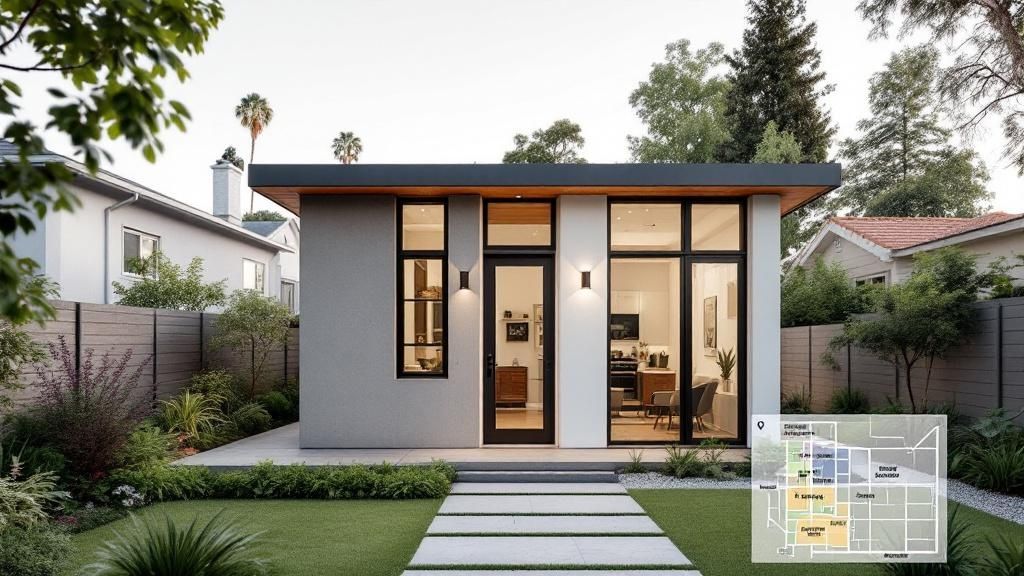
Navigating the rules for Accessory Dwelling Units can feel complex, but the state has laid a clear foundation to empower homeowners. Recent legislative changes have systematically removed major barriers, making it much easier for property owners in places like Monterey, Santa Cruz, and San Benito Counties to add a granny flat or backyard cottage.
The goal of these statewide rules is to increase California's housing supply by making ADU construction a predictable and achievable project. At Aldridge Construction, our expertise in local and state requirements ensures your project moves smoothly from concept to completion.
The Impact of Statewide ADU Reforms
California's pro-housing legislation has had a massive effect on the growth of ADUs, starting with a series of laws in 2016 that eased restrictions on parking and owner-occupancy. The results have been staggering.
According to data analyzed by the UC Berkeley Terner Center for Housing Innovation, the number of permitted ADUs skyrocketed by an incredible 15,334% between 2016 and 2022. This added nearly 84,000 new homes across the state—a clear sign of the opportunity available to homeowners.
Understanding the statewide baseline is your first step. While your local city or county—like Monterey County or Santa Cruz County—has its own specific rules, they cannot be more restrictive than the state's foundational laws. For a closer look at what the process entails, explore our overview of residential ADU construction in Salinas.
California Statewide ADU Requirements at a Glance
To simplify the core regulations, this table breaks down the fundamental statewide rules. This is your starting point for determining if an ADU is right for your property.
| Requirement Category | Statewide Mandate |
|---|---|
| Zoning | Permitted on any lot with an existing or proposed single-family or multi-family dwelling. |
| Minimum ADU Count | Cities must allow at least one ADU of up to 800 sq. ft. that meets 4-foot setbacks. |
| Maximum Size | Generally 1,200 sq. ft. for a detached ADU, though cities can allow more. |
| Minimum Size | At least 150 sq. ft. (the size of an "efficiency unit"). |
| Setbacks | Minimum 4-foot side and rear yard setbacks for new detached ADUs. |
| Parking | No parking required if the ADU is within a ½-mile of public transit or in a historic district. |
| Owner Occupancy | Cities cannot require the owner to live on the property for new ADUs built until 2025. |
| Permit Timeline | Ministerial approval required within 60 days of submitting a complete application. |
These rules form the backbone of ADU development in California, guaranteeing homeowners a clear path forward.
How State Law Transformed the ADU Landscape
For decades, building a backyard cottage was a deeply frustrating and often impossible task for California homeowners. Local governments used restrictive zoning rules and subjective reviews to shut projects down.
This old system was built on discretionary approval. Even if a project met every rule, a planning commission could deny it for vague reasons like "neighborhood character," creating immense uncertainty for property owners in Monterey and Santa Cruz Counties.
The Shift to By-Right Approval
The game changed when California’s government mandated a ministerial or by-right approval system.
This means if your project plans meet all the objective, black-and-white standards in state and local codes, the city must issue your permit. This shift has been the engine behind the current ADU boom, giving homeowners a reliable roadmap. As long as you follow the checklist of california adu requirements, you are guaranteed an approval.
Removing Key Barriers for Homeowners
Lawmakers also dismantled the biggest roadblocks that once stopped projects. Key changes include:
- No More Parking Mandates: Cities used to demand new off-street parking spots for an ADU. Now, most projects are exempt.
- Owner-Occupancy Rules Abolished: The rule forcing an owner to live on-site was suspended until at least 2025, giving homeowners more flexibility for rental income or housing family.
- Guaranteed Size and Setbacks: State law now guarantees you can build an ADU of at least 800 sq. ft. with minimal 4-foot side and rear setbacks, overriding restrictive local rules.
For a deeper dive into what an ADU is, check out our complete guide to what ADU means in construction.
Which Properties Qualify for an ADU
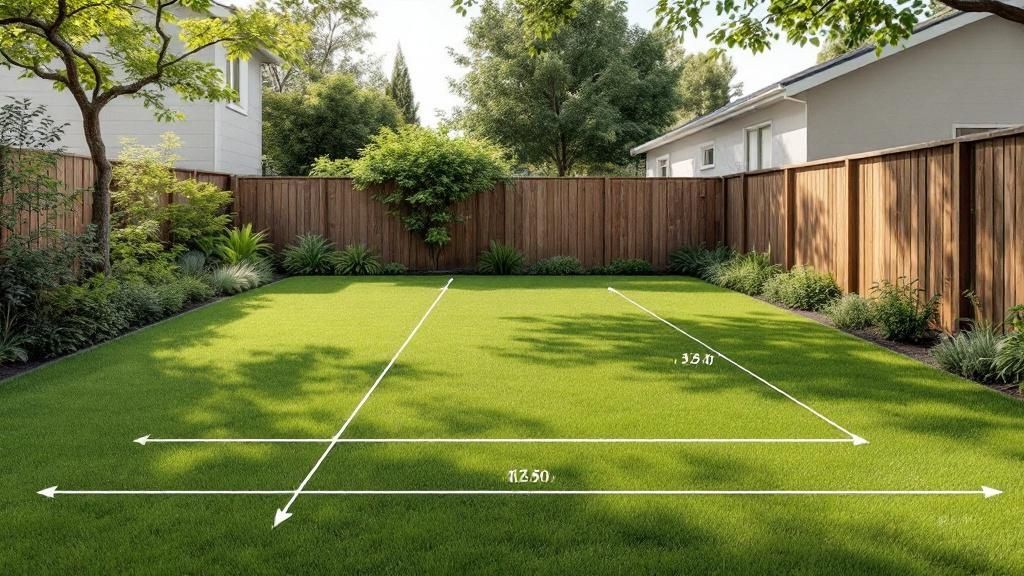
One of the best things about California’s recent ADU laws is how many properties are now eligible. The new guiding principle is simple: if your property is in a residential zone, you almost certainly have the right to build at least one ADU.
For homeowners in Monterey, Santa Cruz, and San Benito Counties, this means properties zoned for single-family or multi-family use are clear for development. It's always wise to double-check your local zoning map on your city or county’s planning department website.
Special Considerations for Your Property
Some locations have extra layers of rules you’ll need to navigate. Your project will need to align with these special conditions.
- Historic Districts: If your home is in a designated historic district, your ADU's design must be compatible with the neighborhood’s character. Your materials and architectural style, like roofing and siding, will need to fit in.
- Coastal Zones: This is a key factor for homeowners in Monterey and Santa Cruz Counties. Properties within the coastal zone fall under the California Coastal Act and will likely need a Coastal Development Permit (CDP).
- High Fire Hazard Severity Zones (HFHSZ): In areas with high wildfire risk, ADUs must meet strict fire-safe building codes. This includes using materials like ignition-resistant siding and dual-pane tempered glass windows, a non-negotiable safety step in many local communities.
Unlocking More Potential with Junior ADUs
Beyond a standard ADU, California law also allows for a Junior Accessory Dwelling Unit (JADU). A JADU is a unit up to 500 sq. ft. created by converting part of an existing single-family home, like a spare bedroom or an attached garage.
The real game-changer is that state law allows for both a standard ADU and a JADU on the same single-family property. This powerful combination lets you add two distinct living units, maximizing your property's housing capacity and potential rental income.
ADU vs. JADU Key Differences
This table helps clarify the differences between an ADU and a JADU.
| Feature | Accessory Dwelling Unit (ADU) | Junior ADU (JADU) |
|---|---|---|
| Location | Detached, attached, or converted space | Converted from existing space within a home |
| Maximum Size | Up to 850-1,000 sq. ft. (or more) | 500 sq. ft. |
| Kitchen | Requires a full, separate kitchen | Can have a smaller "efficiency" kitchen |
| Bathroom | Requires a separate bathroom | Can share a bathroom with the main house |
| Parking | Generally waived | No additional parking required |
| Owner Occupancy | Not required (until 2025) | Owner must reside in the main house or JADU |
Every property is unique, so getting expert advice tailored to local rules is crucial. Our team of ADU contractors in Salinas can help homeowners in Monterey County make sense of it all. Data shows that between 2018 and 2021, ADUs accounted for 19% of all permits in Southern California, highlighting how effective these laws have been. Learn more about how California's ADU reforms have been evaluated.
Mastering Size, Setbacks, and Parking Rules
Diving into the technical side of the California ADU requirements can feel overwhelming, but it boils down to three key questions: How big can I build? How close can I get to my property lines? And do I need more parking?
State law provides a clear and protective baseline, ensuring that local cities in Monterey or Santa Cruz can't impose rules more restrictive than the state’s minimums.
Think of state law as a "floor" for your rights. Your city can let you build bigger, but they can't force you to build smaller than what the state guarantees.
How Big Can My ADU Be?
California state law ensures you can build a functional and comfortable living space. Cities are legally required to allow an ADU of at least 850 square feet for a studio or one-bedroom unit.
If you are planning an ADU with two or more bedrooms, the protected minimum size increases. The state guarantees your right to build an ADU of at least 1,000 square feet. This critical protection stops cities from forcing impractically small designs.
- One Bedroom or Less: You have the right to build an ADU of at least 850 sq. ft.
- Two or More Bedrooms: You have the right to build an ADU of at least 1,000 sq. ft.
- Local Maximums: Many areas, including those around Monterey Bay, allow detached ADUs up to 1,200 sq. ft. Aldridge Construction can confirm the maximum size allowed at your specific property.
Understanding Property Line Setbacks
A "setback" is the required distance between a building and your property lines. In the past, restrictive setback rules made it impossible to fit an ADU on many lots.
State law fixed this by creating a clear, minimal standard. For any new detached ADU, California mandates a minimum setback of just four feet from the side and rear property lines. This simple rule has unlocked the potential for countless properties.
This four-foot requirement is a powerful tool. Your local planning department cannot force you to place your ADU further into your yard, preserving valuable outdoor space. Front yard setbacks, however, must still follow local zoning rules.
The Rules on ADU Parking
Parking used to be the ultimate project-killer. Fortunately, state law has almost completely eliminated this headache by creating several common-sense exemptions.
Your ADU project is exempt from any parking requirements if any of these are true:
- Near Public Transit: The property is within a half-mile walking distance of a public bus stop or rail station.
- In a Historic District: The property is located inside an officially designated historic district.
- Part of an Existing Structure: The ADU is built within the existing space of the main house or an accessory building (like a garage conversion).
- Close to a Car Share: A dedicated car-share vehicle is available within one block.
Given how common public transit is across Monterey and Santa Cruz Counties, the vast majority of ADU projects qualify for a parking exemption. If you convert a garage, you don't even have to replace the parking spot you're eliminating.
The ADU Permit Process From Plan to Approval
For many homeowners in Monterey and Santa Cruz Counties, the permitting process feels like the most intimidating part of an ADU project. With the right team, however, navigating the California ADU requirements is a clear, step-by-step journey.
It starts with a feasibility study and architectural design. This involves creating a complete set of documents that prove your project meets every requirement, from local zoning to California’s Title 24 energy codes.
The 60-Day Shot Clock
A powerful tool for homeowners is the state-mandated 60-day "shot clock." Once you submit a complete ADU application, your local agency has just 60 days to approve it or provide a written list of specific code violations that need fixing.
This rule established ministerial approval, turning the permit process from a subjective review into a straightforward checklist. If your plans meet the code, the permit must be issued, removing uncertainty and keeping your project on a reliable timeline. This is where working with an experienced builder like Aldridge Construction is invaluable, as we ensure your initial submission is complete and correct. Learn more about general construction permit requirements.
Understanding Utility Connections and Impact Fees
You'll need a plan for utility connections and fees. Your new ADU requires its own water, sewer, and power, which means coordinating with local utility providers.
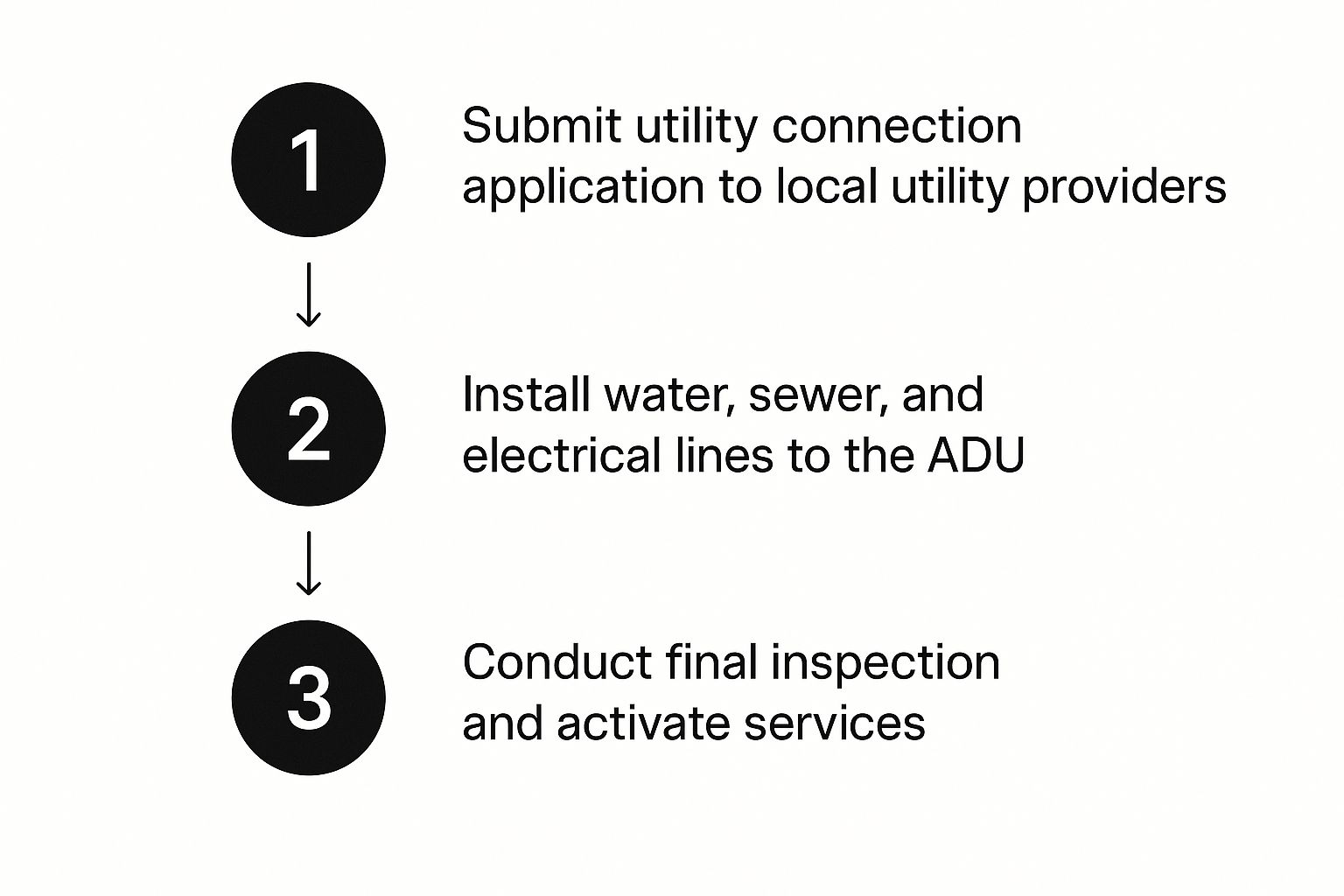
This part of the project demands tight coordination to ensure everything is installed correctly and on schedule.
Another financial piece is impact fees, which local governments charge to help pay for public infrastructure. State law provides major relief here:
- No Impact Fees for Smaller ADUs: If your ADU is under 750 square feet, you are completely exempt from impact fees.
- Proportional Fees for Larger ADUs: For ADUs 750 square feet or larger, fees must be proportional. The fee is calculated based on the ADU’s size relative to the main house, preventing unfairly high charges.
For example, if your primary home is 2,000 sq. ft. and you build a 1,000 sq. ft. ADU, the impact fee can't be more than 50% of what would be charged for a new single-family home. This makes budgeting far more manageable.
Start Your ADU Project with Aldridge Construction
Understanding California’s ADU rules is the first step; turning that knowledge into a finished granny flat is where the real work begins. The next step is finding the right local partner to bring your vision to life.
At Aldridge Construction, we are experts in the local building codes across Monterey, Santa Cruz, and San Benito Counties. Our team handles everything from initial design to securing the final permit, turning confusing regulations into a clear plan.
From Blueprint to Beautiful Home
A well-built ADU is a lasting improvement to your property. We build our reputation on quality, using materials designed to add value and beauty, such as durable quartz countertops and energy-efficient Milgard windows.
A quality-built ADU is a significant investment in your property's future. By focusing on quality from the ground up, we ensure your new unit is a source of pride and long-term value.
Our goal is a seamless construction experience. We manage timelines, coordinate tradespeople, and keep you informed every step of the way, ensuring your project is finished on time and on budget. Learning about affordable ADU builders in Salinas is a great way to see how a professional team can streamline the journey.
Frequently Asked Questions (FAQs)

Here are answers to common questions we hear from homeowners in Monterey, Santa Cruz, and San Benito Counties about California ADU requirements.
1. Can I build an ADU on my property in Monterey County?
Yes, in most cases. If your property is zoned for a single-family or multi-family home, state law grants you the right to build at least one ADU. Local rules in Monterey, Santa Cruz, or San Benito add specific guidelines but cannot deny your right to build. Aldridge Construction can perform a detailed feasibility study to confirm your eligibility and identify any local rules, such as coastal zone requirements.
2. How long does it take to get an ADU permit in California?
Once a complete application is submitted, state law gives your local planning department 60 days to approve or deny it. This "shot clock" rule prevents long delays. The entire process, from initial design to receiving the permit, typically takes a few months. Submitting a complete and accurate application is key to a speedy approval.
3. Do I have to provide parking for my new ADU?
Usually, no. You are exempt from adding new parking if your property is within a half-mile of public transit, in a historic district, or if the ADU is a conversion of an existing structure (like a garage). Since these exemptions are broad, most projects in our service areas do not require new parking. Even if you convert your garage, you are not required to replace the lost parking spaces.
4. Can I rent out my new ADU on Airbnb?
This depends entirely on your local city or county. State law allows long-term rentals (leases over 30 days) but lets local governments regulate short-term rentals (STRs). Many communities in the Monterey Bay area restrict or ban using an ADU as a short-term vacation rental. Always check your local ordinances to avoid significant fines.
5. What is the difference between an ADU and a JADU?
An ADU can be a detached, attached, or converted unit up to 1,200 sq. ft. (or more) with a full kitchen. A JADU (Junior ADU) is a smaller unit (up to 500 sq. ft.) created by converting existing space within a home, like a bedroom, and can have a more basic "efficiency" kitchen. State law allows for both an ADU and a JADU on the same property, offering a great way to maximize housing options.
Ready to unlock your property's potential? The team at Aldridge Construction has the local expertise in Monterey, Santa Cruz, and San Benito counties to guide you.