
Accessible kitchen design is about much more than simply checking boxes on an ADA compliance list. It represents a forward-thinking mindset focused on creating a kitchen that is inherently easy to use, safe, and genuinely inviting for everyone—regardless of their age, height, or physical abilities. The ultimate goal of accessible kitchen design is to build a space where a child, a tall adult, a person using a wheelchair, and an older relative can all prepare a meal together, comfortably and without barriers.
This approach ensures your kitchen not only meets today's needs but also adapts to life's changes, making it a cornerstone of a truly functional home. Aldridge Construction specializes in integrating these smart design principles into beautiful, practical kitchens across Monterey, Santa Cruz, and Maricopa Counties.
What Accessible Kitchen Design Really Means
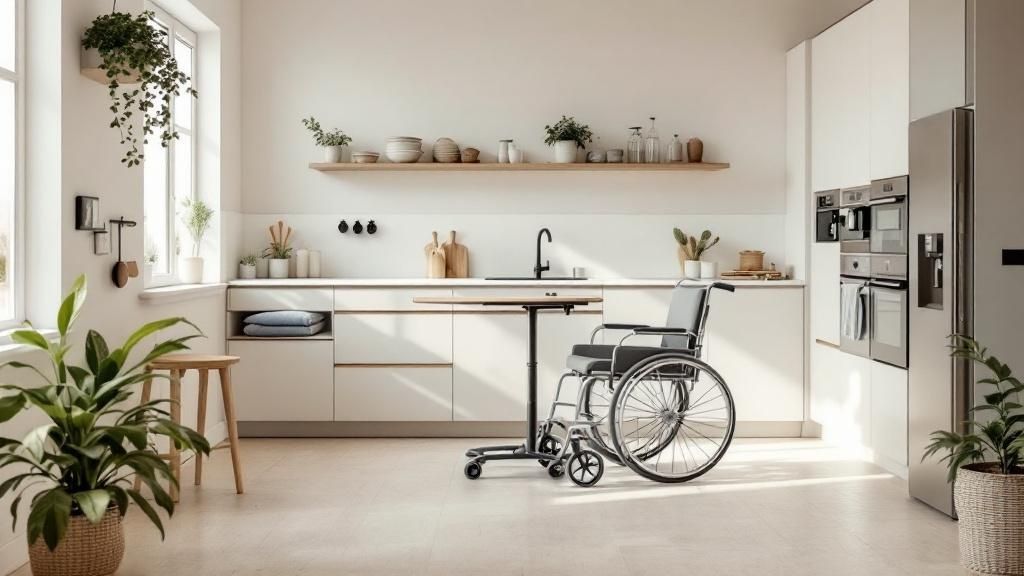
Often referred to as universal design, this philosophy blends human-centered ergonomics with beautiful aesthetics. It’s about building a gorgeous, highly functional kitchen that solves problems before they even arise. This approach has gained significant momentum as more homeowners in California and Arizona recognize the value of creating homes that can adapt with them through every stage of life.
The market reflects this growing demand. According to recent industry analysis, the global market for home accessibility products is projected to grow substantially, indicating a clear shift toward future-proofing homes. For homeowners, this means building accessibility right into their design from day one is a smart, long-term investment.
Core Principles for Every Home
For homeowners in regions like Monterey County, CA, or Maricopa County, AZ—areas popular with retirees and multi-generational families—this forward-thinking design is especially powerful. It’s not just about meeting today's building codes; it’s about future-proofing your most important asset.
To achieve this, Aldridge Construction focuses on a few key principles that drive the design process. These principles translate into real-world features that enhance usability for everyone.
Core Principles of Universal Kitchen Design
| Principle | Objective | Example Feature |
|---|---|---|
| Flexibility in Use | Accommodate a wide range of preferences and abilities. | Multi-level countertops that work for both seated and standing users. |
| Simple and Intuitive Use | Make features easy to understand for any user. | Touchless faucets or appliances with clear, picture-based controls. |
| Low Physical Effort | Minimize fatigue and physical strain during daily tasks. | Pull-down shelving, full-extension drawers, or D-pull cabinet handles. |
These principles are not complex; they are just smart. When a kitchen is designed with these in mind, it simply works better for everyone, fostering independence and ensuring safety. For anyone planning to age in place, these features transition from "nice-to-have" to absolutely essential.
At Aldridge Construction, we see accessible design as smart design. It’s about creating a kitchen that works for you today and adapts to your needs for years to come, enhancing both daily life and your home's long-term value.
By weaving these concepts into your remodel from the beginning, you create a space that’s not only beautiful but also truly functional for every person who calls it home. For more ideas, explore our guide on other essential home modifications for seniors to age in place safely.
Planning a Functional and Open Kitchen Layout
The layout is the foundation of any successful accessible kitchen design. It dictates the flow of movement, overall safety, and how effortless daily tasks feel. A well-planned footprint creates an environment where everyone, including wheelchair users, can move freely and work efficiently without restriction.
This process involves more than just arranging appliances; it requires a deep understanding of space and human movement. The growing demand for specialized kitchen design services underscores the need for custom solutions that address mobility, reach, and safety—a core focus for Aldridge Construction.
Creating Clear Pathways and Work Zones
The U-shape and L-shape are two of the most popular layouts for a reason. An L-shaped kitchen often opens up the floor space, making it ideal for creating crucial wide pathways. A U-shaped layout can create a highly efficient “work triangle,” but it requires careful measurement to avoid feeling cramped.
Regardless of the shape chosen, certain dimensions are non-negotiable for true accessibility:
- Clear Pathways: Hallways and paths between counters or islands must be at least 42 inches wide for comfortable passage.
- Turning Radius: A 60-inch (5-foot) diameter clear turning space is essential for most wheelchair users to navigate turns. This is a critical consideration in both Monterey and Maricopa County homes where open-concept living is popular.
- Work Aisle Width: The aisle in front of key appliances like the oven or dishwasher should be at least 42-48 inches wide to accommodate an open door and a person standing in front of it.
At Aldridge Construction, we often recommend an open-concept L-shape layout with a versatile island. This approach provides ample turning space while establishing a functional work zone that doesn’t create barriers.
This infographic breaks down the core steps for creating an ergonomic layout that balances these critical dimensions.
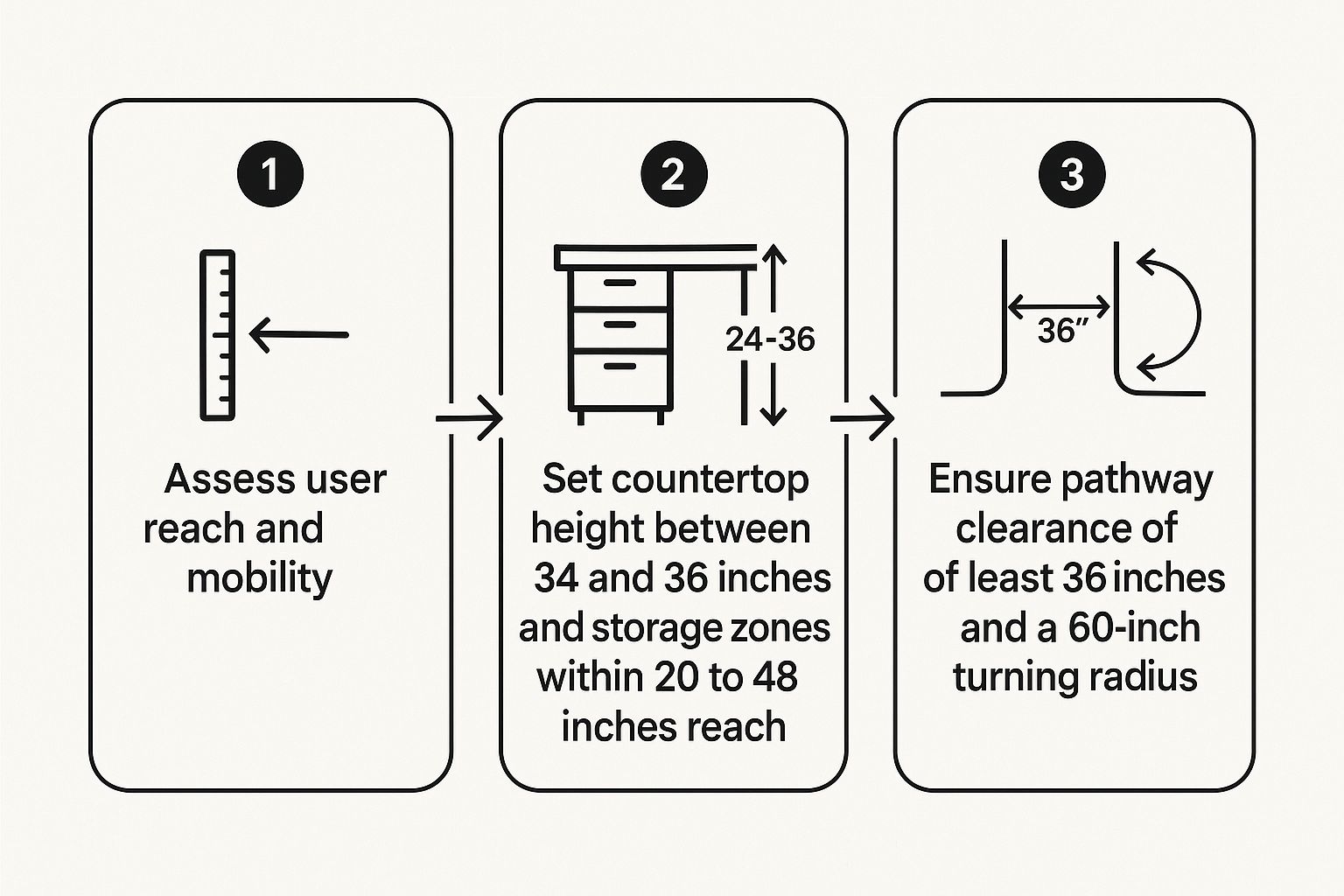
Assessing the user's specific needs directly informs the placement and height of every key kitchen element. This leads to a safer, more intuitive space that works for you, not against you.
The Importance of the Work Triangle
The classic kitchen "work triangle" remains vital in accessible kitchen design. Its purpose is to place the three primary work areas—the refrigerator (storage), the sink (cleaning), and the cooktop (cooking)—in a configuration that minimizes steps and effort.
For an accessible kitchen, the legs of this triangle must be completely unobstructed. An island, if not placed thoughtfully, can interrupt this natural flow. The goal is to ensure a user can move smoothly between these three points without navigating around obstacles. Planning this flow is a key part of our process, and our comprehensive kitchen remodel checklist can help you map out your needs.
Choosing Smart Cabinets and Countertops
In any kitchen, cabinets and countertops are the workhorses, defining both aesthetics and daily function. In an accessible kitchen, these choices become even more critical. The right selections can transform the space, turning potential daily frustrations into a place of empowerment and ease.
This is where universal design proves its worth. It’s not about creating a space that looks clinical; it’s about smart, thoughtful features that work better for everyone. From extensive experience with kitchen remodeling in Salinas and across the Monterey Bay area, Aldridge Construction knows homeowners want a kitchen that’s as beautiful as it is practical.
The Advantage of Multi-Level Countertops
A one-size-fits-all countertop doesn't work for a multi-generational household. A standard 36-inch counter height can be challenging for a wheelchair user or for children helping out. Conversely, a lower counter can cause back strain for taller family members during meal prep.
Multi-level countertops solve this by creating distinct, comfortable zones for different people and tasks.
- A Seated Prep Area: A section of the counter, typically on an island, can be set at a height between 28 and 34 inches. This area should have open space underneath so a wheelchair can roll right up.
- A Standard Work Surface: The rest of the countertops remain at the conventional 36-inch height, perfect for standing tasks and standard appliances.
Creating varied work surfaces is one of the most effective ways to build flexibility into a kitchen. It ensures that everyone has a comfortable, ergonomic space to participate in meal preparation.
Smart Cabinetry for Effortless Access
Rummaging through deep, dark cabinets is a common frustration. Modern cabinetry, however, offers brilliant solutions that bring contents directly to you, eliminating awkward reaching and straining.
When Aldridge Construction works with clients in Maricopa and Santa Cruz Counties, the team steers them toward options that make storage feel intuitive. Here are some of the most impactful solutions.
Key Cabinetry Solutions
- Full-Extension Drawers: Replacing traditional base cabinets with deep, full-extension drawers is a game-changer. They slide all the way out, providing a clear, top-down view of everything inside.
- Pull-Down Shelving: For upper cabinets, these mechanized shelves bring an entire shelf down to counter level with minimal effort, making glasses and spices easily reachable.
- Open Shelving: For frequently used items like mixing bowls or coffee mugs, stylish open shelving can be both beautiful and highly practical, removing the barrier of a door.
- Lazy Susans & Blind Corner Pull-Outs: Modern pull-out and rotating systems for corner cabinets make every inch of that awkward space usable and easy to access.
Comparing Accessible Cabinetry Solutions
To find the best fit for your kitchen, here's how some of the most popular accessible cabinetry options compare.
| Cabinetry Solution | Best For | Pros | Cons |
|---|---|---|---|
| Full-Extension Drawers | Base cabinets; storing pots, pans, and dishes. | Excellent visibility and access to all items; ergonomic. | Can be more expensive than standard cabinets; may reduce vertical storage slightly. |
| Pull-Down Shelving | Upper cabinets; storing everyday items like glasses and spices. | Brings items to a comfortable height; great for seated users. | Mechanical systems can be costly and require professional installation. |
| Open Shelving | Storing frequently used, visually appealing items. | Immediate access with no doors; adds decorative element. | Items are exposed to dust; can look cluttered if not maintained. |
| Lazy Susans & Pull-Outs | Corner cabinets. | Maximizes use of awkward corner space; brings items to the front. | Can sometimes be tricky to organize; moving parts can wear over time. |
The best approach often involves a combination of these solutions. Material choice is also key. Aldridge Construction recommends durable, non-porous surfaces like quartz for countertops due to their resistance to stains and ease of cleaning.
Selecting the Right Appliances and Fixtures
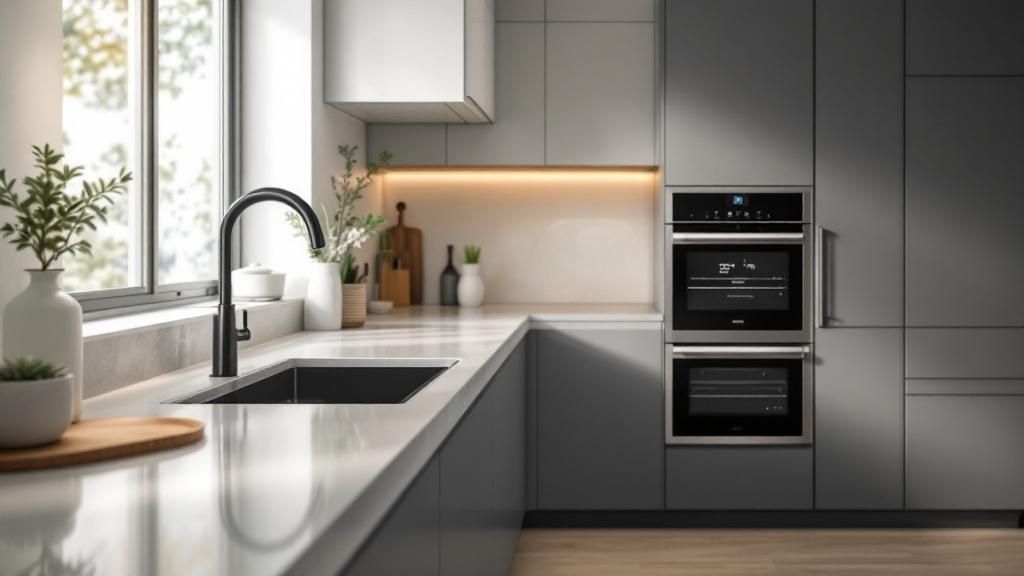
The right appliances and fixtures are what turn a well-planned layout into a truly functional, safe, and independent space. Modern technology offers incredible features that dramatically reduce physical strain and make daily life more convenient.
For example, a traditional oven's drop-down door forces users to lift hot, heavy dishes over a scalding surface. Aldridge Construction almost always recommends side-swing or French door wall ovens because they allow you to stand directly in front, making it far safer to slide cookware in and out.
Smart Appliances That Enhance Independence
The smart kitchens market was valued at $5.3 billion in 2023 and is projected to reach $14.4 billion by 2030, according to Business Wire. This growth is driven by advancements in voice activation and automation that directly boost kitchen safety and usability. You can discover more about the rise of smart kitchen technology and how it’s shaping modern homes.
For clients in Monterey, Santa Cruz, and Maricopa Counties, this translates into tangible benefits:
- Smart Refrigerators: Side-by-side or French door models from brands like Samsung or LG put both fresh and frozen items within a comfortable vertical reach.
- Voice-Activated Faucets and Lighting: The ability to turn on water or adjust lights with a voice command is incredibly helpful for someone with limited grip strength.
- Drawer-Style Microwaves: Installed below the countertop, a drawer-style microwave from a brand like Sharp allows anyone to safely place and retrieve hot food without reaching overhead.
At Aldridge Construction, we often recommend brands like Bosch for their side-swing wall ovens and Sharp for their drawer microwaves. These products have a proven track record of reliability and user-friendly design that our clients appreciate.
Choosing Faucets and Sinks
Fixtures are just as important as appliances. A shallow-basin sink, around 6 to 7 inches deep, is far more comfortable for a seated user and prevents back strain. Paired with a single-lever or touchless faucet, it creates a highly ergonomic workstation. Lever handles require little force, while touchless models from brands like Moen or Delta offer ultimate convenience.
By carefully selecting appliances and fixtures, Aldridge Construction helps homeowners build a kitchen that isn’t just beautiful but truly empowering and safe.
Integrating Smart Safety and Lighting
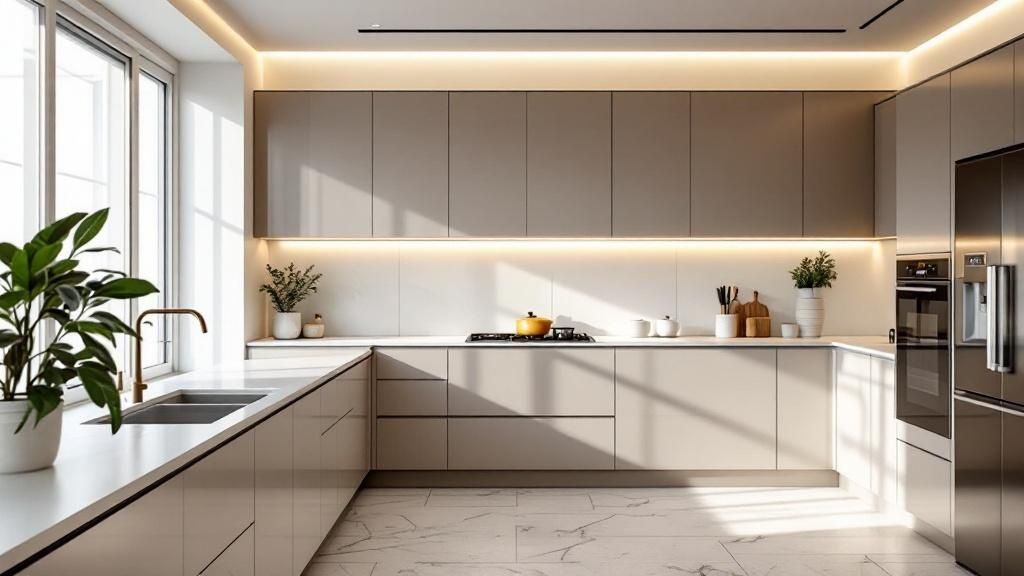
In an accessible kitchen, safety is woven into every decision. A secure kitchen environment results from deliberate choices in materials, lighting, and finishes that work together to prevent accidents. This process starts from the ground up, with flooring being a critical consideration.
For clients in Monterey and Maricopa Counties, Aldridge Construction recommends materials that deliver excellent slip resistance without sacrificing style.
Essential Flooring and Surface Safety
Matte-finish porcelain tile and luxury vinyl tile (LVT) are two excellent recommendations. Both offer a high coefficient of friction, providing fantastic grip even when wet, and they come in a wide range of beautiful designs.
Beyond the floor, every surface matters. Rounded countertop edges are a small detail with a huge impact, preventing painful bumps and bruises in a busy home. It’s a simple, effective touch that Aldridge Construction builds into nearly every project.
Layered Lighting for Clarity and Comfort
Proper lighting is a powerful safety tool. A single, harsh overhead fixture creates shadows and eye strain. A layered lighting plan, however, makes every corner of the kitchen bright and clear. In California, this is also a key part of meeting Title 24 energy efficiency and lighting standards.
A great lighting plan includes three distinct layers:
- Ambient Lighting: General illumination from well-placed recessed cans or other overhead fixtures.
- Task Lighting: Focused lights over key work zones, like pendants over an island or spotlights aimed at the sink.
- Under-Cabinet Lighting: This is non-negotiable for safety, as it perfectly illuminates countertops for prep work and cuts down on glare.
A layered lighting plan doesn’t just make a kitchen safer; it makes it feel more welcoming and spacious. It’s a critical element that bridges the gap between a standard room and a truly thoughtful workspace. You can explore how these elements come together in our portfolio of luxury kitchen design projects.
Other vital safety features include anti-scald faucets that regulate water temperature and induction cooktops, where the surface stays cool to the touch, drastically reducing the risk of burns. Integrating these thoughtful measures creates kitchens that provide genuine peace of mind.
FAQs About Accessible Kitchen Design
Planning a remodel with accessible kitchen design in mind brings up many questions. Homeowners in Monterey, Santa Cruz, and Maricopa counties often ask Aldridge Construction about costs, resale value, and the difference between "accessible" and "ADA-compliant." Here are clear, straightforward answers to help you plan your project.
1. How much more does an accessible kitchen remodel cost?
It likely costs less than you think. Many universal design features, like lever-style handles or a side-by-side refrigerator, cost about the same as standard counterparts if planned from the start. Specialized equipment like height-adjustable countertops will add to the investment, but a skilled contractor can help prioritize features to fit your budget.
2. Is an accessible kitchen the same as an ADA-compliant kitchen?
No, not exactly. The Americans with Disabilities Act (ADA) sets strict standards for public spaces. A residential kitchen with universal design is more flexible. While Aldridge Construction uses ADA guidelines as a starting point for clearances, the ultimate goal is to perfectly suit the daily lives of the home's specific residents, blending function with personal style.
3. Will an accessible kitchen design lower my home's resale value?
On the contrary, a thoughtfully designed accessible kitchen can boost your home's appeal and market value. As more buyers seek homes that support "aging in place," features that improve safety and usability are highly desirable, opening your home to a wider pool of potential buyers.
4. What is the most important feature to start with?
If you must phase the project, focus on the layout and flooring first. An open floor plan with adequate clearance and high-quality, non-slip flooring are foundational safety elements. They are also the most disruptive to change later. Other features can be added as your budget allows. Many of our clients find this approach makes a full home renovation in Salinas and Monterey feel much more achievable.
5. How long does an accessible kitchen remodel take?
The timeline is similar to a standard kitchen remodel, typically 6 to 12 weeks from demolition to final walkthrough. The schedule may extend if major structural work is needed or for custom components with long lead times. At Aldridge Construction, a detailed project schedule is provided from the start so you always know what to expect.
Let's Build Your Accessible Kitchen
Ready to create a kitchen that is beautiful, safe, and works for every member of your family? The team at Aldridge Construction has the expertise to bring your vision for an accessible kitchen design to life in Monterey, Santa Cruz, San Benito, or Maricopa County.
Contact Aldridge Construction today for a professional consultation and start planning a kitchen that will serve you for years to come.