
Getting a home addition done without the usual delays means shifting your focus. It’s not just about the building phase. The secret is a proactive pre-construction strategy.
What’s possible is shrinking the overall project timeline by weeks, sometimes even months. This happens when you master the local permitting process. It also helps to have materials secured long before the first shovel hits the dirt. This is how you turn a year-long headache into a well-managed process.
Understanding Your Home Addition Timeline
Dreaming of a new master suite or a spacious family room is the fun part. But the fear of a project dragging on forever can be a roadblock. It's important to have clear expectations about the entire process.
Many contractors might quote three to six months for the build itself. However, the total journey from the first sketch to the final sign-off is often much longer.
Those extra months are almost always eaten up by pre-construction. This is the critical period of design, engineering, and navigating local government offices. This is where unexpected delays sneak in and frustrate homeowners.
The Two Timelines: Standard vs. Streamlined
The key to preventing delays is deep, local knowledge of planning and permit offices. An experienced contractor who works in Monterey, Santa Cruz, or San Benito County every day understands the hurdles in each area. They know how to create a permit application that answers a reviewer's questions before they are even asked.
This local expertise shrinks the pre-construction waiting game. It sets the stage for a smooth, on-schedule build. For anyone starting to plan, this guide to extension and loft conversion offers great early insights.
Imagine needing more space for your growing family in Salinas. Room additions often take about three to six months for construction. But that doesn't include the two or more months needed for design and permitting. With supply chain issues still causing headaches, smart planning is critical.
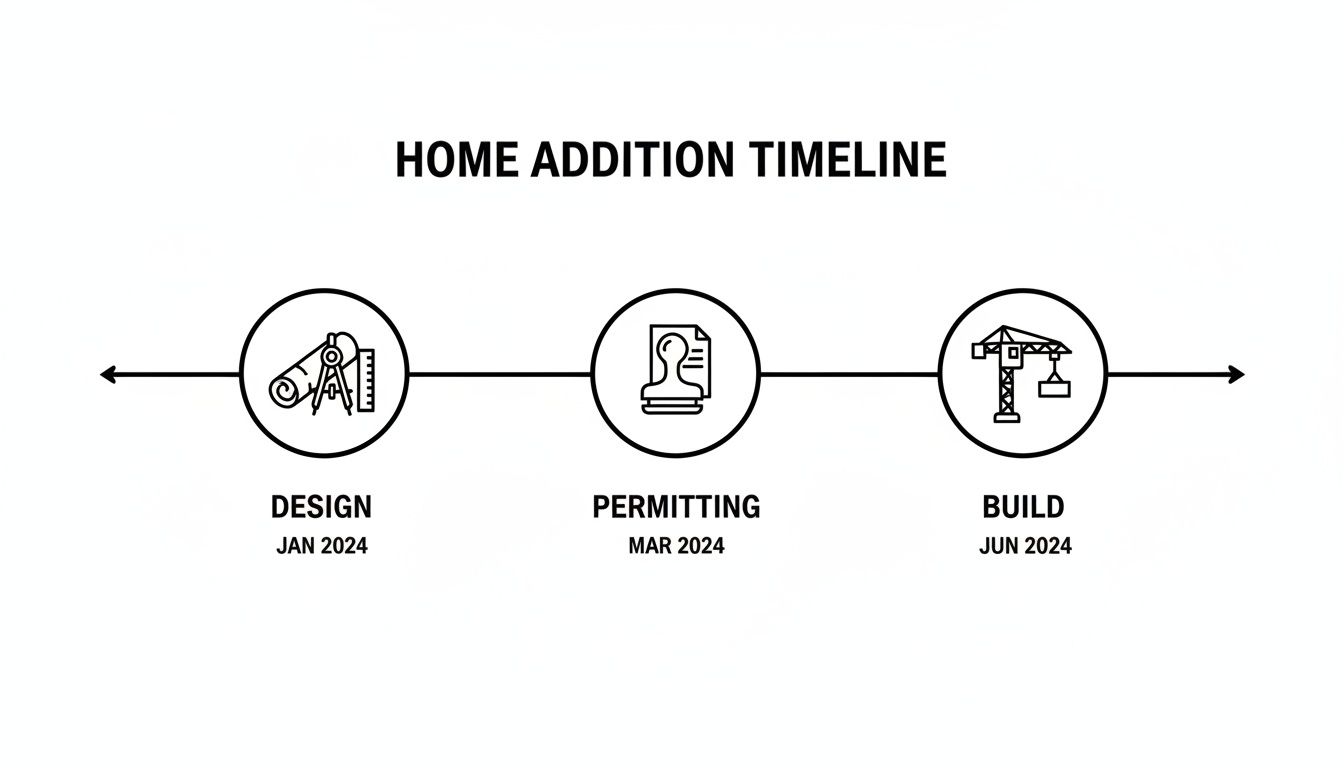
As you can see, the permitting phase is the critical bridge between dreaming and doing. Any delay here pushes back the entire project.
Comparing Project Timelines
The difference between a typical project and a well-managed one isn't just a few weeks; it's a completely different experience. Let's look at how a proactive approach can transform the timeline.
Standard vs. Streamlined Home Addition Timelines
| Project Phase | Standard Timeline (Prone to Delays) | Aldridge Streamlined Timeline |
|---|---|---|
| Design & Engineering | 8-12 Weeks. Back-and-forth revisions; architect unfamiliar with local codes, causing redesigns. | 4-6 Weeks. Plans are created with permit requirements and material availability in mind from day one. |
| Permit Submission | 2-4 Weeks. Incomplete submissions that trigger questions and correction cycles from the city. | 1 Week. A "bulletproof" permit package submitted with all required engineering and supporting documents. |
| Permit Review | 8-16+ Weeks. The application sits in a queue, gets reviewed, sent back for corrections, and waits again. | 4-8 Weeks. Proactive communication with plan checkers; swift responses to any requests. Fewer correction cycles needed. |
| Material Procurement | During Construction. Ordering windows and doors after the permit is issued, leading to on-site delays. | During Permitting. Long-lead-time items (like windows) are ordered as soon as plans are finalized, arriving right when needed. |
| Construction | 4-6+ Months. Starts and stops due to missing materials or failed inspections. | 3-5 Months. A continuous workflow because materials are on-site and inspections are passed the first time. |
| Total Project Time | 9-12+ Months | 5-7 Months |
The table shows that a streamlined process doesn't just save time. It removes the uncertainty and frustration from home renovation projects.
Why Most Home Addition Projects Get Delayed
Project delays are more than just frustrating—they're expensive. While every project has its curveballs, most slowdowns come from a few common issues. Understanding these roadblocks is the first step to creating home additions without the delays: what’s possible when you plan ahead.
Three big issues wreck most timelines: permit backlogs, supply chain surprises, and unexpected site conditions. For homeowners on the Central Coast in places like Monterey or Santa Cruz County, these factors can hit even harder. A project's success often hangs on how well your contractor prepares for these issues.
The Permit Paper Chase
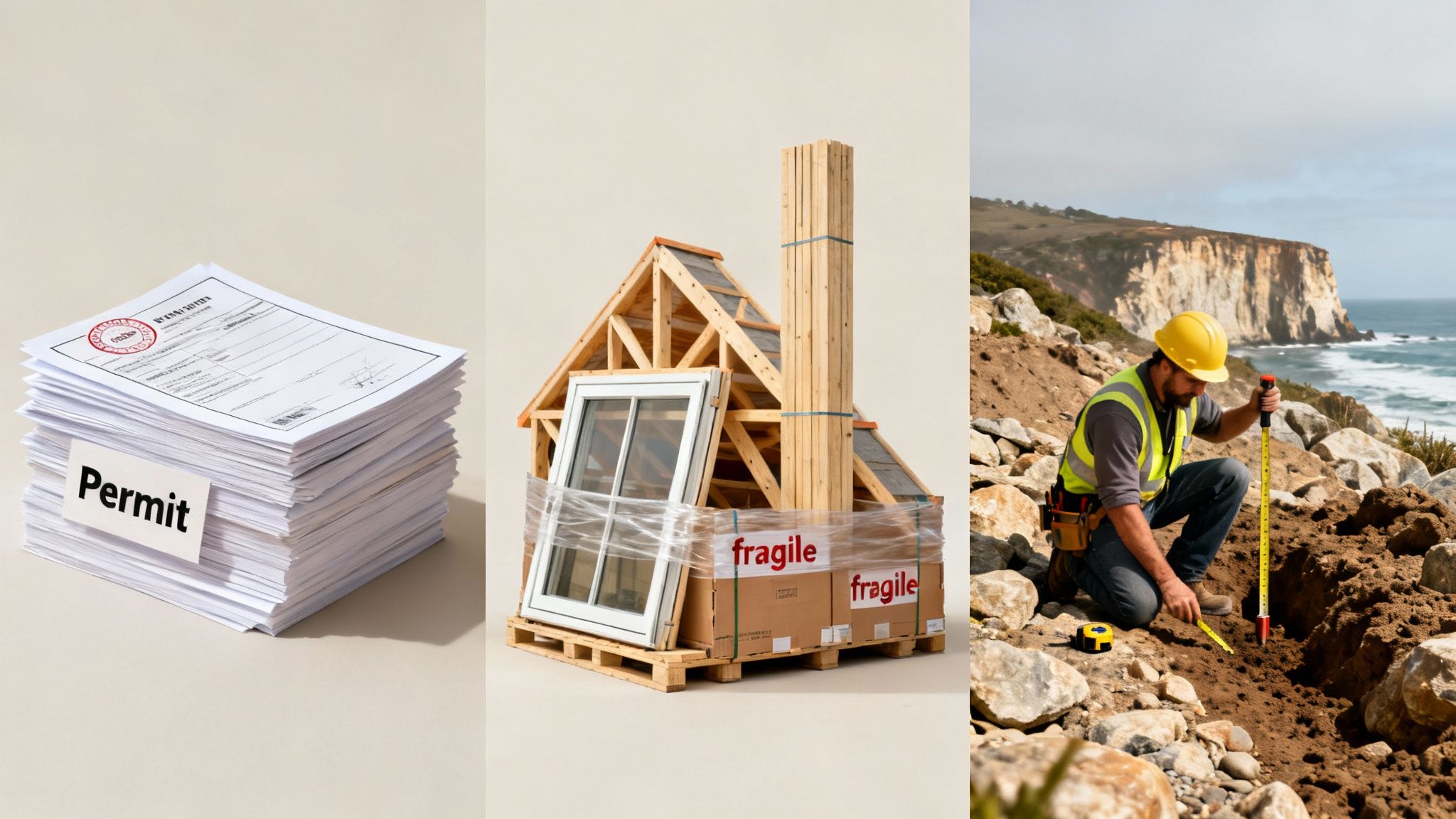
The single biggest bottleneck in our region is the permitting process. What looks like a simple step can turn into months of waiting if not handled with precision.
Local planning departments, like the Monterey County Planning Department, have their own unique rules. This is especially true for projects near the coast. An application missing a single detail gets sent to the back of the line.
At Aldridge Construction, we submit permit applications that are complete. We provide all the necessary engineering and California Title 24 energy calculations. This proactive approach cuts down on painful correction cycles.
Surprises in the Supply Chain
Even with a permit, a project can halt while waiting for materials. The industry still deals with unpredictable lead times for key items. We have to plan for this aggressively.
These are the items that cause major headaches if not ordered in advance:
- Custom Windows and Doors: Specially sized windows can take 12-16 weeks to arrive. Ordering them after demolition creates a massive, costly gap in the schedule.
- Roof Trusses: Engineered trusses are custom-built for each job and require significant lead time.
- Specialty Finishes: Custom cabinetry, specific tile, or high-end appliances often have long delivery schedules.
Our strategy is simple: we order these items the moment the design is locked in. This happens while the permit is still under review. This ensures materials show up on-site exactly when needed.
Discoveries Lurking On-Site
The last major cause of delays is what we find after work begins. No matter how well-built a home is, there can be hidden issues.
Common on-site surprises include:
- Outdated wiring or plumbing that doesn't meet today's codes.
- Hidden structural damage from old water leaks.
- Challenging soil conditions, like the rocky soil in the Santa Cruz mountains, which may require extra foundation engineering.
To get ahead of this, Aldridge Construction performs thorough site checks before starting. Finding potential issues early lets us build solutions into the plan and budget. This turns a potential crisis into a manageable task.
Setting Your Project Up For Success
A smooth home addition is built on a solid foundation of planning. The projects that finish on time and on budget are the ones where the pre-construction phase is managed with precision. This is where you turn a vision into a clear, actionable blueprint.
Getting these early steps right is the most effective way to ensure you get home additions without the delays: what’s possible is a direct result of strong upfront planning.
Creating a Realistic Budget
Your budget is the roadmap for your project. A realistic budget goes beyond the obvious costs of lumber and labor. It must also include a contingency fund.
We recommend setting aside 10-15% of the total construction cost for unexpected issues. This could be for outdated wiring found in a wall or extra foundation work. According to Remodeling Magazine's 2024 Cost vs. Value Report, even a small addition is a significant investment, so protecting it with a contingency is smart.
Without that buffer, a single surprise can halt construction while you find more funding. Building it in from day one keeps your project moving forward.
Lock in Your Design Choices Early
One of the biggest momentum killers on a job site is homeowner indecision. Changing your mind about windows or a bathroom layout after construction has started can trigger a cascade of delays. In the industry, we call this a change order.
A change order almost always means:
- Stopping work while the new plan is approved.
- Re-ordering materials, which can add weeks of waiting.
- Rescheduling subcontractors, throwing the whole timeline off track.
The best way to avoid this is to finalize every selection—from flooring to paint colors—before work begins. This lets your contractor order everything in advance and build a reliable schedule.
The Power of a Detailed Contract
Finally, a detailed, fixed-price contract is your best protection. This document should leave no room for guesswork. It ensures you and your contractor are on the exact same page.
A solid contract should clearly define:
- Scope of Work: A detailed description of every task.
- Payment Schedule: Clear milestones for when payments are due.
- Project Timeline: A start date and an estimated completion date.
- Material Specifications: An exact list of brands and models, like specific Milgard windows or the exact Quartz countertops you chose.
By taking these steps, you create a clear path for a successful project. Aldridge Construction ensures every project begins with this level of detailed planning.
How To Navigate Local Permits and Inspections
For many homeowners, the permitting process is the most intimidating part of a home addition. It can feel like a maze of paperwork and codes. But with the right partner, it's just another step in the journey.
This is especially true in the areas we serve. A project in Monterey County has different hurdles than one in Maricopa County, Arizona. In California, we focus on meeting strict Title 24 energy codes. In Arizona, we pay attention to codes for a hotter, drier climate. Getting these regional differences right is key to a smooth approval.
Understanding the Local Landscape
Every city has its own rules. For example, building in the coastal zones of Santa Cruz County requires navigating extra regulations that don't exist in Salinas. An experienced local contractor knows these details inside and out.
Aldridge Construction builds timelines based on real-world experience with local permit offices. This deep local knowledge is critical for creating home additions without the delays: what’s possible is often determined by how well you prepare for this phase.
The goal is to submit a permit application so thorough that it sails through the review process with minimal corrections. This is where a builder's local relationships and reputation make a real difference.
Leveraging Smart Tools for Faster Approvals
Fortunately, some local governments are creating ways to speed things up, especially for Accessory Dwelling Units (ADUs). With 2025 streamlining laws and pre-approved ADU plans in counties like Monterey, some projects now move faster.
Using a pre-approved ADU plan can be a game-changer for your timeline. Since the core designs have been vetted by the building department, the review process can be much shorter. This can shave weeks off the pre-construction phase.
Modern builders can also consult resources like The Builder’s Guide to Faster Permit Sets, which details workflows that save weeks on plan review.
Passing Inspections the First Time
Once your permit is approved, the next hurdles are on-site inspections. A city inspector visits to verify that the work meets code. A failed inspection means a stop-work order, causing delays.
Your project will have several key inspections:
- Foundation Inspection: Before concrete is poured.
- Framing Inspection: After the frame is up but before drywall.
- Final Inspection: Once the project is complete.
Aldridge Construction prepares for each inspection carefully. Our goal is always to pass on the first visit, keeping the project momentum strong.
The Aldridge Approach To On-Time Construction
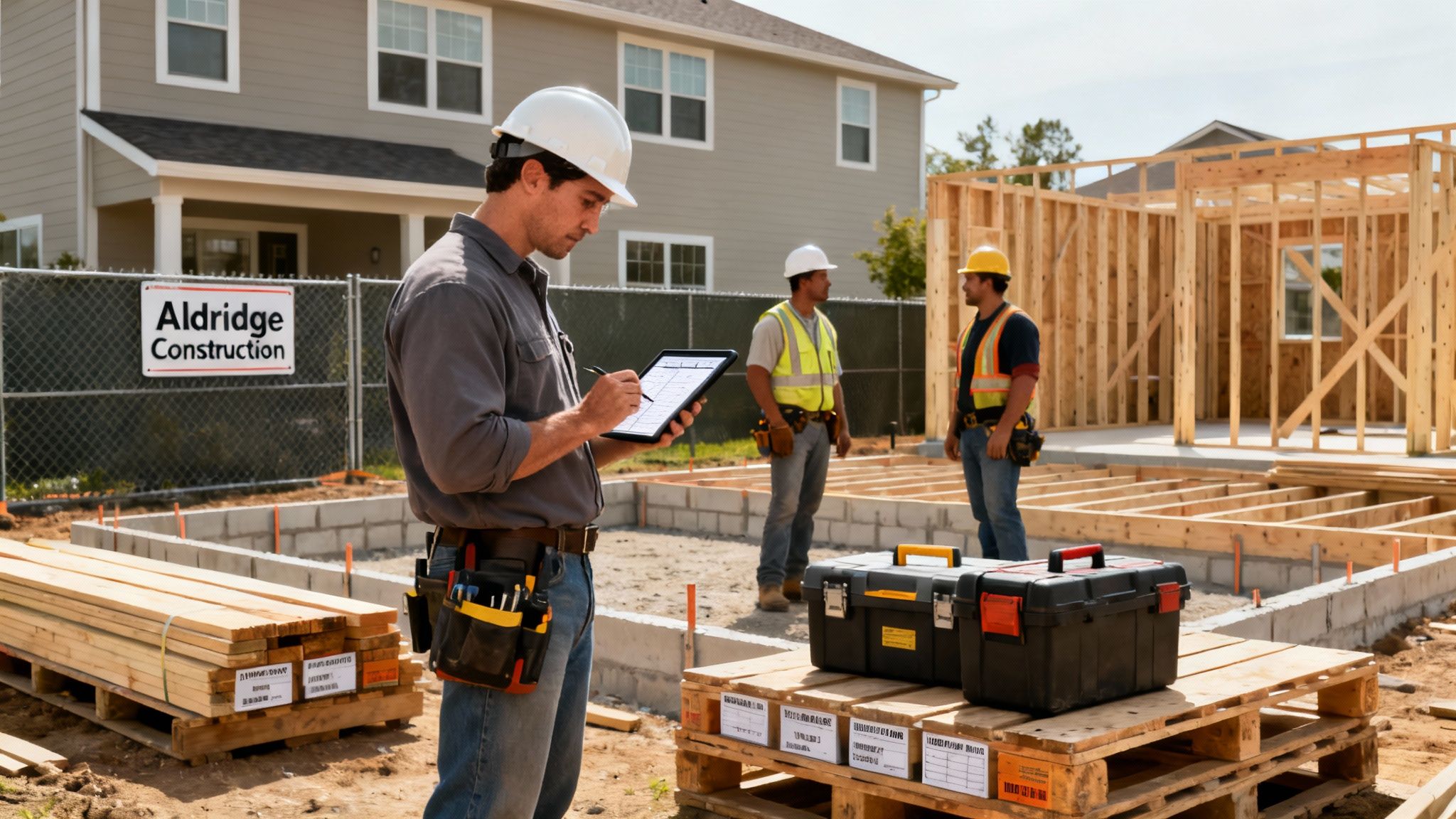
A great plan is only effective if it's executed perfectly. At Aldridge Construction, our approach is built on clear communication and deep local partnerships.
Successfully building home additions without the delays: what’s possible depends on the systems a contractor uses. It’s not about rushing; it’s about maintaining steady, forward momentum.
Transparent Communication
Confusion is the enemy of a smooth project. That’s why we use modern project management software to keep you informed every step of the way.
Through a client portal, you can easily:
- View the Project Schedule: See what’s happening and what’s next.
- Track Progress Photos: We upload regular photo updates so you can watch your vision come to life.
- Communicate Directly: Ask questions and approve changes in one place.
This level of transparency eliminates surprises. It ensures everyone on the team is working from the same information.
The Power of Strong Local Relationships
A contractor is only as good as their team. After decades of working in Salinas, Monterey, and across the Central Coast, we have built rock-solid relationships with the best local tradespeople. These are trusted partners who share our commitment to quality.
These relationships mean we can rely on our electricians, plumbers, and framers to be there when we need them. This prevents scheduling conflicts that stall other projects. This network is a core part of the value you get when working with Aldridge Construction.
Personal Oversight on Every Project
Finally, nothing replaces hands-on leadership. Brian Aldridge personally oversees every project. His presence on-site means that potential issues are identified and addressed before they can grow into costly delays.
This personal commitment is central to our philosophy. We are delivering a positive, predictable experience.
FAQs: Home Addition Timelines and Delays
1. How long does a typical home addition take?
A home addition usually takes 4 to 12 months from start to finish. The first 1-3 months are for design and permits. The next 3-9 months are for construction. The timeline depends on the project’s size and complexity.
2. Can I live in my house during the addition?
Yes, in most cases. A professional contractor will seal off the construction zone to minimize dust and disruption. For major projects affecting your only kitchen or bathroom, a temporary move might be more comfortable.
3. What is the biggest cause of delays in Monterey County?
The single biggest cause of delays in Monterey and Santa Cruz Counties is the permitting process. These areas have strict rules, especially near the coast. An incomplete application can lead to months of back-and-forth, which is why hiring a builder with local experience is crucial.
4. Is an ADU timeline different from a regular addition?
Sometimes. An ADU project can be faster if you use a pre-approved ADU plan, which counties like Monterey now offer. This can shorten the permit review time. A fully custom ADU will have a timeline similar to a standard home addition.
5. How does Aldridge Construction prevent delays?
Aldridge Construction prevents delays with proactive planning and clear communication. We build realistic schedules based on decades of local experience. We order long-lead materials like custom windows early, often while still in the permitting phase. Our project management systems and hands-on oversight keep the build moving forward predictably.
Ready to map out your project timeline? Let’s talk about what’s realistic — and how Aldridge keeps builds moving across Monterey, Santa Cruz, and San Benito Counties. Contact us today to start the conversation.