
If you are thinking about building an Accessory Dwelling Unit (ADU), you probably started by looking at pretty photos online. But here is the honest truth: building an ADU in Monterey County is very different from what general guides say. To succeed, you need to know the local rules.
This guide will show you the truth about ADU permits, costs, and timelines in Monterey County.
Why General ADU Advice Fails in Monterey County
Looking at a modern ADU on Pinterest is the fun part. The hard part is dealing with the real challenges of building in Monterey County. These are problems that national guides don't mention.
For example, a standard guide won't explain the rules for building near the coast. It also won't warn you about local fees that can add thousands of dollars to your budget.
This is where homeowners get frustrated. Many people are surprised by unexpected costs and long permit delays. In our area, a general plan is a recipe for problems.
The Rise in ADUs and Its Problems
ADUs are more popular than ever. In California, demand for ADU permits has jumped by 15,334% since 2016. But online forums are full of stories from homeowners who paid over $20,000 in fees and waited years for approval. You can learn more about this ADU boom and its challenges.
This shows a big problem: everyone wants an ADU, but good local information is hard to find. This is where Aldridge Construction comes in. We have the local knowledge to help you avoid these issues.
What This Guide Covers
This guide gives you a clear roadmap. At Aldridge Construction, we have built many ADUs in Monterey, Santa Cruz, and San Benito Counties. We will explain the truth about:
- Local Permits: We will explain the specific permits you need, from building permits to special coastal permits.
- Real Costs: You will get a clear breakdown of all costs, including hidden fees for things like utility hookups.
- Project Timelines: We will show you what a real timeline looks like and explain common delays so you can plan better.
Understanding Monterey County ADU Permit Rules
Getting an ADU permit in Monterey County can feel confusing. But if you understand the local rules, your project will go smoothly. The truth about ADU permits is that local knowledge is key.
Think of it like using a map. A map of the U.S. can't help you find a coffee shop in Carmel. You need a local street map for that. ADU permits work the same way.
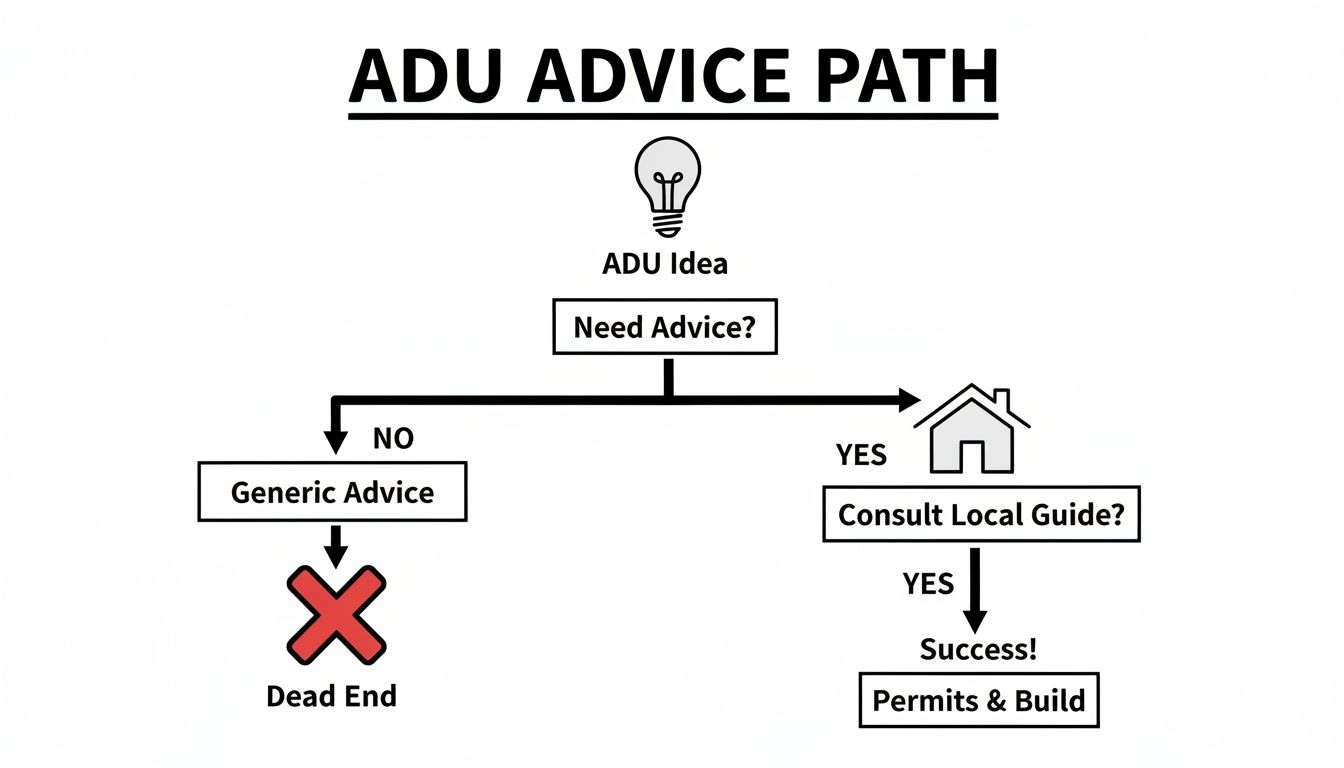
As you can see, general advice leads to a dead end. A local approach gives you a clear path forward. Working with a local expert like Aldridge Construction helps you avoid costly surprises and finish your project faster.
The Permits You Will Actually Need
Every ADU project in Monterey County starts with a building permit. This permit ensures your plans are safe and meet California's codes for building, electrical, and plumbing work.
But you may need other permits too. The most common one is the Coastal Administrative Permit.
If your home is in the coastal zone, this permit is required. It is an extra step to protect our beautiful coastline. This is a key local rule that national blogs often miss.
Homeowners in Santa Cruz and San Benito counties often face similar local rules. A good local builder can tell you what you need from day one.
How Pre-Approved Plans Speed Up the Process
Monterey County offers pre-approved ADU plans to make things easier for homeowners. These plans have already passed the first design and engineering checks.
Because they are already approved, they only need a simple review. A custom plan needs a much more detailed check. You can find the county’s pre-approved ADU plans and info online.
Choosing a pre-approved plan can save you weeks or even months on your timeline. It is a smart way to get your project started faster.
Key Monterey County ADU Rules to Know
You also need to follow local building rules. These rules decide what you can build on your property. Knowing them helps your designer create a plan that will get approved quickly.
Here are a few important rules in Monterey County:
- Height Limit: A separate ADU can usually be no taller than 16 feet.
- Setbacks: The space from your property line is often just 4 feet for side and rear yards.
- Minimum Size: California law lets you build at least an 800-square-foot ADU.
Our team at Aldridge Construction knows these rules well. We can help you create a design that follows all California ADU requirements.
The Real Cost of Building an ADU in Monterey County
Let's talk about the real numbers. A big mistake homeowners make is using general cost estimates from the internet. Those numbers rarely match the true cost of building in Monterey County.
To make a real budget, you need to understand two types of costs: hard costs and soft costs. Think of it like buying a car. The hard cost is the price of the car itself. The soft costs are the tax, registration, and insurance fees. You must pay for both.

Breaking Down Hard Costs
Hard costs are the costs for the labor and materials to build your ADU. These costs build the actual structure.
- Site Work & Foundation: This includes clearing the land and pouring the concrete foundation. If your property is on a slope in Monterey or Carmel, this can be a big expense.
- Framing & Structure: This is the "skeleton" of your ADU. It includes the lumber for the walls, floor, and roof.
- Exterior Finishes: This covers what you see from the outside, like roofing, siding, windows, and doors. For example, you might choose durable James Hardie siding or energy-efficient Milgard windows.
- Interior Finishes: This includes drywall, paint, flooring (like luxury vinyl plank), kitchen cabinets, and countertops (such as Quartz).
- Plumbing & Electrical: This is the important work of running pipes and wires and connecting your new unit to utilities.
Uncovering The Soft Costs
Soft costs are the other expenses that make the project happen. Homeowners are often surprised by how much these costs add up. The truth is that soft costs can be 15-25% of your total budget.
Here is a list of common soft costs:
- Design & Engineering Fees: This pays for the architectural plans and the structural engineering to make sure the building is safe.
- Permit & Impact Fees: These are fees you pay to the local government for plan reviews and inspections.
- Utility Connection Fees: You often have to pay fees to connect your ADU to water, sewer, and electricity.
- Soil & Land Surveys: You may need a soils report to design the right foundation.
Estimated ADU Cost Breakdown in Monterey County
This table shows typical cost ranges for a standard 800 sq. ft. ADU in our area. It shows how both hard and soft costs make up the final price.
| Cost Category | Description | Estimated Cost Range |
|---|---|---|
| Site Work & Foundation | Clearing, grading, and pouring the concrete slab. | $20,000 – $45,000 |
| Framing & Structure | Labor and materials for the ADU's "skeleton." | $40,000 – $65,000 |
| Exterior Finishes | Roofing, siding, windows, and doors. | $25,000 – $50,000 |
| Interior Finishes | Drywall, paint, flooring, cabinets, countertops. | $50,000 – $80,000 |
| MEP (Mechanical, Electrical, Plumbing) | HVAC, wiring, plumbing, and sewer connections. | $35,000 – $60,000 |
| Design & Engineering (Soft Cost) | Architectural plans and structural calculations. | $12,000 – $25,000 |
| Permits & Fees (Soft Cost) | County plan check, building permits, impact fees. | $8,000 – $20,000+ |
Please note these are estimates. Your property and the finishes you choose will affect the final cost. The total price for a typical 800-1,200 sq. ft. ADU in Monterey County is usually between $200,000 and $400,000.
State law helps by waiving most impact fees for ADUs under 750 square feet. For a deeper look at statewide trends, you can read our guide on the cost to build an ADU in California. An experienced builder like Aldridge Construction can give you a clear budget from the start.
Navigating ADU Project Timelines and Avoiding Delays
"How long will this take?" This is one of the first questions homeowners ask. The truth is, your ADU timeline depends on local government processes and your builder's experience.
A real timeline starts the moment you design your unit. A typical ADU project has several phases. Each phase can have delays if not managed well.
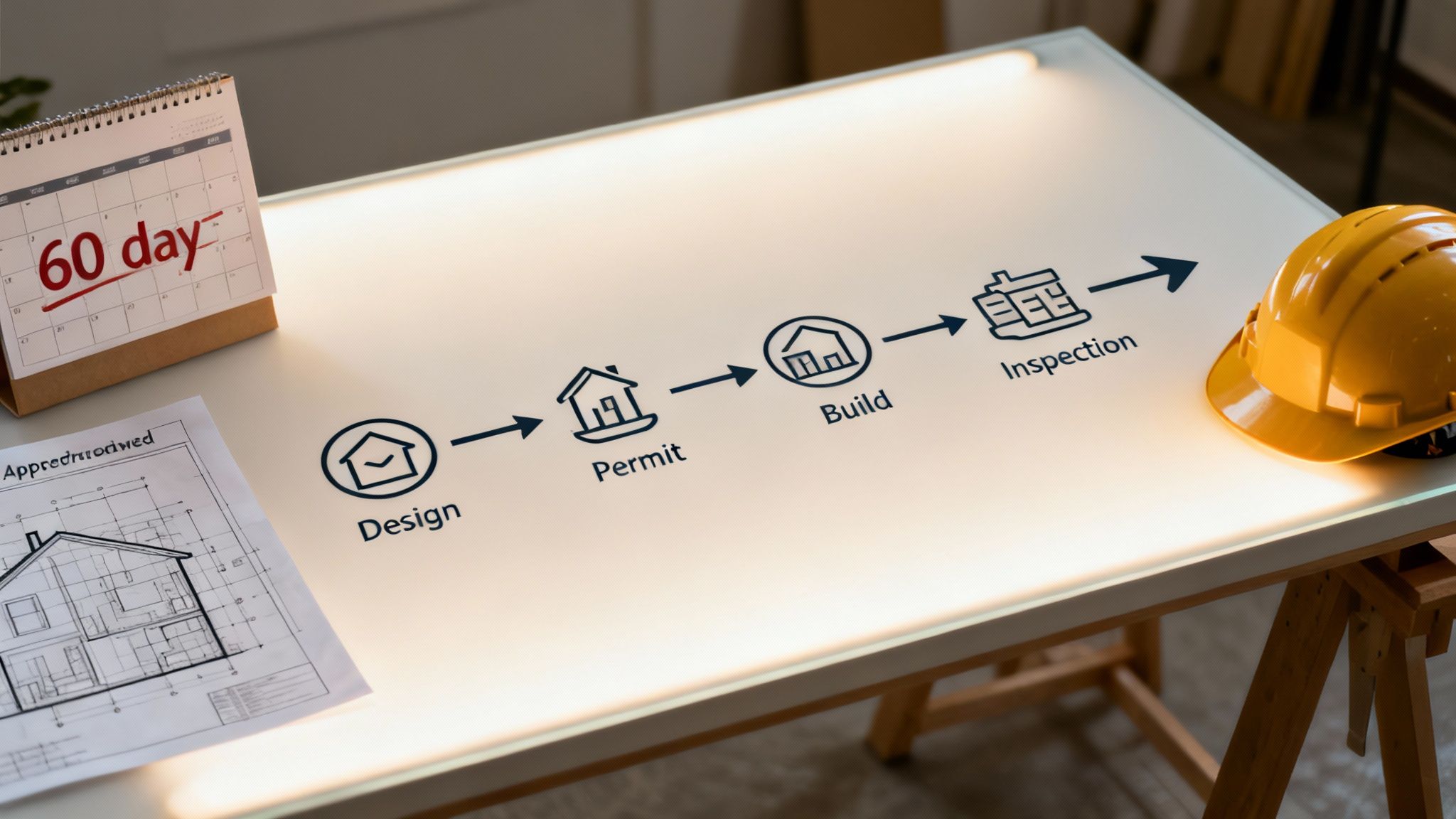
Understanding the 60-Day Permit Review Rule
California law helps homeowners. It says local governments must approve or deny an ADU permit application within 60 days of getting a complete one.
But the key words are "complete submittal." Any missing information or mistake on the plans will stop the clock. Your application will go to the back of the line.
Common Roadblocks That Cause Delays
An experienced local builder can see problems before they happen. Knowing the common issues is the first step to avoiding them.
Here are the most common causes of ADU project delays in Monterey County:
- Incomplete Permit Applications: A single missing form can cause your application to be rejected.
- Utility Coordination: Connecting new water, sewer, and electrical services can be complex and take a long time.
- Site Preparation Surprises: Finding unexpected issues like bad soil can stop the project. This homeowner's guide to precision digging explains safer ways to dig.
- Supply Chain Headaches: Delays in getting materials like custom windows can pause a project for weeks.
- Inspection Scheduling: Your builder must schedule inspections at key points. If they don't do it ahead of time, you can lose days just waiting.
How an Experienced Builder Keeps Your Project on Track
A local partner like Aldridge Construction helps you avoid these problems. We manage the whole process with careful planning.
We make sure your permit application is perfect the first time. We coordinate with utility companies early and order materials with long lead times. This careful planning keeps your project moving forward smoothly. For more details, see our article on how long it really takes to build an ADU in Monterey County.
Your Step-by-Step Guide to a Smooth ADU Build
An ADU project is easier with a clear roadmap. This guide walks you through the journey, from the first idea to the final inspection.
Understanding the truth about ADU permits, costs, and timelines in Monterey County means knowing the steps. Let's begin.
Step 1: Check Your Property and Set a Budget
First, confirm that your property can have an ADU. This means checking local zoning rules and your property lines.
An experienced builder can check your site's potential. Once you know you can build, set a realistic budget. This includes both hard costs (materials, labor) and soft costs (permits, fees).
Step 2: Choose Your Design Path
Next, decide between a custom ADU or a pre-approved plan. A custom design gives you total creative freedom.
A pre-approved plan can shorten the county's review time. The choice depends on your goals, timeline, and budget.
Step 3: Select the Right Local Contractor
Choosing your builder is a very important decision. You need a partner with experience in Monterey County.
Ask contractors about their recent ADU projects and check their references. A detailed, clear bid is also important. We have a guide on how to find the best affordable ADU builders in Salinas to help you.
Homeowners who work with a skilled local builder can avoid costly surprises and finish their projects months sooner. You can learn more from the County of Monterey's official ADU info page.
Step 4: Site Preparation and Permitting
Now it's time to prepare your property and submit your plans. Site preparation includes important steps like creating the foundation. These granny flat excavation footings can affect your timeline and budget.
Your contractor will handle the permit submission. Getting it right the first time helps you stay on track with the 60-day review period.
Step 5: Construction and Inspections
Once you have the permit, the building begins. Construction includes pouring the foundation, framing walls, and adding all the finishes.
County inspectors will visit at key stages to approve the work. A well-managed project moves smoothly from one inspection to the next.
Why a Local Pro is Your Best Bet
Building an ADU in Monterey, Santa Cruz, or San Benito County is a big investment. Success is about more than a pretty design. It's about having a partner who knows the local area.
Unpacking the truth about ADU permits, costs, and timelines in Monterey County requires real experience. That's what Aldridge Construction offers. We live and work here, so we understand the local building codes and permit processes.
Why Local Experience Matters Most
Online guides often miss key details, like rules for coastal zones or how to get utilities connected. These small details can cause big problems for your budget and timeline.
When you work with a team that has built ADUs here, you avoid those headaches. We know what to look for before issues arise.
If you want to build an ADU the right way, our team is here to help. We offer step-by-step support to turn your idea into a beautiful reality. Learn more about our custom ADU design-build services for Salinas.
Ready to get started? Contact Aldridge Construction today for a consultation.
Common Questions About Building an ADU in Monterey County
Here are answers to the most common questions we hear from homeowners in Monterey, Santa Cruz, and San Benito counties.
How long does it really take to get an ADU permit in Monterey County?
State law gives a 60-day window to review a complete application. But a custom design or a complex property, especially in the coastal zone, may take longer. If speed is your priority, using one of the county’s pre-approved plans is your best option. You can often get your permit in about two months.
Can I build an ADU if my property is in the coastal zone?
Yes, you can. But you will likely need a Coastal Administrative Permit in addition to your building permit. This means an extra review to make sure your project follows coastal protection rules. An experienced local builder like Aldridge Construction knows how to handle this process for you.
What are the biggest hidden costs when building an ADU?
The most common surprise costs are for utility connections (water, sewer, and electrical). Other hidden costs can include significant site work if you have a sloped lot or unexpected city or county impact fees. A good builder will assess your site thoroughly to find these potential costs early.
Do I have to use one of the county's pre-approved plans?
No. You can hire an architect to create a fully custom ADU that fits your needs. The main benefit of pre-approved plans is speed. They are designed to meet all codes, which makes the county's review process much faster and can save you money on design and permit fees.
How much value can an ADU add to my property?
An ADU is a great investment. In a housing market like Monterey County, a permitted ADU can significantly increase your property value. An ADU also creates a new source of rental income. This combination of added property value and rental income makes an ADU a smart financial choice.
Ready to stop guessing and start building? The team at Aldridge Construction has the local expertise to guide you through every step of the ADU process, from initial design to final inspection. Contact us today for a consultation and let's bring your vision to life. https://aldridgeconstruction.biz