
If you've driven around Salinas or Carmel lately, you might have noticed new, smaller homes popping up in backyards. You're not imagining things. The demand for Accessory Dwelling Units—or ADUs—is surging across Monterey County.
Homeowners are using these smart, flexible homes to tackle housing costs. These units can generate rental income, boost property value, or simply keep family members close.
Why Everyone Is Talking About ADUs in Monterey County
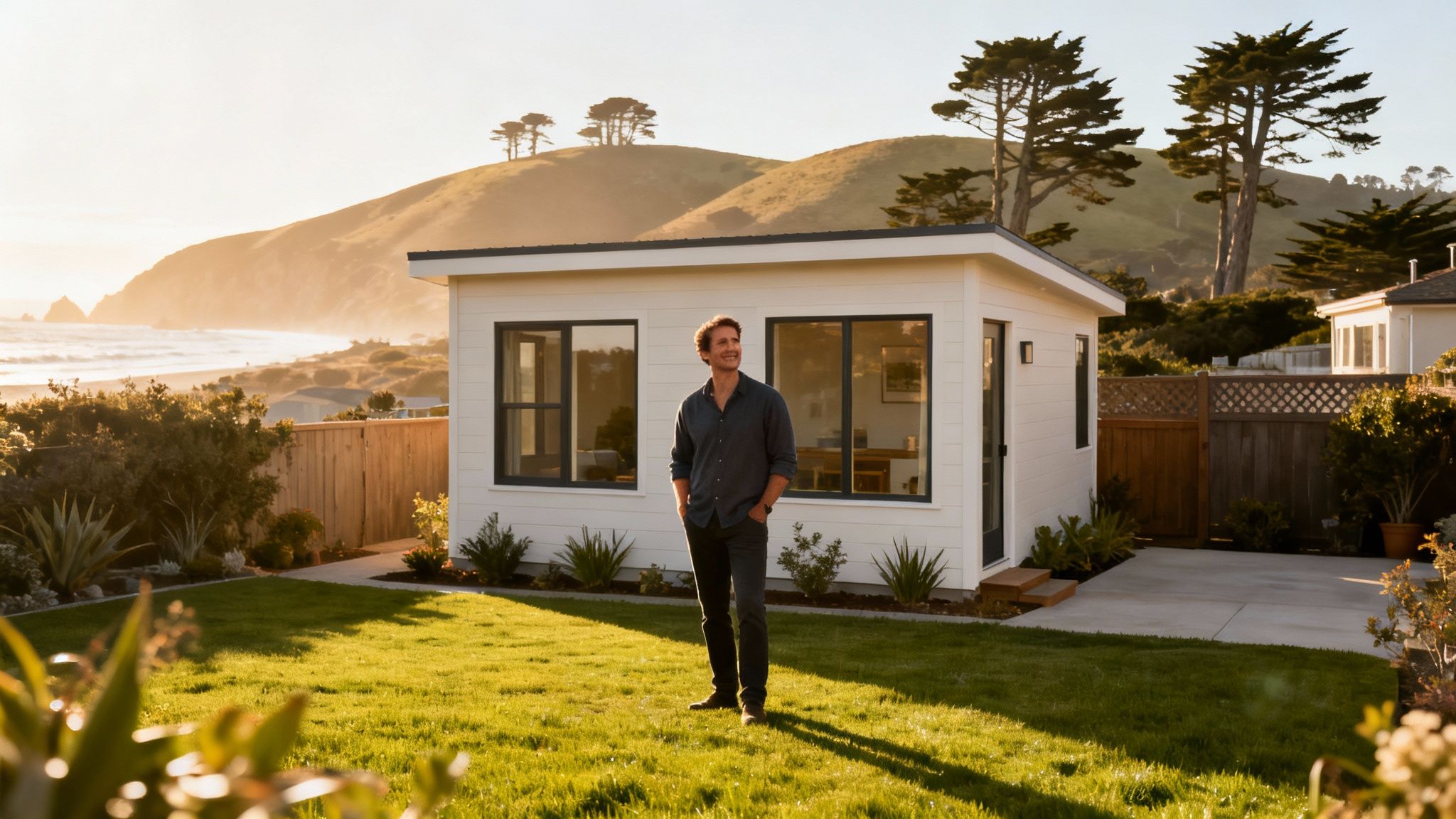
Living on the Central Coast is expensive. For many residents, ADUs are a practical way to offset those costs and improve their quality of life. An ADU isn't just an extra building; it's a smart financial move that can pay off for years.
This sharp rise in ADU interest is a direct response to our region's high housing costs and a desire for more versatile living spaces. Homeowners are quickly learning how much potential these compact homes hold. With high rents and limited housing, ADUs offer residents a way to generate income, support aging parents, or increase property value.
The Main Drivers Behind the ADU Boom
So, what's really fueling this local trend? A few key factors explain why so many of your neighbors are exploring this option. Here’s a quick rundown of what’s driving the ADU boom in our area.
- Generating Rental Income: A well-built ADU provides a steady stream of rental income to help offset mortgage payments.
- Supporting Family Members: ADUs are perfect for multigenerational living. They let aging parents or adult children live independently yet close by.
- Boosting Property Value: Adding a permitted, functional living space to your property significantly increases its market value.
- Creating Flexible Space: Many people use ADUs as home offices, art studios, or personal gyms.
The housing landscape in Monterey County is shifting, with a clear need for creative solutions. Projections show the county needs to build 854 new homes per year through 2028 to meet demand. [Source: Monterey County Housing Production Plan]
ADUs play a key role in meeting that demand. You can read more about the county's housing production forecasts to see how these units fit into the long-term plan. For homeowners in Monterey, Santa Cruz, and San Benito counties, an ADU is one of the most effective ways to adapt to the current housing market.
How an ADU Boosts Your Finances and Property Value
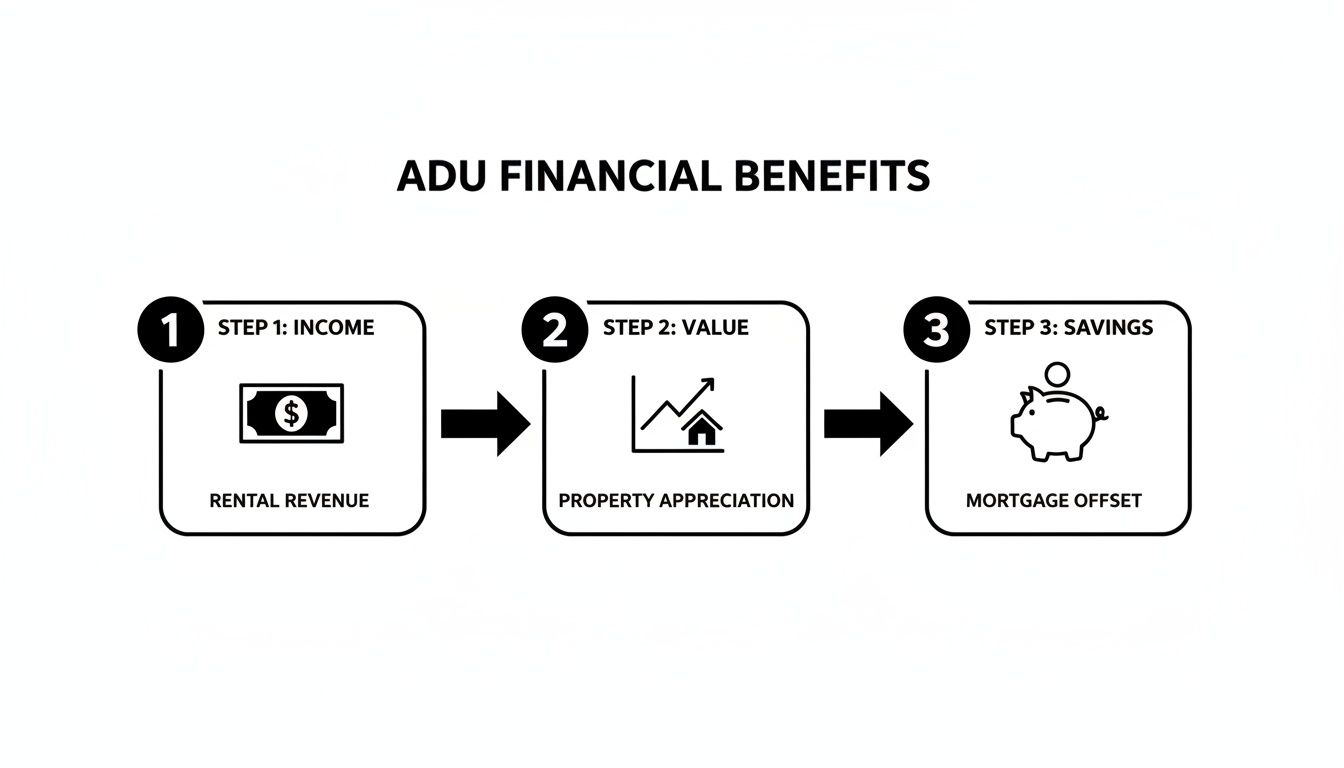
Building an ADU is one of the smartest financial moves a Monterey County homeowner can make right now. It is more than just adding space; an ADU delivers powerful returns on your investment. This project pays you back in multiple ways, from immediate cash flow to long-term equity.
Let's look at the three main ways a backyard home can improve your financial picture.
Generate Consistent Rental Income
The most immediate benefit is the ability to generate steady rental income. With high housing demand, rental rates in areas like Salinas and Monterey remain strong. A well-designed one-bedroom ADU can easily bring in enough monthly rent to cover its own construction loan.
This extra cash flow can help you:
- Pay down your mortgage faster.
- Fund other investments or save for retirement.
- Cover property taxes and maintenance costs.
If you are thinking about short-term rentals, understanding smart vacation rental pricing strategies to maximize revenue can increase the financial benefits even more.
Instantly Increase Your Property Value
When you build a permitted ADU, you add legal square footage to your property. This is one of the most direct ways to boost your home’s market value. Real estate experts often see a significant increase in a property's appraisal right after a well-built ADU is completed.
A strategically designed ADU can increase a property's value by an estimated 20-30%. This adds substantial equity and makes your home more attractive to future buyers, especially in a competitive market like the Central Coast. As ADU demand soars across Monterey County, properties with these units are becoming highly desirable.
Provide Smart Multigenerational Living Solutions
An ADU also offers a powerful financial benefit by helping you avoid other costs. Think about the high price of senior living facilities or the rent an adult child would have to pay. An ADU provides a cost-effective and dignified alternative.
By building a one-time asset, you can save thousands of dollars each year. This approach allows you to keep family close while giving them independence. It’s an investment in your family's well-being and your financial stability.
A Simple Guide to Monterey County ADU Rules and Permits
Let's be honest: the word "permits" can make any homeowner nervous. But when it comes to ADUs in Monterey County, the process has improved. State and local laws have been updated to encourage, not block, new ADU construction.
This is a huge win for property owners. California now requires local agencies to approve or deny ADU applications within 60 days. This rule has cut down the frustrating waiting times that used to stall projects.
Understanding Monterey County’s ADU Process
Getting your permit is a step-by-step journey. First, you'll submit your architectural plans to the local planning department. They'll check your design against zoning rules for size, height, and location on your lot.
Once planning gives the green light, the plans go to the building department for a final safety review. After that, you get a building permit. This is when the work begins with a trusted contractor like Aldridge Construction. A county inspector will visit at key stages—from the foundation to the electrical—to ensure everything is built to code.
A Huge Time-Saver: Pre-Approved Plans
Monterey County has a great program to make the permit process even faster: pre-approved ADU plans. These are architectural designs that the county’s building officials have already reviewed.
Using a pre-approved plan can easily shave weeks or even months off your project timeline. It reduces the back-and-forth with the planning department, letting you break ground sooner. Many homeowners don’t know they qualify for this faster approval track.
You can discover more insights about these housing initiatives on the county's website. Working with a local contractor who knows these plans is key to a smooth project.
Breaking Down ADU Construction Costs and Timelines
Before you build, you need to understand two things: what your ADU will cost and how long it will take. Every decision, from the design to the final paint, shapes your budget and schedule.
The journey starts with design and permits, followed by site preparation. The bulk of your budget will go toward construction and interior finishes.
Typical Cost Categories for an ADU
No two ADU projects are the same, but the expenses fall into similar buckets. A garage conversion in Salinas will cost less than a new two-story unit on a sloped lot.
Here’s a practical breakdown of what you should budget for:
- Design and Permitting: This covers fees for architects, engineers, and submitting your plans to the county.
- Site Preparation: Costs here can include grading the land, trenching for utilities (water, sewer, electric), and pouring the foundation.
- Core Construction: This includes all the lumber, framing, roofing, windows, and insulation.
- Finishes and Fixtures: This is where you personalize your space. Your choices for items like Quartz countertops, energy-efficient Milgard windows, cabinetry, flooring, and appliances will affect the final price.
As you plan, it's smart to look into effective strategies to reduce construction costs to make every dollar count.
Mapping Out a Realistic Project Timeline
Knowing what to expect week by week helps you manage the project without stress. In a county where median home prices hit $525,000 in 2022, the extra income from an ADU can be a game-changer. You can find more Monterey County housing data to see the strong local market trends.
Here is a simplified timeline for a typical ADU build in Monterey County.
Estimated ADU Project Timeline in Monterey County
| Project Phase | Estimated Duration |
|---|---|
| Phase 1: Design & Permitting | 2–4 Months |
| Phase 2: Site Prep & Foundation | 2–4 Weeks |
| Phase 3: Framing & Exterior | 3–6 Weeks |
| Phase 4: Interior & Finishes | 4–8 Weeks |
| Phase 5: Final Inspections | 1–2 Weeks |
This timeline is an estimate. Working with an experienced local contractor like Aldridge Construction is the best way to keep your project on track.
Why a Local Building Partner Is Your Greatest Asset
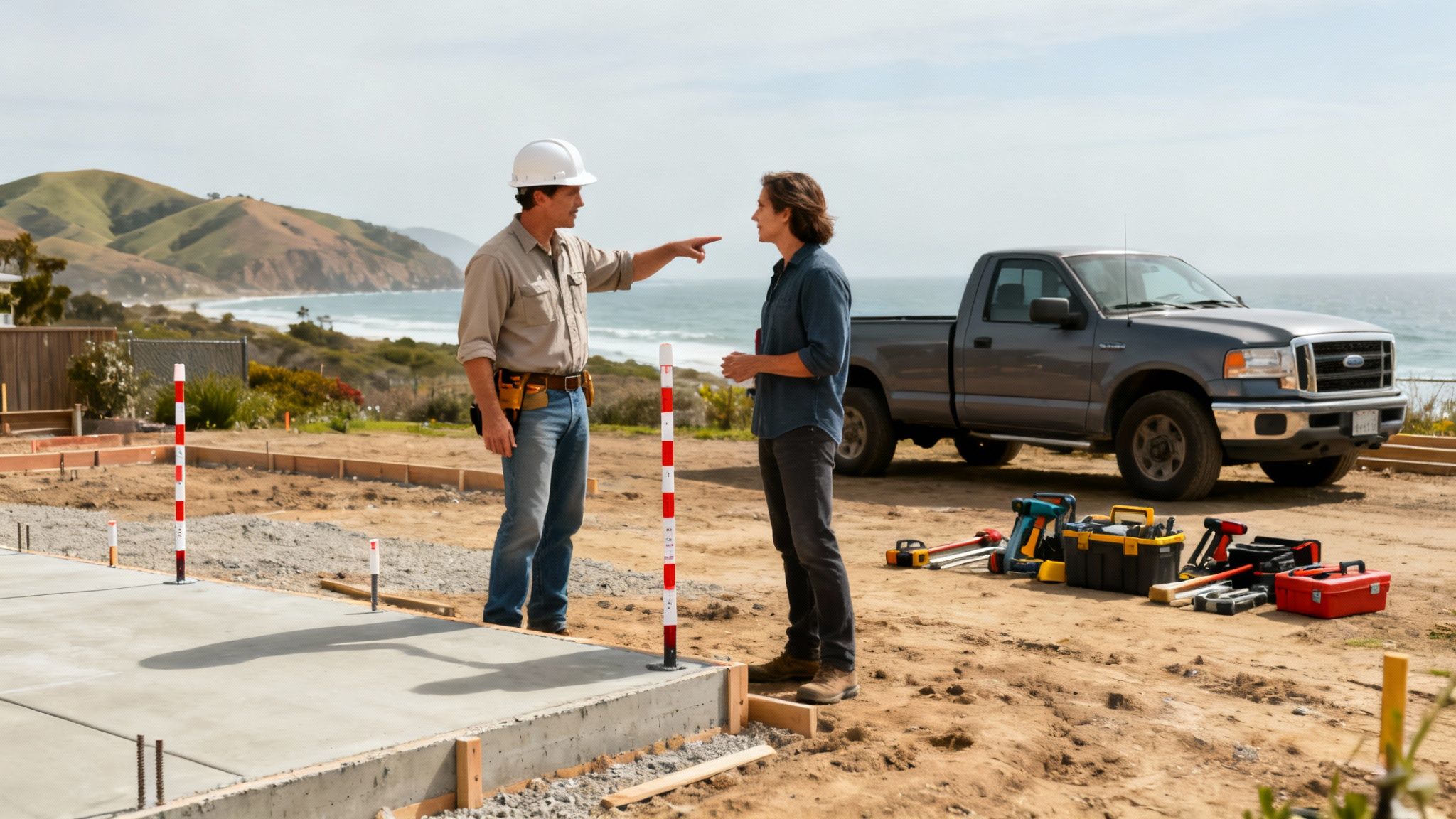
Building an ADU is about more than just construction. It’s about navigating local rules and challenges. A contractor with deep roots in Monterey, Santa Cruz, or San Benito counties is your most essential partner.
An experienced local builder understands the small but critical details. They know the differences between planning departments in Salinas versus Santa Cruz. That inside knowledge is priceless.
Navigating Local Nuances
Building on the Central Coast comes with its own set of rules. A local expert understands these specific requirements, saving you from costly mistakes and delays.
Here are a few areas where local expertise shines:
- California Title 24 Energy Codes: A local builder knows how to meet these strict energy standards for our coastal climate.
- Local Soil Conditions: A local team knows how to engineer the right foundation for your property, whether it has sandy or clay soil.
- Established Relationships: An experienced local builder like Aldridge Construction has built trust with city inspectors and suppliers. This means smoother inspections for you.
Your general contractor is your guide through a complicated process. Choosing a local expert is the best way to protect your investment. A professionally guided design can avoid costly delays.
Homeowners considering an ADU in 2025 should act now to secure build slots for the spring. It is important to consult local experts and choose designs that meet regional code.
To see how a team with local experience can help, get in touch with the experts at Aldridge Construction.
Frequently Asked Questions About Building an ADU
Here are answers to some common questions homeowners in Monterey County have about building an ADU.
1. How much value does an ADU add to my property?
A permitted ADU delivers a major return on investment. Most real estate experts agree that an ADU can boost a property's value by 20-30%. A legal rental unit is also a huge selling point for future buyers because it represents built-in income potential.
2. Is my yard too small for an ADU?
You might be surprised by how little space you need. California state laws now allow for smaller setbacks. In many cases, an ADU can be built as close as four feet from the side and rear property lines. Garage conversions are another great option that requires no new yard space. An expert can assess your lot's potential.
3. What are the best ways to finance an ADU project?
Homeowners have several good options for funding an ADU:
- Home Equity Line of Credit (HELOC): Lets you borrow against the equity in your home.
- Cash-Out Refinance: You replace your current mortgage with a new, larger one and use the extra cash for the project.
- Construction Loan: A short-term loan specifically for building costs.
It is always a good idea to talk with a loan officer who understands ADU projects to find the best option for you.
4. How long does it take to get ADU permits approved in Monterey County?
Thanks to new state laws, the process is much faster. Local agencies must respond to ADU applications within 60 days. The key to fast approval is submitting a perfect application. Using one of Monterey County's pre-approved plans or working with an experienced contractor can help you avoid delays.
5. Can I choose my own design and finishes for my ADU?
Yes, absolutely! You have full creative control. You can decide on every detail, from elegant Quartz countertops and energy-efficient Milgard windows to the flooring and paint colors. You can personalize the space to match your style or attract the perfect renter.
Planning an ADU in Monterey, Santa Cruz, or nearby? Contact Aldridge Construction to explore your best options with a team that knows the process—and the region—inside and out. Visit us online at https://aldridgeconstruction.biz to schedule your consultation.