
Living in Santa Cruz’s fire-prone zones means picking a home improvement contractor is about more than a good price or a nice design. It’s about making your home safer.
The right contractor needs proven experience in disaster restoration. They must understand local fire-hardening building codes and have hands-on expertise with specific fire-resistant materials. This ensures your home isn’t just repaired, but rebuilt to stand a fighting chance against the next wildfire.
Building for Resilience in Santa Cruz County
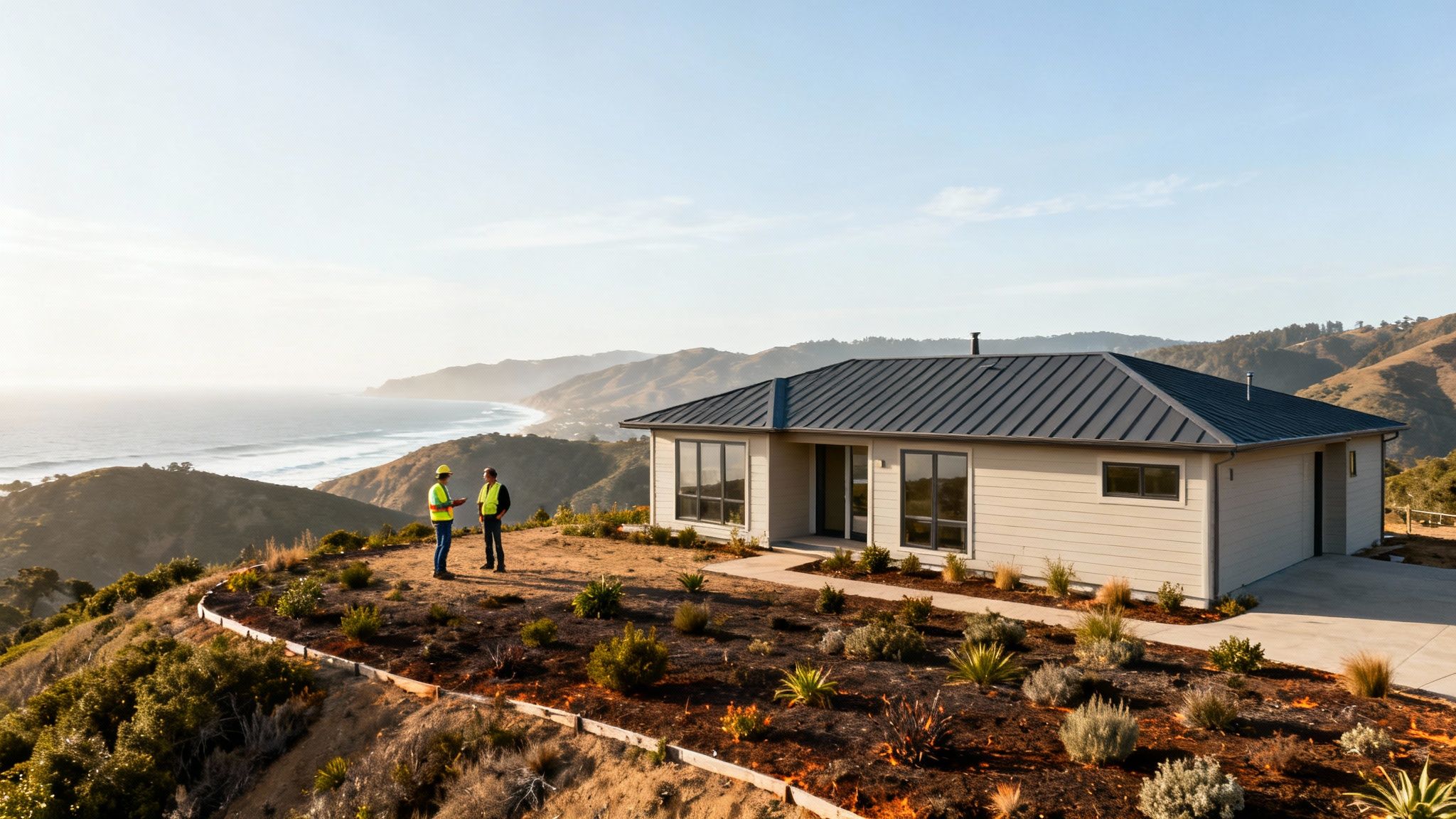
Residents of the Central Coast know that wildfire season isn’t a distant threat—it’s a yearly reality. From the Santa Cruz Mountains to Carmel Valley, fire zones and coastal storm risks shape how homes are built and rebuilt.
Many homeowners search for “contractors near me” without looking for expertise in fire-resistant construction. A general contractor may not understand the unique demands of building in a Wildland-Urban Interface (WUI) zone. These projects require a deep knowledge of how to defend a home against wind-driven embers and intense heat.
A Stark Reminder: The CZU Lightning Complex Fires
The need for this specialized expertise became clear in August 2020. The CZU Lightning Complex fires burned over 86,000 acres and became one of the most destructive wildfires in California's history.
The fire’s behavior in the Santa Cruz Mountains was shocking. According to post-fire analysis, 77% of the burned area experienced high-severity burns, far exceeding regional averages. This event changed the conversation about how we build and rebuild in Santa Cruz County.
Why Specialized Expertise is Essential
Building a fire-resilient home is about creating a complete defensive system. A contractor worth hiring understands how all the pieces fit together.
- Defensible Space: This is the first line of defense. It involves smart landscaping and proven vegetation management strategies to create a buffer that can slow a fire.
- Material Science: A knowledgeable builder will guide you toward specific, tested products. This includes materials like James Hardie fiber cement siding, ember-resistant vents, and dual-pane tempered glass windows.
- Code Compliance: Your contractor must be an expert in local ordinances and California's strict building codes. This knowledge prevents costly delays and ensures your project gets approved.
Aldridge Construction’s Disaster Restoration Services division was created to meet these challenges. Our focus is on rebuilding homes to be stronger and safer than before, using the latest fire-resistant construction methods.
Quick Contractor Checklist for Fire-Prone Zones
When you're interviewing potential contractors, it can be tough to know what to ask. This checklist helps you focus on the qualifications that matter for a fire-resilient build in Santa Cruz.
| Qualification | What to Look For | Why It Matters in Santa Cruz |
|---|---|---|
| WUI Zone Experience | Ask for a portfolio of projects completed specifically within local fire zones like Bonny Doon or Boulder Creek. | They'll know the unique terrain, microclimates, and fire behavior specific to our area. |
| Knowledge of Chapter 7A | They should speak fluently about California Building Code Chapter 7A requirements for materials and construction. | This is the state's playbook for fire-safe construction. Non-compliance means failed inspections. |
| Fire-Resistant Materials | Look for experience with fiber cement siding (like James Hardie), non-combustible decking, and ember-resistant vents. | The right materials are your home's armor. Proper installation is key for maximum protection. |
| Defensible Space Expertise | Can they advise on creating fire safety Zones 0, 1, and 2 around your home? | A fire-hardened home is only as good as the defensible space around it. This is a critical part of the system. |
| Local Permitting Success | Ask about their relationship with the Santa Cruz County Planning Department. Can they provide local references? | An experienced contractor knows the process and the people, saving you time and headaches. |
Use this table as your guide. A contractor who can confidently answer questions about these topics understands the responsibility of building in our beautiful but fire-prone landscape.
How to Vet a Contractor's Wildfire Expertise
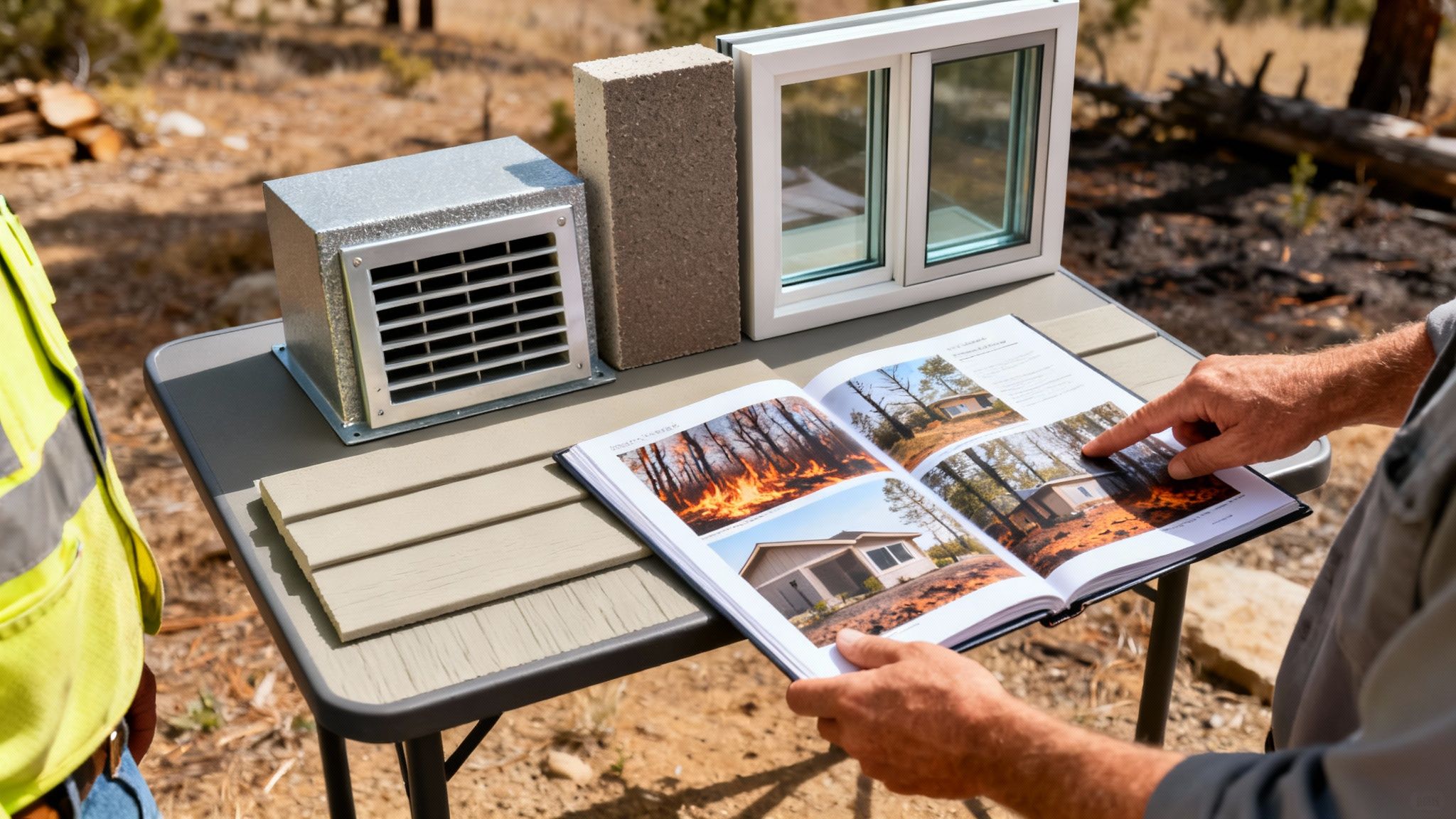
When you're choosing a home improvement contractor in Santa Cruz’s fire-prone zones, you are hiring a specialist. Not every licensed contractor has the hands-on experience needed to build a home that can stand up to a wildfire.
Your vetting process has to go beyond checking a license number or looking at photos of kitchen remodels. You need to dig deep into their direct experience with wildfire-resilient construction.
Asking the Right Questions During the Interview
Your first conversation with a potential contractor is your best chance to gauge their real-world knowledge. Come prepared with a list of specific questions. Vague answers are a huge red flag.
Here are the critical questions to ask:
- "Can you walk me through a specific project you completed in Santa Cruz County that required wildfire hardening?" Listen for details about the location, challenges, and the fire-safe solutions they used.
- "What fire-resistant materials, like James Hardie siding or ember-resistant vents, do you recommend and why?" An expert will explain why one material is better than another in certain situations, discussing installation and long-term performance.
- "How do you approach defensible space planning as part of a project?" Their answer should show they understand that a resilient home is a complete system. They should mention the critical "Zone 0" (the first five feet around the home), which must be free of combustible materials.
- "Describe your process for ensuring compliance with California Building Code Chapter 7A and local Santa Cruz County fire ordinances." This tests their technical knowledge. They should be able to speak confidently about local codes.
While wildfire expertise is key, don't forget the fundamentals. Exploring these tips on how to find the right roofing contractor can round out your checklist.
Scrutinizing Their Portfolio for Fire-Safe Evidence
A portfolio is more than just a collection of pretty pictures; it’s hard evidence. When you review a contractor’s past work, look for details that prove their understanding of fire-resistant building.
Analyze their photos for these key features:
- Exterior Wall Cladding: Can you spot non-combustible siding like fiber cement or stucco?
- Eaves and Vents: Are the eaves "boxed-in" to stop embers? Can you see fine mesh screens covering attic and foundation vents? These small details are often the most critical.
- Decks and Attachments: Are their decks made from non-combustible materials like composite decking?
- Window and Door Specifications: You'll have to ask about this. They should confirm they installed dual-pane tempered glass, which is more resistant to heat.
A contractor's portfolio should tell a story of resilience. If that story is only about aesthetics, they may not have the expertise you need. True wildfire specialists, like the team at https://aldridgeconstruction.biz/, proudly showcase the safety features that make their projects durable and defensible.
By combining sharp questions with a critical eye on their past work, you can find a contractor who is equipped to build a safer home in Santa Cruz.
Navigating Local Building Codes and Permitting
Understanding the maze of local building codes and permits in Santa Cruz County can feel overwhelming. These rules are especially tight for those of us living in high-risk fire zones.
A contractor who is not familiar with these local requirements can bring your project to a halt. We’ve seen it happen. They submit the wrong plans, miss a critical fire-safety ordinance, or fail inspections, leading to frustrating delays.
These regulations are strict for a reason. The 2020 fire season was a brutal reminder, with nearly 9,900 fires burning 4.3 million acres across California Frontline Wildfire. This tragic past has forced local governments to enforce tougher building standards.
Key Regulations You Need to Know
When choosing a contractor in a fire-prone area, their knowledge of local codes is everything. They need to be experts in a few key areas to keep your project on track.
- California Building Code (CBC) Chapter 7A: This is the statewide code for materials and construction methods in the Wildland-Urban Interface (WUI). It dictates everything from the type of siding to the screening required for vents.
- California Title 24: These are California's energy efficiency standards. Any new construction or major remodel must comply.
- Santa Cruz County Ordinances: Santa Cruz has its own specific ordinances for building in high-fire-hazard areas. These can include requirements for fire truck access and specific defensible space clearances.
A contractor with a proven track record in Santa Cruz, Monterey, or San Benito Counties will have solid relationships with local building departments. This means they know the process and what inspectors look for.
Why a Local Pro Is a Game Changer
An experienced local contractor does more than just build. They act as your professional guide through all the pre-construction steps. They handle plans, reports, and permit applications on your behalf.
Choosing a contractor who knows the local permitting landscape is like hiring a skilled navigator. They anticipate challenges, prepare the right documents, and keep the project moving forward.
This expertise is priceless. At Aldridge Construction, our experience in Monterey, Santa Cruz, and San Benito Counties translates into a smoother, faster project timeline for our clients.
Must-Have Fire-Resistant Materials and Techniques
When you're choosing a home improvement contractor in Santa Cruz’s fire-prone zones, you need a builder who can explain the what and the why behind their material choices.
The CZU Lightning Complex fires were a harsh lesson. The fires destroyed 1,490 structures. Post-fire analysis was clear: homes built with modern, fire-resistant materials and techniques had a much higher survival rate. You can learn more about the history and impact of these events and how they've shaped our building standards.
Your Home’s First Line of Defense: Siding
Think of siding as your home's armor. While traditional wood siding is common, it’s also highly combustible. An experienced contractor will guide you toward non-combustible alternatives.
- Fiber Cement Siding: Products like James Hardie siding are a top choice. Made from cement, sand, and cellulose fibers, this material will not ignite when exposed to a direct flame.
- Stucco: A classic and effective fire-resistant option, stucco creates a seamless, non-combustible barrier.
Hardening the Most Vulnerable Entry Points
Embers are the primary cause of home ignition during a wildfire. These tiny, wind-driven firebrands can travel a mile or more, looking for small openings to get inside.
A knowledgeable contractor will be obsessed with sealing these weak points:
- Vents: All attic, gable, and foundation vents must be covered with 1/8-inch metal mesh screening to block embers. Upgrading to specialized, WUI-rated "ember-resistant" vents is even better.
- Windows: Single-pane windows are a major liability. The standard for fire-zone construction is dual-pane windows with tempered glass on at least one pane.
- Roofing: Your roof is the most vulnerable surface. Class A fire-rated materials are essential. Good options include metal roofing, clay or concrete tiles, and high-quality asphalt shingles.
A contractor's local expertise can greatly affect project timelines in a fire zone.
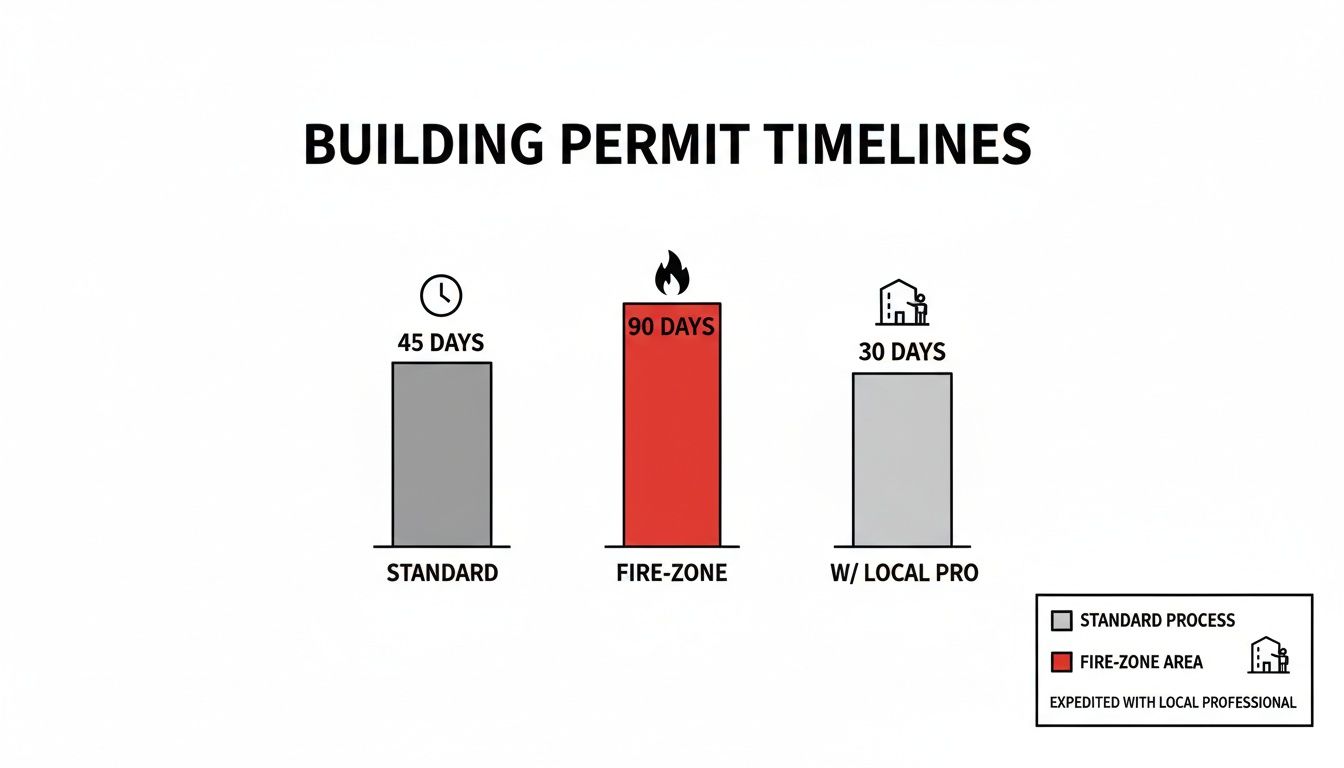
The data shows that while fire-zone projects take longer, a contractor with local expertise can significantly shorten that timeline.
Comparing Fire-Resistant Building Materials
| Component | Good (Standard) | Better (Fire-Resistant) | Best (Maximum Protection) |
|---|---|---|---|
| Roofing | Class A Asphalt Shingles | Concrete or Clay Tiles | Standing Seam Metal Roof |
| Siding | Treated Wood Siding | Fiber Cement Siding (e.g., Hardie) | 3-Coat Stucco or Stone Veneer |
| Windows | Dual-Pane (Annealed Glass) | Dual-Pane (One Pane Tempered) | Dual-Pane (Both Panes Tempered) |
| Vents | 1/4" Metal Mesh Screen | 1/8" Metal Mesh Screen | WUI-Rated Ember-Resistant Vents |
| Decking | Fire-Retardant Treated Wood | Composite Decking (WUI Rated) | Concrete Patio or Pavers |
This comparison shows that "fire-resistant" is a series of deliberate upgrades across your home's exterior.
Beyond the House Itself
A fire-resilient property extends beyond the four walls of your house. Your contractor needs a plan for attached structures and the immediate surroundings.
An often-overlooked detail is the deck. A wooden deck attached to your house acts like a fuse, providing a direct path for fire to reach your exterior walls.
Using non-combustible decking materials is a critical part of a holistic defense strategy. This conversation, along with a plan for creating defensible space, is one you must have with your contractor.
Understanding Contracts, Insurance, and Project Costs
The paperwork side of a home improvement project is just as important as the physical construction. This is where you protect your investment. Before you sign anything, you need to understand the contractor's credentials, the contract details, and how costs are structured.
First, you must verify the contractor's credentials. Any professional you hire must be licensed by the California State License Board (CSLB), bonded, and carry the right insurance.
Key Insurance Policies to Verify
Don't just take a contractor's word for it—ask for proof. Request to see their certificates of insurance. Two policies are vital for your protection.
- General Liability Insurance: This covers property damage or injuries that might happen on your property.
- Workers' Compensation Insurance: This is critical. It covers the contractor’s crew if they get hurt on your job site.
Getting copies of these documents ensures you're partnering with a legitimate business, shielding you from financial risk.
Decoding the Construction Contract
A well-written contract is the roadmap for your project. It needs to be detailed and clear.
The Scope of Work should be incredibly specific. It should name the exact materials being used. For instance, instead of "install fire-resistant siding," a good contract specifies "install James Hardie fiber cement siding."
Next, look at the Payment Schedule. A huge red flag is a contractor asking for a massive upfront payment. California law limits down payments to 10% of the total contract price or $1,000, whichever is less. Payments should be tied to project milestones.
Finally, make sure the contract includes a clear timeline. It should also outline the process for handling change orders.
A transparent, detailed contract is the hallmark of a true professional. If the scope of work feels vague, ask more questions—or walk away.
Why a Specialist's Bid Might Seem Higher
Quotes from wildfire specialists are often higher than those from general contractors. It’s important to see this as an investment in safety, not just an added cost.
A specialized bid is higher for a few good reasons:
- Superior Materials: Products like James Hardie siding and dual-pane tempered glass windows cost more than standard materials.
- Specialized Labor: Installing these materials correctly takes specific training and expertise.
- Comprehensive Planning: A fire-resilience expert puts more time into the planning phase to ensure every detail is right.
This upfront investment provides peace of mind. It may also lead to lower homeowners insurance premiums and a higher property value. Most importantly, it gives your home the best possible chance of survival.
Spotting Red Flags Before You Sign
Choosing the right contractor is as much about knowing who to avoid as it is about finding the right fit. Learning to recognize warning signs can save you from costly mistakes and project delays.
A trustworthy contractor inspires confidence. A questionable one creates pressure and uncertainty. A true professional who is confident in their work will never use high-pressure tactics or ask for sketchy payments.
Common Contractor Warning Signs
Keep your eyes peeled for these common tells. If any of these pop up, it’s a signal to reconsider before you sign.
- Intense Pressure to Sign Immediately: A contractor who pushes you to sign a contract on the spot is a major red flag. A reputable builder will give you time to review the contract and compare bids.
- Requests for Large Upfront Payments: California law is clear: a down payment cannot exceed 10% of the total contract price or $1,000, whichever is less.
- Inability to Provide Local References: A contractor with a solid reputation in Santa Cruz County should have a list of happy local clients. If they can't provide recent, local references, it's a huge warning sign.
Community trust is earned. Local homeowners on platforms like Nextdoor often ask, "Has anyone used a contractor who really understands wildfire hardening?" A contractor not mentioned positively may not have the community's trust.
Making a Confident Final Choice
Once you’ve vetted their expertise and haven't seen any red flags, your last check is their reputation. Read online reviews on platforms like Google. Look for consistent themes in the feedback—do clients mention good communication and high-quality work?
Choosing a home improvement contractor in Santa Cruz's fire-prone zones is a critical decision. Aldridge Construction is committed to building smarter, safer homes across Monterey, Santa Cruz, and San Benito counties by combining expert craftsmanship with a deep understanding of local fire-resilience needs.
FAQs: Choosing a Contractor in Fire-Prone Zones
Here are answers to some common questions homeowners ask.
1. How much more does it cost to build a fire-resistant home in Santa Cruz?
Building with fire-resistant materials can add about 5% to 10% to the initial construction cost. This upfront cost is an investment. You may see savings on your homeowners insurance premiums, and a fire-hardened home has a higher resale value.
2. Will my homeowners insurance cover upgrades to fire-resistant materials?
It depends on your policy. Most standard policies cover "like with like" replacements. However, some policies now include coverage for mandatory code upgrades in high-risk zones. Talk to your insurance agent and a contractor who specializes in disaster restoration.
3. What’s the single most important feature for wildfire home protection?
The number one priority is stopping embers from getting inside your house. This requires a system approach:
- Vents: Use fine metal mesh screening (1/8-inch) on all vents.
- Walls: Use non-combustible siding like fiber cement or stucco.
- Windows: Install dual-pane tempered glass windows.
An effective strategy addresses the whole building envelope—the roof, walls, windows, and defensible space.
4. How can I verify a contractor's experience with fire-hardening?
Ask for proof. A contractor with real-world experience will be happy to show you their work. Ask for a portfolio of projects in high-risk areas like the Santa Cruz Mountains. Then, ask for at least three local references from past clients whose homes involved fire-resistant construction.
5. Are there any local rebates for wildfire-resistant home improvements?
Sometimes, yes. Various local and state programs may offer grants or rebates for wildfire mitigation work. These programs can change from year to year. An experienced local contractor will be in the loop on current programs available in Santa Cruz County and can help you identify potential savings.
Ready to build a safer, more resilient home? The team at Aldridge Construction has the local expertise and disaster restoration experience to protect your investment in Monterey, Santa Cruz, and San Benito counties. Contact us today for a consultation.