
Designing a home that works for everyone, from grandkids to grandparents, is about creating flexible, accessible spaces. It means finding the right balance between privacy and shared living.
This could mean weaving universal design principles into your existing layout or building a separate Accessory Dwelling Unit (ADU). The goal is to comfortably fit everyone under one roof.
Why Multi-Generational Living Is the New Normal
More families in communities like Monterey, Santa Cruz, and San Benito Counties are choosing to live together. This isn’t just a trend—it's a practical answer to the challenges of modern life. For many, designing for generations is a smart investment in their family's well-being.
This shift comes from high housing costs and a simple desire to be closer. Bringing everyone together offers a powerful solution to support aging parents and give adult children a stable start.
The Financial and Emotional Drivers
When families live together, they can pool resources on mortgages, rent, and utility bills. This frees up money for other goals, like saving for retirement or college.
The data backs this up. A recent study found that 36% of homeowners are thinking about a remodel or an ADU to make room for family. Even more telling, 58% of them want to add accessibility features to support aging parents.
But it goes beyond the numbers. The emotional benefits are huge.
- Support for Seniors: Grandparents can stay in a familiar, loving home, which helps fight loneliness.
- Childcare Help: Having grandparents nearby provides trustworthy childcare, saving families thousands.
- Stronger Family Bonds: Being around each other every day builds deeper connections across generations.
"When families come to us, they’re looking for more than extra space. They want a way to live together comfortably without giving up privacy, independence, or their lifestyle."
Adapting Your Home for a New Reality
Making a home work for everyone takes thoughtful planning. It’s about creating spaces that are both beautiful and functional. This is where an expert construction partner makes a difference.
At Aldridge Construction, we specialize in helping families in Monterey, Santa Cruz, and San Benito counties adapt their homes for this new chapter. Whether it's building an ADU or converting a den into an accessible in-law suite, we focus on practical, long-term solutions.
Designing for dignity and function is a priority. Simple changes can dramatically improve quality of life for older adults while still looking beautiful. Think about:
- Wider Doorways: A 36-inch doorway is essential for a walker or wheelchair and makes the home feel more open.
- No-Step Entries: Removing a front step makes a home accessible for everyone, from strollers to wheelchairs.
- Flexible Layouts: A room that’s a home office today can easily become a ground-floor bedroom tomorrow.
With new California laws passed in 2025 to streamline ADU approvals, it's a great time to invest in a multi-generational home. Aldridge Construction knows the permitting process in local counties, helping homeowners move from idea to approved plan faster.
Planning Your Multi-Generational Home Remodel
A successful project begins with thoughtful planning. This is the foundation of designing for generations, making sure your remodeled home supports everyone’s needs for both privacy and togetherness.
The first step is a practical assessment of your current layout. Many homes have underused spaces waiting to be transformed. Could that den become a ground-floor bedroom? Can the garage be converted into an independent living space?
This process is about understanding how your family will actually live in the home. Finding the sweet spot between private retreats and functional shared areas creates long-term harmony.
This infographic breaks down the main reasons families are creating multi-generational homes.
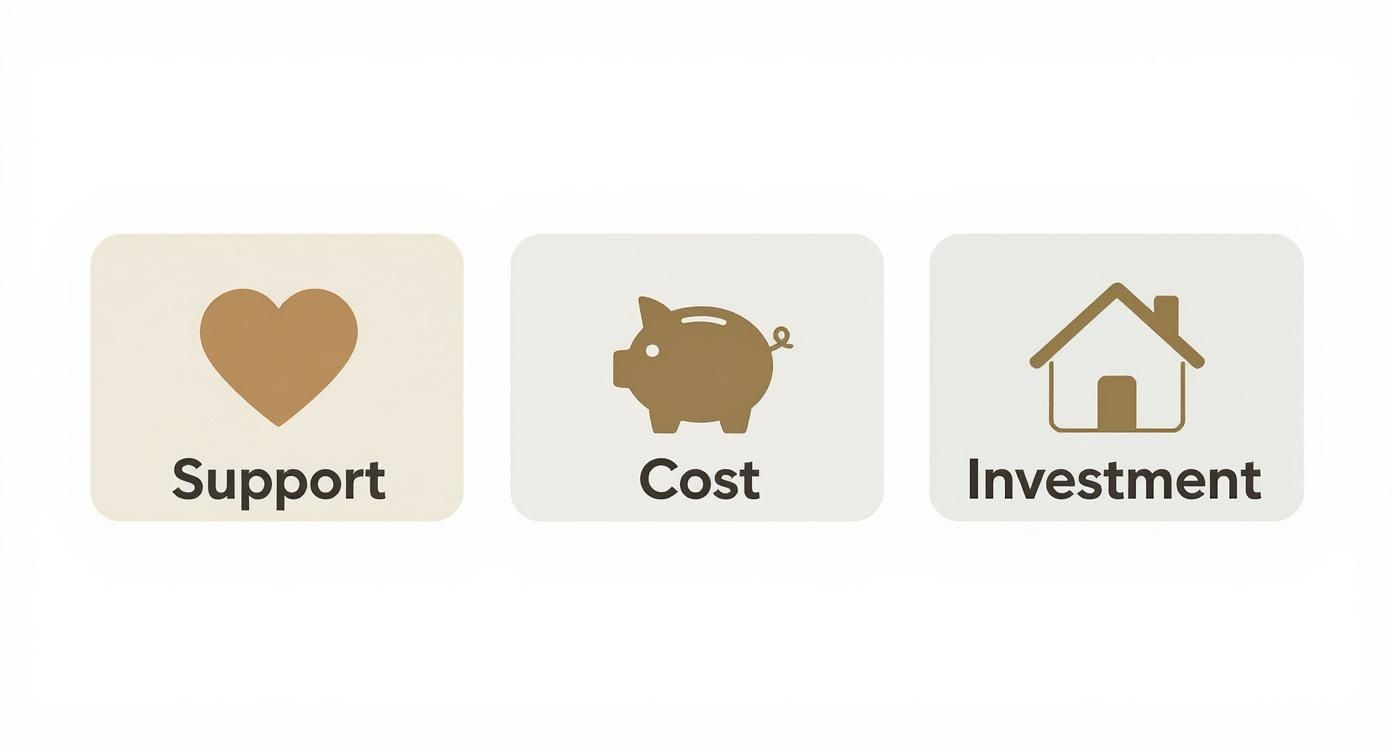
As you can see, while cost savings are a huge factor, emotional support and family well-being are just as powerful.
Starting the Conversation with Your Family
Bringing everyone to the table for an open discussion is essential. This conversation helps set clear expectations and ensures the final design reflects a collective vision.
Here are a few questions to get the ball rolling:
- Daily Routines: Who are the early risers? Who needs a quiet space? Mapping out a typical day reveals potential conflicts and opportunities.
- Privacy vs. Togetherness: How much independent space does each person need? A separate entrance, private bathroom, or small kitchenette can make a huge difference.
- Accessibility Needs: What current or future mobility challenges should we plan for now? This is the time to discuss features like no-step entries and bathroom safety.
- Shared Responsibilities: How will household duties be shared? The design of common areas like the kitchen and laundry room should support these arrangements.
A great multi-generational design anticipates needs before they arise. Thinking about how a space can adapt over the next five to twenty years is key to a future-proof home.
Assessing Your Home for Potential
With your family’s input, you can evaluate your home’s structure with a clear vision. In areas like San Benito County or Maricopa County, AZ, a garage conversion can be a cost-effective way to add a self-contained living unit.
In Monterey or Santa Cruz, where properties may have more land, a detached ADU could be the ideal solution. As you plan, it's crucial to consider essential accessible home renovations to ensure safety and comfort for everyone.
This table outlines key design considerations you'll be balancing.
Key Design Considerations for a Multi-Generational Home
| Design Area | For Aging Parents (Accessibility & Comfort) | For Growing Families (Flexibility & Durability) |
|---|---|---|
| Entrances & Hallways | No-step entry, 36-inch wide doorways, lever-style door handles, good lighting. | Durable flooring that can handle high traffic, easy-to-clean wall paint. |
| Bathrooms | Walk-in or curbless shower, grab bars, comfort-height toilet, non-slip flooring. | Bathtub for kids, ample storage for everyone’s toiletries, dual vanities. |
| Kitchens | Lowered countertops, pull-out shelving, easy-to-reach appliances. | Open-concept layout for supervision, scratch-resistant Quartz countertops, large pantry. |
| Living Spaces | Ground-floor bedroom option, comfortable seating, minimal clutter for easy navigation. | Multi-functional rooms (e.g., playroom/office), built-in storage, durable furniture. |
| Privacy Zones | Separate sitting area or kitchenette, soundproofing between living areas. | Separate entrance for an in-law suite or ADU, distinct zones for work and play. |
Budgeting for a Successful Remodel
Finally, a realistic budget is critical. The cost of a remodel can vary widely based on the scope of work, material choices, and local labor costs. A den-to-bedroom conversion will have a very different price tag than a full ADU build.
At Aldridge Construction, we help you explore options that align with your budget. We provide clear cost breakdowns and suggest durable materials, helping you create a home that truly works for every generation.
Essential Design Features For Aging In Place
When you start designing for generations, the goal isn't to make your home look like a hospital. It’s about making smart choices that improve daily life for everyone. These features blend seamlessly into your home’s style.
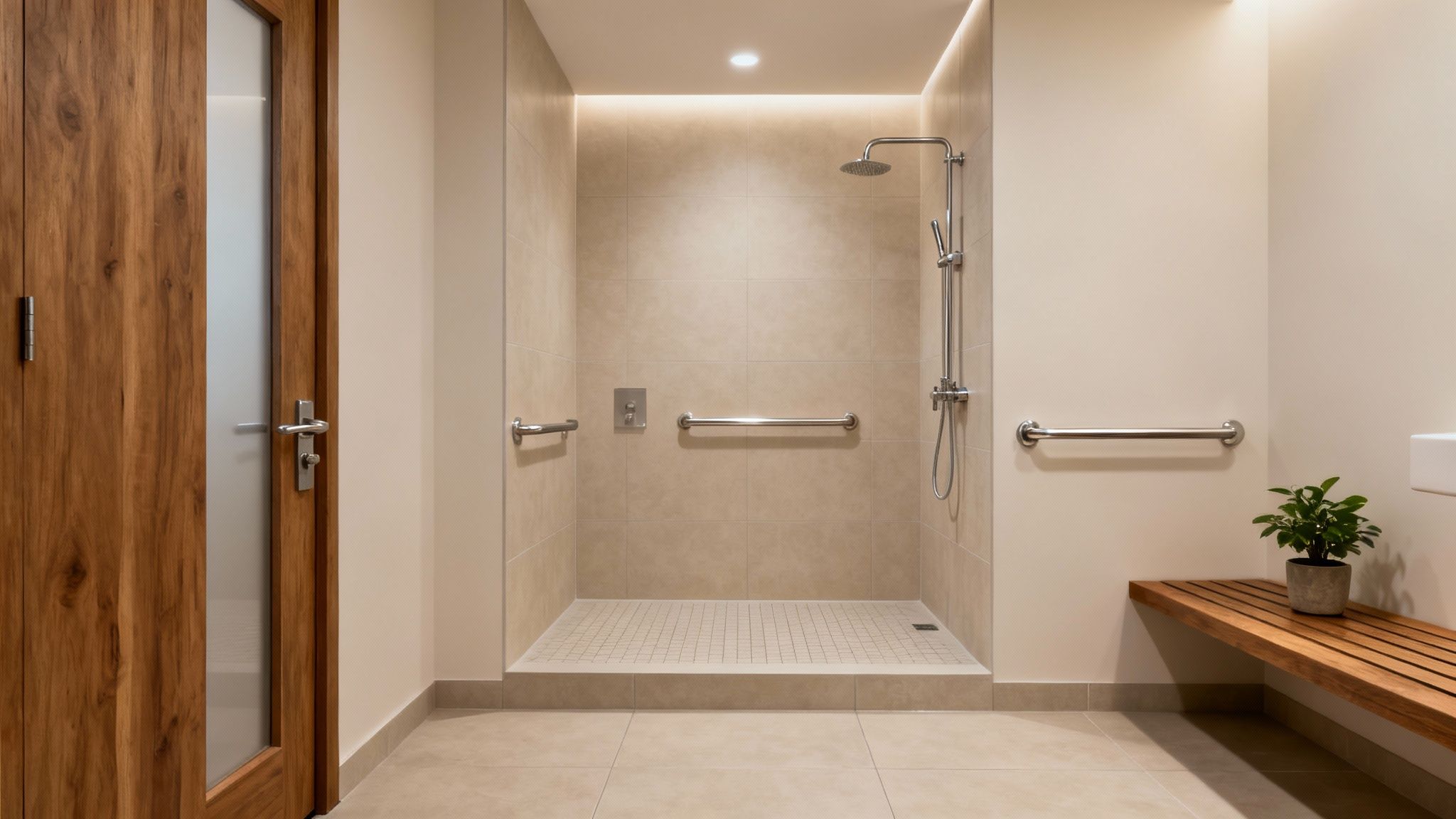
This kind of design is more important than ever. A huge majority—75% of American adults aged 50 and older—want to stay in their homes as they age [AARP, 2021]. The reality is that fewer than 5% of U.S. homes can handle even moderate mobility challenges.
Start With Seamless Entries and Passageways
The journey through a home should be effortless. This starts at the front door with a no-step entry. Getting rid of even a single step removes a major barrier and makes life simpler.
Inside, wider doorways are a cornerstone of any accessible design.
- The Old Standard: Most older homes have doorways that are just 28 to 32 inches wide, which is a challenge for a wheelchair.
- The Universal Standard: We recommend widening key doorways to at least 36 inches. This guarantees easy passage and gives the home a more open, spacious feel.
Rethink The Bathroom For Safety And Style
The bathroom is the most critical space to get right when designing for aging in place. Smart design can drastically cut the risk of falls while adding modern luxury.
One of the best investments is a curbless or zero-threshold shower. Removing that small curb creates a seamless transition, eliminating a common trip hazard. Pair it with a beautiful non-slip floor, like textured porcelain tile, for a safe and stylish look.
An accessible bathroom doesn't have to feel clinical. With elegant grab bars that double as towel racks or a built-in shower bench made from quartz, safety becomes a natural part of a spa-like design.
Other features we often integrate include:
- Integrated Grab Bars: Today’s options are sleek, coming in finishes like matte black or brushed gold.
- Comfort-Height Toilets: These are a few inches taller, making it easier to sit and stand.
- Handheld Showerheads: A showerhead on a sliding bar offers flexibility for anyone who is seated.
For more specific guidance, resources on adapting bathrooms for wheelchair accessibility can be helpful.
Focus On The Finer Details
Sometimes, the smallest changes have the biggest impact. Simple upgrades to fixtures and lighting can make a world of difference.
Swapping out round doorknobs for lever-style handles is a simple fix. Levers are easier to open for someone with arthritis. The same goes for faucets—levers are much more user-friendly than knobs.
Finally, never underestimate good lighting. As we age, our eyes need more light.
- Task Lighting: Add under-cabinet lighting in the kitchen and focused lighting over bathroom vanities.
- Ambient Lighting: Make sure hallways, stairways, and living areas are well-lit to prevent trips.
- Rocker Switches: These large, flat light switches are much easier to operate.
By weaving these features into your design, Aldridge Construction helps families create spaces that are more comfortable and enjoyable for everyone.
Creating Independence with ADUs and In-Law Suites
The secret to successful multi-generational living is often carving out enough privacy to maintain everyone's independence. Accessory Dwelling Units (ADUs) and in-law suites are game-changers.
They strike the perfect balance, keeping loved ones close while giving them a space that is genuinely their own. The goal is dignity and personal space.
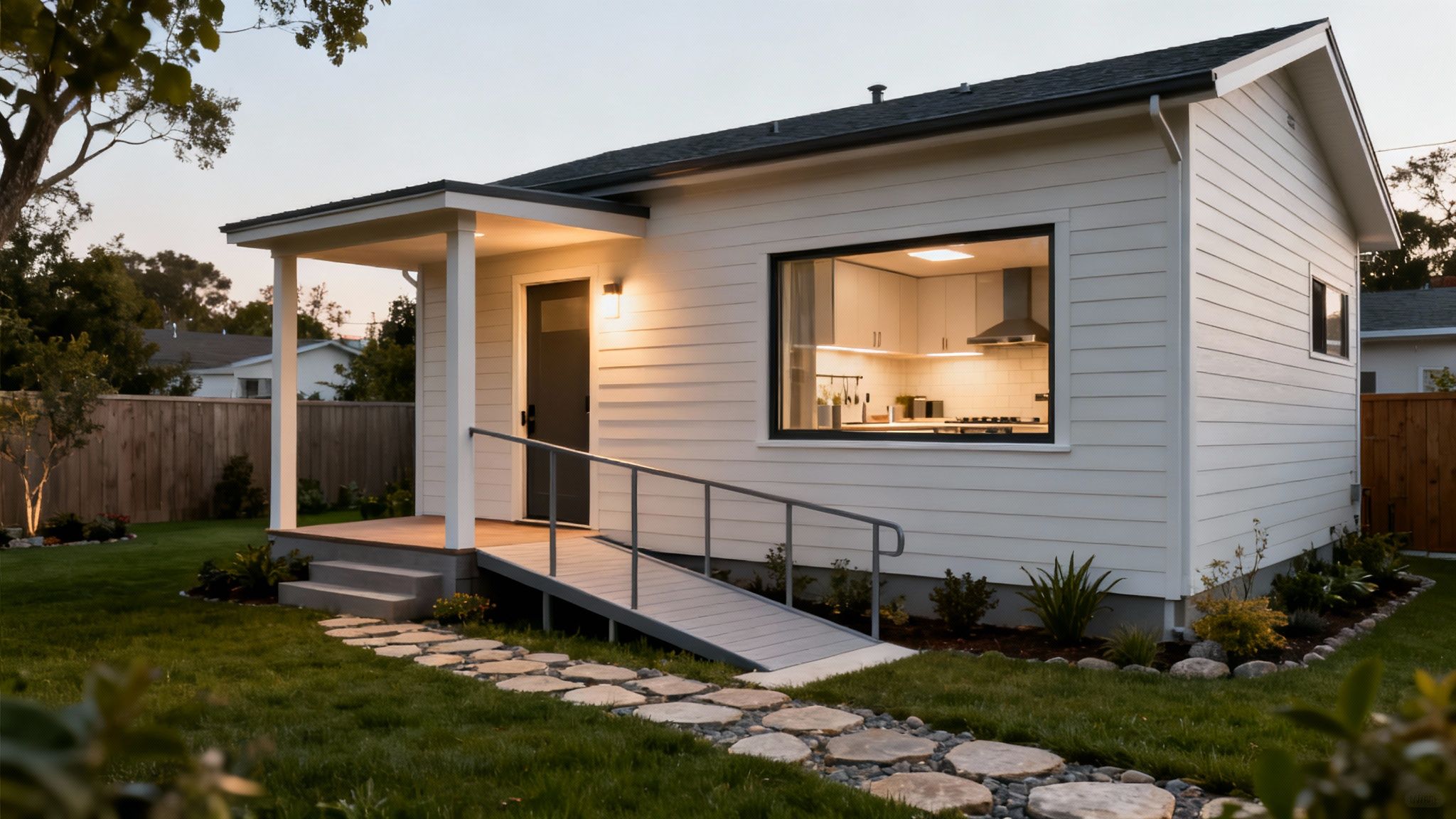
The Benefits of a Separate Space
Building an ADU or in-law suite is an investment in family harmony. For aging parents, it means they can live on their own terms. For young adults, it offers a stepping stone toward financial freedom.
These dedicated spaces empower residents with control over their daily lives. They can cook, have friends over, and come and go as they please. This separation is key to preventing friction.
Practical Layouts for Comfort and Function
The design of an ADU or in-law suite has to be tailored to the person who will live there. Some of the most popular and practical options include:
- Studio-Style Units: An open-concept layout is perfect for one person. A well-equipped kitchenette provides everything needed for simple meal prep.
- One-Bedroom Layouts: A separate bedroom creates a living area that feels more like a small apartment. This is great for couples or for hosting visitors.
- Private Entrances: A separate, accessible entrance is non-negotiable. It is the most important feature for reinforcing independence.
"A well-designed ADU isn't just a small house. It's a thoughtfully planned home that prioritizes accessibility, privacy, and comfort, making it a sustainable solution for long-term family care."
Navigating Local Laws and Permitting
Building an ADU in California involves a specific set of rules. The good news is that recent state laws make the process easier. With over two-thirds of Californians supporting neighbor-built ADUs, the state passed new laws in 2025 to streamline approvals.
However, each county—from Monterey to San Benito—has its own unique zoning rules. This is where working with an experienced local builder like Aldridge Construction makes all the difference. Our team knows the specific requirements.
We manage the entire process, from design and submitting plans to securing permits. This hands-on approach helps you avoid delays and moves your project from an idea to a finished home much faster. For a detailed overview, learn more about the latest California ADU requirements.
Smart Remodeling Ideas for Shared Living Spaces
You don’t always need a massive addition to make your home work for everyone. Strategic remodels can unlock hidden potential, turning underused areas into functional, beautiful living spaces.
Many homeowners in Monterey and Santa Cruz find that a thoughtful conversion is a cost-effective way to gain space. This helps you adapt your home quickly without the complexity of a major addition.
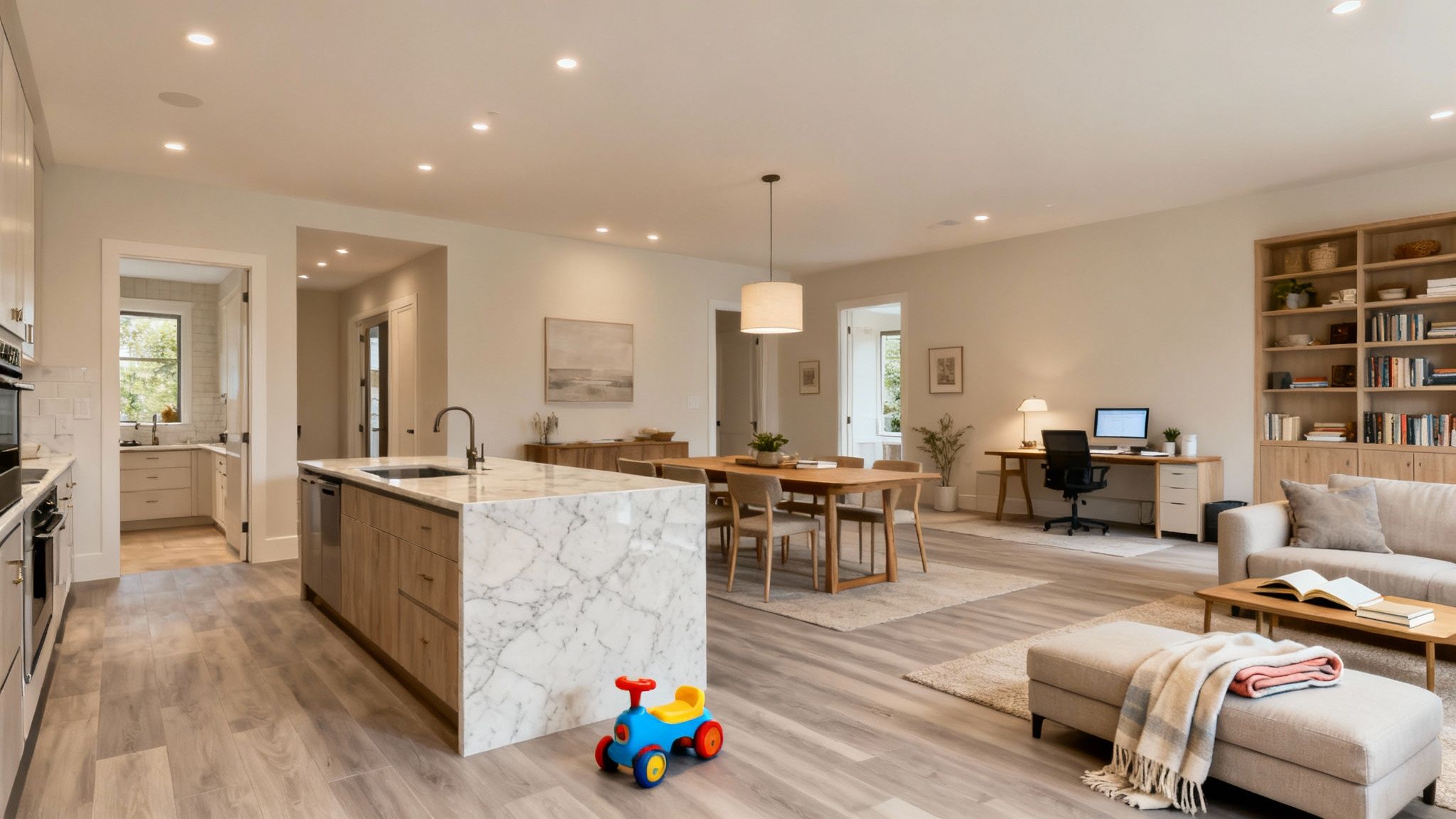
Transform Underused Rooms Into Private Suites
Is there a ground-floor office that rarely gets used? A formal living room that's become a catch-all for clutter? These spaces are prime candidates for conversion into a bedroom suite, perfect for an aging parent who needs to avoid stairs.
A successful conversion focuses on creating a self-sufficient space. The key is to add an accessible bathroom. The goal is to provide a private retreat that offers dignity and independence.
Finish a Basement or Convert a Garage
For a more distinct living area, finishing a basement or converting a garage can be an excellent solution. These projects often yield enough square footage for a small apartment-style setup.
Finishing these spaces allows for complete separation when needed. You can create a comfortable apartment for an adult child or a safe, ground-level suite for grandparents. These conversions also add significant value to your property. For more inspiration, check out our guide on family room addition ideas.
Design Shared Spaces for Harmony
Making common areas work for everyone is just as important as creating private retreats. The kitchen often becomes the heart of a multi-generational home.
Here are a few practical ideas:
- A Separate Prep Zone: A small secondary sink and counter space can allow two people to prepare food at the same time.
- Accessible Storage: Incorporate pull-out pantry shelves and lower drawers so everyone can reach what they need.
- Durable Materials: We recommend Quartz countertops for their scratch and stain resistance and luxury vinyl plank (LVP) flooring for its durability and easy cleaning.
By rethinking your existing layout and choosing the right materials, Aldridge Construction can help you create a home that truly serves every member of your family.
A Home That Grows with Your Family
At the end of the day, designing for generations is a smart investment in your family’s future and your home’s value. With thoughtful planning and the right construction partner, you can create a home that is functional, comfortable, and beautiful for everyone.
A well-designed home strikes the perfect balance between independence and togetherness. It’s about creating a safe harbor where every member of the family can thrive. The right remodel proves that accessibility and great style can go hand in hand.
If you’re exploring how to support aging parents, host extended family, or build for the future, Aldridge Construction can help. Our team’s local expertise and recent certification in disaster restoration add peace of mind, ensuring your home is built for both everyday use and long-term resilience.
Ready to create a home that works for everyone? Contact Aldridge Construction today to explore remodeling or ADU solutions tailored to your family’s needs in Monterey, Santa Cruz, or San Benito County.
Frequently Asked Questions About Multi-Generational Design
What does an in-law suite or ADU cost?
The cost for an Accessory Dwelling Unit (ADU) or in-law suite varies based on size, finishes, and property conditions. A simple garage conversion is more budget-friendly than building a new, detached unit. An experienced contractor can provide a detailed quote for your project in Monterey or Maricopa County.
Can I make my home more accessible without a huge remodel?
Yes. You can make a big difference without tearing down walls. High-impact upgrades can dramatically boost safety and comfort. Examples include installing stylish grab bars that look like high-end fixtures, adding better task lighting, and swapping round doorknobs for easier-to-use lever handles.
How long does ADU permitting take in California?
Permitting times vary by county. In places like Santa Cruz or San Benito County, the process can have unique requirements. However, California has been working to make approvals faster. Partnering with a builder who knows the local planning department is the key to avoiding delays.
What is Universal Design?
Universal Design is a smart, future-proof approach to creating spaces that work for everyone, regardless of age or ability. It means your home is just as comfortable for a toddler as it is for a grandparent using a walker. It creates a stylish, modern home that is naturally easier to live in.
Is an ADU a good investment?
Absolutely. An ADU immediately boosts your property value and gives you incredible flexibility. It can be a safe home for aging parents, a private space for adult children, or a source of rental income. This versatility makes it a powerful asset for any family.
Ready to create a home that works for everyone? If you’re exploring how to support aging parents, host extended family, or build for the future in Monterey, Santa Cruz, or San Benito County, Aldridge Construction can help.
Contact us today to schedule a consultation and let's start planning a space that will serve your family for years to come.