
Let's get right to it: do you really need a permit to remodel your kitchen in Monterey, Santa Cruz, or San Benito counties? The answer is almost always yes. Many people think permits are just for huge projects, but even small changes can require one.
This is one of the most common questions homeowners and even other contractors ask. Many assume it's only required if you're building an addition or tearing out walls. However, that's a risky assumption.
Why Most Kitchen Remodels Require a Permit
Many homeowners are surprised to learn that even simple-sounding tasks can trigger the need for a permit. It’s a huge myth that you only need to call the building department if you’re moving load-bearing walls.
The reality is, the moment your project involves your home's core systems—like electrical, plumbing, or structural elements—you have entered permit territory. A permit isn't just paperwork; it’s a safety check for your project.
It proves the work was inspected and meets current California building codes. This process protects your family’s safety and your home’s value.
When a Kitchen Permit Is Typically Required in California
The line between a cosmetic refresh and a full renovation is often crossed when you start changing how the kitchen works. Here’s a table to see what usually requires a permit in our area.
| Remodel Task | Permit Required? | Why It's Needed |
|---|---|---|
| Moving or adding electrical outlets/switches | Yes | Ensures new wiring is safe, properly grounded, and won't overload the circuit. |
| Installing new dedicated appliance circuits | Yes | High-power appliances like induction cooktops need their own circuits to prevent fire hazards. |
| Relocating a sink, dishwasher, or gas stove | Yes | Guarantees that plumbing and gas lines are installed without leaks and with proper drainage. |
| Altering or removing any wall (even non-load-bearing) | Yes | Confirms that structural integrity isn't compromised and meets fire code. |
| Changing the layout of your kitchen | Yes | Usually involves electrical and plumbing changes that need to be inspected. |
| Replacing cabinets and countertops in the same spot | No | This is considered a cosmetic update since it doesn't alter core systems. |
| Painting, tiling, or installing new flooring | No | Purely cosmetic work that doesn't require a permit. |
| Replacing a faucet or light fixture in the same location | No | Considered a simple repair, as long as no new wiring or pipes are run. |
As you can see, most changes that improve your kitchen's function fall into the "permit required" category.
Common Permit Triggers You Can't Ignore
If your dream kitchen involves more than new paint, you’re almost certainly going to need a permit. Here are some of the most common tasks that will send you to the planning department:
- Electrical Work: Adding an island with new outlets, installing under-cabinet lighting, or upgrading to a powerful induction cooktop all require new wiring and a permit.
- Plumbing Modifications: Moving your sink just a few feet involves changing plumbing lines. Shifting the dishwasher also requires a permit. You absolutely need a permit when altering gas lines for a new range.
- Structural Changes: Creating an open-concept kitchen almost always involves removing or changing a wall. Even if it’s not load-bearing, it still needs to be permitted and inspected.
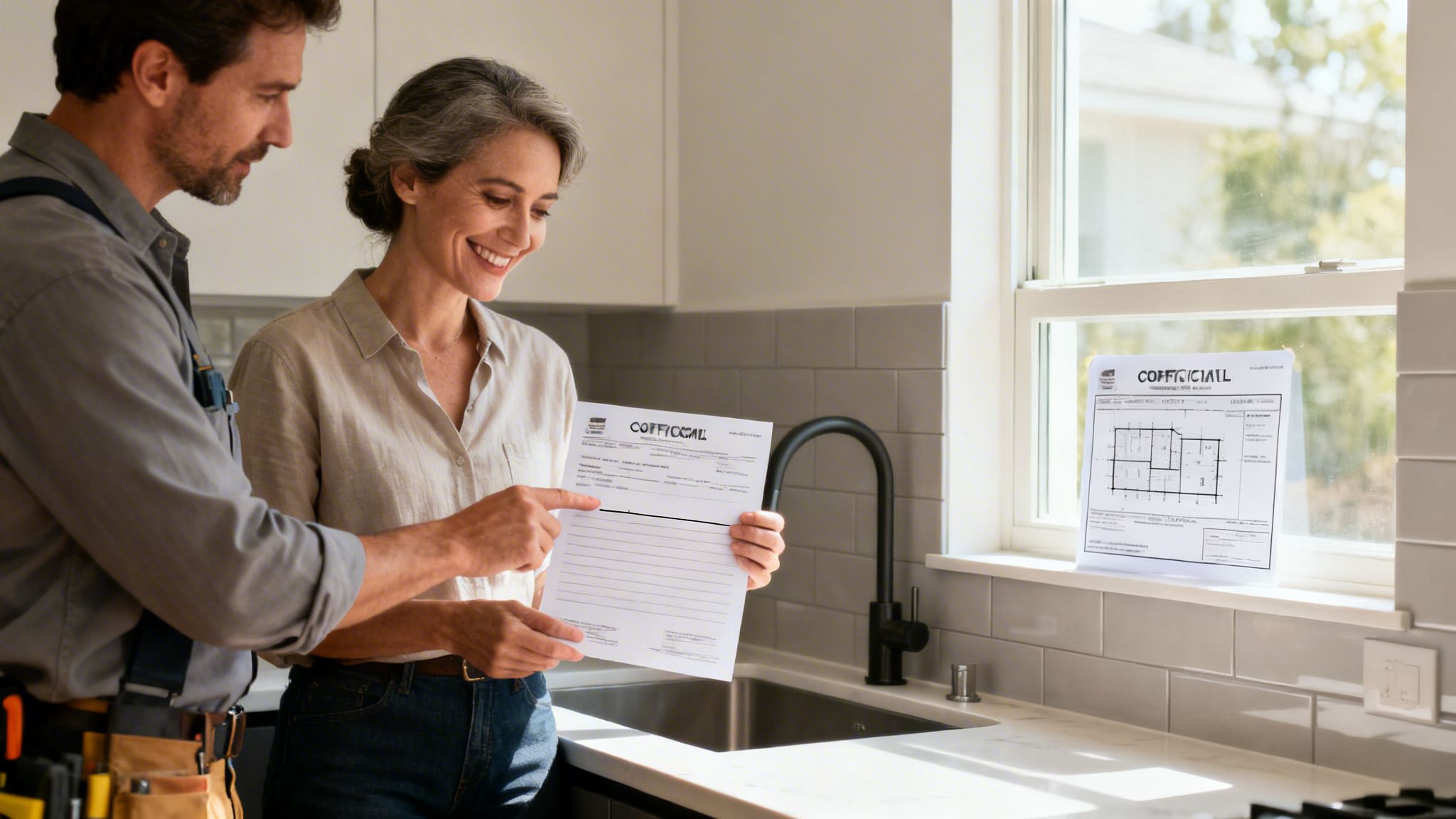
The rules can feel confusing because local building departments don’t always explain them clearly. This is where partnering with an experienced, local contractor like Aldridge Construction makes all the difference. We manage the entire permitting process, ensuring your project is fully compliant from the start.
Trying to skip a permit in Monterey County for work that clearly needs one can cause major headaches. As you start planning, having a clear roadmap is your best tool. Our detailed kitchen remodel checklist can help you get organized.
Understanding What Triggers a Permit Requirement
So, when does a remodel officially require a permit? It’s not just about knocking down walls. The answer involves any changes to your home's core systems—the things that keep it safe and running smoothly.
Think of your home as a body. Cosmetic updates like painting are like getting a haircut. But if you plan to change the circulatory system (plumbing), nervous system (electrical), or skeleton (structure), you need a professional to do it right. That’s what a building permit ensures.

Electrical System Changes
Anytime you add, move, or alter electrical wiring in Monterey or Santa Cruz counties, a permit is almost certainly required. This is a critical safety check to prevent fire hazards from faulty wiring.
Common electrical work that triggers a permit includes:
- Adding New Outlets: That convenient outlet for your coffee station or on the kitchen island needs a permit.
- Installing New Lighting: Recessed lights, under-cabinet lighting, or a new pendant over the sink all involve running new wires, which means getting a permit.
- Creating a Dedicated Circuit: High-draw appliances like a wall oven or induction cooktop often need their own circuit. This is a non-negotiable permit situation.
While swapping an old light fixture for a new one in the same spot usually doesn't need a permit, anything more involved will.
Plumbing and Gas Line Modifications
Just like with electrical, altering your home's "wet" systems will trigger a permit. The point is to prevent disastrous leaks, water damage, and dangerous gas situations. A tiny gas leak can have catastrophic results.
Plumbing and gas work that demands a permit includes:
- Moving a Sink or Dishwasher: Even shifting your sink a few inches requires rerouting water and drain lines, and that needs a permit.
- Adding a Pot Filler or Prep Sink: Introducing brand-new water lines is a clear-cut permit trigger.
- Relocating a Gas Stove or Cooktop: Any work involving moving or extending a gas line is serious business that always requires a permit.
Understanding what goes into tasks like installing a gas cooktop shows why it's heavily regulated.
Key Takeaway: If you're changing where water comes in, water goes out, or gas is supplied, you need a permit. Just replacing a faucet in its existing spot is fine.
Structural and HVAC Alterations
Do you really need a permit to remodel your kitchen for an open-concept layout? Yes, absolutely. Any change to your home's structure must be reviewed to ensure your home remains stable and safe.
Structural changes that always require a permit:
- Removing or Relocating a Wall: This is the big one. Even a non-load-bearing wall might hide plumbing or electrical lines.
- Altering a Load-Bearing Wall: Widening a doorway or creating a pass-through in a structural wall requires engineered plans and a permit.
- Changing Windows or Doors: Enlarging a window opening or moving a door is a structural change that needs a permit.
If your remodel requires rerouting HVAC ductwork, you'll also need a mechanical permit. Getting a handle on these specific construction permit requirements is the first step toward a smooth project.
The High Costs of Skipping a Building Permit
It’s tempting to sidestep the permit process to save time and money. You're excited to start your remodel, and permits can feel like a hassle. But bypassing this step is a high-stakes gamble that rarely pays off.
This shortcut can lead to expensive and stressful problems. The risks are not just financial—they can compromise the safety of your home and family. At Aldridge Construction, we handle the permitting process to ensure clients in Monterey, Santa Cruz, and San Benito counties avoid these headaches.
Immediate Consequences of Unpermitted Work
Trouble with unpermitted work can start quickly. Local building inspectors can spot construction activity, and a call from a neighbor can bring your project to a halt.
If you're caught, here’s what you can expect:
- Stop-Work Orders: An inspector will place a "red tag" on your property, legally forcing all work to stop. The order stays until you get a permit, which usually involves paying penalty fees.
- Significant Fines: Cities and counties issue steep fines for unpermitted work. These can pile up daily until the situation is corrected.
- Forced Demolition: This is the most painful consequence. If an inspector can't see the wiring or plumbing behind your new drywall and quartz countertops, they can make you tear it all out.
Long-Term Financial and Safety Risks
Even if you finish an unpermitted remodel without getting caught, the risks follow you. These problems often surface at the worst possible moments.
One of the biggest issues appears when you decide to sell your home. Unpermitted work is a huge red flag for buyers and home inspectors. It can lead to painful negotiations, a lower asking price, or even kill the sale.
Beyond resale value, there are critical safety and insurance issues.
A major kitchen remodel is a significant investment. Unpermitted work not only jeopardizes that investment but can also void appliance warranties and create serious safety hazards like house fires.
If a fire or flood is traced to unpermitted work, your homeowner's insurance could deny your claim. That would leave you to cover all repair costs. You can learn more about how documentation is key in our resources on storm damage insurance claims.
Ultimately, skipping a permit puts all the legal and financial risk on you, the homeowner. You can discover more insights about how permits protect investments and keep projects on track.
How to Navigate the Local Permit Process
Okay, so you know you need a permit. What now? The process can feel complicated, but it follows a logical path. For homeowners in Monterey, Santa Cruz, and San Benito counties, the journey has several clear stages.
An experienced contractor handles these steps easily, but knowing the roadmap helps you understand what's happening. It empowers you to ask the right questions.
Preparing Your Permit Application Package
First, you need to assemble a detailed application package. This file gives the building department a clear picture of your project. Think of it as the blueprint for your remodel's safety.
Your package will almost always include:
- A Completed Permit Application Form: The official request with your property info, contractor details, and a summary of the work.
- Detailed Plans and Drawings: This is the core of your application. These drawings must show the existing kitchen and the proposed new one. Every wall, window, cabinet, and appliance location must be mapped.
- Structural Calculations (if needed): If you’re touching any walls, you'll need plans stamped by a licensed structural engineer.
- Electrical and Plumbing Schematics: These diagrams show where every new outlet, switch, light, and pipe will go.
Professionals often use tools like interior design AutoCAD software to ensure every line is precise.
Submission and Plan Review
Once your application is ready, it goes to your local building department in Monterey County, the City of Santa Cruz, or another local office. After submission, your project enters the plan review phase.
A plan checker reviews every detail of your submission. They look for anything that doesn't align with California building codes or local rules. It’s normal for them to send plans back with notes. This back-and-forth ensures everything is correct before work begins.
Permit Issuance and On-Site Requirements
After all corrections are made, your permit will be issued. This is a huge milestone! You'll pay the permit fees, which are based on your project's total value.
The physical permit must be posted somewhere visible on the job site. You cannot legally start construction until this permit is posted.
The image below shows why you don't want to skip this step. The risks are serious, from stop-work orders to fines.
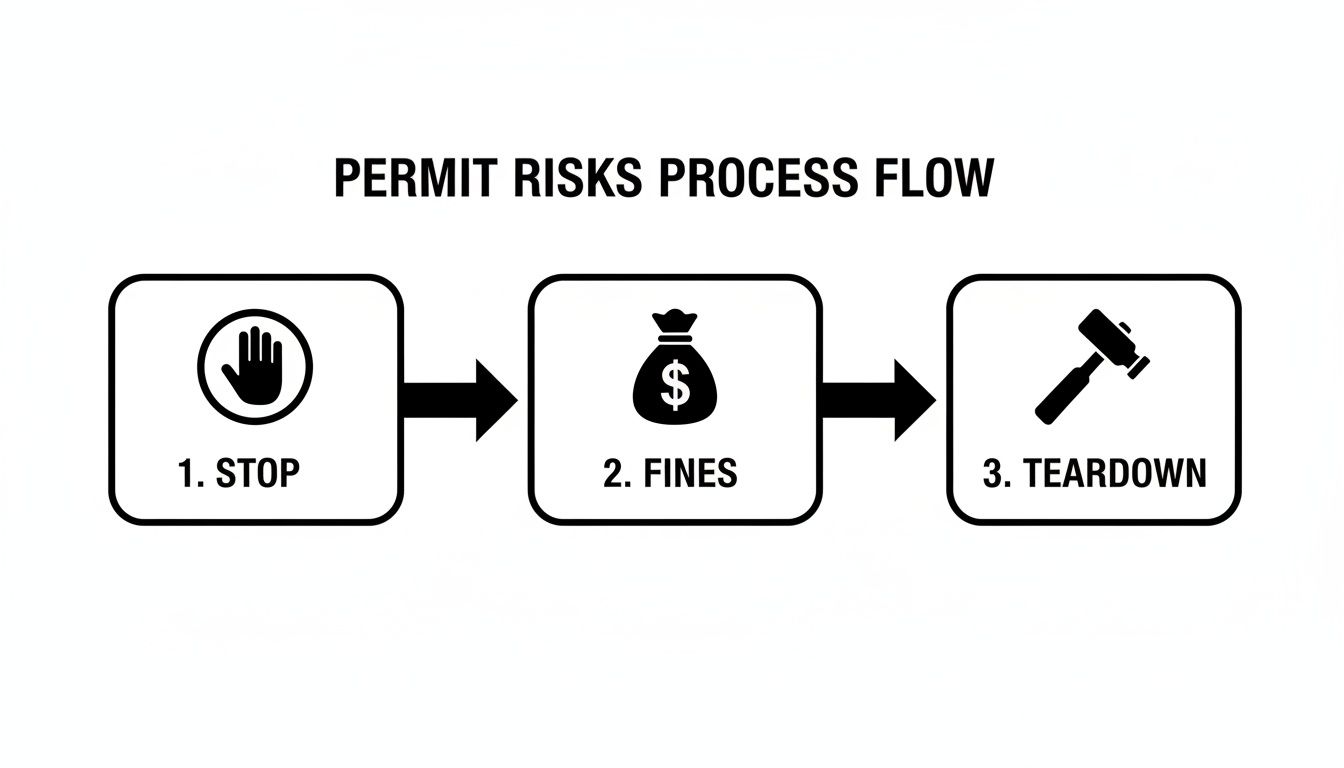
Skipping a permit isn't a shortcut; it's a gamble that can lead to expensive and frustrating dead ends.
The Inspection Phase
Getting the permit is just the start. Your contractor will schedule inspections with the local building department at critical milestones. An inspector will visit to ensure the work matches the approved plans.
For a kitchen remodel, you can expect a few common inspections:
- Rough-in Inspections: This happens after demo when new framing, plumbing, and wiring are installed, but before drywall goes up. The inspector needs to see the "bones" of the work.
- Insulation Inspection: If you opened exterior walls, the inspector checks that new insulation is installed correctly.
- Final Inspection: Once everything is finished, a final inspection is scheduled. The inspector does one last walk-through to sign off on the project.
After you pass the final inspection, your permit is "finaled out." This means the project is officially and legally complete. Our building inspection checklist offers more insight into what inspectors look for.
At Aldridge Construction, we manage this entire process for our clients. We coordinate every submission and inspection for a smooth, stress-free experience.
Building Trust Through Transparent Permitting
Navigating permits can feel like a maze, but it shouldn't be stressful. At Aldridge Construction, our approach is built on integrity and clear communication. We believe you should never guess about costs, timelines, or whether your remodel is legal and safe.
This is how we build trust with families across Monterey, Santa Cruz, and San Benito Counties.
A common question is, "do you really need a permit to remodel your kitchen?" As we've seen, the answer is usually yes. Confusion arises when contractors gloss over this step, leaving the homeowner to figure it out. That approach is a recipe for delays and surprise costs.
Our Proactive and Transparent Process
Our process eliminates surprises from the start. Before we finalize a proposal, we check permit requirements with your local building department, whether in Monterey County or the City of Santa Cruz.
This means the proposal you receive is comprehensive and honest. It includes:
- A Clear Permit Strategy: We outline which permits are needed—electrical, plumbing, structural—so you know what's being filed.
- Transparent Cost Estimates: Your proposal will have clear line items for permit fees and any associated costs. No hidden charges.
- A Realistic Timeline: We factor in the local department's review and inspection timelines, so your schedule is based on reality.
This is about protecting your investment and ensuring your project is done right. If you don’t clarify this early, you may face project delays or fail an inspection when you try to sell your home.
Our Commitment: For Aldridge Construction, managing permits is a core part of our promise. We handle the paperwork, inspections, and complexities so you can focus on the exciting parts of your remodel.
Why This Matters for You
Choosing a contractor who prioritizes transparent permitting is a critical decision. It shows they are committed to protecting you and have the expertise to navigate local rules.
When you're ready to start, knowing how to vet potential partners is essential. For more guidance, our post on how to hire the best licensed contractors offers valuable tips, including how to compare bids. By including a permit estimate and timeline in our bid, we show clients we are proactive, which builds trust.
Your Next Steps for a Compliant Kitchen Remodel
So, after all that, do you really need a permit to remodel your kitchen? For almost any change beyond paint and new cabinet pulls, the answer is yes.
Trying to get around the permit process is a gamble that isn’t worth taking. It's about protecting your family's safety, your home's legal standing, and its future value.
Let's Build Your Dream Kitchen the Right Way
The good news is that you don't have to navigate this maze alone. The journey becomes straightforward when you have an experienced partner guiding you.
A good contractor handles the plans, paperwork, and inspections. That leaves you free to focus on the fun stuff—like picking out your countertops.
If you’re planning a kitchen remodel in the Monterey, Santa Cruz, or San Benito County areas, your best first step is a simple conversation.
We invite you to reach out to Aldridge Construction for a consultation. Let us put our local expertise to work for you, ensuring your project is a stunning success.
Ready to get started? Contact our team today, and let's build something great together.
Frequently Asked Questions About Kitchen Remodel Permits
Here are quick answers to some common questions we get from homeowners in our community.
Can I pull the permit myself as a homeowner?
Yes, California law allows homeowners to pull their own "owner-builder" permits for work on their primary residence.
However, when you sign that application, you become legally responsible for the entire project. You are liable for ensuring all work meets building codes. If an inspection fails, that responsibility is yours. Hiring a professional contractor like Aldridge Construction transfers that liability to an expert.
How much does a kitchen remodel permit cost in California?
There’s no single price. The cost depends on your location and project size. Fees are usually based on the total value of your remodel, including labor and materials.
For homeowners in Santa Cruz and San Benito Counties, fees can range from a few hundred to several thousand dollars. We include a detailed estimate of these costs in our project proposals.
What if my contractor says we don’t need a permit?
This is a massive red flag. A reputable, licensed contractor knows that cutting corners on permits is a huge risk for everyone. They will always check requirements with the local building department.
Any contractor who suggests skipping a required permit is asking you to take on all the liability. Before hiring anyone, read our guide on how to compare bids from home improvement contractors.
Does simply replacing kitchen cabinets require a permit?
Usually, no. If you’re just swapping out old cabinets for new ones in the exact same spot, it’s considered a cosmetic update.
But if the new cabinet layout affects your home's systems—like moving an outlet or a water line—you will need a permit for that specific electrical or plumbing work.
How long is a building permit valid for?
In California, most building permits are valid for 180 days from the issue date. You must show steady progress. As long as work is happening and you are passing inspections, the permit stays active. If work stops, you may need to apply for an extension.
If you're unsure whether your next kitchen project needs a permit—or how to explain it to a client—reach out to Aldridge Construction for expert guidance on local rules and real-world workflows. We’re happy to help you get it right from the start.