
Direct Answer: A full kitchen remodel takes 6–10 weeks and disrupts daily life at every stage. Planning your temporary kitchen setup, locking in finishes early, and understanding the permit sequence makes the difference between smooth and miserable.
A kitchen remodel doesn’t happen to your house while you’re somewhere else. It happens around you, your family, your kids, your morning routine — while you’re trying to figure out where the coffee maker went and why the sink is in the backyard. That’s the part nobody talks about when they’re showing you cabinet samples.
I’ve seen this play out on projects across Salinas and Monterey County, and the homeowners who come out of it feeling good have one thing in common: they knew what was coming. One family we worked with described living through a full kitchen, bathroom, family room, and home office remodel as smooth and stress-free — not because it was easy, but because the crew kept them informed and respected that they were actually living in it during construction. That phrase — lived in it — is the whole ballgame.
This article is about three things: what the week-by-week timeline actually looks like, how to set up your life around it, and how to keep costs from creeping on you mid-project. If you’re planning a kitchen remodel in Salinas or anywhere in Monterey County, this is the realistic picture.
What the Timeline Actually Looks Like, Week by Week
A full kitchen remodel — new layout, new cabinets, countertops, plumbing and electrical work — typically runs 6 to 10 weeks from demo day to final walkthrough. That range is real. Inspection scheduling at the City of Salinas Building Division, material lead times for cabinets, and countertop fabrication timelines all push and pull that number.
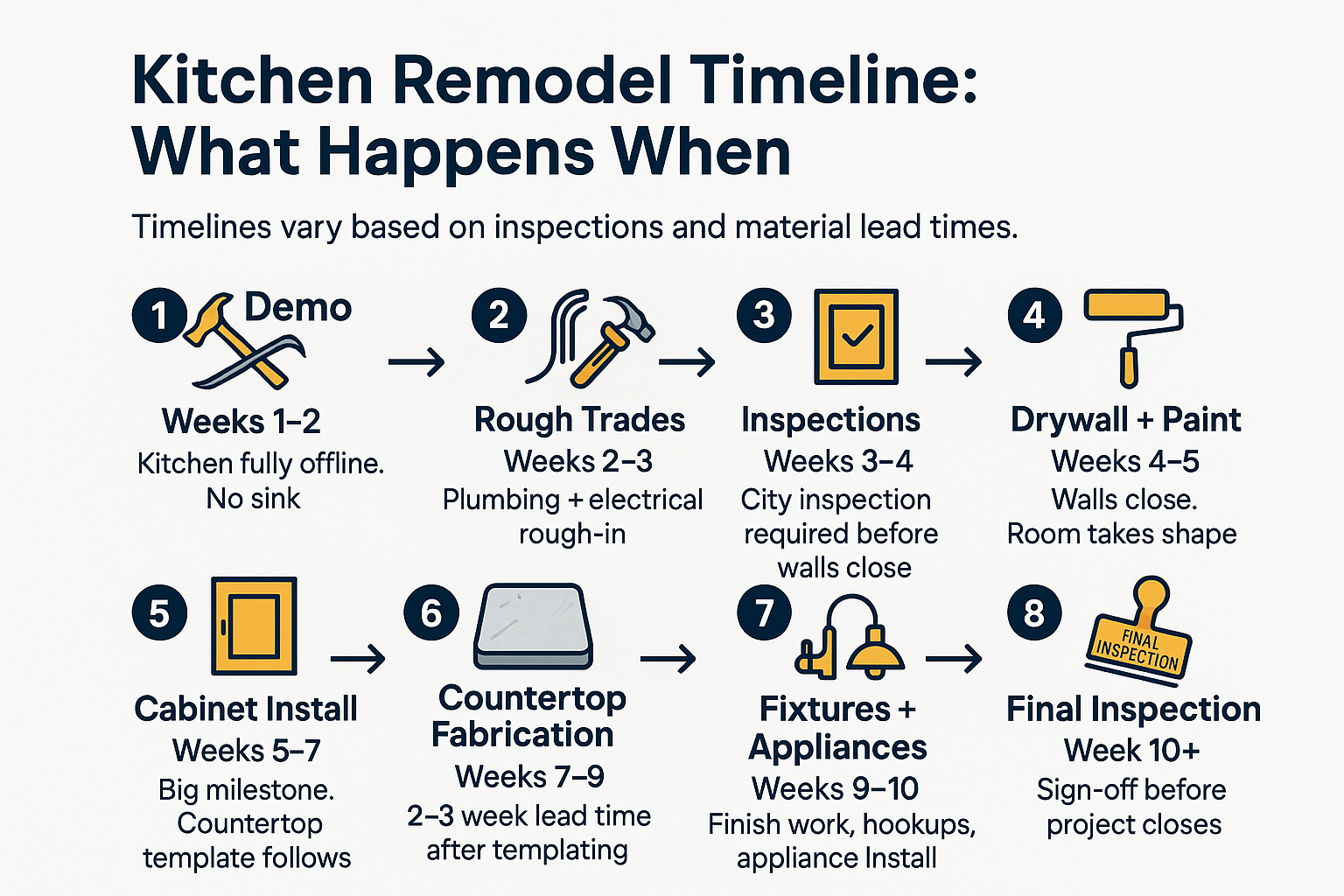
Here’s a realistic sequence for a full Salinas kitchen remodel:
- Week 1–2: Demolition — cabinets come out, flooring comes up, walls open for rough work. This is the loudest, dustiest phase. Expect the kitchen to be completely offline.
- Week 2–3: Rough plumbing and electrical — new circuit runs, plumbing relocations, any gas line work. This is when the contractor schedules rough inspections.
- Week 3–4: Inspections and approval — this window can stretch depending on the City of Salinas inspection calendar. Nothing closes up until the inspector signs off.
- Week 4–5: Drywall, texture, and paint — walls close, the space starts to look like a room again.
- Week 5–7: Cabinet installation — this is a big milestone. Once cabinets are set, countertop templates can be made.
- Week 7–9: Countertop fabrication and installation — most stone fabricators in the Salinas area run a 2–3 week lead time after templating. This is non-negotiable.
- Week 9–10: Fixtures, appliances, finish work, and final inspection.
Knowing this sequence helps you plan around the worst of it. The first two weeks are when you’ll have no sink. Plan accordingly before demo begins, not after.
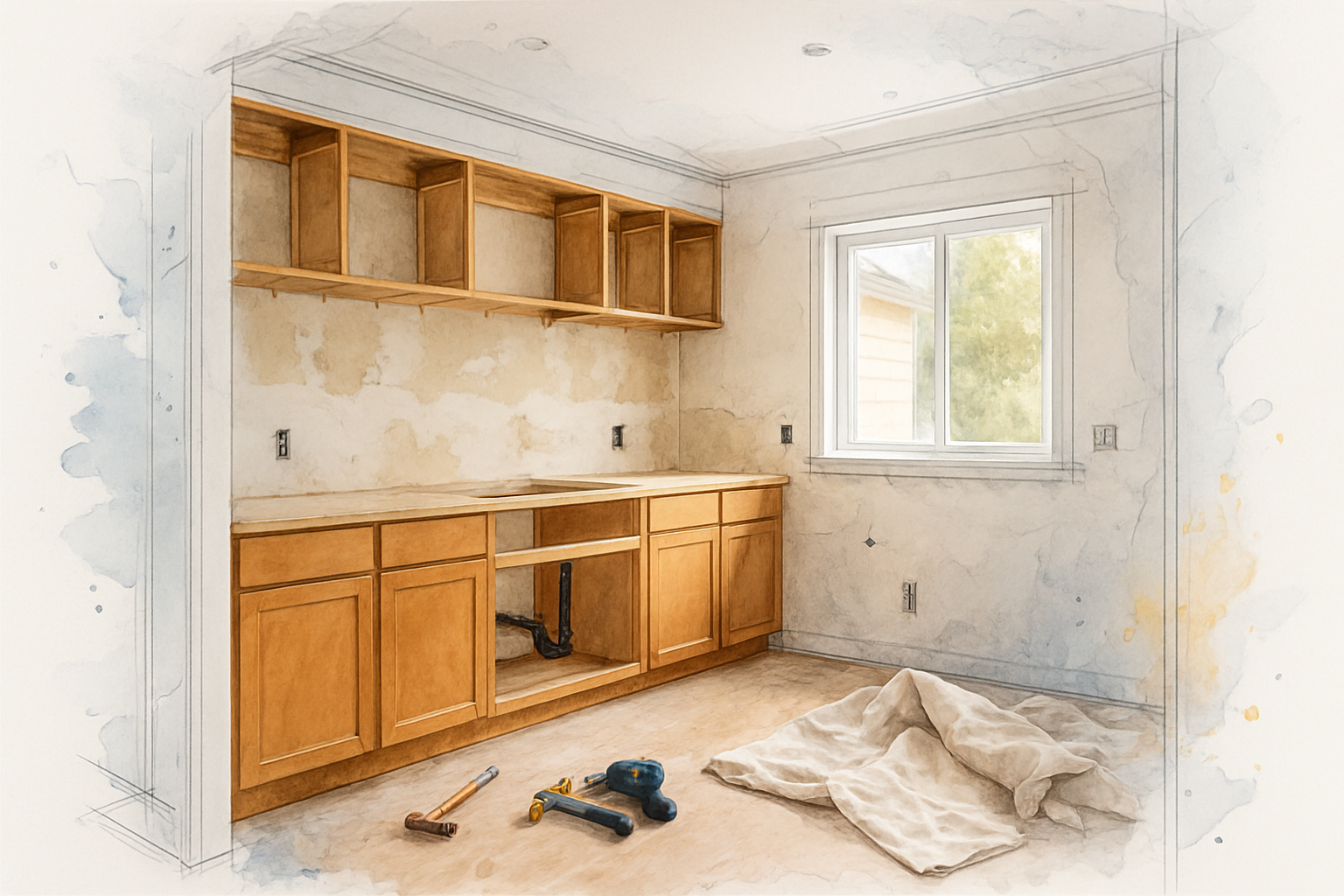
Setting Up a Temporary Kitchen Before Demo Day
This is the piece most homeowners skip until it’s too late. Demo day arrives, the sink disappears, and suddenly a family of four is trying to survive on whatever’s left in the pantry and takeout every night.
Salinas households skew larger than the California average — multi-generational setups are common, and losing kitchen access for six-plus weeks is a real daily burden. A good temporary kitchen setup, built before the crew swings the first pry bar, changes the whole experience.
Here’s what actually works:
- Mini-fridge: Move it to the garage or a spare room before demo. Keep it stocked with basics.
- Microwave: A countertop microwave handles more than people expect — soups, leftovers, frozen meals, reheating.
- Electric kettle and single-burner induction plate: These two cover coffee, eggs, pasta, and simple cooking without open flame or running water nearby.
- Paper plates and disposable containers: Not glamorous, but they eliminate dish-washing when you have no sink.
- Outdoor grill: If you have one, it becomes your primary cooking tool for weeks 1 through 4.
Set this up the weekend before demolition starts. Don’t wait. And talk to your contractor about which days the water will be fully off — those are the days to plan around, not react to.
The Phases of a Kitchen Remodel at a Glance
Here’s a visual breakdown of the major phases, what goes offline when, and roughly how long each stage runs in a typical Salinas kitchen remodel.
Change Orders Are Preventable — Here’s How
Change orders are the number one source of budget anxiety on a kitchen remodel, and in my experience, almost all of them are avoidable. A change order isn’t just an inconvenience — it can delay your timeline by days or weeks and add costs that compound on each other.
The most common triggers I see:
- Changing countertop material after the template is made — stone fabricators charge for the original cut whether you use it or not
- Selecting a cabinet style mid-project that requires different hardware than what was quoted
- Adding recessed lighting after electrical rough-in is already done — that’s a re-open, re-run, and re-inspection
- Swapping appliances after the rough plumbing or electrical is already roughed in for the original specs
The fix is simple but it requires discipline upfront. Make every finish selection before demo begins. That means countertop material, cabinet style and hardware, fixture finishes, appliance models, and lighting layout — all confirmed before the first pry bar touches a cabinet.
Also ask your contractor to identify any open decision that could trigger a change order before it becomes expensive to reverse. A contractor who flags those decision points proactively is worth a lot more than one who just builds what’s in front of them.
For more on how to read what you’re actually signing before the project starts, understanding a home remodeling estimate gives you a clear breakdown of what to look for in a bid. And if you’ve had past projects go sideways on budget, what separates a renovation that goes smoothly from one that doesn’t is worth reading before you sign anything.
The Permit Question — And Why It Matters More Than You Think
I hear this one constantly: Do I really need a permit for a kitchen remodel?
For a full kitchen remodel in Salinas and throughout Monterey County, the answer is almost always yes — and here’s why that matters. If your remodel involves new electrical circuits (which it almost certainly does if you’re adding an induction range, upgrading to a larger panel, or running circuits for new appliances), plumbing changes, or any layout modification, a permit is required by the City of Salinas Building Division. That’s not a gray area.
Unpermitted kitchen work creates two problems you can’t undo:
- At resale: Unpermitted work shows up — or doesn’t show up — on disclosure. Buyers ask. Inspectors ask. And when it comes out, it either kills the deal or comes off the price.
- If something fails: Without a permitted inspection, you have no documented record that the electrical or plumbing was installed correctly. If a connection fails and causes damage, your insurance position is complicated.
A contractor who tells you a major kitchen remodel doesn’t need a permit is not doing you a favor. They’re protecting their schedule at your expense.
It’s also worth knowing that California’s 2025 Building Standards Code — effective January 1, 2026 — includes updated requirements that affect permitted kitchen and bathroom work. If your project is starting in 2026, ask your contractor which code cycle applies to your permit.
The California Department of Housing and Community Development maintains the state building standards that flow down to local jurisdictions like Salinas — it’s a useful reference if you want to understand how state code and local enforcement connect.
What Triggers a Permit in a Salinas Kitchen Remodel
Not every kitchen project requires a permit, but most full remodels do. Here’s a quick reference for common scopes.
| Scope of Work | Permit Required? | Why |
|---|---|---|
| New electrical circuits (induction, panel upgrade) | Yes | Any new circuit requires electrical permit and inspection |
| Plumbing relocation or new drain/supply lines | Yes | Plumbing changes require rough and final inspection |
| Layout change moving walls | Yes | Structural work requires building permit |
| Cabinet replacement, same layout, no electrical/plumbing changes | Typically No | Cosmetic swap with no system changes — confirm with City of Salinas |
| Countertop replacement only | Typically No | Surface replacement with no plumbing changes |
| New recessed lighting on existing circuit | Varies | Check with City of Salinas Building Division — often requires electrical permit |
Frequently Asked Questions About Living Through a Kitchen Remodel
How long will I actually be without a functioning kitchen?
For a full kitchen remodel, expect to be without a sink and countertop workspace for roughly 4 to 6 weeks in most cases — longer if material lead times stretch. The first two weeks after demo are the hardest. Setting up a temporary kitchen in your garage or spare room before demo starts makes that period significantly easier. The kitchen comes back in stages — cabinets first, then countertops, then fixtures — so it’s not an all-or-nothing return to normal.
What’s the most common reason kitchen remodels go over budget?
Change orders, by a wide margin. When homeowners change their countertop material, cabinet style, or lighting layout after work has already started, it costs more — sometimes significantly more — than making the same decision before demo. Lock in every finish selection before the first day of demolition, and ask your contractor to flag any pending decision that could become a change order later.
Do I need a permit if I’m just replacing cabinets and countertops?
If it’s a straight cosmetic swap — same layout, no plumbing moves, no electrical changes — many jurisdictions including Salinas don’t require a permit for that scope alone. But the moment you’re adding circuits for an induction range, moving a drain line, or shifting the layout, a permit is required. When in doubt, call the City of Salinas Building Division directly and ask. It’s a five-minute phone call that can save you a real problem at resale.
How do I keep noise and dust from taking over the whole house?
The demo phase — typically the first one to two weeks — is when dust and noise peak. A good contractor will seal off the work area with plastic sheeting and work within agreed-upon hours. Talk to your contractor before day one about daily cleanup expectations and dust containment. It should be in the contract, not just a conversation. The review language we hear most from satisfied clients centers on contractors who kept a clean worksite and respected that people were living in the home.
What happens if the inspector doesn’t pass rough-in on the first visit?
It happens, and it’s not the end of the world — but it does add time. The contractor corrects the flagged item and reschedules. In Salinas, re-inspection scheduling can add 3 to 7 business days depending on the Building Division’s calendar at the time. This is one of the reasons the 6-to-10-week timeline range exists — inspections are the variable that neither the homeowner nor the contractor can fully control.
What should I ask about before signing a kitchen remodel contract?
A few things matter more than others: How are change orders handled and priced? What is the inspection sequence and who schedules it? What are the payment milestones tied to? And what are the material lead times for cabinets and countertops — because those timelines drive the whole schedule. Reading the estimate carefully before you sign is the best first step, and verifying the contractor’s license before you hand over any deposit is non-negotiable.
Ready to Plan Your Kitchen Remodel the Right Way?
If you’re getting ready for a kitchen remodel in Salinas, Monterey, Seaside, or anywhere in Monterey County and want to talk through the timeline and process before committing to anything, the team at Aldridge Construction is easy to reach. Call 831-682-9788 or visit aldridgeconstruction.biz to start a conversation — no pressure, just a straight answer from someone who’s done this work here for years.