
In 2025, getting the most from your property is about more than just a fresh coat of paint. It's about making your home work for your modern needs—for housing, income, and lifestyle. For many homeowners, an Accessory Dwelling Unit (ADU) is the smartest way to do that.
These aren't just backyard sheds. A well-designed ADU adds flexible living space, creates a new source of rental income, and can significantly boost your property value. Best of all, it lets you do this without the stress of buying a new property.
Why Homeowners Are Choosing to Stay and Invest
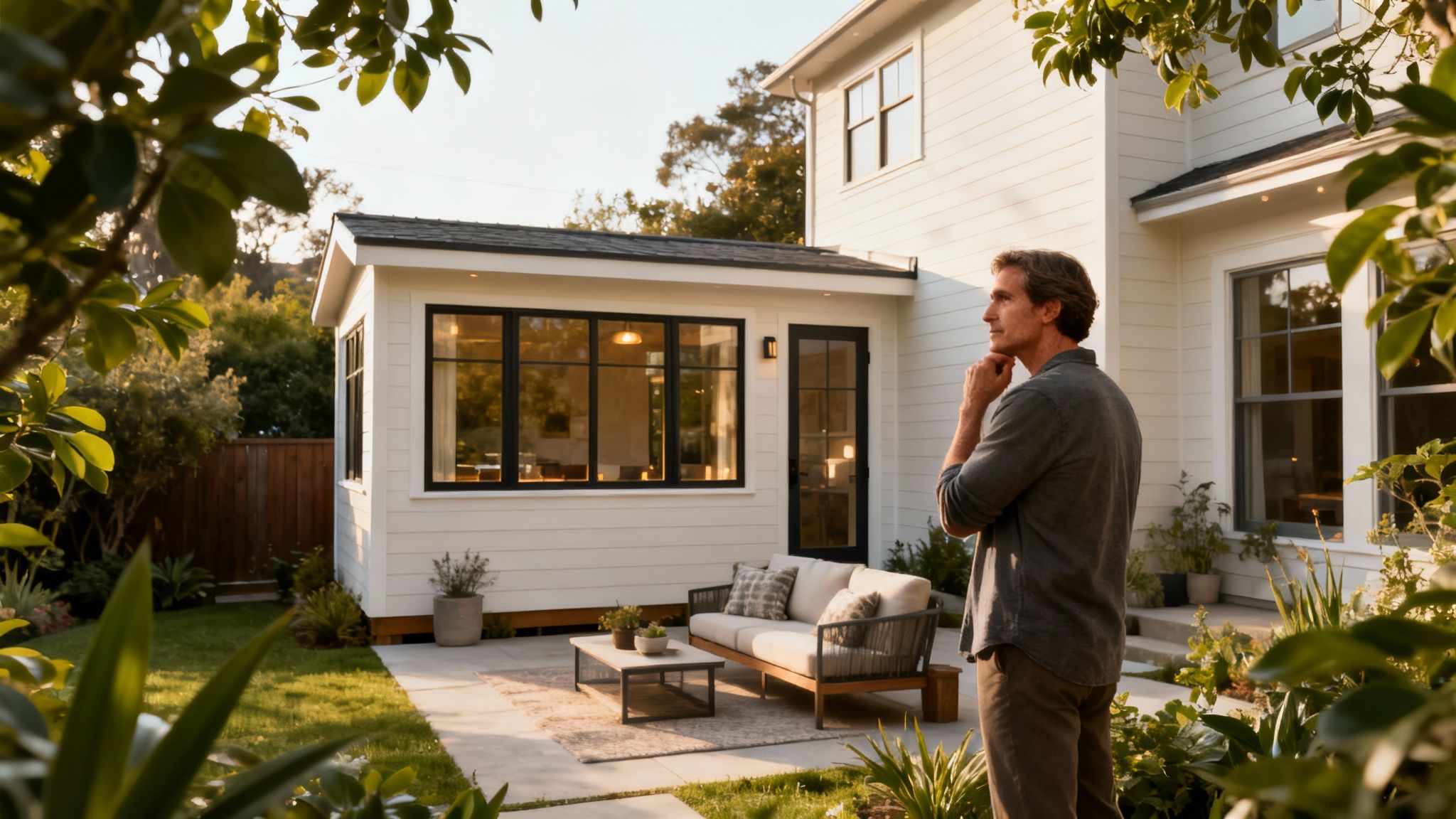
With high mortgage rates and home prices, moving isn't as appealing as it used to be. That's why many homeowners in Monterey, Santa Cruz, and San Benito Counties are choosing to invest in the homes they already have.
In fact, 55% of Americans now prefer renovation over relocation. This trend shows a clear shift toward improving existing homes.
This is where an ADU makes perfect sense. It’s a smart way to expand your living area for family or create a steady income stream without jumping back into a difficult real estate market.
ADUs Are Now a Mainstream Housing Solution
Just a few years ago, ADUs were not very common. Today, they are a key part of California's housing strategy. In California, ADU permits grew by an incredible 15,000% from 2016 to 2022. This shows that homeowners see real value in these flexible units.
A big reason for this trend is that an ADU is one of the best strategies to increase property value. By adding legal, rentable square footage, you directly improve your biggest financial asset.
A recent poll found that 66% of California homeowners have considered adding an ADU. It's clear that ADUs are now a standard feature for homeowners looking to make the most of their property.
Aldridge Construction: Your Local ADU Expert
Building an ADU means dealing with local rules, permits, and design trends. For homeowners in Salinas, Hollister, or Santa Cruz, local experience is key.
Aldridge Construction is based in Salinas and serves Monterey, Santa Cruz, and San Benito Counties. We have deep knowledge of the local permitting processes and building codes. We can guide you through every step, from choosing pre-approved plans to creating a fully custom design. Our local approach makes the process smooth and efficient. Understanding your potential home renovation return on investment is the first step to a confident decision.
Defining the Purpose of Your ADU
Before you start building, ask yourself: "What do I want this space to do for me?" Your answer will guide every decision, from the floor plan to the final budget. A clear vision ensures your new unit will truly maximize your property’s potential.
A unit designed for rental income in a market like Santa Cruz will need different features than a private suite for an aging parent in Salinas. Nailing down your "why" is the foundation of a successful project.
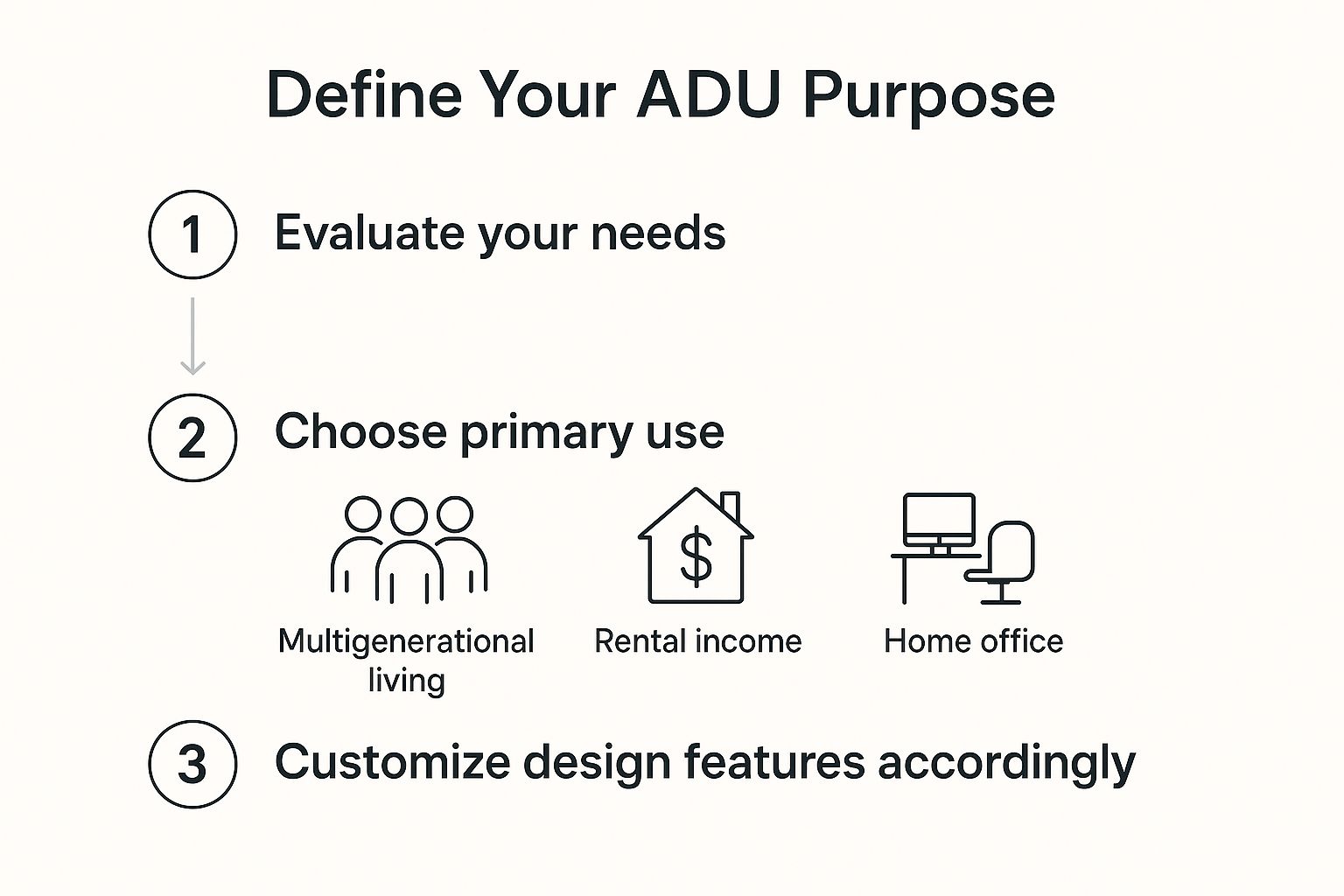
1. A Home for Family (Multigenerational Living)
One of the most popular reasons to build an ADU is to keep family close while giving everyone their own space. It's a great option for aging parents or adult children.
Key features for a family-focused ADU include:
- Accessibility: We can add features like zero-step entries, walk-in showers with grab bars, and wider doorways to make the space safe for relatives with mobility challenges.
- Privacy: We use smart window placement and separate entrances to ensure both households feel independent.
- Comfort: The goal is to create a true home with quality finishes, plenty of storage, and an inviting layout.
2. A Source of Rental Income
For many homeowners, an ADU is a financial tool. Rental income can help pay the mortgage or build savings. If you're new to the concept, you can learn more by checking out our guide on what an ADU means in construction.
A rental unit needs to appeal to tenants and be durable. Features that make a big difference for a rental ADU include:
- Durable Materials: Think luxury vinyl plank flooring and quartz countertops that resist stains.
- Efficient Layout: An open-concept kitchen and living area makes the space feel larger and more usable.
- Desirable Amenities: In-unit laundry, dedicated parking, or a small private patio can attract better tenants and higher rent.
3. A Flexible Lifestyle Space
Sometimes, an ADU is all about improving your own lifestyle. It can be a perfect home office, art studio, home gym, or a private guest house.
This approach offers the most creative freedom. The design is tailored to your needs. An artist might want large windows for natural light, while someone working from home may need extra soundproofing.
Your Roadmap to a Finished ADU
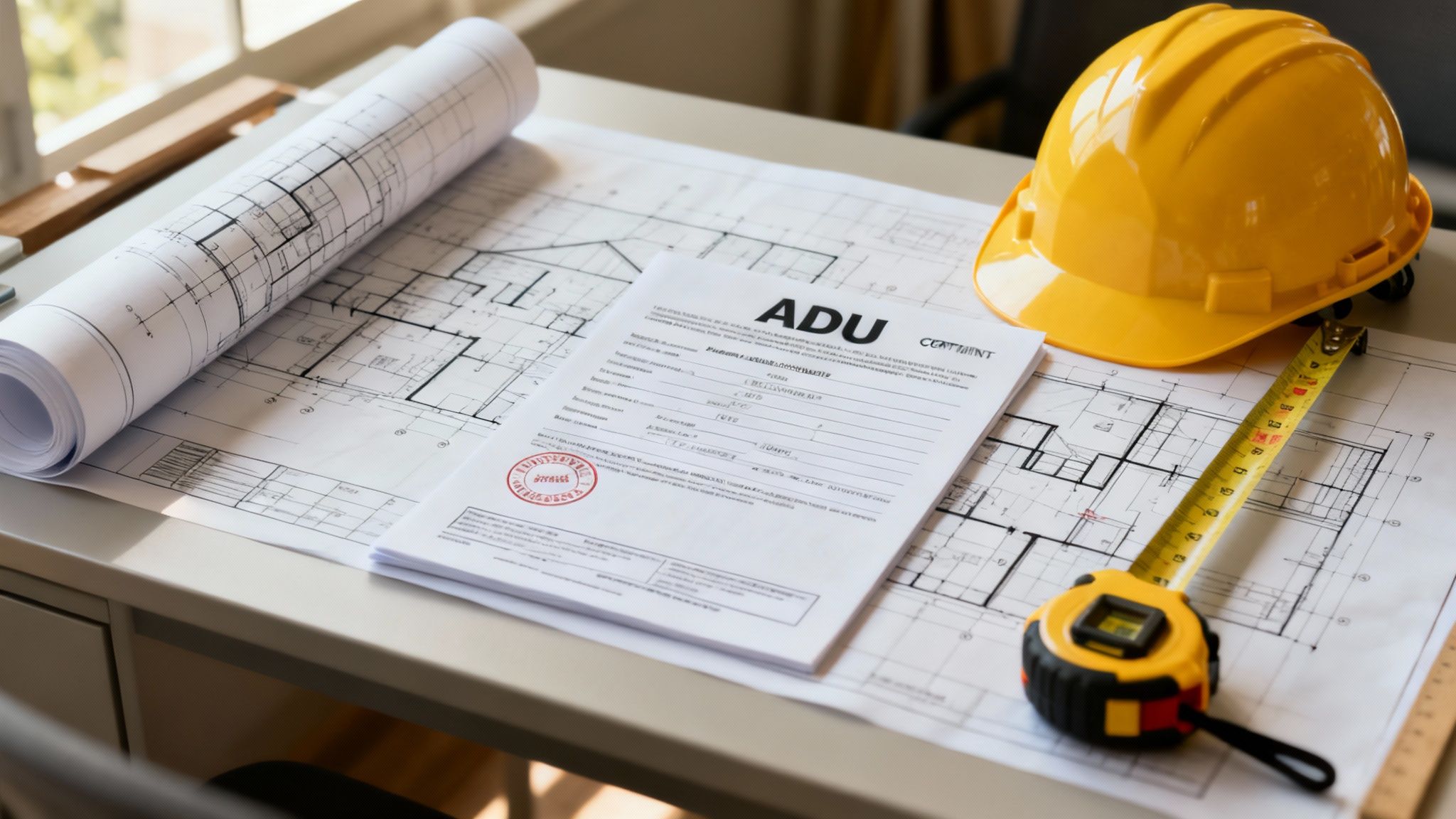
Starting an ADU project can feel overwhelming. At Aldridge Construction, we break it down into four clear steps: feasibility, design, permitting, and construction. This roadmap helps you know what to expect at every stage.
This structured approach is important. The global ADU market was valued at $3.3 billion in 2023 and is projected to reach $10.6 billion by 2030. Many of your neighbors are using ADUs to solve their housing needs. Our job is to make this solution a reality for you.
Step 1: Feasibility and Planning
Before we talk about design, we assess your property. This step answers the question: "What is possible on my lot?" We check several key factors.
Our team will evaluate:
- Lot Size and Setbacks: We measure your property to see how much space is available based on local zoning rules.
- Utility Access: We locate your water, sewer, and electrical lines to plan the most cost-effective way to connect the new unit.
- Site Accessibility: We check how easily construction vehicles and materials can get to your backyard.
This review gives us a clear picture of what we can build, helping you maximize your property's potential from the start.
Step 2: The Design Process
Once we confirm your property is right for an ADU, we move to the fun part: design. In California, you have two main options.
A custom build offers complete creative freedom. You work with our designers to create a one-of-a-kind ADU. This is perfect if you have a unique lot or specific needs.
Pre-approved plans are a great way to save time and money. These are floor plans that the city has already reviewed, which speeds up the permitting process. We can help you find a pre-approved design and customize the finishes.
Step 3: Navigating Permits
Securing permits can be confusing. Every city—whether it’s Salinas, Santa Cruz, or Hollister—has its own specific requirements.
Aldridge Construction handles this for you. We prepare and submit all necessary documents. Our team has strong relationships with local planning departments, which helps us avoid delays. Understanding common construction permit requirements is key, and we manage it all.
Step 4: Construction and Completion
With approved permits, it’s time to build. We manage every detail with clear communication and quality work. From the foundation to the final finishes, like energy-efficient Milgard windows, we handle it all.
We provide regular updates so you always know what's happening. Our goal is to make construction as stress-free as possible, delivering a beautiful, functional space that meets your needs.
Designing an ADU for Maximum Value and Function
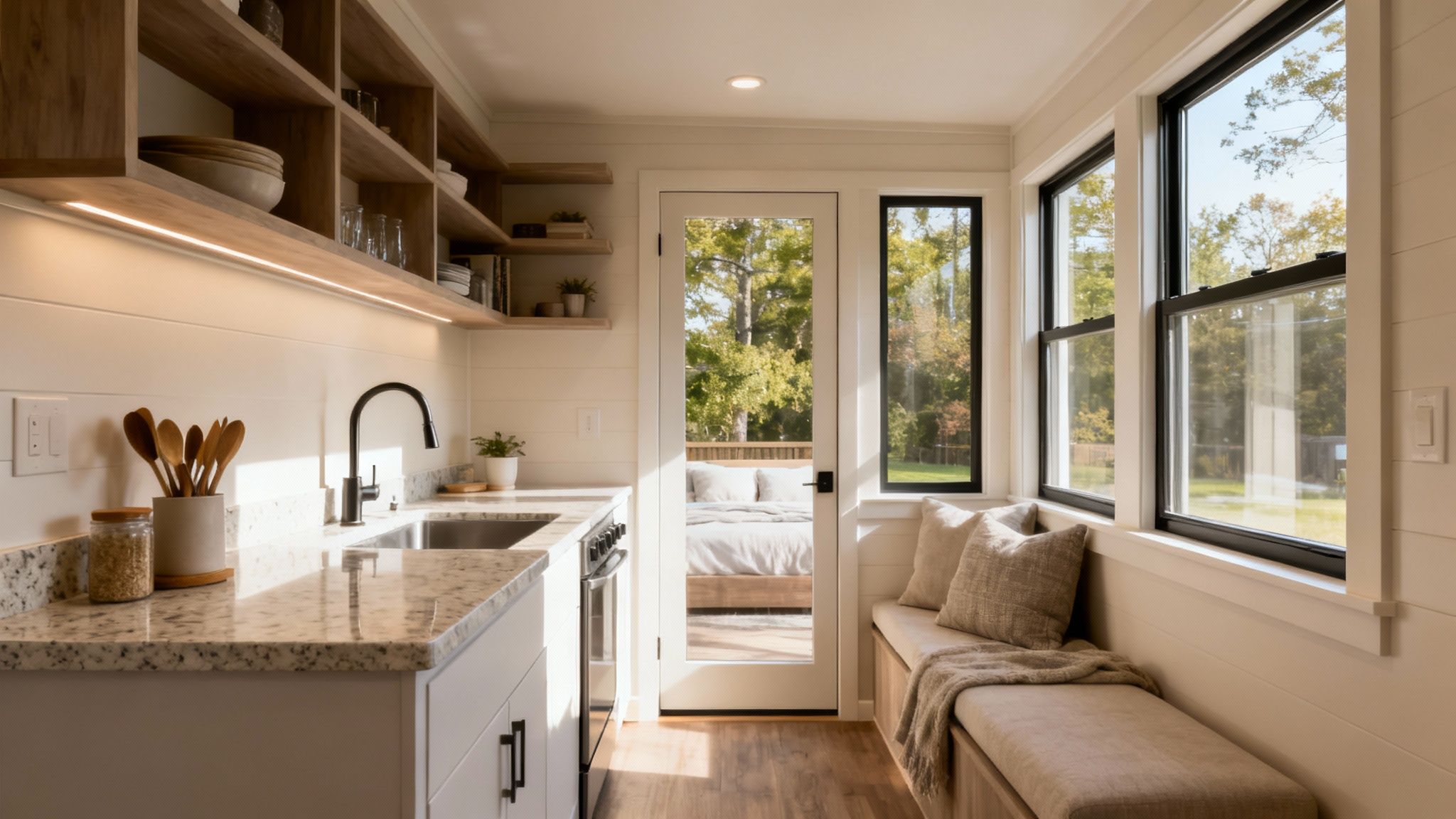
A great ADU is more than just four walls. It’s a smart space built with a purpose. Your design choices will directly impact its long-term value. Thoughtful planning helps you maximize your property’s potential.
From the layout to the materials, every detail matters. A well-designed space feels larger, costs less to maintain, and provides a better living experience.
Choosing the Right Layout for Your Goals
Your first big decision is the floor plan. Most ADUs are either a studio or a one-bedroom unit.
A studio ADU combines living, sleeping, and kitchen areas into one open space. This layout is cost-effective and works well for small lots. It's ideal for a home office or short-term rental.
A one-bedroom ADU offers a separate bedroom for more privacy. This layout is usually preferred for long-term rentals or for housing a family member. Explore different layouts in our collection of ADU design ideas.
Smart Design Strategies for Small Spaces
Making a small space feel big is key to a great ADU. Here are a few techniques we use:
- Maximizing Natural Light: Large windows and glass doors make a room feel bigger and more inviting.
- Built-In Storage: Custom cabinets and closets eliminate the need for bulky furniture and keep the floor plan open.
- Vertical Space: High or vaulted ceilings create a sense of spaciousness. We also use floor-to-ceiling shelving to draw the eye upward.
Selecting Materials That Add Value and Last
The materials you choose are a critical investment. For a rental unit, durability is a top priority. For a family home, comfort and quality may come first.
Here are a few of our go-to recommendations:
- Quartz Countertops: These are scratch-resistant, stain-resistant, and perfect for a rental kitchen.
- Luxury Vinyl Plank (LVP) Flooring: LVP looks like hardwood but is waterproof, durable, and easy to clean.
- Energy-Efficient Windows: We often install quality Milgard windows. They help lower utility bills, which is a huge plus for any occupant.
This focus on quality materials ensures your ADU remains a durable, long-lasting asset.
Understanding ADU Costs and Financial Returns
Building an ADU is a major investment. Understanding the costs and returns will help you make a confident decision. This allows you to see an ADU not just as an expense, but as an asset designed to maximize your property’s potential.
Let’s look at the key financial pieces, from upfront costs to long-term returns in the Monterey Bay area.
Breaking Down the Main ADU Costs
The final price depends on the size, design, and materials you choose. However, most project costs fall into a few main categories. A detailed look at the cost to build an ADU is essential for planning.
Here are the main costs:
- Design and Engineering Fees: This covers the architectural plans and site surveys.
- Permit and Impact Fees: These are the fees your city charges to review and approve your plans.
- Site Preparation: This includes groundwork like excavation and trenching for utility hookups.
- Construction Costs: This is the largest part of the budget, covering labor and materials for the structure.
- Finishes and Fixtures: This includes your choices for flooring, countertops, cabinets, and appliances.
How to Fund Your ADU Project
Most homeowners need a financial plan for a project this size. There are several good rental property financing options available.
Here are three common financing routes:
- Home Equity Line of Credit (HELOC): This works like a credit card, letting you draw funds as needed. It's flexible for managing construction costs.
- Cash-Out Refinance: You replace your current mortgage with a new, larger one and use the extra cash to fund the ADU.
- Construction Loan: This is a short-term loan designed for building projects. Funds are released in stages as work is completed.
Calculating Your Return on Investment
An ADU provides a financial return in two main ways: increased property value and rental income.
An ADU is one of the few home improvements that can pay for itself over time. It adds immediate value while creating a new income stream.
For example, a $250,000 one-bedroom ADU in the Salinas area can increase your property's appraised value by $300,000 or more. That's an instant equity boost. On the income side, that same ADU could rent for $2,200 per month, bringing in $26,400 a year. This cash flow can help pay off the construction loan or cover other expenses.
Your ADU Questions Answered (FAQs)
Here are answers to some of the most common questions we get from homeowners in Monterey, Santa Cruz, and San Benito counties.
1. How long does it take to build an ADU?
From start to finish, the process usually takes between 9 and 12 months. This includes 2-3 months for design, 3-4 months for permitting, and 4-6 months for construction. Aldridge Construction manages the entire schedule to keep your project on track.
2. Can I build an ADU on my small lot?
Yes, you can. Recent California laws have made it easier to build on smaller lots. If a detached unit won’t fit, a garage conversion or a Junior ADU (JADU) built inside your existing home are great, cost-effective options. We can assess your property for free to show you what's possible.
3. Will an ADU make my property taxes go up a lot?
Your property taxes will increase, but only based on the assessed value of the new ADU itself. Your existing home will not be reassessed. This "blended" assessment prevents a huge tax hike.
4. What is the difference between pre-approved and custom plans?
Pre-approved plans are designs the city has already reviewed, which can speed up your permit timeline. A custom design is created from scratch just for you, offering complete creative freedom. We can help you decide which option is best for your budget and goals.
5. Do I need to hire my own architect?
No, you don’t. Aldridge Construction is a full-service design-build firm. We have our own designers and work with a trusted network of local architects and engineers. This streamlined approach gives you one point of contact from start to finish.
Ready to unlock your property's full potential? The team at Aldridge Construction serves Monterey, Santa Cruz, and San Benito Counties with local expertise. Contact us today for a complimentary consultation and let's start planning your ADU project.