
Remodeling a bathroom for an elderly loved one is one of the most meaningful investments you can make in their long-term well-being and independence. It’s about more than a new look; it’s about transforming a hazardous space into a safe, accessible sanctuary. By replacing high-walled tubs and slippery floors with smart, senior-friendly alternatives, you provide peace of mind for the entire family.
This guide on bathroom remodeling for elderly loved ones covers the essential features, materials, and planning steps to create a space that supports independence with dignity. At Aldridge Construction, we have extensive experience helping homeowners in Monterey, Santa Cruz, San Benito, and Maricopa counties achieve this goal.
Why Bathroom Safety Is a Priority for Seniors
For many seniors, the bathroom is the most dangerous room in the house. Standard designs—with their combination of hard surfaces, water, and high thresholds—can create a perfect storm of risk. A simple slip on a wet floor or instability while stepping over a tub wall can lead to serious injuries that impact mobility and confidence.
This is precisely why a thoughtful remodel is a fundamental part of aging in place safely. This isn't just anecdotal; the market for aging-in-place bathroom products is projected to hit $15.8 billion by 2033, according to market research [Future Market Insights]. This growth is fueled by a clear need to reduce fall risks where it matters most. Learn more about the aging-in-place market trends to see the full picture.
From Hazard Zone to Safe Haven
Turning a high-risk bathroom into a safe haven comes down to a strategic focus on three core pillars. Each addresses a specific aspect of daily use, ensuring the finished space is not just safer but also more comfortable.
We focus on:
- Accessibility First: This is about tearing down physical barriers. Think wider doorways for walkers, a curbless shower that eliminates thresholds, and enough clear floor space to move without obstruction.
- Essential Safety Features: These are the non-negotiables. We're talking about professionally installed grab bars, high-traction non-slip flooring, and comfort-height toilets that reduce strain on knees and backs.
- Smart and Functional Design: Great design makes safety feel effortless. This includes lever-style faucets for arthritic hands, bright, layered lighting to prevent trips, and reachable storage to minimize risky bending.
By weaving these principles into every project, Aldridge Construction creates bathrooms that support independence with dignity.
Key Bathroom Hazards and Their Solutions
Understanding common risks is the first step toward creating a truly safe bathroom. This table shows exactly how targeted remodeling solutions can neutralize everyday hazards.
| Common Hazard | Risk Factor | Effective Remodeling Solution |
|---|---|---|
| Slippery Floors | Wet tile or vinyl creates a high risk for slips and falls, especially when stepping out of a shower or tub. | Install high-traction, non-slip flooring materials like textured porcelain tile or luxury vinyl plank (LVP). |
| High Tub Walls | Stepping over a 15-20 inch tub wall requires significant balance and leg strength, posing a major fall risk. | Replace the tub with a zero-threshold or curbless shower featuring a wide, easy-to-access entry. |
| Lack of Support | Bending, sitting, or standing without stable support can lead to loss of balance, particularly for those with mobility issues. | Strategically install ADA-compliant grab bars in the shower, next to the toilet, and along key pathways. |
| Poor Lighting | Dim or shadowy lighting can hide trip hazards like bathmats or water on the floor, increasing fall risk. | Implement layered lighting: bright overhead fixtures, task lighting at the vanity, and motion-activated night lights. |
| Low Toilet Height | Standard toilets are often too low, making it difficult to sit and stand without straining joints and muscles. | Install a comfort-height toilet (17-19 inches high) to reduce strain on the knees and back. |
| Hard-to-Use Fixtures | Round doorknobs and faucet handles can be difficult to grip for individuals with arthritis or limited hand strength. | Replace standard knobs and faucets with lever-style handles that are easier to operate. |
A comprehensive remodel addresses these issues holistically, creating a layered safety net that makes the bathroom a secure and comfortable space.
Essential Features for an Accessible Bathroom
Once planning is sorted, it's time to focus on the non-negotiable features every bathroom for older family members needs. These elements create a foundation of safety and function, promoting independence day in and day out.
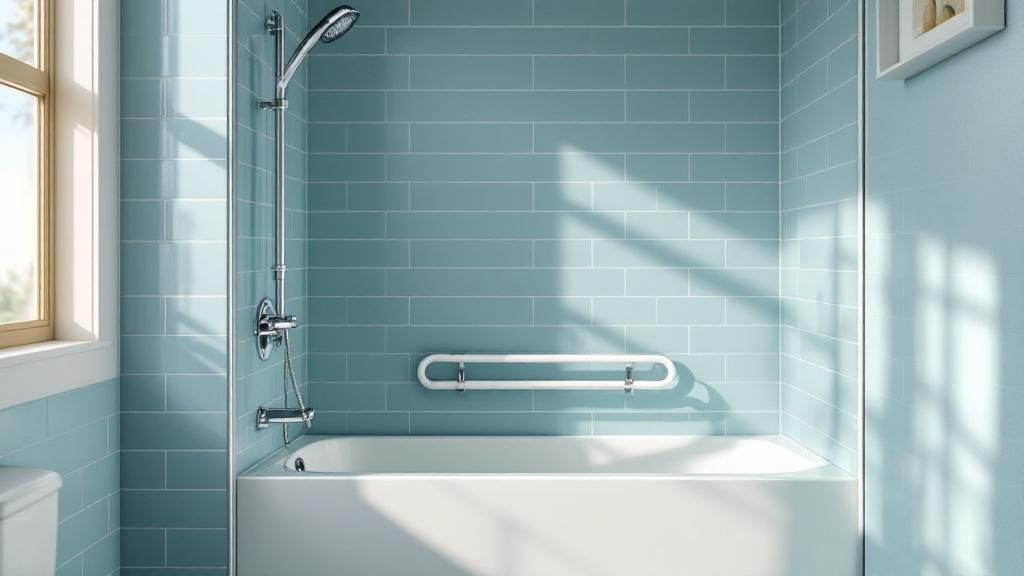
Hands down, the single most effective upgrade in a bathroom remodeling for elderly residents is swapping a traditional bathtub for a zero-threshold or curbless walk-in shower. A standard tub wall is often 15 inches or higher—a major trip hazard. By removing that barrier, you create a seamless entry that makes bathing dramatically safer, especially for someone who uses a walker.
Smart Seating and Support
Once safely inside the shower, stability is everything. A built-in shower bench is a fantastic option. It’s permanent, sturdy, and can be beautifully integrated into the shower's design, often tiled to match the walls. For more flexibility, a high-quality, portable medical-grade shower chair is an excellent alternative.
No accessible shower is complete without professionally installed grab bars. These must be anchored securely into the wall studs to support a person's full body weight during a slip.
Placement is just as critical as installation:
- A vertical bar near the shower entrance helps with stepping in and out.
- A long, horizontal bar on the main shower wall provides continuous support.
- Another bar should be located near the shower controls for stability while adjusting the water.
Key Takeaway: Grab bars are non-negotiable safety tools. At Aldridge Construction, we always anchor grab bars directly into wall framing for maximum strength and reliability, planning placement around the user’s height and specific mobility needs.
Beyond the Shower
The focus on safety needs to extend throughout the entire bathroom. Installing grab bars near the toilet provides crucial support for sitting down and standing up, taking significant strain off the knees and back.
Another vital upgrade is an ADA-compliant or comfort-height toilet. It sits between 17 and 19 inches high, a noticeable difference from the standard 15 inches. This seemingly small change makes the toilet much easier and safer to use. In our experience with bathroom remodeling in Salinas and Monterey, this is one of the most appreciated changes a family can make.
Finally, let's not forget the vanity. For more information, read about understanding appropriate vanity heights for comfort and accessibility. A wall-mounted "floating" vanity can provide essential knee clearance for anyone who needs to sit while at the sink.
Choosing Safe and Stylish Materials
There’s a myth that safety must come at the expense of style. When planning a bathroom remodeling for elderly family members, this couldn't be further from the truth. The secret is knowing how to pick modern materials engineered for both beauty and function.
Here at Aldridge Construction, we regularly guide homeowners across Santa Cruz and San Benito Counties toward selections that elevate their bathroom's design while putting safety first.

High-Traction Flooring Options
Your flooring choice is the most critical safety decision in the bathroom. The goal is to find a material with a high coefficient of friction (COF), which measures slip resistance. A wet, glossy tile floor is dangerous, but today’s alternatives offer fantastic grip without looking institutional.
We often recommend two standout options:
- Textured Porcelain Tile: Look for porcelain tiles with a subtle texture or a matte finish. They provide excellent traction and come in countless designs, from realistic wood-grain looks to classic stone patterns.
- Luxury Vinyl Tile (LVT): LVT is a fantastic, resilient choice. It’s naturally more slip-resistant than traditional ceramic, feels warmer underfoot, and is completely waterproof. Modern LVT is also exceptionally durable.
While thinking about flooring, it's also a great idea to read up on choosing indoor floor mats for safety and style, as the right mat adds another crucial layer of protection.
Fixtures and Lighting That Make a Difference
Ease of use is everything for faucets and shower controls. Traditional round knobs can be difficult for anyone with arthritis or limited grip strength to operate.
Aldridge Construction Pro Tip: Always opt for single-handle, lever-style faucets for sinks and showers. They require little force to use and make adjusting water temperature simple and precise, reducing the risk of accidental scalding.
Lighting also plays a massive role in preventing falls. A layered lighting plan is a much smarter and safer approach than a single, dim overhead light.
Think about incorporating:
- Bright, even overhead lighting to illuminate the entire room.
- Task lighting around the vanity mirror for safer grooming.
- Waterproof lighting right inside the shower stall.
By combining these choices, you create a beautiful, functional, and safe space. As you explore options, check out our guide on affordable bathroom remodeling to see how great design and safety can work with your budget.
Smart Layouts for Better Functionality
A truly accessible bathroom is built on the intelligent use of space. The layout dictates how easy and safe the room is to navigate. Thoughtful bathroom remodeling for elderly residents prioritizes flow and function, transforming a cramped space into one that promotes independence.
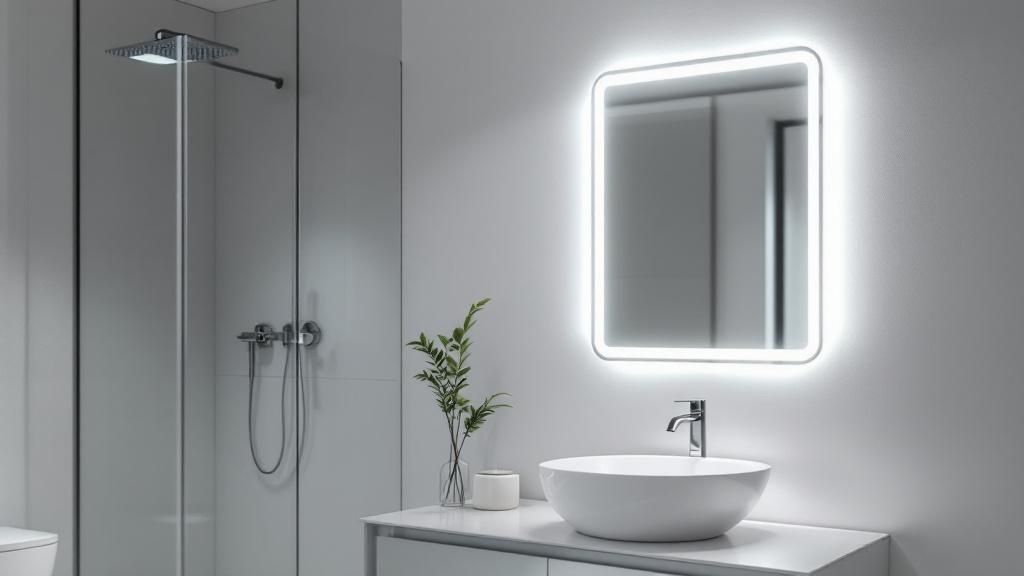
It all begins at the entrance. Widening the doorway to a minimum of 32 inches—with 36 inches being ideal—is one of the most impactful changes for walker or wheelchair access.
Once inside, clear floor space is non-negotiable. An accessible bathroom should have a clear turning radius of at least 60 inches to allow a wheelchair user to pivot. Even for those using a walker, eliminating tight corners is key to preventing falls. This is a common strategy we employ in both the ranch-style homes of Maricopa County, AZ, and the varied architecture in Monterey, CA.
Reimagining Vanities and Storage
The vanity area is another critical zone. A standard cabinet-style vanity can be an obstacle for anyone using a seated walker or wheelchair.
Key Takeaway: A floating or wall-mounted vanity is an excellent solution. It creates open knee space underneath, allowing a seated user to get close to the sink comfortably and safely.
The vanity height also matters. A height of 32-34 inches is often more ergonomic and accessible for a seated user.
Finally, smart storage is essential for minimizing risky movements. Consider these upgrades:
- Pull-down Shelving: Upper cabinets can be fitted with shelves that pull down to counter level.
- Full-Extension Drawers: Opt for drawers that pull all the way out so nothing gets lost in the back.
- Open Shelving: Install a few open shelves at an accessible height for frequently used items like towels.
Integrating these principles is a core component of any comprehensive home renovation and remodeling project.
Planning Your Remodel From Start to Finish
A successful bathroom remodel is built on a solid plan, especially when creating a safe space for an aging loved one. This process requires thoughtful budgeting, the right contractor, and a clear understanding of local codes.
At Aldridge Construction, we’ve guided countless families in Monterey, Santa Cruz, and Maricopa counties through every step. We ensure the final result is a bathroom that supports independence and gives everyone peace of mind.
The first step is a realistic budget. A comprehensive bathroom remodeling for elderly residents must account for labor, materials like non-slip flooring, and necessary plumbing or electrical adjustments. A great starting point is requesting one of our transparent home renovation quotes.
If you're exploring financing, it's good to know there are specialized options. Some homeowners look into OAP personal loans designed for older adults, which can offer terms suited for these essential modifications.
Hiring the Right Contractor Is Critical
Choosing your contractor is the single most important decision. You need a licensed, insured professional with specific experience in aging-in-place design and ADA-compliant features. This is specialized work where expertise is non-negotiable.
When interviewing potential contractors, ask direct questions:
- Can you show me photos or examples of accessible bathrooms you've completed?
- How familiar are you with local building codes for accessibility here in Monterey County?
- What’s your exact method for anchoring grab bars to ensure they support a person's full body weight?
- How will you manage the project timeline and minimize disruption?
Navigating Permits and Local Codes
Any remodel involving moving walls or changing plumbing and electrical layouts will require a permit. In California, for example, your project must comply with Title 24 energy efficiency standards. In Arizona, Maricopa County has its own set of local codes.
A seasoned contractor like Aldridge Construction handles the permitting process from start to finish, ensuring your new bathroom is safe, compliant, and built to last.
This image simplifies the core principles we follow when optimizing a bathroom layout, from initial assessment to final fixture placement.
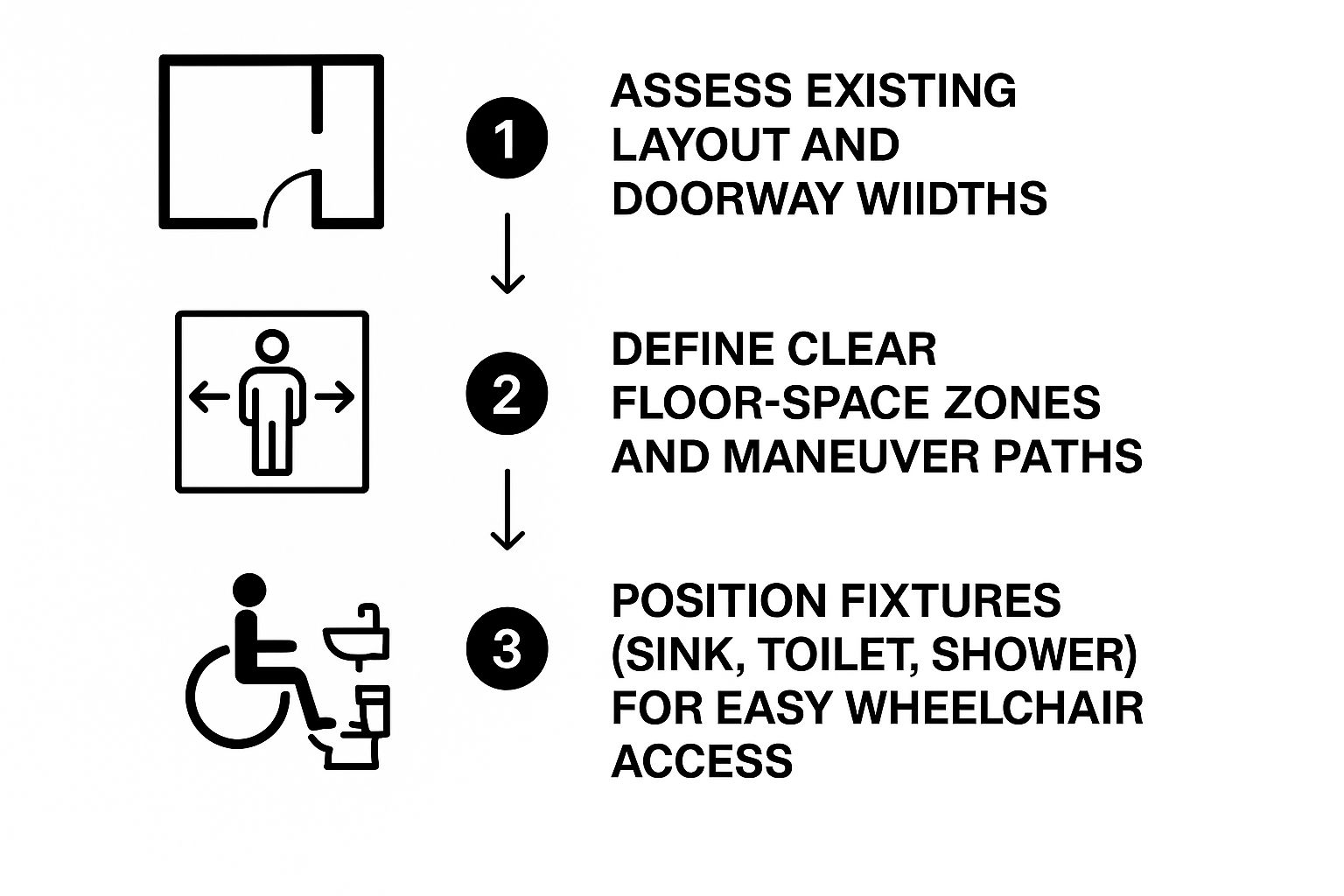
We start by understanding existing limitations and then strategically place key fixtures to create clear, wide pathways for maximum maneuverability. From the first measurement to the final inspection, this careful planning guarantees the bathroom is safe, functional, and built correctly.
Frequently Asked Questions About Bathroom Remodeling for Elderly Residents
When planning a bathroom remodeling for elderly family members, it’s natural to have questions. Here are some common ones we hear from homeowners in Monterey, Santa Cruz, San Benito, and Maricopa counties.
How much does a senior-friendly bathroom remodel typically cost?
The cost depends on the scope and materials. A basic update with grab bars and a comfort-height toilet might cost a few thousand dollars. A full-scale remodel in Monterey or Maricopa County with a curbless shower, new flooring, and wider doorway typically falls in the $15,000 to $30,000+ range. Aldridge Construction provides detailed quotes to fit your family's needs and budget.
What is the single most important feature for a senior-safe bathroom?
Replacing a high-sided bathtub with a zero-threshold, walk-in shower is the most impactful change. This single upgrade eliminates the biggest trip hazard in a typical bathroom. Combining it with a shower bench and grab bars creates a fundamentally safer bathing experience.
Can an accessible bathroom still look stylish?
Absolutely! Today's manufacturers design with high-end style in mind. You can find:
- Sleek Grab Bars: Available in modern finishes like matte black and brushed gold to match your faucets.
- Beautiful Non-Slip Tiles: Choose from gorgeous textured porcelain or luxury vinyl that mimics natural stone or hardwood.
- Elegant Fixtures: Lever-handled faucets and frameless glass shower doors contribute to a modern, beautiful space.
Our bathroom renovation services are built around achieving this balance of safety and style.
How long does this type of bathroom remodel take?
The timeline depends on the project's complexity. Installing grab bars and a new toilet might take a week or two. A complete renovation that requires moving plumbing and changing the layout can take four to six weeks or longer. We provide a clear timeline before starting to minimize disruption.
Are there financial assistance programs available for accessibility remodels?
Yes, depending on your location and situation. A few places to start your research include:
- Veterans' Benefits: The VA provides grants for home modifications for qualifying veterans.
- Medicaid Waivers: Some state Medicaid programs may cover home modifications for eligible individuals.
- Local Non-Profits: Contact your Area Agency on Aging in Monterey, Santa Cruz, San Benito, or Maricopa County to ask about local grants or assistance programs.
Ready to Create a Safer Bathroom?
A thoughtful bathroom remodel is a powerful way to support the long-term safety and independence of your elderly loved ones. By focusing on smart design, safe materials, and expert craftsmanship, you can provide invaluable peace of mind for the entire family.
If you are considering a bathroom remodel in Monterey, Santa Cruz, San Benito, or Maricopa County, the experts at Aldridge Construction are here to help. Contact us today for a professional consultation and let's discuss how we can transform your bathroom into a safe, stylish, and accessible space.