
So, you've found the perfect commercial space for your business. That's the first step. But what about turning that empty shell into a place that actually works for you? That’s where a tenant improvement contractor comes in. Think of them as a specialized general contractor who takes a blank or outdated commercial space and transforms it into a custom environment built specifically for your business's needs.
They are the essential partner for any business leasing a new office, retail store, or industrial facility in areas like Monterey County, CA, or Maricopa County, AZ. They manage the entire build-out, from the first design sketch to the final coat of paint, ensuring your new space is ready for success.
What Is a Tenant Improvement Contractor?

Imagine leasing a new commercial property. Oftentimes, what you get is just a "shell"—four walls, a floor, a ceiling, and basic utilities. A tenant improvement (TI) contractor is the expert who turns that blank canvas into a functional and branded space. They're different from a residential or general commercial builder because their entire focus is on modifying existing structures to meet the unique operational demands of a new tenant.
This whole process is often called a "build-out," and it's far more than just a cosmetic facelift. It's a strategic project designed to make sure the physical space perfectly aligns with your company's workflow, brand identity, and the experience you want to create for your customers. A skilled TI contractor ensures every dollar is invested wisely to build real, lasting value.
The Contractor as a Strategic Partner
The best tenant improvement contractors aren't just builders; they become strategic partners in your business’s success. They play a vital role in the commercial real estate world by taking a landlord's generic property and customizing it for a tenant's specific needs, making the whole renovation process efficient and targeted. Their work involves meticulous planning, managing tight schedules, and orchestrating all the moving parts of a construction project. For a deeper dive, check out this helpful tenant improvement contractors' guide.
A TI contractor's role goes way beyond just swinging hammers. They are the central hub of the entire project, coordinating every trade and detail to bring the vision to life.
Core Responsibilities of a Tenant Improvement Contractor
| Responsibility | Description & Impact |
|---|---|
| Initial Space Planning | Works with you to understand your business operations, then designs a layout that maximizes workflow, efficiency, and employee collaboration. |
| Budgeting & Value Engineering | Creates a detailed, transparent cost estimate and suggests smart alternatives for materials or methods, like using LVT flooring instead of hardwood, to achieve your goals without breaking the bank. |
| Permit Navigation | Manages the complex and often frustrating process of securing building permits in jurisdictions like Monterey County, CA, or Maricopa County, AZ, ensuring 100% compliance with local codes. |
| Subcontractor Management | Hires, schedules, and oversees all the specialized trades—from electricians and plumbers to flooring installers and painters—ensuring quality work from start to finish. |
This table highlights how their job is to handle the construction complexities so you can stay focused on what you do best: running your business.
A great tenant improvement contractor bridges the gap between a landlord’s property and a tenant’s vision. They translate business needs into a physical reality, ensuring the final space is not only beautiful but also fully compliant and operationally sound from day one.
Ultimately, by managing every detail, a professional TI contractor like Aldridge Construction ensures your project finishes on time, stays within budget, and meets the highest quality standards. They are the key to turning a simple lease into a valuable, hard-working business asset.
Mapping Your Tenant Improvement Journey
Every successful tenant improvement project follows a clear, predictable path. A skilled TI contractor provides a roadmap, guiding you from the initial idea to the final handover. This prevents costly missteps and turns a blank commercial space into an environment perfectly tuned to your business.
The entire process breaks down into three key phases, moving logically from big-picture planning to the nitty-gritty of construction. This flow chart gives you a bird's-eye view of how a typical TI project unfolds.
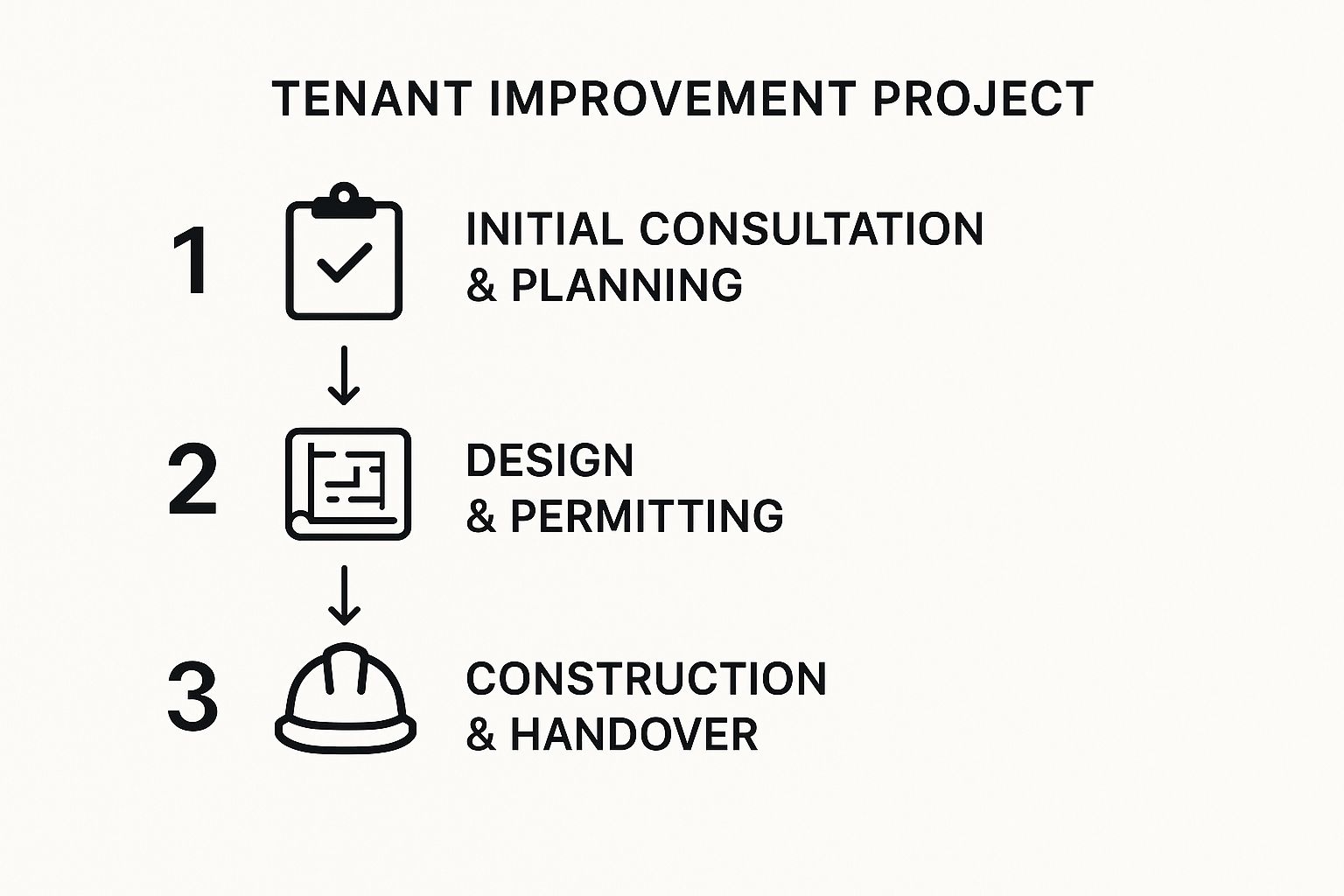
As you can see, the journey starts with consultation and planning, flows into design and permitting, and finishes with construction and your final walkthrough. It’s a systematic approach that keeps things organized and on track.
Phase 1: Initial Consultation and Space Planning
This is the foundational stage where your vision starts to become tangible. It kicks off with a deep-dive consultation where we listen—to your goals, operational needs, and budget.
Here’s what happens in this first phase:
- Needs Assessment: We talk through everything. How many employees do you have? What does your workflow look like? Are you building an open-plan office in Santa Cruz, a specialized medical exam room, or a chic retail showroom in Monterey?
- Site Evaluation: Your contractor will inspect the existing conditions, identifying both opportunities and constraints. This means checking out the HVAC, electrical, and plumbing systems to see what we’re working with.
- Preliminary Budgeting: Based on your goals and the site evaluation, we develop an initial budget. This is a critical reality check to ensure the project is financially viable before diving into formal design work.
Phase 2: Collaborative Design and Permitting
Once the scope is clear, we move into the design phase. Aldridge Construction works closely with architects and designers to create the detailed construction documents—the blueprints that will guide the entire build.
A critical part of this phase is ensuring compliance with local and state regulations. For projects in California, this means designing to meet strict California Title 24 energy efficiency standards, which govern everything from lighting to insulation.
After the designs are finalized, the next hurdle is getting permits from the local building department. Navigating the permitting process in places like Monterey County or Maricopa County, AZ, takes real local expertise. An experienced tenant improvement contractor handles this entire process for you, preventing the costly delays that can trap a project in administrative limbo.
Phase 3: Construction and Final Handover
With approved permits in hand, the real work begins. Your contractor now orchestrates all the subcontractors—electricians, plumbers, painters, and everyone else—and manages the day-to-day progress on site. Consistent communication is everything during this phase.
The very last step is the punch list walkthrough. You’ll walk the finished space with your contractor to identify any minor items that need a final tweak or adjustment. Once every detail meets your standards, we hand over the keys. Your new, custom-fit business space is officially ready for you to move in.
Why a Specialized TI Contractor Is Your Best Bet

You might be wondering, "Can't any general contractor handle a commercial build-out?" While many are capable, choosing a specialized tenant improvement contractor is a lot like picking a heart surgeon over a general practitioner for heart surgery. One has the exact, focused expertise you need when the stakes are high.
A dedicated TI specialist brings a concentrated skill set that a generalist just can't match. Their entire professional world revolves around transforming interior commercial spaces inside existing buildings, often while business operations continue next door. This specialization pays off in significant ways.
Superior Budget and Schedule Management
TI projects are notorious for tight timelines and budgets, often tied directly to your business’s grand opening. A specialized contractor thrives in this high-pressure environment. They’ve seen it all before and understand the unique rhythm of commercial renovations, allowing them to spot potential bottlenecks before they derail your project.
Their deep experience also makes them masters of value engineering. This isn't about cutting corners; it’s about making smart, strategic substitutions that protect your budget without sacrificing your vision.
What is Value Engineering?
It's a systematic way to improve a project's "value." For example, a TI expert might suggest a specific brand of durable, luxury vinyl tile that gives you the same high-end look as hardwood but at a lower price point and with better longevity for a busy retail space. This is where their hard-won experience really pays off.
Navigating Complex Commercial Codes
Commercial buildings operate under a completely different—and often much stricter—set of rules than residential properties. A specialized tenant improvement contractor lives and breathes these regulations every day.
Here are a few key areas where their expertise is crucial:
- ADA Compliance: Ensuring your space is fully accessible to people with disabilities isn't just a good idea—it's federal law. A mistake here can lead to expensive lawsuits and forced renovations.
- Fire and Safety Codes: From sprinkler systems to the correct number and location of emergency exits, a TI contractor ensures your build-out meets every requirement from the local fire marshal, whether you're in Monterey County, CA, or Maricopa County, AZ.
- Specific Use Regulations: The build-out requirements for a medical office are worlds apart from those for a restaurant or a tech startup. A specialist understands these critical nuances.
While we are experts in commercial spaces, the core principles of quality and compliance carry through all our work. You can see this same commitment in our approach to home renovation and remodeling. Hiring a specialist is an investment in a smooth, compliant, and successful project.
Decoding Tenant Improvement Costs and Allowances
The financial side of a commercial renovation can feel complicated. Getting a handle on costs and how they’re managed is critical for both tenants and landlords. This is where a professional tenant improvement contractor becomes your most valuable financial guide.
A key piece of the puzzle is the Tenant Improvement Allowance (TIA). Think of it as a financial contribution from the landlord to you, the tenant, to help pay for building out your new space. It’s almost always calculated on a per-square-foot basis and is a major negotiating point in any commercial lease. An experienced contractor is essential here, as they can help you accurately estimate your project costs to negotiate a fair TIA.
Key Factors Driving Project Costs
No two tenant improvement projects cost the same. When you understand what drives these costs, you can make smarter decisions that keep your project aligned with your budget.
Your project's cost will be influenced by:
- Scope of Work: A simple cosmetic facelift with new paint and flooring will cost much less than a full "down to the studs" rebuild. Moving walls, adding plumbing, or installing new electrical systems increases complexity and cost.
- Material Selections: The finishes you pick have a huge impact. For example, choosing high-end quartz countertops and custom millwork is a world away from the cost of standard laminate countertops and off-the-shelf cabinetry.
- Regional Labor Rates: Construction labor in Monterey County, CA, will have different rates than in Maricopa County, AZ, directly affecting the total budget.
- Permitting and Code Compliance: Navigating the specific construction permit requirements in your city or county adds another layer of cost to the project.
Negotiating and Managing the TI Allowance
In today's commercial real estate market, tenants often have more bargaining power. With higher commercial vacancies in many areas, landlords are more motivated to offer attractive incentives. In fact, some markets have seen TI allowances jump by as much as 50%, often bundled with perks like a few months of free rent. [Source: JLL, 2023]. A savvy contractor helps you use this dynamic to your advantage.
A well-managed TI allowance is the bedrock of a successful project. Aldridge Construction operates with full transparency, tracking every dollar spent against the allowance. We provide clear financial reports so you can see exactly where the funds are going and stop budget overruns before they happen.
The goal is to be strategic with the TIA. Your contractor will help you prioritize spending on the elements that deliver the most functional and aesthetic bang for your buck, protecting your investment from day one.
Thriving in the Current Commercial Real Estate Market

To pull off a successful commercial renovation, you have to understand the larger real estate market. The current climate has unique challenges and opportunities that will affect your tenant improvement project. This is where a savvy tenant improvement contractor becomes your greatest asset.
Right now, two big trends are shaping the landscape: vacancy rates are up, and new construction has slowed. With commercial vacancy rates hitting a multi-year high, landlords are feeling the pressure to compete for good tenants. This can give you serious leverage at the negotiating table.
Strategic Approaches for Different Markets
These market dynamics don’t look the same everywhere. A skilled contractor can help you craft a strategy that fits the specific conditions of your local area, whether you're in the coastal markets of California or the industrial hubs of Arizona.
For instance, in a competitive rental market like Santa Cruz County, a landlord might offer a generous TI allowance to lock in a quality, long-term tenant. Your contractor can help you put together a detailed project estimate, arming you with the hard data you need to negotiate for a larger contribution from the landlord.
By presenting a well-defined project scope and budget, you transform your renovation plans from a mere wish list into a powerful negotiating tool. This proactive approach shows you are a serious, organized tenant, making a landlord more likely to invest in your build-out.
Phased Renovations in Growing Regions
Now, let's flip the script. In a rapidly expanding industrial zone like Maricopa County, AZ, a phased renovation could be the smartest move. This allows you to tackle your most immediate operational needs first, while laying the groundwork for future expansion as your business grows. A phased strategy, guided by an experienced contractor, is a fantastic way to manage your cash flow and keep disruptions to a minimum.
Ultimately, the principles of smart, careful planning are universal. It doesn't matter if you're planning a major commercial build-out or thinking about home improvement in Monterey. Aldridge Construction helps clients in both California and Arizona make strategic, forward-thinking decisions that turn market conditions into real opportunities.
How to Select the Right Tenant Improvement Contractor
Choosing your partner for a commercial build-out is the single most important decision you'll make for the project. A great tenant improvement contractor makes the entire process feel smooth and controlled. The wrong one can lead to budget overruns, frustrating delays, and a lot of stress.
You need to treat this selection process with the same seriousness you'd apply to hiring a key employee. You are looking for a partner who communicates clearly, manages projects like a pro, and has proven experience in your specific industry.
Your Essential Vetting Checklist
Before you sign a contract, walk through this checklist during your conversations with potential contractors. Their answers will tell you everything you need to know.
- Licensing and Insurance: Ask for their contractor license number and proof of general liability and workers' compensation insurance. Never hire an unlicensed or uninsured contractor. You can easily verify a California license with the CSLB and an Arizona license with the ROC.
- Relevant Experience and Portfolio: Don’t just ask if they’ve done TI work. Ask to see a portfolio of projects similar to yours in both scope and scale. A team specializing in medical offices might not be the best choice for your new restaurant.
- Local References: Ask for a list of recent clients, especially those in Monterey, CA, or Maricopa, AZ. Speaking directly with past clients provides unfiltered insights into their quality of work and communication style.
- Project Management and Communication: How exactly will they keep you in the loop? Do they use specific project management software? Get a clear communication plan established from day one.
Your goal is to find a contractor who is transparent, experienced, and completely reliable. A detailed, thorough proposal is a great sign; a vague, one-page estimate is a major red flag.
This vetting process is crucial for a successful outcome. For a more detailed breakdown of what to look for, Aldridge Construction provides a comprehensive guide on how to find a good contractor that applies to any construction project. By asking the right questions, you empower yourself to hire with confidence.
Frequently Asked Questions About Tenant Improvement Projects
1. Who pays for tenant improvements?
This is negotiated between the landlord and tenant. Most often, the landlord provides a Tenant Improvement Allowance (TIA), which is a set amount per square foot. The tenant is responsible for any costs that exceed this allowance. A skilled TI contractor helps you create an accurate budget to maximize your TIA and negotiate effectively.
2. How long does a tenant improvement project take?
The timeline depends entirely on the project's scope. A simple cosmetic refresh with new paint and flooring might take 2-4 weeks. A full build-out involving new walls, plumbing, and electrical systems could take 3-6 months or more, which includes time for design and navigating the permit process in places like Santa Cruz County, CA or Maricopa County, AZ.
3. What is a Tenant Improvement Allowance (TIA)?
A TIA is a sum of money provided by a landlord to a tenant to cover all or a portion of the costs of renovating a commercial space. It is typically calculated on a per-square-foot basis (e.g., $50 per square foot) and is a key negotiating point in a commercial lease agreement.
4. Can my business stay open during the renovation?
Yes, in many cases. An experienced tenant improvement contractor can phase the construction to minimize disruption. This can involve working after business hours, building temporary dust barriers to isolate the work zone, and scheduling noisy activities like demolition for off-peak times.
5. What's the difference between a TI contractor and a general contractor?
While a general contractor can handle many types of construction, a TI contractor specializes specifically in renovating and customizing interior commercial spaces within existing buildings. They have deep expertise in commercial codes (like ADA and fire safety), working in occupied buildings, and managing the unique tenant-landlord-contractor relationship.
Ready to Transform Your Commercial Space?
The expert team at Aldridge Construction has guided businesses across Monterey, Santa Cruz, and Maricopa Counties through successful tenant improvement projects. We have the specialized expertise to bring your vision to life, on time and on budget.
Contact Aldridge Construction today for a professional consultation and start planning your perfect business space.
https://aldridgeconstruction.biz