
Thinking about expanding your home? The first question on your mind is probably about the cost.
A room addition can range from $150 to over $300 per square foot. That's a wide range because the final price depends on what you're building and how complex the job is.
This guide breaks down what’s the average cost of a room addition and the best way to budget for your project in Monterey, Santa Cruz, or San Benito Counties.
Understanding Room Addition Costs
When you ask, "what’s the average cost of a room addition," the answer is always, "it depends."
Adding a simple bedroom is very different from a kitchen expansion. A kitchen involves plumbing, custom cabinets, and high-end appliances, which drives up the price.
Understanding this from the start helps you create a realistic budget and avoid surprises. This blueprint shows how costs change with the size and complexity of your project.
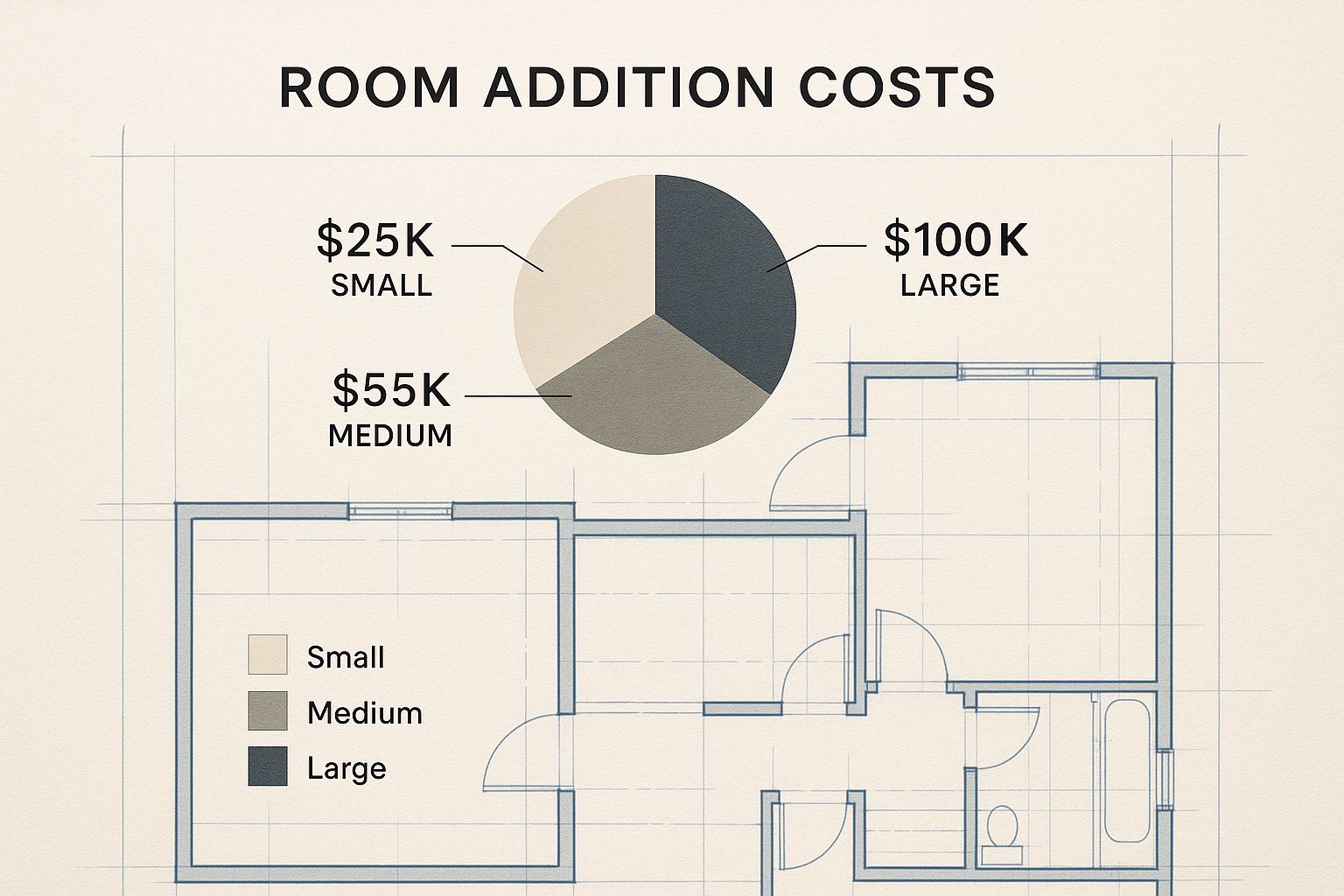
As you can see, even a small addition requires careful financial planning. Costs for the foundation, framing, roofing, and finishes add up quickly.
National vs. Local Costs
Nationally, a room addition often costs between $22,000 and $83,000. The average homeowner spends around $51,000.
However, the type of room is a major factor. Here is a breakdown of what you might expect for different spaces.
Estimated Cost Per Square Foot by Room Type
| Room Type | Average Cost Per Square Foot | Key Cost Drivers |
|---|---|---|
| Bedroom | $110 – $230 | Framing, drywall, basic electrical, flooring, paint. Fewer complex systems keep costs down. |
| Bathroom | $200 – $400+ | Extensive plumbing, tile work, waterproofing, fixtures like a Kohler shower system, and ventilation. |
| Kitchen | $250 – $500+ | Plumbing, dedicated electrical circuits, gas lines, custom cabinetry, Quartz countertops, and appliances. |
| Living Room | $150 – $300 | Varies based on features like fireplaces, built-in shelving, or high-end flooring. |
These numbers are a good starting point, but local factors matter. In Monterey County and Santa Cruz County, labor and material costs are often higher than the national average. This is due to local demand and specific building codes.
To get a more personalized estimate, use our room addition cost calculator. It helps you create a budget based on real-world factors.
At Aldridge Construction, we provide detailed quotes. You will know exactly where your money is going before we start.
Key Factors That Drive Your Final Price
Once you have a general idea, it's time to look at what shapes the final quote for your room addition. A few key variables can change the price of your project.
The most obvious cost driver is size and design complexity. A simple, rectangular bedroom will cost less than one with custom angles or vaulted ceilings. Every extra corner and architectural detail adds to labor and material costs.
The Invisible Costs of a Room Addition
Many of the biggest expenses are the ones you can't see. They are essential for a safe, legal, and lasting addition.
Some of the most critical "invisible" costs include:
- Site Preparation: Before building, we must prepare the ground. This could involve excavation or grading to ensure proper drainage, especially with the soil conditions in Monterey County.
- Foundation Work: Every addition needs a solid foundation. This structural work is a major part of the budget.
- Permits and Fees: You cannot skip this step. Each city and county has its own rules. Securing building permits is necessary to protect your investment and ensure everything is up to code. We navigate local regulations in Salinas and Santa Cruz. You can learn more about local construction permit requirements.
- Plumbing and Electrical Integration: Connecting new systems to your home’s existing infrastructure requires licensed professionals. Adding a bathroom or kitchenette is more complex and adds to the final price.
Materials and Finishes Determine the Final Look—and Cost
Your personal taste has a big impact on the budget. There is a large price difference between standard vinyl windows and premium, energy-efficient Milgard windows.
The quality of your materials affects both the initial cost and the long-term value of your addition. Investing in quality from the start often saves money on future repairs.
Aldridge Construction provides a detailed, line-item estimate. This transparency means you know exactly where your money is going, from the foundation to the final coat of paint.
Building Out vs. Building Up: What It Means for Your Budget
When you need more space, you can either build out or build up. This decision greatly affects your budget.

Surprisingly, building up is almost always more expensive per square foot than building out. The reason is the structural work required.
Why Building Up Often Costs More
To add a second story, your home’s existing structure must handle the extra weight. A licensed contractor like Aldridge Construction will hire a structural engineer to assess your home's foundation and frame.
Other factors that increase the price include:
- Roof Removal and Reconstruction: Your existing roof must be removed and rebuilt, which is a major project.
- Staircase Construction: You need a new staircase, which takes up space on your first floor and adds complexity.
- Plumbing and HVAC Rerouting: Extending pipes and ductwork vertically is more difficult than running them into a ground-floor addition.
A Tale of Two Additions
Let's compare two hypothetical 400-square-foot additions.
Industry data shows a ground-level room addition costs between $80 and $200 per square foot. A second-story addition is typically $300 to $500 per square foot due to the extra structural work.
Here's what that means in real numbers:
A 400-square-foot ground-level family room might cost between $32,000 and $80,000.
A 400-square-foot second-story master suite could cost between $120,000 and $200,000.
This price gap is why building out is often more budget-friendly. This is especially true for homeowners in Monterey or Maricopa County with enough yard space.
The right choice depends on your property, your family's needs, and your budget.
How to Build a Budget That Works
A successful room addition starts with a smart financial plan. A realistic budget is the most important step in turning your vision into a goal.
First, get detailed, itemized quotes from licensed contractors. A trustworthy professional like Aldridge Construction will break down the costs line by line. You will see the price difference between premium Milgard windows and a standard option, for example.
Plan for the Unexpected
Even with a detailed plan, surprises can happen. This is common in older homes, where we might find outdated wiring or hidden structural issues. That’s why your budget must include a contingency fund.
Industry experts recommend setting aside 15% to 20% of your total project cost for unforeseen expenses. This is an essential part of your budget that acts as a safety net.
This fund gives you peace of mind, allowing you to handle unexpected issues without stress.
Analyzing the Numbers in Your Budget
To budget well, you need to understand where your money is going. Part of this involves effective space planning before construction begins. Bedrooms are often the most affordable additions, while bathrooms and kitchens cost more.
Here’s a look at what your budget should cover:
- Hard Costs: Labor and materials like lumber, concrete, and drywall.
- Soft Costs: Architectural designs, engineering fees, and building permits in Salinas or Monterey County.
- Finishing Costs: Paint, flooring, light fixtures, and hardware.
- Contingency Fund: Your 15-20% buffer for surprises.
Once you have a clear financial picture, explore funding options. Our guide to the top home renovation loans can help.
Remember, the cheapest bid is rarely the best value. A low quote can be a red flag for shortcuts or low-quality materials. Investing in a quality build with a transparent contractor ensures your addition is a lasting asset.
Choosing The Right Contractor In Monterey County
You have a budget and a plan. Now comes the most important decision: picking the right contractor.
The contractor you choose will determine the quality, cost, and success of your room addition. Finding a partner with a proven track record is the best way to protect your investment.

A trustworthy contractor offers peace of mind. This means transparent pricing with no hidden surprises. Working with a team that provides a detailed, line-item quote is the most effective way to budget.
Why Local Expertise Matters
A contractor with deep local roots can avoid costly delays. This is crucial on the Central Coast.
At Aldridge Construction, our experience in Monterey, Santa Cruz, and San Benito Counties gives us a strong understanding of local challenges. We are familiar with the permitting process in Salinas and know the zoning codes. This local knowledge ensures your project moves smoothly.
Choosing a contractor is about building a relationship based on trust and clear communication. A great contractor acts as your advocate, guiding you through every decision and ensuring the final result exceeds your expectations.
Our start-to-finish project management means we handle every detail. We coordinate all the moving parts so you don’t have to. For more tips, see these expert tips on hiring a general contractor for renovations.
Aldridge Construction is committed to quality without shortcuts. We created a guide on how to find a good contractor to help you make an informed choice. Our goal is to make your vision a reality, on time and on budget.
Frequently Asked Questions About Room Addition Costs
Here are answers to some of the most common questions we hear from homeowners in Salinas and Monterey County.
1. What’s the average cost per square foot for a room addition in Monterey County?
In Monterey County, you can expect to pay between $150 and $300+ per square foot. This is often higher than the national average due to local labor costs and building codes. The final cost depends on the room type, materials, and project complexity.
2. Is it cheaper to build up or build out?
It is almost always cheaper to build out (a single-story addition) than to build up (a second-story addition). Building up requires significant structural reinforcement, roof reconstruction, and staircase installation, which increases the cost per square foot.
3. How much should I budget for a contingency fund?
We recommend setting aside 15% to 20% of your total project cost for a contingency fund. This fund covers unexpected expenses, like hidden structural issues or material price increases, without derailing your budget.
4. What factors have the biggest impact on a room addition's cost?
The biggest cost drivers are:
- Size and design complexity.
- Room type (kitchens and bathrooms cost more than bedrooms).
- Structural changes and foundation work.
- Quality of materials and finishes (e.g., flooring, windows, fixtures).
- Permit fees in your specific city or county.
5. Does a room addition increase my home's value?
Yes, a well-designed room addition can provide a strong return on investment. According to Remodeling Magazine's 2024 Cost vs. Value Report, a midrange bathroom addition can recoup over 66.7% of its cost at resale. Additions that add a bedroom or expand living space are particularly valuable to buyers in California.
Ready to turn your vision for more space into a reality? The team at Aldridge Construction has the local expertise and commitment to quality to bring your room addition to life. We provide honest, transparent quotes and manage every detail from start to finish.
Contact us today for a consultation and let’s discuss how we can build the perfect addition for your home in Monterey, Santa Cruz, or San Benito County. Visit us at https://aldridgeconstruction.biz to learn more.