
Finding the right partner for your home remodel starts with knowing how to find a good contractor. After years in this business, the most reliable method is a smart blend of trusted referrals and tapping into professional networks. This foundational step ensures the names on your list are already vetted by people you trust or by industry gatekeepers.
Building Your Initial List of Potential Contractors

Kicking off a renovation is a huge investment. The contractor you choose will be your partner for weeks or even months, which makes this initial selection process the single most important stage of your project.
Your goal here is to build a strong starting lineup of three to five qualified professionals. This gives you enough options for competitive bids but is small enough that you can thoroughly vet each one without getting overwhelmed.
Start with Trusted Word-of-Mouth
The most powerful recommendations come from people whose judgment you trust and whose finished projects you can see for yourself.
- Friends, Family, and Neighbors: Start with your immediate circle, especially if they’ve recently finished a project similar to yours. Ask them about the contractor's communication, how well they stuck to the budget, and the overall quality of the work.
- Real Estate Agents: Good local agents in areas like Monterey or Maricopa County have a roster of go-to contractors they rely on to get homes ready for sale. They can be an incredible source for solid, reliable names.
- Architects and Designers: If you're already working with an architect or designer, they'll have a shortlist of builders they’ve had success with. They can recommend someone whose style and expertise fit the complexity of your project.
Broaden Your Search with Professional Resources
Once you've tapped your personal network, it's time to look at professional and local sources. These can help you find pre-vetted, reputable contractors, which is especially important when you’re exploring options for a full home renovation in Salinas or Monterey and need to find established local pros.
To get started, this quick checklist can help guide your search across different platforms and networks.
Contractor Sourcing Checklist
| Source | What to Look For | Key Question to Ask |
|---|---|---|
| Local Building Supply Stores | Consistent presence, good relationship with staff. | "Who are the reliable, professional builders you see in here often?" |
| NARI (National Association of the Remodeling Industry) | Certifications, awards, and a commitment to a code of ethics. | "Can you show me a list of certified remodelers in my area?" |
| Houzz or Angi | Detailed project portfolios, client reviews, and direct responses from the contractor. | "Do their project photos match the style and quality I'm looking for?" |
| Local Real Estate Agents | Contractors they trust for pre-sale renovations and repairs. | "Who do you recommend when a client needs to get their home market-ready?" |
This table provides a solid framework for finding quality names beyond your immediate circle. Don't overlook your local building supply stores; their staff know which contractors run a professional operation.
How to Properly Vet Your Contractor Shortlist
You've got a few names on your list. Now the real work begins. This due diligence phase is where homeowners can make or break their entire project.
Your first mission is to confirm you’re dealing with a legitimate, professional business. You need to verify they have the right credentials to work in your area, whether it's Monterey County, CA, or Maricopa County, AZ. Start by asking for two non-negotiable documents:
- A valid contractor's license: In California, run a quick check on the Contractors State License Board (CSLB) website. For projects in Arizona, the Arizona Registrar of Contractors (ROC) is your go-to.
- Proof of insurance: A pro will have two types of coverage. General Liability insurance protects your property from damage, and Workers' Compensation covers their crew if someone gets hurt on your job site.
Dig Deeper Than Surface-Level References
Once their credentials check out, it's time to talk to their past clients. A truly insightful reference check means asking targeted questions that reveal how a contractor really operates.
Have a specific list of questions ready for each reference call. We suggest starting with these:
- How was the communication during the project? Were you kept in the loop?
- Did the final cost match the initial bid? If it changed, were the reasons clear and justified?
- Was the project finished on the timeline they gave you?
- What was their job site management like? Did they keep it clean and safe?
- The ultimate question: Would you hire them again?
Analyze Their Portfolio and Set Realistic Expectations
Think of a contractor’s portfolio as their professional resume. Pay close attention to work that mirrors the scope and style you’re after. If you're planning a modern kitchen in Santa Cruz, a portfolio of only rustic additions in San Benito County might signal a poor fit.
It's also crucial to ground yourself in reality. Home renovation shows often create a false sense of perfection and speed. As you can see in this helpful guide on contractor hiring, real-world projects can hit snags.
Understanding this from the get-go helps you build a better partnership. When you pair thorough vetting with realistic goals, you're in a stronger position to evaluate home renovation quotes and choose a trusted partner.
Decoding Bids and Finalizing Your Contract
Once you’ve vetted your top candidates, the bids will start rolling in. This is where a little analysis goes a long way in learning how to find a good contractor. You're not just looking at the final number; you're comparing detailed roadmaps.
Be wary of any bid that comes in significantly lower than the others. An unusually low price is often a red flag that could mean cheap materials, uninsured labor, or surprise costs later. A professional bid will break everything down for you.
What to Look for in a Professional Bid
A quality bid is an itemized breakdown showing exactly where your money is going. This level of detail builds trust and sets clear expectations.
Here’s what you should expect to see:
- Labor Costs: A clear breakdown of labor charges, separated by trade.
- Material Specifications: This should list specific brands, like James Hardie siding or particular models of Pella windows.
- Permit Fees: An allowance for pulling permits in your municipality, whether in Monterey County, CA, or Maricopa County, AZ.
- Payment Schedule: A schedule that ties payments to completed project milestones, not just calendar dates.
The graphic below highlights the importance of vetting credentials, a step you should complete before the bidding stage.
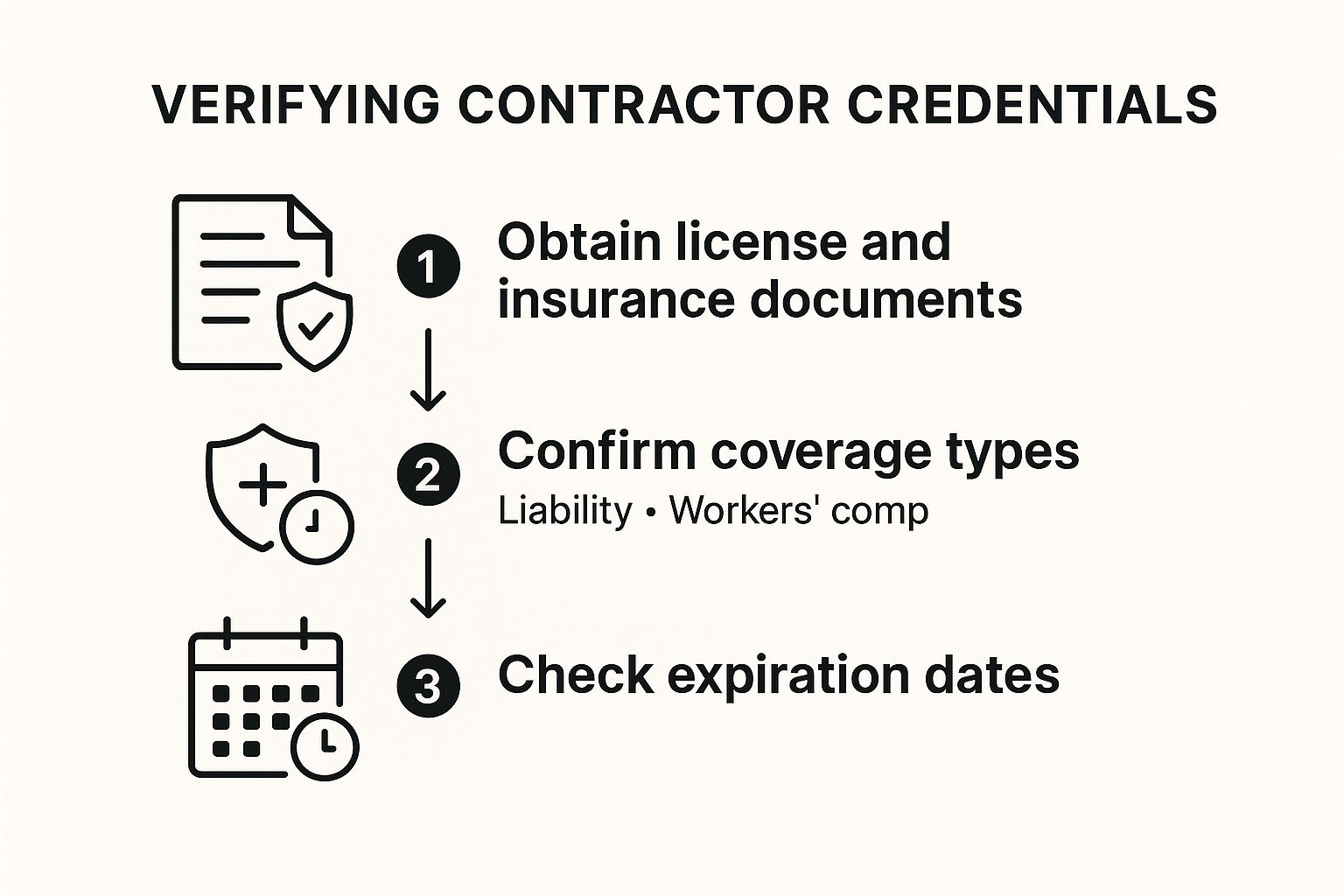
Following this process ensures any contractor you're considering is legitimate, insured, and ready to take on your project.
Bid Comparison Key Factors
Comparing bids can feel like comparing apples to oranges. This table will help you look deeper and evaluate each proposal more objectively.
| Evaluation Factor | Contractor A | Contractor B | Contractor C |
|---|---|---|---|
| Total Price | |||
| Detailed Cost Breakdown | |||
| Specific Materials Listed | |||
| Clear Payment Schedule | |||
| Projected Timeline | |||
| Warranty Details | |||
| Change Order Process | |||
| Professionalism/Communication |
By filling this out, you can get a clearer picture of who is offering the most comprehensive plan, not just the cheapest one.
Your Contract Is Your Ultimate Protection
After you’ve made your choice, the last step is the written contract. This non-negotiable document is the most critical tool you have to ensure your project is successful, protecting both you and the builder.
The global construction market is enormous, valued at over $14.3 trillion in 2023 [The Business Research Company, 2024]. This scale means there are countless specializations, making it crucial to ensure your contract’s details match your project’s specific needs. You can learn more by reading the full market report. Your contract should be a detailed blueprint of the entire project, outlining scope, materials, milestones, and the change order process.
The Unseen Qualities of a Great Contractor

Technical skill is just the price of entry. What separates an adequate builder from a true partner are the unseen qualities—the professional systems that keep your project on track and your stress levels down.
A great contractor doesn't leave you guessing. From day one, they'll lay out a clear communication plan: how often you'll get updates, who your go-to person is, and the best way to ask questions.
Project Management and Communication Habits
Pay close attention to how they manage the entire operation. A well-organized contractor has a system for everything, a key piece of the puzzle when you're learning how to find a good contractor. You'll see it in how they schedule subcontractors, order materials, and maintain a safe, clean job site.
Here are a few tell-tale signs of a pro at work:
- Proactive Problem-Solving: They see potential issues and bring you solutions, not problems.
- A Tidy Worksite: A clean site signals respect for your home and a commitment to safety.
- Deep Code Knowledge: A top-tier contractor will be fluent in local requirements, like California’s Title 24 energy codes or Arizona building codes, ensuring your project is compliant.
A contractor's daily habits are the clearest predictor of your project's outcome. Consistent communication, a tidy job site, and proactive issue resolution are signs you've found a reliable partner. These professional traits guarantee a smoother, more predictable experience with expert expert home improvement contractors.
Working Together: Keeping Your Project on Track

Once work begins, the most important part of your project is the relationship you have with your contractor. This partnership, built on respect and open communication, is what turns a stressful process into a rewarding one.
A collaborative spirit keeps everyone on the same page. Your role is huge; timely decisions on materials like tile, paint colors, or countertops are critical to avoiding delays.
How to Build a Strong Partnership
Keeping the project moving forward takes effort from both you and your contractor. We've found that regular, scheduled check-ins are more effective than a random string of texts or calls.
To keep things running smoothly, we recommend these practices:
- Keep a Project Journal: Jot down notes from conversations and decisions. After a meeting, send a quick email summarizing what was agreed upon to create a shared record.
- Handle Disagreements with Professionalism: Issues will come up. When one does, bring it up calmly with your project manager and refer to your contract to clarify expectations.
- Put Change Orders in Writing: Any deviation from the original plan needs a formal change order. This document should clearly state the new work, its cost, and any impact on the timeline.
A great contractor relationship is built on clear communication and professional respect. This partnership becomes even more vital on bigger jobs like large-scale home additions, where client collaboration is prioritized every step of the way.
Frequently Asked Questions About Hiring Contractors
Even after doing research, most homeowners still have questions before they hire a contractor. Getting solid answers is the final step in feeling confident about your project. Here are some of the most frequent questions we hear.
What are the biggest red flags to watch out for?
A contractor pushing for a large, upfront cash payment, refusing to provide a written contract, or getting defensive when you ask for their license and insurance info are major red flags. Also, be wary of an unusually low bid, as it often signals cut corners or hidden fees.
How many bids should I get for my project?
Get at least three detailed bids from contractors you've already vetted. This provides a solid baseline for comparing costs and timelines. Ensure every contractor is bidding on the exact same scope of work and materials for a true apples-to-apples comparison.
Is it normal to pay a deposit before work starts?
Yes, a deposit is standard practice to cover initial material orders and secure your spot on the schedule. However, the amount must follow state law. In California, a down payment for a home improvement project cannot exceed 10% of the contract price or $1,000, whichever is less. Payments should be tied to project milestones.
What should I do if a problem arises during construction?
Bring up any issues immediately and directly with your contractor. Open communication is the fastest way to solve problems. Refer to your signed contract and follow up with an email documenting the issue and agreed-upon solution. You can find more insights on this when working with professional home renovation contractors.
Why is a local contractor better?
Hiring a contractor local to Monterey, Santa Cruz, or Maricopa County provides a home-field advantage. They understand regional building codes, unique climate challenges (like coastal moisture in CA or desert sun in AZ), and have established relationships with the best local suppliers and subcontractors, ensuring a better, longer-lasting result.
Ready to stop searching and start building with a contractor you can trust? The team at Aldridge Construction has been serving homeowners across Monterey, Santa Cruz, San Benito, and Maricopa Counties with integrity and expert craftsmanship. Contact us today for a professional consultation.