
That cramped, dusty attic space holds more potential than you might think. With the right design, it can become a beautiful and useful bathroom. This adds value and convenience to your home. Many homeowners in Monterey, Santa Cruz, and San Benito Counties are finding that a smart attic conversion is a great way to expand their living space without the cost of a full addition. This is especially true for older Salinas homes, which often have layouts that need creative solutions.
Aldridge Construction specializes in turning awkward slopes and tight corners into beautiful, custom bathrooms. This article gives you creative attic bathroom ideas to maximize small spaces. We'll show you smart layouts, materials, and fixtures our team has used. As you plan, think about details like privacy. You can explore the best blinds for bathrooms to find window treatments that work for your new space.
We'll look at how to mix style with practical use, meet local California building codes, and create a room you'll love. Let's see how you can turn that forgotten space into a functional retreat.
1. Under-Eave Storage Solutions with Built-in Fixtures
The biggest challenge in an attic bathroom is the sloped ceiling. These slopes create low, awkward corners. Instead of seeing this as wasted space, we can turn it into a useful and attractive feature. By building custom storage and putting fixtures under the eaves, you make these low-clearance areas very efficient.
This approach creates a clean, built-in look that uses every inch of your floor plan. Tucking vanities, toilets, or storage benches into these sloped areas keeps the center of the room open. This leaves more headroom for moving around. This is one of the best creative attic bathroom ideas to maximize small spaces because it works with the attic's shape, not against it.
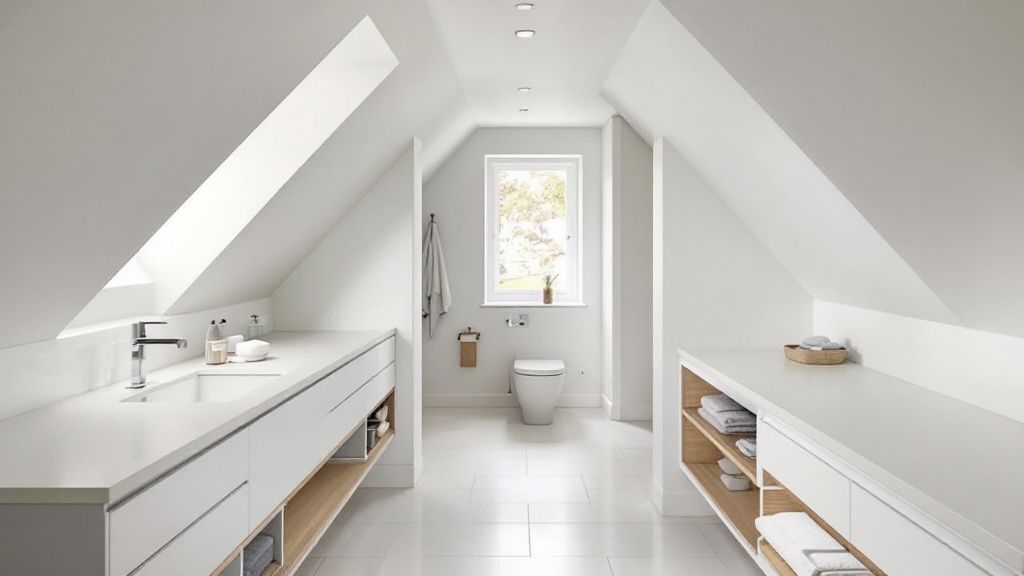
How to Implement This Idea
The key to this idea is custom-made cabinetry. Store-bought vanities and cabinets rarely fit the specific angles of an attic. Aldridge Construction can design and build units that follow your roofline exactly. This creates a high-end, seamless look.
Consider these practical examples from our work in Salinas homes:
- Built-in Vanity: A custom vanity can be built under the lowest part of the slope. This is perfect for a sitting area or for a vessel sink that adds height.
- Integrated Toilet Nook: Placing the toilet under an eave saves standing room elsewhere. However, you must make sure it meets local building code for clearance.
- Storage Benches: A long, low bench with drawers or lift-top storage can provide seating and a place for towels and supplies.
Key Considerations for Success
Before you start, careful planning is a must. You need to measure the space and account for the slope and usable height. It's also important to plan for plumbing and electrical access before any cabinets are built.
To make sure your investment lasts, use moisture-resistant materials. Good choices include marine-grade plywood or specially treated MDF, which stand up to the humidity in a bathroom. Proper ventilation behind the built-in units is also needed to prevent moisture buildup.
2. Skylight Shower Integration
You can turn your attic bathroom into a beautiful retreat by putting the shower directly under a skylight. This smart design brings in lots of natural light. It also creates a luxurious, spa-like feeling. A large window right above the shower makes the room feel bigger, brighter, and more open to the outdoors. This helps solve common attic problems like poor lighting and ventilation.
This idea makes the shower the main feature of the bathroom. It draws your eyes upward, which highlights the room's height. This makes the sloped ceilings seem less noticeable. It's one of the most effective creative attic bathroom ideas to maximize small spaces because it combines beauty with function.
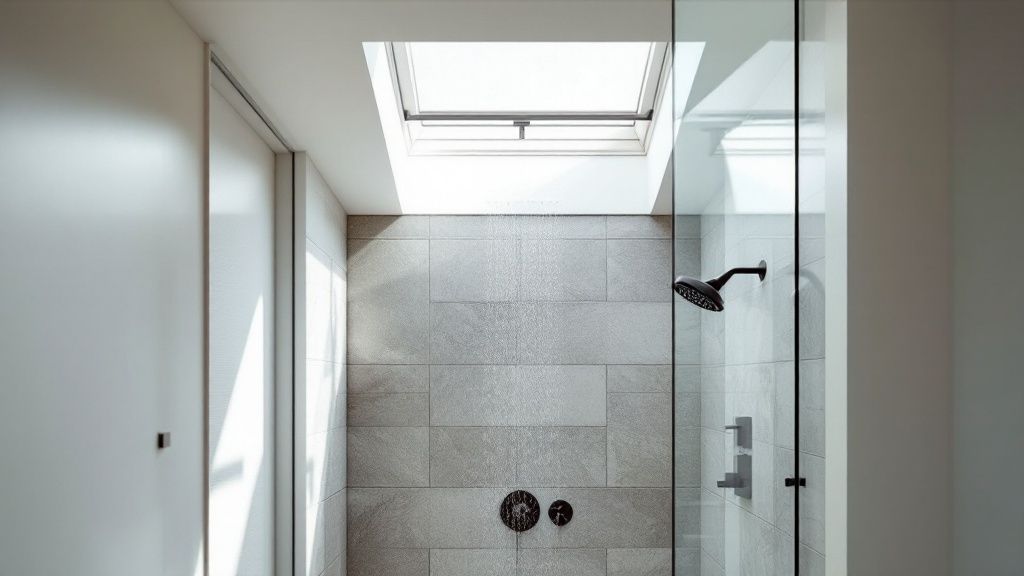
How to Implement This Idea
A skylight shower needs professional installation and smart material choices. It requires careful work between roofing, framing, and plumbing to ensure it is watertight and structurally sound. A certified installer is a must to prevent leaks and ensure proper sealing.
Consider these practical examples:
- Walk-in Shower with a View: A frameless glass walk-in shower under a large skylight creates an open look that feels like showering outdoors.
- Ventilating Skylight: Choose a skylight that can be opened. This provides excellent ventilation to remove steam and prevent moisture problems.
- Tub-Shower Combination: Place a freestanding tub or a built-in tub-shower combo under the slope. You can enjoy a starlit bath or a sun-filled shower.
Key Considerations for Success
You must hire a certified skylight installer who has experience with bathrooms. This will guarantee a leak-proof seal. Choose high-performance, double-glazed skylights for better insulation. This is important for homes in Monterey, CA, or Maricopa County, AZ, with their different climates.
Also, consider integrating sun tunnels for natural light. They can brighten even the darkest corners of an attic. Finally, make sure your design includes good drainage around the inside of the skylight to manage any condensation.
3. Compact Corner Wet Rooms
A European-style wet room is a great solution for odd-shaped attic bathrooms where a normal shower won't fit. This design waterproofs the entire room. This means you don't need a bulky shower base or curtain. A gentle slope in the floor guides water to a drain, creating an open and very useful space.
This simple approach makes even the most awkward attic corner usable as a full shower area. By removing barriers, the whole bathroom feels larger. This is one of the best creative attic bathroom ideas to maximize small spaces because it gives you a full shower experience without taking up a lot of floor space.
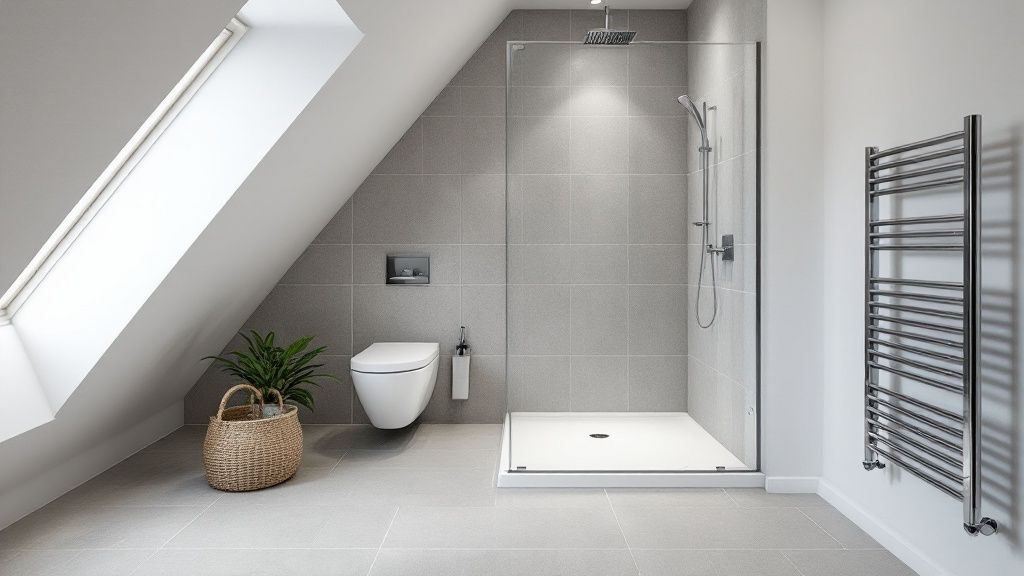
How to Implement This Idea
A successful wet room depends on professional waterproofing and good drainage. The entire floor and the lower parts of the walls must be sealed with a waterproof membrane before tiling. The floor also needs a careful slope to make sure water flows correctly to the drain.
Consider these design ideas:
- Strategic Drain Placement: Install a long, narrow drain against a wall or a sleek central drain. The choice depends on your floor layout.
- Wall-Mounted Fixtures: Use a wall-mounted toilet and vanity. This frees up floor space and makes cleaning the waterproof floor much easier.
- Ceiling Rain Showerhead: A "rain" showerhead mounted on the ceiling directs water straight down. This reduces splashing and keeps the rest of the small space drier.
Key Considerations for Success
Careful planning is essential for a wet room. The floor must have a proper slope to prevent water from pooling. Expert installation is critical to ensure the waterproofing is perfect. This prevents leaks that could damage the structure of your home.
Good ventilation is also very important. An efficient exhaust fan, especially one with a humidity sensor, is needed to handle steam. This prevents moisture problems in the attic.
4. Multi-Level Platform Design
An attic's layout, with its different ceiling heights, can be a puzzle. A multi-level platform design solves this by creating separate zones using raised platforms. This strategy works with the sloped ceiling. It lets you place fixtures like a tub or vanity at the right height while adding visual interest.
This approach defines separate areas for different activities. For example, you could have a raised wet room for the shower and tub. This is one of the most creative attic bathroom ideas to maximize small spaces because it turns a layout problem into a beautiful design feature. It adds depth and a custom, spa-like feel to the room.
How to Implement This Idea
A multi-level design needs careful structural planning. The goal is to build up the floor in certain areas to create new, more functional levels. This often involves building a new subfloor frame that is then finished with your bathroom flooring.
Consider these practical examples:
- Elevated Wet Room: Build a raised, waterproofed platform under a high-ceiling section. This can house a walk-in shower and a freestanding tub.
- Vanity Platform: Place the vanity and sink on a raised level under a lower part of the ceiling. This provides comfortable standing height where it might otherwise be tight.
- Step-Up to the Toilet: A single step can raise the toilet area. This tucks it into a corner and separates it visually from the rest of the bathroom.
Key Considerations for Success
Safety and building code compliance are the top priorities with this design. All steps must be clearly visible, and their height should meet local rules. In California, this is usually between 7 and 8 inches. Use anti-slip surfaces, like textured tile, on all floor levels.
Consider adding low-profile LED lighting into the steps for better visibility. To keep the look consistent, use the same flooring material across all levels. This design not only solves height issues but also provides a clever way to hide plumbing pipes within the platforms.
5. Sliding and Folding Element Systems
In an attic bathroom, every square inch counts. Traditional swinging doors can take up a lot of space. Sliding and folding systems offer a smart solution. This approach uses moving parts like pocket doors and retractable shower screens to free up floor space.
This is one of the most effective creative attic bathroom ideas to maximize small spaces because it makes the room more flexible. A pocket door disappears into the wall, so you don't need room for it to swing open. A folding glass shower screen can be pushed neatly against the wall when not in use. This makes the room feel instantly larger.
How to Implement This Idea
The success of this idea depends on high-quality hardware and correct installation. These parts need careful planning to ensure they work smoothly for a long time. Start by finding areas where a moving part could create more usable space.
Consider these practical examples:
- Pocket or Barn Doors: A sliding pocket door that goes into the wall is the best space-saver for a bathroom entrance. A sliding barn door can also work well and add style.
- Folding Shower Screens: Instead of a fixed glass panel, a frameless folding screen can be collapsed against the wall. This opens up the shower area to the rest of the room.
- Retractable Fixtures: In very small spaces, consider smart fixtures like fold-down sinks that have a slim profile.
Key Considerations for Success
Before you choose sliding systems, check your wall structure. Pocket doors need enough space inside the wall cavity, which isn't always available in attics. It is important to buy top-quality hardware to prevent problems like jamming later.
Always plan for future access to mechanical parts, especially for pocket doors. A detailed home remodel checklist can help you organize every step. It ensures your design is both functional and possible.
6. Vertical Garden Privacy Walls
Adding a living green wall to your attic bathroom is a bold choice that serves many purposes. This strategy uses a vertical garden to act as a natural wall. It offers privacy while creating a lush, spa-like feeling. A living wall also helps clean the air and adds a vibrant texture.
This idea turns a simple privacy screen for a toilet into a beautiful focal point. It's one of the most unique creative attic bathroom ideas to maximize small spaces because it brings nature into an area that can often feel small or sterile. The vertical design uses wall space well without taking up limited floor area.
How to Implement This Idea
A successful installation requires a special system designed for vertical gardens. These systems usually include a waterproof backing, a frame, an irrigation system, and pockets for the plants. You can create a full wall or a smaller panel to screen certain areas.
Consider these practical examples:
- Toilet Nook Screen: A half-wall vertical garden can hide the toilet from the main vanity or shower area. It defines the space without blocking light.
- Freestanding Green Divider: In a more open attic bathroom, a freestanding living wall can create a dramatic separation between the bathing and dressing zones.
- Focal Wall Behind a Tub: Instead of simple tile, install a living wall behind a freestanding bathtub to create a natural oasis.
Key Considerations for Success
Good planning is key to keeping your living wall healthy. Choose plants that do well in high humidity and lower light, which are common in bathrooms. Good choices include ferns, pothos, and philodendrons. An automated drip irrigation and drainage system is a must to prevent water damage and make maintenance easy.
You might also need to install special grow lights if your attic doesn't get much natural light. Make sure all parts of the system are waterproof and installed correctly to protect your home's structure.
7. Mirror Illusion and Light Multiplication
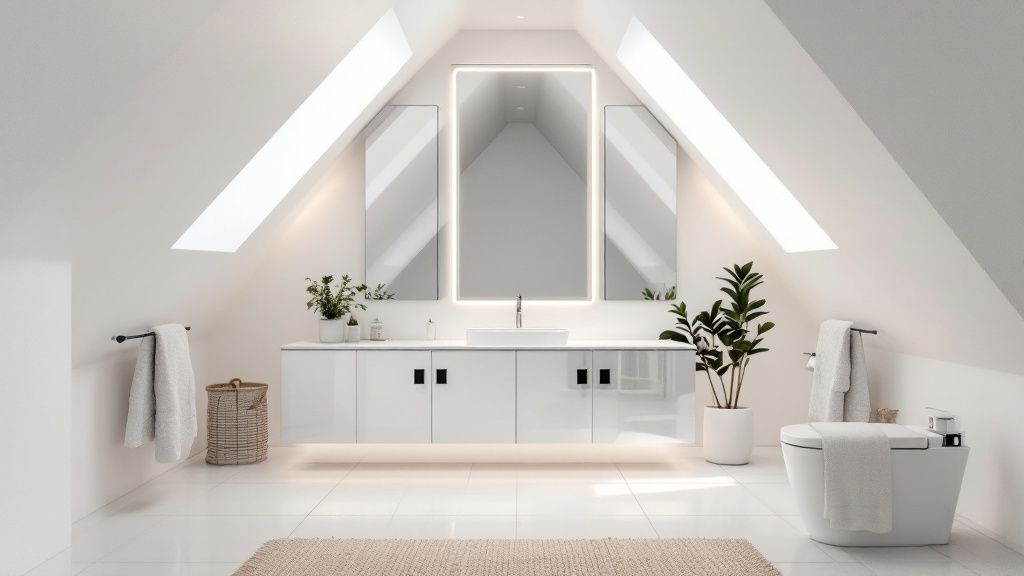
An attic bathroom's small size and limited natural light can make it feel dark and cramped. This design strategy fixes that problem by using reflective surfaces to create an illusion of more space and light. By placing mirrors and choosing high-gloss materials, you can make the room feel much larger and more open.
This is one of the most budget-friendly creative attic bathroom ideas to maximize small spaces because it plays with perception. A large mirror can visually double the size of the room. Reflective tiles bounce light into the darkest corners. This transforms the attic from a small area into a bright retreat.
How to Implement This Idea
Success with this idea comes from smart placement. It's not just about hanging one mirror over the sink. It's about a complete plan that uses reflective surfaces throughout the design. This creates an open feel, a common goal in projects where Aldridge Construction's team designs for compact spaces in older Salinas homes.
Consider these practical examples:
- Wall-to-Wall Mirror: Instead of a small mirror, install a large one that covers the entire wall behind the vanity. This creates a dramatic sense of depth.
- Reflective Tile: Use high-gloss ceramic or polished porcelain tiles for the shower walls or as a backsplash. Their shine will scatter light around the room.
- Mirrored Cabinet Doors: Choose medicine cabinets with mirrored doors. They add reflective surfaces that also provide storage.
Key Considerations for Success
Before you commit to large mirrors, plan your lighting. The placement of mirrors should work with both natural light from a skylight and your light fixtures. This will give you the best effect. Avoid placing large mirrors directly across from each other, as this can be confusing.
For a humid bathroom, buy high-quality, moisture-resistant mirrors. Also, consider anti-fog coatings for mirrors near the shower. Combining this strategy with a good lighting plan will ensure your attic bathroom is bright and feels spacious.
Creative Attic Bathroom Ideas Comparison Table
| Item | Implementation Complexity 🔄 | Resource Requirements ⚡ | Expected Outcomes 📊 | Ideal Use Cases 💡 | Key Advantages ⭐ |
|---|---|---|---|---|---|
| Under-Eave Storage | High – custom carpentry required | High – professional labor and materials | Maximizes space, clean look | Attics with sloped ceilings needing storage | Optimizes dead space, custom look |
| Skylight Shower | High – requires roof work | High – skylight, expert installation | Luxury feel, natural light | Attics where roof changes are possible | Better air quality, unique feature |
| Compact Wet Rooms | High – expert waterproofing needed | High – waterproofing, plumbing | Spacious feel, low maintenance | Odd-shaped attics needing an open shower | Easy to clean, modern look |
| Multi-Level Platform | Medium – platform construction | Medium – materials, skilled labor | Visual interest, defined zones | Attics with different ceiling heights | Hides plumbing, adds architectural appeal |
| Sliding/Folding Systems | Medium – hardware installation | Medium – quality hardware | Flexible, multi-use spaces | Small spaces needing adaptable layouts | Saves space, sleek modern design |
| Vertical Garden Walls | Medium – living systems installation | Low to Medium – garden modules | Better air quality, natural privacy | Bathrooms needing a biophilic design | Natural look, improves air quality |
| Mirror and Light | Low – installing mirrors/lights | Low – mirrors and light fixtures | Makes space look larger | Bathrooms needing a low-cost update | Budget-friendly, brightens space |
Start Your Attic Bathroom Transformation Today
Turning an underused attic into a stylish bathroom is a smart investment in your home. The challenges of sloped ceilings and awkward layouts are not problems but chances for creative design. From skylight showers to custom storage, these creative attic bathroom ideas to maximize small spaces show that good design can solve any structural issue.
Success comes from working with the attic's character, not against it. By using the existing architecture, you can create a space that feels both planned and large. Adding a midrange bathroom remodel can get back 66.7% of its cost, according to Remodeling Magazine’s 2024 Cost vs. Value Report. This makes an attic conversion a smart financial move.
Turning Inspiration into Action
The journey from idea to a finished room requires careful planning and expert work. Here are the most important steps to get started:
- Assess Your Space: Before you pick a design, understand your attic's limits. Measure headroom and find load-bearing walls. Note where existing plumbing and electrical lines are. This is a key first step for projects in historic Salinas homes or modern Maricopa County residences.
- Prioritize Functionality: Think about how you will use the space. Is it a main bathroom that needs a full shower and double vanity, or a simple guest bathroom? Your needs will guide the layout and fixture choices.
- Consult a Professional: Navigating building codes, especially in areas like Monterey County or Santa Cruz County, can be tricky. An experienced contractor can make sure your attic bathroom is not only beautiful but also follows local rules, including California’s Title 24 energy standards.
Frequently Asked Questions (FAQs)
1. What is the minimum ceiling height required for an attic bathroom?
In most parts of California and Arizona, building codes require at least 7 feet of ceiling height over 50% of the usable floor area. The Aldridge Construction team can help you check your local codes in Monterey or Maricopa County to make sure your design is compliant.
2. How do I manage moisture and ventilation in an attic bathroom?
Proper ventilation is key. We always install a high-quality exhaust fan vented to the outside. Using moisture-resistant materials like mold-resistant drywall (green board) and good waterproofing in the shower area is also essential to prevent problems.
3. Can I put a heavy freestanding tub in my attic?
It depends on your home's structure. A full cast-iron tub can be very heavy. Before installing one, we will have a structural engineer check if the floor joists need to be reinforced to safely support the weight.
4. How can I get natural light into a windowless attic?
Skylights are a great option, as they bring in light from above. Another choice is a "sun tunnel" or solar tube. This device channels sunlight from the roof down into the bathroom through a reflective tube, brightening the space without needing a large window.
5. What are the first steps to starting an attic bathroom remodel?
The first step is to contact a design-build contractor like Aldridge Construction for a consultation. We will assess your space, discuss your ideas, and help you understand the budget and timeline. We also manage the entire process, from design and permits to construction.
Ready to unlock the hidden potential in your attic? The team at Aldridge Construction specializes in complex renovations. We have a proven track record of creating beautiful, code-compliant attic bathrooms in Monterey, Santa Cruz, and Maricopa Counties. Contact us today for a professional consultation and let's start designing a space that perfectly fits your home and vision.