
Embarking on a home remodel is one of the most exciting investments you can make in your property. Whether you're dreaming of a modern kitchen in Monterey, a functional ADU in Santa Cruz, or an expanded living space in Maricopa County, AZ, success hinges on meticulous planning. A comprehensive home remodel checklist is a strategic roadmap that transforms your vision into a reality, preventing costly mistakes and ensuring a smooth process.
This guide provides an actionable blueprint for your renovation journey. We'll show you how to build a resilient budget, navigate the permitting processes specific to California or Arizona, and establish a realistic timeline. Think of this checklist as the foundation of your project, ensuring every decision is informed.
With insights backed by industry data, such as Remodeling Magazine’s 2024 Cost vs. Value Report, and decades of hands-on experience, the team at Aldridge Construction has broken down the entire journey into nine critical phases. Let’s start building your dream, the right way.
1. Establish a Detailed Budget with 20% Contingency
Before a single wall comes down, your home remodel checklist must begin with a comprehensive budget. A well-planned budget acts as the financial blueprint for your entire project, guiding decisions and preventing costly surprises.

Why a 20% Contingency Fund is Non-Negotiable
Industry experts universally recommend adding a 20% contingency fund to your total estimated project cost. This isn’t just a buffer; it’s a critical tool for managing the unknowns inherent in any renovation. Older homes in areas like Monterey or Santa Cruz, for instance, often hide outdated wiring or plumbing issues that only become apparent after demolition begins.
Scenario: Your kitchen remodel is budgeted at $60,000. A 20% contingency adds $12,000, bringing your total necessary funding to $72,000. This fund is reserved for unforeseen costs, such as discovering termite damage or needing to upgrade an electrical panel to meet current California building codes.
How to Build an Accurate Budget
To create a realistic budget, start by gathering detailed information. Vague estimates lead to financial stress, so precision is key.
- Get Multiple Quotes: For major work like electrical or structural changes, obtain at least three detailed quotes from licensed contractors. This helps establish a realistic market rate for labor in your area, whether it's Maricopa County, AZ, or San Benito County, CA.
- Itemize Material Costs: Research and list the price of every material, from major appliances and cabinetry to tiles and fixtures. Visit local suppliers to compare costs for items like quartz countertops or energy-efficient Milgard windows.
- Track Everything: Use a detailed spreadsheet to track every expense against your budget in real-time. This helps you stay accountable and make informed decisions.
Securing the necessary funds is just as important as creating a budget. For guidance on financing your renovation, learn more about home renovation loans on aldridgeconstruction.biz to see which options might best suit your project's financial scope.
2. Secure All Required Permits and Inspections
Navigating building permits is a critical step in your home remodel checklist. Obtaining the correct permits ensures your project complies with local building codes, safety standards, and zoning regulations in your specific municipality. This official approval is your legal protection, safeguarding you from potential fines or issues when you sell your home.
Why Permits Are a Legal and Financial Safeguard
A building permit is formal permission from your city or county to proceed with construction. It certifies that your plans have been reviewed and meet the minimum safety requirements defined by California or Arizona building codes. Working without a permit can lead to stop-work orders, costly fines, and the forced removal of completed work.
Scenario: You are adding a primary bathroom to your home in Salinas. This project will require multiple permits: a building permit for the structure, a plumbing permit for the shower and sinks, an electrical permit for lighting, and a mechanical permit for the ventilation fan. Each permit triggers inspections to verify the work is done safely.
How to Manage the Permitting Process
Properly managing permits and inspections prevents delays and ensures a smooth project flow. A proactive approach is essential.
- Start Early: Contact your local building department in Monterey County or Maricopa County, AZ, at least 4 to 6 weeks before you plan to start work. Permit review times can vary significantly.
- Lean on Professional Expertise: A general contractor with extensive experience in the local permitting process can prepare the necessary documents and communicate directly with building officials.
- Schedule Inspections Promptly: Coordinate inspections well in advance to avoid having your crew idle while waiting for an inspector.
- Keep Meticulous Records: Retain copies of all permit applications, approved plans, and inspection reports. This documentation is invaluable for your records and the future sale of your home.
Understanding the specific permits your project needs is a foundational part of planning. You can learn more about construction permit requirements on aldridgeconstruction.biz to get a clearer picture of what to expect.
3. Hire Licensed and Insured Contractors
The next critical step on your home remodel checklist is selecting the team to bring your vision to life. Hiring qualified, licensed, and properly insured contractors is the single most important decision you will make to ensure project success and quality workmanship.
The process of vetting and hiring your team should be methodical. This timeline illustrates a typical two-week hiring process.
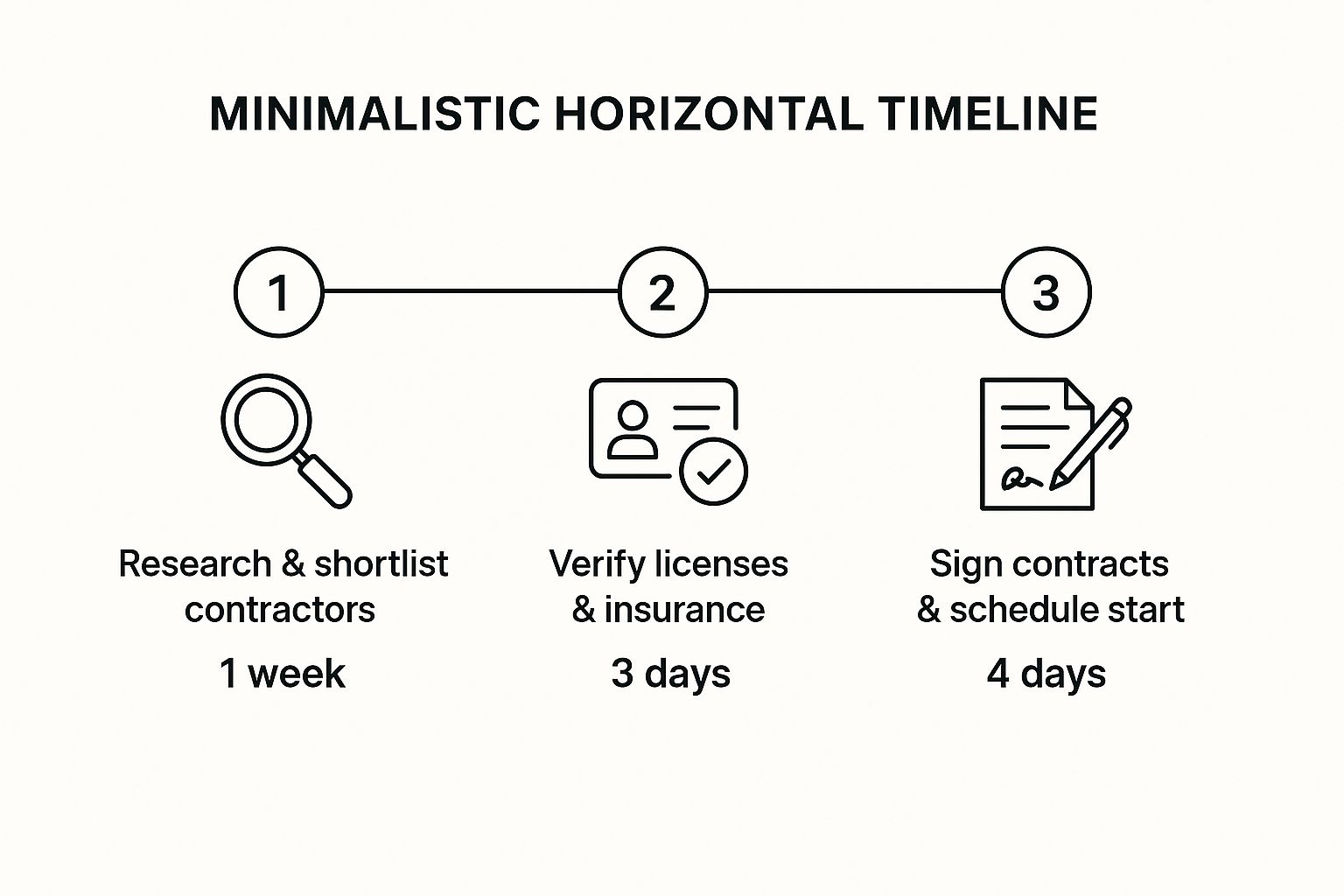
Dedicating about two weeks to thoroughly research, verify, and contract with a builder establishes a solid foundation for your project before any work begins.
Why Licensing and Insurance are Non-Negotiable
A contractor's license is your assurance that they have met the state's minimum requirements for competency. In California, for example, the Contractors State License Board (CSLB) holds contractors accountable. Adequate insurance is your financial shield.
Scenario: A worker is injured while installing new windows in your Santa Cruz home. If your contractor lacks proper workers' compensation insurance, you could be held personally liable for their medical bills and lost wages. Similarly, if they cause accidental damage, you would be left to cover the repair costs.
How to Verify and Select Your Contractor
To build a team you can trust, you must perform due diligence. A systematic approach ensures you cover all your bases.
- Verify Licenses: Use official state resources, like the CSLB website for California or the Arizona Registrar of Contractors for projects in Maricopa County, to confirm a contractor's license is active and in good standing.
- Request Proof of Insurance: Ask for certificates of both general liability and workers' compensation insurance. Contact the provider directly to verify that the policies are current.
- Check Recent References: Speak with at least three recent clients whose projects were similar in scope to yours. Ask about their experience with communication, budget adherence, and overall quality.
- Demand a Detailed Contract: Never proceed without a comprehensive written contract. It must specify the full scope of work, a detailed list of materials, a project timeline, and a clear payment schedule.
Finding the right professional is a detailed process, but it is essential for a successful renovation. You can learn more about how to find a good contractor on aldridgeconstruction.biz to ensure you partner with a builder who meets these critical standards.
4. Create a Realistic Timeline with Buffer Time
Just as a budget guides your finances, a detailed timeline serves as the project’s roadmap. A well-structured schedule prevents chaos, manages expectations, and ensures that tradespeople, material deliveries, and inspections happen in the correct sequence.
Why a 25-30% Buffer Time is Essential
Construction professionals recommend building a 25-30% buffer into your timeline. Renovations are complex, and unforeseen issues are common, especially in older homes across Monterey County or Santa Cruz. This buffer accounts for permit delays, material lead times, and subcontractor scheduling conflicts.
Scenario: A master bathroom renovation is estimated to take six weeks. A 25% buffer adds about a week and a half, extending the total planned timeline to nearly eight weeks. This extra time is crucial if custom-ordered tile is delayed or the plumbing inspector requires an unexpected modification.
How to Build an Accurate Timeline
An effective timeline is built by working backward from your ideal completion date and mapping out each dependent step.
- List Every Phase Sequentially: Break the project into major phases: demolition, framing, rough-in (plumbing, electrical), insulation, drywall, painting, flooring, and finish work (cabinets, fixtures).
- Factor in Lead Times: Some materials have significant lead times. Custom cabinetry, specialty windows, or specific tiles can take weeks or even months to arrive. Order them early and build their delivery window into your schedule.
- Account for Downtime: Your timeline must include non-working periods like weekends, holidays, and necessary "curing" times for concrete or drywall mud.
Building a realistic schedule is a foundational part of successful project management. To learn more, you can learn more about the home construction timeline on aldridgeconstruction.biz to better prepare for your project.
5. Plan for Temporary Living Arrangements
A successful home remodel checklist accounts not just for construction but also for the disruption it causes to your daily life. Major renovations can make your home temporarily inconvenient. Thoughtful planning for temporary living arrangements is crucial to minimize stress and maintain family comfort.

Why Proactive Planning Prevents Project Delays
Failing to plan for living through a remodel can lead to frustration and even slow down the crew. Establishing a functional living space away from the primary construction area is a strategic move that benefits both your family and the project timeline.
Scenario: Your Monterey home is undergoing a full kitchen gut and remodel. Instead of struggling daily, you set up a temporary kitchen in the garage before demolition begins. This includes a mini-fridge, a microwave, and a hot plate. This keeps your family fed and out of the contractor's way, allowing them to work faster.
How to Create a Livable Temporary Space
Whether you stay in the home or relocate, preparation is key. The goal is to create a sustainable routine for the project's duration.
- Set Up Functional Zones: Before work starts, designate specific areas. If remodeling a master bathroom, ensure the guest bath is fully stocked. For kitchen projects, budget for more dining out or set up a temporary station.
- Invest in Containment: If you're living amidst the dust, proper containment is non-negotiable. Invest in high-quality plastic dust barriers to seal off work zones and consider a portable air scrubber, a common step for projects in both Santa Cruz County, CA, and Maricopa County, AZ.
- Accommodate Everyone: Don't forget pets, who can become stressed by the noise. Arrange for them to stay with family or consider a pet boarding facility for the most disruptive phases.
6. Establish Clear Communication Channels
A home remodel checklist hinges on seamless collaboration, and the foundation of that is communication. A project can quickly derail due to misunderstandings or delayed decisions. Establishing clear communication channels is a critical project management tool.
Why Proactive Communication Prevents Costly Delays
In any renovation, questions arise daily. Delays in getting answers can halt progress, pushing back timelines and increasing labor costs. A formal communication plan ensures everyone knows how, when, and with whom to communicate.
Scenario: Your contractor needs you to confirm the final placement of vanity lights. If you are unreachable for a day, the electrician may move to another job, and rescheduling could cause a week-long delay. A pre-established plan, like daily end-of-day texts, ensures this question is answered promptly.
How to Build a Strong Communication Framework
A robust communication strategy is defined before the project starts and is ideally written into your contract. This sets clear expectations.
- Define Methods and Frequency: Decide on primary communication methods upfront. Will you use daily texts, a weekly in-person meeting, or a project management app?
- Establish a Point Person: Your general contractor should be your single point of contact. This prevents confusion that arises from speaking directly with subcontractors in areas like Salinas or Santa Cruz.
- Document Everything in Writing: Verbal agreements can be easily forgotten. Insist that all significant decisions, change orders, and material selections are confirmed in writing.
- Be Responsive: Communication is a two-way street. Make yourself available to answer questions from your contractor promptly. A quick response can be the difference between staying on schedule and facing a delay.
7. Select and Order Materials Early
Failing to order materials in a timely manner is a common cause of project delays. A crucial part of your home remodel checklist is selecting and ordering all materials well before they are needed on-site. This step helps avoid bottlenecks and locks in pricing.
Why Long Lead Times Can Halt Your Project
Certain items, especially custom or imported ones, have significant lead times that can span weeks or even months. Waiting to order these can bring your renovation to a standstill. For projects in areas like Monterey or Salinas, specialty items might require more logistical planning.
Scenario: Your project plan requires custom kitchen cabinets to be installed in week eight. If those cabinets have a 10-week lead time, they must be ordered before the project even begins. A delay in ordering could push back plumbing and countertop installation, creating a costly domino effect.
How to Manage Material Selection and Procurement
Effective material management requires organization and foresight. A detailed plan prevents last-minute scrambles and costly mistakes.
- Prioritize by Lead Time: Work with your contractor to identify items with the longest lead times first, such as windows, custom cabinetry, specialty tile, and high-end appliances.
- Create a Master List: Develop a spreadsheet listing every material required. Include model numbers, colors, quantities, and expected delivery dates.
- Order a Surplus: Always order 10-15% extra for materials like flooring and tile. This accounts for cuts, waste, and provides matching materials for future repairs.
- Inspect Deliveries Immediately: When materials arrive, inspect every item for damage or discrepancies right away. Reporting issues promptly is critical.
By planning your material procurement strategically, you can ensure a smoother process. You can discover more about green construction materials to see how you can incorporate them into your project.
8. Address Utilities and Infrastructure First
Before you enjoy new cabinets or flooring, your home remodel checklist must prioritize the unseen systems that make your home functional and safe. Updating utilities like electrical, plumbing, and HVAC is a critical first step. Addressing them early prevents costly retrofitting and ensures your home can support modern demands.
Why Outdated Infrastructure Can Halt a Project
Ignoring underlying infrastructure is a recipe for disaster. Older homes, especially in Monterey County or Santa Cruz County, were not built for today’s technology. Installing high-draw appliances on an old electrical system can lead to system failures and unexpected costs.
Scenario: You're starting a 1950s kitchen remodel in Salinas. Your design includes new induction cooktops and double ovens. During demolition, your contractor discovers a 100-amp electrical panel. This is insufficient, requiring an immediate upgrade to a 200-amp service to meet both modern needs and California building codes.
How to Proactively Manage Utility Upgrades
Proper planning is key to integrating utility work seamlessly into your project. A professional assessment is the first step.
- Schedule a Professional Assessment: Before finalizing plans, have licensed electricians and plumbers evaluate your systems. They can identify necessary upgrades, ensuring your remodel complies with codes in San Benito County, CA, or Maricopa County, AZ.
- Prioritize the Rough-In Phase: All "rough-in" work (running new pipes and wires) must be completed before insulation and drywall are installed. This is the most cost-effective time for changes.
- Plan for Future Capacity: When upgrading, think beyond immediate needs. Sizing your electrical panel for a future ADU can save you from tearing open walls again later.
- Coordinate with Inspections: Utility work requires specific inspections. A knowledgeable contractor ensures these are scheduled correctly, preventing work stoppages.
9. Implement Comprehensive Safety and Protection Measures
A successful remodel isn't just about the final look; it's also about protecting your family and property. A crucial part of any home remodel checklist involves implementing comprehensive safety and protection measures before work begins. This step prevents accidents and minimizes damage.
Why Property Protection is a Project Essential
From fine dust to constant foot traffic, a renovation can wreak havoc on your home. Protecting existing finishes and belongings is a hallmark of a professional contractor. This requires a systematic approach to isolate the work zone.
Scenario: For a kitchen remodel in a Salinas home, the contractor should install heavy-duty Ram Board to protect hardwood floors in adjacent hallways. Furniture in the nearby living room should be covered with thick plastic sheeting to prevent dust from settling on it.
How to Ensure a Safe and Secure Job Site
A safe job site is a productive one. Establishing clear safety protocols protects workers and gives you peace of mind.
- Establish Dust Containment Zones: Before demolition, insist on high-quality dust barriers. For projects in older Monterey homes where lead paint may be a concern, a professional-grade containment system is non-negotiable.
- Document Existing Conditions: Take detailed photos and videos of the areas surrounding the remodel zone before work begins. This creates a clear record of pre-construction conditions, preventing disputes about potential damage.
- Secure the Site Daily: Ensure the work area is cleaned and secured each evening. Tools should be stored away and access points locked to prevent theft and limit your liability.
Home Remodel Checklist Comparison Matrix
| Item | Implementation Complexity 🔄 | Resource Requirements ⚡ | Expected Outcomes 📊 | Ideal Use Cases 💡 | Key Advantages ⭐ |
|---|---|---|---|---|---|
| Establish a Detailed Budget with 20% Contingency | Moderate – requires detailed planning and research | Time for detailed quotes, cost tracking tools, financial oversight | Controlled costs, fewer surprises, better decision-making | All remodels needing cost control and risk management | Prevents funding shortfalls, reduces stress |
| Secure All Required Permits and Inspections | High – involves dealing with local authorities and inspections | Time (4-6 weeks lead), documentation, possible design revisions | Legal compliance, safety assurance, project legitimacy | Projects involving structural, electrical, plumbing changes | Protects property value and ensures safety |
| Hire Licensed and Insured Contractors | Moderate – license/insurance checks, contract preparation | Verification resources, legal knowledge, vetting references | Quality workmanship, liability protection, accountability | All projects requiring professional trades and legal compliance | Safeguards legal and financial risks |
| Create a Realistic Timeline with Buffer Time | Moderate – scheduling, coordination, ongoing updates | Scheduling tools, knowledge of trades and delivery timing | Smooth project flow, reduced stress, better coordination | Projects with multiple trades and dependencies | Prevents unrealistic expectations and delays |
| Plan for Temporary Living Arrangements | Low to moderate – setup of temporary facilities and arrangements | Temporary setup materials or alternative housing costs | Maintains comfort, speeds construction by limiting disruptions | Major remodels disrupting daily living spaces | Reduces stress, protects belongings |
| Establish Clear Communication Channels | Moderate – ongoing coordination and documentation | Communication tools, time commitment from stakeholders | Fewer misunderstandings, timely decisions, documented changes | Complex or long-duration projects with many stakeholders | Improves project transparency and speed |
| Select and Order Materials Early | Moderate – requires early decision-making and lead time management | Advance payments, storage space, supplier coordination | Avoids delays, locks prices, ensures design consistency | Projects with custom/specialty materials or long lead times | Prevents material-related delays |
| Address Utilities and Infrastructure First | High – technical assessments and significant structural work | Skilled trades, inspections, potentially high costs | Proper foundation, safety compliance, capacity for modern needs | Major remodels involving system upgrades | Prevents costly retrofits, ensures safety |
| Implement Comprehensive Safety and Protection Measures | Moderate – preparation, ongoing maintenance | Protective materials, training, additional setup/cleanup time | Reduced accidents, less damage, better air quality | All renovation projects prioritizing safety and property protection | Minimizes liability and property damage |
Turning Your Checklist into a Completed Project
Transforming your house into the home of your dreams is an exhilarating journey, but it’s one paved with details. The comprehensive home remodel checklist we’ve outlined is your strategic blueprint for navigating the complexities of renovation. By using this guide, you can move from abstract ideas to a tangible, successful outcome.
Remember, a well-executed remodel hinges on proactive planning. The most successful projects are not those without problems, but those where potential issues were anticipated and managed effectively.
From Blueprint to Reality: Key Takeaways
Your journey through this checklist has equipped you with the foundational knowledge to oversee a major home transformation. Here are the most critical lessons:
- Financial Foresight is Non-Negotiable: A detailed budget with a 20% contingency fund is your most important financial safeguard. This prepares you for the unknowns inherent in any renovation.
- Compliance is Key: Securing the correct permits is not optional. It’s a legal requirement that protects your investment and ensures your home is safe, whether you're in Monterey County, CA, or Maricopa County, AZ.
- Your Team Defines Your Success: The quality of your renovation reflects the professionals you hire. Vetting contractors for licensing, insurance, and local experience is the most critical decision you will make.
- Communication Prevents Complications: Establishing a clear communication protocol with your contractor is vital. Regular check-ins and a system for documenting changes will prevent misunderstandings and keep everyone aligned.
Expert Insight: Think of your home remodel checklist as the foundation of a building. If the foundation is weak or rushed, the entire structure will be compromised. Invest time in this planning phase, and the construction phase will be significantly smoother.
Your Actionable Next Steps
With your checklist in hand, you are now at a pivotal moment. The theoretical planning must transition into concrete action. Here is how you can move forward with confidence.
- Finalize Your Vision and Scope: Solidify exactly what you want to achieve. Prioritize your "must-haves" versus your "nice-to-haves." This clarity is essential before seeking quotes.
- Organize Your Documentation: Create a dedicated binder or digital folder. This will be the central hub for your budget, bids, permits, material selections, and all project communications.
- Begin Vetting Local Professionals: Start researching reputable general contractors who serve your area, whether it's an ADU in Santa Cruz, a kitchen remodel in San Benito, or a whole-home renovation in Maricopa County.
Ultimately, this home remodel checklist is designed to demystify the renovation process. A great plan paired with a great team is the unbeatable formula for a home you will love for years to come.
Frequently Asked Questions (FAQs)
1. How long does a typical home remodel take?
A project’s duration depends on its scope. A simple bathroom update might take 3-4 weeks, while a full kitchen remodel in Monterey County could take 8-12 weeks. Major additions can last several months. Always add a 25-30% time buffer for unexpected delays.
2. What is the most important item on a home remodel checklist?
While every step is crucial, creating a detailed budget with a 20% contingency fund is arguably the most important. A solid financial plan prevents stress and ensures you can afford to complete the project to your standards, even if unforeseen issues arise.
3. Do I need a permit for a small remodel in California?
In California, permits are generally required for any work that involves structural, electrical, plumbing, or mechanical changes. This includes moving walls, adding new outlets, or changing plumbing fixtures' locations. Simple cosmetic updates like painting or replacing a faucet in the same spot usually don't require a permit, but it's always best to check with your local building department in Santa Cruz or San Benito county.
4. How can I save money on my home remodel?
You can save money by doing some of the demolition or final painting yourself, sourcing standard materials instead of custom ones, and getting multiple quotes. However, never cut costs by hiring an unlicensed contractor or skipping permits, as this can lead to much higher expenses later.
5. What should I look for when hiring a contractor in Arizona?
For projects in Maricopa County, AZ, ensure your contractor is licensed with the Arizona Registrar of Contractors (ROC). Verify they have both general liability and workers' compensation insurance. Ask for at least three recent, local references and look at their portfolio of completed projects.
A detailed plan is the first step, but a trusted partner is what makes it a reality. If you're planning a project in Monterey, Santa Cruz, San Benito, or Maricopa County, the team at Aldridge Construction has the local expertise and commitment to quality to guide you through every item on your checklist. Let us help you turn your meticulous planning into a beautifully crafted space by visiting Aldridge Construction for a consultation today.