
When homeowners ask how long it really takes to build an Accessory Dwelling Unit (ADU), the generic answers online just don't cut it. Here in Monterey County, a realistic timeline from the first sketch to the final walkthrough is anywhere from 10 to 18 months.
That number might seem long. But it covers everything—the design, the permitting maze, and the actual on-the-ground construction. Most advice you find is too general and doesn't account for local backlogs or site-specific issues common in Monterey, Santa Cruz, or San Benito Counties.
Your Realistic ADU Timeline in Monterey County
Knowing the full journey helps you plan your finances and set practical goals. A huge chunk of the timeline is dedicated to crucial pre-build phases. These include design, engineering, and navigating local permit offices.
Think of it as planning a road trip. You wouldn't just jump in the car and start driving. You'd map the route and plan for detours. Building an ADU is the same—knowing the entire route makes the journey much smoother.
This infographic gives you a great visual breakdown of where all that time goes.
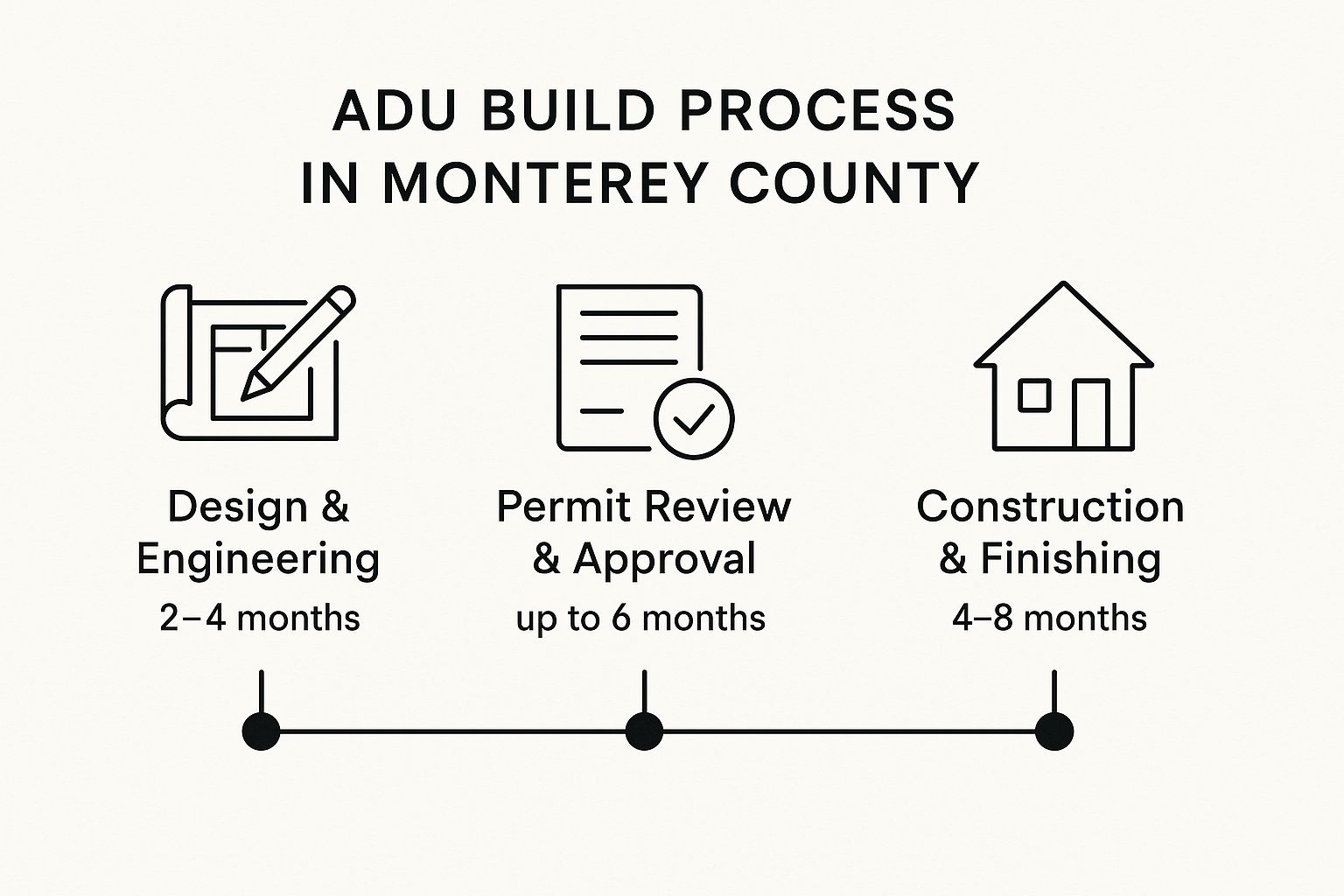
As you can see, the physical construction is often just the final third of the whole project. All the planning and paperwork beforehand takes up a serious amount of time.
To give you a clearer picture, here’s a table that breaks down the typical timeline for an ADU project in our area.
ADU Project Timeline At-a-Glance
This table provides a realistic breakdown of each major phase for an ADU project in Monterey County, helping you understand where the time goes.
| Project Phase | Typical Duration | Key Activities |
|---|---|---|
| Phase 1: Design & Feasibility | 1 – 3 months | Initial consultation, property assessment, concept design, budget refinement, contractor selection. |
| Phase 2: Plans & Permitting | 3 – 6 months | Architectural drawings, structural engineering, submitting plans to the county, addressing revisions. |
| Phase 3: Site Preparation | 2 – 4 weeks | Clearing the site, excavation, grading, foundation work, and utility trenching. |
| Phase 4: Construction | 4 – 7 months | Framing, roofing, plumbing, electrical, insulation, drywall, and interior/exterior finishes. |
| Phase 5: Finalization | 1 – 2 months | Final inspections, utility hookups, landscaping, final walkthrough, and obtaining Certificate of Occupancy. |
Keep in mind, these are typical ranges. Every project is unique. Factors like site complexity or custom designs can shift the timeline.
The good news? Thanks to updated 2025 California laws, local agencies must act on a completed ADU permit application within 60 days. The key phrase is "completed application." Getting your plans officially accepted is the real hurdle.
For a closer look at the nuts and bolts of each building stage, you can check out our more detailed home construction timeline. At Aldridge Construction, we ensure you have that clarity from day one.
Building Your Foundation with Solid Planning and Design
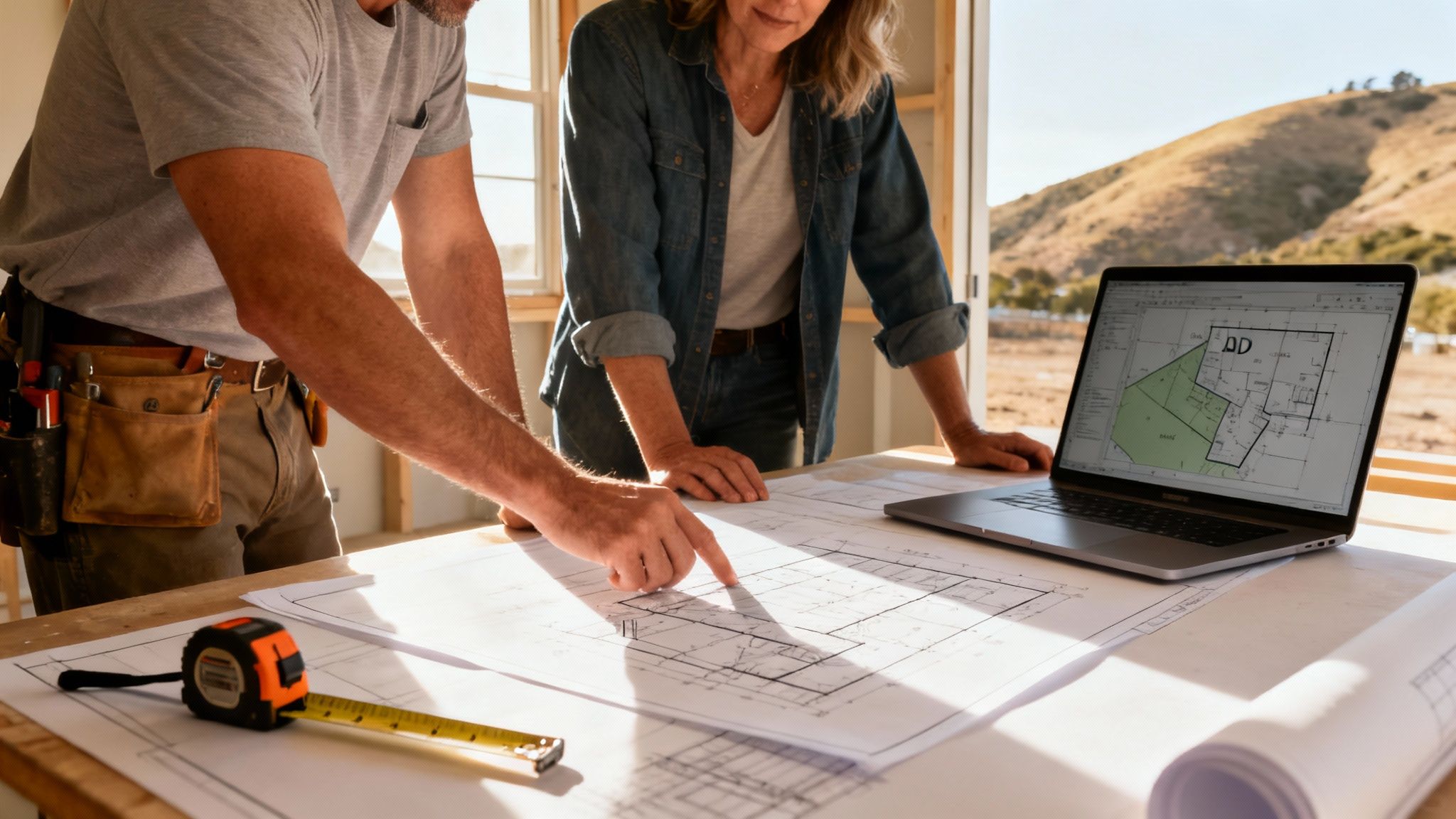
The success of your ADU is decided before a single shovel hits the dirt. The early planning and design phase is where your vision becomes a buildable blueprint. It's also where many preventable delays take root. Answering how long it really takes to build an ADU in Monterey County always starts here, with a rock-solid plan.
This stage is more than just drawing a floor plan. It starts with a detailed site assessment on your Monterey or Santa Cruz County property. We look at everything from soil conditions to where we can tap into utilities. This helps us create a custom design that balances what you want with what local zoning laws allow.
An experienced local contractor doesn’t just build what you ask for. They first determine what’s possible on your specific property. This avoids costly redesigns and permit rejections.
Key Steps in the Design Phase
The technical work done here is what gets you a permit. It takes a team of professionals to make sure your ADU is safe, compliant, and built to last.
- Structural Engineering: An engineer designs the "bones" of your ADU. They ensure it can handle local conditions like seismic activity. This step is non-negotiable.
- Soil Reports: This is crucial for hillside properties in Santa Cruz or rural parts of San Benito County. A soil report tells us what kind of foundation your ADU needs to be stable.
- Title 24 Calculations: California has strict energy efficiency standards. A Title 24 report proves your ADU’s design meets all requirements for insulation, windows, and HVAC systems.
The Advantage of a Design-Build Approach
Homeowners can lose months playing middleman between separate architects and builders. When plans need a tweak—and they always do—the back-and-forth communication can grind a project to a halt.
At Aldridge Construction, we use an integrated design-build approach. This means our design and construction teams are in the same room from day one. This seamless process eliminates the communication breakdowns that often add months to a timeline.
If you need some inspiration, take a look at our favorite ADU design ideas. With a solid plan, you're set up for a much smoother journey.
Navigating the Monterey County Permit Process
Getting your building permit is the most unpredictable part of building an ADU. This is where timelines can stretch thin. But with the right partner, you can sidestep common traps that leave projects stuck in limbo for months.
While California state law mandates a 60-day review period for complete ADU applications, the real challenge is getting your submission considered "complete." A simple design mistake or a missing document can send your plans back to square one, resetting the clock.
What Local Planners Look For
When you submit your ADU plans in Monterey County, they pass through multiple hands.
- Planning Department Review: This team focuses on zoning rules. They check your ADU's size, height, and location to ensure it lines up with local requirements. They also verify property line setbacks.
- Building Department Review: This is where things get technical. They review your plans to ensure they comply with California building codes. They look at structural integrity, safety, and energy efficiency.
Understanding local building permit requirements is critical for a smooth sign-off.
Avoiding Common Permit Delays
At Aldridge Construction, our experience with officials across Monterey County means we submit clean, complete permit packages from the start. We know exactly what planners are looking for. This proactive approach is your best defense against long delays.
The secret to a faster permit isn't rushing. It's submitting a flawless application that gives the county no reason to reject it.
Recent state laws have kicked ADU construction into high gear. In 2019, California saw over 15,571 ADU permits issued—a huge jump from just 5,911 the year before [California Department of Housing and Community Development]. This shows how popular these projects have become.
To stay on top of the rules, review our guide on California ADU requirements. We combine local knowledge with the latest regulations to keep your project moving forward.
Bringing Your ADU to Life During the Build Phase
With your permit in hand, the excitement begins. This is where blueprints become a physical structure on your property. Understanding this sequence is key to knowing how long it really takes to build an ADU in Monterey County once work begins.
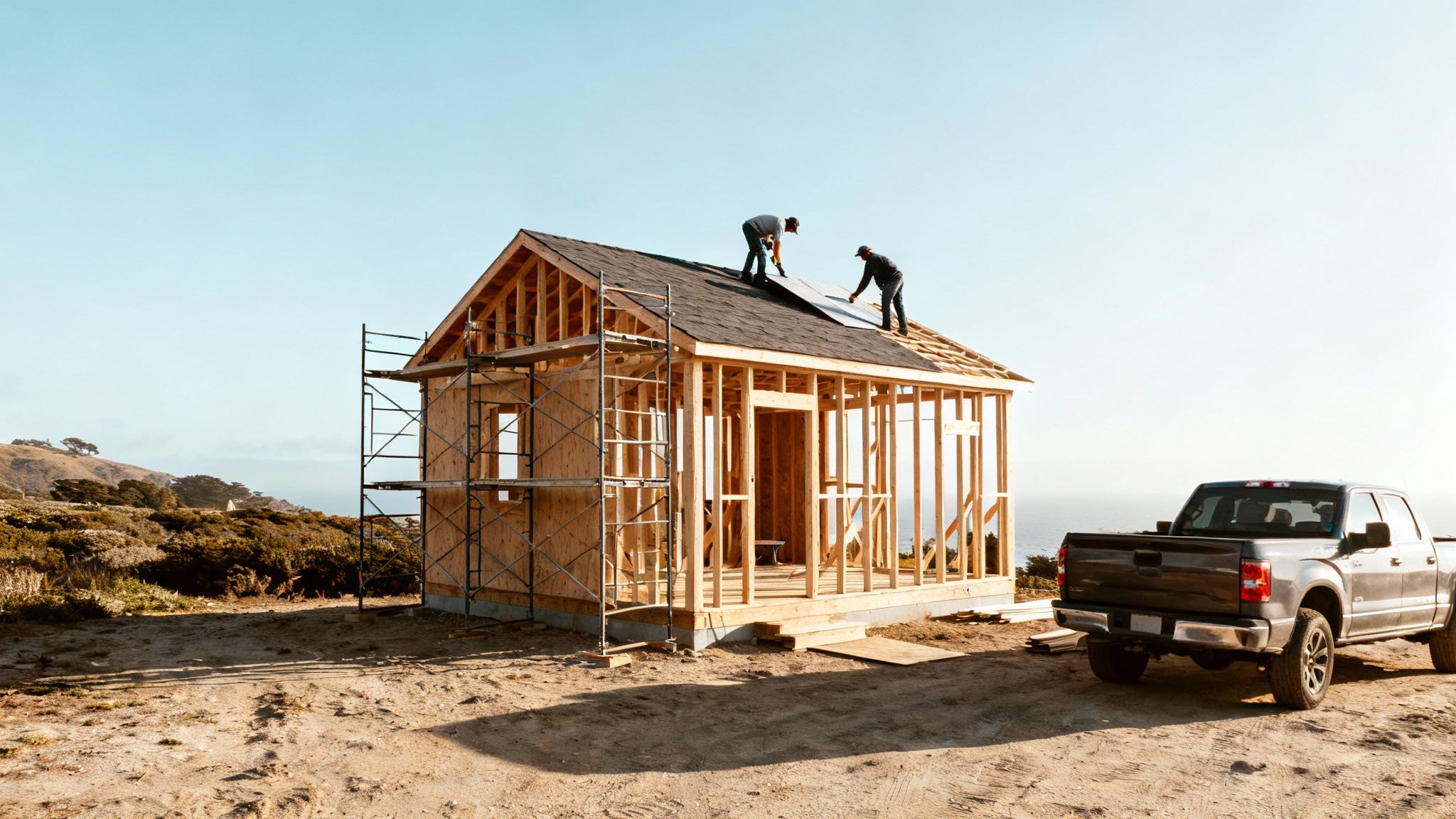
This phase kicks off with site preparation. We start by grading the land to create a level, stable base. Next, our team trenches for utilities like water, sewer, and electrical lines.
From Foundation to Framing
Once the site is ready, we pour the concrete foundation. This is the bedrock of your ADU and needs time to cure. After the foundation is solid, the framing goes up surprisingly fast. This is when you'll finally see the outline of your new space.
Getting the structure "weathered in" is the next milestone. This involves installing the roof, exterior sheeting, and windows—like energy-efficient Milgard models. This seals the building and protects the interior from the elements.
The Rough-In and Finishes
Now, we head inside for the "rough-in" stage. This is when licensed plumbers and electricians install the systems behind the walls.
Think of the rough-in as installing the building's central nervous system. All wiring and pipes are put in place before drywall goes up. This work must pass rigorous county inspections.
After inspections are cleared, we install insulation and hang drywall. From there, it’s all about the finishes that make it feel like a home. This includes:
- Flooring: Laying durable laminate or classic tile.
- Cabinetry and Countertops: Installing custom cabinets and surfaces like Quartz countertops.
- Painting: Applying fresh coats of paint to interior and exterior surfaces.
- Fixtures: Installing lights, faucets, and appliances.
Each step requires skilled craftsmanship. To learn more about the financial side, read about the cost to build an ADU. For those curious about other building methods, you can explore shipping container modular homes.
Avoiding Common Delays That Derail ADU Projects
Ever wonder why some ADU projects seem to drag on forever? The answer almost always comes down to a few common, avoidable pitfalls. Knowing these timeline killers is the first step to ensuring they don't happen to you.
An incomplete or inaccurate permit application is the number one reason projects get stuck. If your plans are missing key details, the county will reject them. This forces you back to the drawing board and can add months to your timeline.
Unforeseen site conditions are another big one. In Monterey County, it's not uncommon to discover challenging soil that requires special engineering. These discoveries can stop work and require costly solutions.
Navigating Local Hurdles
Even with a perfect plan, some delays are part of the local landscape. Understanding them helps build a realistic schedule.
- Utility Connection Backlogs: Connecting to power and gas isn't instant. Utility companies often have long waitlists. Getting a crew to your site can take weeks, sometimes months.
- Material Supply Chain Issues: Waiting for specific windows or finishes can bring a project to a halt. Planning ahead and ordering long-lead-time materials in advance is critical.
- Site Access Challenges: Narrow driveways or steep slopes can complicate material delivery. These factors can add time and labor costs to the project.
The most effective way to sidestep delays is to partner with a local expert who conducts a thorough upfront assessment. Identifying risks before they become problems is the foundation of a successful build.
At Aldridge Construction, our local knowledge helps us anticipate these challenges. We know the terrain and the people in the permit offices across Monterey, Santa Cruz, and San Benito Counties. This proactive approach is how we create a more accurate answer to the question, how long does it really take to build an ADU in Monterey County.
Why a Local Design-Build Expert Is Your Best Asset
In Monterey, Santa Cruz, and San Benito counties, local knowledge is the secret to keeping your ADU project on time and budget. Generic, one-size-fits-all advice misses the mark here. A local expert gives you a home-field advantage because we live and breathe the challenges of this region every day.
One of the most common ways an ADU timeline gets derailed is by juggling separate architects, engineers, and builders. This fragmented approach is a recipe for miscommunication and delays.
A Single Point of Contact
A unified design-build firm cuts through all that noise. By bringing every expert you need under one roof, we create a single, clear line of accountability. When the person designing your ADU can talk directly to the person building it, problems get solved in minutes, not weeks.
When you have one team handling everything, accountability is clear. There’s no finger-pointing between the architect and the builder—just solutions that keep your project on track.
This integrated model is what lets us confidently answer the big question: how long does it really take to build an ADU in Monterey County? Our design and build services are built to give you a clear roadmap and a trusted partner from start to finish.
We also keep a close eye on the financial side. A true local partner understands the ecosystem of state and local initiatives that can help homeowners manage costs. To learn more about California's approach, you can read about making ADU projects more accessible. Choosing the right local team ensures you have an expert who can navigate the build and all the local nuances that come with it.
Frequently Asked Questions About ADU Timelines
Building an ADU is a big undertaking. Here are answers to common questions we hear from homeowners in Monterey County.
Can I really get my ADU permit in 60 days?
While California law gives planning departments 60 days to review your plans, that clock doesn't start until your application is deemed "complete." Many submissions get bounced back due to errors, which adds months of back-and-forth. Working with a local expert who submits a perfect application from the start is the key to hitting that 60-day target.
Do pre-approved ADU plans actually make things faster?
Yes, they can speed up the initial design phase. Think of it as starting with a solid template. However, you still have to go through the full permitting process. Your property needs its own site plan and foundation design, so pre-approved plans don't let you bypass the permit desk.
What is the single biggest cause of construction delays?
After permits, the two biggest wildcards are surprise site conditions and utility company backlogs. Discovering poor soil or getting stuck in a long queue for PG&E to connect your power can halt a project for weeks. A thorough upfront site assessment helps spot these potential roadblocks early.
Is converting a garage into an ADU a quicker project?
Generally, yes. A garage conversion is often faster because you already have a foundation, walls, and a roof. But it is still a major construction project. It requires full architectural plans, city permits, and multiple inspections to become a legal, safe dwelling.
What is the best way to get a realistic ADU timeline?
The best first step is to consult with a local design-build firm. A good contractor can give you a realistic, personalized timeline based on your specific property, your goals, and the current workload at local planning departments. They can assess your property's feasibility and give you a clear view of the entire process.
Ready to start planning with confidence? The expert team at Aldridge Construction can provide a clear, personalized timeline for your ADU project in Monterey, Santa Cruz, or San Benito County. Contact us today for a consultation.