
Designing an Accessory Dwelling Unit (ADU) is about more than picking trendy finishes. It's about creating a smart, flexible space for real California living. This could be a home for aging parents, a rental unit, or a much-needed home office.
This guide will skip the surface-level advice. We will explore the practical design choices that make a backyard home private, comfortable, and valuable.
Designing Beyond the Blueprints
The ADU boom in California has changed how we view our backyards. This trend requires a design approach that focuses on smart, functional layouts, not just looks.
Of course, a stylish ADU is nice. But a successful one is built for its specific purpose. This could mean generating rental income in a market like Santa Cruz or giving your family private space in Monterey.
From Looks to Livability
The conversation around ADU design has changed. We've moved past just adding a tiny house and now focus on creating efficient, livable spaces. Homeowners are learning that the best layouts are practical, not just pretty.
This means focusing on key details from the start:
- Noise Buffering: Placing bedrooms away from the main house or a busy property line creates more peace and quiet.
- Multipurpose Storage: Using clever built-ins and flexible furniture makes every square foot work harder.
- Smart Utility Access: Planning for easy access to plumbing and electrical systems saves headaches later.
This focus on function comes from the huge growth in ADU construction. Between 2016 and 2022, California ADU permits grew by 15,334% [Source: UC Berkeley Terner Center for Housing Innovation]. This forced builders to create efficient solutions that work in the real world.
The Aldridge Construction Approach
Many online articles focus on paint colors or tile. At Aldridge Construction, we know that lasting value comes from a layout that simply works. A thoughtful floor plan that prioritizes privacy, natural light, and indoor-outdoor flow is the foundation of a successful ADU.
Our approach to designing ADUs for real California living is based on our knowledge of Monterey, Santa Cruz, and San Benito counties. We help you create a space that is not only beautiful and code-compliant but also perfectly suited to your property and your life.
California ADUs vs. Generic Plans
The table below shows how a purpose-built California ADU design differs from generic online plans.
| Design Factor | Generic Online Plans | Real California Living Design |
|---|---|---|
| Indoor-Outdoor Flow | Often an afterthought; small windows and a single door. | A primary focus; uses large glass doors, patios, and pergolas to extend the living space. |
| Climate Response | Standard insulation and window specs; not climate-specific. | Optimized for local climate with strategic window placement, passive cooling, and high-performance materials like Milgard windows. |
| Privacy | Minimal consideration for views into or out of the main house. | Careful window and door placement to create separate, private zones for both homes. |
| Multi-Use Layouts | Fixed, single-purpose rooms (e.g., a dedicated bedroom). | Flexible spaces with built-ins or movable partitions that can serve as an office, guest room, or den. |
| Local Code & Zoning | Not tailored to specific city or county rules. | Designed from the ground up to meet local codes in places like Monterey or Santa Cruz County. |
A successful ADU reflects its environment and its purpose. It’s not just a smaller version of a big house. If you’re ready to see how we blend smart function with great style, check out our ADU design ideas for real-world inspiration.
Laying The Groundwork: Site Planning and Zoning
Before you pick a floor plan, the first step is to understand your property. A successful ADU project starts with a clear analysis of your lot's potential and its limits.
This groundwork is essential for designing ADUs for real California living that are both functional and compliant with local rules. We look at your property from every angle to find the best spot for your new unit.
Evaluating Your Property’s Potential
A thoughtful site analysis looks at more than just open space. We consider key factors that will impact the final design, cost, and livability of your ADU.
- Sunlight and Shade: Where does the sun hit your property during the day? Placing an ADU to capture morning light or avoid harsh afternoon sun can improve comfort and lower energy bills.
- Utility Connections: Finding your existing sewer, water, and electrical lines is a major cost factor. Placing the ADU closer to these hookups can save you thousands in trenching and plumbing costs.
- Privacy for Everyone: The goal is to create two distinct homes. We analyze sightlines from both houses to place windows, doors, and outdoor areas so everyone has privacy.
This process chart shows the flow from site planning to the build phase.
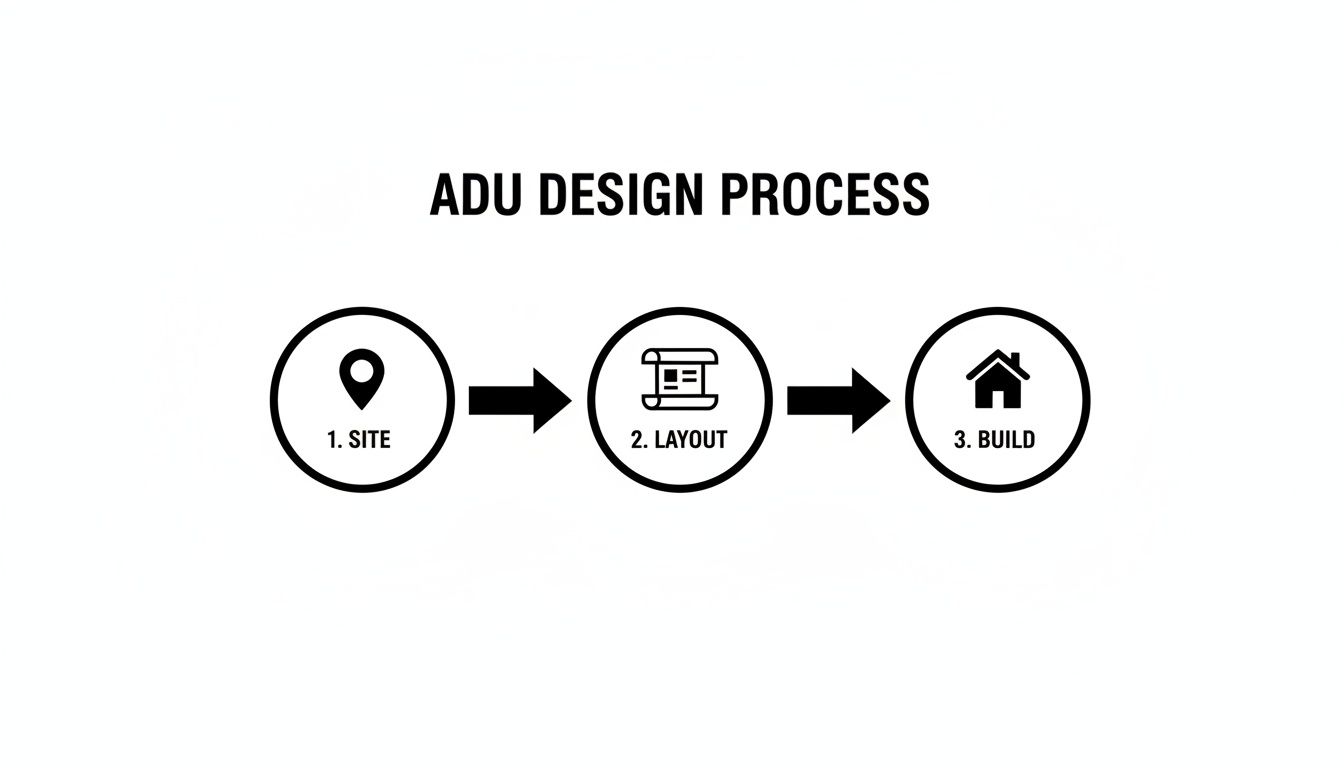
A solid site plan is the first step that guides every following decision.
Understanding Your Buildable Area
Next, we map out your buildable area. This is the part of your lot where you are legally allowed to build, determined by local zoning rules called setbacks.
Statewide California laws have simplified many old ADU rules. Now, you can usually expect a four-foot setback from the side and rear property lines for new detached ADUs. This opens up parts of your property that were previously unusable.
It's important to remember that while state law sets the minimum, local rules in Monterey, Santa Cruz, or San Benito counties can have their own requirements. An experienced local builder can help you navigate these rules to maximize your space. For a full overview, it helps to understand the California ADU requirements.
Creating A Functional ADU Layout
A great Accessory Dwelling Unit feels spacious and bright, no matter its size. The secret is in the smart layout. When you're designing ADUs for real California living, every inch must be useful.
The goal is to create a purpose-built space where daily life flows smoothly. A well-designed layout solves problems before they happen.
Prioritizing Privacy And Noise Reduction
One of the biggest challenges in ADU design is creating separation and peace. Nobody wants to feel like they are living in a fishbowl.
A simple strategy is to place bedrooms away from shared walls. For example, designing the layout so closets or bathrooms act as a sound buffer between the ADU’s bedroom and the main house’s patio makes a big difference.
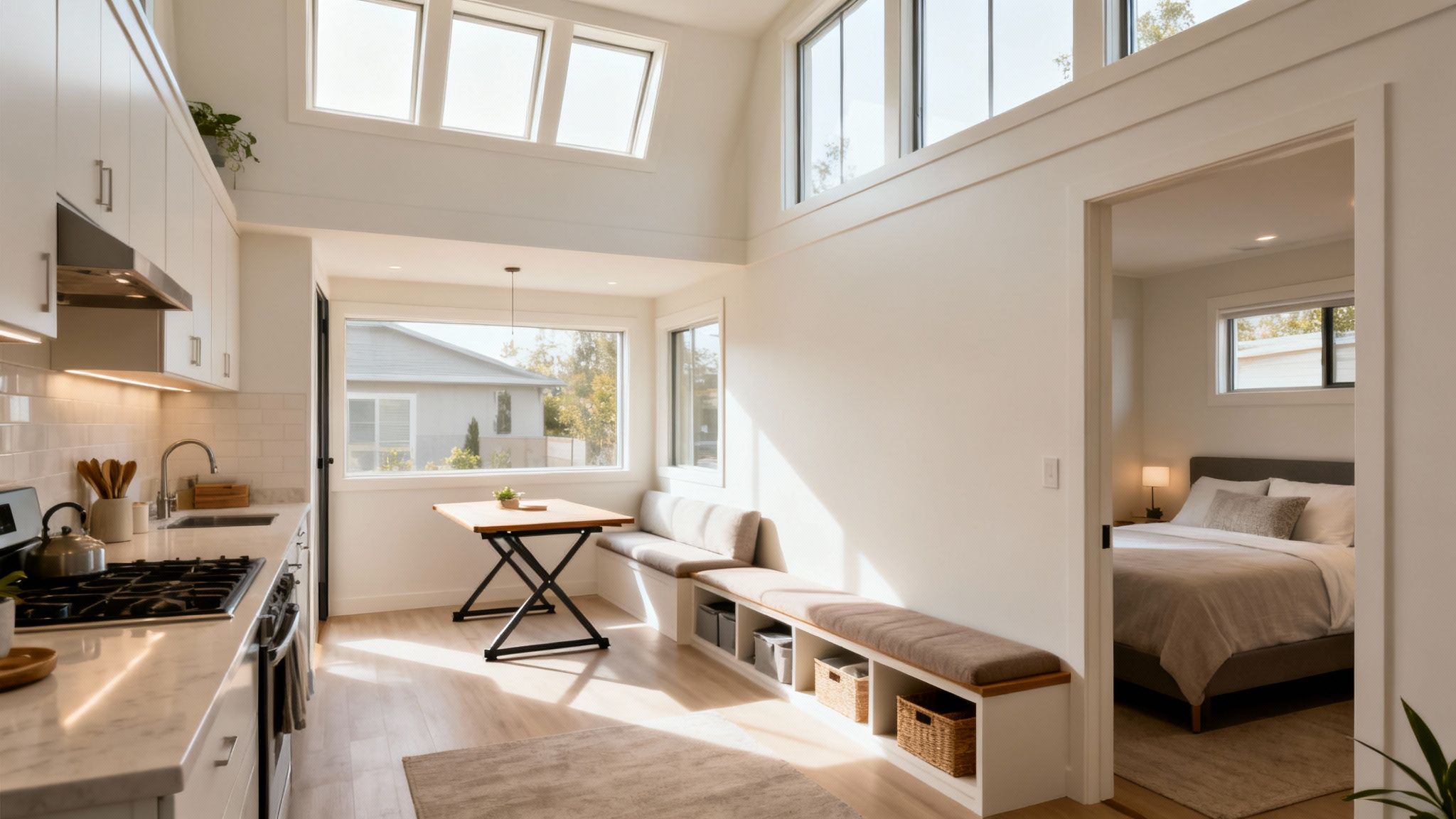
Window placement is also key. High, clerestory windows bring in natural light, making the space feel bigger without sacrificing privacy.
Making Every Square Foot Count
In a small home, every design choice matters. You want a layout that feels open but still has plenty of storage. This is where multi-functional design is important.
Here are a few layout strategies for ADUs:
- The L-Shaped Kitchen: An L-shaped layout along two walls opens up the main living area. This creates a more social space and often leaves room for a small dining island.
- Integrated Storage Solutions: Built-in storage, like a window seat with drawers or floor-to-ceiling cabinets, maximizes storage without adding bulk.
- Defining Zones Without Walls: In a studio or one-bedroom ADU, you can create the feel of separate rooms without walls. A change in flooring or a bookshelf can visually separate a sleeping area from the living space.
Because ADUs are compact, knowing how to maximize space is essential. It pays to explore tips for designing a multi-purpose room to improve your ADU's function.
Designing For Rental Readiness
Many homeowners in Monterey and Santa Cruz build ADUs for rental income. This makes durability and low operating costs top priorities.
When designing for a renter, think long-term.
- Durable Finishes: Choose materials that can handle wear and tear, like Quartz countertops and Luxury Vinyl Plank (LVP) flooring.
- Efficient Appliances: Select energy-efficient appliances. An induction cooktop or a tankless water heater can lower utility bills, making your rental more appealing.
- Easy Maintenance: Ensure easy access to the water heater and electrical panel. This can save time and money on future service calls.
Embracing Indoor-Outdoor Living
True California living blurs the lines between home and yard. This is an essential mindset when designing ADUs for real California living. A smart connection to the outdoors can make a compact ADU feel open and spacious.
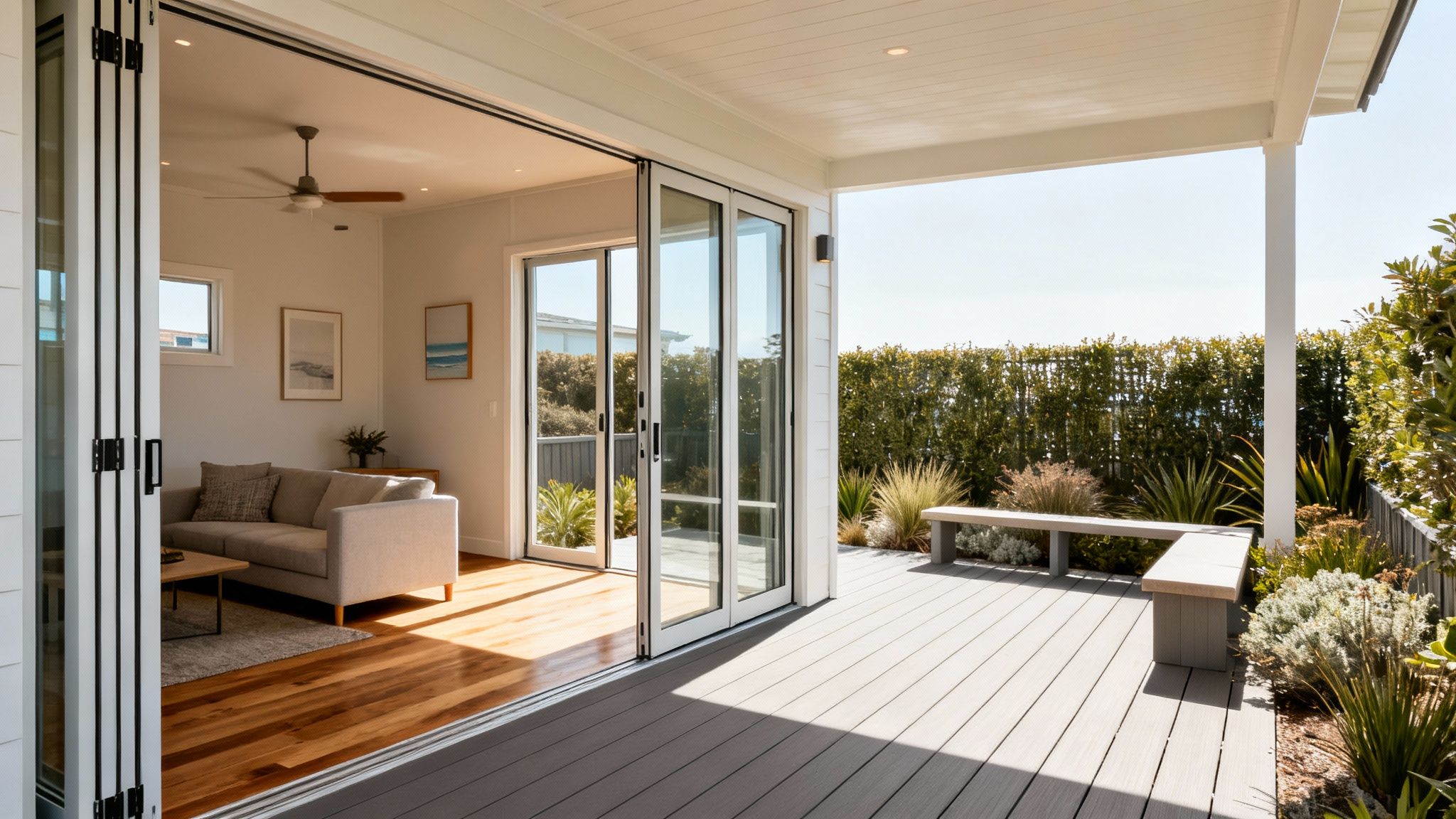
This is more than just a small concrete patio. It's a design strategy that creates a seamless flow. A 500-square-foot ADU can feel much larger when it opens to a private deck or porch.
Creating A Seamless Transition
The magic of indoor-outdoor design is making the transition feel effortless. Large glass doors are your best tool for this.
- Accordion or Bifold Doors: These doors fold away completely. They create a large opening that merges your indoor space with a deck or patio.
- Multi-Panel Sliding Doors: These large glass panels slide into a wall pocket or stack to one side. They give you the same wide-open effect.
Using the same flooring inside and out also creates the illusion of one large living area.
Choosing Materials For Coastal Climates
In coastal areas like Monterey and Santa Cruz, outdoor materials must be tough. They face salt air, moisture, and temperature changes. Choosing the right materials means your outdoor space will stay beautiful with less maintenance.
We recommend these durable, low-maintenance options for our local climate:
- Composite Decking: Brands like Trex offer great durability. They resist rot, fading, and insects and never need staining or sealing.
- Fiber Cement Siding: Materials like Hardie board are excellent for covered porch walls. They resist moisture and salt, preventing peeling and warping.
- Paver Patios: Concrete or stone pavers create a classic, durable surface. If one gets damaged, it's easy to replace.
Landscaping For Privacy And Ambiance
Landscaping is the final touch. It's a key tool for creating privacy between the main house and the ADU. A few smart strategies can make the ADU’s outdoor area feel like a secluded retreat.
Planting tall shrubs or using a trellis with climbing vines can create a "green screen." This blocks views without feeling like a harsh wall. Low-voltage landscape lighting can extend the use of the space into the evening.
Building For Efficiency And Durability
When designing an ADU for real California living, efficiency and durability are key. Choosing the right materials and systems means your ADU will last for decades with lower utility bills and less maintenance.
This focus on performance is also the law. Every new home in the state, including ADUs, must meet California's Title 24 energy standards. This rulebook ensures your ADU is built to save energy.
Meeting California's Title 24
The idea behind Title 24 is simple: build smarter, use less energy. For an ADU, this involves a few key parts.
- High-Performance Windows: We recommend options like Milgard windows. Their dual-pane glass and special coatings keep your ADU cooler in summer and warmer in winter.
- Proper Insulation: The right insulation in walls and ceilings acts like a thermal blanket. It prevents energy from escaping and keeps the indoor temperature comfortable.
- Cool Roof Materials: In sunny California, a "cool roof" reflects more sunlight and absorbs less heat. This keeps the ADU cooler and reduces air conditioning use.
These elements work together to create a home that’s more comfortable and affordable to run. For more on this, see our guide on green construction materials.
Smart Systems That Lower Utility Bills
The mechanical systems you choose also impact your ADU's operating costs. Consider different strategies to reduce energy consumption to maximize savings. For most ADUs, we recommend all-electric systems.
Two impactful upgrades we install are:
- Heat Pump HVAC Systems: These act as an efficient air conditioner in the summer and a heater in the winter. They move heat instead of creating it.
- Tankless Water Heaters: These on-demand systems heat water only when you need it. This can cut water heating energy costs by 30% or more.
Here is a quick summary of our recommended material and system choices.
Key Material And System Choices For A California ADU
| Component | Recommended Option | Key Benefit |
|---|---|---|
| Windows | Dual-Pane, Low-E Coated (e.g., Milgard) | Reduces heat transfer, lowering HVAC costs. |
| Insulation | High R-Value Batts or Spray Foam | Maintains stable indoor temperatures year-round. |
| Roofing | Cool Roof Shingles or Metal | Reflects sunlight to keep the ADU cooler. |
| HVAC System | Electric Heat Pump (Mini-Split) | Provides highly efficient heating and cooling in one unit. |
| Water Heater | Electric Tankless (On-Demand) | Heats water only when needed, saving significant energy. |
| Siding | Fiber Cement (e.g., James Hardie) | Resists moisture, pests, and rot for long-term durability. |
These choices create a high-performance ADU that meets Title 24 and provides a better living experience with lower costs. Given that ADUs have recently accounted for about 20% of California's new housing growth, every durable, efficient unit we build contributes to the state's larger sustainability goals. You can learn more about the impact of ADU construction on California housing trends.
Choosing The Right Design-Build Partner
Building an ADU is a big investment. The partner you choose will define the experience. A design-build firm brings everything under one roof. This approach streamlines communication and keeps your budget tied to the design.
This is especially true when designing ADUs for real California living. Local codes and site challenges demand a cohesive strategy from the start.
A design-build partner like Aldridge Construction is your single point of contact for the entire project. This integrated process avoids the finger-pointing that can happen with separate teams. Everyone is on the same team, working toward the same goal. You can see how this works by reading about our custom home building process.
Key Questions For Your Potential Contractor
Finding a team with experience in Monterey, Santa Cruz, or San Benito counties is essential. A local contractor knows the permitting hurdles and design nuances unique to our area.
Before you sign a contract, get clear answers to these questions:
- How many ADUs have you built in my county? Real-world experience with the local planning department is priceless.
- Can you show me a portfolio of your completed ADU projects? This helps you judge their craftsmanship and design style.
- How do you handle project costs and changes? You need a transparent process for managing budget adjustments.
- What’s your realistic timeline for a project of this size? A professional should be able to map out a clear schedule.
Frequently Asked Questions About Designing Your California ADU
Here are answers to some of the most common questions we hear from homeowners in the Monterey Bay area.
1. How much does it cost to design an ADU in Monterey County?
Design costs are usually a percentage of your total construction budget. A design-build firm will include these fees in a single project proposal. The final cost depends on the ADU's complexity and any special engineering needed. Investing in a professional design prevents expensive changes later. For more details, review our guide on the cost to build an ADU.
2. Do I need an architect and a builder for my ADU?
You can hire them separately, but this can lead to communication gaps. A design-build firm is a more streamlined solution. With a design-build firm, the design and construction are under one contract. This ensures the design is practical and stays on budget.
3. How can I make a small ADU feel bigger?
Smart design can make a small space feel open and airy. High or vaulted ceilings draw the eye up. Large windows and glass doors bring in natural light and extend the view. An open layout for the main living area removes visual barriers. Finally, built-in cabinets and multi-functional furniture keep the space uncluttered.
4. What are the biggest ADU design mistakes to avoid?
The most common mistakes happen before construction starts. These include poor layout planning and ignoring your property's unique features. For example, placing windows that look directly into the main house or choosing high-maintenance materials for a rental unit are big mistakes.
5. What is the difference between a custom design and pre-approved plans?
A custom design is created from scratch for your property and goals. It offers the most flexibility. Pre-approved plans are standard designs that some local counties offer to speed up the permit process. A skilled design-build firm can help you choose the right path or modify a pre-approved plan to fit your needs.
Ready to design an ADU that fits your property and goals? The team at Aldridge Construction has the local expertise to guide you. If you're building an ADU in Monterey, Santa Cruz, or San Benito, we’ll help you design it to fit your property—and your goals. Contact us to get started at https://aldridgeconstruction.biz.