
Building a custom home is so much more than a construction project—it’s the realization of your unique vision. The custom home building process is a deeply personal, multi-stage journey. It takes an idea from a blueprint on your own land and transforms it into a living, breathing reality, all driven by careful planning, a stellar team, and clear communication from day one.
This guide will walk you through each phase, from the initial dream to the final walkthrough, ensuring you feel confident and prepared.
Starting Your Custom Home Journey
Getting started on a custom home is an incredible venture, one that ends with a space built just for you and your lifestyle. This isn't like buying a production home where you pick from a few pre-set plans. A true custom home is a one-of-a-kind creation, born not from a shovel in the dirt, but from a clear vision in your mind.
The path from that first idea to finally getting the keys involves several distinct phases, each with its own timeline and decisions. Understanding this roadmap from the beginning is the single most important thing you can do to make sure the experience is smooth and rewarding. Whether you’re building in Monterey, California, or out in Maricopa County, Arizona, the fundamentals of a great build never change: meticulous planning and expert guidance.
Defining a Clear Vision
The biggest mistake homeowners make is rushing into design without first nailing down a clear, detailed vision. A Pinterest board is a fantastic starting point, but a true vision goes much deeper. It forces you to answer the tough questions about how your family will actually live in the space.
Before you even sit down with an architect or builder, take some time to think through these key areas:
- Daily Routines: How do your mornings unfold? Where will the kids spread out to do their homework? Really picturing your daily life helps map out a layout that just works.
- Long-Term Goals: Will this home need to accommodate growing children down the road? What about aging parents, or your own retirement? Planning for the long haul now can save you from a major renovation later.
- Non-Negotiables: What are your absolute must-haves? This could be anything from a first-floor primary suite with a curbless shower to a kitchen with a large island and Quartz countertops built for a serious cook.
Once you have it, this well-defined vision becomes the North Star for every single decision that follows. For a detailed guide to help you get all your thoughts organized, be sure to check out our comprehensive new home building checklist.
According to the National Association of Home Builders (NAHB), single-family custom home building remains a strong segment of the housing market. In recent quarters, custom home starts have maintained a steady share, indicating consistent demand from families looking to create their ideal living spaces. [NAHB, 2024]
Building Your Team and Financial Foundation
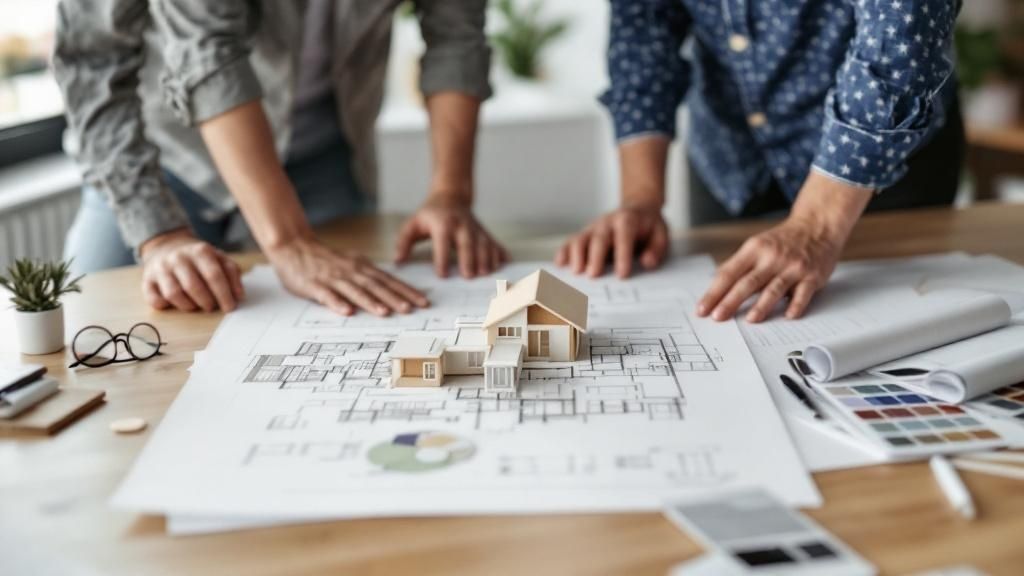
The success of your custom home hangs on two things: the team you hire and the financial plan you create. This stage of the custom home building process is where dreams meet reality. It's time to make the big decisions that will define the entire project, from finding partners you can trust to setting a budget that gets you to the finish line without any nasty surprises.
Your build team is the engine that powers this whole machine. This group usually includes your builder, an architect, and often an interior designer. Finding the right people isn't about just picking the lowest bid—it's about forging a partnership built on trust, clear communication, and a shared vision for your home.
Assembling Your Professional Team
Your builder is your most important ally in this process. When you're looking at builders in Monterey or Maricopa County, you have to look past the price tag. A truly great builder is your project manager, your advocate, and your chief problem-solver all rolled into one.
Start by asking to see a portfolio of their work, and pay close attention to homes that are similar in style and scale to what you have in mind. Then, verify their license and insurance to make sure they're in good standing with local and state authorities. Finally, get a feel for their communication style. Are they responsive, transparent, and do they take the time to answer your questions?
Choosing the right professionals comes down to asking the right questions. For a deeper dive, you can explore our guide on 8 crucial questions to ask general contractors before hiring. This resource will help you make sure you find a team that’s a perfect fit for your project.
Establishing Your Financial Plan
Just as important as your team is your financial footing. A realistic, all-in budget is your roadmap, and it needs to cover a lot more than just the "sticks and bricks" construction costs.
Your budget should account for everything, including:
- Land Acquisition: The cost of the lot itself.
- Design and Engineering Fees: Payments for your architect and any necessary structural engineers.
- Permitting and Impact Fees: The costs charged by local municipalities, whether in San Benito or Santa Cruz Counties.
- Landscaping and Site Work: The money needed for grading, driveways, and creating your outdoor living spaces.
- A Contingency Fund: This is non-negotiable. Set aside 10-15% of the total construction cost to cover unexpected issues or desired upgrades.
Next, figure out how to pay for it all. For most people, a construction loan is the go-to financial tool. A construction loan is a short-term loan that covers building costs and is paid out in stages (called "draws") as specific milestones are completed.
Once your home is finished and the Certificate of Occupancy is issued, the construction loan is usually rolled into a permanent, long-term mortgage. Getting pre-approved for your construction loan early defines your real-world budget, giving you and your team the confidence to move forward with design choices.
Designing and Permitting Your Dream Home
This is where the magic really starts. The design phase is the creative heart of the custom home building process, where all your daydreams and ideas finally take shape on paper. It's an intimate partnership between you, your architect, and Aldridge Construction. Together, we’ll translate your lifestyle and personal taste into a detailed set of blueprints that become the roadmap for the entire build.
We begin with broad strokes—conceptual sketches—and progressively refine them into precise, technical drawings. Every single detail gets attention, from the way rooms flow into one another to how the morning sun will stream into your kitchen. For our projects in Monterey or Santa Cruz Counties, we’re laser-focused on California’s tough Title 24 energy codes. In Maricopa County, Arizona, the focus shifts to tackling the unique building requirements of a desert climate.
From Concept to Construction-Ready Plans
Designing a home isn't just about drawing walls; it's about solving a complex, three-dimensional puzzle. Your architect will kick things off with initial floor plans and exterior elevations, giving you that first thrilling glimpse of your future home. This is your moment to give feedback and make revisions.
Once you’ve signed off on the general layout, the plans get much more technical. This includes:
- Structural Engineering: A licensed engineer designs the home’s foundation and framing, ensuring it meets all safety and seismic codes.
- Mechanical, Electrical, and Plumbing (MEP) Plans: These drawings map out the HVAC system, light switch locations, pipes, and drains.
- Site Plans: This shows exactly how the home sits on your property, detailing the driveway, drainage, and utility hookups.
Bringing a builder like Aldridge Construction into the design phase early on is a game-changer. We provide real-time cost feedback, suggest more efficient building methods, and ensure the architect's vision is buildable within your budget. This collaboration saves money and prevents frustrating redesigns.
Navigating the Permitting Labyrinth
With a complete set of architectural and engineering plans in hand, we hit the next major milestone: securing building permits. Every jurisdiction, whether it’s San Benito County in California or a city in Maricopa County, Arizona, has its own maze of rules and review timelines.
This is where a seasoned local builder becomes your most valuable player. At Aldridge Construction, we manage the entire submission, talk directly with plan checkers, and quickly address any required corrections. According to the US Census Bureau, privately-owned housing units authorized by building permits were at a seasonally adjusted annual rate of 1.44 million in April 2024, highlighting the constant flow of projects through this system. [U.S. Census Bureau, 2024]
Knowing what to expect is half the battle. For a closer look at what this process involves, check out our guide on navigating construction permit requirements.
Setting Realistic Timelines
How long does it take to get a permit? The honest answer is: it depends. It could be a few weeks or drag on for several months, depending on project complexity and the local building department's workload.
We help you set realistic expectations from day one, building these potential delays right into the project schedule. Our mission is to get your plans approved and ensure they are perfectly optimized for a smooth, efficient, and successful build.
Preparing Your Site for Construction
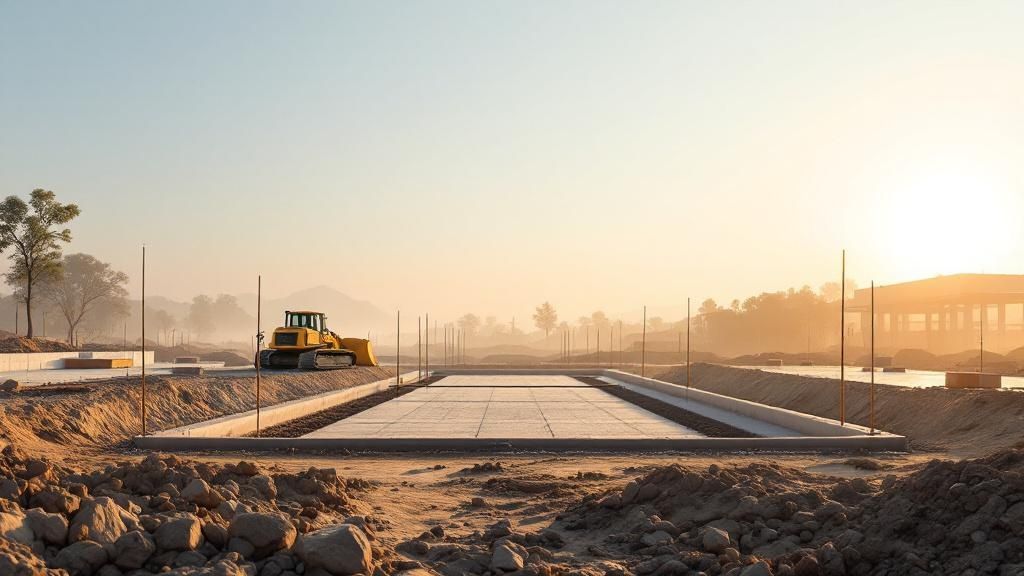
With your approved plans in hand, the energy of the custom home building process finally shifts from paper to your actual property. This pre-construction phase is all about methodically laying the groundwork for a smooth build. It’s where your builder transitions from a consultant to the commander of the physical job site.
The process begins with a final pre-construction meeting. This is when you'll sit down with us at Aldridge Construction to lock in the final project schedule, confirm material selections, and give the budget one last look before we break ground.
The First Steps on Your Land
Once the formalities are out of the way, the real work on your land begins. This is a precise operation to prepare the canvas for your new home.
The initial site work involves a few key activities:
- Clearing and Grubbing: We bring in equipment to remove trees, large rocks, and other debris from the building footprint.
- Site Survey and Staking: Professional surveyors stake the exact location of your home's foundation, ensuring it’s positioned perfectly according to the site plan.
- Temporary Utilities and Access: We establish a temporary power pole for tools, set up a water source, and create a solid construction driveway for deliveries and heavy machinery.
Depending on your specific location in Monterey or Santa Cruz Counties, this phase may require specialized geological surveys or soil testing. This isn't just a regulatory checkbox; it's essential for designing a foundation that will stand strong for generations.
Grading and Excavation
After clearing the lot, the next major job is to reshape the earth itself. Grading involves sculpting the terrain to make sure water drains properly away from your future home. This is one of the most critical steps for protecting your foundation, especially for properties dealing with California’s rainy seasons.
Excavation follows grading. This is where heavy machinery digs out the earth for the foundation and any basement or crawl space. At the same time, we’ll be trenching for the main utility lines.
These trenches are the pathways for all your essential services:
- Water Lines: Connecting to the municipal water supply or a private well.
- Sewer or Septic Lines: Establishing the connection for all your wastewater.
- Electrical and Communications: Running conduits for power, internet, and cable from the street to your home.
Finally, we secure the site with temporary fencing and signage to control access and maintain a safe environment. This prep work is the unsung hero of the build, setting the stage for every milestone that follows.
Key Milestones in the Construction Phase
This is where the magic happens. After all the planning, designing, and site prep, the construction phase is when your custom home finally starts to rise from the ground. This isn't a chaotic process; it's a highly organized sequence of events where each step builds on the last, timed and requiring specific sign-offs from local inspectors in Monterey, Santa Cruz, or Maricopa Counties.
Staying in close contact with your project manager is crucial now. We encourage regular site visits—it’s the best way to feel connected to the build and see your vision physically take shape.
From Foundation to Framing
The very first major milestone is pouring the foundation. This is the literal bedrock of your home, and its integrity is something we never compromise on. Whether we're pouring a slab-on-grade foundation, common in Arizona, or a more complex foundation for California's seismic activity, it demands absolute precision and a critical inspection.
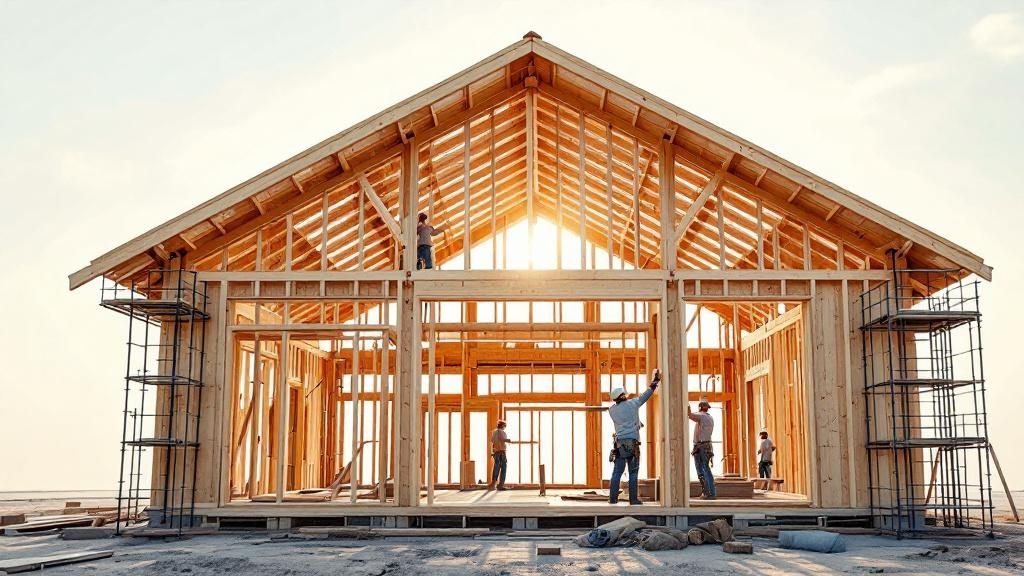
Once the concrete cures, the skeleton of your home goes up. This is the framing stage, one of the most dramatic parts of the build. Walls are erected, floor joists are laid, and roof trusses are set in place. It’s the first time you can actually walk through the "rooms" and get a real feel for the home’s layout and scale.
The Rough-In for Essential Systems
With the frame complete, we "dry-in" the house by adding sheathing and a weather-resistant barrier. Now, the work moves inside, focusing on the mechanical, electrical, and plumbing (MEP) rough-in.
This phase is a masterclass in coordination as specialized trade partners install:
- Plumbing: All supply and drainage pipes are run through the walls and floors.
- Electrical: Wiring for every outlet, switch, and light fixture is pulled throughout the structure.
- HVAC: The ductwork for your heating, ventilation, and air conditioning system is fitted into place.
A well-managed rough-in ensures these vital systems don’t conflict and pass rigorous inspections, preventing major headaches down the road.
Enclosing the Exterior and Interior
After the MEP rough-in is finished and signed off by the inspector, we install high-quality, energy-efficient windows from brands like Milgard, followed by the exterior doors. Then comes the siding—perhaps a classic stucco finish or durable James Hardie fiber cement siding—along with any stone or brick accents.
Inside, we fill the walls and ceilings with insulation, a huge factor for energy efficiency, whether meeting California's stringent Title 24 standards or keeping a home comfortable in the Maricopa County heat. Once the insulation passes inspection, the drywall is hung, taped, and finished, creating smooth interior walls and ceilings.
The image below gives you a sense of the critical permitting process that has to happen before any of this construction can even start.
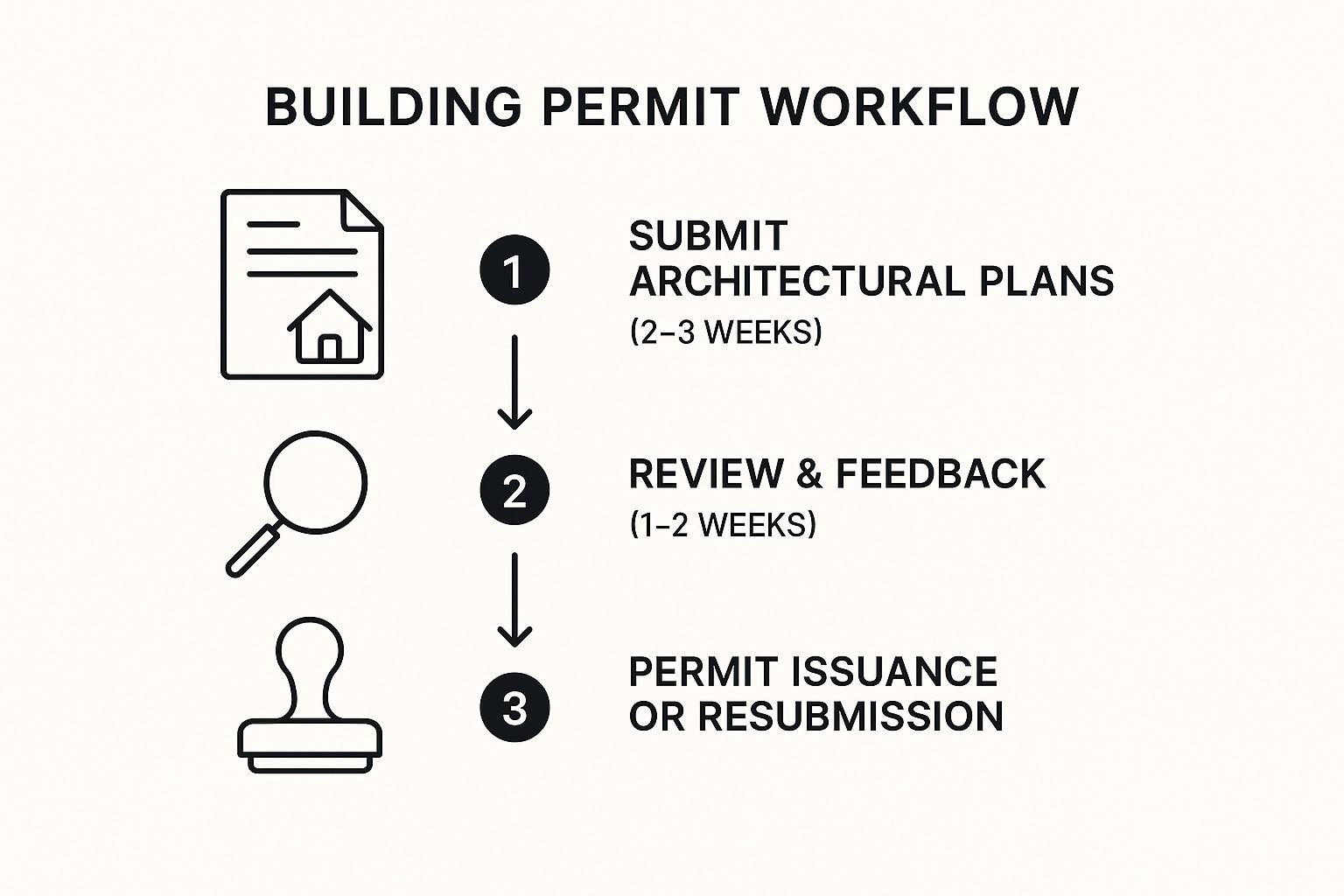
As you can see, getting the permits is a multi-step journey involving submissions, reviews, and feedback. Getting this part right from the beginning is key to avoiding delays.
Material and Finish Selection Checklist
As the framing and rough-ins are happening, you'll be working with our team to finalize your finish materials. To keep things on track, we use a detailed schedule to make sure selections are made well before they're needed on-site.
Here is a sample checklist that outlines the kinds of decisions you'll be making during this phase.
| Category | Selection Item | Decision Deadline |
|---|---|---|
| Exterior | Siding Style & Color | Prior to Framing Completion |
| Exterior | Roofing Material & Color | Prior to Framing Completion |
| Exterior | Windows & Exterior Doors | During Design Phase |
| Interior | Cabinetry Style & Finish | After Rough-In Inspection |
| Interior | Countertop Material | After Cabinet Install |
| Interior | Flooring (Hardwood, Tile, Carpet) | After Drywall Completion |
| Interior | Paint Colors (Walls, Trim) | After Drywall Completion |
| Fixtures | Lighting Fixtures | After Rough-In Inspection |
| Fixtures | Plumbing Fixtures (Faucets, Sinks) | After Rough-In Inspection |
Having a clear timeline for these choices is just as important as the construction schedule itself. It ensures a seamless transition from the structural build to the beautiful, finished details.
Applying the Finishes
Welcome to the home stretch! This final phase is all about the details—the elements that give your home its unique personality.
Here’s a quick rundown of what happens:
- Interior Finishes: Trim carpenters install all baseboards, door casings, and interior doors.
- Painting: The prime coat and final coats of paint are applied.
- Flooring & Cabinetry: Your hardwood, tile, or carpet is laid down, and kitchen and bathroom cabinets are set in place.
- Countertops & Fixtures: Gorgeous surfaces like Quartz countertops are installed. Plumbers and electricians return for their "finish" work—installing sinks, faucets, light fixtures, and outlet covers.
If you want to see how these stages fit into the bigger picture, you can check out your guide to the home construction timeline. Each step is a deliberate move toward handing you the keys to your dream home.
Final Walkthrough and Receiving Your Keys
As the dust settles, the custom home building process enters its most rewarding phase. Construction is officially wrapping up, and our focus shifts entirely to perfecting the details and ensuring every element meets your exact standards.
The entire journey culminates in the final walkthrough. This is a critical meeting where you and our Aldridge Construction team inspect every corner of your new home together. It's a meticulous process designed to catch any imperfections before you move in.
The Punch List Walkthrough
This final inspection is all about creating a document called a "punch list." You, as the homeowner, will walk through each room with a fine-tooth comb, pointing out any items that need a final tweak, correction, or adjustment.
We encourage you to be picky. Point out anything that isn’t quite right, no matter how small it might seem.
- Check all surfaces: Look for any scuffs on walls, stray paint drips, or imperfections in the flooring and tile grout.
- Test all fixtures: Turn every faucet on and off, flush every toilet, and flip every single light switch.
- Operate doors and windows: Open and close every interior and exterior door, every window, and every cabinet to make sure they function smoothly.
- Inspect finishes: Run your hand over countertops and double-check all appliance installations.
Our goal is to build a comprehensive list of touch-ups. Once we have it, our team gets to work immediately to ensure the home is absolutely flawless.
Securing the Certificate of Occupancy
After you’ve signed off on the completed punch list, the last administrative hurdle is securing the Certificate of Occupancy (C of O). This is an official document issued by the local building department—whether in Monterey, San Benito, or Maricopa County—after their own final inspections are passed.
The Certificate of Occupancy is the city or county's official declaration that your new home is safe, fully compliant with all building codes, and legally ready for you to live in. No one can move into a new home without it.
Closing Out the Project and Getting Your Keys
With the C of O officially in hand, we move to the final project closeout. This involves processing the final payment and the official handover of the property. We’ll provide you with a comprehensive package containing all warranties, user manuals for your new appliances, and contact information for our trusted trade partners.
Then comes the best part of the entire journey: we hand you the keys to your new custom home. After months of planning and construction, your vision is finally a tangible reality, ready for you to start making memories.
To make the transition smooth, we recommend setting up essential utilities first, then focusing on unpacking one room at a time. This makes moving into your new space an enjoyable and exciting experience.
FAQs: Your Custom Home Building Questions Answered
1. How long does the custom home building process typically take?
From the initial design meeting to receiving your keys, a typical custom home build takes around 12 to 18 months. This can be broken down into approximately 3-5 months for design and permitting, followed by 9-12 months for the actual construction, depending on the home’s complexity and location.
2. What is a contingency fund and why do I need one?
A contingency fund is a financial safety net, typically 10-15% of the total construction cost. It’s set aside to cover unforeseen circumstances, such as unexpected site conditions (like difficult soil), or for homeowner-driven upgrades added during the build. It prevents project delays and financial stress.
3. Can I make design changes once construction has started?
Yes, changes are possible, but it's most cost-effective to finalize the design before breaking ground. Any mid-construction modification requires a formal "change order" that details the new work and its impact on the budget and timeline. It's crucial to discuss any potential changes with your builder immediately.
4. What is a "punch list"?
A "punch list" is a document created near the end of construction. During a final walkthrough, you and your builder identify any items that are incomplete or need correction, like a paint touch-up, a stiff door, or a faulty fixture. Completing this list ensures the home is perfect before the final handover.
5. How is building a custom home financed?
Most custom homes are financed with a construction loan. Unlike a standard mortgage, these are short-term loans disbursed in stages, or "draws," as specific construction milestones (like foundation, framing, etc.) are completed and inspected. Once the home is finished, the construction loan is typically converted into a permanent mortgage. We have more resources available on how home renovation loans and similar financing structures work.
Ready to start the conversation about building your custom home in Monterey, Santa Cruz, San Benito, or Maricopa County? The team at Aldridge Construction is here to guide you through every step of the process. Contact us today to schedule your initial consultation. https://aldridgeconstruction.biz