
Building a custom home is one of life's most rewarding ventures, transforming a vision into a place you will cherish for years. From the sun-drenched lots in Maricopa County, Arizona, to the scenic coastal properties of Monterey and Santa Cruz Counties in California, the journey from an empty plot to a finished home is complex. A successful project hinges on meticulous planning and expert execution.
This comprehensive building a new home checklist is your essential roadmap, designed by the experts at Aldridge Construction to guide you through every critical phase. We have distilled decades of experience building custom homes across California and Arizona into a clear, step-by-step process.
By following this checklist, you can proactively avoid common pitfalls, make informed decisions, and ensure your new build stays on schedule and within budget. Let’s start laying the foundation for your dream home.
1. Establish and Finalize Your Budget
The first step in building a new home is establishing a comprehensive budget. This financial roadmap dictates every subsequent decision, from the size of your home to the quality of the finishes. A well-planned budget prevents scope creep and costly surprises down the road.
Breaking Down Your Budget
Your total budget must account for far more than just construction. A thorough financial plan includes several key categories:
- Land Acquisition: The cost of the property itself.
- Hard Costs (Construction): This covers labor and materials, from the foundation and framing to roofing and drywall.
- Soft Costs: These include architectural and engineering fees, permits, surveys, and soil tests. In areas like Monterey or Santa Cruz County, permitting fees can be a significant line item.
- Finishing Costs: This category covers everything from flooring like engineered hardwood, cabinetry, appliances like a Sub-Zero refrigerator, quartz countertops, and light fixtures.
- Landscaping and Site Work: Don't forget costs for driveways, grading, and outdoor living spaces.
- Contingency Fund: Set aside 10-20% of your total construction cost for unexpected issues. According to the National Association of Home Builders (NAHB), this is a best practice to cover unforeseen challenges, like discovering poor soil conditions that require deeper foundation footings.
A construction-to-permanent loan can streamline financing by combining the construction loan and the final mortgage into a single transaction, a common strategy we guide clients through in both California and Arizona.
2. Secure Land and Evaluate Site Conditions
With your budget established, the next crucial step is finding and securing the right piece of land. The property you choose is the canvas for your new home, and its unique characteristics will directly influence design, construction methods, and overall costs. Overlooking site conditions can lead to major budget overruns.

Breaking Down Your Site Evaluation
Thorough due diligence before closing on a property is non-negotiable. A comprehensive site analysis goes far beyond admiring the view; it involves a technical assessment of the land's suitability for construction.
- Zoning and Regulations: Verify local zoning laws in Monterey, Santa Cruz, or San Benito counties, setback requirements, and any HOA covenants that could restrict your home's size or style.
- Geotechnical & Soil Report: Hire a soils engineer to test the ground. Discovering rocky terrain requiring extensive excavation could add $30,000 or more to foundation costs.
- Topography and Slope: A steep slope often requires costly retaining walls and specialized drainage systems. A thorough topographical survey will reveal the land's contours.
- Utilities Access: Confirm the cost of connecting to water, sewer or septic, electricity, and gas. In rural parts of San Benito County, a new well and septic system can be a significant five-figure expense.
- Environmental Factors: Identify potential issues like floodplains or protected wetland areas that may require special permits under California regulations.
A property's orientation has a major impact on energy efficiency, a key principle in sustainable building practices popular in both California and Arizona. Aldridge Construction can guide you through these residential construction hurdles.
3. Select and Hire Qualified Professionals
Your next move is to assemble the expert team that will bring your vision to life. Hiring the right professionals is about partnering with qualified experts who can navigate complex regulations and manage timelines. The quality of your team directly translates into the quality of your home.
Assembling Your Core Team
Your project's success hinges on the synergy and expertise of several key players. A well-chosen team prevents costly mistakes and ensures your home is built to the highest standards.
- Architect/Designer: This professional translates your ideas into buildable plans that meet local codes in areas like Monterey or San Benito County.
- General Contractor (GC): The GC is the project manager, responsible for hiring subcontractors, sourcing materials, and overseeing day-to-day construction.
- Structural Engineer: This expert ensures the home's design is safe, particularly in regions with specific seismic considerations like California.
Depending on your project, you may also need a land surveyor or soil engineer. When vetting professionals, go beyond just a quote. Ask for a portfolio of recent projects and speak with past clients.
For more guidance, learn more about our team of expert contractors at aldridgeconstruction.biz.
4. Obtain Building Permits and Approvals
Navigating municipal regulations is a mandatory stage of your project. Obtaining the correct building permits is a legal requirement that ensures your new home is safe and compliant with local codes. Proceeding without proper authorization can lead to stop-work orders and hefty fines.
Breaking Down the Permitting Process
Securing permits is a meticulous process. In regions like Monterey and Santa Cruz County, the requirements can be stringent, especially in coastal zones or areas with specific environmental considerations like those governed by California's Title 24.
- Zoning and Land Use Approvals: You must confirm your project complies with local zoning ordinances, such as setback requirements and lot coverage limits.
- Building Permit Application: This covers the structural, electrical, plumbing, and mechanical aspects of your home, requiring detailed architectural and engineering plans.
- Specialized Permits: You may need a septic system permit or specific approval from a historic district review board.
- Utility and Environmental Clearances: You will also need approvals from local utility companies for water, sewer, and electrical connections.
Engaging a professional from Aldridge Construction, who is familiar with the local jurisdiction in Monterey County or Maricopa County, AZ, can dramatically streamline this phase.
5. Design and Finalize House Plans
With financing secured and your team assembled, the next step is to translate your vision into a buildable blueprint. This phase involves creating detailed architectural plans that merge your functional needs and budget with the constraints of your site and local codes. This is a crucial element in our building a new home checklist.
Crafting Your Blueprint for Living
The design phase is a collaborative process. A successful design goes beyond just room layouts; it considers how you will live in the space day-to-day.
- Floor Plan and Flow: Consider how spaces connect. An open-concept design can create a spacious, interactive environment ideal for families.
- Aesthetics and Style: Define your preferred style, whether it's a modern farmhouse, a classic Monterey Colonial, or a sleek contemporary design popular in Arizona.
- Site Integration: Your home's design should maximize the lot's best features, like views or natural light from energy-efficient Milgard windows.
- Future-Proofing: Incorporate long-term considerations like planning for aging-in-place with wider doorways and a main-floor master suite.
A common regret for new homeowners is not planning for enough storage. Thoughtfully integrating storage solutions like built-in shelving and walk-in pantries is far more cost-effective than adding them later.
6. Select Materials and Finishes
Once architectural plans are finalized, the next phase is selecting materials and finishes. This step involves choosing every tangible element, from roofing to decorative details. Making these decisions early prevents construction delays and ensures selections align with your budget and aesthetic.
Breaking Down Your Selections
Your choices should balance initial cost with long-term durability.
- Exterior Finishes: This includes roofing material like standing seam metal, siding such as stucco or fiber cement, windows, and exterior doors.
- Interior Structural Elements: Engineered hardwood provides stability and a consistent look in regions with fluctuating humidity, like coastal Monterey County.
- Hard Surfaces: This covers flooring, countertops, and tile. Choosing quartz countertops offers excellent durability and low maintenance.
- Fixtures and Fittings: This includes plumbing fixtures (faucets, sinks), lighting systems, and cabinet hardware. Upgrading to an integrated LED lighting system can reduce home energy consumption by over 75% [U.S. Department of Energy].
- Cabinetry and Millwork: Select styles and finishes for your kitchen cabinets, bathroom vanities, and any built-in shelving or trim.
Create a detailed "Finishes Schedule" spreadsheet with your builder to track orders and keep the project on schedule. Learn more about how we manage material selections for projects in Salinas.
7. Plan Utility Connections and Systems
Planning for electrical, plumbing, HVAC, and telecommunications early in the process is non-negotiable. This foresight ensures your home operates efficiently and safely. Properly engineering these systems directly impacts your long-term comfort and monthly expenses.

Breaking Down Your Utility Systems
Each system requires careful consideration and coordination.
- HVAC System: In areas like Maricopa County, AZ, a high-efficiency AC unit is a must. Homeowners in Monterey County might explore a geothermal HVAC system, which can reduce energy costs by up to 40% [U.S. EPA].
- Electrical Plan: Think about dedicated circuits for high-draw appliances, locations for smart home hubs, and installing whole-house surge protection.
- Plumbing and Water Systems: This is the ideal time to incorporate features like a tankless water heater for on-demand hot water or a whole-house water filtration system.
- Low-Voltage and Communications: Plan for where you'll need internet connections, cable, and security system wiring.
Integrating smart home technology from the start is more cost-effective than retrofitting. Systems like Google Nest or Ring can be planned directly into your electrical and security blueprints.
8. Secure Construction Insurance and Warranties
Protecting your financial investment during and after the build is a non-negotiable step. Securing the right insurance and warranties shields you from unforeseen events and faulty workmanship. This provides essential peace of mind.
Breaking Down Your Coverage
Comprehensive protection involves a multi-layered approach. Your builder should carry their own policies, but you must ensure your personal investment is also protected.
- Builder's Risk Insurance: This policy protects your property during construction. It covers damage from events like fire, theft, and vandalism.
- General Liability Insurance: Your contractor must carry adequate general liability insurance. This protects against third-party claims for injury or property damage.
- Homeowner's Warranty: Provided by the builder, this warranty typically covers workmanship and materials for one year, major systems for two years, and major structural defects for up to 10 years.
- Manufacturer Warranties: These cover individual products like appliances, windows, and roofing materials. Keep all documentation to make a future claim.
Always request and review "Certificates of Insurance" from your general contractor before they begin work. This document proves they have active liability and workers' compensation coverage, protecting you from financial responsibility for accidents on your property.
9. Establish Construction Timeline and Milestones
A detailed construction timeline is the project's heartbeat. Establishing firm milestones is a critical component of our building a new home checklist because it aligns all stakeholders and ensures everyone works in a coordinated and efficient manner.
Breaking Down Your Timeline
A well-structured timeline maps out the entire sequence of construction. A delay in one phase, like foundation work, can create a domino effect.
- Pre-Construction Phase: This includes final design approvals, permitting, and securing financing. This can take several months, especially in areas like Monterey or Santa Cruz County.
- Site Work and Foundation: The first physical step, involving excavation, grading, utility hookups, and pouring the concrete foundation.
- Framing and Rough-Ins: The skeleton of your home goes up, followed by the installation of plumbing, electrical wiring, and HVAC systems.
- Exterior and Interior Finishes: This phase includes roofing, siding, windows, drywall, painting, flooring, cabinetry, and fixture installation.
- Final Inspections and Punch List: The final walkthrough with your builder to identify any last-minute fixes before you receive the keys.
This infographic breaks down a simplified construction timeline into three major phases.
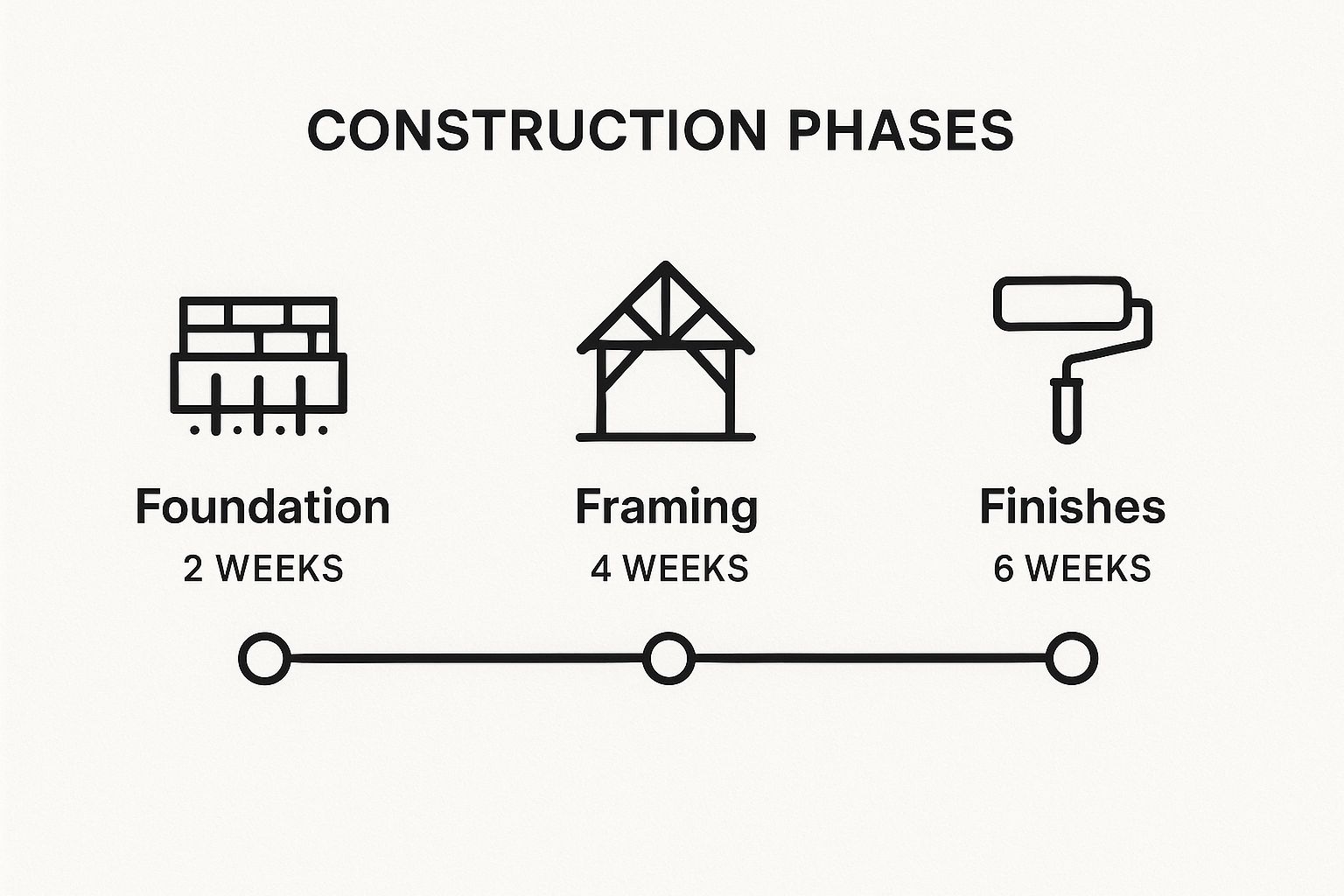
The visualization shows how foundational work must be completed before longer phases like framing and interior finishing can begin.
Always build a time buffer of 15-20% into your schedule for unforeseen delays. Factors like weather in the Santa Cruz mountains or supply chain issues are common.
10. Plan Final Inspections and Move-In Process
The final phase of your build is an exciting but detail-intensive period. Planning this stage ensures your new home is 100% complete, safe, and ready for you to enjoy from day one, preventing last-minute stress.
Breaking Down the Final Phase
This isn't just about getting the keys; it's about a systematic process of verification.
- Final Inspections: The building department will conduct a final inspection to issue a Certificate of Occupancy. This confirms the home is safe and compliant with all codes in your jurisdiction, whether it's Monterey County or Maricopa County, AZ.
- The Punch List Walk-Through: Walk through the home with your builder and create a detailed "punch list" of any remaining issues, such as a scuff on a wall or a misaligned cabinet door.
- Systems and Appliance Testing: Before signing off, test every system. Run the HVAC, test all plumbing fixtures, operate every appliance, and flick every light switch.
- Utility Activation: Schedule the transfer of your utilities (water, gas, electricity, internet) well in advance.
- Move-In Logistics: Coordinate your moving company and consider a temporary housing overlap of a few days to allow time for punch list items to be completed.
Request a comprehensive homeowner's manual from your builder. This binder should contain all warranty information, operating instructions, paint colors, and subcontractor contacts.
Frequently Asked Questions (FAQs)
1. How long does it take to build a new home?
The average time to build a new home is about 9-12 months, but it can vary significantly. Factors include permitting delays in areas like Santa Cruz County, weather, supply chain issues, and the complexity of your design.
2. What is a contingency fund and how much should I have?
A contingency fund is a portion of your budget set aside for unexpected costs. We recommend 10-20% of the total construction cost. This covers issues like unforeseen soil problems or material price increases.
3. What's the difference between a general contractor and an architect?
An architect designs the home, creating the blueprints and ensuring the design is functional and meets codes. The general contractor (GC) manages the entire construction process, hiring subcontractors, scheduling work, and overseeing the build.
4. Why are building permits so important?
Building permits are legal approvals from your local municipality (e.g., Maricopa County, AZ or Monterey County, CA) that ensure your home is built to current safety, structural, and zoning standards. Building without a permit can result in fines and legal trouble.
5. How can I ensure my home is energy-efficient?
Work with your builder to incorporate energy-efficient features. This includes high-performance windows, proper insulation, a high-efficiency HVAC system, and adherence to local energy codes like California's Title 24.
This building a new home checklist provides a comprehensive blueprint, but turning that plan into a beautifully crafted home requires the right partner. At Aldridge Construction, we bring decades of experience and a passion for quality to projects in Monterey, Santa Cruz, San Benito, and Maricopa Counties. Contact us for a consultation, and let our team guide you through every step with the expertise your dream home deserves.