
It’s not just you—Accessory Dwelling Units (ADUs) have gone from a quirky housing idea to a popular solution, and it feels like it happened overnight. A mix of housing shortages, new state laws, and the reality of how families live today is driving this change. It all adds up to make an ADU a smart move for homeowners right now.
Why You Are Suddenly Seeing ADUs Everywhere
If you’ve noticed more small homes in backyards across Monterey and Santa Cruz Counties, you’re seeing the shift in housing that’s making ADUs a smart move now. These aren't just trendy tiny homes. They are fully legal homes that add value to the land you already own.
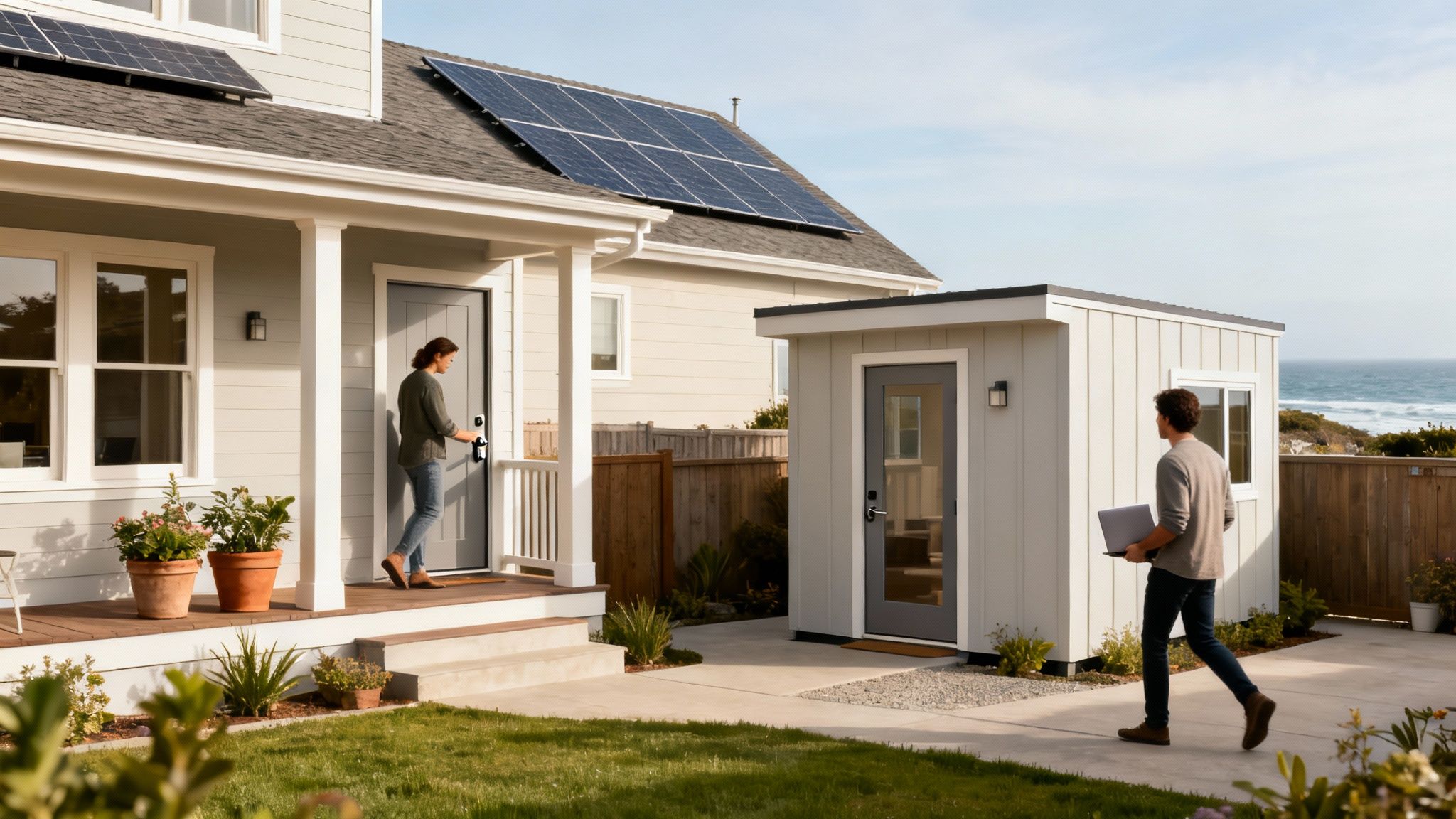
An ADU—often called a granny flat or backyard cottage—is a second home with its own kitchen, bathroom, and living space. It sits on the same lot as your main house. For years, complex rules made building one difficult. But that has completely changed.
The Perfect Storm Fueling the ADU Boom
A few key things have lined up to help ADUs take off across California. For homeowners, it’s no longer just a thought; it’s becoming a priority.
This movement is pushed by three main forces:
- New, Homeowner-Friendly Laws: California has passed laws that cut through the red tape. They have simplified permits, lowered fees, and removed old rules. This makes it easier than ever to get a project approved.
- The Search for Affordable Housing: With high housing costs on the Central Coast, ADUs offer a real solution. They can be an affordable home for aging parents, adult kids, or a caregiver.
- A Powerful Financial Tool: Homeowners see the financial benefits. An ADU can generate rental income to help pay a mortgage or save for retirement. It also adds major value to your property.
Here’s a quick breakdown of what’s driving this trend.
Key Drivers Making ADUs A Smart Move Today
| Driving Factor | Impact on Homeowners |
|---|---|
| Statewide Law Changes | The process is faster, cheaper, and more direct than ever before. |
| High Housing Costs | Provides an affordable living option for family or creates rental income. |
| Need for Flexibility | Creates space for in-laws, adult kids, a home office, or a rental unit. |
| Increased Property Value | An ADU is a real asset that boosts your home's market value. |
These factors are reshaping our neighborhoods for the better. The rise of ADUs is a great example of infill development, which adds housing to existing areas without urban sprawl.
At Aldridge Construction, we see this firsthand. This isn't just a trend; it's a major change in how we view our properties. We dive deeper in our article, From Income to In-Laws: 5 Reasons ADUs Are on the Rise Across Monterey Bay.
The Market Forces Fueling The ADU Boom
The huge growth in ADU popularity is no accident. It’s a direct response to powerful economic forces changing how we live, especially here on the Central Coast. Soaring housing costs, a severe shortage of homes, and the changing shape of modern families have come together. This has created the shift in housing that’s making ADUs a smart move now—not just a trend, but a real need.
For many families in Monterey and Santa Cruz, buying a home feels out of reach. This isn't just a local problem. It’s a national crisis, and homeowners are looking for creative solutions in their own backyards.
The High Cost Of Housing Squeeze
The biggest driver for the ADU boom is the rising cost of housing. For years, California home prices have outpaced wages. This puts pressure on everyone from young professionals to retirees.
Instead of taking on a huge new mortgage for more space, homeowners can build a new home on their property for less. This creates options: a place for adult children saving for a down payment, a private home for aging parents, or a rental unit for extra income.
A Critical Shortage Of Available Homes
On top of high costs, there is a simple lack of supply. California hasn't built enough homes for decades. The result is a housing shortage that drives up prices for both buyers and renters.
This isn't just a local trend—it's a global one. The worldwide ADU market is expected to grow from $19.64 billion in 2025 to over $43.33 billion by 2034. This growth is a direct answer to the housing crisis. Learn more about the data behind this explosive ADU market growth.
ADUs offer a smart solution by adding new homes to existing neighborhoods. Every new ADU built in Salinas, Monterey, or Santa Cruz adds one more home to our local supply. This helps ease pressure on the rental market and provides needed living space.
Evolving Lifestyles And The Need For Flexibility
Life is more dynamic than ever. Multigenerational living is more common, and remote work has turned homes into offices. This has created a need for quiet, separate workspaces.
An ADU is the ultimate flexible space for these new realities.
- Multigenerational Living: It provides a balance of closeness and independence for aging parents or adult children. They get their own space while staying close for support.
- The Home Office Reinvented: A backyard ADU can be a professional, quiet office. This creates a clear separation between work and home life.
- A Source of Financial Security: An ADU can provide a reliable source of rental income. This offers financial stability for retirees or anyone needing to supplement their income.
At Aldridge Construction, we see how these pressures push homeowners in San Benito, Monterey, and Santa Cruz Counties to find practical solutions. Building an ADU is a strategic financial decision that offers security and value.
How New State Rules Make Building An ADU Easier Than Ever
Knowing the market forces is one thing, but understanding how to take advantage of them is what matters. For years, building a second home was buried under complicated local rules. The process was often so slow and expensive that most people gave up.
But that has completely changed. California passed powerful, pro-homeowner laws that simplified the process. These new rules are a key part of the shift in housing that’s making ADUs a smart move now.
Removing Old Roadblocks To Build New Homes
The state recognized that strict local zoning was a barrier to new housing. So, they passed laws that override some of the old local rules that stopped ADU projects. Now, the state has a simpler set of rules that every city must follow.
This has changed the game for homeowners in a few key ways:
- No More Owner-Occupancy Rules: Cities used to require the owner to live in either the main house or the ADU. State law banned this, giving you the freedom to rent out both units.
- Reduced Setback Requirements: Old rules often required large distances between the ADU and property lines. The state has standardized this to a maximum of four feet for side and rear yards.
- Parking Requirements Eased: In many cases, you no longer need to add an extra parking spot for your ADU, especially if you are near public transit.
- Minimum Lot Sizes Eliminated: If you have a single-family home, you can now build at least one ADU, no matter your lot size.
These changes have opened up potential for thousands of properties in Monterey, Santa Cruz, and San Benito Counties. You can learn more about California ADU requirements and how they apply to your project.
Speeding Up The Approval Process
New laws also force local planning departments to act faster. Cities must now approve or deny an ADU permit application within 60 days. This is a huge improvement from the old system, where applications could sit for months.
Since 2016, ADU permits in California have surged over 15,000%. Today, nearly 1 in 5 new homes built in the state is an ADU, proving these rule changes are working.
To speed things up even more, many local governments, including Monterey County, have created pre-approved ADU plans. These are designs that have already been reviewed by the planning department.
At Aldridge Construction, we help clients stay ahead of these changes. We offer pre-approved ADU plans from Monterey County to reduce design and approval time. We also manage the permit process directly, cutting down on confusion and delays so we can start your project faster.
Three Powerful Ways An ADU Unlocks Your Property’s Potential
An Accessory Dwelling Unit is more than just another building. It's a tool for unlocking your property's hidden potential. It’s about adding flexibility, security, and real, long-term value.
This is the heart of the shift in housing that’s making ADUs such a smart move right now. Homeowners realize these small homes can solve big problems. Whether you want financial help, to keep family close, or make your property work for you, an ADU is a practical solution.
Let’s look at the three biggest ways homeowners on the Central Coast are using ADUs.
Generate A Steady Stream Of Rental Income
For many homeowners, the biggest benefit is the potential for passive income. In high-demand rental markets like Monterey and Santa Cruz Counties, an ADU can be a great financial asset. The rent you collect can help pay your mortgage, cover property taxes, or fund other goals.
Renting out a new, one-bedroom ADU in Salinas could bring in a good monthly income. You're turning an unused part of your backyard into an income-producing asset. The ADU market is exploding, hitting $3.3 billion in 2023 and projected to reach $10.6 billion by 2030. You can learn more about the explosive growth in the ADU market and see how this trend creates huge opportunities.
Create A Flexible Multigenerational Living Space
Family needs change over time. An ADU offers a flexible solution for multigenerational living. It helps you keep loved ones near without sacrificing privacy.
- A Home for Aging Parents: Give your parents a safe, private home of their own. They keep their independence while you get peace of mind knowing they are close by.
- A Launchpad for Adult Children: An ADU can be a game-changer for young adults. It provides an affordable place to live while they save for a down payment or start their careers.
This approach strengthens family ties while giving everyone the space they need. We look at this in our guide on how ADUs add real-life value for Monterey Bay families.
Significantly Boost Your Property's Value
Beyond monthly rent, an ADU adds serious, long-term value to your property. When it’s time to sell, a home with a permitted ADU is in high demand. Buyers see the same potential you do: a rental unit, an in-law suite, or a home office.
An ADU is one of the few home projects that can provide both immediate cash flow and a major equity boost. Some estimates show that an ADU can increase a property’s resale value by 25% to 35%.
An ADU adds functional, rentable square footage. This is a key detail that appraisers and buyers focus on. At Aldridge Construction, we make sure your ADU is built to last with quality materials like durable Quartz countertops and energy-efficient Milgard windows. This maximizes both its current use and its future value.
Understanding The Costs And Return On Your ADU Investment
Every smart investment starts with a clear look at the numbers. When it comes to an ADU, the first questions are always about cost and financial return. You need to know what to expect financially before you start.
The total cost for an ADU in the Monterey Bay area can vary. It depends on the type of unit, your property, and the level of finishes you choose. Understanding these parts is the first step to building a realistic budget.
A Transparent Breakdown Of ADU Costs
It’s helpful to think about ADU costs in ranges. A garage conversion will cost less than building a new, detached unit. At Aldridge Construction, we provide a clear breakdown so you know where your money is going.
The main cost drivers include:
- Design and Permitting Fees: This covers architectural plans, engineering reports, and fees paid to local planning departments in Monterey or Santa Cruz County.
- Site Preparation: This is the groundwork. Costs can include grading the land, trenching for utilities (water, sewer, electricity), and pouring a foundation.
- Construction and Labor: This is the biggest part of the cost. It covers framing, roofing, plumbing, and electrical work.
- Finishes and Fixtures: This is where you add your personal style. Your choices in countertops like Quartz, cabinets, flooring, and energy-efficient Milgard windows will affect the final price.
For a deeper look at what a project might cost in our area, see our guide on the cost to build an ADU in California.
Calculating Your Return On Investment
Building an ADU is an investment in your financial future. The return on investment (ROI) comes from rental income and long-term appreciation in your property value. This one-two punch is at the heart of the shift in housing that’s making ADUs a smart move now.
To get a clearer picture of the financial side, it's worth checking out resources that break down the real costs and profit tips for new Airbnb hosts. This can help you project what you might earn from a short-term rental.
The infographic below shows the three core benefits that drive an ADU's value.
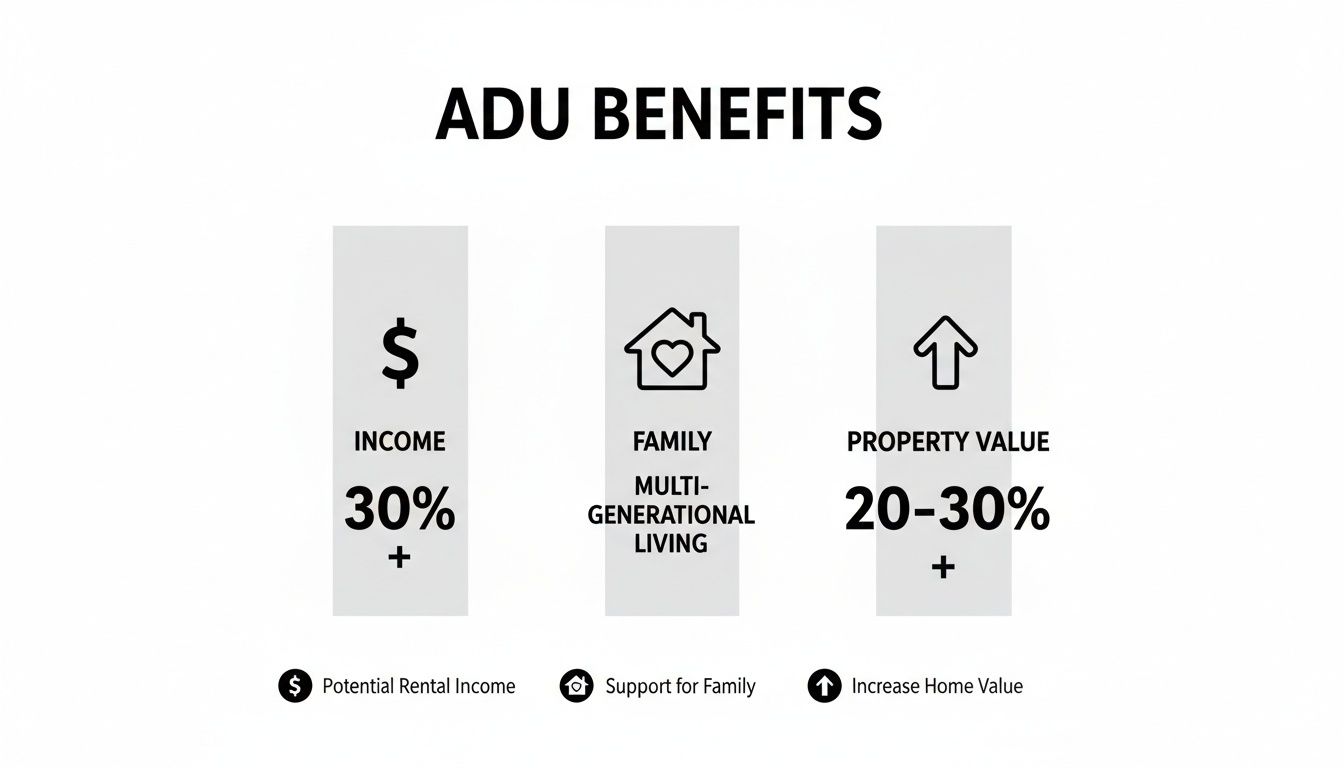
This visual shows how an ADU acts as a valuable asset. It delivers financial gains, flexible family solutions, and a boost to your property's worth.
Sample ADU Project Cost Ranges In Central California
Here’s a rough breakdown of what different ADU projects typically cost in our region. These are ballpark figures, but they help show how different choices impact the cost.
| ADU Type | Estimated Cost Range | Key Considerations |
|---|---|---|
| Garage Conversion | $90,000 – $150,000+ | This is often the most cost-effective option. It requires reinforcing the structure and adding full utility connections. |
| Attached ADU | $150,000 – $250,000+ | This involves building an addition to your home. It needs careful integration with the main house's structure. |
| New Detached ADU | $200,000 – $400,000+ | This is a new, standalone home with its own foundation. It offers the most privacy but is the largest investment. |
Remember, these are just estimates. The final cost depends on your property and design choices. A well-built ADU can increase your property's resale value by 25% to 35%.
Ready to Build Your Central Coast ADU? Here Are Your Next Steps
You've seen how the housing landscape is shifting to make ADUs a brilliant move for homeowners. The market has opened up, new state laws have made it easier, and the reasons to add an ADU—from rental income to keeping family close—are too strong to ignore.
The question isn't if an ADU is a good idea anymore. It's how do I get started?
Taking that first step can feel like a big challenge, but you don’t have to do it alone. You need a partner who understands building on the Central Coast. This means navigating the specific permit rules in Monterey, Santa Cruz, and San Benito Counties.
Partner With A Local Expert Who Knows The Terrain
Aldridge Construction is your local guide, ready to walk you through every stage. We handle the paperwork, help you find the perfect design, and build your ADU with craftsmanship that adds real, lasting value.
Our knowledge of local building codes and relationships with planning departments mean your project runs smoother from day one. To learn more about picking the right team, check out our guide on how to find the best affordable ADU builders in Salinas.
If you're serving clients in Monterey, Santa Cruz, or San Benito Counties, now is the time to sharpen your ADU game. Aldridge Construction has the tools, plans, and experience to help you deliver faster, smarter builds.
Frequently Asked Questions About Building an ADU
Thinking about an ADU brings up a lot of questions. Getting clear answers is the first step to making a smart decision. Here are some of the most common questions we hear from homeowners in Monterey, Santa Cruz, and San Benito Counties.
1. How long does it take to build an ADU in Monterey County?
The entire process, from design to completion, usually takes between 6 to 12 months. The longest part is often getting the permits approved. However, Aldridge Construction can speed this up. We use Monterey County's pre-approved ADU plans, which can shorten the review time and get your project started much faster.
2. Can I build an ADU on my property?
Most likely, yes. New state laws allow most single-family homes in California to build at least one ADU. Old barriers like minimum lot sizes have been removed. However, local rules on unit size and location (setbacks) still apply. Aldridge Construction can provide a site assessment to confirm your eligibility and show you what's possible on your lot.
3. What is the difference between an ADU and a JADU?
An ADU (Accessory Dwelling Unit) is a complete, separate home. It can be detached or attached, but it must have its own full kitchen, bathroom, and entrance. A JADU (Junior Accessory Dwelling Unit) is a smaller unit (up to 500 sq. ft.) created within your existing home, like a converted spare bedroom. It requires a simpler "efficiency kitchen."
4. How do I finance an ADU project?
Homeowners have several great options to fund an ADU. The most common methods are a home equity line of credit (HELOC), a cash-out refinance, or a construction loan. The best choice depends on your financial situation. We can connect you with trusted local lenders who specialize in financing ADU projects.
5. Will an ADU increase my property taxes?
Yes, but not by as much as you might think. Your entire property is not reassessed. Instead, the county assessor adds the value of the new ADU construction to your tax bill in what is called a "blended assessment." For most homeowners, the added property value and potential rental income far outweigh this modest tax increase.
The shift in housing is creating huge opportunities for homeowners on the Central Coast. If you're ready to explore how an ADU can benefit your family and finances, the team at Aldridge Construction is here to help.
Contact us today for a complimentary consultation to discuss your ADU project.