
Building an Accessory Dwelling Unit (ADU) is a smart investment for homeowners, whether you're in Monterey County, CA, or Maricopa County, AZ. An ADU can add property value, create space for family, or generate rental income. But a common question we hear at Aldridge Construction is: “Aren’t ADUs too expensive to build right now?”
Many homeowners worry they have to refinance and lose their great low-interest rate. Thankfully, that's not your only option. Recent insights show that homeowners are using HELOCs, renovation loans, or even state grants to fund ADU construction without touching their primary mortgage. What this means is that you likely have more financing flexibility than you think. You don’t have to give up your great mortgage rate to start building and can enjoy the benefits of renovating instead of moving.
This guide uncovers powerful ADU loans & grants you might not know about. We'll cover options from California programs to federal loans that can make your project happen. To learn more about getting financial support for housing projects, you can explore resources on maximizing grant funding for housing initiatives.
1. CalHFA – ADU Grant Program (California Housing Finance Agency)
For California homeowners, the CalHFA program is a great place to start your search for ADU loans & grants you might not know about. This state program helps homeowners pay for the "soft costs" of building an ADU. These are the upfront expenses that can be a major hurdle before construction begins. In the past, the grant offered up to $40,000 to help get projects started.
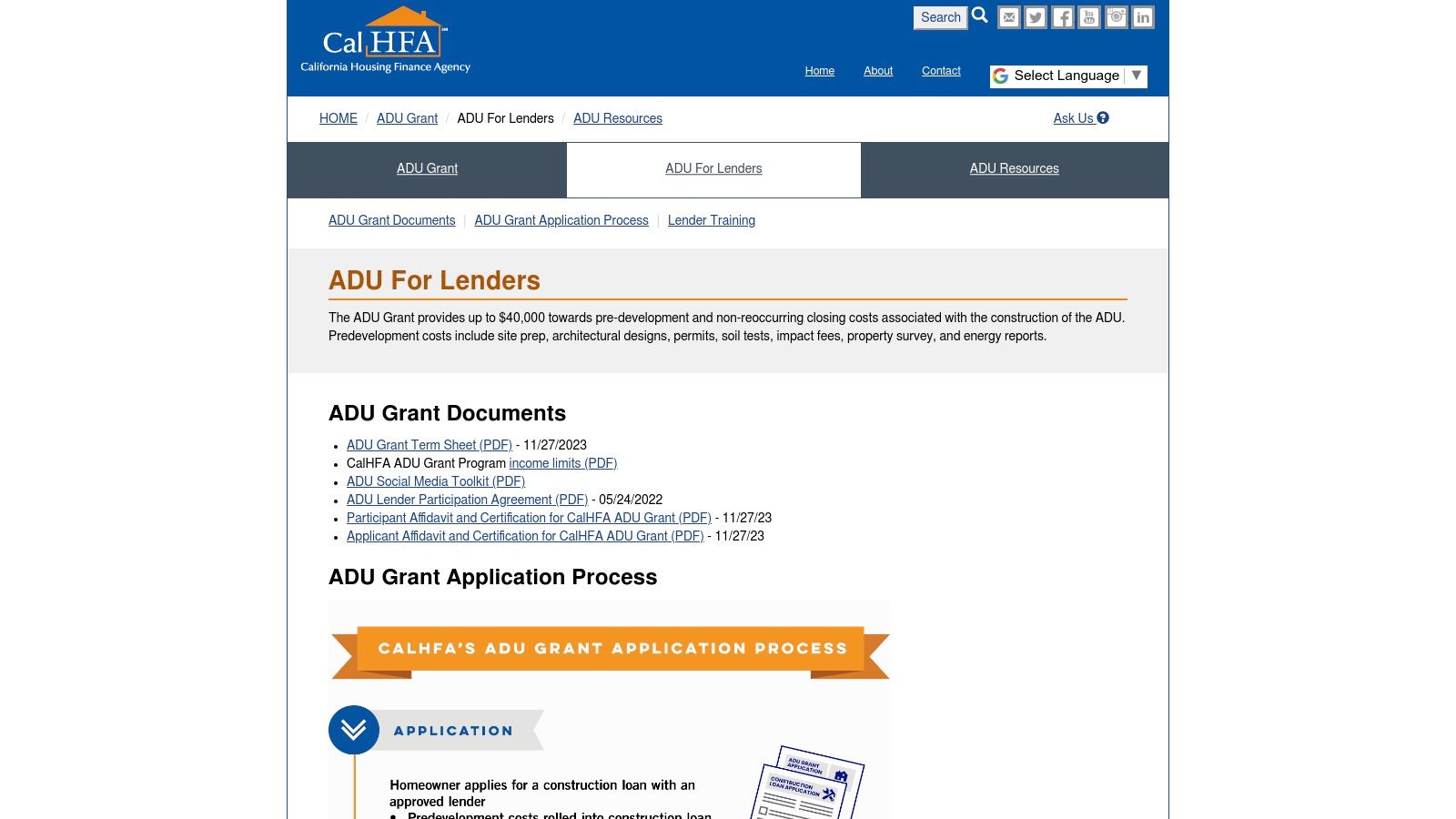
The official CalHFA website has all the information you need. It includes rules, income limits, and a list of approved lenders. It is also the best place to check for updates on new funding.
What Makes This Resource Unique?
Unlike a loan, this is a grant, which means you don’t have to pay it back. It is designed to cover pre-development costs that you pay out-of-pocket before you can get a construction loan.
Key features include:
- Eligible Cost Coverage: Pays for things like architectural plans, soil tests, surveys, and city permit fees.
- Lender-Facilitated: You work with a CalHFA-approved lender, which makes the process simpler.
- Official Updates: The website is the only reliable source for news about when new funding becomes available.
How to Use This Resource
Even if applications are paused, the site is very useful. You can review past requirements and find a list of participating lenders in Monterey, Santa Cruz, or San Benito counties. Contacting these lenders early can help you be ready when new funds are released.
Website: https://www.calhfa.ca.gov/adu/lender/index.htm
2. California HCD – Funding for ADUs (state program directory)
The California Department of Housing and Community Development (HCD) website is another great tool. It acts as an official directory of local and regional adu loans & grants you might not know about. Instead of offering one grant, it points you to different programs from cities, counties, and nonprofits that can help fund your ADU.
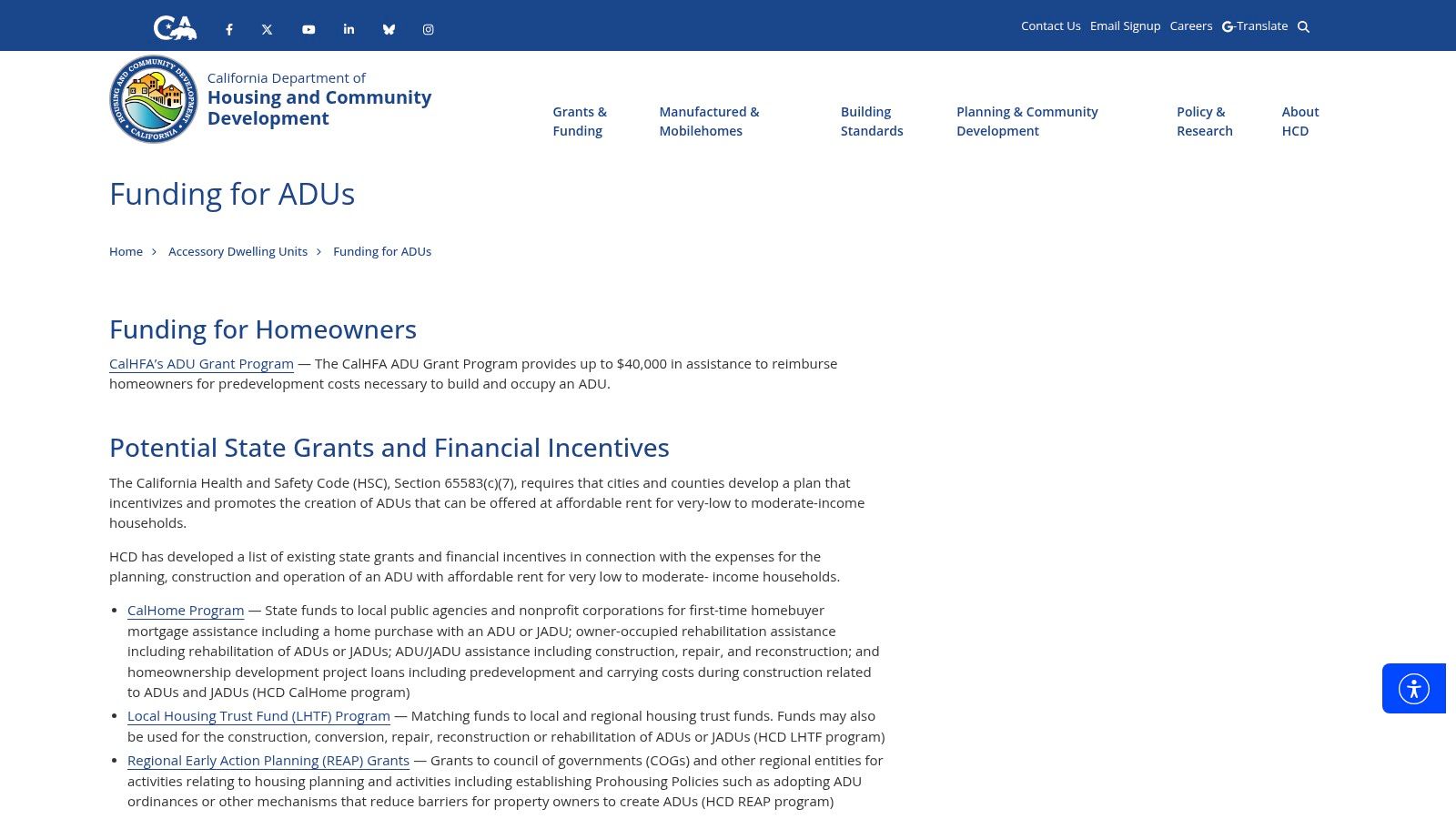
This HCD portal is the best place to find lesser-known local funding. It links directly to the source, so you get accurate information on programs in your specific area.
What Makes This Resource Unique?
This website is a curated list of funding opportunities. It helps you discover local programs that are easy to miss. It also shows how state-level programs are used by local governments to create their own ADU incentive programs.
Key features include:
- Local Program Discovery: Helps you find unique financing and grant programs at the city and county level.
- State Program Identification: Shows how statewide funds support ADU construction in local areas.
- Centralized Information: Provides links to official ADU handbooks, legal resources, and the agencies managing the funds.
How to Use This Resource
Use this directory to see what programs have been offered in Monterey, Santa Cruz, or San Benito counties. Even if a program isn't currently funded, you can learn about its past rules. A design-build firm can help you navigate the process. You can learn more about Aldridge Construction's services here.
Website: https://www.hcd.ca.gov/building-standards/adu/funding
3. San Diego Housing Commission – ADU Finance Program
The San Diego Housing Commission (SDHC) offers a unique city-level program that provides both funding and support. This is one of the more helpful ADU loans & grants you might not know about for San Diego residents. The program guides homeowners through the entire design and permitting process.
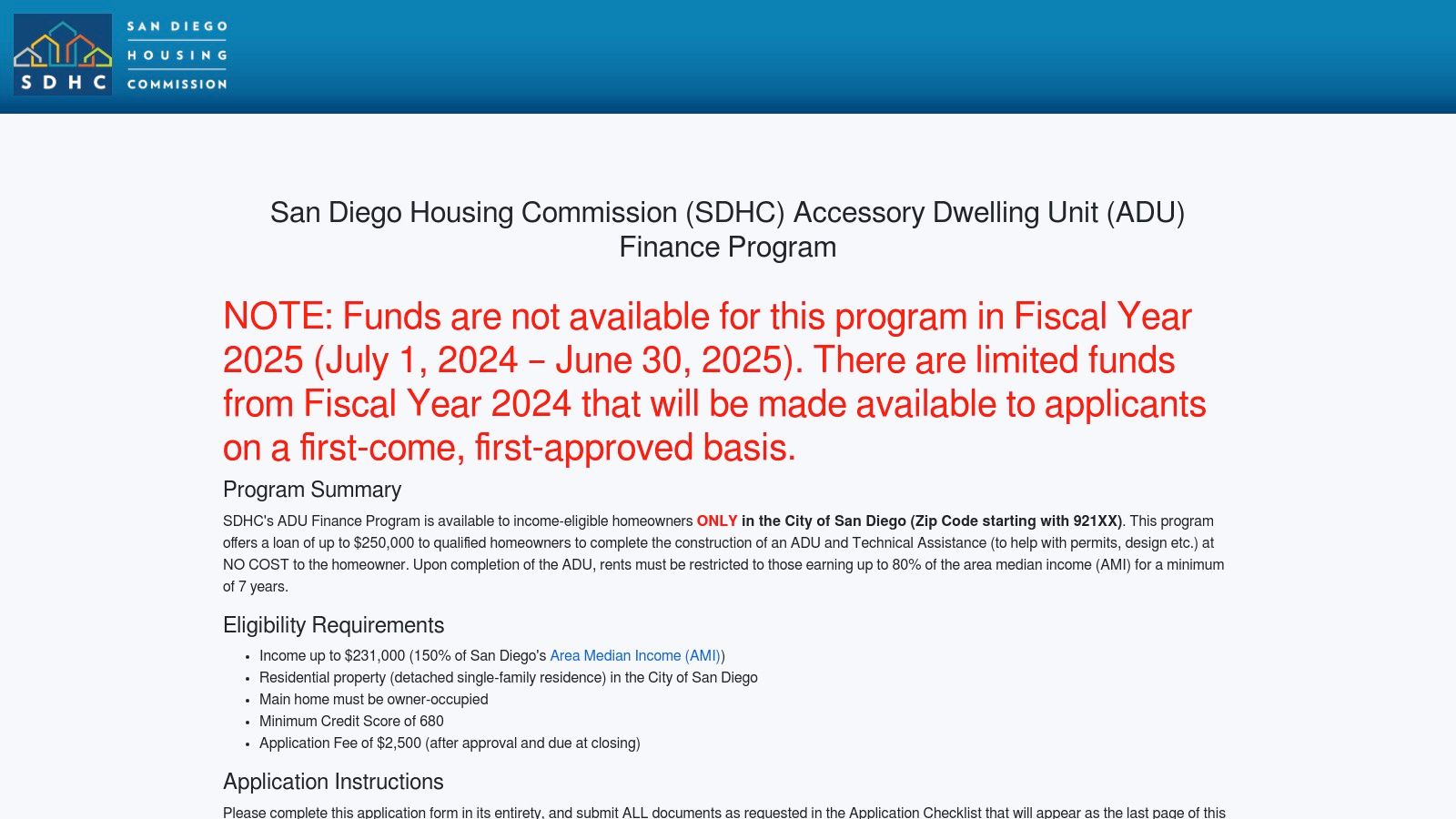
The SDHC website has all the details, from eligibility rules to the application. It offers loans up to $250,000. In return, the ADU must be rented at an affordable rate for a set number of years.
What Makes This Resource Unique?
This program stands out because it combines financial help with technical support. SDHC provides free expert guidance on design, permitting, and construction. This support can be very valuable for first-time builders.
Key features include:
- Combined Financing & Support: Offers both construction loans and free technical help.
- Affordability Component: Requires the ADU to be rented at an affordable rate for a set term.
- Clear Guidelines: The website provides clear information on income limits and program rules.
How to Use This Resource
Visit the SDHC website to download the guidelines and check the income tables. Even if you're not in San Diego, this site is a good model for what other communities could offer. For San Diego residents, it is the direct source for applications.
Website: https://adu.sdhc.org/
4. City of Clovis – ADU Finance Program (with Self-Help Enterprises)
The City of Clovis offers another hyper-local program. This unique partnership between the city and a nonprofit called Self-Help Enterprises provides both financing and hands-on support. It helps with everything from design to final construction.
The City of Clovis website is the main portal for this program. It provides city ADU guides and information on how to connect with Self-Help Enterprises to start the loan process.
What Makes This Resource Unique?
The best feature of this program is its library of free, pre-approved "Cottage Home" ADU plans. Using these plans can save homeowners a lot of money on design costs. It also helps speed up the city's permitting process.
Key features include:
- Pre-Approved Plans: A free library of designs that simplifies and speeds up permitting.
- Nonprofit Partnership: Loan administration is handled by a mission-driven nonprofit.
- Comprehensive Support: The program helps with new ADU construction and repairs to existing units.
How to Use This Resource
Even if you're not in Clovis, this website is a great example of how cities can support ADU projects. For local residents, the site is your first stop. You can download the "Cottage Home" plans and review the city's ADU guides to understand the local process.
Website: https://cityofclovis.com/planning-and-development/planning/adu/
5. Santa Cruz County – ADU Resources (including Forgivable Loan Program reference)
For homeowners in Santa Cruz County, the county's official ADU website is an essential resource. It connects residents with planning tools, pre-approved plans, and information on local incentive programs. It centralizes the entire process, from design to financing.
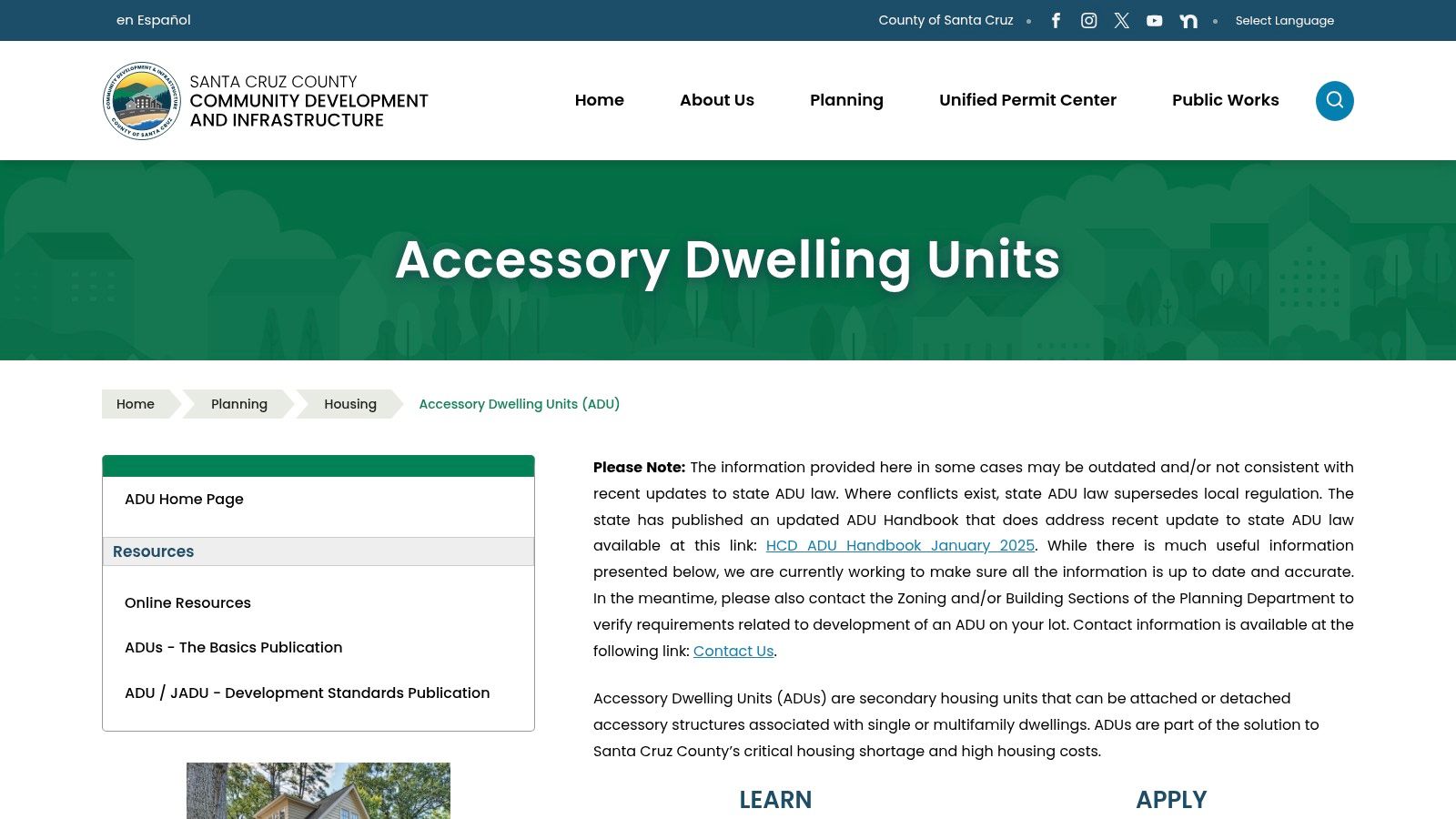
The Santa Cruz County site is a guide to local rules and financial aid. It often mentions forgivable loan programs, which can provide up to $40,000. These loans are tied to keeping the ADU as an affordable rental for a certain number of years.
What Makes This Resource Unique?
This resource is special because it combines the "how-to" of building an ADU with the "how-to-pay-for-it." It links the regulatory steps with financial incentives. This is a rare and valuable combination for homeowners.
Key features include:
- Localized Incentives: Direct links to local forgivable loan programs that may not be widely advertised.
- Pre-Designed Plans: Access to county-approved ADU plans that can reduce design costs and time.
- Cost Calculators: Tools to help estimate permit fees and other costs specific to Santa Cruz County.
How to Use This Resource
Use this site to learn about the whole ADU process in Santa Cruz. Download the pre-designed plans to see if one works for you. Most importantly, follow the links to local incentive programs and sign up for updates to know when new funding is available.
Website: https://cdi.santacruzcountyca.gov/Planning/Housing/adu.aspx
6. Housing Trust Silicon Valley – Small Homes, Big Impact (ADU)
Housing Trust Silicon Valley is a great educational resource for Bay Area homeowners. Through its "Small Homes, Big Impact" initiative, this nonprofit helps people understand the complex world of ADU development. It's a perfect starting point before you commit to a loan.
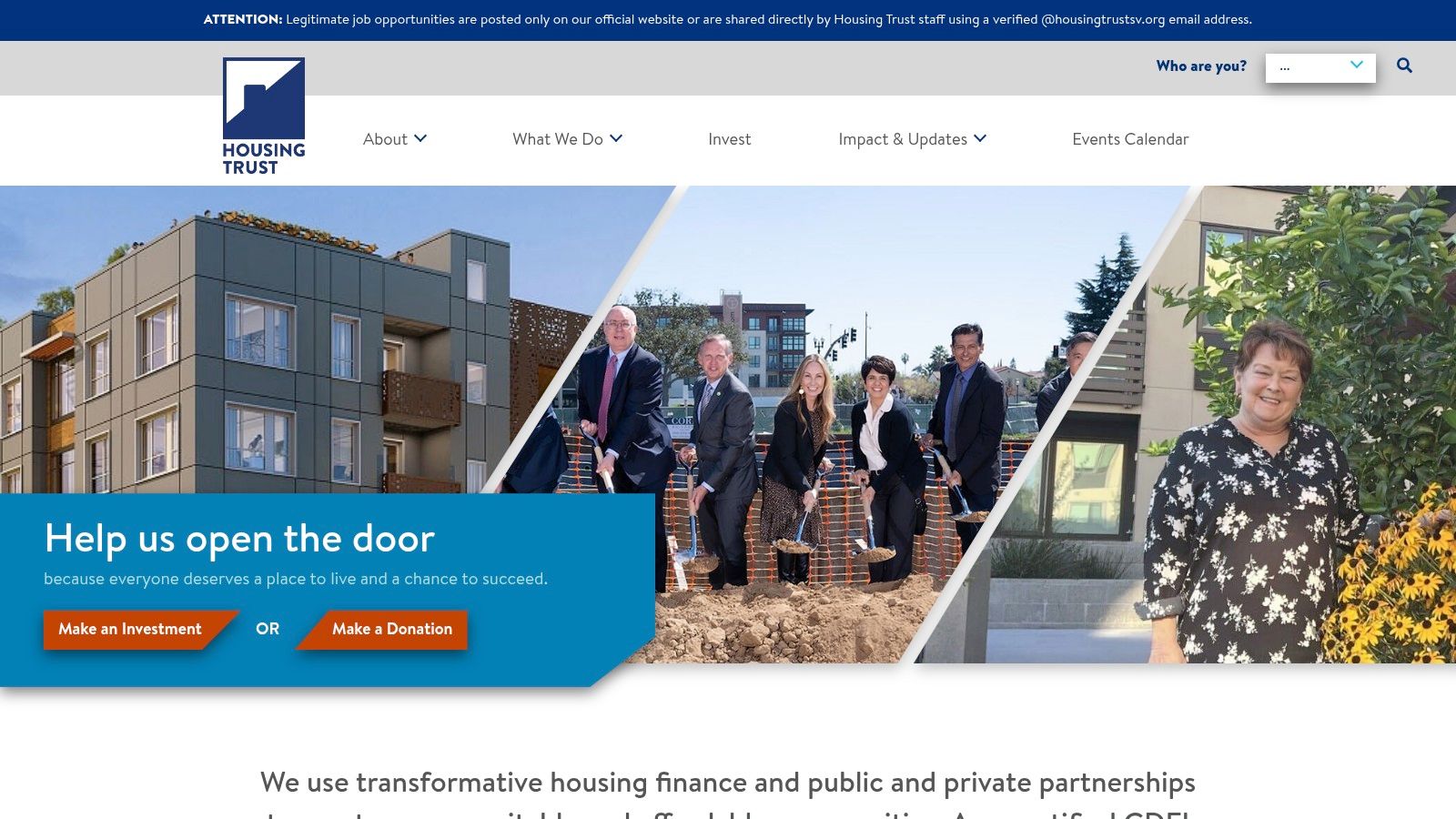
The Housing Trust website offers workshops and connects you with financing partners. While it doesn't give loans directly, it is one of the most valuable resources for finding ADU loans & grants you might not know about because it helps you prepare for them.
What Makes This Resource Unique?
Housing Trust Silicon Valley focuses on education and support. Their goal is to increase affordable housing by helping homeowners build ADUs successfully. They provide the key knowledge you need to get financing from other sources.
Key features include:
- ADU Education: Offers webinars and workshops on every stage of the ADU process.
- Financing Connections: Provides referrals to trusted lenders and public programs that specialize in ADU financing.
- Planning Support: Acts as a nonprofit advisor to help homeowners make smart decisions.
How to Use This Resource
Visit the Housing Trust website to sign up for upcoming ADU webinars. Use their guides and checklists to organize your project plan. This preparation will make you a stronger applicant when you apply for loans and grants in places like Monterey and Santa Cruz counties.
Website: https://housingtrustsv.org/
7. Fannie Mae – HomeStyle Renovation (ADU-eligible)
The Fannie Mae HomeStyle Renovation loan is a powerful tool for financing your ADU. This program lets you bundle the costs of building an ADU directly into your main mortgage when you buy or refinance a home. This makes it easier to finance a major construction project.
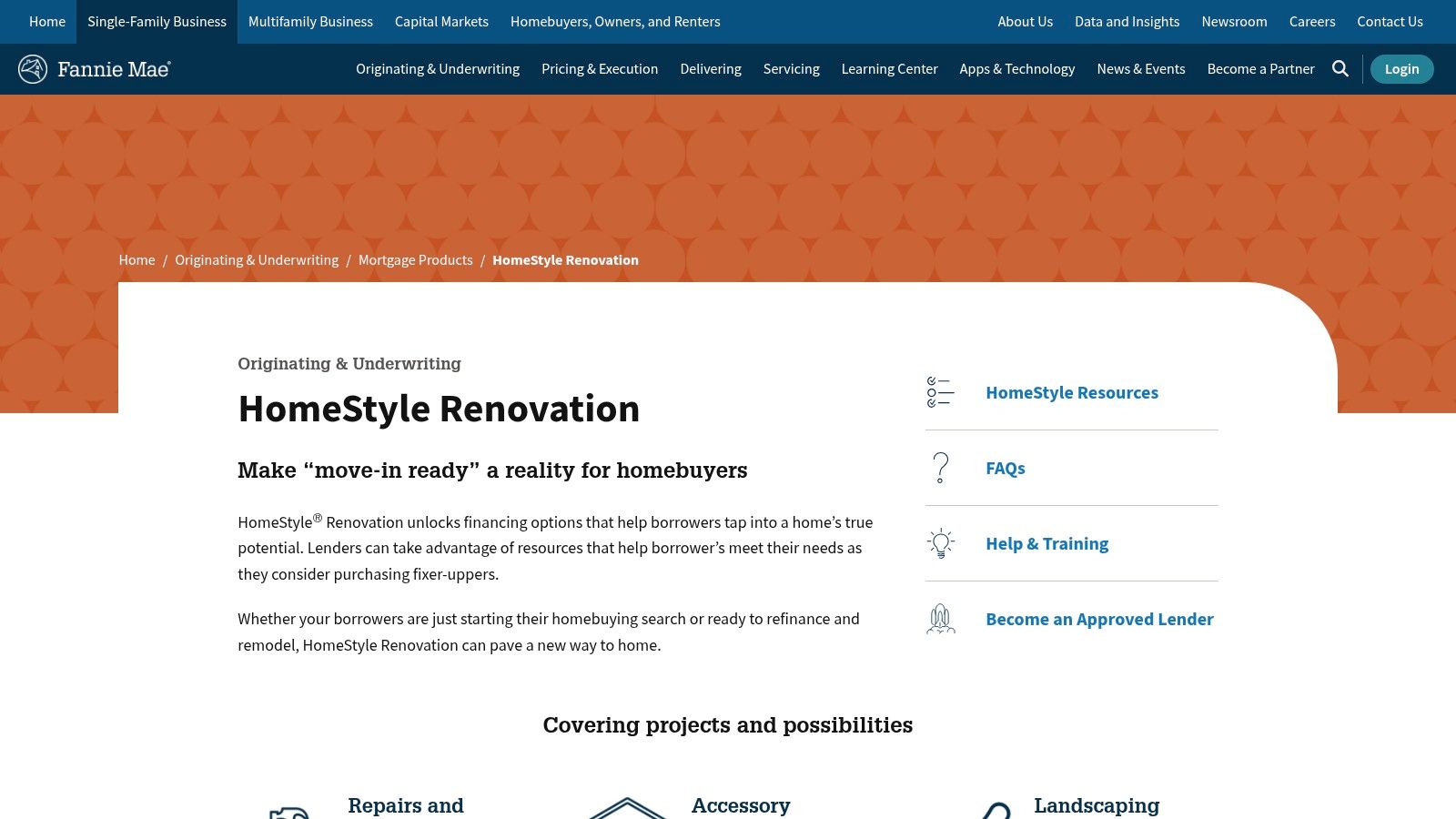
The Fannie Mae website provides the official guidelines that lenders use. It confirms that attached, detached, and internal ADUs are all eligible. This gives both you and your lender confidence in the project.
What Makes This Resource Unique?
The HomeStyle Renovation loan finances your ADU based on the home's after-improved value. This means the lender considers what your property will be worth after the ADU is built. This often lets you borrow more than you could with a standard home equity loan.
Key features include:
- Integrated Financing: Combines the ADU project cost with a purchase or refinance mortgage into a single loan.
- Explicit ADU Allowance: Official guidelines clearly state that ADU construction is an approved use of the funds.
- Wide Availability: It is offered through a large network of banks and mortgage lenders across the country.
How to Use This Resource
Use the Fannie Mae website to understand the program's rules before talking to a lender. When you contact lenders in Monterey or Santa Cruz, you can specifically ask if they offer the "Fannie Mae HomeStyle Renovation" loan.
Website: https://singlefamily.fanniemae.com/originating-underwriting/mortgage-products/homestyle-renovation
8. Freddie Mac – CHOICERenovation (and ADU guidance)
Freddie Mac offers another great conventional loan product called CHOICERenovation. It's one of the key adu loans & grants you might not know about because it lets you roll the cost of an ADU into your main home loan. This helps you avoid a separate, often higher-interest, construction loan.
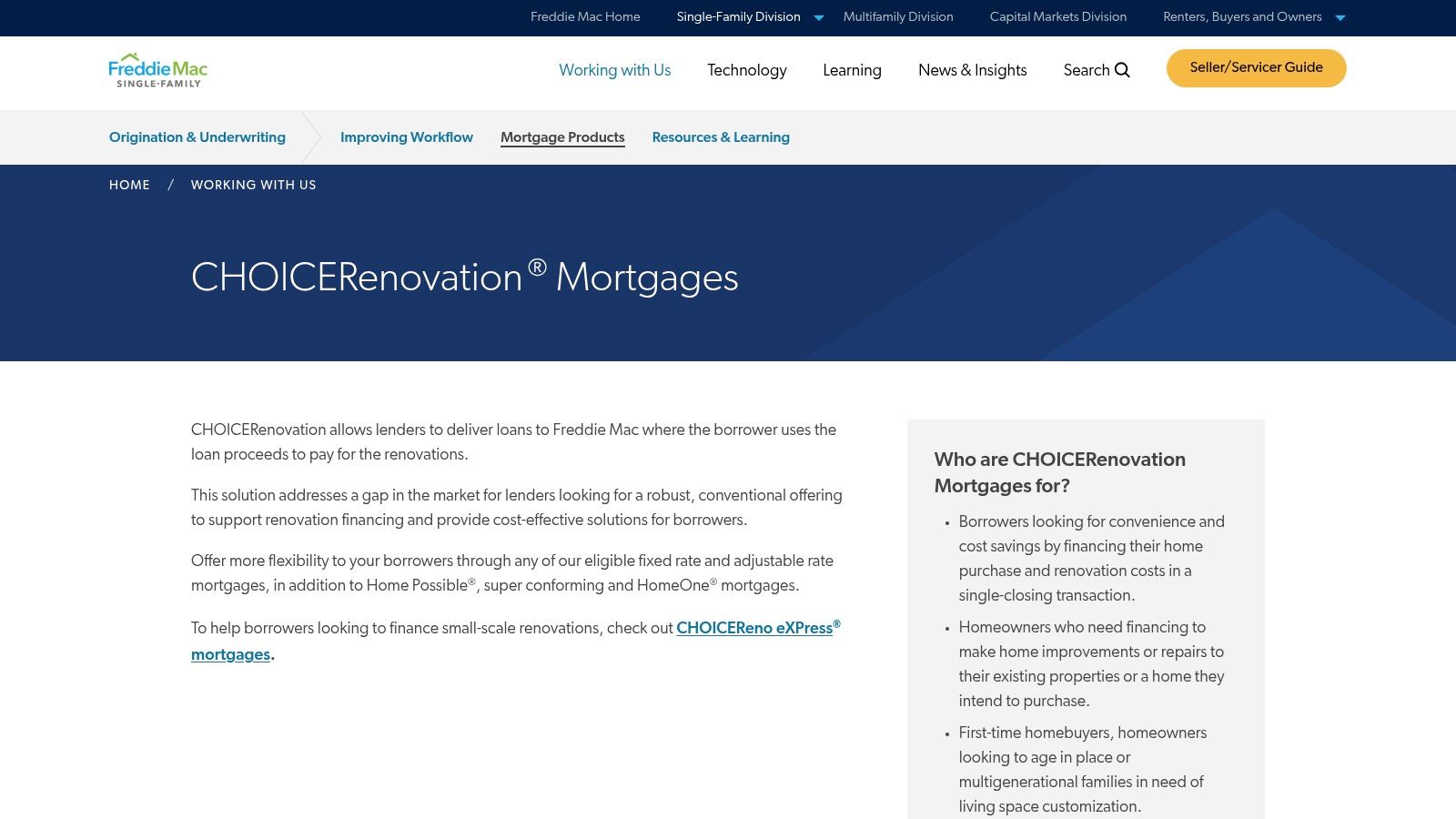
The Freddie Mac website is a resource hub for both borrowers and lenders. It provides detailed guidelines on using renovation funds and specific policies for ADUs. This includes manufactured-home ADUs.
What Makes This Resource Unique?
CHOICERenovation simplifies the borrowing process by integrating ADU financing into a standard mortgage. It is especially helpful for its detailed guidance on manufactured ADUs, a cost-effective construction trend.
Key features include:
- Integrated Financing: Combines the cost of an ADU into a purchase or refinance loan.
- Broad Eligibility: Available for primary residences and second homes.
- Manufactured ADU Support: Provides clear policies for financing manufactured or modular ADUs.
How to Use This Resource
Use the Freddie Mac site to learn about renovation lending before you talk to a lender. You can review the product details and FAQs to understand how it works. Then, ask lenders in Monterey or Santa Cruz counties if they offer CHOICERenovation mortgages.
9. FHA 203(k) – Rehabilitation Mortgage (ADU-supportive policy)
The FHA 203(k) loan is a government-insured mortgage program that bundles a home purchase with renovation funds. This includes building a brand-new ADU. The official HUD website provides the guidelines and eligibility rules.
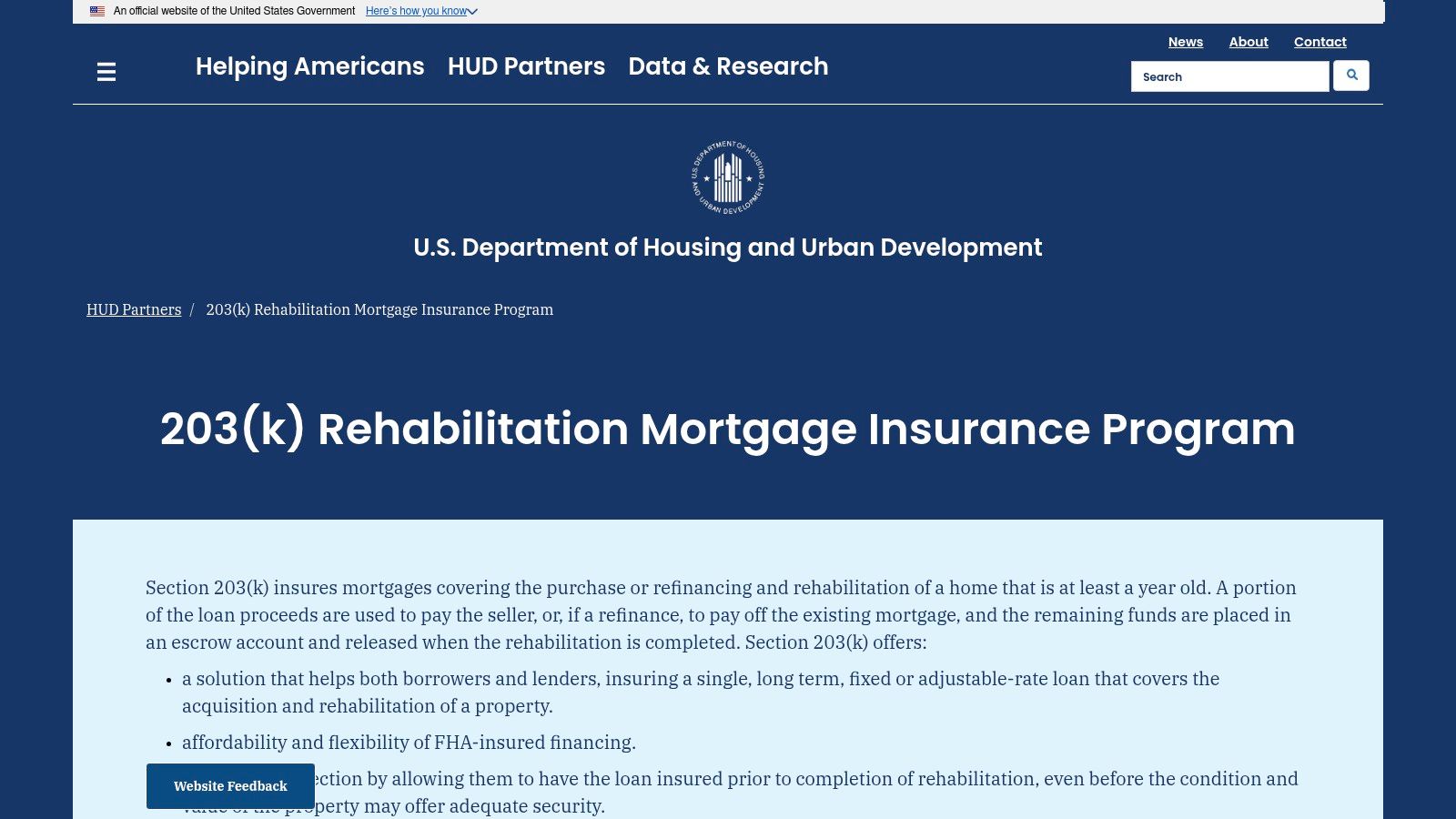
The HUD portal explains the different 203(k) loan types. It shows how homeowners can use this program to fund an ADU project from the ground up through FHA-approved lenders.
What Makes This Resource Unique?
The best part of the FHA 203(k) program is its ADU-friendly policy. In some cases, lenders can count the future rental income from the new ADU toward your total qualifying income. This can be the key to getting approved, especially for first-time buyers.
Key features include:
- Combined Financing: Rolls the purchase and renovation costs into one mortgage.
- Rental Income Consideration: Allows you to use projected ADU rental income to help you qualify for the loan.
- Lower Down Payment: Usually requires a lower down payment and has more flexible credit requirements.
How to Use This Resource
Use the HUD website to understand the program’s rules before you contact a lender. Find FHA-approved lenders in Monterey, Santa Cruz, or San Benito counties and ask about their experience with 203(k) loans for ADUs. Having a qualified contractor like Aldridge Construction who understands the process is very important.
Website: https://www.hud.gov/hud-partners/single-family-mortgage-programs-203k
10. USDA Single Family Housing Repair Loans & Grants (Section 504)
For homeowners in eligible rural areas, the USDA's Section 504 program is a great option. This includes parts of Monterey, Santa Cruz, and San Benito counties. The program offers very low-interest loans and grants to help low-income and elderly homeowners make important home repairs.
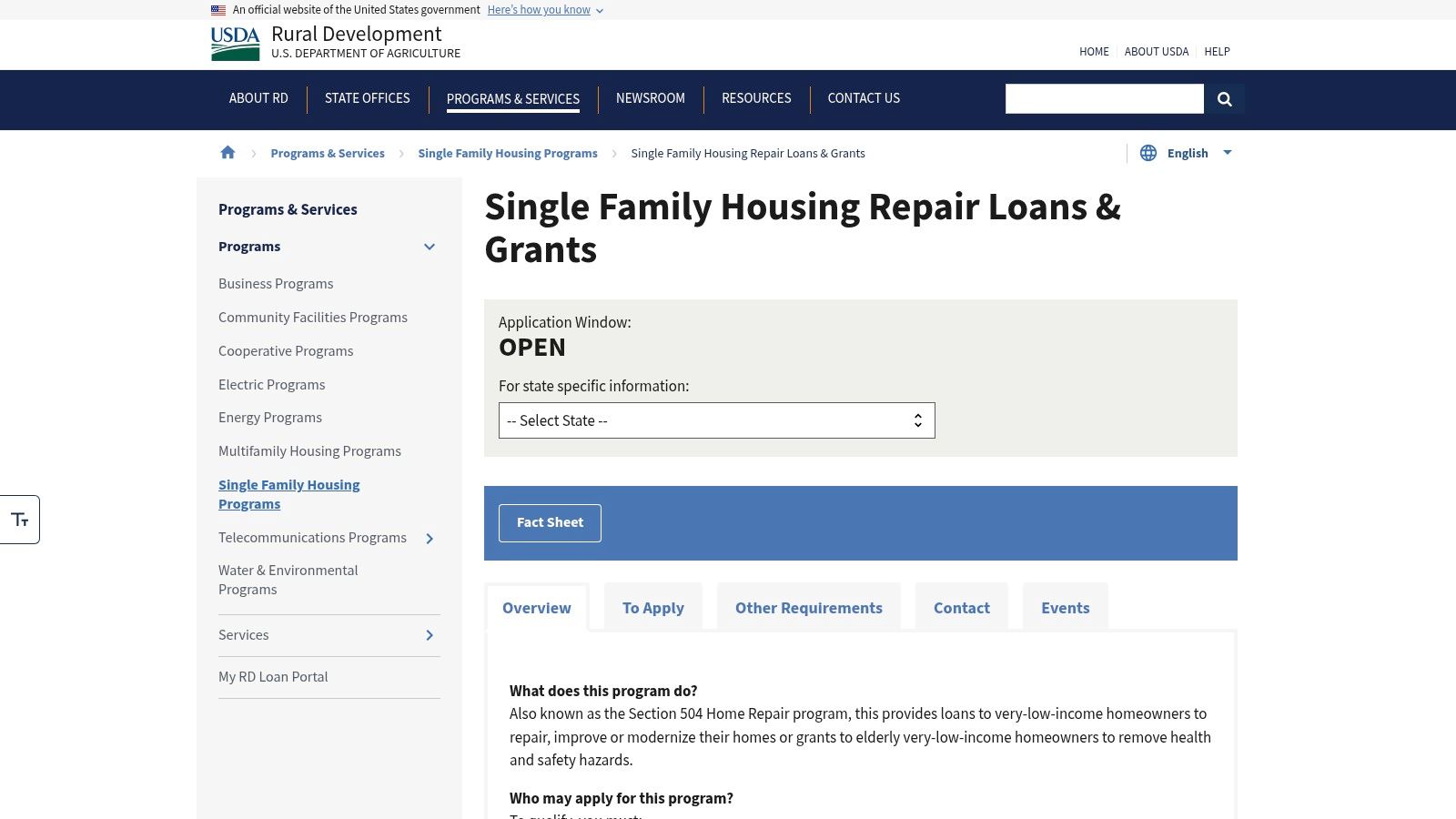
The USDA's Rural Development website is the official source for this program. It provides eligibility checkers, income limits for your county, and contact information for local offices.
What Makes This Resource Unique?
This federal program is special because it combines very low-cost loans (often at a 1% interest rate) with grants that seniors don't have to repay. It's designed to fix health and safety issues, which can include the very problems that stop a garage from being legally converted into an ADU.
Key features include:
- Purpose-Driven Funding: Can be used to repair roofs or update electrical systems before an ADU conversion.
- Combined Financing: Eligible applicants can combine a loan and a grant.
- Rural Focus: Specifically serves homeowners in designated rural and suburban areas.
How to Use This Resource
First, visit the website and use the property eligibility tool. If your home in Monterey County or a nearby rural area qualifies, get your income documents ready. Contact your local USDA office to discuss how these repairs could help your future ADU project.
11. California Energy Commission – IRA Home Energy Rebates (HEEHRA / HOMES)
The California Energy Commission’s website is the official source for federal Inflation Reduction Act (IRA) rebates. While not a direct loan, these rebates can greatly lower the cost of building an ADU. These funds reduce your project's total price, which means you need to borrow less.
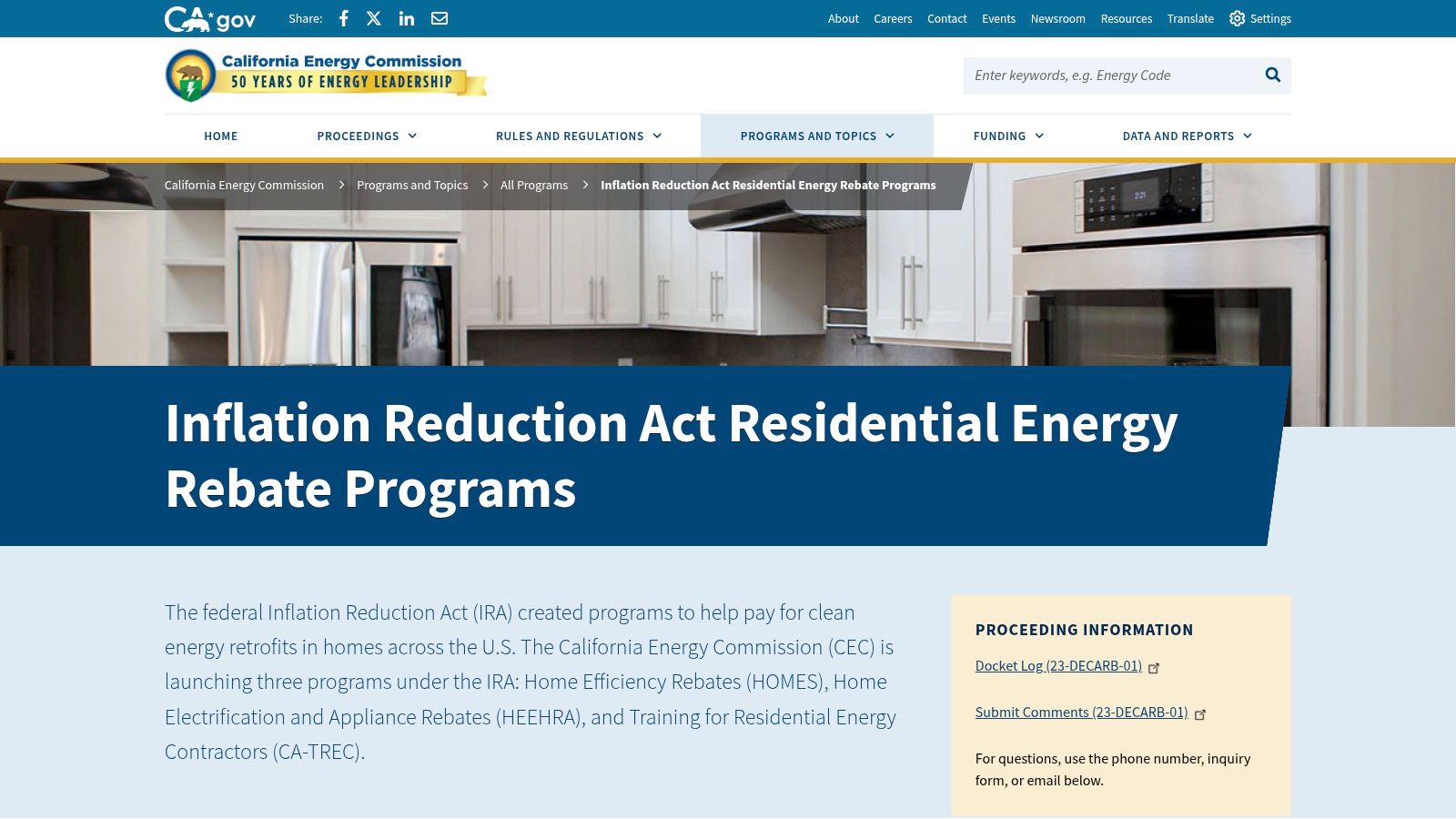
The CEC website has all the details on California’s rollout of these rebate programs. It provides timelines, eligibility rules, and information on how homeowners can participate once the programs launch.
What Makes This Resource Unique?
These are rebates, not loans, and they make high-efficiency electric appliances more affordable. For an ADU, this means lower costs for things like heat pumps, water heaters, and electrical panel upgrades.
Key features include:
- Significant Cost Reduction: Provides thousands of dollars in rebates for key ADU systems.
- Income-Based Support: Offers larger rebates for low-to-moderate-income households.
- Stackable Savings: These federal rebates can be combined with other local utility incentives.
How to Use This Resource
Use the California Energy Commission website now to learn about the program. You can plan your ADU’s systems to use rebate-eligible equipment. Talk to your contractor about these incentives so they can include them in the project budget.
12. GoGreen Financing – GoGreen Home (CAEATFA / State Treasurer's Office)
GoGreen Financing helps homeowners fund the energy systems needed for a new ADU. The platform connects you with approved private lenders for energy-efficiency projects. It’s one of the key ADU loans & grants you might not know about for covering the costs of things like heat pump HVAC systems and electrical panel upgrades.
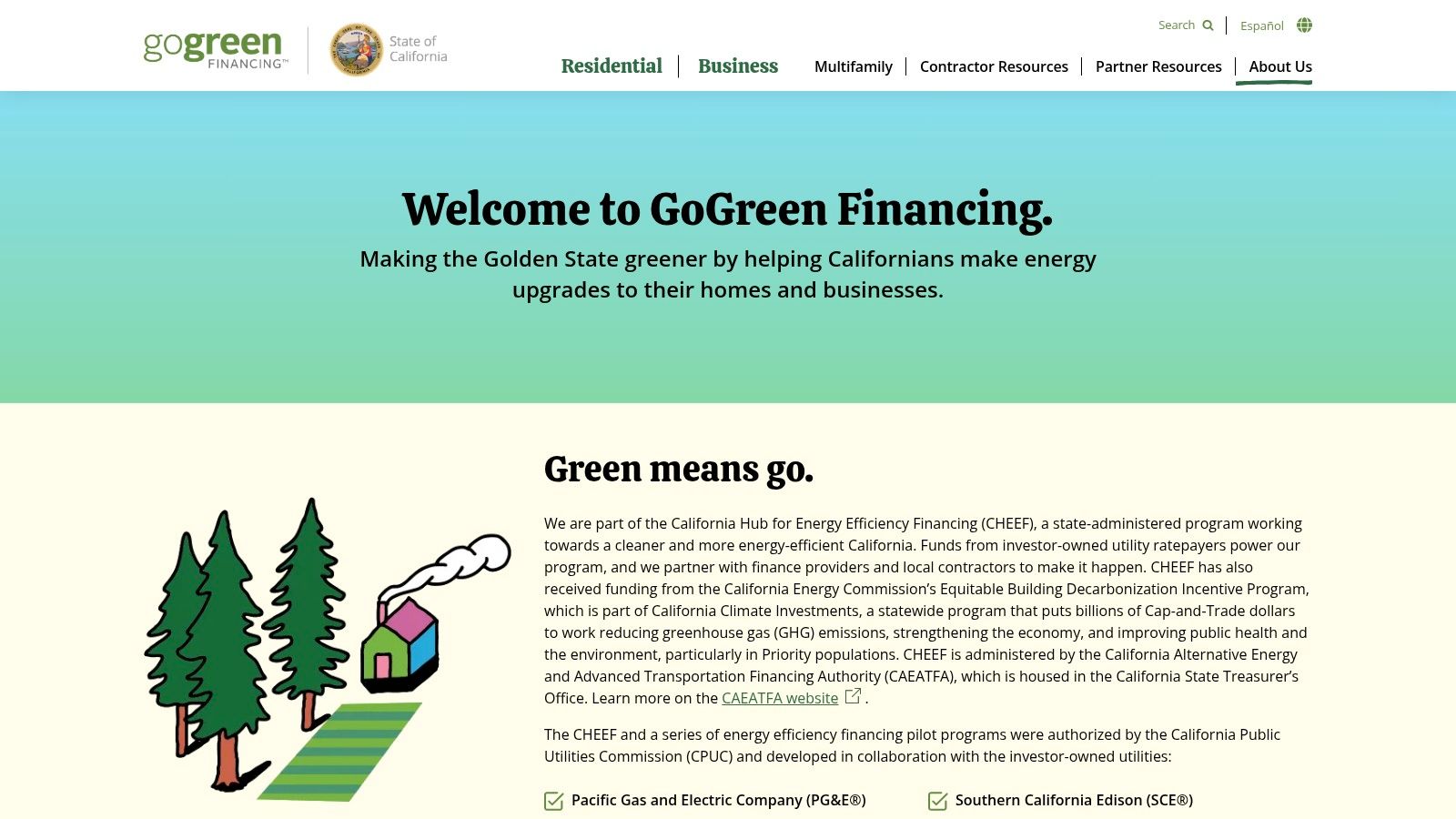
The GoGreen Financing website is a marketplace where you can find lenders offering good terms. This is thanks to state-backed incentives. This support makes it easier for homeowners to get approved for loans to cover green-energy parts of their ADU.
What Makes This Resource Unique?
This program focuses specifically on the energy-related costs of your ADU. Instead of rolling these expenses into a bigger construction loan, you can get separate financing just for making your ADU all-electric and energy-efficient.
Key features include:
- Targeted Energy Financing: Provides loans for things like heat pumps, insulation, and electrical panel upgrades.
- Improved Loan Terms: The state support helps lenders offer better rates.
- Contractor and Lender Network: The site provides lists of approved contractors and lenders.
How to Use This Resource
Visit the GoGreen Financing website early in your ADU planning. Find the energy systems your ADU will need. Use the site to find a participating lender in Monterey, Santa Cruz, or San Benito counties to budget these costs separately from your main construction loan.
Website: https://www.gogreenfinancing.com/about-us/
Comparing Your ADU Loan and Grant Options
| Program | Core Offer | Best For |
|---|---|---|
| CalHFA ADU Grant | Grant up to $40k for pre-development costs | California homeowners needing help with upfront "soft costs" like plans and permits. |
| California HCD Directory | List of local ADU funding programs | Homeowners looking for city or county-specific grants and loans in California. |
| San Diego Housing Commission | Loan up to $250k plus free technical help | San Diego homeowners who can offer the ADU as an affordable rental. |
| City of Clovis Program | Local loan with free, pre-approved plans | Clovis residents who want to save on design costs and speed up permitting. |
| Santa Cruz County Resources | Local forgivable loans and planning tools | Santa Cruz County homeowners looking for region-specific financial aid. |
| Housing Trust Silicon Valley | Educational workshops and lender referrals | Bay Area homeowners who need guidance before seeking a loan. |
| Fannie Mae HomeStyle | Bundles ADU costs into a standard mortgage | Homebuyers or refinancers who want one simple loan for their property and ADU. |
| Freddie Mac CHOICERenovation | Similar to HomeStyle, bundles ADU financing | Homeowners who need flexibility, especially for manufactured ADUs. |
| FHA 203(k) Loan | Government-insured loan for purchase + renovation | Buyers with lower down payments or credit scores who want to build an ADU. |
| USDA Section 504 | Low-interest loans/grants for home repairs | Low-income homeowners in rural areas needing to fix their home before an ADU conversion. |
| IRA Energy Rebates | Rebates for energy-efficient appliances | All homeowners who want to lower the cost of ADU systems like heat pumps. |
| GoGreen Financing | Special financing for energy-efficient upgrades | Homeowners who need a separate loan to cover the "green" parts of their ADU. |
Build Your ADU with Confidence
Building an ADU is a big financial step, but it can transform your property. As we've seen, the world of ADU loans & grants you might not know about is bigger than most people think. From state grants to flexible federal loans, there are many ways to fund your ADU project.
A common question we hear is, “Aren’t ADUs too expensive to build right now?” However, recent insights show that many homeowners are turning to HELOCs, renovation loans, or even state-funded grants to fund ADU construction without touching their low-interest mortgage. What this means is that you likely have more financing flexibility than you think — and you don’t have to give up your great mortgage rate to start building.
Key Takeaways
- Layer Your Funding: The most successful projects often combine multiple programs. You could use a grant for upfront costs and a loan for construction.
- Location is Everything: Funding opportunities vary by city and county. Start your research locally in places like Santa Cruz or Monterey County.
- Be Prepared: Most applications require detailed construction bids and plans. Having this ready will make the process much smoother.
Your Next Steps
- Make a Shortlist: Based on your location and goals, pick the top 3-5 programs from this list.
- Check Your ROI: Before you borrow, it's smart to calculate the potential return on investment for your ADU. This helps you know if the project meets your financial goals.
- Talk to a Builder Early: An experienced contractor can give you the professional estimates and plans needed for your loan applications. This can help you get approved faster.
Building an ADU is a journey, but it's one you don't have to take alone. With the right information and a strong team, you can solve the financing puzzle and unlock your property’s potential.
FAQs About ADU Loans & Grants
1. What is the difference between an ADU loan and an ADU grant?
An ADU loan is money you borrow and must pay back with interest over time. An ADU grant is money given to you, usually by a government agency, that you do not have to repay as long as you meet the program's requirements.
2. Can I combine different ADU financing options?
Yes, this is often a smart strategy. For example, you could use a state grant like CalHFA's to cover initial permit and design fees, and then use a renovation loan like the Fannie Mae HomeStyle to pay for the actual construction.
3. Do I need good credit to qualify for an ADU loan?
Most loans, including conventional renovation loans and HELOCs, require good credit (typically a score of 680 or higher). However, government-insured programs like the FHA 203(k) loan may have more flexible credit requirements. Grants are often based on income level rather than credit score.
4. How much rental income can I expect from my ADU in Monterey or Santa Cruz County?
Rental income varies widely based on the ADU's size, location, and quality. In high-demand areas like Santa Cruz and Monterey, a one-bedroom ADU can often generate $2,000–$3,000 or more per month, which can significantly help offset the cost of the loan.
5. How long does it take to get approved for an ADU loan or grant?
Approval times vary. Grants can be competitive and have short application windows, with decisions taking a few months. A standard renovation loan or HELOC can often be approved in 30–60 days, but the process requires detailed plans and bids from a contractor, which takes time to prepare.
Curious what your ADU budget could realistically look like? Aldridge Construction can provide the detailed plans and professional estimates needed for your loan and grant applications. Contact us today for a personalized project estimate and let's start building your vision in Monterey, Santa Cruz, or San Benito County.