
You've heard the advice. Every blog and well-meaning friend says the same thing: "Just make sure you get three bids."
But following that generic advice is often the first step toward a project disaster. It doesn’t teach you how to spot the real red flags—the ones that professional contractors know how to hide. This is the truth about hiring a contractor: what generic advice doesn’t tell you.
Why Generic Contractor Advice Falls Short
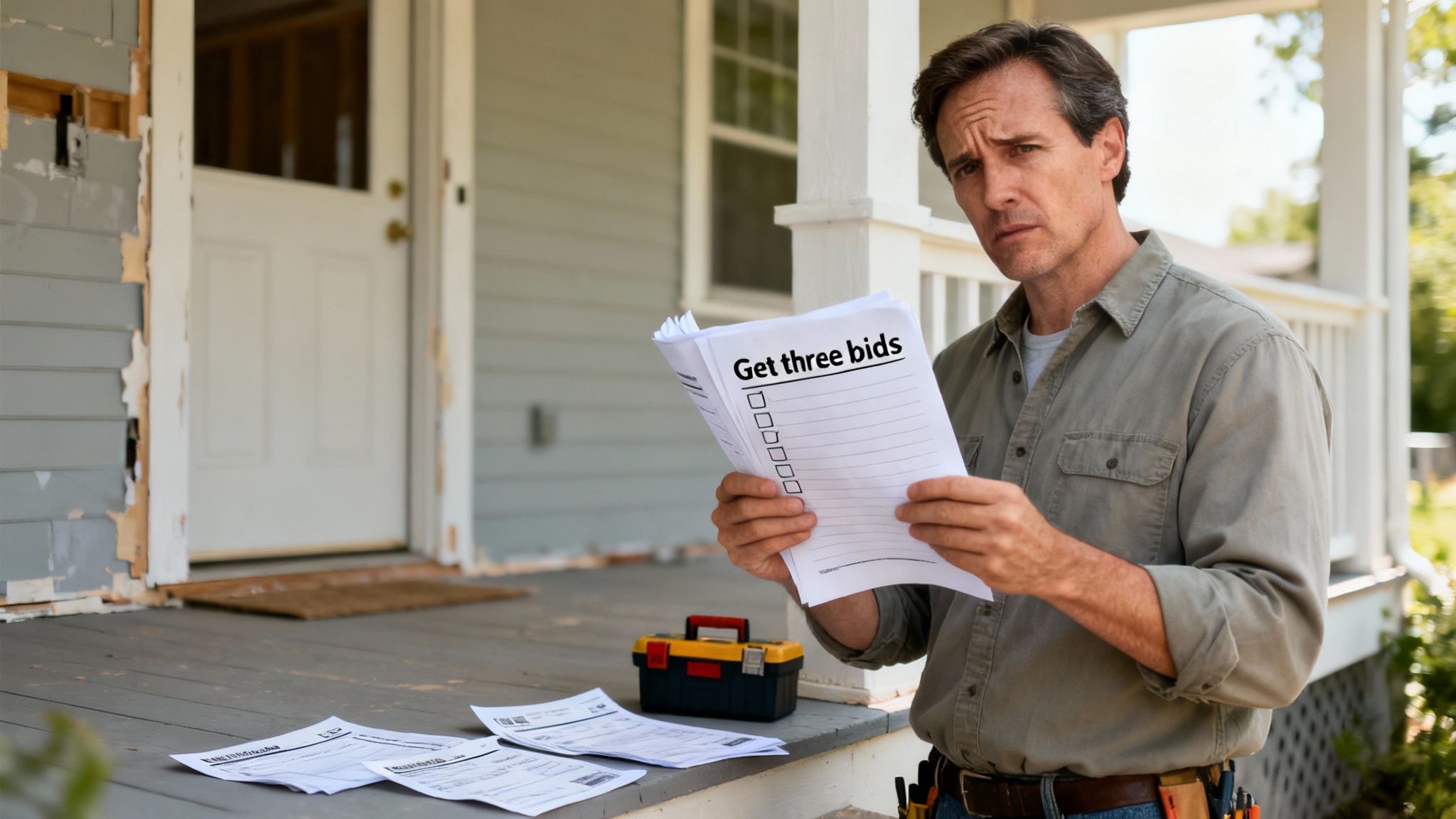
When planning a home renovation, standard advice like "compare estimates" and "check for a license" feels safe. These steps are important, but they only scratch the surface. They don't prepare you for the real-world problems that turn a dream remodel into a nightmare.
This is where projects go wrong. A canned checklist won't warn you about a contractor with high crew turnover. It won't teach you how to spot a vague scope of work designed to create a stream of expensive change orders.
There’s a reason why studies show that 78% of homeowners went over budget on their remodeling projects. Nearly half also experienced serious delays. Many of these issues are avoidable if you know what to ask upfront.
Generic Advice vs. Real-World Risk Assessment
The gap between canned advice and what you actually need to know is huge. It’s the difference between asking if a contractor has references and asking how they manage subcontractors to stay on schedule. One is a simple checkbox; the other reveals their true operational strength.
This table breaks down the difference:
| Generic Advice | The Hidden Risk | The Right Questions to Ask |
|---|---|---|
| "Get three bids." | A low bid often hides an incomplete scope of work, setting you up for costly change orders later. | "Can you walk me through your bidding process? What specific details are included in your scope of work?" |
| "Check for a license." | A license is the bare minimum. It doesn't tell you about their financial stability or if they're stretched too thin. | "Who is your primary project manager, and will they be on-site daily? How many other projects are they running?" |
| "Ask for references." | Contractors only provide their happiest clients. It's a curated list, not a full picture. | "Can I speak with your most recent client and one from a year ago? How do you handle disagreements?" |
| "Sign a contract." | A contract can be vague, leaving loopholes for the contractor to increase costs or change materials. | "How are material allowances handled? What is your process for documenting and approving change orders?" |
Ultimately, a strong vetting process goes far beyond the basics. It’s about understanding the contractor’s entire business.
Moving Beyond Canned Checklists
In regions like Monterey County, Santa Cruz County, or even Maricopa County, Arizona, the quality of contractors can vary dramatically. A generic checklist won’t help you distinguish a true professional from a company that’s barely staying afloat. Don’t rely on canned checklists.
This is why we focus on a different approach at Aldridge Construction. We give homeowners a framework for how to think critically during contractor interviews. To get it right, you need to understand what comprehensive contractor management actually involves, from selection to project completion.
Our goal is to help you ask smarter questions that reveal the truth about a contractor’s stability and process. This guide is an insider’s look at how to make a truly informed decision, protecting your investment.
The Unseen Threat: How Contractor Instability Derails Projects
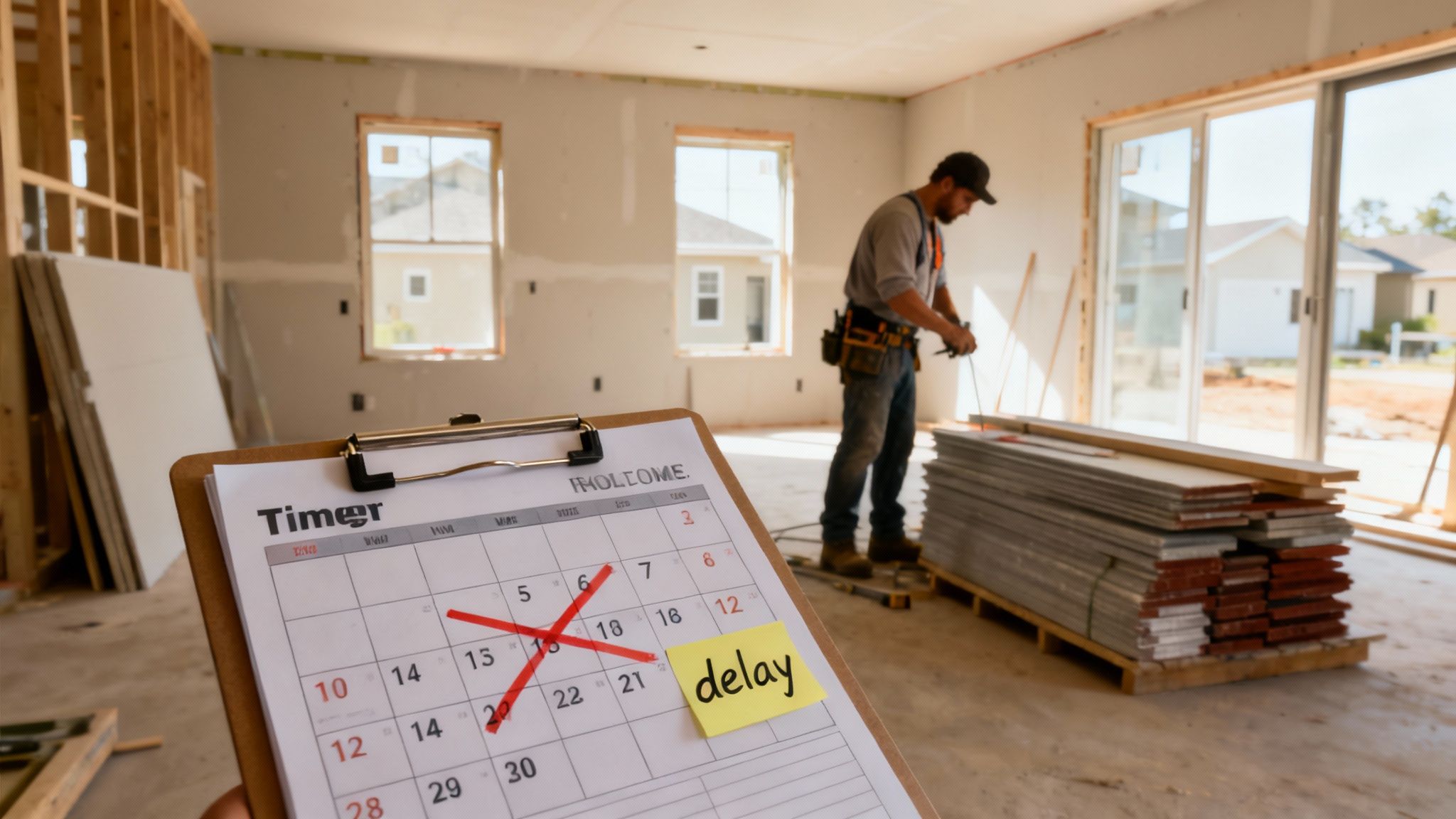
The biggest threat to your project isn't bad weather or a surprise jump in lumber prices. The number one reason construction projects go off the rails is something most homeowners never think to ask about: the skilled labor shortage.
This industry-wide crisis is the hidden engine behind blown timelines and spiraling budgets. When you hire a general contractor, you're hiring their entire network of plumbers, electricians, and carpenters. If that network is shaky, your project is built on risk.
This isn't a minor inconvenience. The tough reality is that 92% of construction firms across the country are struggling to fill key positions. A nationwide survey found that 45% of these firms directly blame labor shortages for causing project delays. You can read the full research on construction workforce shortages to see just how big this problem is.
What an Unstable Crew Looks Like on Your Project
So, how does this problem show up at your house? A contractor's unstable workforce translates into real problems for your remodel. Confusing change orders, vanishing crews, and blown timelines are common results.
Here’s what you can expect:
- Vanishing Crews: Your project starts strong, but then the job site sits empty for days. The real reason is often that their go-to plumber is overbooked, and they have no reliable backup.
- Endless Timeline Extensions: Critical tasks get pushed back again and again. Getting the right electrician to wire your new kitchen in Santa Cruz or the best HVAC team for a job in Maricopa County turns into a scheduling nightmare.
- Inconsistent Quality: When a contractor scrambles for whoever is available, quality control suffers. You end up with sloppy craftsmanship and mistakes that have to be redone, costing you time and money.
The real truth about hiring a contractor is that their team's stability is your project's stability. A contractor with a loyal, long-term crew is the best insurance against delays and budget overruns.
How to Vet a Contractor’s Workforce Stability
Since you can’t rely on a generic checklist, you have to ask targeted questions about a contractor's team stability. During your initial interviews, dig into their operational reliability. This is how you separate a well-run business from one that’s just winging it.
A true professional will be proud to answer these questions.
Powerful Questions to Ask a Potential Contractor:
- "How long have your key employees and main subcontractors been working with you?" Listen for answers that show long-term relationships—5, 10, or even 15+ years.
- "What’s your backup plan if a critical trade partner, like your primary electrician or plumber, gets tied up?" A seasoned contractor has a deep bench of trusted professionals.
- "Will I have a dedicated project manager on-site? How many other jobs will they be juggling at the same time?" This tells you if your project will get the focus it deserves.
At Aldridge Construction, we’ve built our reputation on the stability and quality of our team. We work with the same trusted trade partners in Monterey, Santa Cruz, and San Benito Counties on nearly every project.
Is Your Contractor Financially Stable or a Failure Risk?
That shockingly low bid might feel like a win, but it’s often a sign of desperation. The construction industry has a notoriously high failure rate. A contractor’s financial instability can quickly become your nightmare.
When a contractor is on shaky financial ground, your project is the first thing to suffer. It can lead to liens filed against your property by unpaid suppliers or crews abandoning the job mid-project.
The numbers are sobering. Of the construction businesses started since March 2011, only 35.9% were still operating a decade later. That’s a 64.1% failure rate, often because companies mismanage cash flow and underbid jobs. You can discover more insights about these construction industry trends to understand the risks.
Telltale Signs of Financial Instability
How can you spot a financially unstable contractor? The warning signs are usually hidden in their business practices. A contractor living from deposit to deposit is a huge risk.
Here are the practical red flags to watch for:
- Large Upfront Deposits: In California, a professional contractor’s payment schedule is tied to project milestones. If they demand more than 10% or $1,000 (whichever is less, as required by law) before any work begins, it’s a major sign they lack capital.
- Vague or Missing Insurance Details: Proper insurance is a significant business expense. A contractor who is vague about their coverage may be cutting costs by letting policies lapse.
- Pressure to Sign Immediately: Desperate contractors need cash now. They might offer a "special price" that’s only good for 24 hours to rush you into a decision.
- Using Your Money to Pay Other Suppliers: If you hear excuses about waiting for another client's payment to order your materials, run.
A contractor's financial health is the invisible foundation of your entire project. A stable company builds with a plan; an unstable one builds on hope and your deposit.
Practical Ways to Gauge a Company’s Health
Vetting a contractor's financial stability isn’t about being confrontational. It’s about protecting your investment with smart questions.
First, ask about their bonding capacity. A contractor's ability to get a bond from a surety company shows they have been vetted for financial stability. Think of it as a powerful third-party endorsement of their business health.
Additionally, discuss their payment schedule. Aldridge Construction will present a clear schedule of payments tied to completed work, like when the foundation is poured or framing is complete. For a deeper dive, it's helpful in understanding contractor insurance requirements. Verifying their insurance shows they are a legitimate business that takes risk management seriously.
How to Read a Bid and Spot Red Flags in the Fine Print
Learning how to read a bid for red flags is a critical skill. A good proposal is more than a price tag—it’s the roadmap for your renovation. Many homeowners are hooked by a low number, only to find themselves drowning in extra costs later.
A vague, one-page quote is one of the biggest red flags. It’s an invitation for budget creep and surprise fees. A true professional provides a detailed, transparent proposal that leaves no room for doubt.
This decision tree gives you a framework for assessing a contractor's bid.
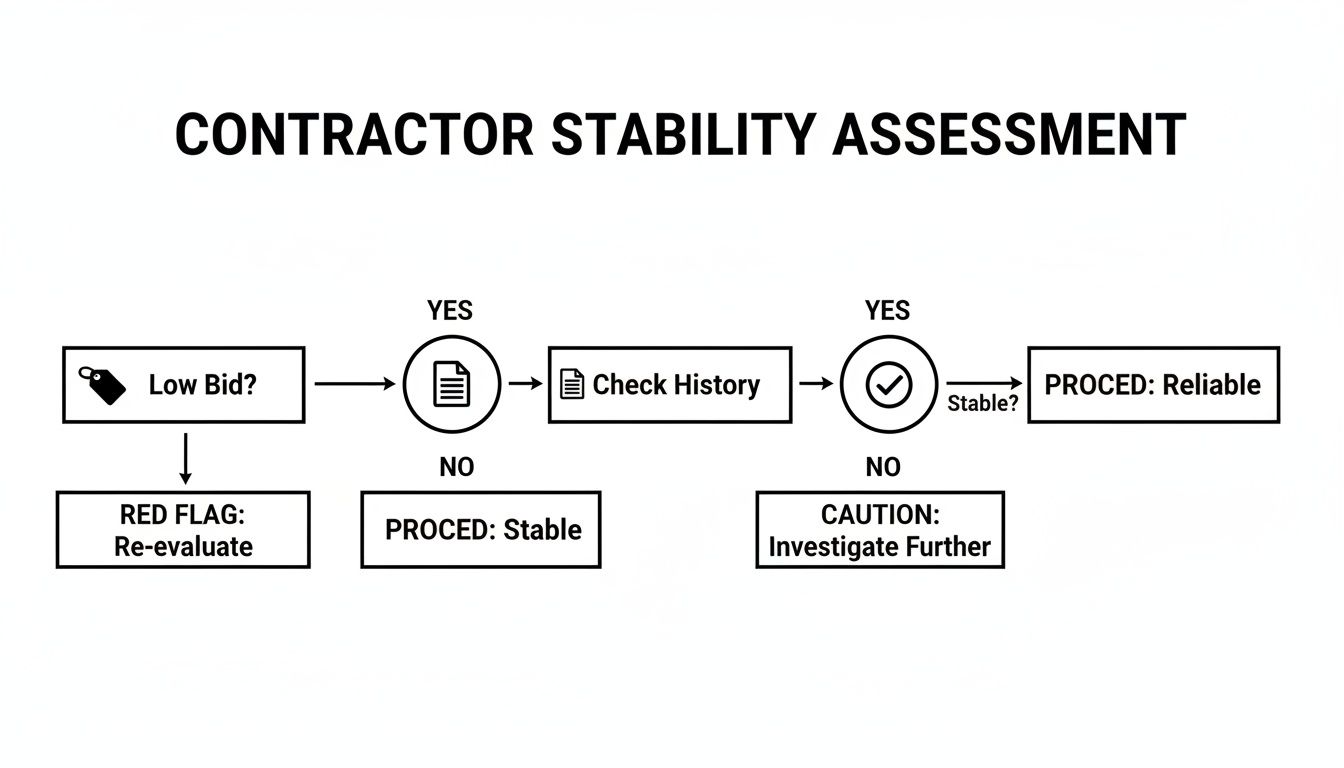
As you can see, a surprisingly low bid shouldn't be a reason to celebrate. It should be a trigger to dig deeper into what they’ve left out.
The Problem with Undefined 'Allowances'
One of the sneakiest traps in a vague bid is the use of “allowances.” An allowance is a placeholder budget for items you haven't picked out yet, like Quartz countertops or light fixtures. A poorly defined allowance is a recipe for a budget disaster.
A risky bid might just say: "Kitchen Faucet Allowance: $300." That tells you almost nothing. When the faucet you actually want costs $600 and needs extra labor to install, you’re hit with a change order that shatters your budget.
A professional proposal from Aldridge Construction breaks it down. We specify the cost of the fixture versus the labor, so you see the complete cost from the start.
Fuzzy Scope of Work and Milestone Payments
Another red flag is a fuzzy scope of work. A bid that says, “Install new kitchen cabinets,” is dangerously incomplete. A proper proposal will name the brand (like KraftMaid), style, and finish.
The payment schedule is just as critical. A stable, professional builder like Aldridge Construction will always tie payments to completed milestones. This prevents project drift and protects your investment.
A well-crafted proposal is your best defense against the budget creep that plagues poorly planned projects. It ensures you know exactly what you're paying for.
A clear proposal protects both you and the contractor. In places like Monterey and Santa Cruz County, where project costs can swing wildly, this level of detail is non-negotiable.
Red Flag Bid vs. Green Flag Proposal
Understanding the difference between a risky bid and a detailed proposal is crucial. This side-by-side comparison shows you what to look for.
| Feature | Red Flag Example (Vague Bid) | Green Flag Example (Detailed Proposal) |
|---|---|---|
| Scope of Work | "Remodel guest bathroom." | "Demo existing tub, tile, and vanity. Install new 30"x60" Kohler acrylic tub, waterproof backer board, and Daltile porcelain tile on walls." |
| Materials | "Install new windows." | "Install five energy-efficient Milgard windows (sizes specified) with Low-E glass, including all flashing and trim work." |
| Allowances | "Lighting Allowance: $500." | "Lighting Fixture Allowance: $500. Labor to install up to 4 fixtures: $350. Total Lighting Budget: $850." |
| Payment Schedule | "50% deposit, 50% on completion." | "10% deposit. Payments due upon completion of: 1) Demolition, 2) Framing/Rough-ins, 3) Drywall, 4) Final Finishes." |
When you demand this level of detail, you force contractors to be honest and thorough. This is a core part of the truth about hiring a contractor that generic advice doesn’t tell you.
The Anatomy of a Smooth and Predictable Project
A great renovation experience comes down to two things: clear communication and a reliable timeline. A professional contract isn’t just about the price; it’s a promise of predictability.
This sense of order comes from proactive planning. A detailed project schedule isn't a "nice-to-have"—it's a non-negotiable tool that outlines every step of your journey.
Your Project’s Roadmap
A professional timeline is more than a start and end date. It breaks the entire job into manageable phases, each with its own deadline. This keeps everyone accountable and stops small delays from snowballing.
A reliable project schedule should always include:
- Key Construction Milestones: Clear markers for when major phases like framing, electrical rough-in, and drywall will be wrapped up.
- Inspection Dates: Scheduled appointments with city or county inspectors—a critical step that can cause huge delays.
- Your Decision Deadlines: Dates by which you need to finalize selections for things like tile or paint colors.
- Payment Schedules: Payments should be tied directly to the completion of these milestones.
The Power of Proactive Communication
A structured communication plan is just as important. You should never have to wonder what’s happening with your home. A true professional sets the communication rhythm from day one.
A great contractor doesn’t just build homes; they build confidence. This comes from a system of regular, scheduled check-ins and a dedicated point of contact.
At Aldridge Construction, we build client check-ins into every project. That means scheduled weekly updates to discuss progress and tackle any challenges head-on. You will always have a dedicated point of contact to ensure your questions are answered promptly.
Navigating Local Permitting Without Delays
Finally, a smooth project hinges on a contractor’s ability to navigate local bureaucracy. In areas like Monterey, Santa Cruz, and San Benito counties, the permitting process can be complex. California-specific regulations like Title 24 or ADU laws can stall a project if mishandled.
An experienced local contractor understands these nuances. They have relationships with local building departments and know how to submit paperwork correctly the first time. This insider knowledge prevents headaches that frustrate homeowners and blow up timelines.
Your Vetting Checklist for Hiring a Local Contractor
All the advice in the world is useless if you don’t have a clear plan. Let's turn this into a practical tool for homeowners in Monterey, Santa Cruz, San Benito, and Maricopa Counties. This isn't a generic list; it’s designed to help you ask the right questions and spot the real red flags.
Use this checklist to guide your conversations and compare options with confidence.
What to Ask Every Potential Contractor
Think of this as a framework for uncovering the truth about a contractor’s stability and process.
-
License, Bonding, and Insurance: "Can you provide a copy of your current state license, proof of general liability insurance, and your bond number?" This is the absolute baseline for legitimacy.
-
Team Stability and Experience: "How long have your project manager and key subcontractors worked with you?" Consistent, long-term relationships (five years or more) are a great sign of a stable team.
-
Detailed Project Proposals: "May I see a sample of a detailed proposal from a past project similar to mine?" You’re looking for a line-item breakdown of materials and labor, not a vague quote.
-
Communication Plan: "What is your process for weekly updates, and who will be my dedicated point of contact?" A structured communication plan is the antidote to misunderstandings.
-
Local Permitting Experience: "Can you describe a recent project you completed in my city and how you navigated the permitting process?" Their answer reveals their familiarity with local codes.
This kind of deep vetting is more crucial than ever. With workforce shortages being one of the top causes of project delays, asking about team stability is a must. To see the data for yourself, you can read the full report on how labor shortages impact construction projects.
This is why the truth about hiring a contractor isn’t found in a low bid, but in asking better questions. This checklist empowers you to do just that.
Ready to work with a team that values transparency and professionalism? The experts at https://aldridgeconstruction.biz/ are here to help. Talk to Aldridge to learn what actually makes a contractor trustworthy in our region.
FAQs: The Truth About Hiring a Contractor
Here are the straight answers to the most common questions we get from homeowners.
1. What’s more important: a low price or a detailed contract?
A detailed contract, without a doubt. A suspiciously low price often hides risks like cheap materials or unskilled labor. A detailed contract is your financial shield, spelling out the exact scope of work, materials, timeline, and payment schedule to prevent surprise costs.
2. How can I really know if a contractor's references are legitimate?
Ask for references from projects similar to yours that were completed in the last year. When you call, ask specific questions like, "How did the contractor handle an unexpected problem?" or "Did the project stay on budget and finish on time?"
3. Why is local experience in Santa Cruz or Monterey County so important?
Every county has its own building codes, permitting processes, and environmental rules. A contractor who knows the Santa Cruz planning department or understands the soil conditions in San Benito County can navigate bureaucracy much faster, preventing frustrating delays. They also have established relationships with the best local subcontractors and suppliers.
4. What is a change order, and how can I avoid them?
A change order is a formal amendment to the contract that outlines a change in the project's scope, price, or timeline. You can minimize them by being incredibly thorough in the planning phase. Work with a contractor who insists on detailed planning before work begins, so every detail is decided on and written into the contract upfront.
5. Should a contractor ask for a large upfront deposit?
Absolutely not. In California, the law limits a down payment to 10% of the total contract price or $1,000, whichever is less. A contractor asking for more is a massive red flag indicating cash flow problems. A professional operates on a milestone payment schedule, where you pay as specific phases of the project are completed.
Feeling more prepared to take the next step? The key is finding an expert who prioritizes transparency from day one. The team at Aldridge Construction is here to answer all your questions and help you plan your remodel with a solid, professional process.
Contact Aldridge Construction today for a no-obligation consultation.