
Most online remodeling guides talk about the fun stuff—picking paint colors and new appliances. That's a great start. But for homeowners in Monterey County, the real work starts long before that. The true challenge is dealing with our local costs, strict building codes, and project timelines.
This guide is different. It goes beyond the design ideas to give you a realistic kitchen remodel guide for Monterey County homeowners. It's packed with tips from real local projects we've completed.
Your Practical Plan for a Monterey County Kitchen Remodel

It’s easy to get inspired by a beautiful kitchen you see online. But turning that dream into reality in places like Salinas or Carmel needs a solid plan. Many guides give vague advice like "set a budget" but don't explain what that budget actually looks like here.
We want to fix that. At Aldridge Construction, we give homeowners real information from the start. We are sharing what we've learned from years of work. This guide covers the details that make a project succeed.
Real-World Factors to Consider
A successful remodel is more than just a pretty result. It’s about a smooth process that avoids costly surprises. Homeowners deserve to know what to expect before they invest a lot of money.
Our focus is on:
- Actual Local Costs: We’ll break down what kitchens truly cost here. This includes materials that hold up in our coastal weather and the skilled workers needed.
- Permit Timelines: Knowing how long it takes to get approvals from the county is key. It helps set a real schedule.
- Inspection Hurdles: We’ll talk about common problems during inspections. We'll also explain how an experienced contractor plans for them.
- Material Delays: We’ll explain how we plan for supply chain issues or worker shortages that can slow down a project.
Why a Local-First Approach Matters
Living on the Central Coast means things are different here. From the salty air to seismic building codes, these local factors affect your remodel. National advice often doesn't apply.
A minor kitchen remodel can get back up to 96% of its cost when you sell your home, according to 2024 industry data. By providing clear, local data upfront, we help reduce surprises. This builds your confidence and makes it easier to move forward with a smart investment.
If you’re planning a kitchen remodel in Monterey, Santa Cruz, or San Benito Counties, don't settle for vague advice. An experienced local partner like Aldridge Construction can show you real project timelines and costs. We help you start your project the smart way.
What a Kitchen Remodel Really Costs in Monterey County

Let's be direct: online kitchen cost estimators are usually wrong for Monterey County. They use national data that doesn't match our area's higher labor rates or material needs.
A realistic budget is the foundation of a successful project. It prevents the surprise of high costs and helps you get the kitchen you want.
At Aldridge Construction, our budgets are based on real project data from Salinas, Carmel, and all over the county. This gives our clients a clear picture of where their money goes. You can explore guides on the average kitchen remodel cost to see how different national figures are from our area.
Breaking Down the Budget Tiers
Not every kitchen remodel is a complete tear-down. Costs change a lot based on the work involved. We've broken down projects into three common types to help you plan.
Here's a breakdown of typical kitchen remodel costs we see in Monterey County.
Sample Kitchen Remodel Cost Tiers in Monterey County
| Remodel Tier | Estimated Cost Range | Typical Scope & Inclusions | Best For |
|---|---|---|---|
| Minor Refresh | $25,000 – $45,000 | Cabinet painting, new countertops like quartz, a tile backsplash, new lights, and a new sink or faucet. | Homeowners with a good layout who want a modern look without changing the kitchen's footprint. |
| Mid-Range Remodel | $50,000 – $90,000 | New semi-custom cabinets, new appliances, countertops, flooring like LVP, and small layout changes (like adding an island). | The most common type of project. It's a complete update to the look and function without big structural changes. |
| Major Renovation | $100,000+ | A full tear-down. This can mean removing walls for an open concept, moving plumbing or electrical lines, and adding custom cabinets and high-end finishes. | Homeowners who want a big change to their home's flow and function. |
These types give you a good starting point. The final cost will always depend on your specific choices.
In Monterey County, with home values around $1.2 million, renovating often makes more sense than moving. A good remodel is a smart investment. Learn how one of our projects yielded a 12-15% property value uplift.
'Hidden' Costs Every Homeowner Should Know
The final price isn't just about cabinets and countertops. Other costs can affect your budget. Planning for them from the start is very important.
One big factor is updating your home to meet current codes. This is common in older Monterey County homes. For example, California's Title 24 energy rules have strict requirements for lighting. If we open a wall and find old wiring, it must be replaced. This is for safety and is required by law.
Other potential costs include:
- Permit and Design Fees: These can range from a few hundred to several thousand dollars.
- Structural Surprises: Older homes can have hidden issues with framing or the foundation. These often appear only after work begins.
- Contingency Fund: This is a must. We recommend setting aside 10-15% of your total budget for unexpected costs. It's better to have it and not need it.
By talking about these costs upfront, we help you create a realistic budget. This leads to a smoother project with fewer surprises.
Getting Through Monterey County Permits and Building Codes
The permit process can feel like a huge headache. Many homeowners ask if they really need one for "just a kitchen." The answer is always yes.
Think of a permit as a safety net. It protects your investment, your family’s safety, and your home's value. Skipping it can lead to fines or having to tear out finished work. A professional contractor knows that getting the right permits is the first step.
What Actually Triggers a Permit for a Kitchen Remodel?
It's a myth that you only need a permit for big projects. Many standard kitchen tasks need approval from your local building department.
You will likely need a permit if your project involves:
- Moving or Removing Walls: Any change to your home's structure needs a permit. This includes taking down a wall for an open-concept feel.
- Altering Plumbing: Moving a sink, adding a pot filler, or moving a gas line all require a plumbing permit.
- Changing Electrical Layouts: Adding new outlets, installing under-cabinet lighting, or moving circuits will trigger an electrical permit.
- Replacing Windows or Exterior Doors: Changing the size or location of a window or door requires a permit.
An experienced contractor doesn't just get permits; they plan for the whole process. By submitting detailed plans that already meet local codes, we reduce delays and keep your project moving.
Making Sense of California's Title 24 Energy Codes
In addition to standard building codes, every remodel in California must follow Title 24. These are our state's energy efficiency rules. For a kitchen, this affects your design choices.
Title 24 is about using less energy. In the kitchen, this means two main things:
- Lighting: At least 50% of the light in your kitchen must come from high-efficacy sources, like LEDs.
- Ventilation: Your range hood must vent outside, not just move air around inside. It also has to meet airflow rules.
A good contractor will guide you to products that meet these rules. This helps you pass inspection and saves you money on utility bills.
Common Inspection Hurdles and How We Avoid Them
Inspections happen at key stages of the project, not just at the end. Failing one can delay your project by weeks. At Aldridge Construction, we manage the whole inspection schedule.
A common issue is the wrong placement of electrical outlets near the sink. The code is very specific about requiring GFCI outlets near water to prevent shocks. We get these details right from the start.
Another problem can be fire-blocking inside walls. This is a safety measure that inspectors check closely. By building every part of your kitchen to code, we make inspections a simple step. That’s what a real kitchen remodel guide for Monterey County should do: plan for success.
Creating a Realistic Remodel Timeline From Start to Finish
A successful kitchen remodel runs on a good schedule. A realistic timeline must account for everything from design talks to construction. Getting this right keeps stress down and the project running smoothly.
One common mistake homeowners make is underestimating the pre-construction phase. This is the longest and most important part. It’s where you make big decisions, order materials, and get permits. Rushing this stage often leads to delays and budget problems later.
The Phases of a Typical Monterey County Kitchen Remodel
A well-planned project flows better. Every job is a bit different, but a standard kitchen timeline has four clear stages. At Aldridge Construction, we manage this whole process for you.
- Phase 1: Design & Planning (4–8 Weeks): This is the foundation. It includes our first talks, creating designs, picking all materials, and setting the budget.
- Phase 2: Permitting & Procurement (3–10 Weeks): Once designs are final, we submit them to the county. At the same time, we order materials, especially custom items like cabinets that have long wait times.
- Phase 3: Active Construction (6–10 Weeks): This is when the work begins. It includes demolition, plumbing and electrical work, inspections, drywall, cabinet installation, countertops, flooring, painting, and hooking up appliances.
- Phase 4: Finishing Touches & Final Walk-Through (1–2 Weeks): The last stretch. We install the backsplash and light fixtures. Then, we walk through the space with you to make sure every detail is perfect.
Why Delays Happen and How We Plan for Them
In the real world, things can happen that cause delays. A professional knows how to handle these moments. We build extra time into our schedules to handle common delays without stopping the whole project.
One big variable is the permit approval process. Getting a permit can take a few weeks to a couple of months.
This chart gives you an idea of the typical steps in the local permit process.
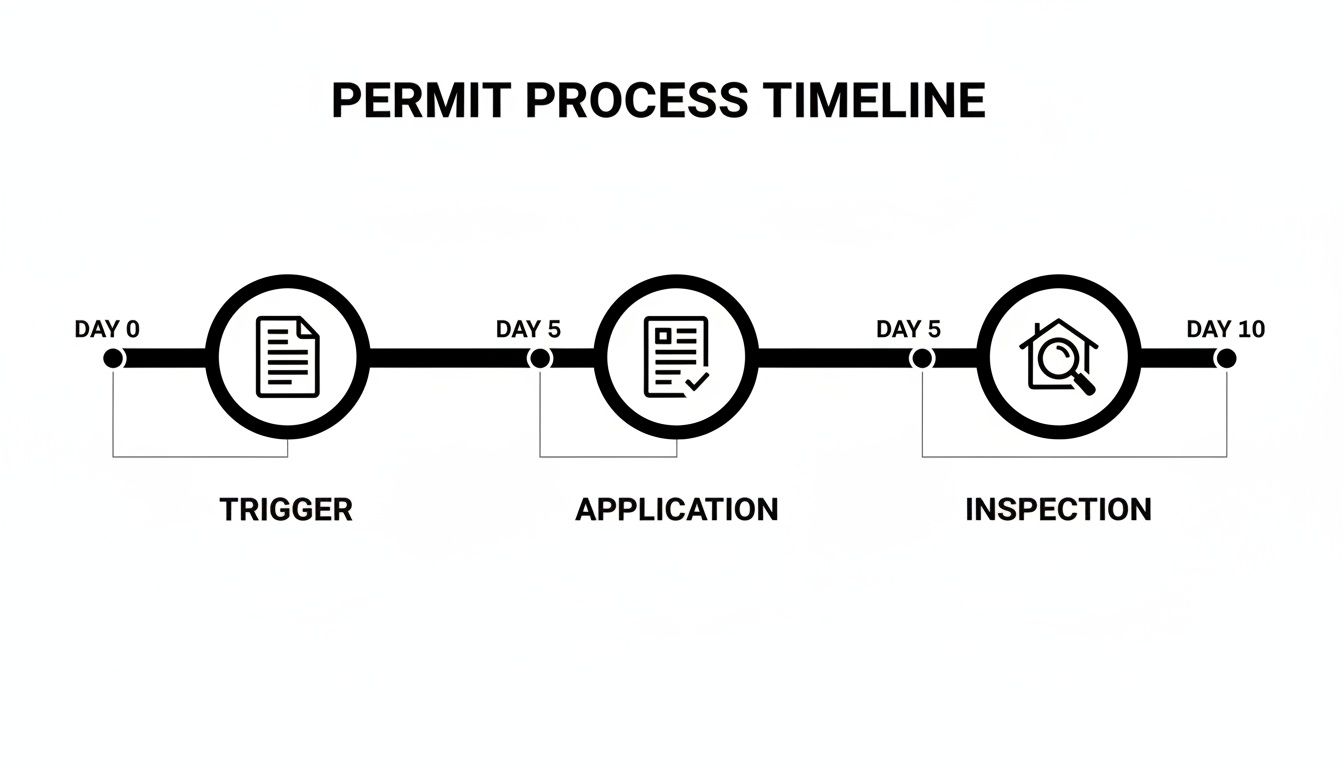
As you can see, the clock starts long before construction begins.
Other common issues include:
- Material Lead Times: Custom cabinets can take 8-12 weeks to arrive. We order these things early so they are ready when we need them.
- Subcontractor Scheduling: We work with a trusted team of plumbers and electricians. Managing their schedules is an art, and we do it carefully.
- Unexpected Discoveries: You never know what you’ll find in an older home. We plan for this in both the timeline and budget.
Any realistic kitchen remodel guide for Monterey County homeowners must be honest about timelines. By doing all the planning and ordering upfront, we reduce dead time during construction. This keeps your project on a clear path.
Choosing Materials That Thrive on the Central Coast
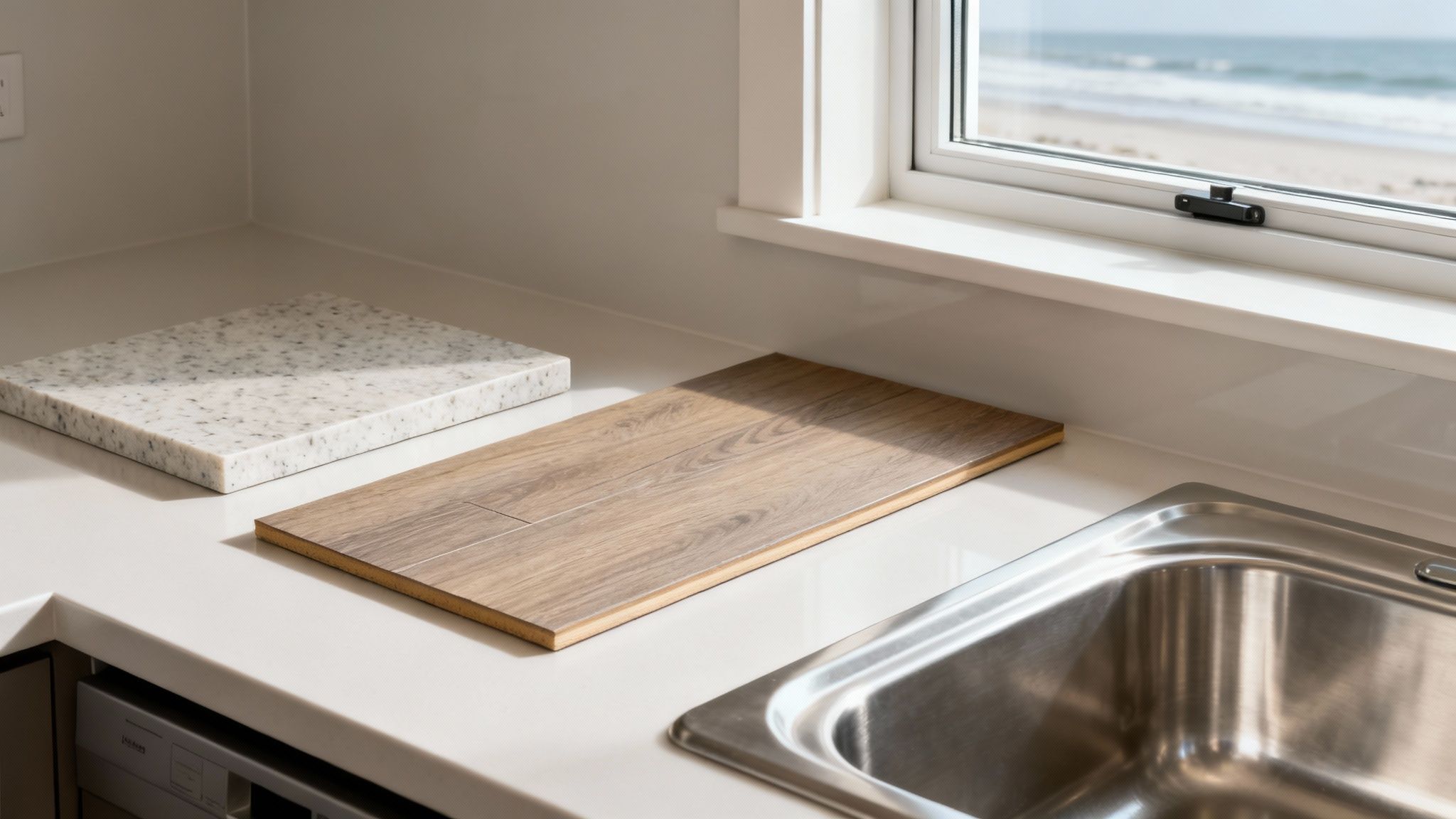
Living on the Central Coast means beautiful, salty air. But that same air can be tough on a home. When picking materials for your kitchen, it's not just about looks. It's about choosing finishes that will last in our unique climate.
You have to think about durability and moisture resistance. The wrong materials can warp or break down. This can lead to expensive repairs. We can help you make smart, long-lasting choices for your kitchen.
Countertops Built for Coastal Kitchens
Your countertops are the workhorse of your kitchen. In our coastal area, strength is the top priority.
Quartz is our top recommendation for kitchens in Monterey and Santa Cruz. It is a man-made material that doesn't absorb liquids. This means it never needs to be sealed and resists stains and moisture. It is durable and easy to maintain.
Natural stones like granite are also beautiful, but they need more care. Granite must be sealed regularly to keep it from absorbing moisture.
Choosing materials is where a realistic kitchen remodel guide for Monterey County homeowners is most helpful. Quartz might cost more at first, but it often saves money over time because it lasts long and needs little care in our climate.
Flooring That Fights Back Against Moisture
Coastal humidity can affect your floors. Traditional solid hardwood can expand and contract, which causes warping over time.
Because of this, many local homeowners choose more resilient flooring. You may want to explore specific kitchen flooring materials to see how they perform in a kitchen.
Here are two great choices for our area:
- Luxury Vinyl Plank (LVP): LVP is 100% waterproof and very tough. It looks like real wood without the moisture risks.
- Porcelain or Ceramic Tile: Tile is a classic choice for a reason. It is completely waterproof and durable.
Ventilation and Windows The California Code Way
Good ventilation and energy-efficient windows are required by California's building codes. They improve your home's air quality, prevent mold, and lower energy bills.
Your range hood must vent directly outside. Also, modern windows, like dual-pane Milgard windows, are key for insulating your home.
By 2026, sustainable kitchen remodels are surging in Monterey County, driven by California's Title 24 energy codes that mandate efficiency gains. This shift is clear in projects using recycled quartz counters and solar-integrated appliances that can cut energy use by 35%, saving homeowners hundreds annually. These eco-focused remodels, which often include securing local rebates, can yield a 68% ROI in high-cost areas. Learn more about how Monterey homeowners are renovating for long-term value. By making these smart material choices, you create a kitchen that is not only beautiful and compliant but also built to thrive for years to come.
Ready to Start Your Monterey County Remodel?
Thinking about a kitchen remodel can feel overwhelming, but you don’t have to do it alone. The biggest difference between a stressful project and a successful one is finding the right local partner. For homeowners in Monterey County, our experience is your biggest advantage.
Our team can take your vision and turn it into a solid plan. It's a plan that respects your budget, follows local building codes, and sets a practical timeline. Many homeowners get stuck researching, confused by vague advice online. We cut through that noise with clear knowledge from years of building kitchens here.
Moving from Ideas to Action
A professional consultation is the best way to start your project. It’s a chance to get your goals on paper and map out a clear path forward.
Choosing the right partner means getting honest answers from day one. We believe in educating our clients, not just selling a service. This builds trust and ensures your final kitchen is exactly what you wanted.
Instead of guessing what your remodel might cost, let our team give you real numbers. We manage every detail, from design and permits to final inspections. This is the heart of a truly realistic kitchen remodel guide for Monterey County homeowners—turning plans into beautiful kitchens.
If you’re ready to build a kitchen that works for you, let’s talk. The expert team at Aldridge Construction is here to guide you every step of the way.
Frequently Asked Questions
When you're thinking about a kitchen remodel, a lot of questions come up. Here are some common questions we hear from homeowners in Monterey County, with simple answers.
How long does a typical kitchen remodel take in Monterey County?
For a full remodel, the actual construction usually takes 8 to 12 weeks. But the total timeline is longer. Before any work starts, the design and planning phase can take 4 to 8 weeks. Then, getting permits approved by the county can add another 3 to 10 weeks. At Aldridge Construction, we create a detailed schedule so you know what to expect.
What happens if you find unexpected problems during demolition?
It’s common to find surprises in older homes, like old wiring or hidden water damage. A good contractor plans for this. We include a contingency fund—usually 10-15% of the budget—in your project costs. If we find a problem, we stop, show you what's going on, and discuss solutions and costs with you before doing any extra work.
Can I live in my house during the kitchen remodel?
Yes, you can. We know moving out isn't an option for most families. Our team works to minimize the disruption. We set up plastic walls to contain dust. We also help you create a temporary kitchen area with your fridge, a microwave, and a coffee maker. We keep the job site clean every day.
How much value does a kitchen remodel add to my Monterey home?
In a market like Monterey County, a kitchen remodel is one of the best investments you can make. National data shows a strong return on investment for kitchen updates when you sell. A beautiful, functional kitchen is a powerful selling point. It doesn't just increase your home's value; it also improves your quality of life.
Why should I hire a general contractor instead of managing the project myself?
Managing a remodel on your own means you are in charge of hiring and scheduling all the workers, like plumbers and electricians. You are also responsible for getting permits and making sure all work meets California's building codes. Hiring a general contractor like Aldridge Construction takes all of that work off your plate. We manage the entire project, ensuring it runs smoothly, stays on schedule, and sticks to the budget.
Ready to move from questions to action? The expert team at Aldridge Construction is here to provide a clear, realistic plan for your Monterey County kitchen remodel. Contact us today for a consultation and let's start building with confidence.