
So, you're thinking about adding a backyard ADU, and the big question pops up: "Do I really need a permit for a backyard ADU in California?"
The answer is a straightforward and absolute yes. In California, getting a permit is not a suggestion; it's a required step for any backyard accessory dwelling unit (ADU).
Skipping this can lead to serious consequences. You could face large fines, legal problems, and even be ordered to demolish the new space you just built.
Why a Permit is Your Foundation for Success
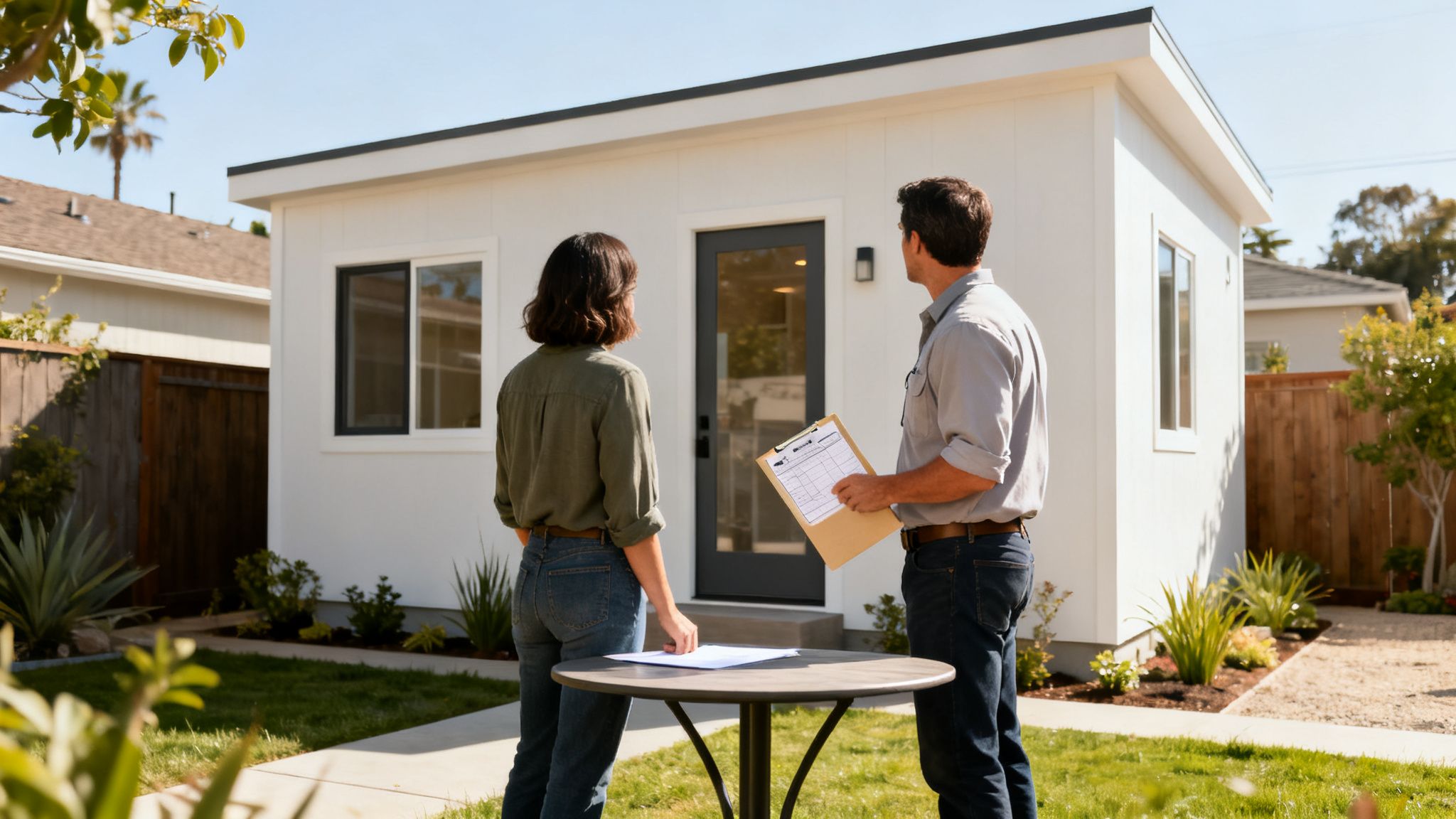
Many homeowners in Monterey, Santa Cruz, and San Benito Counties wonder if they can bypass the paperwork to save time and money. It's a tempting thought.
But viewing a permit as just another hurdle is a huge mistake. Think of your permit as the foundation that protects your property, your family, and your investment.
An approved building permit is the official stamp that confirms your ADU meets California's strict building and safety codes. This is critical for a few key reasons:
- Safety and Compliance: Permits make sure your ADU’s electrical, plumbing, and structural systems are installed correctly. This protects you and anyone who lives in the unit.
- Property Value: When you sell your home, an unpermitted ADU is a problem, not an asset. It cannot be legally counted in your home's square footage, which can scare away buyers.
- Insurance Coverage: Most insurance companies will not cover damages or liability related to an unpermitted structure. This leaves you exposed to major financial risk if something goes wrong.
The Good News: Permits Are Getting Easier
Luckily, getting a permit is more straightforward than ever before. California has passed new laws to remove many of the old barriers homeowners used to face.
The results are clear. Between 2016 and 2022, California saw a 15,334% increase in ADU permits. Today, nearly 1 in 5 new homes built in the state is an ADU. This shows that many homeowners are successfully navigating the process.
Permitted vs. Unpermitted ADU: A Quick Comparison
To make the choice clear, let's look at the two paths side-by-side. One way builds lasting value; the other creates a ticking time bomb in your backyard.
| Aspect | With a Permit (The Smart Way) | Without a Permit (The Risky Way) |
|---|---|---|
| Legality | Fully legal and recognized by your city. | Illegal structure subject to penalties. |
| Safety | Inspected and verified to be safe and up to code. | Unknown safety risks from uninspected work. |
| Property Value | Adds significant, recognized value to your home. | Cannot be legally valued or advertised at sale. |
| Insurance | Covered by your homeowner's insurance policy. | Typically not covered, creating huge liability. |
| Rental Income | Can be legally rented out for steady income. | Cannot be legally rented; risk of tenant issues. |
| Financing | Can be financed and refinanced. | Complicates or blocks future financing or sales. |
The takeaway is simple: the shortcuts you take by avoiding a permit will almost always cost you far more in the long run.
Navigating the local permit process can still feel overwhelming, but you don't have to tackle it alone. Having an experienced partner like Aldridge Construction who knows the specific rules in Monterey, Santa Cruz, and San Benito counties makes all the difference. We manage the entire permitting process for our clients—from creating the site plans to submitting everything to the city.
For a deeper dive into the specific rules and regulations, check out our comprehensive guide on California ADU requirements.
Understanding California's Pro-ADU Laws
If the thought of tackling California’s building laws feels scary, you can relax. Over the last few years, the state has passed powerful, pro-ADU laws. These laws are designed to make building a backyard unit easier and faster.
Think of it as the government clearing away the biggest roadblocks that used to stop homeowners. This is great news for anyone thinking about building an ADU.
These laws are not just small changes. They represent a major shift in how California approaches housing. The goal is to empower homeowners like you to add much-needed living space with less red tape.
What These Pro-ADU Laws Mean in Practice
So, how do these laws actually help you? They provide simple, practical benefits that directly affect your project's cost and timeline.
Here’s a breakdown of the key advantages you now have:
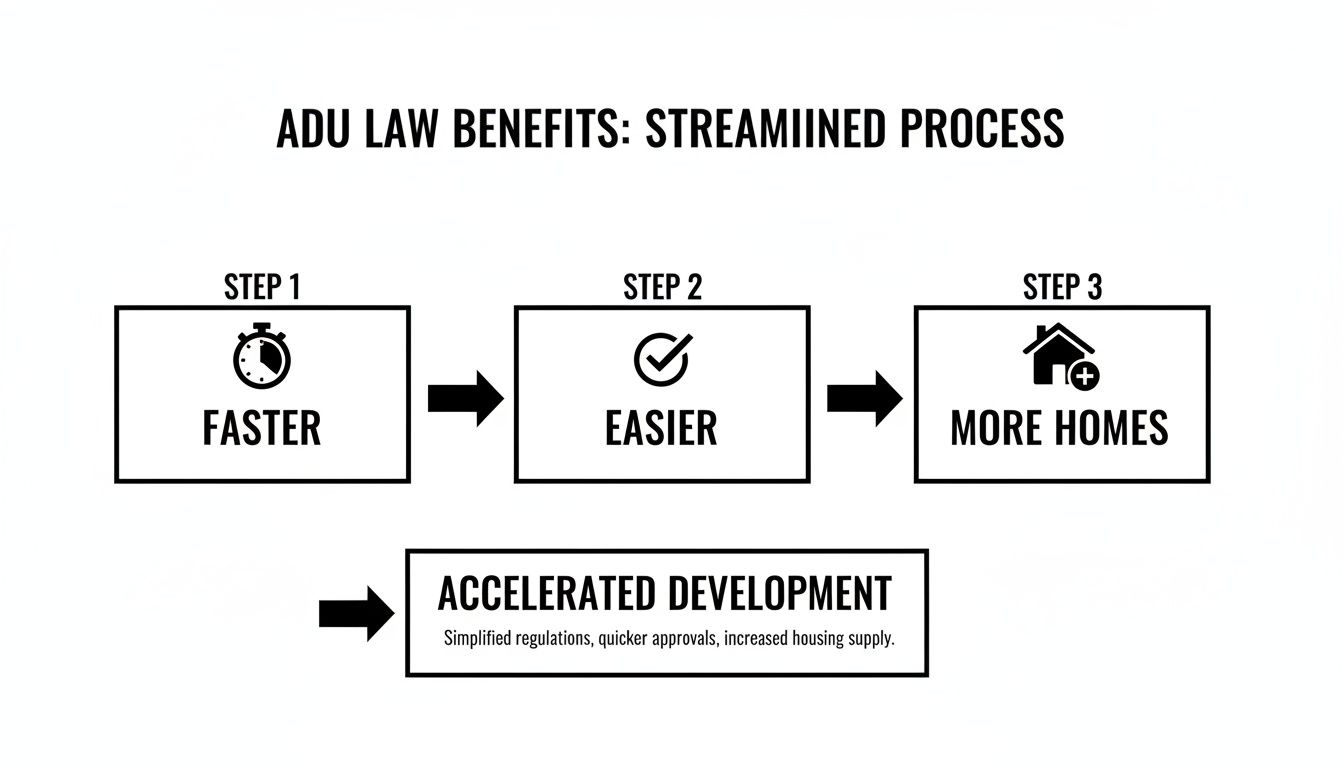
- Faster Approval Times: California law now requires local agencies to approve or deny a complete ADU permit application within 60 days. This ends the long, frustrating waiting periods of the past.
- No More Owner-Occupancy Rules: In the past, some cities forced the property owner to live in either the main house or the new ADU. That rule is gone. This gives you the flexibility to rent out both units.
- Reduced Parking Requirements: Parking used to be a major obstacle. Now, you don't need any extra parking for your ADU if your property is within a half-mile of public transit. This also applies if it's in a historic district or if you’re converting an existing space like a garage.
These are game-changing rules, especially for homeowners here on the Central Coast where lots can be tight.
A Wave of Positive Reforms for Homeowners
The momentum keeps building with even more recent laws. Reforms have removed common barriers, like owner-occupancy rules. They have also paved the way for cities to offer pre-approved plans and even allowed for selling ADUs separately in some cases.
For homeowners in Monterey, Santa Cruz, and San Benito Counties, this legislative support means your dream of a granny flat or rental unit is more realistic than ever.
How State Laws Benefit You Locally
While these are statewide laws, you feel the benefits right here at home. In places like Monterey County, these regulations give builders and homeowners the certainty to move forward. The state’s firm stance forces local planning departments to adopt these more streamlined, homeowner-friendly rules.
This alignment between state and local policy is what makes it all work. It means that when you decide to build, you’re stepping into a process that’s designed for success. For a detailed look at the construction journey from start to finish, be sure to read our guide on building an ADU in California.
At Aldridge Construction, we work with these pro-ADU laws every day. We use them to help our clients get through the permitting process efficiently.
Your Step-by-Step Guide to the ADU Permitting Process
Getting an ADU permit can feel like a mystery for most homeowners. You know you need one, but the steps involved can seem confusing.
When you break it down, the journey is a series of logical steps. Think of it as a roadmap for your project. Each phase builds on the one before it, moving your idea from a dream to a set of approved plans.
Phase 1: Initial Design and Planning
Before you can submit an application, you need a solid plan. This is the most important part of the process because it sets the foundation for everything that follows.
This first step involves creating professional architectural plans. These are not just sketches. They are highly detailed blueprints that must follow specific rules, including:
- The California Building Code, which makes sure your ADU is structurally sound.
- The Title 24 Energy Code, which sets standards for insulation, windows (like energy-efficient Milgard windows), and HVAC systems.
- Local Zoning Ordinances, which control setbacks (distance from property lines), height limits, and lot coverage.
Many homeowners underestimate the technical detail needed here. One small mistake on the plans can get your application rejected. This is where working with a design-build firm like Aldridge Construction really pays off. We make sure your plans are correct from day one, saving you months of potential headaches.
Phase 2: Application Submission and Plan Check
With your plans finished, it’s time to submit your application to the local planning department. This is where the official review process begins.
Once submitted, your project enters the "plan check" phase. City officials will review every detail of your plans to confirm they meet all codes. They’ll check everything from structural engineering to your plumbing layout.
This is the stage where having an experienced guide really helps. An incomplete application is the number one reason permits get delayed. A contractor who works with local agencies every day knows exactly what reviewers are looking for and can fix potential problems before they become roadblocks.
It is common for the planning department to send back plans with requests for changes. A seasoned pro knows how to address that feedback quickly, keeping your project on track. To get a better sense of what's involved, you can learn more about local construction permit requirements in our other guide.
Phase 3: Review Finalization and Permit Issuance
After you’ve addressed all the comments from the plan check, your updated plans go back for a final review. Assuming everything is correct, the planning department will give its final approval.
Once the plans are approved, the last step is to pay the permit fees. After that, the building department officially issues your building permit. This piece of paper is your legal authorization to start construction.
Getting the permit is not the end of the city’s involvement. You have to post it at the construction site, and it kicks off a series of mandatory inspections during the build. This whole journey is exactly what Aldridge Construction handles for our clients.
How Much Do ADU Permits and Fees Really Cost in California?
Homeowners are often shocked by how complex and expensive ADU permits can be. The final price tag often catches people by surprise.
It's not just a single application fee. It’s a collection of "soft costs" that can easily add thousands of dollars to your budget. Many people assume new state laws made permits cheap, but costs vary widely by city. Reddit users have reported fees as high as $26,000 with little guidance.
Understanding these expenses upfront is the best way to build a realistic budget and avoid sticker shock.
Breaking Down the Real Costs
Permit costs are not one-size-fits-all. A project in Salinas will have a different fee structure than one in Santa Cruz. These fees cover the city's cost for reviewing your plans and ensuring your ADU is safe.
Here are the most common fees you’ll encounter:
- Plan Check Fees: This is what the city charges to review your architectural and structural plans.
- Building Permit Fee: This is the main fee for the permit itself, usually based on your project's size.
- School Impact Fees: If your ADU is 750 square feet or larger, you will likely have to pay school impact fees to support local schools.
- Utility Connection Fees: This covers hooking your ADU up to water, sewer, and electrical grids. Upgrades can add significant costs.
The biggest misstep we see is homeowners forgetting to budget for these soft costs. They focus on materials but get blindsided by fees that can add an extra $10,000 to $25,000 or more to the total project cost.
Typical ADU Permit and Soft Cost Breakdown
To give you a clearer picture, here is a table of common fees. These are estimates, as every city has its own schedule, but it's a good starting point for budgeting.
| Fee Type | Description | Estimated Cost Range |
|---|---|---|
| Plan Check Fees | Paid to the city for reviewing architectural and structural plans. | $2,500 – $6,000 |
| Building Permit | The primary permit fee, based on project value or square footage. | $4,000 – $10,000 |
| School Impact Fees | Required for ADUs 750 sq. ft. or larger. Waived for smaller units. | $3,000 – $8,000+ |
| Utility Connection | Covers connecting to city water and sewer systems. | $2,000 – $10,000+ |
| Energy Fees | Fees for Title 24 energy calculations and compliance. | $500 – $1,500 |
| Geotechnical Report | A soils report, sometimes required for new foundations. | $1,500 – $4,000 |
| Surveyor Fees | Required if property lines are unclear or the ADU is near a setback. | $1,000 – $3,000 |
Remember, these figures are a ballpark estimate. The only way to know for sure is to get a detailed quote from a builder who knows your local area.
Aldridge Construction recommends budgeting realistically and getting a line-by-line breakdown of expected fees upfront. We provide a transparent estimate that accounts for every single fee before construction starts. To get a clearer picture of the total investment, check out our detailed breakdown of the cost to build an ADU in California.
Navigating Local Rules in Monterey, Santa Cruz, and San Benito Counties
While California’s state laws have made ADU construction easier, the final rules are always set at the local level. Your city or county planning department is the gatekeeper.
For homeowners in Monterey, Santa Cruz, and San Benito Counties, this means getting familiar with specific local requirements. These rules will shape your design, timeline, and budget. This is where you need local expertise.
Why Local Knowledge Is a Game Changer
An experienced, local contractor is your most valuable asset. It's not just about knowing building codes; it's about understanding unwritten rules and knowing the people who approve your plans.
An expert who works with these departments every day knows:
- The Key Personnel: Knowing who to call in the planning department can save weeks of delays.
- Anticipating Feedback: A seasoned contractor can predict what a plan checker will flag, allowing them to fix issues before submission.
- Local Design Standards: Some communities have specific aesthetic requirements, from roof pitch to exterior finishes.
This insider knowledge prevents common delays that often derail projects.
Leveraging Pre-Approved Plans in Monterey County
One of the best time-saving tools is using pre-approved ADU plans. Monterey County, for example, offers a program with ready-to-use ADU designs that have already been reviewed by the building department.
Choosing a pre-approved plan can dramatically shorten the plan-check phase, potentially cutting months off your project timeline. It gives you cost certainty and takes the guesswork out of the design phase.
At Aldridge Construction, we have extensive experience with these plans. We can help you pick a design that fits your property and guide it through the final approval steps. We explain more in our guide on how long it really takes to build an ADU in Monterey County.
Your Local Guide Through the Process
Building a backyard ADU is a team effort, and your contractor is the captain. At Aldridge Construction, we are your local guides through the entire permitting maze. We have spent years building relationships with planning departments in Monterey, Santa Cruz, and San Benito Counties.
This allows us to manage the entire process for you, from initial site planning to final permit issuance. We handle the paperwork and city communications, shielding you from the stress. Our goal is to save you time, avoid hidden fees, and turn a complicated process into a clear path forward.
Let Aldridge Construction Handle Your Permit Process Stress-Free
The path from a great idea to a finished backyard ADU is paved with paperwork and local rules. For many homeowners, this is the most intimidating part of the project.
Unexpected fees can derail your budget. Confusing paperwork can lead to months of delays. Trying to navigate local planning departments is often frustrating. This is exactly where Aldridge Construction steps in to manage the entire process for you.
Your Full-Service Permitting Partner
Imagine handing off all that red tape to an experienced team. We solve the common headaches by providing a full-service approach that covers every detail of the permitting process.
Our services include:
- Architectural Drawings and Engineering: We ensure your plans are 100% compliant with California and local building codes from day one.
- Application Submissions: We handle all the paperwork, submitting a complete and accurate package to the city.
- City Communications: We manage all the back-and-forth with plan checkers and reviewers, addressing their feedback quickly.
With Aldridge Construction managing the permit process, you can skip the stress of city hall. We handle the bureaucracy so you don't have to.
Local Expertise That Saves You Time and Money
In Monterey, Santa Cruz, and San Benito County, our local experience is your biggest advantage. We know the people and the processes. We use programs like Monterey County’s pre-approved ADU plans to cut through the red tape, often saving you significant time and money.
We manage the entire journey, from initial site plans to final permit issuance. If you're in Monterey, Santa Cruz, or San Benito County, get in touch for a permit consult before you build. Let Aldridge Construction show you a simpler path to your new backyard ADU.
Frequently Asked Questions About California ADU Permits
Here are clear answers to the most common questions homeowners ask about ADU permits.
How Long Does It Take to Get an ADU Permit in California?
Officially, state law gives your local planning department 60 days to approve or deny your permit application. In reality, the full process from design to permit in hand usually takes between three and six months.
The timeline depends on your project's complexity and how busy your local city office is. Aldridge Construction ensures your application is complete and correct the first time, helping you avoid common delays.
Can I Use a Pre-Approved ADU Plan to Save Time?
Yes, absolutely! This is one of the smartest shortcuts you can take. Many cities, including some in Monterey and Santa Cruz Counties, offer pre-approved ADU plans.
Since the building department has already reviewed the core design, using one can shave weeks or even months off your approval time. We can help you find a design that fits your property and your goals.
What Happens If I Build an ADU Without a Permit?
Building an unpermitted ADU is a high-risk gamble. If you're wondering, "do i need a permit for a backyard adu in california?", the answer is a firm yes. Getting caught can lead to stop-work orders, large fines, and even a demolition order.
An unpermitted unit also creates a major headache when you try to sell your home. It can't be legally included in your property's value, which can scare off buyers. The only smart route is to get the proper permits from day one.
Are There Size Limits for a Backyard ADU in California?
Yes, but state laws are quite generous. California law guarantees every homeowner the right to build a detached ADU of at least 800 square feet, regardless of local rules.
Most cities allow for larger units, typically up to 1,000 or 1,200 square feet. The final size depends on your lot, local zoning, and setback requirements. We can determine the maximum potential for your property during a consultation.
Do I Have to Pay School Impact Fees for My ADU?
This depends on the size. If your new ADU is less than 750 square feet, you are exempt from paying school impact fees.
If your design is larger than 750 square feet, those fees will apply. The exact amount varies by school district, but it's a key cost factor we help all our clients budget for.
Ready to take the next step without the stress of navigating permit applications alone? The team at Aldridge Construction has the local expertise in Monterey, Santa Cruz, and San Benito Counties to manage the entire process for you. Contact us today for a consultation at https://aldridgeconstruction.biz.