
If you've been thinking about building an Accessory Dwelling Unit (ADU) in Monterey County, things just got much easier. The county recently streamlined its approval process. They also released new pre-approved building plans to speed things up.
These changes remove some of the biggest hurdles for homeowners. It’s now simpler than ever to add value and extra space to your property.
What The New Monterey ADU Rules Mean For Homeowners

For years, building an ADU was a long and expensive process. Homeowners had to go through a complex custom design and approval phase. This burned through time and money.
But the Monterey ADU rules just changed—here’s what to know. The county has created a more direct approach. The new process is faster and less complicated.
Here’s a quick rundown of what’s different.
Key Monterey ADU Rule Changes at a Glance
This table breaks down the biggest updates to Monterey's ADU rules. It shows how they directly help homeowners like you.
| Area of Change | The Old Way | The New Rule | How This Helps You |
|---|---|---|---|
| Design Process | Every project needed fully custom architectural plans. | Homeowners can now pick from a list of pre-approved ADU plans. | Saves you thousands on initial architect and engineering fees. |
| Permit Timeline | The review process was long and unpredictable. | The state now requires a permit review of only 60 days for complete applications. | You get a clear timeline, which helps with planning your project. |
| Plan Approval | Custom plans could be rejected, forcing expensive changes. | Pre-approved plans have already passed structural and design checks. | Removes the risk and stress of the plan review stage. |
| Overall Complexity | The old rules were a confusing maze that often stopped homeowners. | A simpler, more direct path to getting your ADU built. | Building an ADU is now a realistic option for more families. |
These changes make building an ADU more available to everyone.
Key Benefits of the New Rules
For homeowners in Monterey, Santa Cruz, and San Benito counties, this is great news. It is now much easier to add an ADU. You can use it for family, rental income, or a home office.
Of course, these changes bring up new questions about costs and how to start.
Here are the main advantages of these new rules:
- Faster Project Timelines: Starting with pre-approved plans lets you skip the long initial design review. This can save months on your schedule.
- Less Uncertainty: Pre-approved plans already have the county's green light. This removes the guesswork and risk of your plans being rejected.
- Lower Pre-Construction Costs: You will save a lot on the architect and engineering fees that come with creating a custom design from scratch.
This local change is part of a larger push across California to solve the housing shortage. ADUs now account for one in five new housing permits in the state. By making the ADU process easier, Monterey County helps homeowners be part of the solution.
It is still important to understand all California ADU requirements. State laws are the foundation for these local rules. At Aldridge Construction, our team is up-to-date on these new policies. We can help you navigate the process with confidence.
Exploring Monterey County's Pre-Approved ADU Plans
One of the best parts of the new rules is the pre-approved ADU plans. Think of them as a fast pass for your project. They are professional blueprints that have already passed the county's initial review.
This is a big deal for anyone thinking about adding a granny flat or guest house. Instead of starting from scratch, you begin with a solid, county-approved design. This saves time and removes a lot of stress from the process.
What Kinds of Pre-Approved Plans Are Available?
Monterey County now offers a catalog of plans for different needs and property sizes. This is part of a regional effort to address the housing shortage with faster, more affordable options.
Available layouts usually include:
- Studio Units: These are great for a single person, home office, or creative space. They are often between 300 to 500 square feet.
- One-Bedroom Units: A popular choice for rental income or for a family member. These plans offer a separate living area and bedroom, usually 500 to 750 square feet.
- Two-Bedroom Units: Perfect for small families or tenants needing more room. These layouts can be up to 1,000 square feet or more.
Using a pre-approved plan doesn't mean your ADU will look like everyone else's. The county's approval covers the core structure. You still have freedom to customize the finishes to match your style.
Customizing Your Pre-Approved ADU
Many people hear "pre-approved" and think "cookie-cutter." This is not true. While the main blueprint is set, you and your builder can choose most of the finishes. This is where a design-build firm like Aldridge Construction can guide you through the selections.
Here are a few things you can customize:
- Exterior Finishes: You can pick siding like stucco or wood to match your main house. The roofing, window styles, and paint colors are also your choice.
- Interior Layout: You can often make small, non-structural changes inside. This might include moving a closet or a doorway.
- Kitchen and Bathrooms: This is where you can add your personal touch. You can select everything from Quartz countertops to custom cabinets and tile.
- Flooring and Lighting: Choose from hardwood, vinyl plank, or tile. You can also design a custom lighting plan with fixtures you love.
- Windows and Doors: You can choose energy-efficient Milgard windows or a stylish front door.
For ideas, look at our gallery of ADU design ideas. It shows how different finishes can change a space. When you work with an experienced team, you can turn a pre-approved plan into a beautiful, personalized ADU that adds serious value to your property.
How The ADU Permit Process Got Faster
If you’ve ever done a construction project, you know permitting can be a headache. For years, homeowners in Monterey County faced long, uncertain waits for approvals. Luckily, those days are over.
California law now requires cities and counties to approve or deny a complete ADU permit application within 60 days. This is a huge improvement over the old system. This new, faster timeline helps get your project started quickly.
The New Four-Step Journey to Your Permit
So, what does this new process look like? It is a much clearer path from your idea to having a permit ready for building.
This graphic breaks down the new, simple flow for getting your permit approved.
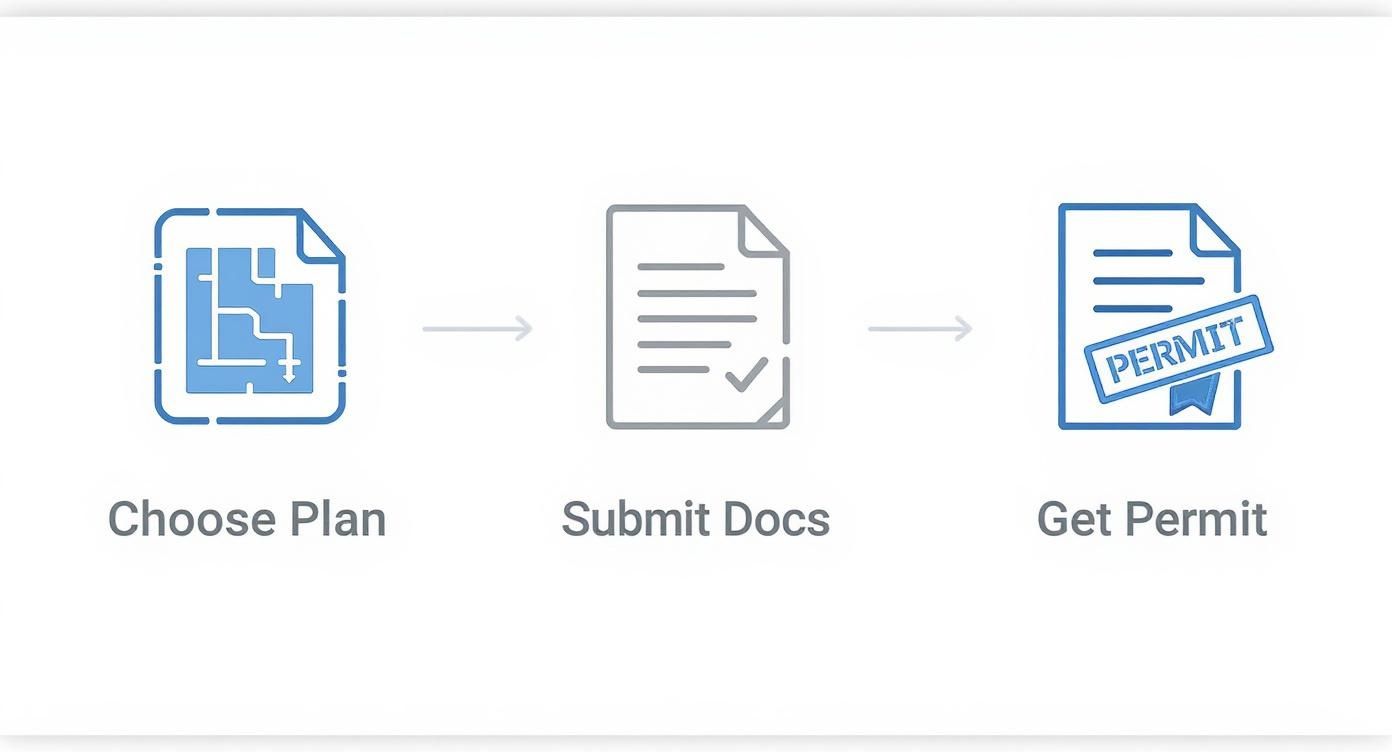
Choosing a pre-approved plan is the fastest way to get your final permit.
-
Assess Your Property and Select a Plan: First, confirm your property is eligible and choose the right ADU plan. Using one of Monterey County's pre-approved plans is your best bet.
-
Prepare and Submit a Complete Application: This step requires attention to detail. Your application must include everything, such as site plans and energy calculations. Missing information can delay the process.
-
The County's Expedited Review: Once your complete application is submitted, the 60-day clock starts. County officials will review your plans to ensure they follow all rules.
-
Receive Your Permit: If everything is in order, you’ll get your building permit. You are now cleared to start construction.
Why a Flawless Application is Key to Speed
The secret to hitting the 60-day target is submitting a perfect application from the start. The 60-day rule only begins once the planning department says your application is "complete." If it's missing anything, they will send it back, and the clock resets.
This is where working with an experienced local builder helps. Simple mistakes are the top cause of permit delays. A professional team knows what the county wants and checks every detail. Aldridge Construction is familiar with these pre-approved plans and the new policies.
The new 60-day timeline is also about predictability. It helps you plan finances and schedules with more confidence.
Understanding the local construction permit requirements is key to success. An expert partner ensures you start right, avoiding common traps.
Who Can Build an ADU in Monterey County?
With all these rule changes, you are likely asking: "Does my property qualify?" The good news is that under Monterey's new rules, more properties are eligible than ever. California has worked to remove old barriers, so most residential lots can fit some type of ADU.
Figuring out the basic requirements is the first step. A professional site assessment is the only way to get a final answer. But most homeowners can get a good idea by looking at a few key factors.
Core Eligibility Requirements
If you own a single-family home, you are probably in a good position to build an ADU. California state law is clear: local governments must allow ADUs in most residential areas. This is part of a statewide push for more housing.
Here are the main requirements for your property:
- Zoning: Your property must be in a residential or mixed-use zone. Most single-family and multi-family residential zones qualify.
- Existing Dwelling: There must already be a main home on the lot.
- No Minimum Lot Size: State law now forbids cities from requiring a minimum lot size for ADUs. This is a big change, meaning even smaller properties often qualify.
The trend is toward fewer restrictions. This gives more homeowners the power to create needed housing.
Setbacks, Parking, and Owner-Occupancy Rules
A few other rules shape what you can build. Luckily, these have also been simplified.
Setback Requirements
A setback is the minimum distance between your ADU and your property lines. Under state law, new ADUs can be as close as four feet from the side and rear property lines. This makes it possible to build on lots where it was not before.
If you are converting a garage into an ADU, it can usually stay where it is. This is true even if it doesn't meet the four-foot setback rule. This makes garage conversions a popular and affordable option.
Parking Regulations
Parking used to be a major problem. Not anymore. You do not have to add an extra parking spot for your ADU if your property is:
- Within a half-mile walk of public transit.
- Located in a historic district.
- Part of the existing main home.
Many properties in Monterey County meet one of these conditions, so the parking rule is often waived.
The End of Owner-Occupancy Rules
Perhaps the biggest change is the end of the owner-occupancy requirement. This rule is gone for all ADUs permitted before January 1, 2025. In the past, the owner had to live in either the main house or the ADU.
This change is a huge win. You can now build an ADU and rent out both the main house and the new unit. This creates two streams of rental income from one property.
Estimating Your ADU Costs and Property Value Gains
Now that it's easier to build an ADU, let's talk numbers. Understanding the potential costs and financial benefits is important. A well-planned ADU is one of the smartest home investments you can make in California.
The budget for an ADU in Monterey County usually has three parts. Planning for all of them from the start is the key to a smooth project.
Breaking Down Your ADU Budget
Here is how to look at your project costs in stages.
- Pre-Construction Costs: This is the prep work. It includes fees for architectural designs (unless using a pre-approved plan), site reports, engineering, and permits.
- Construction Costs: This is the largest part of your budget. It covers all labor and materials, from the foundation to finishes like Quartz countertops and energy-efficient Milgard windows.
- Site Work and Connection Fees: This is work outside the ADU. It includes pouring the foundation and connecting utilities like water, sewer, and electricity.
Locally, 66% of homeowners are considering an ADU. And 87% support their neighbors building one. This shows strong community backing for these new housing options.
Realistic Cost Ranges in the Monterey Area
The final cost of an ADU depends on its size, complexity, and the finishes you choose. But you can use general numbers to start planning. For a more detailed look, check out our guide on the cost to build an ADU.
A small studio from a pre-approved plan will cost less than a large, custom two-bedroom unit. Working with a firm like Aldridge Construction helps you get a precise estimate upfront.
The Long-Term Financial Benefits
An ADU's true value is its return on investment (ROI). Your new unit starts generating value right away.
- Rental Income: With high housing demand in Monterey, Santa Cruz, and San Benito counties, an ADU can bring in a solid monthly income. This can help pay off the construction costs and part of your mortgage.
- Boost in Property Value: Adding a legal living space is a great way to increase your home's market value. It's helpful to understand what ARV stands for in real estate (After-Repair Value). An ADU directly boosts your home's resale price.
Your Next Steps for Building an ADU in Monterey
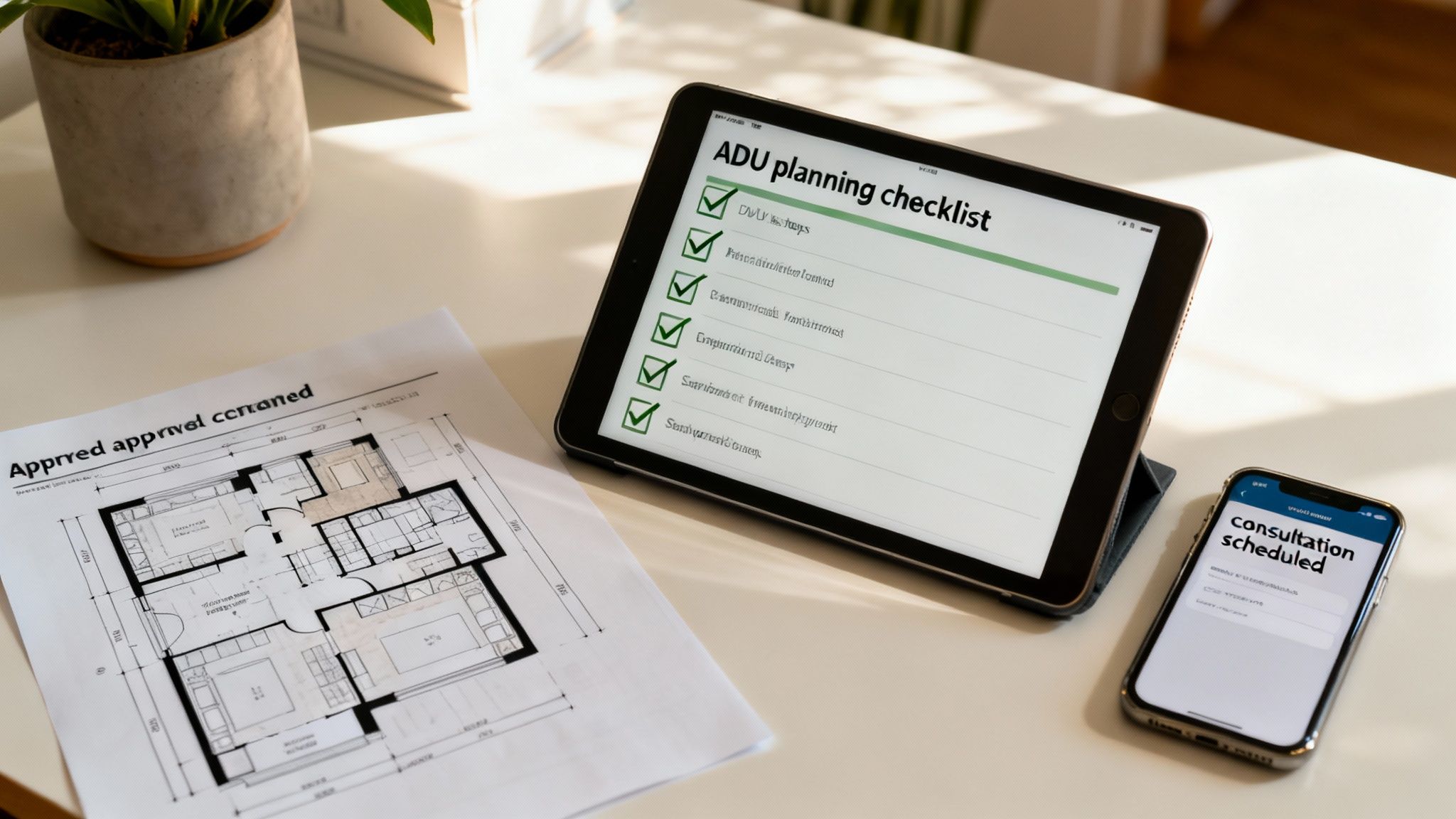
Are you ready to start your ADU project? The new rules in Monterey have made it easier than ever to add value to your property. But knowing where to begin can be a challenge.
The key is to follow a clear plan. This final section gives you a roadmap to guide you from idea to finished unit.
Your ADU Action Plan
Think of these steps as the foundation for a successful build. Good strategic planning in construction upfront helps keep your project on track.
-
Confirm Your Property’s Eligibility: First, check the zoning and setback rules we covered. A quick look at your property lines and local zoning maps is a great start.
-
Define Your Goals: Why do you want an ADU? Is it for family, rental income, or a home office? Your goal will shape the design and features you choose.
-
Explore Pre-Approved Plans: Visit the Monterey County planning department's website to see their pre-approved ADU designs. This helps you see layouts and styles that are already on the fast track.
-
Schedule a Professional Consultation: This is the most important step. You need to know if your property qualifies and how to use the county’s faster review process. Choosing the right builder familiar with local code is essential to avoid costly setbacks.
An experienced firm like Aldridge Construction is the perfect partner. We can do a site assessment, give you accurate cost estimates, and manage the entire project. We understand the custom home building process and apply that same detail to every ADU we build.
Thinking about adding an ADU in Monterey County? Contact Aldridge Construction for a free consultation and learn how new local policies can help you build faster, smarter, and with confidence.
Frequently Asked Questions about Monterey ADU Regulations
It's normal to have questions when you are thinking about building an ADU. Here are straightforward answers to some common questions about the new Monterey ADU rules.
Do I have to use a pre-approved ADU plan?
No, you are not required to use one of the county's pre-approved plans. You can still hire an architect to design a fully custom ADU.
However, choosing a pre-approved plan is the fastest way to get your permit. These designs have already passed the county's initial review. This helps you use the new 60-day approval timeline and save money on architect fees.
How much does an ADU permit cost in Monterey County?
Permit fees are not a single flat rate. They depend on your project's size and complexity. A larger ADU will have higher permit costs than a smaller one.
Working with an experienced local builder is the best way to get a clear number. They can give you a detailed cost breakdown that includes all expected city and county fees.
Can I build an ADU if my property is in a Coastal Zone?
Yes, you can build an ADU in a coastal zone. But you should be ready for a few extra steps. These properties often require review by the California Coastal Commission. This might mean extra design rules to protect the coastline.
It's important to work with a contractor who has experience with coastal zone projects. They know the rules and can guide your project smoothly to avoid delays.
What is the biggest mistake to avoid with the new rules?
The biggest mistake is submitting an incomplete permit application. If any information is missing, the planning department will send your application back. This resets the 60-day review clock to zero.
Working with a professional ensures your application is complete the first time. They will check every detail to make sure all documents are included and accurate.
How do I find out if my property is eligible?
The best first step is to schedule a property assessment with a local ADU expert. A professional evaluation provides a definite answer about your property.
A specialist like Aldridge Construction can review your zoning, measure setbacks, and check utility access. This confirms if you are eligible and helps you see the true potential for an ADU on your lot.
Ready to take the next step? The Aldridge Construction team is here to help you navigate the new Monterey ADU rules with confidence. Contact us today for a free, no-obligation consultation and find out how you can add value and space to your property.