
Direct Answer: A bathroom update becomes a full renovation the moment you move plumbing, open walls, change the layout, or trigger a permit requirement — any of those four things crosses the line.
Most homeowners in Monterey County start a bathroom project thinking they’re doing a quick refresh — new vanity, new fixtures, maybe some tile. Then a contractor pulls back the drywall and finds a different story. What started as a $6,000 update can turn into a $25,000+ renovation before the first tile is set.
The difference between an update and a full renovation isn’t about budget or ambition. It’s about what you’re actually touching — and whether that work requires permits, structural changes, or licensed trade work. Getting clear on that distinction before you start saves you from timeline surprises and budget shock.
This article focuses on the two things that matter most: what actually triggers the line between update and renovation, and what changes about cost, permits, and process once you’ve crossed it here in Monterey County.
The Line Is Usually the Plumbing
If you’re swapping a vanity top, replacing a toilet, or re-grouting tile, that’s an update. You’re not opening walls. You’re not moving drains. A licensed plumber may or may not be involved, and in most cases no permit is required for direct replacement work.
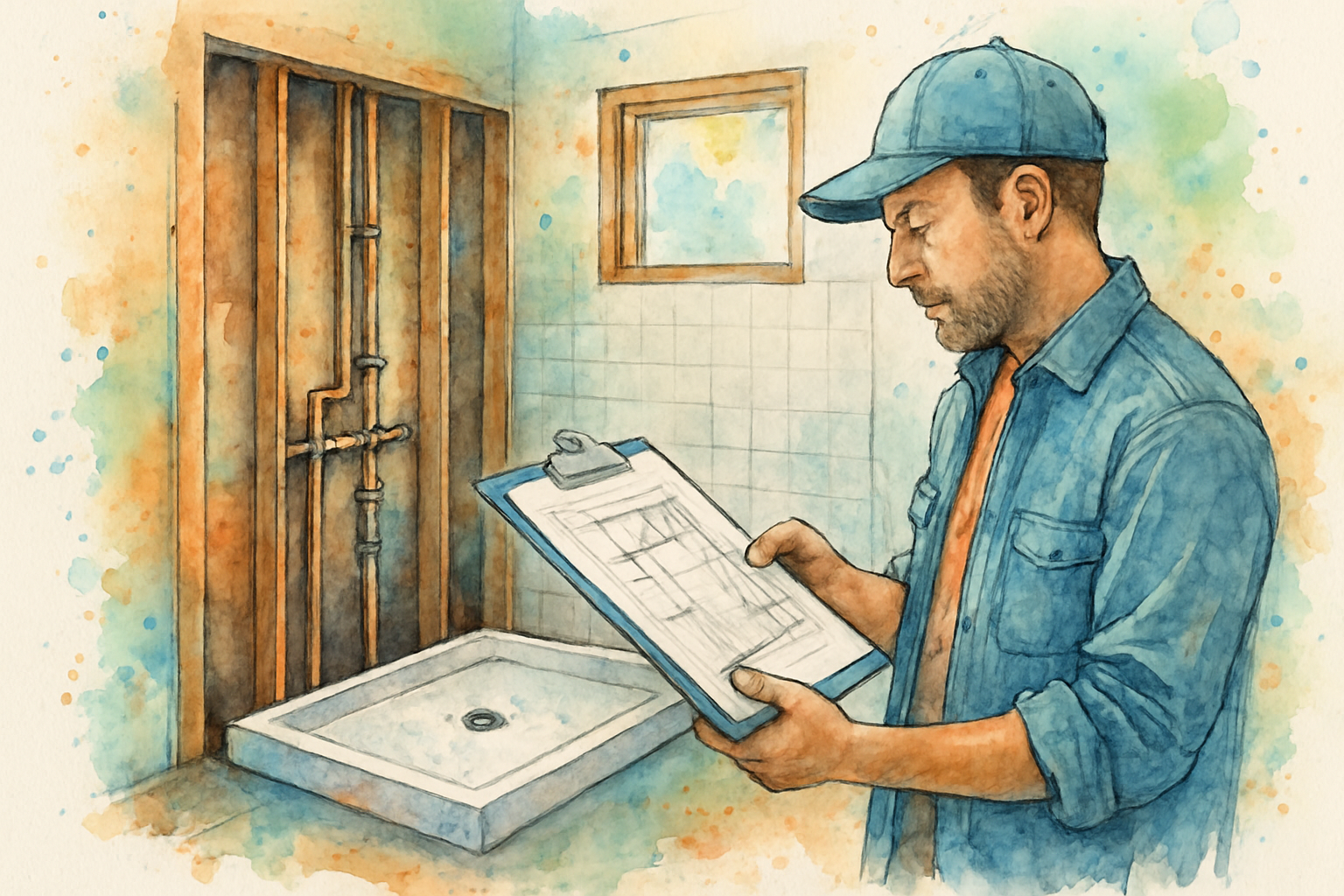
But the minute you want to move a drain, relocate a shower, or add a second sink — even by a foot — you’re in renovation territory. Moving plumbing requires opening the subfloor or walls, and that work needs to be permitted and inspected in every jurisdiction in Monterey County, including the City of Salinas, the City of Monterey, and unincorporated county areas.
The same goes for electrical. Replacing a light fixture on an existing circuit is maintenance. Adding a circuit for a heated floor, upgrading to a GFCI-compliant panel, or installing a new exhaust fan on a new circuit — all of that requires a permit and a licensed electrician. If your bathroom is in a home built before 1990, there’s a real chance the existing wiring doesn’t meet current code once you open the wall.
Three things that most commonly push an update into a full renovation:
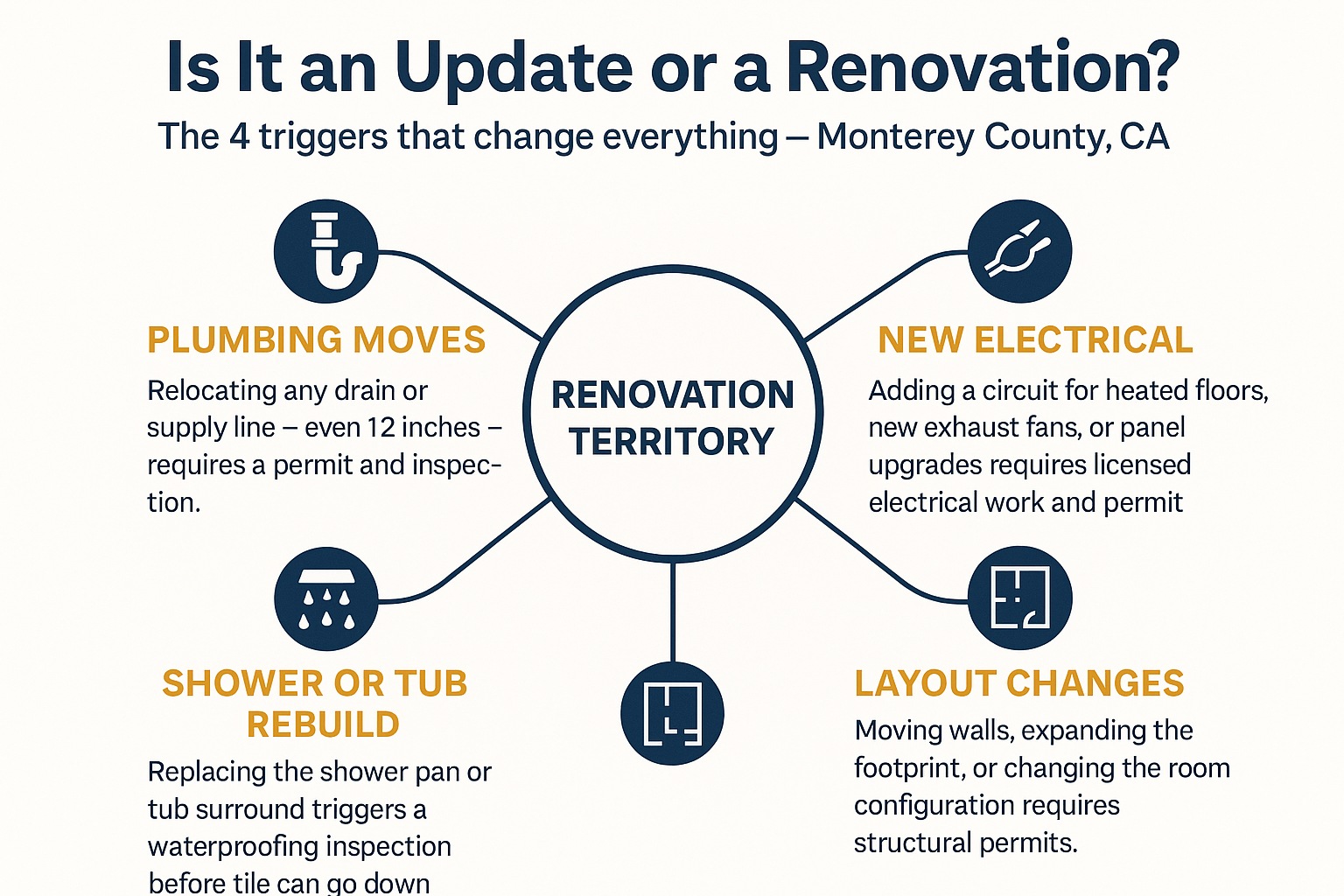
- Moving any drain or supply line, even a short distance
- Adding or upgrading electrical circuits in the bathroom
- Replacing the shower pan or tub surround, which almost always requires waterproofing inspection
If you want a deeper look at how bathroom renovation timelines actually work in Salinas, that article breaks down where most projects get delayed.
What Changes Once a Permit Is Required
A lot of homeowners want to avoid permits to save time and money. That’s understandable — but in Monterey County, skipping a required permit on bathroom work creates real problems down the road.
When you sell the home, unpermitted work gets flagged during inspection. Buyers either walk or demand a price reduction that’s usually bigger than whatever you saved. And if something goes wrong — a water leak that damages the subfloor, a wiring issue that causes a fire — an unpermitted job can complicate your homeowner’s insurance claim significantly.
For permitted work in the City of Salinas, plan on two to four weeks for a residential bathroom permit to be issued, depending on project scope and current workload at the building department. Unincorporated Monterey County can run similar timelines. That permit window is something to plan for before demo starts — not something to figure out after.
Once you’re permitted, you’ll also have inspections at specific stages:
- Rough plumbing inspection — before walls close
- Rough electrical inspection — before walls close
- Waterproofing inspection — before tile goes down in a shower or tub surround
- Final inspection — once the work is complete
Missing an inspection stage can mean opening finished walls again. A good contractor schedules these checkpoints into the project timeline from the start, not as an afterthought.
If you’re wondering whether a specific scope of work actually needs a permit, this breakdown on when permits are required for remodels is worth reading before you make any decisions.
Bathroom Update vs. Full Renovation: What’s the Difference?
This table covers the most common bathroom tasks and which side of the line they fall on — useful for figuring out what you’re actually dealing with before calling a contractor.
| Task | Update or Renovation? | Permit Required in Monterey County? |
|---|---|---|
| Swap vanity (same location) | Update | No |
| Replace toilet (same location) | Update | No |
| Re-grout or re-caulk tile | Update | No |
| Replace light fixture (same circuit) | Update | No |
| Replace shower pan or tub surround | Renovation | Yes — waterproofing inspection required |
| Move drain or supply line | Renovation | Yes |
| Add a circuit (heated floor, new exhaust fan) | Renovation | Yes |
| Change bathroom layout or footprint | Renovation | Yes |
| Replace drywall with cement board in wet areas | Renovation | Depends on scope — verify locally |
| Full gut and rebuild | Full Renovation | Yes — multiple inspections |
The 4 Triggers That Turn an Update Into a Renovation
These are the four most common decision points where a bathroom project crosses from a simple update into permitted renovation territory.
How Cost Shifts When You Cross the Line
A cosmetic bathroom update in Monterey County — new vanity, new fixtures, fresh paint, maybe new flooring — typically runs $4,000 to $9,000 depending on material choices and labor. That’s real money, but it’s a known, contained scope.
Once you’re in full renovation territory, the floor changes. A mid-range full bathroom renovation in Salinas or the surrounding Monterey County area is more commonly $18,000 to $35,000. High-end materials, larger bathrooms, or older homes with hidden issues can push that higher.
What drives the cost gap:
- Labor for licensed trades — plumbing and electrical subcontractors charge more than a tile setter, and you need both on a full renovation
- Permit fees — Monterey County residential permit fees for a bathroom renovation typically run $500 to $1,500 depending on valuation
- Waterproofing and substrate work — most contractors find problems behind old shower surrounds that need fixing before new tile goes down
- Unexpected discoveries — older homes in Salinas, Seaside, and Gonzales frequently have galvanized supply lines or outdated wiring that has to be addressed once the walls are open
The honest reality is that older homes raise the odds of scope creep — not because contractors are padding the job, but because the walls hold surprises. A third-generation contractor who has worked on Central Coast homes for decades has seen enough of those surprises to build in contingency conversations upfront.
For smaller bathrooms specifically, the cost dynamics shift in ways that aren’t always obvious. The article on small bathroom renovations and what changes when space is tight covers that in detail.
When It Makes Sense to Go All the Way
Sometimes homeowners start planning an update and, once they understand what’s actually involved, decide a full renovation makes more sense. That’s not upselling — it’s math.
If your bathroom has old galvanized pipes and a fiberglass shower insert from 1985, spending $7,000 on cosmetic work leaves the underlying problems in place. You’ll be back in two or three years dealing with them anyway, and you’ll have to undo some of the cosmetic work to get there.
The better question is: what do you want this bathroom to do for the next 15 to 20 years? If the answer involves real functionality — a proper tile shower, a double vanity, better ventilation — then the full renovation cost starts looking more reasonable against the alternative of phased partial work.
In Santa Cruz County, where home values frequently exceed $1 million, a well-executed bathroom renovation adds documented value that shows up in appraisals and buyer interest. The bathroom renovation guide for Santa Cruz households talks through those return-on-investment factors in more depth.
The short version: if the bones of the bathroom need work — plumbing, electrical, waterproofing — doing cosmetic work on top of bad bones is money spent twice.
Frequently Asked Questions About Bathroom Updates vs. Renovations
Can I just replace my shower tile without pulling a permit?
It depends on what’s underneath. If you’re setting tile directly over existing cement board that’s still in good shape, some jurisdictions treat it as maintenance work. But if the old tile is coming all the way off and you’re touching the waterproofing membrane or the pan, Monterey County building departments want to inspect that before the new tile goes down. Always verify with your local building department before starting — requirements vary between the City of Salinas, the City of Monterey, and unincorporated county areas.
How long does a full bathroom renovation actually take in Salinas?
From permit application to final inspection, a typical full bathroom renovation in Salinas runs 6 to 10 weeks. Permit issuance alone is usually 2 to 4 weeks. Actual construction, once started, is typically 2 to 4 weeks depending on scope and trade scheduling. Material lead times — especially for tile and fixtures — can add another 2 to 4 weeks if you’re ordering anything custom or less common.
What happens if I do bathroom work without a permit and then try to sell the house?
Unpermitted work gets flagged during a buyer’s inspection. At that point you’re either disclosing it and taking a price hit, or trying to retroactively permit it — which often means opening finished work for inspection. Retroactive permits are generally harder and more expensive than doing it right the first time. In Monterey County’s housing market, where buyers are paying high prices and scrutinizing carefully, unpermitted bathrooms are a real transaction risk.
My bathroom is small — does all this still apply?
Yes. Small bathrooms have the same permit and inspection requirements as larger ones. In fact, small bathrooms often have tighter trade sequencing because there’s less room to work around active trades. Moving a drain in a 40-square-foot bathroom is the same permit process as moving it in a 100-square-foot one.
What should I look for in a contractor to know they actually understand permits?
Ask them directly: which permits does this project require, who pulls them, and what does the inspection sequence look like? A contractor who has done permitted work in Monterey County should be able to answer that without hesitation. Red flags: contractors who say permits aren’t necessary when work clearly requires them, or who suggest you pull your own permit as the homeowner. Also worth reading before you sign anything: the guide to California home improvement contracts covers what a proper contract should spell out.
Not Sure Which Side of the Line Your Project Falls On?
Aldridge Construction works with homeowners across Monterey County — from Salinas and Seaside to Gonzales and Carmel — who are trying to figure out exactly this question before they commit to a scope or a budget. Brian Aldridge can walk through your bathroom, tell you honestly what you’re dealing with, and give you a clear picture of what’s an update versus what actually needs to be done right. Reach out at 831-682-9788 or through the contact page at aldridgeconstruction.biz to set up a time to talk.