
Embarking on a home renovation is one of the most exciting ways to enhance your living space and increase property value. However, turning your vision into a reality requires more than just good ideas; it demands careful planning, smart budgeting, and expert execution. These essential home renovation tips will guide you through the process, helping you avoid common pitfalls and achieve stunning results.
At Aldridge Construction, we have helped countless homeowners in Monterey, Santa Cruz, San Benito (CA), and Maricopa (AZ) Counties navigate their projects successfully. This guide distills our decades of experience into actionable advice, ensuring your project is built on a solid foundation from day one. We will cover everything from setting a realistic budget and understanding local code compliance to hiring the right professionals and focusing on improvements that deliver a strong return on investment.
Whether you're planning a minor kitchen update in Salinas, a full ADU build in Santa Cruz, or a major home addition in Scottsdale, these insights will empower you to make informed decisions. Following this blueprint will help you manage your project with confidence and create a functional, beautiful space you will love for years to come.
1. Set a Realistic Budget (and Add 20% Contingency)
One of the most crucial home renovation tips is establishing a realistic, detailed budget from the very start. A successful renovation isn't just about beautiful finishes; it's about financial control. A comprehensive budget accounts for every foreseeable expense, from materials and labor to permits and even potential temporary living costs.

The cornerstone of this financial planning is the 20% contingency fund. This rule advises setting aside an additional 20% of your total estimated project cost as a safety net for unknowns that surface once demolition begins. For example, a kitchen renovation budgeted at $50,000 should have a $10,000 contingency fund to cover unexpected issues like outdated wiring behind a wall or hidden water damage under old flooring.
How to Implement This Strategy:
- Research Thoroughly: Price out specific materials like Quartz countertops or energy-efficient Milgard windows. Get at least three detailed quotes from licensed contractors to understand labor costs in your area, whether it's Monterey County or Maricopa County.
- Itemize Everything: Create a spreadsheet listing every line item, from drywall and paint to new appliances and light fixtures.
- Track Diligently: Use an app or your spreadsheet to track every single expense against your budget. This prevents small overages from snowballing into a major financial problem.
2. Plan and Design Before You Start
Jumping into demolition without a detailed blueprint is one of the costliest renovation mistakes. Proper planning translates your vision into an actionable roadmap, encompassing professional drawings, material selections, permit acquisition, and a realistic timeline. This upfront investment is critical for a project that stays on schedule and on budget.

This meticulous planning prevents expensive mid-project changes and ensures compliance with local building codes. For instance, an open-concept kitchen renovation requiring the removal of a load-bearing wall must involve a structural engineer early on. This foresight prevents catastrophic structural failures and costly corrections.
How to Implement This Strategy:
- Utilize Design Tools: Experiment with your layout using free software like SketchUp to visualize the space. For more complex projects, professional tools can provide detailed construction documents.
- Create a Project Binder: Keep all essential documents in one place, including architectural plans, permits, contractor agreements, and a log of all material selections.
- Research Local Codes Early: Before finalizing designs, understand the specific building codes in your area, whether it's California's Title 24 energy standards or specific zoning rules in Maricopa County.
- Hire Professionals When Needed: For complex additions or structural changes, hiring an architect or a professional interior designer is a wise investment that saves money in the long run.
3. Invest in Quality Where It Matters Most
A smart renovation prioritizes long-term value over short-term trends. One of the best home renovation tips is to invest in quality where it truly counts. This involves allocating more of your budget to foundational, high-use, and hard-to-replace elements while saving on cosmetic details that are easier to update later.

The principle is simple: focus on the "bones" of your house. For example, spending more on premium PEX-A plumbing during a bathroom remodel can prevent costly leaks for decades. Similarly, investing in high-quality, energy-efficient windows provides superior insulation, a major long-term saving for homeowners in both the sunny climate of Maricopa County and the temperate Central Coast of California.
How to Implement This Strategy:
- Prioritize Foundational Systems: Allocate a significant portion of your budget to structural work, electrical wiring, plumbing, and HVAC systems. These are critical for safety and function.
- Focus on High-Touch Surfaces: Invest in durable materials for items that endure daily wear and tear. This includes solid hardwood flooring, quartz or granite countertops, and well-made cabinetry.
- Save on the Superficial: Keep costs down on easily replaceable decorative elements like cabinet hardware, paint colors, and light fixtures that can be upgraded in the future.
4. Hire Licensed and Insured Professionals for Major Work
While the DIY approach has its appeal for smaller tasks, one of the most critical home renovation tips is to hire licensed and insured professionals for any major work. This includes electrical, plumbing, structural engineering, and roofing. Engaging qualified experts is a non-negotiable step for ensuring safety, meeting local codes, and protecting your investment.
A licensed electrician can prevent a potential house fire by correctly upgrading a panel, while an insured plumber provides a safety net against accidental water damage. Platforms like the Better Business Bureau and state contractor licensing boards were established to protect homeowners from unqualified operators.
How to Implement This Strategy:
- Verify Credentials: Always check a contractor's license through your state’s official licensing board, such as the Contractors State License Board (CSLB) in California. Ask for proof of general liability and workers' compensation insurance.
- Gather Detailed Bids: Obtain at least three detailed, written estimates that itemize labor, materials, and timelines. This helps you compare apples to apples. A great starting point is to understand the key questions to ask general contractors.
- Document Everything: Check online reviews and ask for references from recent projects. Once work begins, take photos to document progress and stick to a pre-agreed payment schedule tied to project milestones.
5. Understand Load-Bearing Structures Before Removing Walls
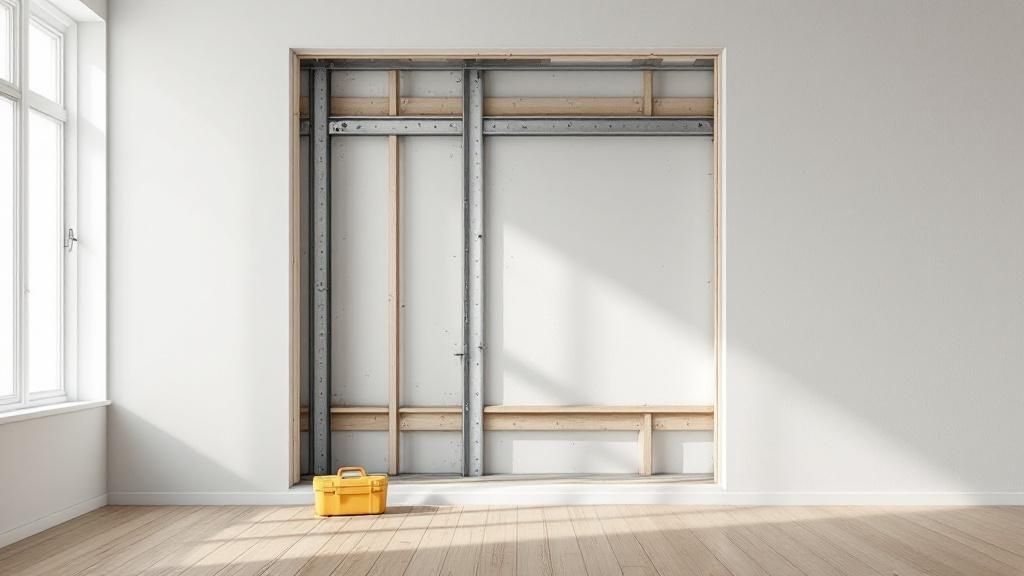
The dream of an open-concept living space often involves taking down a wall, but this is a moment where professional guidance is non-negotiable. A load-bearing wall supports the weight of the structure above it. Removing one without proper support can lead to sagging floors, severe cracking, or even a catastrophic collapse.
This isn't a DIY-friendly task; it requires a professional assessment to prevent a cosmetic upgrade from becoming a structural nightmare. A planned renovation that properly integrates a steel or LVL beam can achieve an open feel safely and according to code, protecting the home's integrity and value.
How to Implement This Strategy:
- Hire a Structural Engineer: Before any demolition, engage a licensed structural engineer. They are the only professionals qualified to determine if a wall is load-bearing and design the correct support system.
- Consult Building Plans: If you have access to your home’s original blueprints, they can offer initial clues, though on-site verification is still necessary.
- Look for Key Indicators: Load-bearing walls often run perpendicular to the ceiling or floor joists and may have support posts directly above or below them on other floors.
- Secure Proper Permits: Removing any wall, structural or not, typically requires a permit in areas like Monterey County or Maricopa County. The process ensures the work is inspected and meets safety standards.
6. Focus on ROI-Positive Improvements
Not all renovations are created equal when it comes to financial returns. One of the most strategic home renovation tips is to prioritize projects that offer a strong return on investment (ROI). This means focusing on upgrades that add more market value to your home than they cost to complete.
Resources like Remodeling Magazine's annual Cost vs. Value Report guide homeowners toward smart financial decisions. For example, replacing a garage door can recoup over 100% of its cost at resale, while adding a midrange bathroom remodel can recoup 66.7% of its cost [Remodeling Magazine, 2024]. In contrast, highly personalized projects rarely recoup their costs.
How to Implement This Strategy:
- Research Annual Reports: Consult the latest Cost vs. Value Report. This data provides specific ROI percentages for dozens of common renovations, both nationally and regionally.
- Prioritize High-Impact Areas: Concentrate your budget on kitchens, bathrooms, curb appeal (like siding or new windows), and energy efficiency. These areas consistently deliver the best returns in markets from Monterey to Maricopa County.
- Avoid Over-Personalization: Steer clear of niche or hyper-trendy designs. Opt for classic, high-quality finishes like Shaker-style cabinets and neutral color palettes that provide a timeless appeal.
7. Create a Realistic Timeline and Expect Delays
Just as a budget controls your finances, a realistic timeline manages your project's flow. A successful project timeline accounts for every phase—from demolition and permit processing to material deliveries and final inspections—while acknowledging that unforeseen issues are part of the process.
A kitchen renovation that a contractor estimates will take six weeks should ideally be scheduled for eight. This extra time is a practical safety net for common hold-ups like a back-ordered appliance, a subcontractor's scheduling conflict, or waiting for a city inspector's sign-off.
How to Implement This Strategy:
- Pad Your Timeline: A smart rule of thumb is to add a 25% time buffer to your contractor’s initial estimate, especially in older homes in areas like Santa Cruz where surprises are common.
- Order Materials Early: Secure all long lead-time items like custom cabinetry, windows, and special-order tile before demolition begins.
- Plan for Disruption: If you're renovating a kitchen or primary bathroom, set up a temporary, functional zone elsewhere in the house to reduce the daily stress of living through a major remodel.
8. Prioritize Safety and Code Compliance
Beyond aesthetics, ensuring every aspect of your project adheres to current building codes is critical. Safety and compliance are non-negotiable, protecting your family and your investment. Any significant alteration, even in an older home, must meet today's standards for electrical, plumbing, structural, and fire safety.
Ignoring codes can void your homeowner's insurance and create major legal and financial liabilities. For instance, a beautifully finished basement cannot legally be called a bedroom without a proper egress window, and a modern kitchen remodel requires GFCI outlets near sinks to prevent electrical shock.
How to Implement This Strategy:
- Research Codes Early: Before finalizing designs, investigate the specific building codes for your area, whether you're in Monterey County, CA, or Maricopa County, AZ. Local building department websites are excellent resources.
- Secure Permits Before Work Begins: Applying for all necessary construction permits is a foundational step. This process ensures a third-party inspector will verify that all work meets legal safety requirements.
- Focus on Key Safety Areas: Ensure your contractor installs GFCI outlets in all wet areas, adds proper ventilation in bathrooms and kitchens to prevent mold, and updates smoke detectors as required.
- Keep Meticulous Records: Retain copies of all passed inspection reports and permits. These documents are crucial if you decide to sell your home.
9. Live in Your Space Before Major Changes
One of the most insightful yet often overlooked home renovation tips is to live in your space before committing to major layout changes. Taking time to understand your home’s natural flow, lighting patterns, and functional shortcomings prevents costly design regrets.
This observational period ensures that your investment addresses genuine needs. For instance, you might realize the chaos in your Monterey kitchen isn’t due to its size but a lack of a dedicated breakfast spot. This insight could lead to adding a functional breakfast bar instead of a more disruptive, full-scale overhaul.
How to Implement This Strategy:
- Track Your Routines: For a few weeks, note daily frustrations, like countertop clutter, traffic jams in hallways, or where laundry tends to pile up.
- Observe Natural Elements: Pay attention to how sunlight moves through the house at different times of day. This is crucial for placing windows, skylights, and deciding on paint sheens.
- Test New Layouts: Before demolition, use painter's tape on the floor to mock up new walls or island placements. See how it feels to live with for a week or two.
Frequently Asked Questions (FAQs)
1. What is the first step in planning a home renovation?
The first step is to define your goals and create a detailed budget. Determine what you want to achieve (e.g., more space, updated style, better function) and establish a realistic budget, including a 20% contingency fund for unexpected costs.
2. How much value does a kitchen remodel add?
According to the 2024 Cost vs. Value Report, a minor kitchen remodel (midrange) in the Pacific region (including California) can recoup approximately 85.6% of its cost upon resale, making it one of the highest ROI projects.
3. Do I need a permit for a small bathroom remodel?
It depends on the scope and location. In most areas like Santa Cruz or Maricopa County, you will need a permit if you are moving plumbing, changing electrical wiring, or altering structural elements. Cosmetic updates like new paint or flooring typically do not require a permit. Always check with your local building department.
4. How do I find a reliable contractor?
Start by getting recommendations from friends or local supply stores. Verify their license on your state's official board (like California's CSLB), check for proof of insurance, read online reviews, and ask for at least three references from recent, similar projects.
5. How can I save money on my renovation without cutting corners on quality?
Focus your budget on high-impact, long-lasting items like quality windows, cabinetry, and structural work. Save money on elements that are easy to change later, such as paint colors, light fixtures, and cabinet hardware. You can also save by doing some of the demolition or final cleanup yourself if you are comfortable and it's safe to do so.
Ready to translate these home renovation tips into a tangible plan? Partner with a team that has a proven track record of excellence in Monterey, Santa Cruz, San Benito, and Maricopa Counties.
Contact Aldridge Construction today for a consultation. Let our experts guide you through every step, ensuring your project is built with integrity, quality, and a commitment to your vision.