
A construction change order is the formal, written process used to make any adjustments to a project's original game plan—whether that affects the scope, cost, or schedule. Think of it as a structured way to manage the unexpected twists and turns that can happen during a remodel. This ensures both you and the construction team are on the same page before any new work kicks off.
Understanding the construction change order process is one of the most important steps for a successful home remodel in Monterey, Santa Cruz, or Maricopa Counties. It’s the key to maintaining control over your budget and timeline.
Why Change Orders Are a Normal Part of Your Remodel

Hearing the words "change order" can sometimes feel alarming, but they are a critical tool for a successful home remodel. A change order is a fair, organized system for adapting to new ideas or, more commonly, unexpected discoveries.
It’s your project’s built-in flexibility plan. It provides absolute clarity on any adjustments, protecting both you and your contractor from expensive misunderstandings. This formal agreement documents every single modification to the original contract, keeping everything transparent.
A Real-World Scenario in Carmel-by-the-Sea
Let’s paint a picture. Imagine a renovation of a beautiful historic home in Carmel-by-the-Sea. During demolition, the Aldridge Construction team opens up a wall and—surprise—finds electrical wiring that’s dangerously frayed and out of compliance with current California building codes. This is a common discovery in older homes throughout Monterey and Santa Cruz Counties.
Simply ignoring it would be unsafe and illegal. This is exactly where the change order process shines. Instead of an informal "we need to fix this," a formal document is drafted.
This change order would spell out:
- The Scope of New Work: The exact steps needed to remove the old wiring and install a new, code-compliant electrical system.
- The Cost Impact: A clear, itemized breakdown of costs for materials (like Romex wiring, new outlets, and a modern breaker panel) and the additional labor hours.
- The Schedule Adjustment: A realistic estimate of how many extra days are needed to complete the new electrical work and pass inspection.
By signing this document, you formally approve the necessary upgrade, and the team gets the official green light to do the work correctly. It transforms a problem into a documented, agreed-upon solution.
The Importance of Documentation
A signed change order is your project's safety net. It guarantees that no work proceeds, and no unexpected costs are added, until everyone is fully aligned and has approved the changes in writing.
This structured approach is fundamental to a successful project. Change orders are so common, in fact, that a 2020 study by the Navigant Construction Forum found that over 35% of all projects experience a major change. [Navigant, 2020].
No matter the project—a major home renovation in Salinas or Monterey, a new ADU in San Benito County, or a home update in Maricopa County, AZ—understanding this process is key. It's what keeps your project adaptable while ensuring you remain in complete control.
Common Triggers for a Change Order in Your Home Remodel

Change orders don’t materialize out of thin air. They’re a direct response to specific, real-world events that pop up during a project. Understanding what typically triggers them helps you anticipate possibilities and feel more prepared.
These triggers usually fall into a few key categories. While some are unavoidable surprises, others are choices that put you, the homeowner, right in the driver's seat.
Unforeseen Site Conditions
This is the most frequent reason for a change order, especially in the older homes across Monterey and Santa Cruz Counties. These are problems nobody could have predicted until demolition was underway—issues hidden behind walls, under floors, or buried underground.
A classic example is finding dry rot after pulling old siding off a vintage Pacific Grove home. This discovery forces a change order to properly address the framing repairs before any new siding goes on.
Other common unforeseen conditions include:
- Outdated Systems: Finding old, ungrounded knob-and-tube wiring or corroded galvanized plumbing that doesn't meet today's safety codes.
- Foundation Issues: Uncovering significant cracks or settlement in the foundation once old flooring is removed.
- Soil Problems: In Maricopa County, AZ, crews might hit hard caliche soil while excavating, requiring specialized equipment and extra time.
An experienced contractor like Aldridge Construction anticipates these surprises. Our decades of local experience mean we know what to look for and can often flag high-risk areas during initial planning.
Homeowner-Driven Changes
Sometimes, the best ideas come to you in the middle of the project. Seeing your new kitchen take shape might spark new inspiration. These are client-requested changes, and they're a perfectly normal reason for a change order.
For instance, you might have initially chosen laminate countertops. But once the new Shaker cabinets are installed, you realize upgrading to a durable quartz would be a better long-term investment. This decision requires a formal adjustment to the contract.
These changes give you the power to refine your vision as it comes to life, ensuring the finished space is exactly what you want.
Design Errors or Omissions
Even meticulous architectural plans can have small gaps. A well-managed construction change order process is designed to catch and correct these issues smoothly.
A common design omission is a missing electrical outlet. You might realize during the framing walkthrough that the plan for your home office in San Benito County didn't include an outlet where your desk needs to go. Adding one requires a change order to document the extra materials and labor.
Other examples of design omissions might be:
- A doorway that feels too narrow once framed.
- A planned light fixture location that conflicts with a structural beam.
- Forgetting to specify a built-in niche in a new tile shower.
Documenting these adjustments ensures the final build matches your functional needs and that all costs are transparently accounted for.
Code-Related Requirements
Building codes are updated regularly to improve safety and energy efficiency. A local inspector from a jurisdiction like the City of Santa Cruz or Maricopa County might require an upgrade that wasn't part of the original scope.
For example, California's Title 24 energy codes are frequently updated. An inspector could mandate additional insulation or a specific type of energy-efficient window. This is a mandatory requirement, and a change order is the formal tool used to document the required work and its cost.
Your Role in the Change Order Workflow
When it comes to home renovations, change is almost inevitable. Knowing your role in the construction change order process takes the mystery out of it and puts you in the driver's seat. It's a straightforward sequence of steps that ensures clarity and protects everyone involved.
It all starts with a simple conversation. A potential change might come from you, our team, or a building inspector. This is the moment to identify the need and talk it through collaboratively.
From Discussion to Documentation
After we’ve talked it over, Aldridge Construction drafts the official Change Order document. This isn't just a quick note—it's a detailed, legally significant update to your original contract.
A proper change order will always contain crucial elements:
- A Detailed Description of the Change: We get specific. Instead of "change bathroom tile," our document will read, "Remove previously selected 12×24 ceramic tile and replace with 3×6 Carrara marble subway tile in a herringbone pattern."
- A Breakdown of Cost Adjustments: This section itemizes every financial detail, including credits for unused materials and new costs for materials and labor.
- An Analysis of Schedule Impact: We’ll state exactly how this change affects the project timeline. For instance, sourcing new marble and the intricate installation might add three days to the schedule.
This level of detail is a core part of the trust we build with every client, whether they're in Monterey, San Benito, or Maricopa Counties.
Your Review and Formal Approval
Once the change order is drafted, we hand it over to you. This is your most important moment in the workflow. It’s your opportunity to read every line and ask questions.
This isn't a take-it-or-leave-it situation; it's a dialogue. Getting this part right is directly linked to a successful project, just like understanding your initial agreement during construction contract negotiation is.
This infographic breaks down the core workflow.
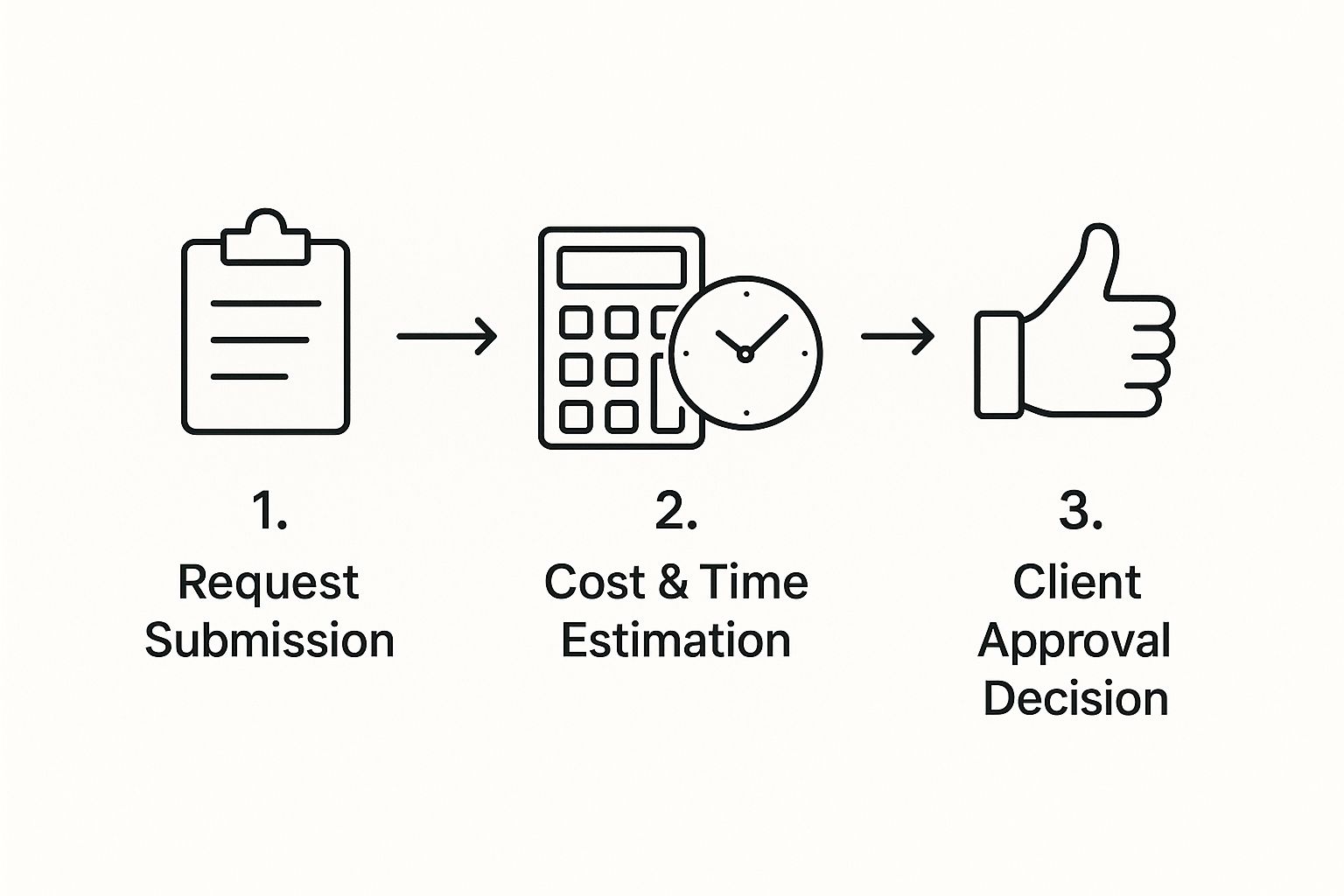
Moving from a request to an estimate and then to a final, signed approval ensures every decision is intentional and fully documented. This is how we prevent scope creep and budget surprises.
The last step is your signature. Once signed, the change order legally amends the contract and gives our team the green light to proceed. That action makes the change official.
Never agree to a verbal change. A signed document is your project's safety net. This is a hard and fast rule we follow at Aldridge Construction to prevent confusion and protect your investment.
How Change Orders Impact Your Budget and Timeline

Any change—big or small—will have a real impact on your project's budget and schedule. Knowing how those impacts are calculated is key to making smart decisions.
A good contractor, like Aldridge Construction, provides a completely itemized breakdown. You should see exactly where every dollar is going.
Calculating the Cost of a Change
When we draft a change order, the cost is a careful calculation based on materials, labor, and any related fees.
Here’s what goes into that math:
- Direct Material Costs: The price of any new materials. For example, upgrading from standard Pella windows to premium, energy-efficient Milgard windows would show the cost difference.
- Direct Labor Costs: The extra hours our crew or trade partners will spend. This is based on specific hourly rates for our electricians, plumbers, or carpenters.
- Subcontractor Fees and Markups: If a change requires a specialist, their fees are included. A general contractor also adds a standard markup for management, insurance, and overhead.
For a clearer picture of how project costs can add up, our home addition costs calculator is a great tool for preliminary estimates.
Understanding Schedule Adjustments
A change order's impact doesn't stop at the budget; it also affects your project's timeline. It’s not just about the hours needed for the new work; it’s about the logistical chain reaction that follows.
Even a small change can create significant schedule adjustments. The time needed to source materials and re-sequence trade professionals often has a bigger impact than the hands-on work itself.
For example, a specialty tile you choose might have a four- to six-week lead time. The plumber can't set the new sink until the countertop is in, and painters have to work around the delay. One change can easily push back several other steps.
This is why smart homeowners in Monterey and Maricopa Counties plan ahead by setting aside a contingency fund. A buffer of 10-15% of the total project cost gives you the power to handle these changes without financial stress.
Best Practices for a Smooth Change Order Experience
A well-managed construction change order process turns potential headaches into productive, collaborative decisions. The key is clear communication, mutual understanding, and thinking ahead.
At Aldridge Construction, we guide our clients through this process every day. These are the tips we share with homeowners across Monterey, Santa Cruz, and Maricopa Counties to keep their projects on track.
Communicate Early and Often
The instant you think you might want a change is the time to start talking. Bringing up a potential change early lets your contractor give you a quick check on cost and schedule. Early talks prevent tiny tweaks from snowballing into major rework.
Understand Your Contingency Fund
A contingency fund is a non-negotiable tool for managing the financial side of change orders. This is a portion of your budget, usually 10% to 20%, set aside specifically for "what if" moments.
It’s the financial safety net that lets you approve necessary changes without breaking a sweat. It's the best way to prevent budget panic and keep things moving.
Review Every Detail Before You Sign
A change order is a legally binding update to your contract. Before signing, go over every line item with a sharp eye. It's your job to double-check that it matches your discussion.
Make sure you see these key things:
- A Precise Scope of Work: The description needs to be crystal clear. "Install two additional recessed lights" is great; "Add lighting" is a red flag.
- An Itemized Cost Breakdown: You should see exactly what you're paying for—materials, labor, and any other fees.
- A Specific Schedule Impact: The document must state how many days the change will add to the project timeline.
Never sign a change order you don't fully understand. Your signature is your formal approval.
Trust Your Contractor’s Expertise
While you're the ultimate decision-maker, it’s important to lean on your contractor's professional experience. When the Aldridge Construction team recommends a change, that recommendation comes from decades of hands-on work from California's Central Coast to Arizona.
Trusting that guidance can save you from expensive mistakes down the road. A great contractor is your advocate, giving you the insights you need to make the best decisions for your home.
For more tips, grab a copy of The Ultimate Remodeling Checklist—it’s a fantastic guide.
Partnering with Aldridge Construction for a Transparent Remodel
A properly managed construction change order process isn’t a sign of trouble—it’s a powerful tool for flexibility. At Aldridge Construction, we treat it as a cornerstone of our commitment to transparent remodels across Monterey, Santa Cruz, San Benito, and Maricopa Counties.
Our established procedures and clear documentation protect your investment and ensure every decision is made with confidence. We demystify change orders, turning them from a source of stress into a straightforward dialogue about your home's potential.
When you partner with experienced home improvement contractors like us, you get a dedicated advocate committed to protecting your budget and timeline every step of the way.
Ready to start your home remodel with a team you can trust in Monterey, Santa Cruz, San Benito, or Maricopa County? Contact Aldridge Construction today for a consultation.
Frequently Asked Questions About Change Orders
1. What if I don’t sign a change order, but the contractor says the work is necessary?
If a change is genuinely critical—for example, to fix a safety hazard or meet building code—a reputable contractor will stop that part of the job until the change order is signed. It's about protecting both parties. Proceeding without your written approval is a huge risk, so open communication is key to finding a path forward.
2. Can a contractor bill me for their own mistake?
If a contractor makes a clear error, like misreading the blueprints, an ethical firm will absorb the cost to fix it. However, if the "mistake" is an omission in the original architectural plans, the contractor must build to the new requirement. This is a change to the original scope, and a change order is the proper way to document the correction.
3. How much should I budget for contingency?
We advise our clients in Monterey, Santa Cruz, and Maricopa Counties to budget a contingency fund of 10% to 20% of the total project cost. For older homes, leaning toward 20% is wise, as there is a higher chance of uncovering unforeseen issues. This fund provides peace of mind and allows you to handle changes without financial stress.
4. Is it normal to have multiple change orders on a big project?
Yes, absolutely. For a large-scale project like a full-home renovation or a second-story addition, it’s practically a given. The longer and more complex the job, the more likely you will encounter unforeseen conditions or want to make adjustments. Multiple, well-documented change orders are a sign of strong communication and flexibility.
5. Can I be the one to request a change?
Of course! The change order process is a two-way street. Many changes come directly from homeowners who are inspired as the project evolves. Simply bring your idea to your project manager, and we will follow the same process: we’ll assess the budget and schedule impact and draft a formal change order for your review and approval.
Ready to start your home remodel with a team that values transparency and clear communication every step of the way? Contact Aldridge Construction for a consultation and see how our proven process brings peace of mind to your project.