
Dreaming of a new outdoor space? The first big question is usually about the budget. What is the average cost of a concrete patio?
The price varies quite a bit depending on your vision. Generally, you can expect a professionally installed patio to cost between $1,580 and $4,465, with most homeowners spending around $2,925. This range covers everything from a simple slab to a more decorative design.
Understanding Concrete Patio Pricing
Knowing the typical cost helps you set a realistic budget from the start. The final price tag depends on the patio's size, design complexity, and the specific finishes you choose.
Recent industry data shows the cost per square foot can range from $4 to $26. A small, basic patio might cost just $700, while a large, custom project with premium finishes could exceed $8,600.
It's helpful to compare these numbers to other projects. For perspective, you can check out a complete pricing guide for fences. This helps you see where your patio fits into your overall outdoor upgrade plans.
Concrete Patio Cost at a Glance
This simple table breaks down the general costs you can expect. These tiers are a solid starting point for your budget, whether you live in Monterey County, CA, or Maricopa County, AZ.
| Project Tier | Average Cost Per Square Foot | Typical Total Project Cost |
|---|---|---|
| Basic (Broom Finish) | $6 – $10 | $1,200 – $3,000 |
| Mid-Range (Stamped/Colored) | $12 – $18 | $2,400 – $5,400 |
| Premium (Complex Designs) | $18 – $25+ | $5,400 – $10,000+ |
As you can see, upgrading from a basic slab to a decorative, stamped patio increases the price. Knowing where your vision falls on this spectrum helps you build an accurate budget.
Key Factors That Influence Your Patio Cost
Understanding the average cost of a concrete patio starts with knowing all the factors that go into the price. Like building a home addition, the total cost is shaped by more than just raw materials. Several key factors determine your project's final budget.
The most obvious factor is size. A bigger patio requires more concrete, materials, and labor, which drives up the cost. But it’s not just about square footage; the slab's thickness also plays a big role in price and durability.
Patio Size and Thickness
For a standard patio meant for furniture and foot traffic, a 4-inch thickness is usually perfect. This depth provides plenty of strength for everyday use.
If you plan to add a heavy feature like a hot tub or an outdoor kitchen, you'll need a stronger, reinforced slab of 6 inches or more. This extra material adds to the cost but is crucial to prevent cracking under the heavy load.
To see how size impacts project pricing, you can experiment with our home addition costs calculator.
Site Preparation Needs
Before any concrete is poured, the ground must be perfectly prepared. This is a critical step that can significantly impact your budget.
- Excavation and Grading: If your yard is sloped or uneven, it will need prep work. We excavate and grade the area to create a flat, stable base that prevents water pooling and ensures a long-lasting patio.
- Demolition and Removal: Is there an old, cracked patio or rotting deck in the way? The cost to break it up and haul away the debris will be part of your quote.
- Site Accessibility: If the patio location is hard to reach with heavy equipment, it may require more manual labor. This can add time and cost to the installation.
Regional Labor and Material Costs
Your location matters. Labor rates and material costs can vary significantly between different areas.
For example, projects in coastal areas like Monterey or Santa Cruz, CA, often have different labor costs than jobs in Maricopa County, AZ. Local demand, supply chain issues, and even the regional climate all play a part.
Based on recent data, the typical homeowner spends around $3,542 on a new patio. However, the full range is anywhere from $800 to $10,000. This wide gap is a direct result of these local factors and your chosen finishes.
How Finishes and Designs Affect Your Budget
The finish you choose for your patio is where you add your personal touch. It's also one of the biggest factors in the final cost.
A simple, functional concrete slab is the most budget-friendly option. But if you want your patio to be a true centerpiece, decorative finishes are the way to go. Understanding how these choices affect the average cost of a concrete patio helps you balance looks with your budget.
A basic broom finish is common because it's affordable and creates a non-slip texture. If you want more style, you have some great options.
Exploring Decorative Concrete Options
Decorative finishes require more specialized labor, techniques, and materials. This increases the price per square foot.
The benefit is that these finishes can mimic high-end materials like natural stone, brick, or slate without the high cost and maintenance.
Here are a few popular decorative options:
- Stamped Concrete: Patterns are pressed into fresh concrete using molds. You can get the look of cobblestone, flagstone, or even wood planks.
- Stained Concrete: This process infuses the concrete with rich, translucent color. It creates a unique, marbled effect that complements any home style.
- Exposed Aggregate: The top layer of cement is washed away to reveal the small stones and pebbles in the concrete mix. This creates a durable, slip-resistant surface, great for pool areas or damp climates like Monterey.
The image below shows how the baseline cost of a project scales with the patio's size, even before adding decorative touches.
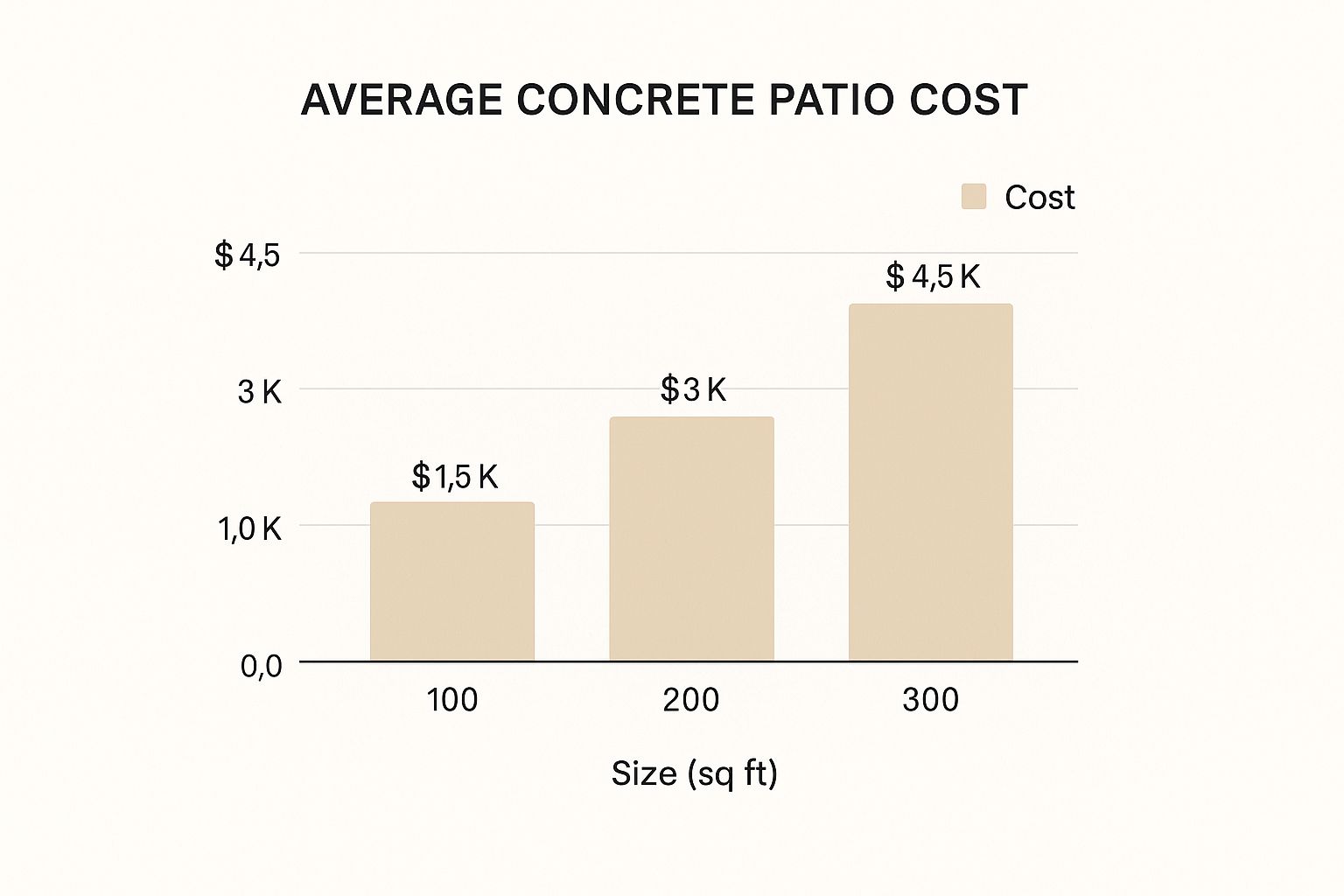
As the chart shows, square footage directly impacts your initial cost. Your choice of finish adds another layer to the price.
To give you an idea of the price difference, here are the costs for some popular decorative finishes.
Comparing Decorative Concrete Finish Costs
| Finish Type | Average Cost Per Square Foot | Best For |
|---|---|---|
| Stamped Concrete | $24 – $36 | Creating high-end looks like stone or brick on a budget. |
| Stained Concrete | $30 – $50 | Adding unique, rich color and a mottled, artistic appearance. |
| Exposed Aggregate | $20 – $30 | High-traffic areas or poolside for maximum durability and slip resistance. |
These numbers, based on recent 2025 data, show how much your choice can influence the final price. While a stamped finish offers great value, a more intricate stained design requires more skill and materials, pushing the cost higher.
For a deeper look at these figures, you can review more detailed 2025 patio replacement data to help with your project planning.
Understanding Regional Price Differences
Your home’s location greatly impacts the average cost of a concrete patio. A quote for a project in Monterey, CA, will likely look different than one for the same design in Maricopa County, AZ.
This difference is tied to specific local factors. Local labor rates are a big piece of the puzzle. The cost to hire skilled concrete finishers in Santa Cruz or San Benito Counties reflects the regional economy. Additionally, the cost of materials like cement and sand can vary between the California coast and the Arizona desert.
Climate and Local Regulations
Local climate and government rules also affect the final price. Pouring concrete is a science where temperature and humidity are critical.
- Hot Climates (Maricopa County): In Arizona's heat, concrete cures very fast. To prevent cracking, we use special additives and often pour concrete early in the morning. This specialized approach adds to the project's cost.
- Mild Climates (Monterey County): On the Central Coast, the mild, damp conditions present a different challenge. The goal is to ensure the concrete cures properly without too much moisture, which requires a different set of skills.
Local building codes are another major factor. California has strict regulations that can influence drainage requirements and reinforcement needs. These rules ensure your patio is safe and long-lasting but can add steps and materials to the process.
Navigating these local requirements is where experience matters. Understanding the local landscape for home improvement in Monterey is a crucial first step. Aldridge Construction has deep roots in both California and Arizona, so we know how to build a patio that is perfect for its environment.
Hidden Costs to Include in Your Budget
When planning for the average cost of a concrete patio, it's easy to focus only on materials and labor. A successful project requires budgeting for everything else that comes with the job.
You might need a building permit before work begins. Navigating the permit process in places like San Benito or Santa Cruz Counties is a standard part of our work, and those fees need to be in your budget.
Demolition and Site-Specific Needs
If you have an old patio or deck that needs to be removed, the cost of demolition and hauling away the debris is a key expense. This step is necessary for a perfect installation.
Not every yard is a flat, ready-to-go canvas. You might also have costs for:
- Special Drainage: If your yard slopes, we may need to install a French drain to keep water away from your home's foundation.
- Major Grading: Fixing significant slopes or uneven ground requires extra labor and equipment to create a stable base for the concrete.
It's also smart to plan for the future. If you might add a pergola, outdoor kitchen, or even an ADU later, it's cheaper to pour the necessary structural footings now. This is similar to the planning that goes into the cost to build an ADU.
Including these potential expenses in your plan gives you a more realistic view of your total investment.
Get an Accurate Patio Quote for Your Home
While national averages provide a ballpark idea, the only way to know the real cost for your project is to talk with a professional. Aldridge Construction can help. We create durable, beautiful patios designed for the unique climates of our communities in California and Arizona.
Our team will walk you through every option and provide a detailed, transparent estimate. It's also helpful to understand the different project estimation techniques contractors use.
If you’re ready to transform your outdoor space in Monterey, Santa Cruz, San Benito, or Maricopa County, getting started is easy. You can learn more about our process by requesting one of our free, no-obligation home renovation quotes today.
Answering Your Top Questions About Concrete Patio Costs
When you plan for a new outdoor space, many questions come up, especially about the budget. Getting clear answers helps you plan without surprises. Here are some of the most common questions we hear from homeowners in Monterey, Santa Cruz, and Maricopa Counties.
1. Is a Concrete Patio Cheaper Than Pavers?
In most cases, yes. A standard poured concrete patio usually has a lower upfront cost than installing pavers. However, if you choose high-end decorative concrete, like complex stamping or multi-color staining, the price can be similar to or even more than a basic paver installation.
2. How Long Does a Concrete Patio Last?
Durability is one of concrete's best features. A professionally installed patio, with a proper foundation and reinforcement, can easily last 30 years or more. Regular maintenance, like sealing it every few years, will extend its life.
3. Can I Pour a Concrete Patio Myself to Save Money?
While it's tempting to DIY to cut costs, pouring concrete is a difficult and unforgiving job. It is physically demanding, and small mistakes can lead to big problems. Incorrect mixing, poor base preparation, or improper finishing can result in a cracked, uneven surface that costs more to fix than hiring a professional from the start.
4. What Time of Year Is Best for Installation?
Concrete needs dry, mild weather to cure properly. The best time for installation depends on your location.
- For Monterey and Santa Cruz Counties: The ideal window is late spring through fall.
- For Maricopa County, AZ: We recommend fall, winter, or early spring to avoid the intense summer heat, which can cause concrete to set too fast and weaken.
5. Does a Thicker Patio Cost a Lot More?
Yes, the thickness directly impacts your total cost. A standard 4-inch thick patio is perfect for foot traffic and patio furniture. However, if you plan for heavy items like a hot tub or a built-in kitchen, you will need a thicker, reinforced slab. This requires more concrete and labor, which increases the price. For complex builds, consulting with home renovation experts in Salinas ensures your patio is engineered to handle the load safely.
Ready to get a clear, accurate quote for your patio project in Monterey, Santa Cruz, San Benito, or Maricopa County? The team at Aldridge Construction is here to help you design and build the perfect outdoor space for your home.