
Adding a second story is a big project. The final second story addition cost is usually between $100,000 to over $250,000. The exact price depends on size, materials, and your home's current structure.
Understanding these factors is the first step. It helps you create a smart budget for your home expansion.
What Is the Real Cost of a Second Story Addition?
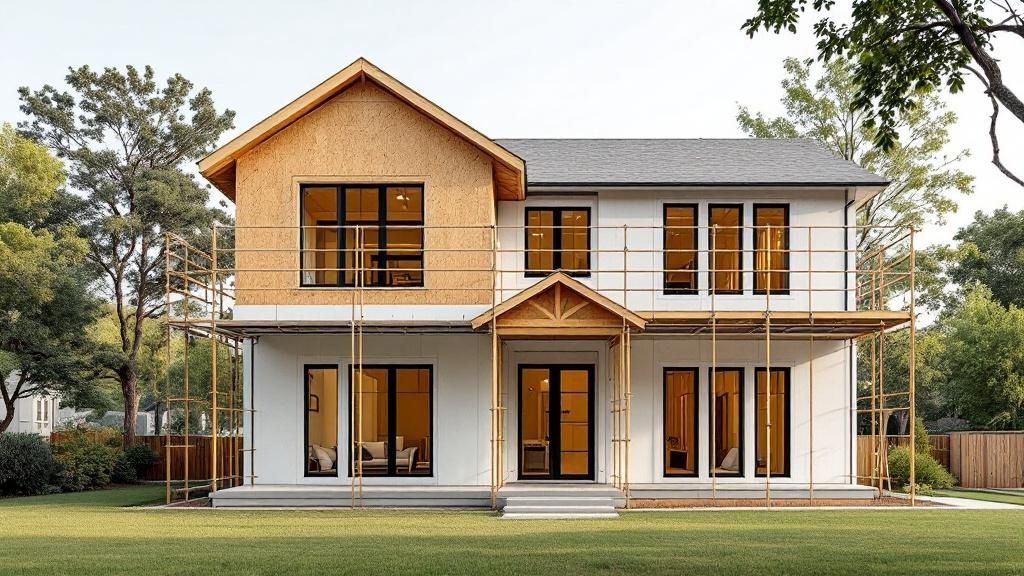
Planning a second story addition is a major financial decision. The numbers can seem large at first. Breaking them down makes it easier to manage. A good starting point is to estimate the cost per square foot.
Nationwide, the average cost to add a second floor is around $175,000. This number can go up for bigger or more complex projects. Your home's foundation is a big variable. If it needs to be stronger to support a new level, that will add to your total cost.
This quick guide will help you see what to expect.
Quick Guide to Second Story Addition Costs
This table shows typical cost ranges. The price depends on the scope and quality of your project.
| Project Tier | Typical Cost Range | Best For |
|---|---|---|
| Basic | $100,000 – $150,000 | Adding simple spaces like bedrooms with standard materials. |
| Mid-Range | $150,000 – $225,000 | Upgraded finishes, like a master suite with a nice bathroom. May include some structural changes. |
| High-End | $225,000+ | Custom designs, luxury materials like Quartz countertops, and premium fixtures. |
Remember, these are just starting points. Your final cost will depend on your specific home and vision.
Understanding Project Tiers
Not all additions are the same. Your project will fall into one of three tiers: basic, mid-range, or high-end. Each tier has a different price tag.
A second story addition is more than just adding rooms. It's a smart investment that can boost your home's value, especially in competitive markets like Monterey and Santa Cruz Counties.
For example, a basic addition might use standard carpet and simple fixtures. A high-end project could have hardwood floors, custom cabinets, and a spa-like bathroom. That’s why it’s important to define your goals early.
When financing a project this size, your home's equity is key. Lenders look at your Loan-to-Value (LTV) ratios. This affects how much you can borrow for your addition.
Calculating Your Project Cost Per Square Foot
When you think about a second story addition cost, start with the price per square foot. This is the easiest way to get a rough estimate. It helps you see how your choices affect the final bill.
However, this number can change a lot. It depends on what you plan to build.
Why Prices Vary So Much
The cost per square foot for a second story is usually between $200 to over $500. This is a wide range for a good reason. It covers everything from framing and drywall to plumbing, electrical, and HVAC systems.
A simple bedroom needs less work than a full bathroom. A bathroom requires a lot of plumbing, special vents, and waterproof surfaces. The more complex the room, the higher the cost per square foot.
Data shows a small 500-square-foot addition often costs between $100,000 and $250,000. A 1,000-square-foot space could cost $200,000 to $500,000. These estimates can help you plan.
The image below shows where the money usually goes.
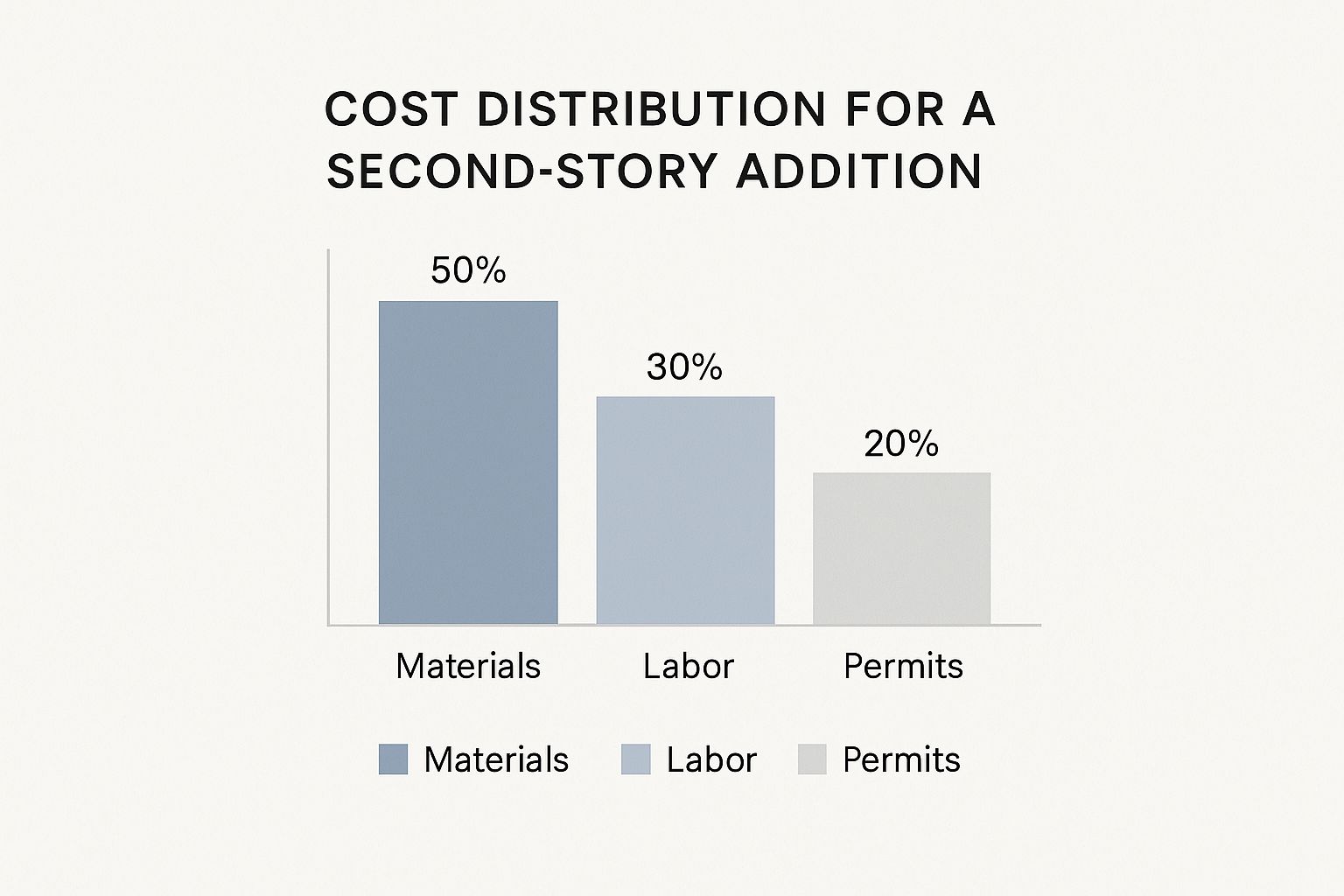
As you can see, materials are the biggest expense. That’s why the finishes you choose have a big impact on your total budget.
Estimated Total Cost by Addition Size
This table shows what you might spend for common addition sizes. It breaks down costs by three different quality levels.
| Addition Size (Sq. Ft.) | Basic Finish ($200/sq.ft.) | Mid-Range Finish ($350/sq.ft.) | High-End Finish ($500+/sq.ft.) |
|---|---|---|---|
| 500 | $100,000 | $175,000 | $250,000+ |
| 1,000 | $200,000 | $350,000 | $500,000+ |
| 1,500 | $300,000 | $525,000 | $750,000+ |
These numbers are a good starting point for planning. For a more exact estimate in Monterey, Santa Cruz, or Maricopa counties, our home addition costs calculator can help.
Key Factors That Drive Your Final Price
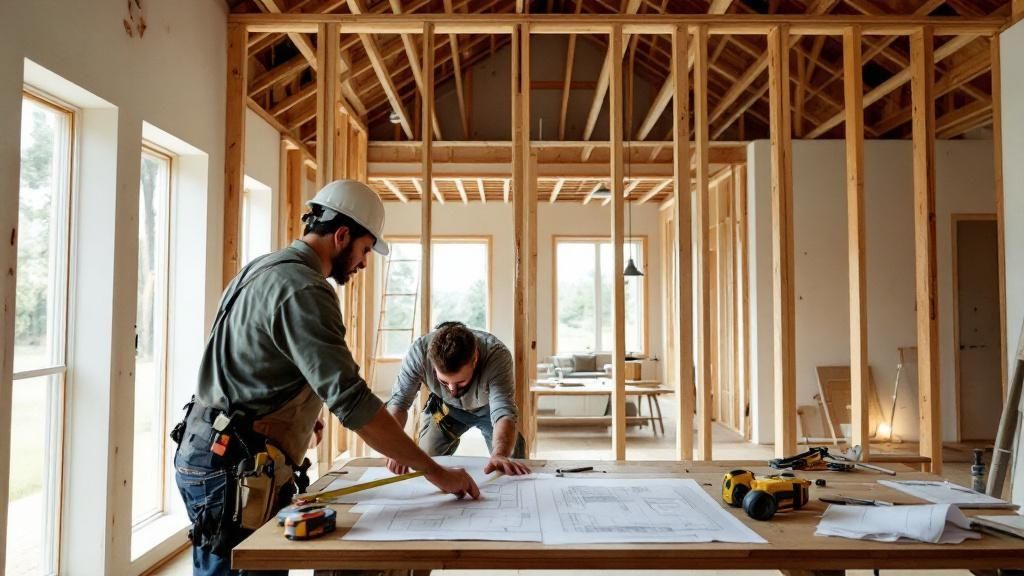
While square footage gives you a starting point for your second story addition cost, other factors shape the real numbers. Your choices and your home's current condition matter most.
Knowing these factors helps you build a realistic budget. Let's look at the four main elements that will affect your project's bottom line.
Structural Integrity and Foundation Work
Before building up, we must ask a critical question: Can your home handle the weight? A second story adds a lot of load to your existing structure.
A structural engineer must inspect your foundation, footings, and walls. If they approve, that's great. If your foundation needs to be stronger, that's the first step. Reinforcing a foundation can add $5,000 or more to the budget. This is a must for safety, especially in Monterey and Santa Cruz counties, which have strict earthquake codes.
Material Quality and Finishes
Your personal taste directly affects the cost. The materials you choose can make the price per square foot change a lot. Every choice, from framing lumber to doorknobs, has a price.
Here are some examples:
- Windows: Standard vinyl windows are affordable. But premium, energy-efficient Milgard windows cost more.
- Flooring: Basic carpet keeps costs down. Durable engineered hardwood or luxury vinyl planking costs more.
- Fixtures: Off-the-shelf lighting and plumbing fixtures are cheaper than custom or high-end brands.
Project Scope and Complexity
What you build upstairs is a huge cost driver. Adding simple bedrooms is different from building rooms with complex plumbing and electrical needs.
A new bathroom is one of the most complex spaces to build. It needs extensive plumbing, special electrical circuits, and proper ventilation. This requires skilled workers and more materials, raising the cost.
Similarly, an open-concept living area might need large, expensive support beams. Complex designs cost more. This is also why a separate unit has its own costs; learn more about the cost to build an ADU.
The Professional Team
Building a second story is not a DIY job. You need a team of qualified professionals. Their fees are a key part of your budget. Your team will include:
- An Architect or Designer: They create the detailed blueprints. They make sure your vision is functional, beautiful, and meets local building codes.
- A Structural Engineer: This expert ensures the design is structurally sound and safe.
- A General Contractor: A team like Aldridge Construction manages the whole project. We hire subcontractors, get materials, and ensure everything is built to plan.
Budgeting for Hidden Costs and Essential Expenses
A successful project is one that stays on budget. Your main construction contract covers most of the work. But there are always other costs to consider. Knowing these "hidden" expenses helps you create a realistic budget and avoid stress.
The final second story addition cost is more than just materials and labor. It also includes the planning and prep work needed before construction begins.
Planning and Permitting Fees
Before any work starts, you need a solid plan. This means hiring professionals, and their fees are an initial cost.
- Architectural and Engineering Plans: An architect designs your new space. A structural engineer then confirms the plans are safe for your home's foundation.
- Building Permits: Every city and county, from Monterey, CA, to Maricopa County, AZ, requires building permits. The fees vary by location but are mandatory. In California, plans must meet strict Title 24 energy codes.
Planning and permit fees are not an afterthought. They are the foundation of your project. Budgeting for them upfront prevents delays and ensures your addition is safe and legal.
The Contingency Fund: Your Financial Safety Net
Renovations can bring surprises. When walls are opened, we might find old wiring, plumbing leaks, or termite damage. This is why a contingency fund is essential.
Contractors, including Aldridge Construction, recommend setting aside 10% to 20% of your total construction budget for unexpected issues. This buffer keeps a small problem from becoming a major disaster. It’s smart to be prepared, which is why understanding termite treatment costs and factors can be helpful.
Temporary Living Expenses
Many people forget about this cost: temporary housing. We have to remove your roof to build the second story. During this time, your home will be exposed and unsafe to live in.
You must factor this expense into your total budget. Whether you stay with family or rent a place, planning for it makes the construction phase smoother. You can get personalized home renovation quotes that include all these variables.
How Your Location Impacts Project Costs

The final second story addition cost is not the same everywhere. Your location plays a big role. Construction costs are tied to local markets, building codes, and even the climate.
A local contractor who knows your area is a great asset. They can navigate local challenges to keep your project on track and on budget.
California Coastal Considerations
Building in coastal areas like Monterey and Santa Cruz, CA, can be more expensive. These regions have some of the strictest building codes in the country due to earthquake risk.
These rules often require:
- Specialized engineering for earthquake safety.
- Reinforced framing beyond standard practices.
- Higher-grade materials to meet safety standards.
Also, the cost of living in these areas means labor rates are higher. These factors increase the baseline cost of any major construction. Our guide to navigating construction permit requirements can provide more details.
Arizona Climate Demands
In Maricopa County, Arizona, the challenges are different. The intense desert heat and sun affect a home's structure and systems.
A home in Arizona must protect against extreme heat. Materials for a second story addition must be energy-efficient and durable to manage cooling costs and withstand the sun.
For an addition in the desert, your budget needs to include materials that perform well in extreme heat. This often means special roofing, advanced insulation, and energy-efficient windows with low-E coatings. These materials may cost more upfront but save you money on energy bills later.
Frequently Asked Questions About Second Story Additions
Here are answers to common questions from homeowners in Monterey, Santa Cruz, and Maricopa Counties. We want to give you the clear information you need to move forward with confidence.
1. Is adding a second story cheaper than buying a new house?
Often, yes. While a second story is a big investment, it can be cheaper than moving, especially in a competitive real estate market like Monterey County. When you add up realtor fees (often 5-6% of a home's price), closing costs, and moving expenses, the total can be very high. Building up gives you the space you need without the high costs of buying and selling.
2. How long does a second story addition take to complete?
A good estimate is 4 to 8 months from start to finish. This includes design, getting permits, and construction. The design phase takes 1-2 months, permits can take another 1-2 months, and the actual construction usually lasts 3-6 months. At Aldridge Construction, we provide a clear schedule so you know what to expect.
3. Can I live in my house during construction?
It depends. If we need to remove the entire roof, living in the house is not safe or practical. The noise, dust, and exposure to weather make it impossible. Most homeowners arrange temporary housing for at least part of the construction time. We work with you to make this period as short as possible.
4. Does a second story addition add value to my home?
Yes, absolutely. Adding functional square footage, like bedrooms and bathrooms, is a reliable way to increase your home's market value. A recent report showed that a primary suite addition can recoup over 53% of its cost at resale [Remodeling Magazine, 2024]. The extra space can also make your home more attractive to buyers in areas like Santa Cruz, CA, or Maricopa County, AZ.
5. What are the first steps to planning a second story addition?
The first step is to consult with a professional contractor like Aldridge Construction. We can help you understand what's possible with your home and budget. We will assess your home's structure, discuss your vision, and provide a realistic cost estimate. Next, you will work with an architect to create detailed plans before applying for local permits.
Let's Start Planning Your Second Story Addition
Adding a second story is a big investment in your home and family's quality of life. We've covered the key factors that drive the second story addition cost, from square footage to local building codes. Now, it's time to turn that knowledge into a real plan.
The process has many details, and it can be overwhelming to manage on your own. As specialists in Monterey, Santa Cruz, and Maricopa counties, our team at Aldridge Construction has the local expertise to guide you. We handle everything, from design to the final walkthrough, to make the experience smooth and clear.
Expanding your home upward is a huge step. It requires a partner you can trust to protect your investment and bring your vision to life.
If you're ready to unlock your home's potential, we're here to help with a clear, detailed estimate.
Ready to build up? Contact Aldridge Construction today for a professional consultation. Let's talk about your project and design a space that will serve your family for years to come. You can learn more by visiting our services page at https://aldridgeconstruction.biz.