
Are you thinking about remodeling your kitchen in Monterey County? Many homeowners feel overwhelmed by permits. The big question is: what actually needs a permit, and what doesn't?
The short answer is almost always yes.
If your project involves changing plumbing, electrical wiring, or the structure of your home, you will need a permit. This ensures the work is safe and meets local building codes.
Why a Permit is Almost Always Required

Many homeowners in Monterey, Santa Cruz, and San Benito Counties hope small kitchen updates don't need a permit. But permits are not just paperwork. They are a critical safety measure for your family and home.
Think of a permit as a form of protection. It ensures a licensed professional's work will be checked by a county inspector. This process protects you from unsafe electrical wiring or plumbing that could cause fires or water damage.
Permits Protect Your Investment
Properly permitted work is also important when you sell your home. Unpermitted renovations can cause major delays or even stop a sale. A clean permit history shows buyers that your kitchen was remodeled correctly and safely.
Kitchen remodels often need multiple permits because they involve different types of work. A simple renovation may require separate permits for plumbing and electrical changes.
To help you understand, here is a table showing which kitchen tasks usually require a permit.
Kitchen Remodel Tasks and Permit Needs in Monterey County
| Remodel Task | Permit Typically Required? | Why It's Needed |
|---|---|---|
| Moving or adding walls | Yes | Structural changes affect the home's safety and stability. |
| Rerouting plumbing lines | Yes | Ensures proper drainage and prevents leaks. |
| Installing new electrical outlets/circuits | Yes | Guarantees safe wiring and prevents electrical hazards. |
| Changing window or door sizes | Yes | Affects the home's framing and weatherproofing. |
| Installing a new gas line for a stove | Yes | Critical for preventing dangerous gas leaks. |
| Replacing cabinets in the same spot | No | This is a cosmetic update that doesn't change core systems. |
| Repainting walls | No | A simple finish change with no impact on safety. |
| Installing new countertops on old cabinets | No | This is a surface-level change. |
| Replacing a faucet or garbage disposal | No | A "like-for-like" replacement is usually exempt. |
| Refinishing floors | No | This is considered a cosmetic update. |
As you can see, once you go beyond surface-level changes, a permit is needed. The goal is to make sure the work is done safely and professionally.
At Aldridge Construction, we handle all permit applications for our clients. We explain the requirements in plain English and manage the entire process so you don't have to.
Understanding the construction permit requirements is the first step to a successful remodel. It helps you avoid fines, delays, and stress.
What Triggers a Permit for Your Kitchen Remodel
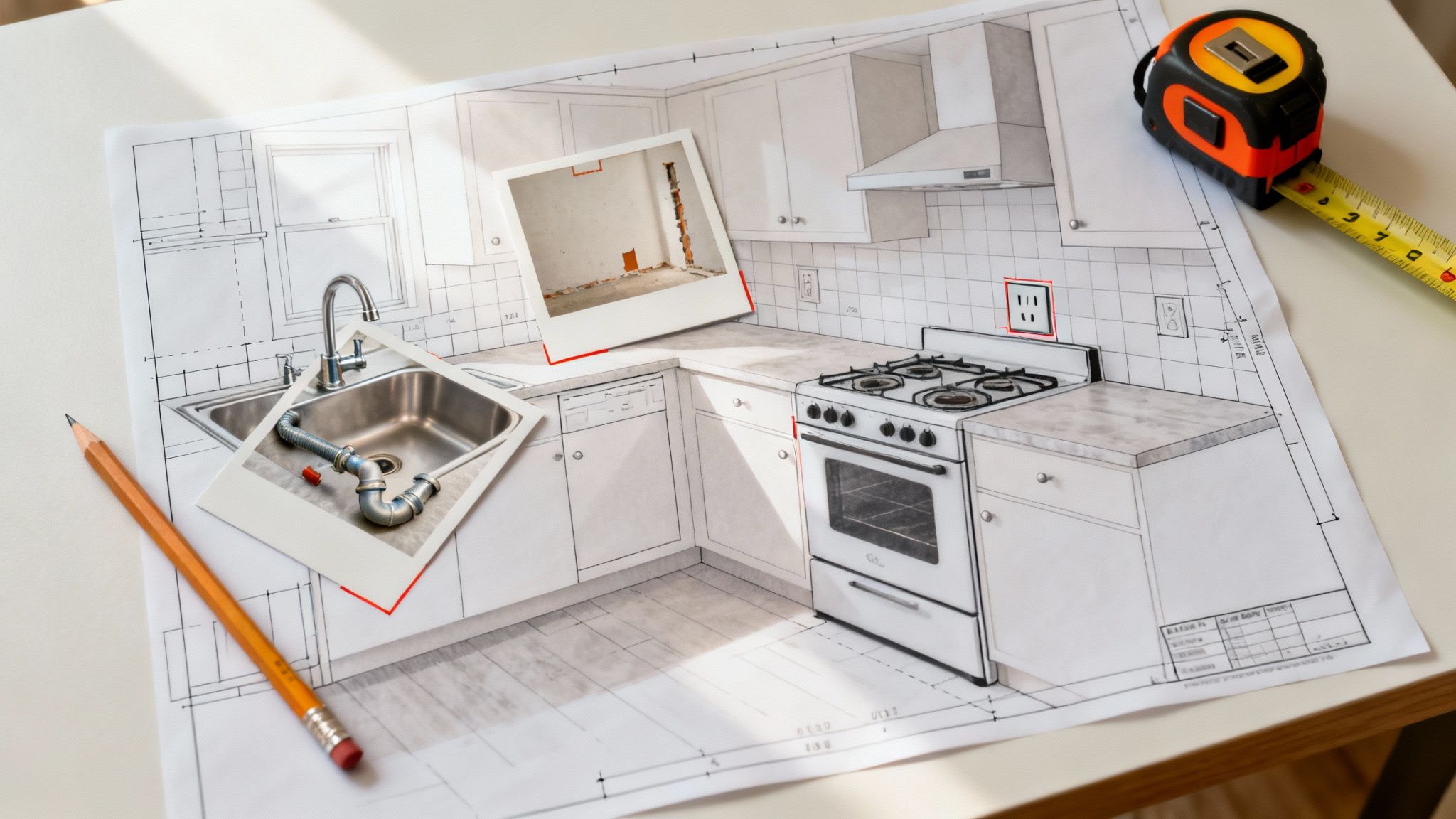 Kitchen remodeling blueprint with photos of a sink and construction, accompanied by a pencil and tape measure.” />
Knowing what work needs a permit is key to a smooth kitchen remodel. In Monterey County, most changes fall into three categories that require a permit: structural, electrical, and plumbing.
These rules exist to make sure your new kitchen is safe. The permit process becomes less scary when you understand it’s all about safety and proper construction.
Structural Modifications
This is the most obvious category. Any time you change your home's framework, you will need a building permit.
- Removing a Wall: Even if a wall is not load-bearing, taking it down is a structural change. If it is a load-bearing wall, an engineer must approve the plans to keep your home stable.
- Altering Windows or Doors: Making a window bigger or adding a new patio door involves cutting into your home's frame. This automatically requires a permit.
Electrical System Upgrades
Modern kitchens use many powerful appliances. Faulty wiring is a leading cause of house fires, so any changes to your electrical system must be permitted and inspected.
Common Misstep: A common mistake is assuming that "small" jobs don’t need a permit. In Monterey County, adding a single new outlet or moving a sink drain requires a permit to ensure it meets current safety codes.
Here are common electrical jobs that need a permit:
- Adding New Outlets: Installing new circuits for a microwave drawer or outlets in a kitchen island all require a permit.
- Installing New Lighting: Adding recessed lights or under-cabinet lighting involves running new wires, which means a permit is needed.
- Relocating Switches or Outlets: Moving an electrical box is a system modification and needs to be permitted.
Our electrical rough-in inspection checklist shows what inspectors look for before the drywall goes up.
Plumbing and Mechanical Changes
Just like electrical work, major changes to your kitchen's plumbing will require a permit. Getting an accurate plumbing work estimation helps define the project scope for the application.
Common plumbing changes that need permits include:
- Moving the Sink or Dishwasher: This involves rerouting water supply and drain lines. This work must be done right to prevent leaks and clogs.
- Adding a New Gas Line: Running a new gas line for a range is a critical safety task. It always requires a permit and multiple inspections.
- Installing an Island Prep Sink: Adding any new fixture that connects to the plumbing system must be permitted and inspected.
Navigating Monterey County’s Unique Water Credit System
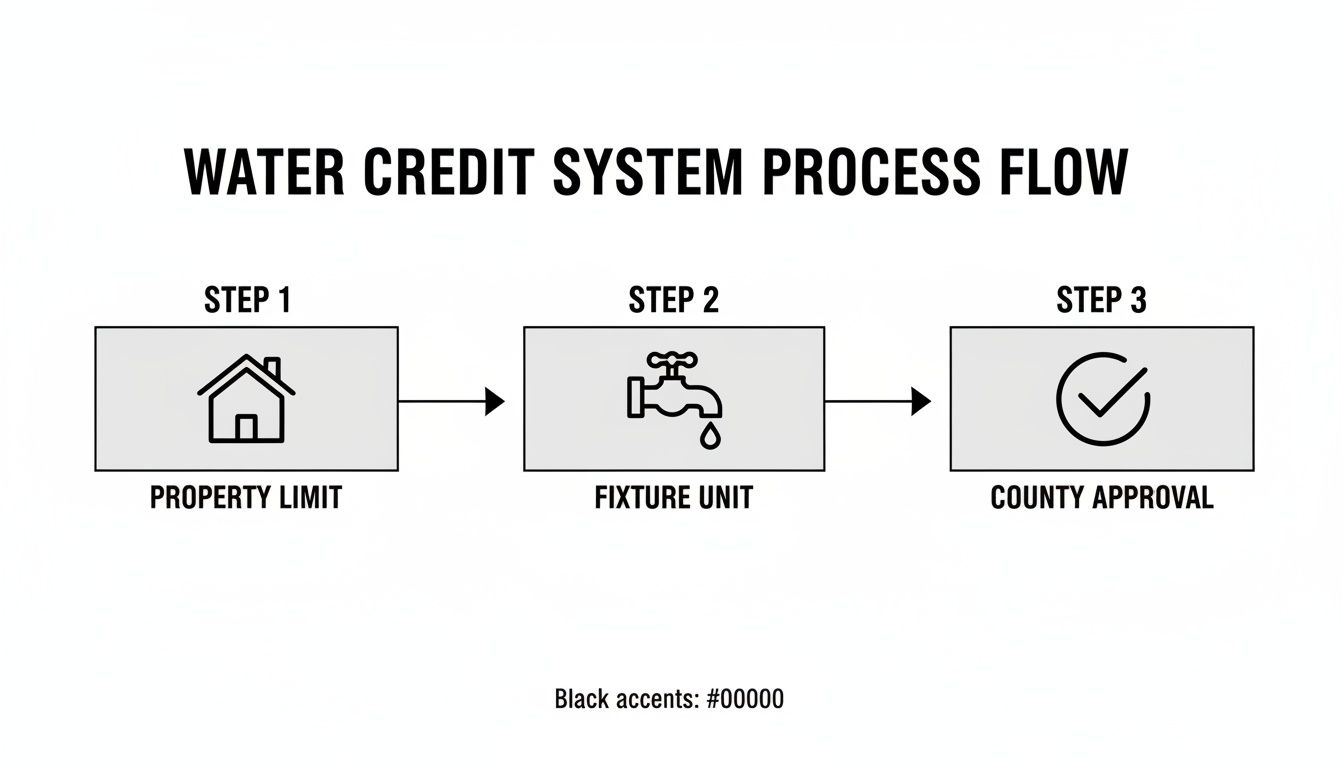
When planning a kitchen remodel, you expect to deal with permits. But in Monterey County, there is another unique rule: the local water credit system. This system can often determine if your project can even happen.
Put simply, every property has a strict limit on its water use. This is measured in “fixture units.” Every water-using appliance, from your sink to your dishwasher, has a fixture unit value.
What Are Fixture Units?
Think of fixture units as a water budget for your property. Your home was given a set budget when it was built, and you cannot exceed it. A problem occurs when your remodel includes new fixtures.
Common additions that add to your fixture unit total include:
- A new prep sink in your kitchen island.
- A pot filler faucet above the stove.
- A second dishwasher.
- A wet bar sink.
If you add any of these, the county will not issue a permit if it pushes your home over its limit. Your project will be stopped before it even starts.
Expert Insight: Discovering a property has no remaining water credits is a common and frustrating roadblock. That's why we check your property’s water allocation at the very beginning of the design process. We won’t let you design a kitchen the county will never approve.
How We Handle Water Credit Investigations
So, how do you know if your dream kitchen is possible? This is where a team with local knowledge is essential. The water credit rules in Monterey County are a unique challenge for remodels.
Aldridge Construction handles this entire process for you. We research your property’s water allocation directly with the county. You can learn more from these Monterey County permitting insights.
We find out how many fixture units your property uses and how many are left. If credits are tight, we can look for ways to free some up. For example, installing efficient fixtures like modern kitchen tap aerators can sometimes earn back credits.
By handling this step first, we ensure there are no surprises. This proactive planning is part of our commitment to a smooth project for every client.
How to Get a Remodel Permit in Monterey County
The permit process can seem confusing, but it's easier with the right steps. The main challenge is meeting the requirements of the local city or county office.
To start, you need to submit detailed documents. These are not rough sketches. They must be professional drawings that clearly show the entire scope of your remodel.
Preparing Your Permit Application Package
A complete application is the fastest way to get approved. Missing information is the most common reason for delays.
Your application package will need to include:
- Detailed Architectural Plans: These are floor plans showing your existing kitchen and the proposed new one. They must show the exact locations of walls, doors, windows, and appliances.
- Structural Drawings: If you plan to remove any walls, you will need plans that detail these changes. Drawings for load-bearing walls must be stamped by a licensed structural engineer.
- Electrical and Plumbing Plans: You need separate drawings showing the location of all new or moved outlets, lights, and plumbing lines.
These documents show the building department your plans and confirm they meet California safety codes.
Aldridge Construction takes complete ownership of this entire process. We manage the creation of all necessary plans, handle the paperwork, submit the application on your behalf, and perform all follow-ups with the planning department. Our goal is to make permitting completely hands-off for you.
Understanding Timelines and Roles
How long does it take to get a kitchen remodel permit in Monterey County? Timelines can vary.
For a standard kitchen remodel, expect the review process to take 2 to 6 weeks. Major structural changes could take longer. The permit process can slow down depending on the season and how busy the local office is.
The infographic below shows the water credit system, a local hurdle you must clear early on.
A full-service contractor like Aldridge Construction coordinates all these moving parts. We schedule every required inspection, from rough-in checks to the final sign-off. You can see what inspectors look for in a standard building inspection checklist.
The Real Risks of Remodeling Without a Permit
It can be tempting to skip the permit process to save time and money. However, the short-term savings are not worth the long-term problems. This is about protecting your home, which is your biggest investment.
The most immediate risk is a stop work order. If a Monterey County inspector sees construction without a permit, they can shut down your project. The order stays until you go through the official process, causing long delays.
Financial and Legal Fallout
The financial penalties can be severe. If you are caught doing unpermitted work, you don't just pay the original permit fee. Monterey County often issues fines that are double the original permit cost.
That shortcut to save a few hundred dollars can turn into a major expense. The project becomes stressful and costly.
Long-Term Headaches and Safety Issues
The problems with unpermitted work can appear years later.
- Selling Your Home Becomes Difficult: Unpermitted work is a huge red flag for potential buyers. It can kill a deal or force you to tear out the work.
- Your Insurance May Not Cover You: If a fire starts from faulty wiring in your unpermitted kitchen, your homeowner's insurance may deny your claim. They can argue the unapproved work created a risk they did not agree to cover.
The Bottom Line: Skipping a permit to save a few hundred dollars today could cost you tens of thousands in fines, repairs, and lost home value tomorrow. It is not a risk worth taking.
Aldridge Construction ensures every part of your kitchen remodel is fully compliant. We handle the entire permitting process, protecting your project from these risks.
Let Us Handle the Hard Parts of Your Kitchen Remodel
Figuring out permits and local building codes is a full-time job. It's complicated, but it doesn’t have to be your problem.
At Aldridge Construction, we have years of experience navigating the rules of planning departments across Monterey, Santa Cruz, and San Benito counties. We know the process and how to get your project approved without delays.
From filing paperwork to coordinating inspections, we manage the entire process. This protects your investment. Many homeowners are surprised to learn that just moving a sink or adding an outlet requires a permit.
Your Partner in Local Permitting
Because we work with local planning offices often, we can spot potential problems early. We know how to check for water credits and design solutions that work within the county's limits. This saves you time and stress.
When you partner with us, you can focus on the fun parts—like choosing quartz countertops and new cabinets. Let us handle the confusing parts.
If you're ready to start planning, our guide on how to plan a kitchen remodel is a great place to begin.
Frequently Asked Questions About Kitchen Permits
1. How much does a kitchen remodel permit cost in Monterey County?
The cost depends on your project's size. For a standard kitchen remodel, permit fees typically range from a few hundred to over a thousand dollars. We include these estimates in our project proposals so there are no surprises.
2. Can I apply for the permit myself as the homeowner?
Yes, homeowners can apply for their own permits. However, the process is demanding and requires detailed plans and knowledge of local codes. Most clients find it easier to let a licensed general contractor handle it.
3. What if my remodel plans change after the permit is approved?
If your plans change significantly, especially with structural, electrical, or plumbing layouts, you will likely need to submit revised plans for approval. It's important to discuss any changes with your contractor immediately to avoid delays.
4. How long is a building permit valid for in Monterey County?
A building permit is typically valid for 180 days from the issue date, as long as work is ongoing. If the project pauses for too long, the permit can expire. Your contractor is responsible for keeping the permit active.
5. What happens if I remodel without a permit?
Remodeling without a permit can lead to stop work orders, fines that are double the original permit fee, problems selling your home, and potential denial of homeowner's insurance claims for related damages.
Navigating the permit process doesn’t have to be a headache. The team at Aldridge Construction has the local experience to manage all the paperwork and inspections for your kitchen remodel in Monterey, Santa Cruz, or San Benito County.
Ready to start your project with confidence? Contact us for a consultation today!