
Building an Accessory Dwelling Unit (ADU) seems simple at first. You pick a floor plan and some paint colors, right? But the details most homeowners miss are the ones that matter most. These include things like utility hookups, planning for future needs, and making sure the new unit works with your main home’s systems.
Getting these details wrong leads to surprise costs, permit delays, and a final product that doesn’t work as well as it should.
Moving Past the Standard ADU Blueprint
Most builders give you a basic overview of ADUs. They explain what they are, the general benefits, and a simple list of design options. They often stop at zoning rules or suggest generic financing tips.
But in California, building an ADU is more complex than that. Permits for ADUs jumped by an incredible 15,334% between 2016 and 2022. ADUs now make up nearly one in five new homes in the state. This growth means more homeowners are hitting roadblocks with county-specific rules.
These aren't just small problems. Research shows that 44% of ADU projects get stuck because of high construction costs. Another 39% are stopped by zoning rules that weren't planned for. You can read the full research on the ADU market to see how common these issues are.
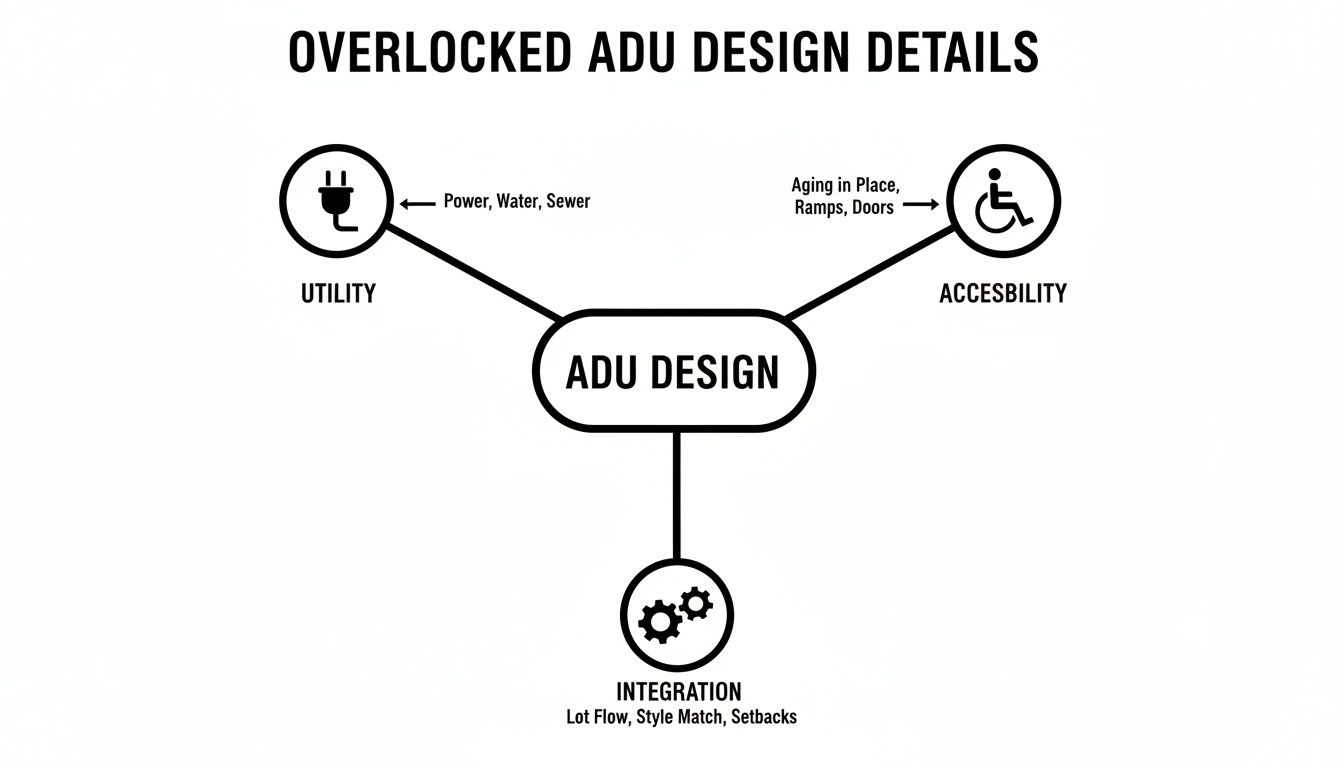
As this graphic shows, a successful ADU project depends on utilities, accessibility, and how it connects to your main home. A problem in one area almost always causes issues in the others. Overlooking these details is like building a house without checking the ground first.
Common ADU Oversights and Their Real-World Consequences
| Common Oversight | Potential Problem | The Smarter Approach |
|---|---|---|
| Ignoring Utility Capacity | Your electrical panel can't handle the extra load, requiring a surprise $5,000+ upgrade mid-project. | Check your existing electrical, water, and sewer capacity before finalizing the design. Plan for any needed upgrades from day one. |
| Forgetting Future Accessibility | An elderly parent can't move in because the doorways are too narrow and there are steps at the entry. | Use universal design ideas like a no-step entry and wider hallways. It’s cheaper to build it in now than to change it later. |
| Poor Site Placement | The ADU is built over a main sewer line, forcing an expensive rerouting project and causing major delays. | Do a full site check to map all existing utilities and property lines to find the best, hassle-free building spot. |
| Treating it as a Separate Project | You remodel your kitchen, then build an ADU a year later. You end up paying for permits, contractors, and disruption twice. | Combine your ADU build with other home renovations. This simplifies permits and lets you upgrade systems like plumbing or electrical just once. |
Thinking about these issues upfront is the difference between a smooth project and one filled with costly surprises.
The Aldridge Construction Approach
At Aldridge Construction, we know homeowners in Monterey, Santa Cruz, and San Benito Counties need more than basic advice. The real challenge is not just building an ADU. It's navigating the different permit rules between counties and planning your unit alongside other home renovations.
By planning your ADU with your broader renovation goals in mind, you’ll save money on permits, reduce construction overlap, and ensure your main home upgrades work with—not against—your new unit.
Instead of getting separate permits for a kitchen remodel and an ADU, a smart plan combines them. This means you only upgrade your electrical panel once or dig trenches for utilities one time. It’s about working smarter, not harder. We specialize in this approach and use pre-approved ADU plans in Monterey County to help clients avoid common delays.
Getting every detail right from the start is key. You can see how we manage these details by checking out our construction quality control checklist.
Why Your Property's Site Plan Is the First Real Hurdle
Before you fall in love with a floor plan, you need to understand your land. Many homeowners get excited about interior design but overlook site planning. This is a critical first step where costly mistakes are often made. This is one of the most important areas beyond the basics of ADU design what most homeowners miss.
The slope of your land, the type of soil, and even where the sun hits your backyard all play a big role. These factors affect the ADU's placement, its foundation, and the total construction cost.
Navigating Underground Utilities
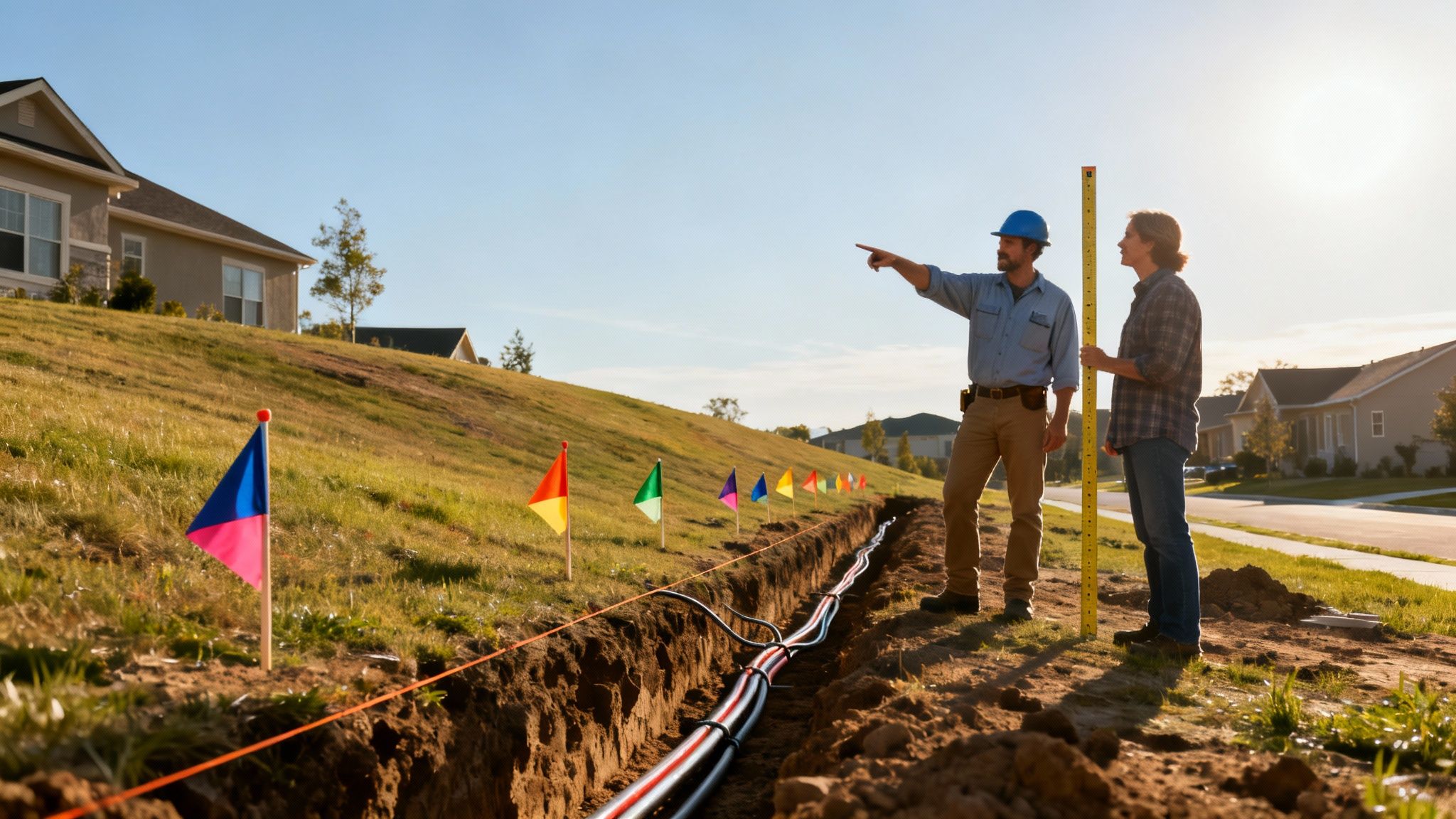
The biggest site planning challenge is often what you can’t see. How will your new ADU get water, power, and sewer service? Tapping into your home’s existing utility lines sounds simple, but it rarely is. This can become one of your project's biggest unexpected expenses.
Your property will likely need trenching to run new lines for plumbing and electrical systems. This involves digging, laying pipes, and then fixing your landscaping. The cost of trenching can add thousands to your budget, especially on land with tough access or rocky soil common in Monterey County.
You may also need to upgrade the main electrical panel on your house. If your current panel can't power another home, a full upgrade is required. This is a smart investment, but it’s a cost that must be planned for from the start.
The True Cost of Connecting Your ADU
Here’s a breakdown of what you need to consider for utility connections:
- Trenching for New Lines: This gives the ADU its own connections. It's more expensive at first but can make managing utilities easier, especially if you plan to rent the unit. Costs depend on distance and soil conditions.
- Upgrading the Main Electrical Panel: This can be a more direct solution if the ADU is close to the main house. A full replacement can cost anywhere from $2,500 to $7,000 or more.
- Sewer and Water Tie-Ins: Connecting to existing sewer lines requires careful planning to ensure proper drainage. Sometimes, a new connection to the city main is needed, which involves more permits and costs.
To avoid costly changes and delays, always check local rules and permits first. An online tool like a property zoning checker can help you understand what’s possible on your land.
By investigating your site and utility options before finalizing any plans, you can avoid surprise expenses. A clear site plan is your roadmap to a successful build.
At Aldridge Construction, we help homeowners in Monterey, Santa Cruz, and San Benito Counties with these challenges every day. We start by checking your property to create a plan that fits your budget. Learn more in our guide to California ADU requirements.
Designing for Multigenerational Living and Future Accessibility
An ADU is more than just extra space. It's a long-term investment in your family's future. Failing to design for different needs is a big missed opportunity. Thinking about who might live there in ten or twenty years is a key step that goes far beyond the basics of adu design what most homeowners miss.
It's now more common for multiple generations to live on the same property. Families want to support aging parents or give adult children a head start. ADUs are the perfect answer, but only if you plan ahead.
Planning for Aging-in-Place from Day One
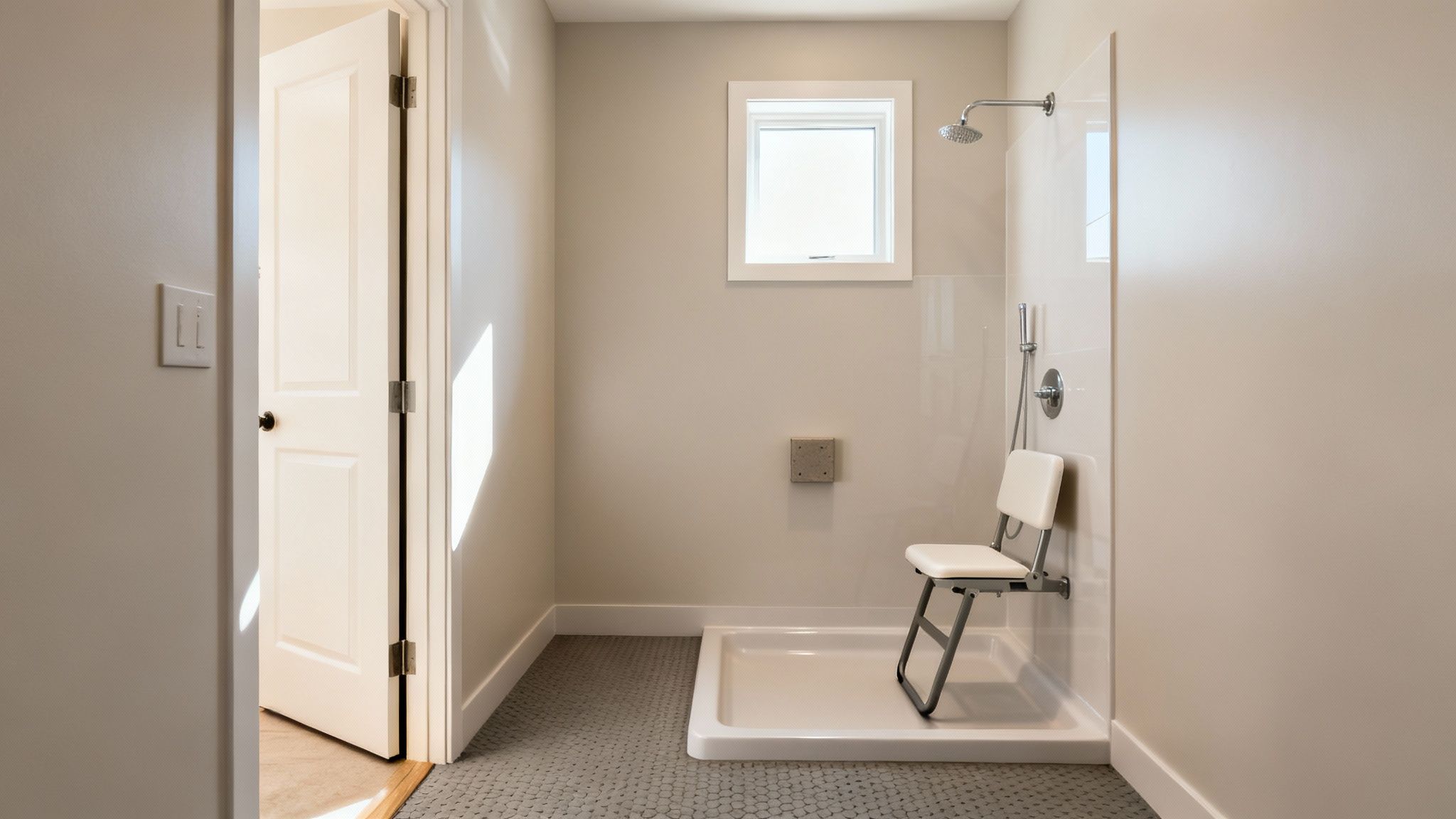
Even if you don't need accessibility features now, building them in from the start is a smart, money-saving choice. Adding a walk-in shower or wider doorway later is much more expensive and disruptive than doing it right the first time.
These small changes often add little to the initial cost but provide huge value later. They make your ADU comfortable for aging parents, a family member with mobility challenges, or more appealing to future renters.
Practical and Easy-to-Implement Features
Making an ADU adaptable doesn't mean it has to look like a hospital. It's about making a few smart choices that have a big impact. A key part of ADU design is designing for accessibility and inclusivity, so the space can serve different needs over time.
Consider asking your builder to include these simple features:
- Wider Doorways and Hallways: Bumping up to 36-inch wide doorways and wider halls creates an open feel and ensures easy movement for everyone.
- Zero-Threshold Entry and Showers: Removing the step at the front door and the curb in the shower eliminates two big barriers for people with limited mobility. A "curbless" shower is also a sleek, modern look.
- Reinforced Bathroom Walls: During framing, adding extra wood blocking inside the walls provides a solid anchor for installing grab bars in the future, without tearing open the walls again.
- Smart Lever Handles: Swapping round doorknobs for lever-style handles is a small change that helps anyone with arthritis or limited hand strength.
By thinking ahead, you’re not just building an ADU; you’re creating a flexible, future-proof home. These touches ensure the space remains useful and valuable for decades.
At Aldridge Construction, we help homeowners in Monterey, Santa Cruz, and San Benito Counties plan for the long term. Our expertise in aging-in-place remodeling ensures your ADU is built to serve your family for generations.
Understanding the True Financial Picture Beyond the Build Quote
A construction quote is just one piece of the financial puzzle. A common mistake is underestimating the other costs that can increase an ADU budget. To make a good investment, you need to look at the complete financial picture.
This means planning for every expense, including permit fees, utility hookups, landscaping, and new furniture.
Costs Hiding in Plain Sight
Adding a new home to your property will impact your annual property taxes. It's also important to call your homeowner's insurance provider to see how an ADU will affect your costs. You'll need to make sure the new structure is properly covered.
Thinking about these ongoing costs early helps you create a realistic budget and prevents surprises later.
By factoring in taxes, insurance, and maintenance from the beginning, you can calculate your true return on investment.
Navigating Your Financing Options
Getting the right financing is another critical step. Getting pre-approved before you finalize your design plans gives you a clear idea of your budget. This helps you make smart decisions without committing to a design you can't afford.
Here are a few common financing options for ADU projects:
- Home Equity Line of Credit (HELOC): This lets you borrow against the equity in your main home.
- Construction Loan: These loans are designed for building projects and are often paid out in stages.
- Cash-Out Refinance: This involves refinancing your mortgage for a higher amount and using the difference to fund your ADU.
Each option has its own pros and cons. At Aldridge Construction, we can connect you with trusted local lenders in the Monterey Bay Area who understand ADU financing. For a deeper look into a builder's estimate, see our guide on breaking down contractor pricing.
How to Integrate Your ADU with a Larger Home Renovation
One of the smartest strategies for building an ADU is to plan it as part of a larger home renovation. This is a game-changer that goes far beyond the basics of ADU design what most homeowners miss. It can lead to big savings in time and money.
If you treat an ADU and a kitchen remodel as two separate jobs, you’re signing up for two sets of plans, two permit applications, and two construction timelines. This means hiring contractors, electricians, and plumbers twice—which leads to more disruption and higher costs.
Why Bundling Projects Creates Massive Savings
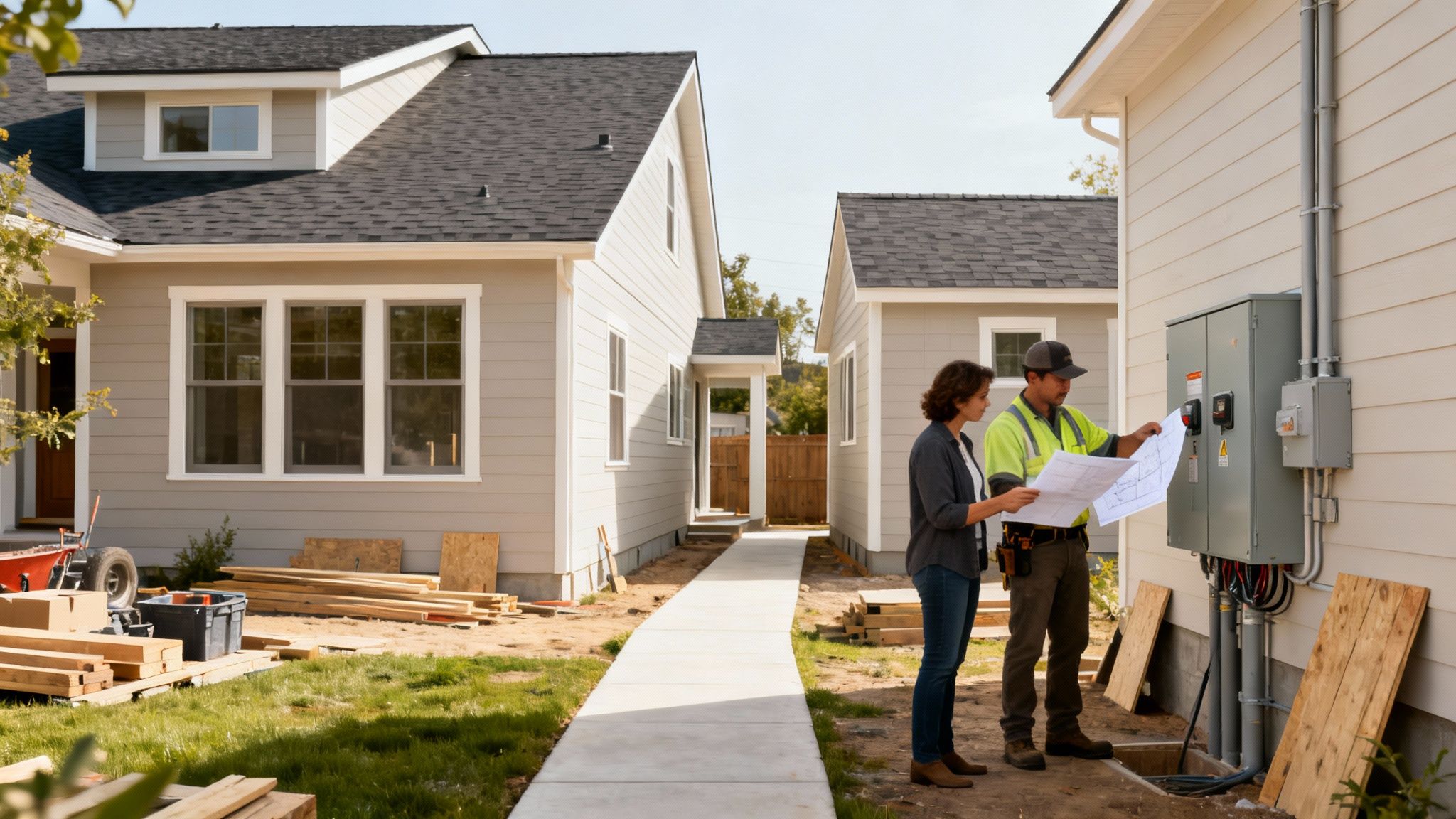
Instead of juggling two projects, a bundled approach treats your property as one big job. When you combine your ADU with a main home renovation, you get a single, streamlined process. This means one contractor manages everything, and you only live through a construction zone once.
The financial benefit is huge. Bundling your projects is the key to avoiding common headaches with permits and regulations.
By planning your ADU with your renovation goals in mind, you’ll save money on permits, reduce construction overlap, and ensure your main home upgrades work with—not against—your new unit.
An Integrated Project Planning Checklist
Combining an ADU with a bigger renovation comes down to smart upfront planning. Focus on these key areas:
- Unified Permitting: Submit one set of plans to your local planning department in Monterey, Santa Cruz, or San Benito County. A single submission saves money on fees and can shorten the approval time.
- One-Time Utility Upgrades: If your home needs a bigger electrical panel for a new kitchen and an ADU, an electrician can do the upgrade just once. The same goes for plumbing and sewer lines.
- Cohesive Design and Materials: You can ensure the design, paint, roofing, and windows match between your main home and the ADU. Buying materials like quartz countertops or Milgard windows in larger quantities often leads to discounts.
- Streamlined Labor: Your construction crew can move easily between the main house and the ADU. This reduces labor costs by eliminating wasted time.
This approach doesn't just save money; it also reduces the disruption to your daily life.
Standalone vs. Integrated Renovation Planning
| Factor | Standalone ADU Project | Integrated Renovation + ADU |
|---|---|---|
| Permitting | Separate applications and fees for each project, leading to longer wait times. | One consolidated application, saving time and reducing administrative costs. |
| Contractor Costs | Hiring and managing separate teams for each job, often with overlapping overhead. | One general contractor oversees the entire project, leading to better coordination and lower management fees. |
| Utility Work | Potential for redundant work, like trenching twice or upgrading systems piecemeal. | All major utility upgrades (electrical, plumbing) are done once for the entire property. |
| Disruption | Two separate periods of construction noise, dust, and disruption to your life. | One contained construction phase, minimizing the impact on your family. |
By treating your property as a single system, you become more efficient. It’s the best way to improve your entire property while keeping your budget in check.
Ready to Start Your Smart ADU Project on the Central Coast?
Building an ADU is a smart investment, but success comes from getting it built right. True value comes from nailing the details that go beyond the basic floor plan. Things like strategic site planning, future-proof design, and smart financial management are what make a project go smoothly.
Thinking about these concepts early is your best defense against surprise costs and permit delays. The goal isn't just to build a unit; it's to create a space that meets your needs today and adds value for years to come.
Taking That First Step With Confidence
We get it. The journey from an idea to a finished ADU can feel overwhelming. Many homeowners spend months or even years just thinking about it before making a move. So, what finally pushed them to take action? For most, it was getting clear answers to three key questions:
- What’s a realistic "all-in" cost for my project?
- What’s actually possible on my property?
- Do I have confidence in the team I’m hiring?
Moving forward is about taking the next step with a partner you trust. You can read about why Aldridge Construction is the top choice for ADU construction in Monterey County to see what sets a great builder apart.
If you're in Monterey, Santa Cruz, or San Benito County and ready to plan your ADU project the right way, Aldridge Construction is here to help. We bring local experience to guide you through every step.
Contact us today to schedule a consultation and let's start the conversation.
Frequently Asked Questions About Advanced ADU Design
Here are some of the most common questions we hear from homeowners in Monterey, Santa Cruz, and San Benito Counties about the details that really matter.
How do I plan for utility connections to my ADU?
The biggest mistake homeowners make is assuming they can just tap into existing utilities. A new ADU puts a big demand on your electrical panel and water lines. Before you finalize a design, have a professional check your current systems.
An electrical panel upgrade can cost $2,500 to $7,000 or more. Connecting sewer and water lines may require extensive trenching. Planning for these costs from day one is key to staying on budget.
Can I build my ADU and remodel my kitchen at the same time?
Absolutely. In fact, it’s one of the smartest things you can do. Combining a home renovation with an ADU build saves time, money, and stress. You go through the permitting process once, and your construction team is already on-site. Major upgrades, like a new electrical panel or sewer line, are done once for both projects. It's the most efficient way to handle construction.
How can I make my ADU accessible without it looking clinical?
Designing for accessibility doesn't mean your ADU has to look like a hospital. Modern universal design creates spaces that are beautiful and work for everyone.
- Install a Curbless Shower: A zero-threshold shower feels high-end and spa-like while removing a trip hazard.
- Choose Lever-Style Handles: Elegant lever handles on doors and faucets are stylish and easier for everyone to use.
- Create an Open Floor Plan: A spacious layout feels modern and provides plenty of room for a wheelchair or walker.
What are the fire safety requirements for ADUs in California?
Fire safety rules can add unexpected costs. If your ADU is built close to a property line or your main house, you may need fire-rated materials like special siding or windows. This can add $5,000 to $10,000 to your budget. A smart site plan can often avoid these costs.
As for fire sprinklers, you generally do not need them in your ADU if your main home doesn't have them. However, sprinklers may be required if the ADU is very large or far from the street. Always check with your local fire department in Monterey, Santa Cruz, or San Benito County early in the process.
How much value does an ADU add to my property?
An ADU is a significant investment that can add substantial value. In California, studies have shown that an ADU can increase a property's value by an average of $150,000 to $250,000, and sometimes much more in high-demand areas like Monterey and Santa Cruz. The value comes from the added living space and potential rental income, which can often cover the mortgage on the unit and provide extra cash flow.
At Aldridge Construction, we believe a successful ADU project is built on a smart plan that sweats the small stuff. If you’re ready to get into the details and build an ADU that truly works for you, our team is here to guide you through every decision.
Contact us today to schedule a consultation and let’s build something great together in Monterey, Santa Cruz, or San Benito County.