
Across Monterey County, a quiet but deep shift is happening in our homes. Old floor plans are making way for something more flexible. This is driven by the shift toward family-centered home design in Monterey County. It's more than new paint colors; it’s a new way of thinking about how we live, fueled by economic changes and a desire to keep family close.
This guide will walk you through this trend and what it means for your home.
Why Monterey County Homes Are Changing
Today’s homes are busy hubs for many generations at once. The old layouts, designed for a small family, no longer work. This change is a response to social and money-related forces affecting everyone from Salinas to Santa Cruz.
The data tells the story. Almost 25% of American homeowners now live in multigenerational households. This is a big jump from a few years ago when it was only 18%. In Monterey, Santa Cruz, and San Benito Counties, this is the new normal.
The New Needs for Home Design
Homeowners are not just renovating for looks anymore. They are investing in big projects to change their spaces for aging parents, adult children, or both. This creates new demands for home design:
- Privacy and Independence: Think about separate entrances, private bathrooms, and small kitchenettes. These features let everyone live together without being on top of each other.
- Access for All Ages: Things like single-level living, wider doorways, and walk-in showers are now essential. They keep the home safe and comfy for every family member.
- Connection Without Crowding: A good home design needs spaces for gathering and quiet zones for retreat. The goal is to avoid feeling overcrowded.
Contractors who offer one-size-fits-all layouts miss the mark. A family’s specific needs—like ADA features for a parent or shared utility spaces—must be part of the plan. Getting this wrong leads to costly fixes and a home that doesn't work for the people in it.
At Aldridge Construction, we help homeowners avoid these problems by designing for real families. As our guide on the surge in home additions shows, smart planning is key. We create flexible living spaces that meet codes and provide comfort for all ages.
The Big Shift: Why Multigenerational Living Is Reshaping Our Homes
The classic idea of a family home is changing. A key reason for the shift toward family-centered home design in Monterey County is the rise of multigenerational living. More families are living together, with grandparents, parents, and adult children all sharing one space.
This is a new reality shaped by economic and social factors. As mentioned, recent data shows nearly 25% of American homeowners now live in multigenerational households. This changes homeowner priorities from simple cosmetic updates to smart, strategic redesigns that work for a larger family.
The Human Side of the Numbers
Beyond statistics, this is about families making life work better. A standard floor plan can cause friction when three generations with different needs live together. A successful family-centered home must balance togetherness and independence.
The challenge is designing a space with quiet privacy for an older parent and open areas for a young family. It means thinking about how people will actually live in the space every day. A poor remodel is a costly mistake that creates a home full of tension, not peace.
This infographic shows how financial realities and the desire to be closer to family are making shared living a preferred choice.
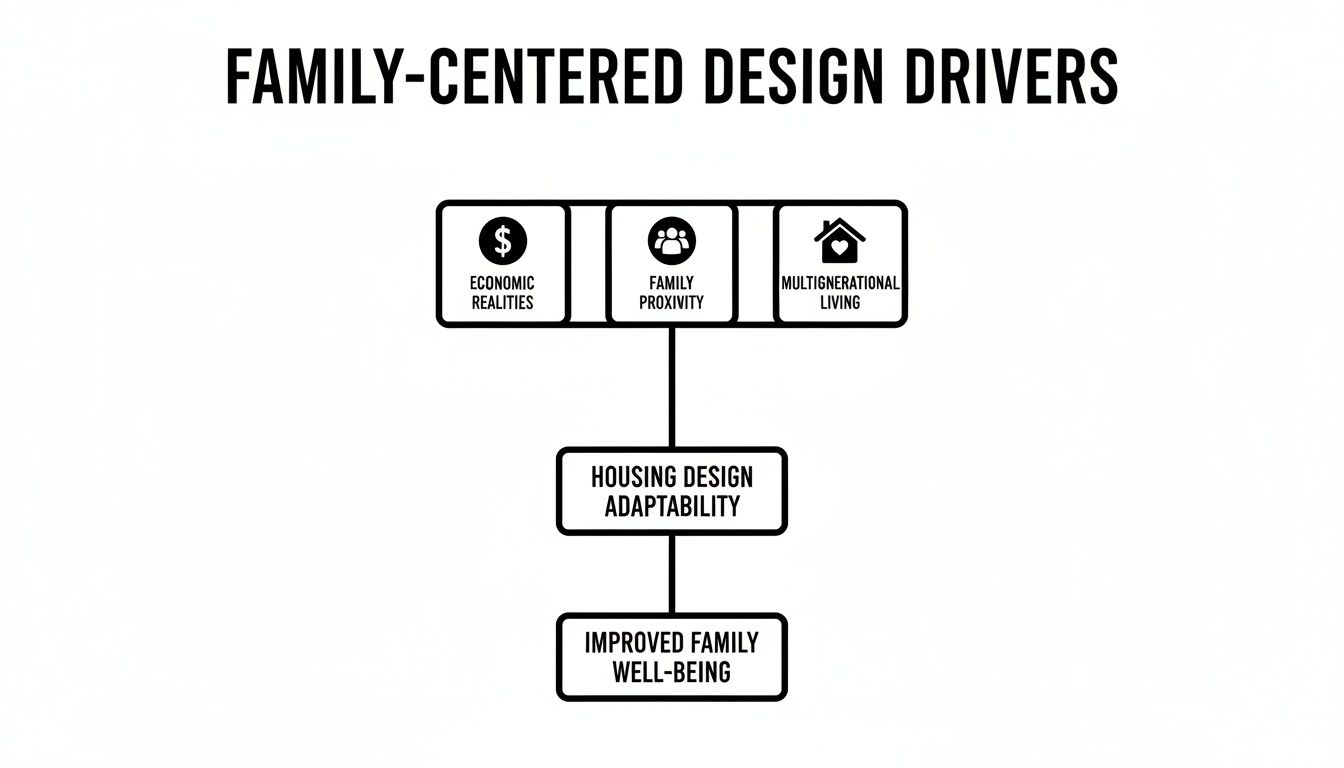
Homes need to adapt to these new needs.
Then vs. Now: Home Design Priorities in Monterey County
Home remodel goals have changed a lot. What homeowners wanted ten years ago is different from what they need today. This table shows that change.
| Design Feature | Traditional Renovation Goal | Modern Family-Centered Goal |
|---|---|---|
| Kitchen | A showpiece "chef's kitchen" for guests. | A functional, multi-user hub with durable surfaces like Quartz. |
| Guest Room | A formal space for occasional visitors. | A flexible suite for long-term family or an adult child. |
| Backyard | A decorative garden or patio area. | An integrated indoor-outdoor living space, often with an ADU. |
| Layout | An open-concept floor plan for a feeling of space. | Zoned living areas for both privacy and shared activities. |
| Bathroom | A spa-like master bath retreat. | An accessible, safe bathroom for aging parents. |
This change from style upgrades to functional, future-proof designs is the core of family-centered remodeling. It's about making a home that works for everyone for a long time.
Essential Features of a Modern Family-Centered Home
What does a family-centered home look like? It's a set of real design choices that make daily life easier for everyone. It’s about creating a home that can handle a growing family and also be a quiet place for aging parents.
The modern family home needs smart space planning. It must understand when families need to be together and when they need space. This is a key idea behind the shift toward family-centered home design in Monterey County—designing for how you really live.
Creating Flexible Rooms That Evolve
Flexible rooms are a powerful tool in family-centered design. A space can be a nursery today but a home office or playroom in five years.
This adaptability future-proofs your home, avoiding another costly remodel later. A well-designed flex room might have:
- Built-in storage that is easy to change.
- Neutral finishes that work for different uses.
- Plenty of outlets and good lighting for any future function.
The Importance of Durable, Low-Maintenance Materials
A busy home sees a lot of wear and tear. Family-centered design uses materials that are tough, beautiful, and easy to clean.
Homeowners are choosing Quartz countertops over marble because they resist stains and don't need sealing. Luxury vinyl plank (LVP) flooring gives the look of hardwood but is more durable and water-resistant. It's perfect for kitchens and bathrooms.
Balancing 'Together' Zones and 'Apart' Zones
Open-concept great rooms are great for family gatherings. But a successful family home also needs "apart" zones for privacy and quiet.
These private spaces are key for harmony in a multigenerational household. An "apart" zone could be:
- A primary suite with its own sitting area.
- A quiet reading nook.
- A small, soundproofed office.
- A separate den for teenagers.
Extending your living space with an outdoor kitchen creates another great "together" zone that uses our beautiful Monterey County climate.
Integrating Accessibility for Every Generation
A truly family-centered home is safe and accessible for everyone. Universal design principles are now part of smart design.
Key accessibility features include:
- Single-level living: Primary living areas on the ground floor.
- Wider doorways and hallways: We aim for 36 inches wide for wheelchairs.
- Curbless, walk-in showers: These remove trip hazards. You can learn more in our guide to accessible kitchen design.
- Lever-style door handles: They are easier to use than knobs.
By including these features, Aldridge Construction creates homes in Monterey, Santa Cruz, and San Benito Counties that are both beautiful and deeply functional.
How ADUs Provide the Perfect Blend of Proximity and Privacy
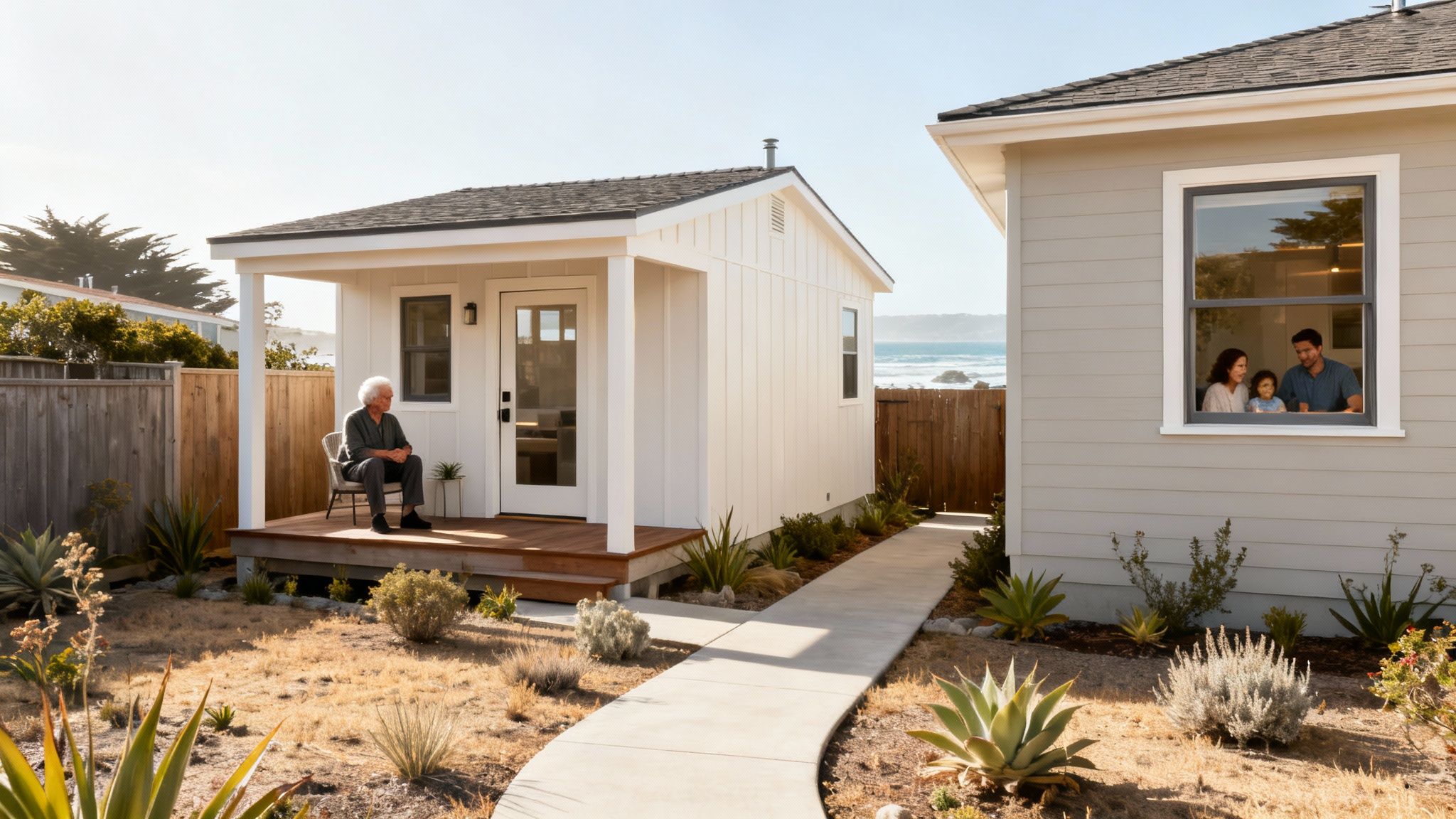
One solution has become a favorite in Monterey County: the Accessory Dwelling Unit (ADU).
These small, self-contained homes are often called granny flats. They solve the biggest challenge of multigenerational living: how to keep family close without crowding. An ADU gives you both proximity and privacy.
ADUs are a direct response to the shift toward family-centered home design in Monterey County. Each one is a separate, full home on your property with its own kitchen, bathroom, and entrance. This is great for aging parents or adult children who need their own space.
The Surge in ADU Popularity
Demand for ADUs has grown quickly. California has passed laws making them easier and more affordable to build. This has simplified the permit process for families across Monterey, Santa Cruz, and San Benito Counties.
An ADU is a smart investment in your family’s future and your property’s value. Read more about the five ways ADUs add real-life value.
Key Benefits of Building an ADU
Building an ADU is a powerful way to adapt your property for modern family life. It's a flexible solution that meets many needs.
- Promotes Independence: An ADU lets family live next door for support while keeping their own routines and privacy.
- Boosts Property Value: Adding a legal living unit is a great financial asset. It increases your home's value and appeal to future buyers.
- Creates Future Flexibility: Today’s granny flat can become a home office, art studio, or rental unit later.
Navigating the ADU Building Process
While new laws make it easier to build an ADU, the process still needs careful planning and local knowledge. Each city and county has its own rules.
This is where working with an experienced local builder like Aldridge Construction helps. We understand local rules and have a history of building custom ADUs. From the first design to the final check, our team manages the entire process to make it smooth for you.
Navigating Your Monterey County Renovation Project
A family-centered renovation here is about more than a great floor plan. It’s about knowing how to build for our unique area, from the coast in Monterey to the sunny valleys of San Benito County.
The mild climate is a huge plus. It's perfect for the indoor-outdoor living spaces families love. This is why large glass doors and durable decking are smart, practical choices that extend your living space.
Understanding Local Building Codes and Permitting
A local expert helps with the practical side of building. Any project must follow local and state rules. California's building codes are among the toughest in the country.
A big one is California's Title 24, the state's energy efficiency code. It sets standards for:
- Insulation: To keep your home comfortable and energy bills low.
- Window Performance: Requiring energy-efficient windows like dual-pane Milgard windows.
- HVAC Systems: Mandating high-efficiency heating and cooling.
- Lighting: Pushing for energy-saving lighting.
Getting Title 24 right makes your home more comfortable and cheaper to run.
The Value of a Local Construction Partner
The permit process can feel like a full-time job. Each city or county has its own rules. Trying to do it alone often leads to delays and extra costs.
A contractor with deep local knowledge is your best asset. They guide your project through the complex system, preventing costly mistakes.
This is where Aldridge Construction’s local experience shines. We have relationships with local planning departments. Our team handles the paperwork so your project gets approved without delays. Partnering with us means you get a team that knows how to get things done on the Central Coast.
Planning Your Family-Focused Renovation for Success
Ready to transform your home? Thoughtful planning is the key to success. It ensures your remodel meets your family's needs, stays on budget, and adds value.
A well-planned project starts long before construction. It begins with a clear vision and a practical plan. Getting this part right helps you build with confidence.
Define Your Family’s Must-Haves
Every family is different, and your plan should be too. Talk with everyone who will use the space. Discuss what works, what doesn't, and what each person needs.
Create two lists: "must-haves" and "nice-to-haves." This brings clarity and sets your priorities.
Your "must-have" list might include:
- A ground-floor bedroom and accessible bathroom for a parent.
- A quiet home office space.
- Durable, low-maintenance flooring.
Your "nice-to-have" list could feature a high-end appliance package. This list tells you where to invest if you have extra room in the budget.
Establish a Realistic Budget
Getting a firm handle on your finances is key. A realistic budget includes both hard costs (materials, labor) and soft costs (permits, design fees).
Always set aside a contingency fund of 10-15% of the total project cost. This is a safety net for unexpected issues. To learn more, check out our guide on how to estimate your renovation costs.
Choose the Right Contractor
Hiring the right contractor is the most important decision you'll make. You need a partner who understands family-centered design. Look for a licensed, insured local contractor with a strong portfolio.
A great contractor is your trusted advisor. They should be open about costs and timelines. They also plan for safety. As you plan, it helps to know how to childproof your home to keep your family safe.
At Aldridge Construction, we are that partner for families in Monterey, Santa Cruz, and San Benito Counties. We believe a successful renovation is built on trust and clear communication.
Frequently Asked Questions About Family-Centered Design
How much does a family-centered remodel cost in Monterey County?
The cost depends on your project's scope. A home addition or new ADU is a bigger investment than remodeling an existing bathroom. Final cost is shaped by square footage, design complexity, and material choices. The best way to get a number is to meet with a local contractor for a detailed quote.
How long does it take to build an ADU or a new suite?
A project includes design, permitting, and construction. The permit process in our area can take several months. Once permits are approved, construction for an ADU or major addition usually takes 6 to 12 months. An experienced local builder can give you a more exact timeline.
What is the first step to planning a multigenerational home addition?
The first step is to talk with your family. Discuss what everyone needs for privacy, accessibility, and shared spaces. Make a list of "must-haves" and "nice-to-haves." With that shared vision, you can then consult a contractor like Aldridge Construction to discuss ideas and create a realistic budget.
Can my existing home be adapted for aging family members?
Yes, many homes can be updated with aging-in-place features. Common upgrades include installing grab bars, converting tubs to walk-in showers, widening doorways to at least 36 inches, and adding ramps. These changes make the home safer and more comfortable for everyone.
What are the benefits of an ADU versus a home addition?
An ADU offers a completely separate living space with its own kitchen and entrance. This is great for privacy and independence. A home addition is fully connected to the main house. This is ideal for families who want a closer connection and shared common areas. The right choice depends on your family's needs and budget.
Ready to create a home that truly works for every generation? The team at Aldridge Construction has the local expertise to guide you through every step of your family-centered renovation. Contact us today for a consultation.