
A successful home office renovation transforms an underused area into a functional, comfortable, and tech-ready workspace that boosts productivity. This isn't just about adding a desk to a spare room. It’s a strategic investment in your work life and home's value, especially as remote work becomes a permanent fixture.
Aldridge Construction has seen this shift firsthand with homeowners across Monterey County, Santa Cruz, and Maricopa County, AZ. A well-planned renovation ensures your new space meets your professional needs and enhances your property.
The Modern Workspace: Your Renovation Blueprint
The concept of a home office has completely evolved. What was once a forgotten corner is now a critical part of the modern home, demanding the same expert execution as a kitchen or bathroom remodel.
This isn't just a feeling; market data confirms it. The move toward remote work has fueled a remodeling boom, with homeowners investing in comfortable, energy-efficient offices. This trend highlights the need for dedicated, functional workspaces. You can explore more on 2025 remodeling industry trends to see the full scope of this movement.
From Blueprint to Reality
This guide is your comprehensive blueprint from Aldridge Construction, designed to navigate every stage of a successful home office renovation. We'll cover everything from initial planning to the final walkthrough.
Our goal is to empower you to make smart decisions, whether you're:
- Carving out a small nook in an existing living area.
- Converting an underutilized space like a guest bedroom or garage section.
- Building a dedicated room addition for the ultimate, distraction-free workspace.
A well-designed home office is more than just a place to work—it’s an investment in your productivity and your property’s appeal. It should inspire focus and feel seamlessly integrated with the rest of your home.
Why Plan Your Home Office Renovation Carefully?
A well-planned approach ensures your new office meets your needs today and adds lasting value. For instance, homeowners in coastal California communities like Santa Cruz often prioritize natural light and durable materials like engineered hardwood.
Meanwhile, clients in Arizona's climate might focus more on superior insulation and energy-efficient windows to keep the space cool. This guide provides actionable insights from our experience building homes across Central California and Arizona, creating a workspace that truly works for you.
Defining Your Vision and Setting a Realistic Budget
A successful home office renovation starts with a clear, functional vision. Before considering paint colors, you must be honest about what the space needs to do for you daily.
Will it be a quiet sanctuary for deep focus or a dynamic command center for video calls? Is it a creative studio where mess is part of the process? The function of the space dictates its form.
Aligning Your Needs with Your Design
A therapist working from home in Santa Cruz County has different priorities than a graphic designer in Maricopa County. The therapist needs exceptional soundproofing, requiring materials like mineral wool insulation and a solid-core door.
The designer, however, needs specialized, color-accurate lighting and ample surface area for multiple monitors. The best home offices are purpose-built, focusing on how the design supports your work and eliminates distractions.
Once the vision is clear, it's time to create a realistic budget. This financial roadmap guides every decision and is the best tool for preventing costly overruns.
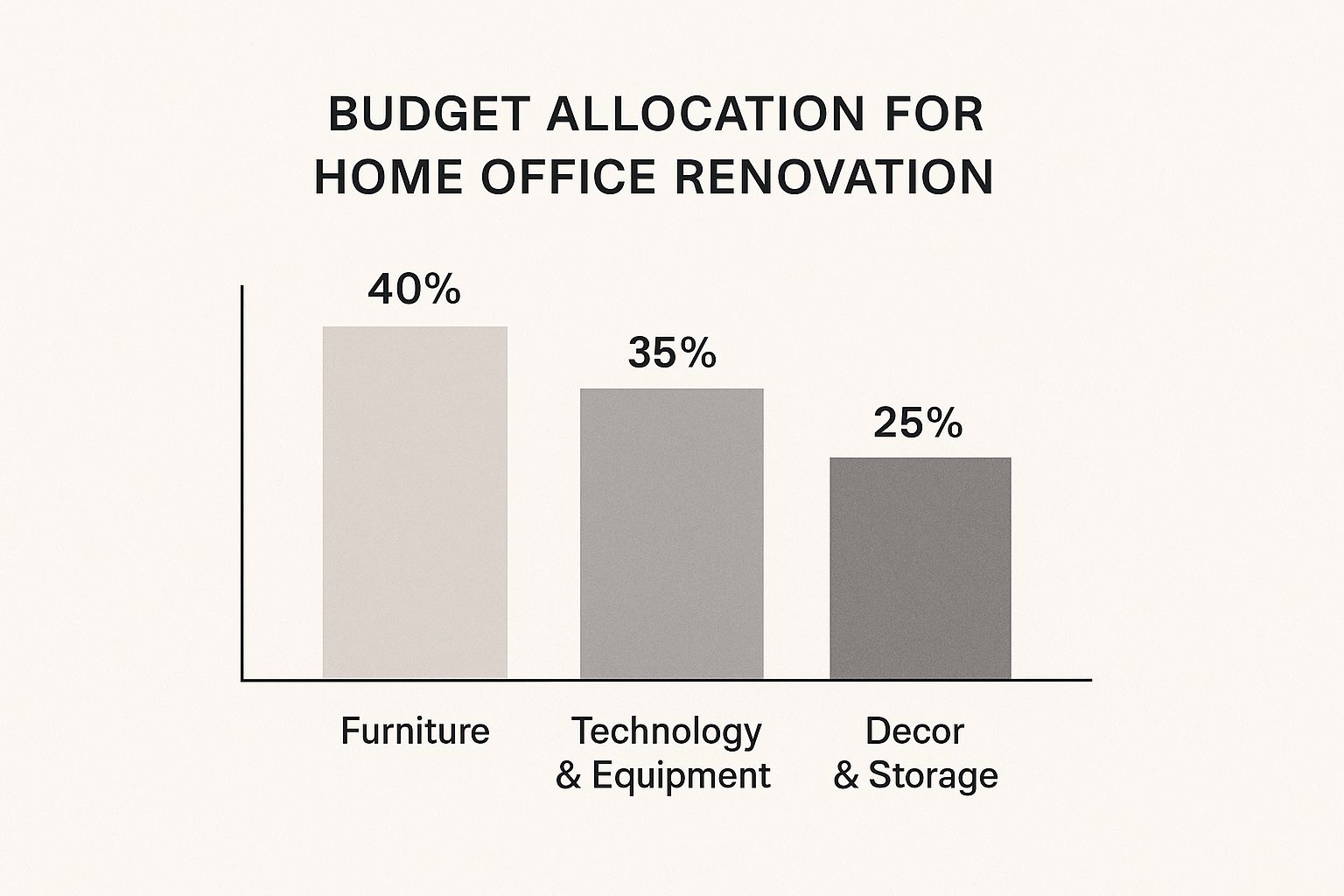
While furniture is a significant expense, technology and decor can be just as costly. A balanced financial plan is crucial from day one.
Budgeting for Your Local Market
The cost of a home office renovation varies by location and complexity. Labor rates and material costs differ between the California Central Coast and the Phoenix metro area.
To set realistic expectations, here are estimated cost ranges for different renovation levels in our primary service areas.
Home Office Renovation Budget Tiers
| Renovation Tier | Typical Scope of Work | Estimated Cost Range (Monterey/Santa Cruz) | Estimated Cost Range (Maricopa County) |
|---|---|---|---|
| Cosmetic Refresh | New paint, flooring, updated light fixtures, and assembly of new furniture. | $3,000 – $8,000 | $2,500 – $7,000 |
| Mid-Range Renovation | Includes cosmetic updates plus custom built-in shelving, new electrical outlets, and professional lighting design. | $9,000 – $25,000 | $8,000 – $22,000 |
| Major Conversion | Converting a garage, attic, or portion of a basement. Involves framing, insulation, HVAC, electrical, and high-end finishes. | $30,000 – $75,000+ | $25,000 – $65,000+ |
These are estimates; your final cost will depend on specific material choices. For more planning advice, Aldridge Construction offers essential home renovation tips for any project.
The Non-Negotiable Contingency Fund
No matter how meticulously you plan, renovations can reveal surprises, like hidden water damage or outdated wiring that needs updating to current California or Arizona code.
This is why a contingency fund is essential. Aldridge Construction strongly recommends setting aside an additional 15-20% of your total project budget as a safety net. This fund prevents small surprises from becoming major financial crises, ensuring your project stays on track.
Designing a Space for Peak Productivity

An effective home office renovation is about engineering an environment that supports focus, creativity, and well-being. A space designed with you in mind reduces physical strain and mental clutter.
This is where thoughtful design meets quality construction. We analyze ergonomics, then layer in smart lighting, clever storage, and future-proof technology to create a true productivity powerhouse.
Ergonomics Beyond the Chair
Proper ergonomic design considers how your body interacts with the entire workspace, not just the chair. Repetitive strain often comes from a poorly configured setup.
Proper desk height is fundamental, typically between 28 and 30 inches for most seated users. Monitor placement is just as critical: the top of the screen should be at or just below eye level and an arm's length away to prevent neck fatigue.
Layered Lighting for a Dynamic Atmosphere
Lighting can make or break your mood and energy. A single harsh overhead light causes glare and eye strain. A layered lighting strategy combines different sources for a balanced and adaptable environment.
- Natural Light: We maximize natural light. For clients in Monterey and Santa Cruz, installing large, energy-efficient Milgard windows can flood a space with soft coastal light.
- Ambient Lighting: This is the room’s general illumination from recessed lights or a central fixture, setting the overall tone.
- Task Lighting: This provides focused light for specific activities, like a desk lamp or under-cabinet lighting.
- Accent Lighting: This adds visual depth, like a spotlight on art or bookshelves.
A well-lit workspace isn't just about brightness; it's about control. Adjusting light throughout the day supports natural circadian rhythms and reduces eye fatigue.
Smart Storage and Tech Integration
Clutter is the enemy of focus. A successful home office renovation must include smart, integrated storage to keep essentials handy but out of sight.
We design solutions like custom built-in bookshelves and concealed cabinets. "Tech garages" hide printers and routers while providing ventilation and outlet access, keeping surfaces clear.
Future-proofing your office tech is equally important. This includes:
- Ample Outlets: We install quad outlets strategically so you're never searching for a plug.
- Integrated USB Ports: Built-in USB-A and USB-C ports reduce adapter clutter.
- Hardwired Data Connection: A dedicated Ethernet port provides a stable, fast internet connection for critical video calls.
Blurring the Lines Between Indoors and Out
In Central California and Maricopa County, creating a strong connection to the outdoors is a powerful design choice. A home office renovation is the perfect opportunity to embrace this.
For a client in Santa Cruz, this might mean a large sliding glass door framing a garden view. In Maricopa County, an office opening onto a shaded patio provides a welcome break space. This link to nature is proven to reduce stress and improve focus.
Finding the Right Partner: Vetting Contractors and Navigating Permits
Choosing a general contractor is the most important decision for your home office renovation. It's about finding a partner to bring your vision to life, directly impacting quality, timeline, and cost.
This choice matters, especially in a home remodeling market valued at nearly USD 950 billion in 2023 and still growing. A great contractor ensures your new office meets modern standards for safety and efficiency. You can review the global home remodeling market report to see what's driving this trend.
Selecting a Trustworthy General Contractor
The right contractor is your project manager and quality control expert. When vetting partners in Monterey, Santa Cruz, or Maricopa County, ask questions that go beyond a price quote.
Look for a contractor with a solid local reputation and a relevant portfolio. A contractor experienced on the California coast knows which materials stand up to moisture, while an Arizona expert understands heat mitigation.
A contractor's license and insurance are non-negotiable. Always verify their license number with the state board (CSLB in California or ROC in Arizona) and request a certificate of insurance covering general liability and workers' compensation. For more guidance, review our detailed guide on how to find a good contractor.
Understanding the Permitting Process
Dealing with permits can feel daunting, but it's a vital step to ensure your project is safe, legal, and built to last. Each jurisdiction, from Monterey County, CA, to Maricopa County, AZ, has its own rules.
Generally, you'll need a permit if your project involves:
- Structural Changes: Moving or adding load-bearing walls.
- New Electrical Work: Adding new circuits, outlets, or major lighting fixtures.
- Plumbing Modifications: Adding a powder room or wet bar.
- Altering the Building Envelope: Adding new windows or exterior doors.
Cosmetic jobs like painting or new flooring usually don't require a permit, but a seasoned contractor like Aldridge Construction will always verify with the local building department.
How a Contractor Simplifies Permits
A professional contractor handles the entire permitting process, from preparing drawings to scheduling inspections. In California, this includes ensuring the project meets Title 24 energy standards.
Having an expert manage this process saves time and avoids costly delays. It's your guarantee that your new office is not just beautiful, but also structurally sound and up to code.
Making It Real: The Construction and Materials Phase
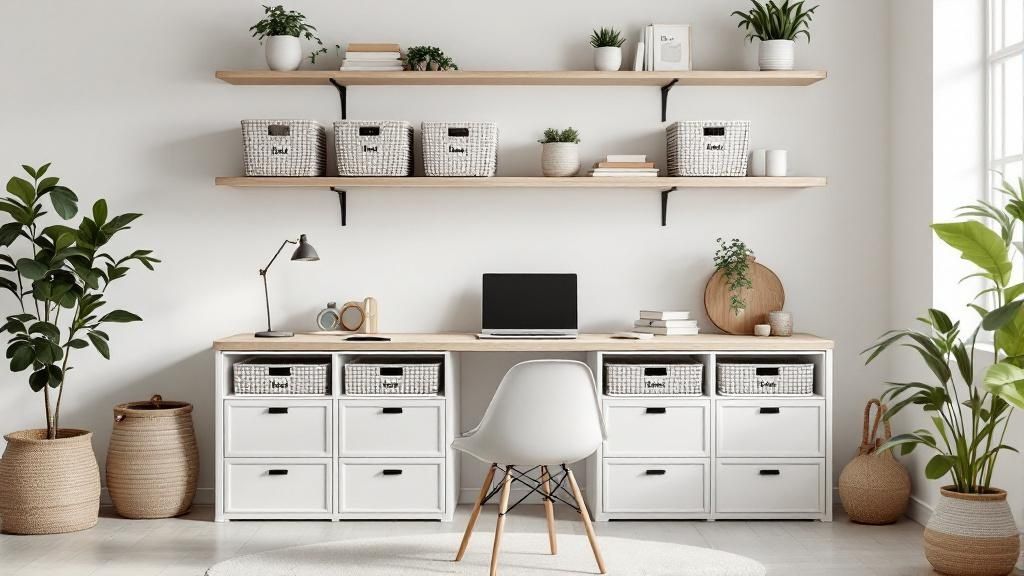
With a contractor hired and permits secured, your home office renovation shifts from plans to reality. It's an exciting time as the vision starts to take physical form.
Aldridge Construction begins with meticulous site preparation, sealing off the work area with plastic barriers and using dust-control systems to protect the rest of your home.
The Construction Sequence
Once the site is prepped, the work begins. Though every project is unique, the construction process follows a logical sequence to ensure quality and avoid backtracking.
The key phases typically unfold like this:
- Demolition & Framing: We clear away old materials and frame the new "skeleton" of your office.
- Mechanical Rough-In: With walls open, plumbers and electricians run new pipes and wiring for outlets, data ports, and lighting.
- Insulation & Drywall: After inspection, we install insulation for thermal performance and soundproofing. Drywall is then installed and finished for smooth, paint-ready walls.
Your project manager coordinates all trades—carpenters, electricians, painters—to ensure the project flows smoothly and meets our high craftsmanship standards.
Choosing Materials That Perform
Material selection stamps your personality onto the space and ensures longevity. It's about choosing high-performance products that fit your work style and meet local building standards in Maricopa County or Monterey.
Flooring That Works as Hard as You Do
Your office floor must be durable. We recommend materials that balance durability, comfort, and style.
- Engineered Hardwood: Offers the classic look of solid wood with better stability, ideal for California’s variable humidity.
- Luxury Vinyl Plank (LVP): This material is highly durable, waterproof, and effectively mimics the look of real wood or stone, making it a practical choice for a multi-use office.
Surfaces That Are Both Functional and Beautiful
For built-in desks and countertops, the surface material needs to be scratch-resistant and visually appealing.
- Quartz: A non-porous, engineered stone that is incredibly tough and requires zero maintenance. It offers a clean, modern look perfect for a high-use work surface.
- Butcher Block: A solid wood butcher block adds warmth and a natural feel. It can be refinished over the years, making it a long-term investment.
Windows, Air Quality, and Final Details
Natural light and a healthy environment are non-negotiable. Energy-efficient windows, like those from a quality brand like Milgard, lower energy bills, block UV rays, and reduce outside noise.
We also guide clients toward sustainable materials like low-VOC or zero-VOC paints and formaldehyde-free cabinetry to improve indoor air quality. These choices create a healthier atmosphere for the hours you’ll spend in your new space. For more on how material choices intersect with building codes, see our approach to local construction permit requirements.
Finishing Touches and Your Final Walkthrough
This is where your project transforms from a job site into a workspace you’ll love. The focus shifts to the finishing details that inject personality, comfort, and final functionality.
Paint color is a tool for productivity; soft blues and greens create a calm atmosphere. Flooring is laid, light fixtures are hung, and custom cabinetry gets its final hardware, tying the design together.
The Critical Final Walkthrough
Before moving in, the final walkthrough with your contractor is a crucial step. This is your dedicated time to meticulously inspect every detail and ensure the craftsmanship meets your standards.
Treat the final walkthrough like a formal inspection, not a casual tour. Be systematic and check every component. Don't be rushed—a thorough check now saves headaches later.
Creating Your Punch List
Use a notepad to create a detailed "punch list" of every item needing attention, no matter how small. Walk through the room with your contractor and physically test everything. To get started, you can adapt our comprehensive home remodel checklist.
Here are must-haves for your inspection list:
- Paint & Drywall: Scan walls for even coverage, crisp lines, and zero scuffs.
- Electrical Fixtures: Test every outlet and switch, including dimmers.
- Doors & Windows: Open and close each one to ensure smooth operation and secure locking.
- Cabinetry & Built-Ins: Open all doors and drawers to check for proper alignment and smooth operation.
- Flooring: Look for gaps, scratches, or uneven spots, and check transitions to other rooms.
Once you and your contractor have addressed the punch list and you’ve signed off, you can finally move in and enjoy your fantastic new home office.
Your Home Office Renovation: FAQs
Even with a detailed plan, questions arise during a home office renovation. Having served homeowners across Monterey, Santa Cruz, and Maricopa Counties, Aldridge Construction has compiled answers to the most common inquiries.
1. How long does a home office renovation typically take?
The timeline depends on the project's scope. A simple cosmetic refresh (paint, new furniture) can take 1–2 weeks. A mid-range renovation with custom built-ins and new electrical work might take 4–6 weeks. A major conversion, like a garage to a fully finished office, should be planned for 8–12 weeks or more to account for design, permitting, and inspections.
2. What is the ROI on a home office renovation?
While a precise ROI is hard to pin down, a well-designed home office is a major selling point that significantly adds to your home's marketability. With remote work becoming standard, buyers see a dedicated workspace as a high-value feature. The global home renovation market was valued at nearly $2 trillion in 2024, with North America accounting for 33.34%, showing a strong trend toward functional home upgrades. You can dive deeper into the home renovation market projections for more data.
3. Can I convert a closet or part of a garage into an office?
Yes, "nook" offices are an excellent way to create a dedicated workspace. However, these conversions require professional attention to ensure proper insulation, HVAC, and safe electrical wiring. The space must also comply with local building codes for habitable spaces in California and Arizona. See how our home renovation experts in Salinas tackle similar projects.
4. What is the best way to soundproof my new office?
Effective soundproofing involves layers. We recommend installing dense mineral wool insulation inside walls, adding a double layer of 5/8-inch drywall with a sound-dampening compound between them, and installing a solid-core door. Sealing all gaps with acoustic caulk provides the finishing touch for a quiet, private workspace.
5. How can I make a small home office feel bigger?
To make a small space feel open and airy, use these design tricks:
- Light Colors: Light paint on the walls reflects natural light and creates a sense of openness.
- Vertical Storage: Use floating shelves to draw the eye upward and free up floor space.
- Minimalist Furniture: Choose a desk with open legs instead of a bulky, solid one.
- Mirrors and Lighting: A well-placed mirror combined with good lighting can create an illusion of depth, making the room feel larger.
Ready to transform your workspace? Contact Aldridge Construction today for a consultation and let our experts in Monterey, Santa Cruz, San Benito, and Maricopa Counties help you build the perfect home office.