
Direct Answer: On the Monterey Peninsula, a building permit cannot issue until the water management district issues a water permit, and the city must approve an allocation first. Plan that step before drawings.
Here is the pattern I see on the Peninsula more than any other. A homeowner in Monterey or Carmel gets plans drawn, picks a contractor, sets a start date, and then learns the building permit cannot issue until a water permit is in hand.
That water permit comes from the Monterey Peninsula Water Management District. And before the district can act, the city has to sign off on a water allocation. Two agencies most homeowners have never dealt with, sitting in front of the one they were expecting.
This is sequencing, not bad news. The people who learn it in month one build the schedule around it. The people who learn it in month six lose a whole construction season.
Why the Water Permit Comes First on the Monterey Peninsula
Water on the Peninsula is capped. The City of Monterey says plainly that it has no water available for allocation, and it keeps three separate waiting lists, including a Residential Remodel Water Waiting List.
So for most private projects, the water you get to use is the water already credited to your specific parcel. Not the neighborhood’s, not a pool the city draws from. Yours.
That single fact reshapes a project. It means the real question at the kitchen table is not “can we afford this addition,” it is “does this parcel have the water on record to support it.”
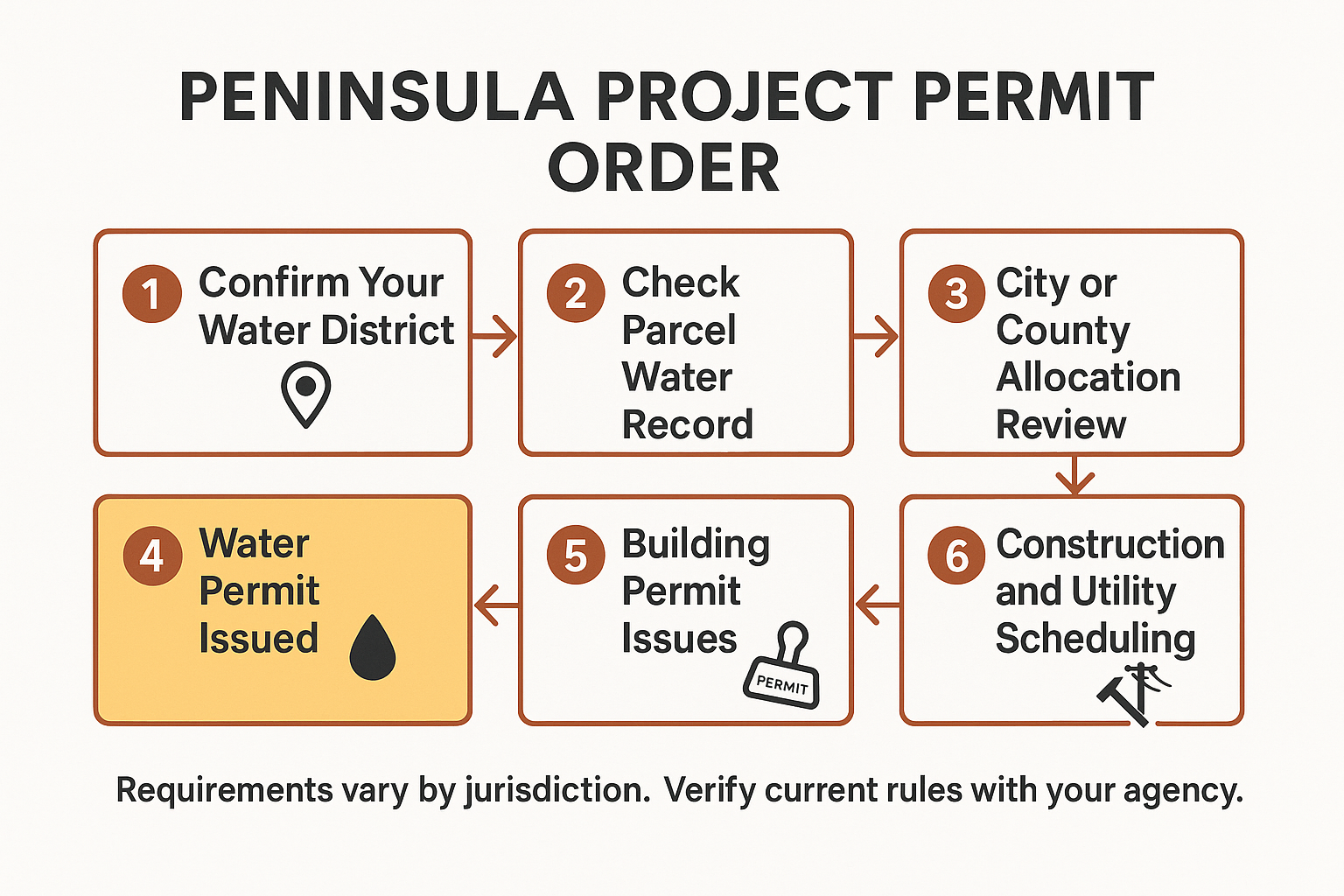
Here is the order of operations I walk Peninsula clients through:
- Confirm which water agency serves the parcel
- Get a read on the parcel’s existing water record and fixture count
- Work the city or county planning side for an allocation determination
- Submit the signed water release form and approved plans to the district
- District prepares the water permit
- Building permit can then issue
Once a jurisdiction does grant an allocation, the applicant has a limited window to submit the related development permit application. Sit on it and you can lose it. That is a very different clock than the one on a coastal ADU permit timeline, and both can be running at once.
Adding One Bathroom Can Mean Replacing Fixtures Across the Whole House
This is the part almost nobody publishes, and it is the reason I wrote this article.
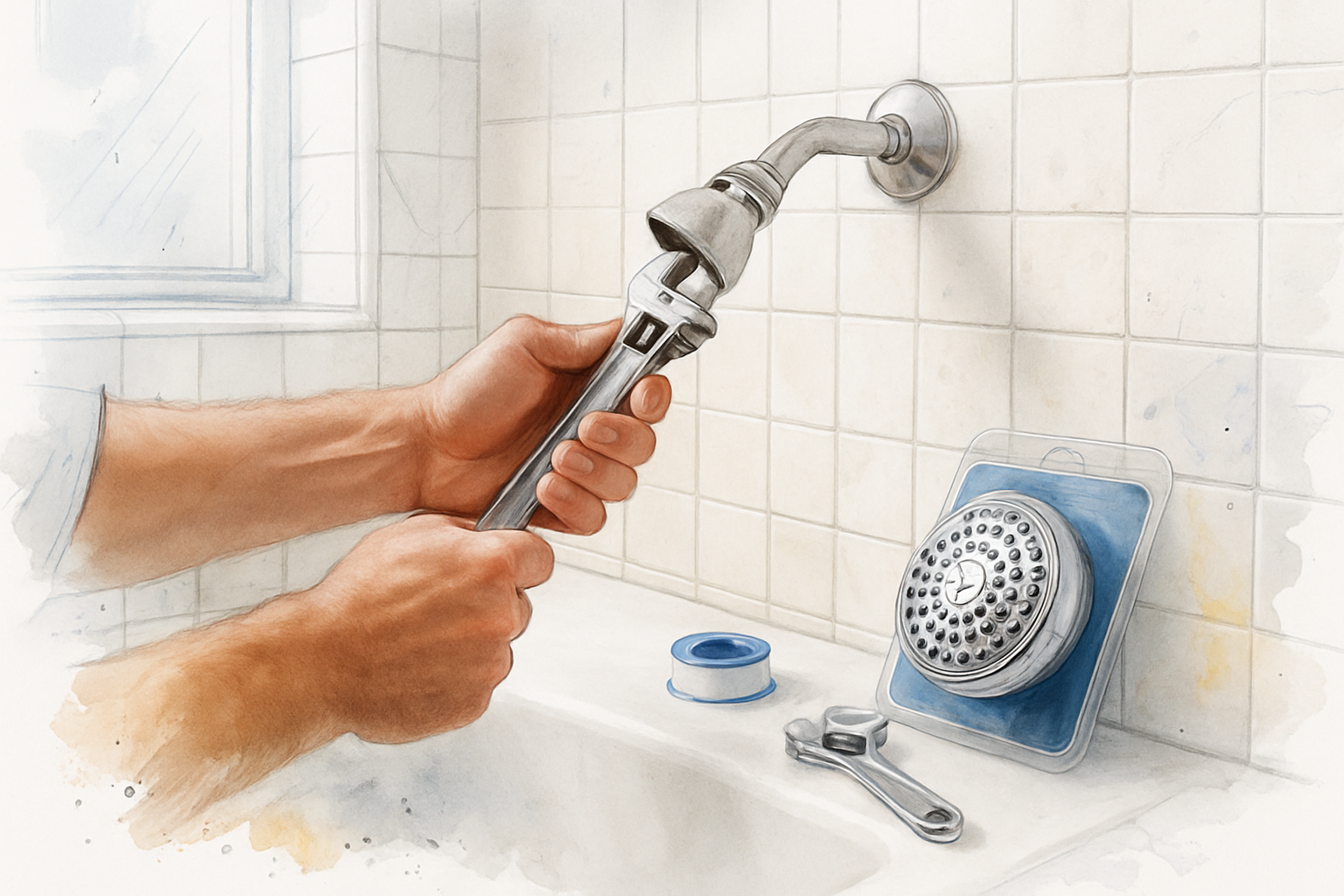
As a condition of a water permit to add a bathroom, the district requires that every toilet on the site be a high efficiency 1.28 gallon per flush model, every showerhead flow at 2.0 gallons per minute, and kitchen, utility, and bar sink faucets emit no more than 1.8 gallons per minute at 60 psi. You can read the conditions on the district’s own ADU water permit page.
Read that again with your own house in mind. Adding one bathroom in Monterey, Carmel, Pacific Grove, or Seaside can require touching fixtures in bathrooms you were not remodeling at all.
What that does to a project:
- The materials list grows beyond the room under construction
- Older homes with two or three original toilets take the biggest hit
- Vintage or specialty fixtures may have no compliant match, so the decision becomes replace or redesign
- Labor gets scattered across the house instead of concentrated in one room
- New dwellings also require water efficient appliances including an instant-access hot water system, and the district gives no credit for installing it
I will not put a dollar figure on that, because it swings hard depending on how many fixtures your house has and what you pick to replace them with. But it belongs in the budget conversation on day one, not as a change order in week five.
Where Your Parcel Sits Changes the Entire Process
This is where general remodeling advice falls apart for Central Coast homeowners. The same 450 square foot garage conversion follows two completely different paths depending on the address.
Build it in Salinas, Gonzales, or Hollister and this Peninsula water permit process does not apply to the project at all. Build it in Seaside, Marina, or Carmel Valley and you may be dealing with a different water agency entirely, with its own retrofit conditions.
Seaside’s own ADU instructions tell applicants to calculate water needs with the district first, then bring that analysis back to city planning to find out whether an allocation is even needed. That is a two-stop process before a single sheet of plywood is ordered.
Properties served by Marina Coast Water District follow a separate track. I tell every homeowner the same thing: confirm which district serves your parcel before you assume anything, including assuming your neighbor’s experience applies to you. Lots a few hundred feet apart can sit under different agencies.
It also changes how I’d scope the job. Deciding between a garage conversion and a detached ADU is a different math problem when fixture retrofits ride along with the bathroom.
Water Permit Reality by Area
A rough map of what homeowners run into depending on where the parcel sits. Always verify your own parcel with the serving agency.
| Area | Water permit situation | What it usually means for the build |
|---|---|---|
| Monterey, Carmel, Pacific Grove | MPWMD water permit plus city allocation | Water permit must be in hand before the building permit issues; whole-site fixture conditions apply when adding a bathroom |
| Seaside | MPWMD analysis first, then city planning | Calculate water needs with the district, bring the analysis back to planning to learn whether an allocation is needed |
| Marina area (Marina Coast Water District) | Separate agency, separate track | Different rules and different retrofit expectations; confirm the serving district before planning |
| Carmel Valley | Depends on the serving agency for that parcel | Do not assume it matches the city of Carmel; verify by parcel |
| Salinas, Gonzales, Hollister | Not in the Peninsula water permit process | Standard city or county permitting path, no MPWMD water permit step |
The Order These Approvals Actually Happen In
Most homeowners picture one permit. On the Peninsula it is a chain, and the water step sits in the middle of it.
Water Credits, in Plain English
Credits are what decide whether a project is possible at all, and the concept is simpler than the paperwork makes it look.
The district documents credits when water efficient appliances replace older ones or when fixtures are permanently removed, including removal through demolition. Take out a bathroom, take down an old structure with plumbing in it, and there may be something on the record.
One catch that catches people: residential water use credits are time limited to ten years. They do not sit on a parcel forever.
That matters in two situations I see constantly on the Central Coast:
- Buyers who purchase a Peninsula home planning to add a unit later. The credit clock may already be running, and it started before they owned the place.
- Owners tearing down an old shed or outbuilding as part of an ADU project. What comes out can matter as much as what goes in, if it is documented correctly.
So the practical first move costs nothing. Call the district with your parcel number and ask what the water record shows, before you commission drawings.
I have watched that one phone call change a project from a detached unit to a conversion inside existing space, and save the owner months. It is also worth doing before you settle on a budget, because the water picture feeds directly into what an ADU actually costs in Monterey County.
On Peninsula Projects, Outside Agencies Set the Calendar
Once every other county or city approval is in place, the signed water release form and the approved plans go to the district, and the district then prepares the water permit. That is the handoff that gets a building permit moving.
A couple of details worth knowing on the ADU side. The district allows permanent submetering of water use into an ADU. A unit built inside the existing space of a house or an accessory structure is exempt from that submetering requirement, which is one more reason conversions pencil differently than new detached construction.
And after all of that, the meter set and the power connection still have their own queues. A homeowner who had us convert a garage into an ADU put it well in her review:
> “The project took a little longer than expected, but this was due to PG&E’s scheduling and availability.”
She was right about the cause. On Peninsula work, water and power schedule the job more often than framing or finishes do. That is also true when you are legalizing an existing unpermitted unit, where the utility record can be the longest pole in the tent.
One standing caution: these requirements shift by jurisdiction and by year. Verify current rules directly with your city or county and with your water district before you rely on any of it.
Frequently Asked Questions About the Monterey Peninsula Water Permit
Do I really have to replace toilets in bathrooms I am not remodeling?
If you are adding a bathroom under a Peninsula water permit, yes, the conditions apply site-wide. Every toilet at 1.28 gallons per flush, every showerhead at 2.0 gallons per minute, and kitchen, utility, and bar faucets at no more than 1.8 gallons per minute at 60 psi. Budget for the whole house, not just the new room.
How do I find out if my parcel has water credits?
Call the water management district with your parcel number and ask what the record shows. Do it before you pay for drawings. Credits from removed fixtures or demolished structures may exist, but residential water use credits are time limited to ten years, so timing matters.
Does any of this apply to my house in Salinas?
No. A remodel or ADU in Salinas, Gonzales, or Hollister does not go through the Peninsula water permit process. You are on the standard city or county permit path, which is why advice from a friend in Carmel may not fit your project at all.
Can I get a water allocation from the City of Monterey if my parcel does not have credits?
The city states it has no water available for allocation and maintains three waiting lists, including a Residential Remodel Water Waiting List. For most private projects, you are working with the credits already attached to that parcel.
Does an ADU need its own water meter?
The district allows permanent submetering of water use into an ADU. A unit built inside the existing space of the house or an accessory structure is exempt from that submetering requirement, which is one more practical argument for conversions on tight Peninsula lots.
Want a Read on Your Own Parcel?
We treat Monterey County as several permitting environments rather than one, and we handle the multi-agency order of operations across planning, environmental health, building, and utility coordination, including garage conversions and legalizing existing structures that catalog builders will not take on. Aldridge Construction is licensed in California (Lic #1081584) and reachable at 831-682-9788 or through the contact page at aldridgeconstruction.biz if you want a straight read on what your parcel’s water record means for your project.