
Getting a building permit can feel like a huge roadblock to your remodel. But with the right team, permits don’t have to be a pain. An experienced contractor who knows local codes in Monterey, Santa Cruz, or Maricopa County can guide you through the system.
In fact, recent changes for projects like Accessory Dwelling Units (ADUs) have made approvals faster than ever. This guide will show you how smart planning turns permits from a problem into a key part of your project's success.
Your Permit Questions Answered Upfront

Starting a home remodel brings up many questions. You might wonder, "How long will this really take?" or "Do I truly need a permit for my project?"
These are valid concerns. Getting clear answers early is key to a stress-free experience. The permit process protects your safety and home value. It ensures everything, from the foundation to wiring, meets strict safety standards.
Common Renovation Projects and Permit Needs
Knowing which jobs require a permit is the first step. Rules can vary between Monterey, CA, and Maricopa, AZ, but some general guidelines apply.
Here’s a quick look at common projects and their permit needs.
| Project Type | Permit Required? | Key Consideration |
|---|---|---|
| Kitchen Remodel | Yes, if moving walls or changing plumbing/electrical. | Structural changes and utility work always need a city review to ensure they meet code. |
| Bathroom Addition | Yes | New spaces with plumbing and electrical require a full plan review and inspections. |
| Window Replacement | Often, Yes | In California, permits ensure new windows meet Title 24 energy efficiency requirements. |
| Re-roofing | Yes | A permit ensures the new roof is structurally sound and meets local fire safety rules. |
As you can see, big changes involving structural, electrical, or plumbing work need city approval. It’s always better to be safe than sorry.
Organizing Your Documentation
A smooth permit application starts with organization. A good contractor will handle this, but it’s helpful to know what’s involved.
To make the process painless, you can check an ultimate building permit checklist ahead of time. Our team at Aldridge Construction manages this entire process for you. For a detailed guide on organizing your project, download our free home remodel checklist.
How Smart Permitting Protects Your Investment

It’s easy to see permits as just another hurdle. But in reality, careful permitting protects your family and your home investment.
Skipping permits can backfire badly. Unpermitted work can lead to big fines, unsafe construction, and problems when you try to sell. After years of working with homeowners across Monterey, Santa Cruz, and Maricopa Counties, we’ve learned that when managed correctly, permits don’t have to be a pain.
More Than Just Paperwork It’s Your Safety Net
Think of a permit as a quality control check. It is official proof that an expert has reviewed your plans to make sure they meet safety standards.
This review process confirms crucial details, ensuring:
- The structural integrity is solid.
- All electrical systems are installed correctly to prevent fire hazards.
- Your plumbing meets modern health codes.
- The project meets energy efficiency standards, like California's Title 24.
Without these checks, you are taking a risk on your home's safety. That's a gamble no one should take.
Boosting Your Property Value the Right Way
A fully permitted renovation adds real, legal value to your home. When it’s time to sell, unpermitted work is a huge red flag for buyers and their lenders.
A clean permit file shows all work was done by the book. This transparency makes your home more attractive and helps you see a better financial return. A real estate due diligence checklist can help you understand all the factors involved. You can also read our guide to home renovation return on investment.
Getting Your Plans Through the City: From Submission to Inspection
The journey from blueprints to a stamped permit has a clear path. Knowing what to expect—and having an experienced partner—proves that permits don’t have to be a pain.
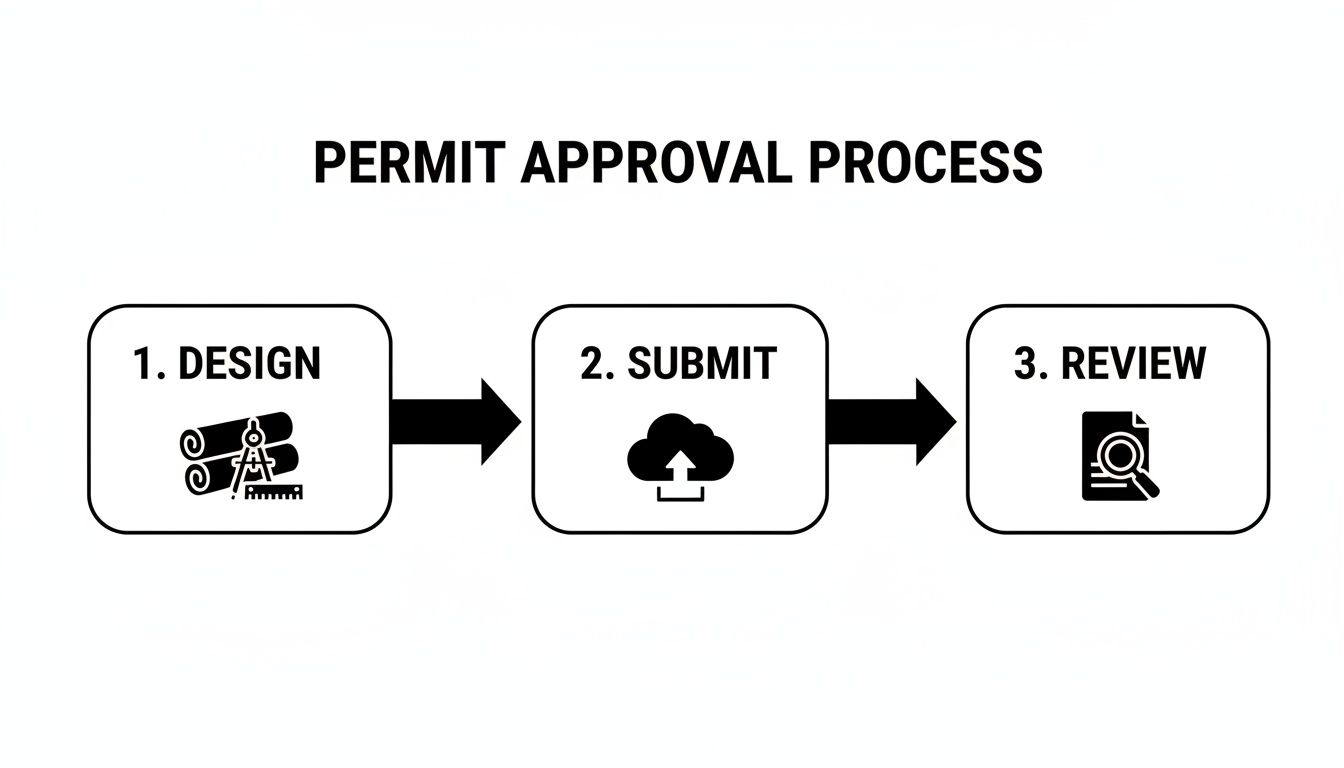
From Design Plans to Application Submission
The first step is putting together a complete document package. This isn’t just a simple sketch; it’s a professional set of plans.
This package almost always includes:
- Detailed Site Plans: Shows property lines and where the new work will happen.
- Architectural Drawings: Floor plans and exterior views of the finished project.
- Structural Calculations: An engineer's proof that the structure will be safe.
- Energy Calculations: In California, this means Title 24 reports for energy efficiency.
Once ready, the package is submitted. The process varies by location. Maricopa County, AZ, has an online portal, while Monterey County might require in-person steps. A local contractor knows exactly how to submit your application for the fastest review.
The Review Stage and On-Site Inspections
After you submit, a plan checker at the building department reviews every detail. They make sure your project follows building codes and local laws.
It’s normal for the reviewer to have questions. They will send back a list of "comments." Your contractor's job is to address every one and resubmit the plans. This back-and-forth is a normal part of the process.
Once plans are approved, the permit is issued, and construction can start. A city inspector will visit at key milestones, like after pouring the foundation or before closing up walls. These inspections confirm the work matches the approved plans. You must pass each one to move forward. Find more details in our guide to construction permit requirements.
How California and Arizona Are Making Permits Easier
The word “permits” can make any homeowner nervous. But local and state governments are proving that permits don’t have to be a pain. Both California and Arizona have made changes to make the process faster and less confusing.
A common question is: “Won’t an ADU project take forever to get approved?” However, recent insights show that updated California laws and local support have streamlined ADU permits, with counties offering pre-approved plans to speed things up.
Streamlined ADU Approvals in California
What this actually means for you is that building an ADU is faster and easier than it used to be. Homeowners in Monterey County can now access pre-approved designs that significantly cut down review times.
Because the city has already approved the core plans, their review focuses only on site-specific details. This simple change can cut weeks or even months off the timeline. Ask your contractor if they work with your city’s pre-approved ADU designs to shorten the permitting process. You can learn more about this in our post about Pre-Approved ADU Plans here.
Efficient Digital Systems in Arizona
It's not just California making moves. In Maricopa County, Arizona, online permit portals have been a game-changer.
These digital systems let contractors submit plans, track the review status, and talk with plan checkers online. This transparency makes the whole experience less stressful and creates a more predictable schedule.
Common Permit Pitfalls and How to Avoid Them
Even with faster approvals, a few common mistakes can still cause delays. Learning from others' mistakes is the best way to keep your project on track and prove that permits don’t have to be a pain.
Overlooking Local Zoning and Setbacks
One of the most common issues involves property lines and setbacks. This is the required buffer zone between your home and the property edge.
A project in Salinas was rejected because the design went just two feet into the side-yard setback. This forced a total redesign, adding costs and a two-month delay. The lesson is clear: every inch matters. Your contractor must check local zoning rules for your property in Monterey, Santa Cruz, or Maricopa County before drawing plans.
Incomplete Plans and Code Compliance
Another common problem is failing to address specific building codes in the plans. For example, California's Title 24 energy codes are very strict.
Your plans must show how your project will meet these standards, from the U-factor of your Milgard windows to the R-value of your insulation. An application missing that detail gets flagged for correction right away. An experienced local contractor knows what plan checkers look for and ensures your application is complete from the start. You can learn more from this analysis of permitting timelines to see how much a solid plan helps.
Finding a Partner for Painless Permitting

You don’t have to handle building permits alone. An experienced local contractor is your most valuable partner. This is how we ensure permits don’t have to be a pain for our clients.
At Aldridge Construction, we manage the entire permitting process for you. We prepare and submit the application and communicate with city plan checkers. We are your single point of contact with the building department.
Our knowledge of local codes across San Benito, Santa Cruz, and Monterey counties saves you time and stress. We also schedule all required inspections to keep your project moving smoothly. Our guide on how to find a good contractor can help you make a smart choice.
Want to see how fast you can get started? Reach out to explore our streamlined ADU process.
Frequently Asked Questions (FAQs)
We understand the permit process can seem confusing. Here are straightforward answers to common questions we hear from homeowners in California and Arizona.
1. How long does it take to get a building permit?
It depends on your project's size and how busy your local building department is. A simple job in Monterey or Maricopa County might take a few weeks. A complex addition or new ADU could take several months. Using pre-approved plans or working with an experienced contractor who knows the system can significantly speed things up.
2. What happens if I build without a permit?
This is a costly mistake. The city can issue a stop-work order, which halts all construction immediately. You may face heavy fines and could even be forced to tear down the unpermitted work. It also creates major problems when you try to sell your home.
3. Can I pull the building permit myself?
While homeowners can apply for their own permits, we don’t usually recommend it. The process requires detailed architectural plans, engineering calculations, and a deep understanding of local building codes. It's often much faster and less stressful to have your licensed contractor manage the entire process for you.
4. Do I really need a permit just to replace my windows?
Yes, in many areas you do. In California, a permit is usually required for window replacement to ensure the new windows meet current Title 24 energy efficiency standards. This helps lower your home’s energy use. Always check with your local building department or your contractor first.
5. Is the cost of the permit included in a contractor's quote?
This is an important detail to clarify, as it varies between contractors. At Aldridge Construction, we list permit fees as a separate item in our proposal for full transparency. We manage the entire submittal and payment process for you, so there are no surprises.