
Direct Answer: A Super El Niño winter can bring 150–200% of normal rainfall to the Salinas area. Check your gutters, foundation drainage, crawl space, and exterior seals now — before storm season makes repairs harder and more expensive.
Every few years, the Pacific Ocean reminds the Central Coast who’s actually in charge. A strong El Niño event — the kind that meteorologists are already flagging for the coming winter — historically delivers 150 to 200 percent of normal rainfall to Monterey County. That’s not a rounding error. For homeowners in Salinas, Seaside, Hollister, and across the county, it means the Salinas River swells, low-lying neighborhoods flood, and any deferred maintenance on your home stops being a background worry and becomes an emergency repair bill.
The good news is that summer and early fall are exactly the right time to get ahead of it. Gutters, drainage grades, crawl spaces, and exterior wall seals are all things that can be evaluated and corrected before the first December storm shows up. The homeowners who regret it are the ones who had the same items on their to-do list in October and never got around to calling anyone.
This guide walks through the home systems most at risk during a wet winter, how to do an honest walk-around assessment on your own property, and why project timing — for everything from a bathroom remodel to a new ADU — matters more than most homeowners realize when heavy rain is in the forecast.
What a Super El Niño Actually Means for Monterey County
The term “El Niño” gets used loosely, but the distinction between a moderate event and a strong one is significant. KSBY and NOAA have both tracked Central Coast rainfall patterns over past strong cycles — the winters of 1982–83, 1997–98, and 2022–23 are the reference points. In each of those years, Monterey County saw prolonged rain events, not just individual storms.
For Salinas specifically, the geography matters. The Salinas River runs through the valley floor, and its floodplain includes sections of North Salinas and agricultural land that backs up to residential neighborhoods. Coastal Monterey and Seaside face different risks — storm surge and hillside saturation — while inland areas like Hollister in San Benito County deal with clay soils that shed water slowly and pool against foundations.
None of this means panic. It means preparation. A home that has been properly maintained — good grading, sealed penetrations, functioning gutters — handles a wet winter far better than one with three years of deferred maintenance. The difference shows up clearly after the storms pass, when some homeowners are calling their contractors for routine follow-up and others are dealing with wet crawl spaces, buckled subfloors, and water-stained drywall.
Understanding what separates a remodel that holds from one that doesn’t starts with how well the home’s envelope was built and maintained — and that matters even more in a heavy-rain year.
The Four Home Systems That Fail First in Heavy Rain
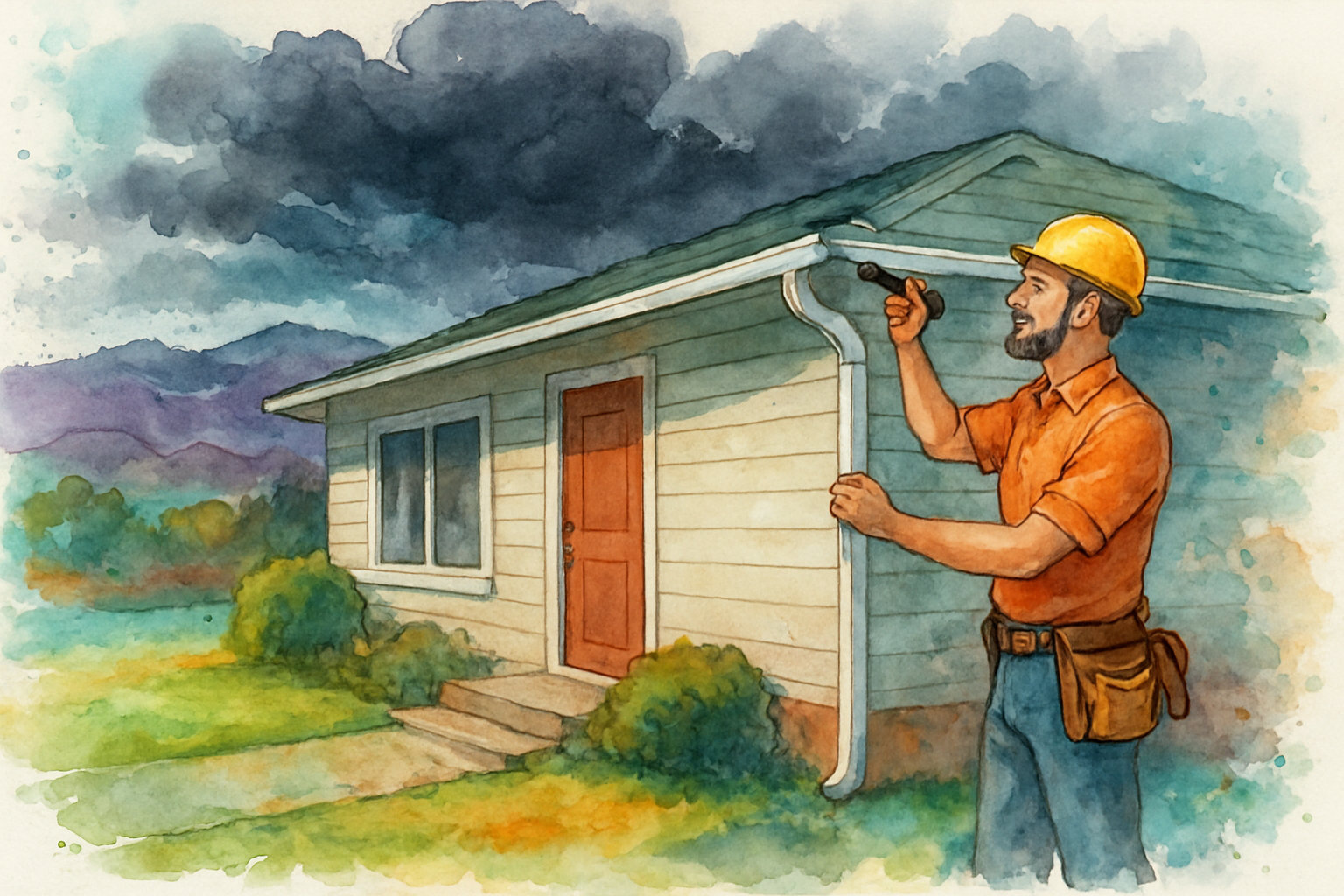
After a wet winter, most of the repair calls contractors receive trace back to the same handful of failure points. These aren’t obscure or complicated systems — they’re things homeowners can observe themselves with an hour and a ladder.
1. Gutters and downspouts
Clogged or undersized gutters are the most common source of water intrusion problems. When gutters overflow, water runs directly down exterior walls and pools at the foundation. In Salinas, mature oak trees and eucalyptus lines mean gutters can fill up fast. Downspouts should discharge at least 4 to 6 feet away from the foundation — not into a splash block that sits three inches from the slab.
2. Foundation grading
The soil around your foundation should slope away from the house, typically 6 inches of drop over 10 horizontal feet per most code guidance. Settled soil, raised planter beds, and mulch buildup work against this over time. Any spot where water visibly pools against stucco or wood siding after a rain is a problem that will worsen in a heavy season.
3. Crawl space conditions
Homes built before the 1990s in Salinas and the wider Monterey County area frequently have vented crawl spaces with older vapor barriers — or no barrier at all. A wet winter without adequate crawl space protection means elevated moisture levels under the floor for months. That leads to:
– Subfloor wood rot and deflection
– Mold growth on joists and insulation
– Pest entry points that open up as wood softens
– Increased HVAC inefficiency from wet insulation
4. Exterior wall penetrations
Anywhere a pipe, conduit, or vent passes through an exterior wall is a potential water entry point if the seal has degraded. Older stucco homes are particularly prone to hairline cracks near window frames and at wall transitions. A proper visual scan of every exterior penetration before storm season can prevent thousands of dollars in interior water damage.
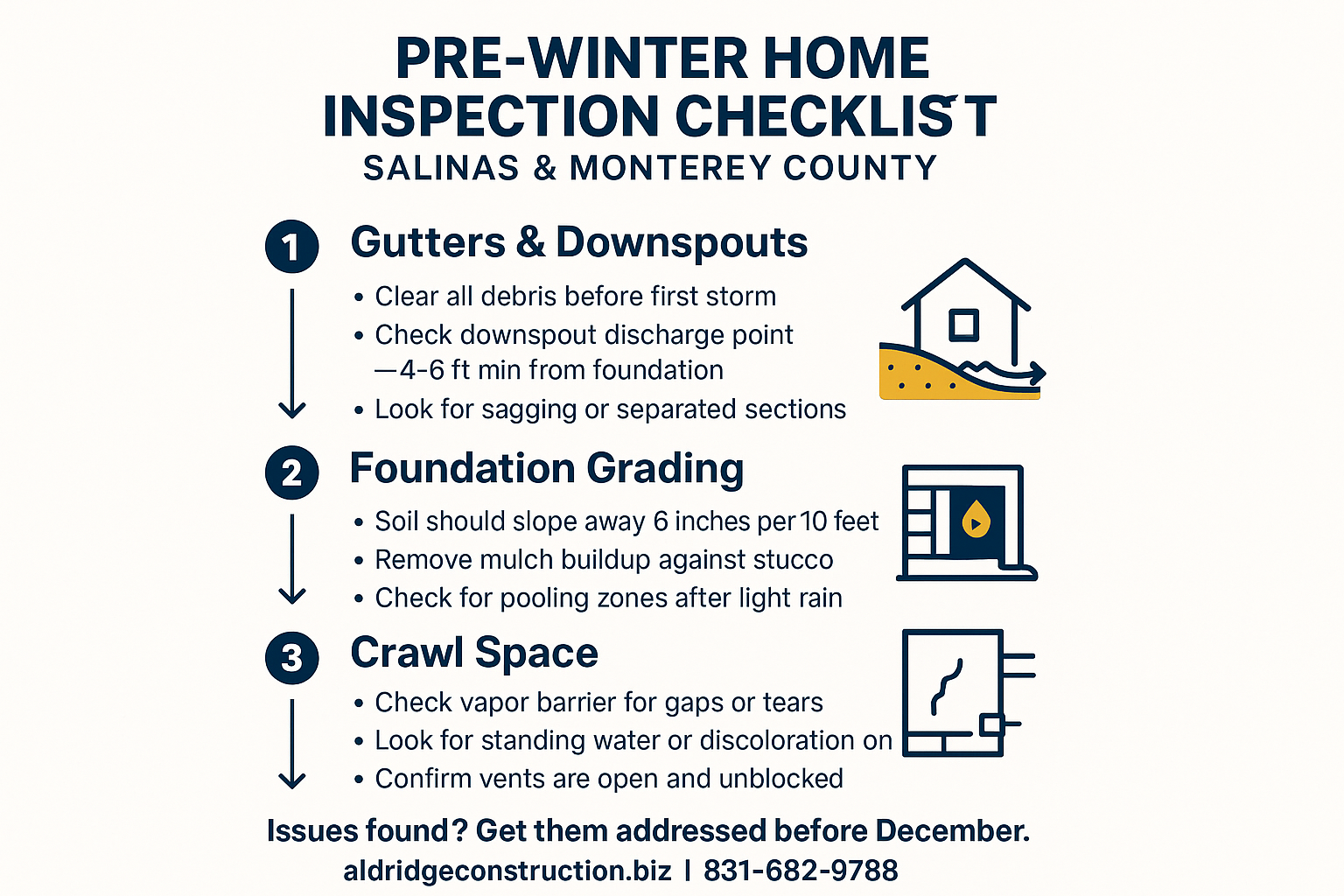
Salinas-Area Home: Pre-Winter Inspection Checklist
This checklist covers the four highest-risk systems on any Salinas-area home heading into a heavy-rain winter — use it before you call a contractor.
Why Renovation Timing Is a Real Problem When El Niño Arrives
A lot of homeowners think of a bathroom remodel or kitchen update as something they can start anytime. But if you’re planning to open walls, replace subfloor sections, or tie in new plumbing, the timing against storm season is something worth thinking through.
Kitchens and bathrooms both involve opening the building envelope at various points — removing old tile, cutting into subfloors, exposing wall cavities for plumbing and electrical. During active construction, those areas aren’t fully weathertight. A project that starts in November and hits a multi-week rain delay mid-demo is a harder situation than one that wraps up its rough work in September and gets buttoned up before the first real storm.
The same logic applies to home additions. A foundation pour that gets saturated before it cures, or a framed addition left open to three weeks of rain while waiting on an inspection, adds real problems to a project. Understanding bathroom renovation timelines in Salinas already involves enough scheduling complexity — layering in a wet December makes it worse.
For homeowners who are still in the planning stage, starting the estimate and permit process now means you’re more likely to have rough work completed before storm season, not running parallel to it.
ADUs Under Construction Face Extra Weather Risk — Here’s Why
If you have an ADU in plan check or under active construction, a heavy El Niño winter adds specific complications that a standard home remodel doesn’t face.
ADU sites in Monterey County often involve new utility trenching, site grading, and foundation work — all of which are highly sensitive to saturated soil conditions. A trench for a sewer lateral that fills with groundwater before it’s backfilled can compromise compaction. A concrete pour scheduled during a rain event has to be rescheduled, which cascades into inspection delays and subcontractor conflicts.
Permit timing matters here too. Monterey County’s plan check process — which includes sequencing through planning, environmental health, and building — can easily run 3 to 5 months under normal conditions. Add the scheduling crunch that comes when contractors are dealing with storm damage calls across the county, and projects that didn’t get into plan check before fall are looking at significant delays.
For anyone considering an ADU who hasn’t started the process yet, understanding what’s actually involved in ADU construction in Salinas is worth doing now — before the window for pre-winter progress closes. And if you’re curious about what an ADU actually costs to build in this market, current Monterey County ADU cost data gives you a realistic baseline to work from.
What El Niño Risk Looks Like by Home System and Repair Cost Range
These are general repair cost ranges for Salinas and Monterey County based on common post-wet-winter scenarios. Actual costs vary by scope and site conditions.
| Home System | Common Failure Mode | Typical Repair Cost Range |
|---|---|---|
| Gutters & Downspouts | Overflow damage to fascia and foundation | $300 – $1,800 |
| Foundation Drainage | Water intrusion, soil erosion at footing | $1,500 – $8,000+ |
| Crawl Space | Vapor barrier replacement, joist drying/repair | $2,000 – $12,000 |
| Subfloor (bathroom/kitchen) | Rot from chronic moisture, replacement required | $3,500 – $15,000 |
| Exterior Wall Seals | Water intrusion at cracks or penetrations | $500 – $4,000 |
| ADU Site Drainage | Trench failure, regrading, retaining issues | $2,500 – $10,000+ |
How to Walk Your Property Before Calling a Contractor
You don’t need a contractor to tell you whether your gutters are full of oak leaves or your downspout discharges onto a flat concrete pad next to the foundation. A basic walk-around after even a light rain gives you a lot of information.
What to look for outside:
– Any spot where water visibly stands within 5 feet of the house after rain
– Soil or mulch that slopes toward the foundation rather than away
– Downspouts that terminate close to the house or onto a flat area
– Cracks in stucco, especially near window corners and at grade transitions
– Soft or discolored wood at fascia, soffits, or around window frames
What to check if you have crawl space access:
– Look for any standing water or wet soil under the house
– Check whether the vapor barrier is intact, lying flat, and lapped at seams
– Look at the underside of the subfloor for dark staining or soft spots
– Note whether the crawl vents appear open and unobstructed
If you’re planning any renovation work — even something like a bathroom update that might turn into a fuller renovation once walls open up — doing this walk-around first gives your contractor better information to work with. Problems found during demo cost more to fix than problems found during a pre-project site visit.
For homeowners with older homes — especially anything built in the 1940s through 1970s in established Salinas neighborhoods — moisture issues in walls and crawl spaces are common discoveries. Knowing that going in is better than finding out mid-project.
Frequently Asked Questions: El Niño Winter Prep for Salinas Homeowners
How bad can a Super El Niño actually get in Salinas and Monterey County?
Strong El Niño events have historically brought 150 to 200 percent of normal annual rainfall to the Central Coast, often concentrated in multi-day events rather than spread out gradually. The 1997–98 season caused widespread flooding along the Salinas River corridor and significant damage to homes with drainage issues. The 2022–23 season was a more recent reminder. For most well-maintained homes, it’s manageable — but deferred maintenance that would survive a normal year often doesn’t survive a wet one.
Is summer or fall still a realistic window to start a kitchen or bathroom remodel?
Yes — and actually, it’s the best window. Projects that begin estimate and permit work in July or August can realistically have rough work completed by October or November, well before serious storm weather arrives. Starting the conversation now is the practical move. Waiting until November to begin planning means you’re scheduling demo work into the rainy season.
Will heavy rain affect my ADU permit timeline?
Indirectly, yes. Rain itself doesn’t pause plan check processing, but it does create downstream scheduling problems — inspections get delayed, site work gets pushed, and contractors dealing with storm-related repair calls have less availability for scheduled ADU work. Getting into plan check before fall keeps your project ahead of that crunch. Monterey County’s ADU permit process already has enough moving parts without weather adding more delays.
My crawl space has always been a little damp. Is that actually a problem?
Chronic moisture in a crawl space is a real problem, even if it hasn’t caused visible symptoms yet. Over time, persistent moisture leads to wood rot in floor joists and subfloor sheathing, mold growth, and pest access. In a heavy rain year, a crawl space that’s “a little damp” normally can become saturated for weeks. Getting it assessed before winter is worth doing — a vapor barrier upgrade or improved drainage is far cheaper than subfloor replacement after the damage is done.
Do I need permits for drainage improvements or crawl space work?
It depends on the scope. Basic vapor barrier replacement and gutter repairs generally don’t require permits. More significant work — like retaining walls, regrading that affects neighboring properties, or any structural work on joists and subfloor — may require permits depending on your jurisdiction. Monterey County Building Services is the right call to confirm requirements for your specific project. Knowing what actually requires a permit saves you from surprises later.
What’s a realistic budget to get my home prepared before winter?
It varies widely depending on what you find. A gutter cleaning and minor caulk repair might run $300 to $600. A full vapor barrier replacement in a Salinas-area crawl space typically runs $2,000 to $5,000 depending on square footage and access. Drainage regrading around a foundation can run $1,500 to $8,000 depending on how much soil work is needed. The earlier you start, the more time you have to get competitive estimates and schedule work without rush pricing.
Want a Contractor Who Knows What to Look For Before the Rain Hits?
Aldridge Construction works with homeowners across Monterey County, Santa Cruz County, and San Benito County on everything from pre-winter repairs to full kitchen, bathroom, and ADU projects. If you’ve done your walk-around and have questions about what you found — or you want to get a renovation project on the calendar before storm season complicates scheduling — Brian Aldridge and his team are a straightforward call away. Reach out at 831-682-9788 or visit aldridgeconstruction.biz to start the conversation.