
Designing an Accessory Dwelling Unit (ADU) means making every square foot count. While adding a guest house or rental unit is appealing, the real challenge is creating a functional and comfortable space in a small footprint. This is why exploring smart small adu floor plans is so important for homeowners in Monterey, Santa Cruz, and Maricopa Counties.
A good layout can turn a small building into an efficient home. It will maximize both its use and your property value.
This guide looks at six different small ADU floor plans. We will analyze the layout choices, point out key features, and offer tips you can use for your own project. We will cover clever storage and multi-use furniture that make spaces under 500 square feet feel surprisingly open.
Whether you want to earn rental income or create a private space for family, these designs will help you decide. If you plan to build an ADU as an investment, it's also smart to calculate potential rental yield for an ADU to understand the financial returns. Let’s look at plans that deliver big results in small spaces.
1. The Studio ADU
The studio ADU is one of the most popular and efficient small ADU floor plans. This design combines the living, sleeping, and kitchen areas into a single open room, usually 300 to 500 square feet. The only separate space is the bathroom.
This small layout is a cost-effective way to add a rental unit, home office, or guest suite. By removing inside walls, the design feels bigger than it really is. Success comes down to smart planning and multi-functional furniture.
Strategic Breakdown and Analysis
A well-designed studio ADU uses every inch of space. The key is to create separate "zones" for different activities without using walls. For example, an area rug can define the living space, while a small table can separate the kitchen from the sleeping area.
This layout is common in places like Monterey and Santa Cruz Counties. It can provide much-needed housing or a source of rental income for homeowners.
Actionable Takeaways for Your Project
To get the most from a studio ADU floor plan, use these tips:
- Vertical Storage: Use tall bookshelves and wall-mounted shelves. This draws the eye up and keeps the floor clear.
- Multi-Functional Furniture: Buy pieces that do more than one job. Think of a sofa that turns into a bed or a coffee table with hidden storage.
- Enhance Natural Light: Install large windows or skylights. This makes the space feel brighter and more open. Light-colored walls and floors also help.
- Smart Door Choices: Use a pocket door or a barn door for the bathroom. They slide along the wall instead of swinging in, which saves valuable floor space.
The chart below shows the typical size and cost for a studio ADU project.
As the chart shows, a studio ADU offers a functional living space in a small footprint at a good price. This makes it an excellent starting point for homeowners. This balance of cost and size makes it one of the smartest small ADU floor plans available.
2. One-Bedroom ADU with Separate Living Area
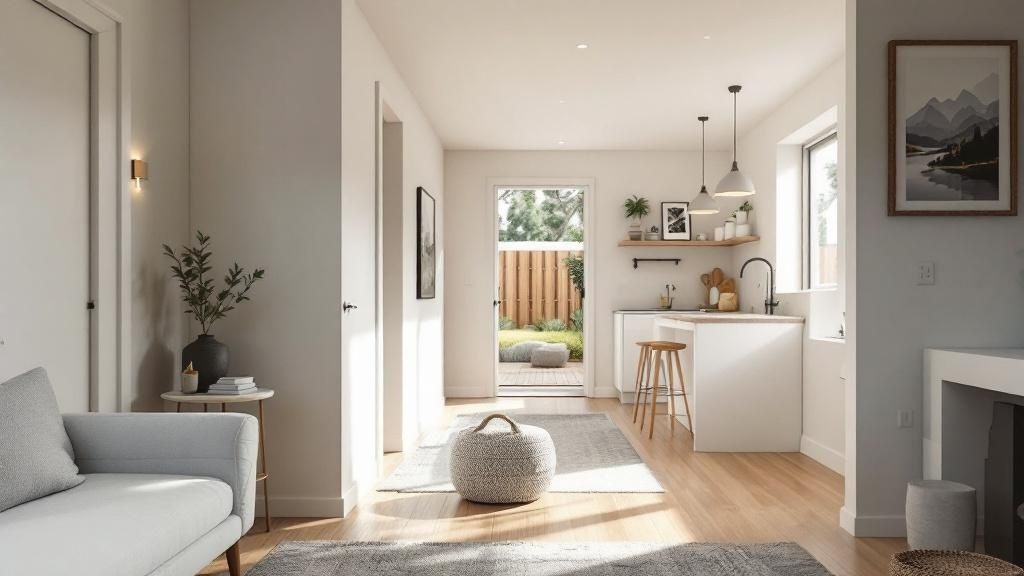
For those who want more privacy than a studio, the one-bedroom ADU is a great choice. This layout is one of the most versatile small ADU floor plans and is usually 500 to 800 square feet. It provides a clear separation between public and private spaces.
This design feels more like a traditional home. It is ideal for long-term tenants, in-laws, or a standalone guesthouse. The separate spaces make it more comfortable and functional.
Strategic Breakdown and Analysis
A successful one-bedroom ADU feels spacious and works well. The key is to create a good flow between the kitchen, living area, and bedroom. An open kitchen that looks into the living room makes the main area feel larger and more social.
In areas like Monterey County or Maricopa County, AZ, this ADU model is a good balance of space, comfort, and cost. Because it is a true one-bedroom unit, property owners can often charge higher rent compared to a studio. Homeowners wanting a detailed breakdown should review the cost to build an ADU to understand the investment.
Actionable Takeaways for Your Project
To make the most of a one-bedroom ADU floor plan, focus on these tips:
- Create Privacy: Place the bedroom away from the main house and the ADU's entrance. This creates a quiet, private retreat. Consider adding soundproofing insulation in the walls between the bedroom and living area.
- Incorporate Built-In Storage: Use built-in closets and shelving. This keeps the space organized and clutter-free without taking up floor space.
- Design a Social Kitchen: An L-shaped kitchen or one with a peninsula can act as a natural divider. It can also be a casual dining spot while keeping the cook connected with guests.
- Add Visual Separation: If space allows, a split-level design with a few steps can create a clear separation between the living and sleeping zones.
3. Loft-Style ADU
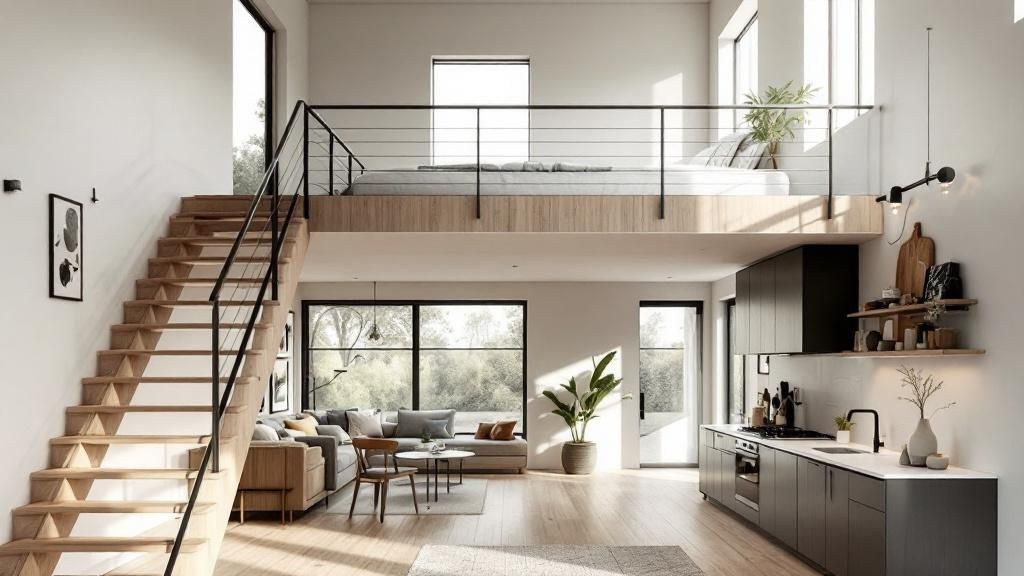
The loft-style ADU is a creative choice among small ADU floor plans. It is perfect for making the most of vertical space. This design features a sleeping loft built above the main living area, creating two levels in a small footprint, usually between 400 and 600 square feet.
This layout is ideal for homeowners in places like Santa Cruz or Monterey. It adds functional square footage without making the ADU’s foundation bigger. By building up instead of out, the loft design separates living and sleeping areas, which is a big advantage over a regular studio.
Strategic Breakdown and Analysis
A successful loft-style ADU depends on smart engineering and following building codes. The high ceilings needed for the loft create a feeling of openness that makes the small ground floor feel bigger. The separate sleeping area provides privacy that tenants or guests will appreciate.
These plans are a creative solution to space limits. They can turn a small building into a livable, multi-level home. For more inspiration on creating unique spaces, explore these ADU design ideas.
Actionable Takeaways for Your Project
To get the most out of a loft-style ADU, consider these important tips:
- Code Compliance: Make sure the loft meets local building codes for ceiling height and ladder or stair safety. This is a critical step in California and Arizona for both safety and passing final inspection.
- Safe Access: Install strong safety railings around the loft. Make sure the ladder or staircase is well-lit and secure.
- Maximize Under-Stair Space: Use the space under the stairs for built-in storage or a small desk. This keeps the main floor from getting cluttered.
- Improve Airflow: High ceilings can trap warm air. Install a ceiling fan to move air between the main floor and the loft to keep both spaces comfortable.
4. L-Shaped Efficient ADU
The L-shaped ADU is a popular choice for small ADU floor plans, especially for properties with corner lots. This design is usually 500 to 700 square feet and uses its shape to create a private outdoor courtyard. The building wraps around a patio or garden area.
This layout is perfect for blending the ADU with the existing yard. It creates a great indoor-outdoor living experience. For homeowners in Monterey County or Maricopa County, this design takes full advantage of the pleasant weather.
Strategic Breakdown and Analysis
A well-designed L-shaped ADU uses its shape to get more privacy and natural light. One part of the "L" can hold the kitchen and living room. The other part can have the bedroom and bathroom. This separation provides a feeling of space that simple rectangle plans often lack.
The inside corner of the "L" is a great spot for large glass doors or windows. This fills the inside with light and offers nice views of the private courtyard.
Actionable Takeaways for Your Project
To get the most out of an L-shaped floor plan, try these strategies:
- Orient Living Spaces: Point the main living and kitchen areas toward the private courtyard. Use sliding or French doors to create an easy flow between inside and outside.
- Create Distinct Wings: Use one part of the "L" just for the bedroom and bathroom. This creates a quiet retreat separate from the main living areas.
- Add a Covered Patio: Install a pergola or covered porch in the inside corner of the "L." This extends your usable living space and provides a shaded area for relaxing.
- Vary Roof Heights: Consider different roof heights for each wing of the ADU. This adds architectural interest and helps define the different areas of the home.
5. Convertible/Flexible Space ADU
The flexible space ADU is a modern approach to small ADU floor plans. This design, usually between 400 and 600 square feet, uses moveable walls or modular furniture to change the layout. A single space can go from an open studio to a private one-bedroom, or from a living area to a work studio.
This layout maximizes function in a small footprint. It is a perfect solution for those who need their ADU to serve many purposes. For example, it could be a guest house that also works as a home office.
Strategic Breakdown and Analysis
A well-done flexible space ADU is a great example of smart design. The goal is to make changes easy and smooth, not difficult. The concept works best with high-quality hardware and a layout planned for different setups from the start.
In dense urban areas or on smaller lots in Monterey County, a flexible ADU offers the use of a larger unit without the extra construction cost.
Actionable Takeaways for Your Project
To create a successful convertible ADU, focus on these key elements:
- Invest in Quality Hardware: The moving parts are the core of this design. Use high-quality sliding tracks, hinges, and modular parts to make sure they last and work well.
- Plan Utilities for All Layouts: Electrical outlets and lighting must work in every possible setup. This requires careful planning in the design phase. Understanding the custom home building process can help you coordinate these details.
- Prioritize Built-In Storage: To keep the space clutter-free, build storage into walls, furniture, and partitions.
- Test All Components: Before finishing construction, test every moving part. Make sure walls slide easily and furniture works correctly.
6. Accessible/Universal Design ADU
An accessible ADU is a smart choice among small ADU floor plans. It is designed to support aging in place or to accommodate people with mobility challenges. This layout, ranging from 600 to 800 square feet, is built to be usable by people of all ages and abilities.
This single-level design creates a barrier-free environment. It includes features like wider doorways, no-step entries, and spacious bathrooms. These features are blended into a modern, attractive design. This ADU type is a smart investment in future flexibility.
Strategic Breakdown and Analysis
A successful universal design ADU is both safe and beautiful. The key is to add accessible features so they look like intentional design choices, not sterile additions. The floor plan is open and easy to get around in, with no tight corners or narrow hallways.
This approach is becoming popular in many communities. For homeowners in Monterey or Maricopa County, this design is a perfect solution for multi-generational living. It allows older relatives to live independently and comfortably on the same property.
Actionable Takeaways for Your Project
To make your accessible ADU both functional and inviting, focus on these tips:
- Plan for Zero Barriers: Design the ADU with a no-step entry. Make sure all inside doorways are at least 36 inches wide to allow for a walker or wheelchair.
- Create an Accessible Bathroom: Install a "roll-in" shower with a built-in bench, grab bars, and a handheld showerhead. A comfort-height toilet also improves usability.
- Choose Smart Flooring: Select non-slip flooring like luxury vinyl tile (LVT). Avoid thick carpets that can be hard to move on and create trip hazards.
- Incorporate Thoughtful Details: Place light switches and electrical outlets at accessible heights. Use lever-style door handles, as they are easier to use than knobs. For more specialized strategies, explore home modifications for seniors.
Small ADU Floor Plans Comparison
| ADU Type | Implementation Complexity | Resource Requirements | Expected Outcomes | Ideal Use Cases | Key Advantages |
|---|---|---|---|---|---|
| The Studio ADU | Low – simple layout | Low – minimal materials | Cost-effective, efficient | Single occupants, home offices | Most affordable, quick build |
| One-Bedroom ADU | Medium – distinct zones | Medium – full kitchen | More privacy, higher rent | Couples, aging parents | Better privacy, more storage |
| Loft-Style ADU | Medium – vertical design | Medium – high ceilings | Unique, uses vertical space | Young adults, creative pros | Maximizes space, visual appeal |
| L-Shaped ADU | High – complex foundation | High – more exterior walls | Private outdoor spaces | Unique lots, outdoor living | Creates courtyards, good flow |
| Flexible Space ADU | High – movable parts | High – specialized hardware | Highly adaptable, multi-use | Changing family needs | Maximum space use, versatile |
| Accessible ADU | High – barrier-free design | High – accessible fixtures | Safe, ages in place | Aging parents, mobility needs | Future-proofs usage |
Final Thoughts
The world of small ADU floor plans is full of creative and efficient designs. From a simple studio to a flexible universal design unit, the options are endless. The key is to focus on smart space planning, not just square footage.
The floor plans we looked at share a few main ideas. They use multi-functional spaces, clever storage, and a connection to the outdoors to make small areas feel larger. They prove that a small footprint doesn't have to mean limited living.
Your Path to a Successful ADU Project
To turn these ideas into a real project, your next steps are important. Here are some key takeaways:
- Define Your "Why": Before picking a layout, decide its main purpose. Is it for an aging parent, a rental tenant, or your own use? Your goal will decide which features you need.
- Analyze Your Property: Look at your lot's limits and benefits. Note the sunlight, access points, and local rules in Monterey, Santa Cruz, or Maricopa County. This will help you narrow down which small ADU floor plans will work.
- Prioritize Smart Design Over Size: Remember that smart design can deliver more function than a poorly designed, larger unit. Focus on the quality of the space, not just the size.
- Think Long-Term: Your needs may change. A design that is accessible or can be easily changed offers more long-term value. As you plan, exploring eco-friendly construction methods can also lead to lower utility bills.
A well-chosen ADU floor plan is the foundation of a successful project. It can raise your property's value and provide flexible living space. By using these tips, you can confidently pick a design that fits your vision and budget.
FAQs About Small ADU Floor Plans
1. What is the smallest size an ADU can be?
In California, an ADU must be at least 150 square feet, but local rules can vary. Most functional studio ADUs start around 300 square feet to comfortably fit a kitchenette, bathroom, and living/sleeping area.
2. How can I make a small ADU feel bigger?
Use light paint colors, large windows, and high ceilings. Multi-functional furniture, like a Murphy bed or a dining table that folds away, is also key. An open-concept floor plan without interior walls helps create a sense of space.
3. Is a one-bedroom ADU a better investment than a studio?
It depends on your goals and local market. A one-bedroom ADU often attracts higher rent and long-term tenants in areas like Santa Cruz County. However, a studio is cheaper to build, offering a quicker return on investment.
4. Are loft-style ADUs safe?
Yes, when built to code. Regulations in California and Arizona require safe access (sturdy ladder or stairs) and proper safety railings. It's crucial to work with a qualified builder like Aldridge Construction to ensure all safety standards are met.
5. Do I need a separate utility meter for my ADU?
This often depends on local regulations and your intended use. In many parts of Monterey and Maricopa counties, you can tie into the main home's utilities. However, a separate meter is often recommended for long-term rental units to make billing easier.
Ready to take the next step and bring your ADU vision to life in Monterey, Santa Cruz, San Benito, or Maricopa County? The expert team at Aldridge Construction specializes in navigating local regulations and building beautiful, high-quality accessory dwelling units from the ground up. Contact us today to discuss your project and get a professional consultation.