
Adding a porch is an investment in your home's character, value, and your family's quality of life. A well-designed porch serves as a welcoming transition from the outdoors in, creating a functional space for relaxing and enjoying the Central Coast or Arizona climate. It’s one of the best ways to add a porch to your house, boosting curb appeal and expanding usable square footage.
This guide explores the top porch options for homeowners in Monterey, Santa Cruz, San Benito, and Maricopa Counties. We will cover classic front porches that enhance your home’s facade, expansive wraparound designs, and versatile screened-in rooms. Understanding the core essential hardware building materials can provide valuable insight into the quality of your future project.
Whether your goal is a cozy reading nook or a grand entertaining space, this list provides actionable insights to help you choose the right style and materials for your home.
1. Front Entry Porch
A front entry porch is a classic and effective way to dramatically boost your home's curb appeal and functionality. This type of porch is a covered structure at the main entrance, creating a graceful transition to your home's interior. It serves as a welcoming focal point while offering protection from sun and rain.
Architectural Harmony and First Impressions
The primary goal of a front entry porch is to complement your home’s existing architecture. A well-designed porch looks like it was always part of the original house.
- For Colonial Homes: Think symmetrical designs with classic white columns and a traditional brick foundation.
- For Craftsman Bungalows: Consider a porch with tapered stone columns, exposed rafters, and warm wood accents.
- For Modern or Ranch-Style Homes: A simpler design with clean lines, metal railings, and a low-pitched roof often works best.
A thoughtful front yard landscaping design can connect the new structure to the surrounding environment, creating a cohesive and inviting look.
Key Considerations for a Front Entry Porch
This addition is a structural enhancement that requires professional planning. Key factors include ensuring the foundation is set below the local frost line to prevent shifting. Sizing the porch proportionally to your home’s facade is also crucial.
Here's a summary of what a typical front entry porch project involves.
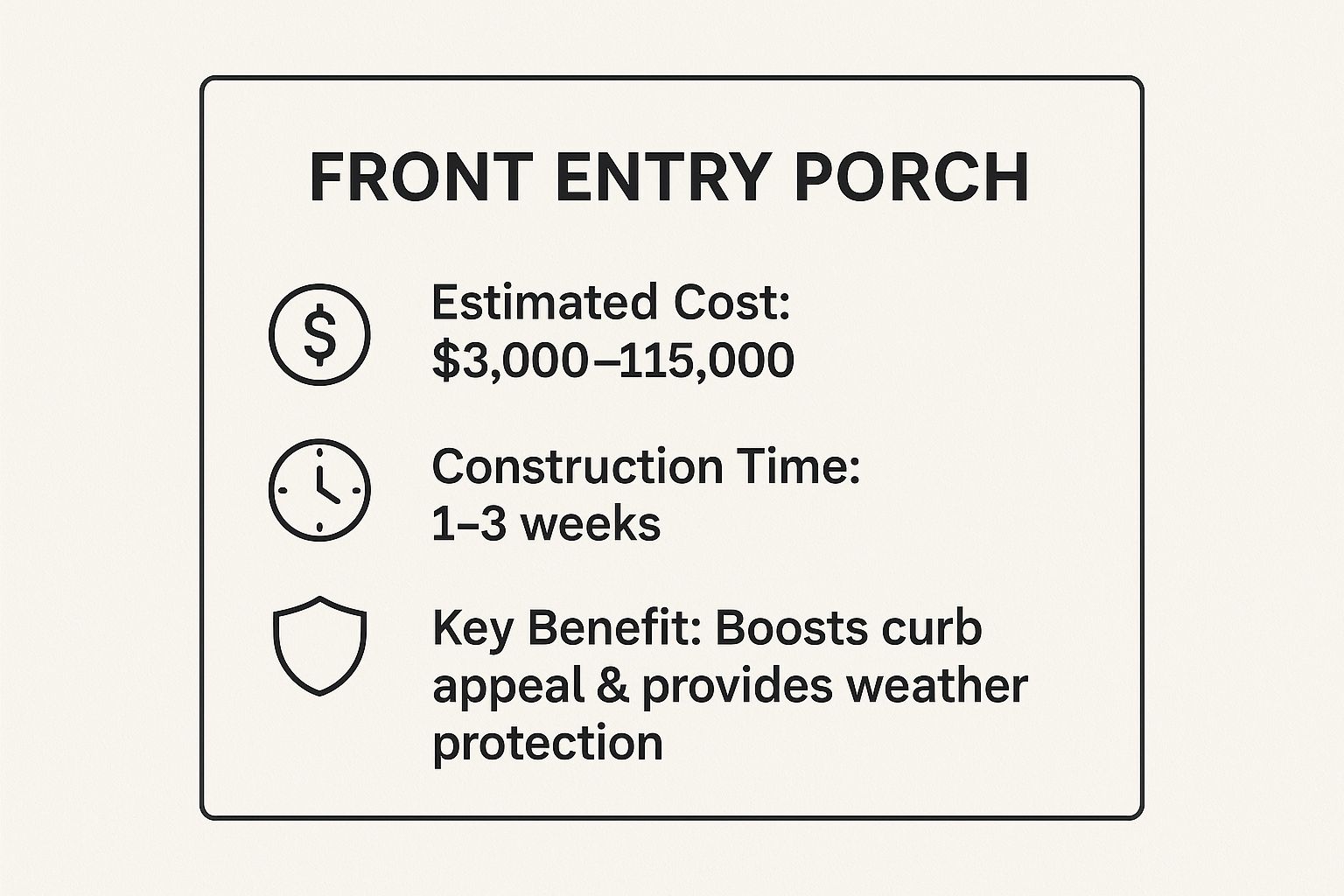
As the data shows, a front entry porch provides significant value by enhancing curb appeal and offering practical weather protection. For homeowners in Monterey County or Maricopa County, this is one of the best ways to add a porch to your house. Learn more about home renovation tips from Aldridge Construction.
2. Wraparound Porch
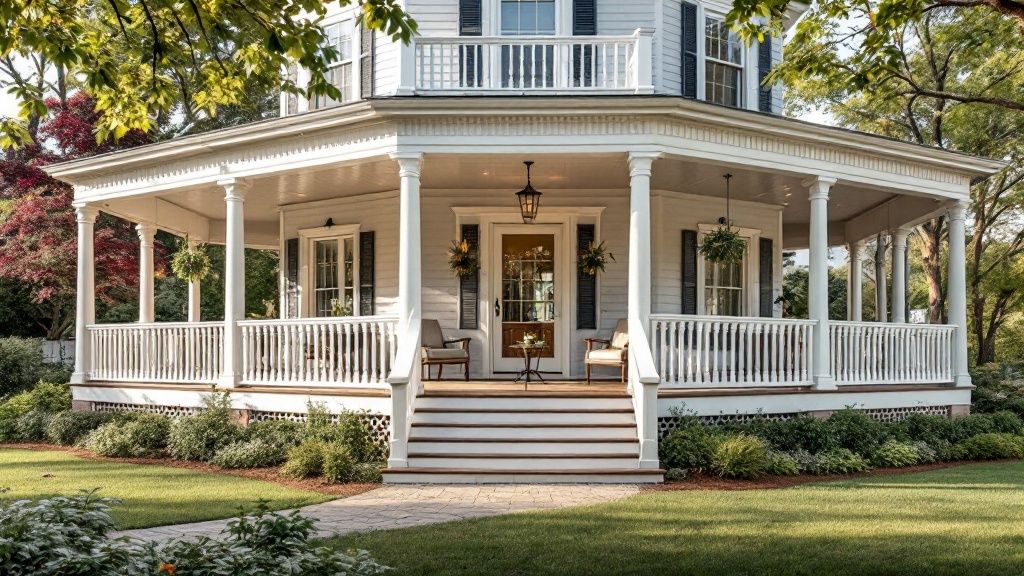
A wraparound porch is an expansive addition that extends around two or more sides of a house. This classic design creates an impressive amount of outdoor living space and delivers dramatic curb appeal. It provides a seamless connection between your indoor and outdoor environments.
Architectural Harmony and Expansive Living
A successful wraparound porch enhances your home's scale and style. This addition is best suited for larger homes where its size feels balanced and intentional.
- For Victorian Homes: Embrace intricate details like gingerbread trim and decorative railings to complement the ornate architecture.
- For Farmhouses in Salinas: A simpler design with sturdy, straight posts maintains a rustic and authentic feel.
- For Large Homes: Classic columns, a raised foundation, and wide stairs create a timeless and stately appearance.
A wraparound porch is a significant structural undertaking. Proper planning for elements like drainage systems and a solid foundation is essential for longevity, especially in regions like Monterey County.
Key Considerations for a Wraparound Porch
This type of project significantly alters your home's footprint and requires careful design. It’s one of the best ways to add a porch to your house if you have the space for a true outdoor living room.
- Proportional Scale: Ensure your house is large enough to support the visual weight of a wraparound porch.
- Structural Support: This major addition demands a robust foundation and professional engineering to integrate safely with your home.
- Material Cohesion: Use consistent flooring, railing, and ceiling materials like redwood or composite decking to create a unified appearance.
- Functionality and Flow: Plan for multiple zones, such as a dining area, a quiet seating nook, and clear pathways.
Partnering with an experienced contractor is critical to navigate local building codes in areas like San Benito or Maricopa County.
3. Screened-In Porch
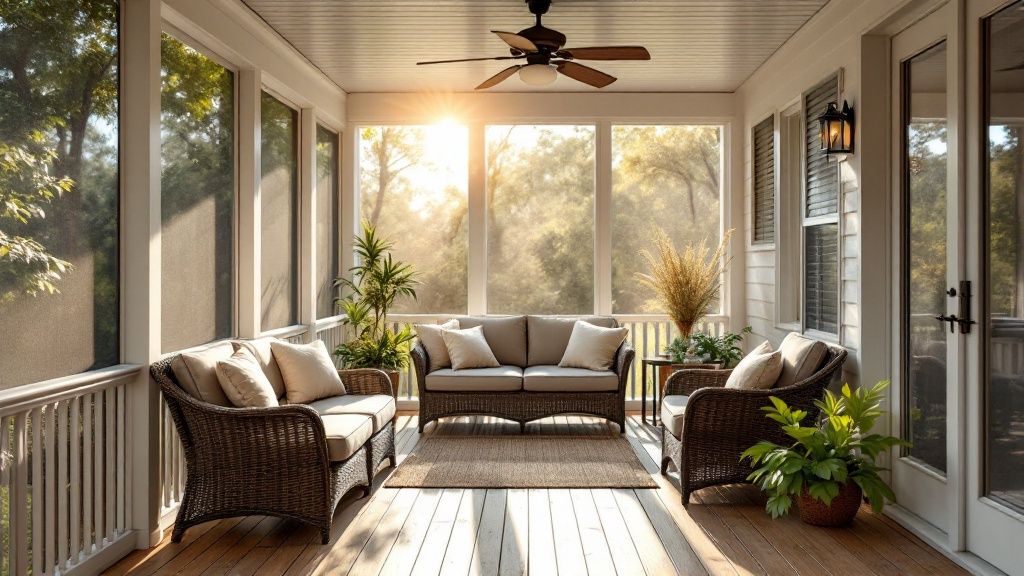
A screened-in porch is a fantastic way to enjoy the outdoors without insects or harsh weather. This porch features a permanent roof and is enclosed with screen panels, creating a versatile indoor-outdoor living area. It allows fresh air to flow through while offering protection.
Blending Indoor Comfort with Outdoor Ambiance
The main benefit of a screened-in porch is creating a bug-free zone that still feels connected to your yard. This makes it an ideal spot for dining, relaxing, or entertaining. A well-designed screened porch functions as a true extension of your home.
- For Coastal Homes: These porches are perfect for capturing breezes while keeping mosquitos at bay.
- For Suburban Family Homes: They can become a designated outdoor dining room or a safe play area for children.
- For Homes in Warmer Climates: In places like Maricopa County, a screened porch with a ceiling fan offers a shaded retreat from the sun.
This addition is one of the best ways to add a porch to your house if your goal is to maximize comfortable living space.
Key Considerations for a Screened-In Porch
Proper planning is essential to ensure your screened-in porch is both functional and durable. The choice of screening material, structural design, and amenities will determine its long-term usability.
- Choose High-Quality Screening: Opt for durable materials like fiberglass or aluminum that resist tearing.
- Plan for Electrical Access: Including ceiling fans, lighting, and outlets will dramatically increase the room's functionality.
- Consider Removable or Retractable Systems: For homeowners in areas like Monterey County, removable panels offer flexibility.
- Strategic Door Placement: Ensure the screen door is placed for convenient access to your yard without disrupting furniture layout.
4. Three-Season Room/Enclosed Porch
A three-season room, also known as an enclosed porch, provides a climate-controlled space that blends indoor comfort with outdoor views. This addition is a fully enclosed structure with extensive windows instead of screens. It creates a versatile room you can enjoy through spring, summer, and fall.
Blurring the Lines Between Indoors and Outdoors
The primary goal of an enclosed porch is to extend your home's usable square footage. This space is perfect for homeowners in climates like Monterey County or Maricopa County. You can enjoy the scenery year-round but may want shelter from wind, rain, or sun.
- As a Sunroom: Use tile flooring, install large, energy-efficient windows, and add a ceiling fan for a bright retreat.
- As a Garden Room: This is an ideal spot for showcasing your plants, with ample sunlight and protection from pests.
- As a Casual Family Room: Furnish it with comfortable seating to create a secondary living area with panoramic views.
Integrating this type of room is one of the best ways to add a porch to your house for maximum year-round functionality and value.
Key Considerations for a Three-Season Room
Building a three-season room is a significant home addition. Because it is a conditioned space, factors like insulation, window efficiency, and ventilation are critical. This addition requires a solid foundation and must be tied into your existing roofline.
- Invest in high-performance windows to manage solar heat gain.
- Plan for adequate ventilation with operable windows.
- Consider radiant floor heating for added comfort during cooler months.
- Include ceiling fans to promote air circulation on warmer days.
- Design the layout around your furniture to ensure the space flows well.
5. Covered Deck Conversion
If you already have a deck, converting it into a covered porch is a smart upgrade. This approach involves adding a roof structure over your existing deck, transforming it into a protected outdoor room. It’s a great way to add a porch because it leverages your current investment.
Maximizing Existing Infrastructure
The biggest advantage of a deck conversion is using the foundation you already have. This saves time and money compared to building from scratch. The goal is to create an addition that provides shade and shelter, making the space usable in various weather conditions.
- For Backyard Entertainment Decks: A pergola-style roof can offer sun protection without completely blocking the light.
- For Poolside Decks: A solid shingled roof provides maximum shade and a cool retreat from the sun.
- For Multi-Level Decks: You can choose to cover only one section, creating a versatile space with both open and sheltered areas.
This method instantly adds value by creating a functional outdoor living room perfect for dining or relaxing.
Key Considerations for a Deck Conversion
Before adding a roof, a professional assessment is crucial. The new roof adds weight, and your deck’s existing structure must support it safely. Proper waterproofing where the new roof meets the house is essential to prevent leaks.
- Structural Capacity: A qualified contractor must verify that your deck's footings and frame can handle the additional load.
- Roofing Materials: Match the new roof to your home’s existing style for a cohesive look.
- Drainage: A well-designed gutter system is necessary to manage rainwater runoff.
- Permitting: Adding a roof is a structural change that almost always requires a building permit in California and Arizona.
A covered deck conversion is an excellent way to gain a new porch without starting from zero. To better understand the expenses involved, you can get insights from this home addition costs calculator.
6. Pergola Porch
A pergola porch is an open-roof structure with parallel beams and cross-rafters that provides partial shade while maintaining an airy feeling. It defines an outdoor room without fully enclosing it. This makes it one of the best ways to add a porch to your house: boost curb appeal & comfort.
Visual Appeal and Outdoor Flow
A well-designed pergola porch enhances your home’s style and connects indoor and outdoor spaces seamlessly.
- Mediterranean-Style Homes: Pair stucco columns with curved wooden beams for an Old World charm.
- Modern Residences: Use steel beams and minimalist finishes for a sleek, contemporary look.
- Garden Settings: Support flowering vines on cedar rafters to create a living canopy.
In Salinas and Monterey County, a pergola porch can frame sweeping views. For Maricopa County, aluminum beams resist heat and require minimal maintenance.
Key Considerations for a Pergola Porch
Before you build, plan these critical details to ensure lasting beauty and function:
- Material Selection: Opt for weather-resistant woods like cedar or redwood, or durable composite beams.
- Shade and Canopy Options: Consider a retractable fabric canopy for adjustable sun protection.
- Beam Spacing and Load: Space rafters based on desired light—closer for more shade.
- Plant Supports: Integrate built-in trellis panels if you want climbing roses, wisteria, or grape vines.
- Local Permits and Codes: Check Monterey or Maricopa County regulations for pergola height limits and setback rules.
A pergola porch not only boosts curb appeal but also creates a versatile living area for dining or lounging. Learn more about a Pergola Porch on alderidgeconstruction.biz.
7. Raised Foundation Porch
A raised foundation porch is an elevated structure built to match your home's main floor level. This approach is essential for houses with a raised first floor, common in hilly areas or coastal regions like Monterey County. It provides an impressive architectural presence.
Architectural Harmony and Commanding Views
The main objective of a raised foundation porch is to make the addition feel like an original part of the home's design. This style elevates your entryway, offering a grander sense of arrival and enhanced views.
- For Coastal Homes: Often elevated for flood protection, these porches can feature wide stairs and durable materials like composite decking.
- For Historic Homes: Grand entry stairs and a foundation clad in brick or stone can restore period-correct charm.
- For Hillside Homes: A raised porch can level a sloped entry, creating a stable, usable outdoor space.
This porch style is a substantial structural addition. Proper planning ensures it not only looks good but performs safely, making it one of the best ways to add a porch to your house.
Key Considerations for a Raised Foundation Porch
Building an elevated structure requires careful engineering and adherence to strict safety codes. The foundation must be robust and the railings secure. Factors like soil stability in Salinas and seismic requirements in Santa Cruz County must be addressed by a professional.
This is a major addition, so ensuring it is built to last protects your investment. This is a key aspect of our work on property management remodeling and repair.
8. Modular/Kit Porch Systems
For homeowners seeking a streamlined and often more affordable approach, a modular or kit porch system is an excellent solution. These pre-engineered systems include all necessary components manufactured to precise specifications. This method reduces the uncertainties of custom construction.
Predictable Results and Faster Timelines
The main benefit of a porch kit is predictability. Because the components are pre-cut and designed to fit together, the construction process is significantly faster. This method minimizes material waste and labor costs.
- For Colonial-Style Homes: Pre-finished vinyl or composite kits offer classic aesthetics with minimal maintenance.
- For Craftsman Bungalows: Look for kits with warm wood components and designs that feature clean, strong lines.
- For Modern or Ranch Homes: Sleek aluminum and composite systems provide a contemporary look.
This approach is ideal for homeowners in Monterey County or Maricopa County who want a high-quality porch addition on a controlled budget.
Key Considerations for Modular/Kit Porch Systems
While kits simplify the process, proper planning is still essential. The most critical step is ensuring the design complies with local building codes. Your home’s measurements must be exact before placing an order.
Many homeowners hire a professional to assemble the structural elements to ensure safety. This hybrid approach combines the cost savings of a kit with the expertise of a licensed contractor. Learn more about the custom home building process to see how structured planning leads to great results.
Frequently Asked Questions (FAQs)
1. How much value does a porch add to a house?
A porch can provide a strong return on investment. According to the 2024 Cost vs. Value Report from Remodeling Magazine, even a modest wood deck addition can recoup over 103% of its cost at resale, and a well-designed porch can have a similar or greater impact on curb appeal and buyer interest.
2. Do I need a permit to add a porch in Monterey County?
Yes, in most cases. Adding a roof structure, expanding a foundation, or making significant structural changes to your home almost always requires a building permit in Monterey, Santa Cruz, and San Benito Counties. Aldridge Construction handles the entire permitting process for our clients.
3. What is the best material for a porch in a coastal climate like Santa Cruz?
For coastal areas, it's best to use materials that resist moisture and salt air. Composite decking (like Trex), PVC, and pressure-treated lumber are excellent choices. For railings, powder-coated aluminum or stainless steel offer great durability.
4. How long does it take to build a new porch?
The timeline depends on the project's complexity. A simple front entry porch might take 1-2 weeks for construction after permits are approved. A large, complex project like a wraparound or three-season porch could take 4-8 weeks or more.
5. Can you build a porch on a sloped yard?
Absolutely. For sloped properties, a raised foundation porch is often the perfect solution. It requires a carefully engineered foundation with deep footings to create a level, stable surface that integrates seamlessly with your home’s entrance.
Ready to Build Your Dream Porch?
Adding a porch is an investment in your home's character, value, and lifestyle. From the timeless elegance of a Wraparound Porch to the modern flexibility of a Covered Deck Conversion, each option offers a unique path to boost curb appeal and comfort.
As you plan, remember these key points:
- Define Your Purpose: Decide if you need a grand entrance, a private retreat, or an entertainment space.
- Match Your Home's Style: Ensure the new porch complements your home’s existing architecture.
- Balance Budget and Materials: Weigh upfront costs against long-term maintenance. Modern composites offer low-maintenance durability that stands up to the coastal air in Santa Cruz or the Arizona sun.
- Never Skip the Permits: Partnering with a knowledgeable contractor who understands local requirements in Salinas, San Benito County, or Maricopa County ensures your project is safe and legal.
Ready to turn your dream porch into a reality? The team at Aldridge Construction has decades of experience designing and building beautiful, high-quality porches across Monterey, Santa Cruz, San Benito, and Maricopa Counties. We are fully licensed, insured, and dedicated to delivering quality craftsmanship.
Contact us today for a consultation and let's create the perfect outdoor space for your home.