
When you hear "green construction materials," what comes to mind? It’s easy to think of solar panels or bamboo flooring, but the concept is much bigger—and simpler—than that.
Think of it this way: green materials are to your home what whole foods are to your body. They’re sourced responsibly, contain fewer harmful additives, and ultimately contribute to a healthier, stronger, and more efficient home. This is a core philosophy at Aldridge Construction, where we build with lasting value in mind.
What Defines a Green Construction Material?
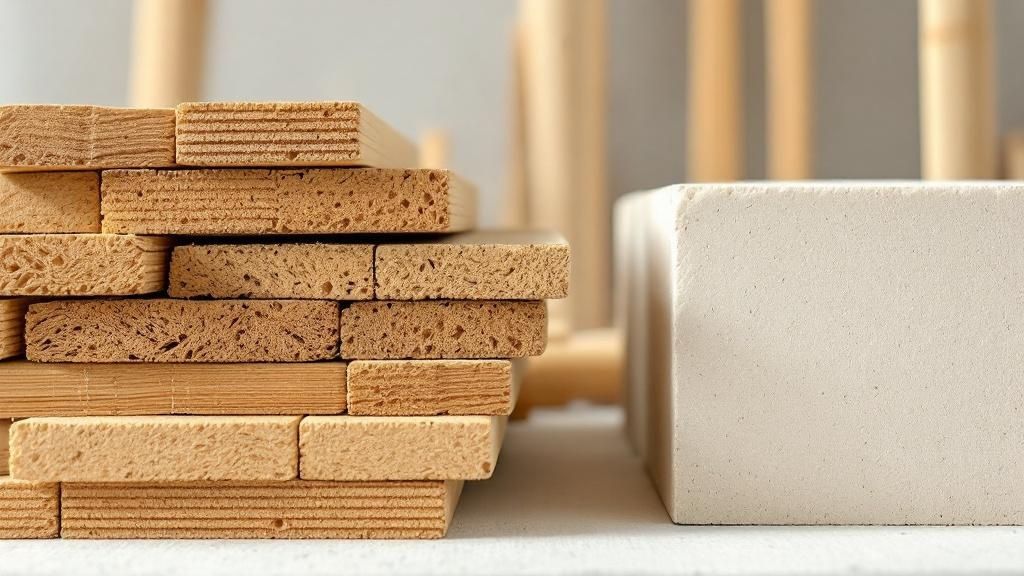
At its heart, a material earns the “green” label by having the smallest possible environmental footprint across its entire life. This means we look at everything—from how it’s made and how it performs in your house to what happens to it decades from now. It’s about the whole story, not just one chapter like "recycled content."
This commonsense approach is quickly becoming the new industry standard. The global green building materials market was valued at a massive USD 285.89 billion in 2024 and is projected to hit USD 458.61 billion by 2030. This isn't a fleeting trend; it’s a direct response to growing demand for energy-efficient homes, especially as buildings contribute significantly to global emissions. You can dive into the complete green building materials market forecast to see the numbers driving this shift.
Key Characteristics of Green Construction Materials
To help clarify what makes a material truly 'green,' this table breaks down the key attributes Aldridge Construction looks for when selecting materials for projects in Monterey, Santa Cruz, and Maricopa counties.
| Attribute | What It Means for Your Home | Example Material |
|---|---|---|
| Sustainably Sourced | Less strain on natural resources and ecosystems. | Reclaimed wood from old barns or factories. |
| Recycled Content | Reduces landfill waste and the energy needed to create new materials. | Countertops made from recycled glass bottles. |
| Energy Efficient | Lowers your utility bills and increases indoor comfort year-round. | High-performance Milgard triple-pane windows. |
| Low-Toxicity | Improves indoor air quality by avoiding harmful chemicals. | Low-VOC (Volatile Organic Compound) paints. |
| Durable & Long-Lasting | Fewer replacements mean less waste and lower long-term costs. | Fiber cement siding that resists rot and pests. |
| Recyclable or Biodegradable | The material can be repurposed or returned to the earth at the end of its life. | Natural wool insulation. |
As you can see, a material's green credentials come from a combination of factors. It’s this holistic view that ensures we’re making genuinely sustainable choices for your home.
The Lifecycle of a Green Material
To really grasp what makes a material sustainable, you have to look at its entire journey. This "lifecycle perspective" is critical because it prevents us from choosing a material that looks eco-friendly on the surface but hides a bigger environmental price tag.
A material's 'green' status isn't just a single feature—it's the sum of its entire story. Aldridge Construction evaluates responsible sourcing, efficient manufacturing, healthy indoor performance, and end-of-life recyclability. This holistic view is key to building truly sustainable homes.
We can break this lifecycle down into a few key stages:
- Sourcing and Extraction: Are raw materials rapidly renewable, like cork or bamboo? Or are they made from post-consumer recycled content, like reclaimed steel? If virgin resources are used, they must be harvested responsibly.
- Manufacturing and Production: The factory process matters. Turning raw materials into a finished product should use as little energy and water as possible and avoid releasing harmful pollutants.
- Performance and Durability: A huge part of sustainability is simply building things that last. Whether you're in the cool Monterey climate or the Arizona heat, well-insulated windows that cut down on energy bills are sustainability in action.
- End-of-Life: What happens when the material's job is done? The best-case scenario is that it can be recycled, repurposed for another project, or safely biodegraded back into the earth, keeping it out of the landfill.
Core Pillars of Green Building
Beyond the lifecycle, green construction materials are defined by three core benefits. These pillars are the bedrock of the Aldridge Construction selection process, ensuring we provide value that’s more than just skin-deep.
- Resource Efficiency: This is all about doing more with less. It means prioritizing materials that are recycled, renewable, or salvaged to reduce the demand for new, raw resources.
- Energy Efficiency: These materials are your home's first line of defense against high utility bills. This includes high-performance insulation, energy-smart windows, and "cool roofs" that reflect the sun's heat.
- Improved Indoor Air Quality: Many traditional building products off-gas chemicals called volatile organic compounds (VOCs). We focus on green materials like low-VOC paints and formaldehyde-free cabinetry to create a healthier breathing environment.
The Real Payoff of Building Green
Choosing green construction materials is a smart investment in your family's financial future and day-to-day well-being. The most tangible rewards hit home in two places everyone cares about: their wallet and their health.
This shift toward healthier, more efficient building materials isn't a niche trend. The global market for green building materials is on a serious growth trajectory, with one forecast predicting a compound annual growth of 11.3% between 2025 and 2035. This boom is driven by homeowners who are demanding better, alongside new regulations that recognize the long-term value of building sustainably. You can dive into the full green building materials market analysis to see how this is reshaping the construction world.
Lower Utility Bills and Higher Property Value
The most immediate financial win from building green is a dramatic drop in your energy bills. This is a game-changer for homeowners in Maricopa County facing blistering summer heat, and just as critical for those along the California coast in Monterey and Santa Cruz.
Think of high-performance green materials as a protective shield for your home:
- Advanced Insulation: Materials like sheep wool or recycled denim create a superior thermal barrier. This keeps your expensive conditioned air inside and the outside temperatures out, so your HVAC system works less.
- Cool Roofs: In a sun-drenched climate like Arizona, a cool roof with reflective materials can slash a roof's surface temperature by up to 50°F. This massively reduces heat seeping into your home, giving your air conditioner a break.
- Energy-Efficient Windows: Modern double or triple-pane windows with Low-E coatings, like those from Milgard, are workhorses. They prevent heat gain in the summer and heat loss in the winter, creating a stable, comfortable indoor environment.
On top of monthly savings, these upgrades directly boost your home's market value. A house that's cheaper to run and built with quality materials is a more valuable asset when it comes time to sell.
A Healthier Home Environment
The materials used to build our homes have a direct, daily impact on the air we breathe. Many conventional building products release volatile organic compounds (VOCs) and other toxins for years after installation.
Your home should be a sanctuary—a place that protects your family’s health. Aldridge Construction believes choosing non-toxic, green construction materials is one of the most powerful ways to ensure your indoor environment is clean and safe.
Using green materials fundamentally improves indoor air quality:
- Low-VOC and Zero-VOC Paints: You get beautiful, long-lasting color without the harmful fumes that off-gas into the air you and your family breathe.
- Formaldehyde-Free Products: We specify formaldehyde-free options for insulation, cabinetry, and engineered wood, which eliminates one of the most common and persistent indoor air pollutants.
- Natural Materials: Products like cork flooring, natural linoleum, and wool carpeting are inherently non-toxic. They also often resist the growth of mold and mildew.
This focus on health is just as critical in commercial settings. For business owners, a healthy indoor environment is key to employee productivity and well-being. It's a core consideration for any tenant improvement contractor focused on creating a superior workspace.
Exploring Top Green Materials for Your Home
Now that you understand the powerful benefits of building green, it's time for the exciting part—exploring the materials themselves. The world of green construction materials is rich with durable, beautiful, and high-performing options for every part of your home.
At Aldridge Construction, we help homeowners in Monterey, Santa Cruz, and Maricopa counties select the right products for their specific climate and project goals. Let's walk through some of the best green materials available today.
Structural and Framing Materials
The skeleton of your home needs to be strong and resilient. Fortunately, some of the most robust options are also the most sustainable.
- Reclaimed Steel: Steel is infinitely recyclable without losing strength. Using reclaimed steel from demolished structures significantly reduces the energy and carbon emissions associated with new steel production.
- Bamboo: Technically a fast-growing grass, bamboo reaches maturity in just a few years, making it a highly renewable resource. It boasts a strength-to-weight ratio that rivals steel, making it excellent for flooring and cabinetry.
- Structural Insulated Panels (SIPs): These are high-performance building panels made of a foam core sandwiched between two structural facings. SIPs are fabricated off-site, which dramatically reduces on-site waste. Their airtight construction results in homes that are 40% to 60% more energy-efficient than traditional stick-built homes.
High-Performance Insulation
Insulation is your home's thermal shield. Choosing the right material is critical for comfort and energy savings, whether you're battling the Arizona sun or cool coastal nights.
A well-insulated home is the cornerstone of energy efficiency. Green insulation options from Aldridge Construction not only lower your utility bills but also provide superior soundproofing and are made from non-toxic materials for healthier indoor air.
The image below shows top-performing natural insulation materials being installed within a home's wall cavities.
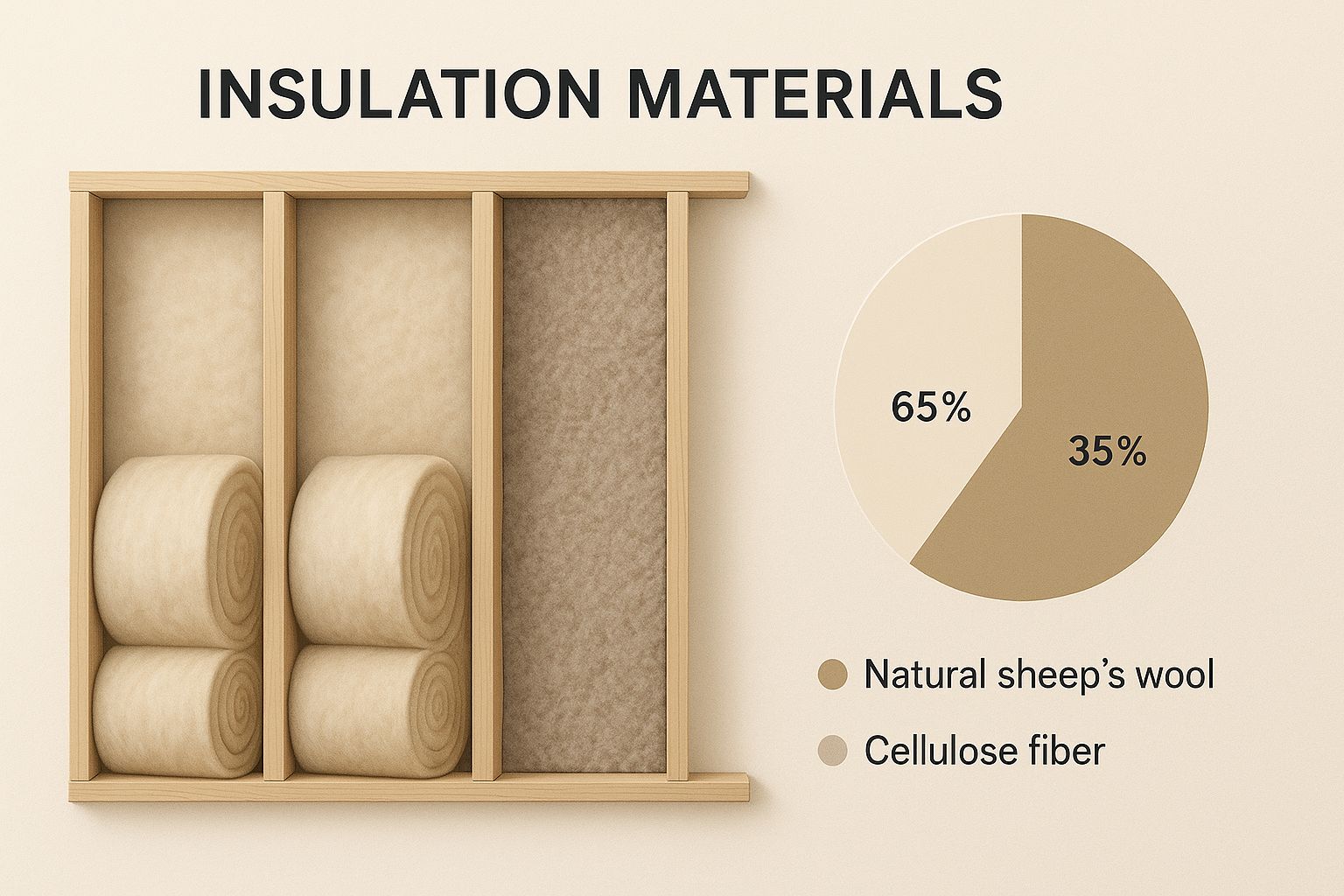
This highlights how materials like sheep's wool can be seamlessly integrated into standard construction, offering a much healthier alternative to conventional fiberglass.
Here are a few leading options:
- Sheep Wool: This natural fiber is a fantastic insulator that is also flame-resistant and can absorb and release moisture without compromising its thermal performance. It actively improves indoor air quality by trapping common pollutants like formaldehyde.
- Cork: Harvested from the bark of cork oak trees without harming the tree, cork is both renewable and biodegradable. It offers excellent thermal and acoustic insulation and is naturally resistant to moisture and rot.
- Cellulose: Made from recycled paper products, cellulose insulation gives post-consumer waste a new life. It's treated with non-toxic borates to be fire and pest-resistant.
Interior and Exterior Finishes
The finishing touches are what bring your home's design to life. Green options in this category deliver style, health benefits, and durability.
- Low-VOC and Zero-VOC Paints: Traditional paints release Volatile Organic Compounds (VOCs). Low- and zero-VOC paints provide rich, lasting color without the toxic off-gassing.
- Recycled Glass Countertops: These stunning surfaces are made from post-consumer glass bound in a cement or resin base. They divert waste from landfills and create a durable, non-porous countertop that rivals quartz in beauty.
- Cool Roofs: Essential for homes in Maricopa County, cool roofs use reflective materials that can lower a roof's surface temperature by up to 50°F. This drastically cuts cooling costs.
- Permeable Pavers: For driveways and patios, permeable pavers allow rainwater to seep into the ground instead of running off into storm drains. This is a smart water management strategy for both California's rainy season and Arizona's monsoons.
Comparing Popular Green and Conventional Materials
See the difference side-by-side. This comparison highlights how green materials stack up against traditional options in performance, longevity, and eco-impact.
| Green Material | Conventional Alternative | Key Advantage |
|---|---|---|
| Bamboo Flooring | Hardwood Flooring | Matures in 3-5 years versus 20+ for hardwoods. |
| Reclaimed Steel | New Steel | Prevents massive carbon emissions from new steel production. |
| Sheep Wool Insulation | Fiberglass Insulation | Improves indoor air quality by trapping toxins. |
| Recycled Glass Counters | Granite Countertops | Diverts waste from landfills; unique aesthetic. |
| Zero-VOC Paint | Standard Latex Paint | Eliminates harmful off-gassing for healthier air. |
| Permeable Pavers | Concrete Slab | Manages stormwater onsite, reducing runoff and erosion. |
As you can see, choosing a green material often means gaining benefits that go far beyond just sustainability. A knowledgeable contractor can help you compare these materials to find the perfect fit for your project.
How to Choose the Right Green Materials
Choosing the right green construction materials can feel overwhelming. The secret isn't just picking something off a shelf; it's about making an informed choice that lines up with your home’s performance goals, vision, and budget. At Aldridge Construction, we guide homeowners through this process, making sure every material adds real, lasting value.
The key is to look past marketing fluff and find verified proof of a material's green credentials. This is where third-party certifications become your best friend, acting as a seal of approval from an unbiased expert.
Demystifying Eco-Labels and Certifications
In a market flooded with buzzwords, legitimate certifications separate the real deal from the imposters. The U.S. green building materials market is booming, expected to hit USD 153.87 billion by 2025, and trusted programs are a huge reason why. You can dig deeper into the drivers of the green building materials market to see how these standards are shaping the industry.
Here are a few of the most respected labels to look for:
- Forest Stewardship Council (FSC): This logo on wood or bamboo guarantees the material was harvested from a responsibly managed forest that protects wildlife habitats and supports local communities.
- Green Seal: This certification applies to products from paints to adhesives. A Green Seal mark means the product passed strict tests for performance, health, and environmental impact.
- LEED (Leadership in Energy and Environmental Design): While LEED is a rating system for an entire building, choosing materials that contribute to LEED credits is a fantastic strategy.
The Power of Sourcing Locally
Beyond official certifications, one of the most impactful things you can do is source materials locally. For our projects in Monterey, Santa Cruz, or San Benito Counties, we prioritize materials made or harvested in the region. Doing so dramatically slashes the carbon emissions tied to long-haul transportation.
By prioritizing local suppliers, Aldridge Construction supports community businesses and reduces the carbon footprint associated with long-haul transportation. It’s a powerful choice that benefits both your project and the regional economy.
Balancing Cost, Durability, and Aesthetics
The best green construction materials for your home strike a perfect balance between your budget, long-term performance, and the look you want. A material can have amazing eco-credentials, but if it can't stand up to our coastal climate or doesn't fit your financial plan, it's not the right choice.
This is where having an expert in your corner makes all the difference. We often walk clients through these trade-offs, providing a clear picture of the costs associated with building an ADU or home addition. By looking at the lifecycle costs—the upfront price plus long-term savings from energy efficiency—we help you make choices that deliver value for decades.
Navigating Green Building Codes in CA and AZ
Picking the right green construction materials is one thing, but making sure they check all the boxes with local building codes is another. In states like California and Arizona, regulations focus on regional challenges—energy efficiency, wildfire safety, and water scarcity. At Aldridge Construction, our job is to handle these complexities so your project is 100% compliant from day one.
Think of building codes less like a restrictive rulebook and more like a blueprint for a durable, high-performing home. When your contractor has deep local expertise, these requirements are opportunities to make your home safer and more efficient.
California Title 24 and WUI Codes
For clients building in Monterey, Santa Cruz, and San Benito Counties, our material choices are guided by two powerful sets of rules: California's Title 24 and local Wildland-Urban Interface (WUI) codes.
- Title 24 Energy Standards: This advanced energy code sets a high bar. Using green materials isn't just a nice idea—it’s a must for getting plans approved. We rely on high-performance insulation, energy-efficient windows, and cool roofs to meet or beat these standards.
- WUI Fire Safety Codes: Many beautiful spots along the Central Coast are in high fire-risk zones. WUI codes are non-negotiable, requiring fire-resistant materials for everything from roofing and siding to decks. We specify materials like fiber cement siding and non-combustible roofing that protect your investment.
Building an Accessory Dwelling Unit (ADU) brings its own layers of regulation. You can get a head start by reading our guide on California ADU requirements.
Building in California means designing for both efficiency and resilience. Aldridge Construction leverages deep knowledge of Title 24 and WUI codes to select green materials that not only meet regulations but create a safer, more cost-effective home.
Arizona Codes for Heat and Water Conservation
Over in Maricopa County, building codes are written for a different reality: intense desert heat and precious water. Our strategy here shifts to green building practices that champion resilience and resourcefulness in an extreme climate.
We focus on materials proven under the Arizona sun, like advanced spray foam insulation to create an airtight home. We also heavily recommend cool roof systems, which reflect sunlight and dramatically slash the heat your home absorbs. Water conservation is also a huge piece of the puzzle, using permeable pavers and high-efficiency fixtures to meet code and cut water use.
Build Your Sustainable Home with Aldridge Construction
Building with green construction materials is a forward-thinking investment in your family's health and a home that's simply built better. It’s about creating a space that performs efficiently and feels fundamentally better to live in.
But turning that vision into a reality takes deep expertise. The journey involves choosing the right materials for our unique coastal climate and navigating the maze of local building codes.
That's where Aldridge Construction comes in. We have the proven, hands-on experience to guide you through every step in Monterey, Santa Cruz, San Benito, and Maricopa counties. We also know that understanding the financial piece is crucial, which is why exploring options like home renovation loans can make funding your project much more approachable.
Aldridge Construction simplifies the entire green building process. We merge your vision with our deep expertise in sustainable materials and local codes to create a home that is healthier, more efficient, and built to stand the test of time.
Our team ensures that every material we select actively supports your goals for a smarter, more resilient home. If you're ready to build a home that truly aligns with your values, let's start the conversation.
Frequently Asked Questions About Green Building
Homeowners often ask us about the cost, performance, and legitimacy of green products. To help clear the air, we’ve put together answers to the most common questions we hear from our clients across Monterey, Santa Cruz, and Maricopa counties.
1. Are green construction materials more expensive?
It depends. While some specialized green construction materials have a higher upfront price, many are competitive with traditional options. The key is to think about the lifecycle cost. High-performance insulation or triple-pane windows might cost more initially but can slash monthly energy bills, often paying for themselves over time. Aldridge Construction can help you find high-performance options that fit your budget.
2. How do I know if a material is genuinely green?
"Greenwashing" is a real concern. The most reliable way to know for sure is to look for credible, third-party certifications. These independent seals of approval show that a material has passed strict environmental and performance tests. Think of them as a verified "nutrition label" for your building materials. Look for seals like ENERGY STAR, Forest Stewardship Council (FSC), and Green Seal.
3. Do green materials require special maintenance?
For the most part, no. In fact, it's often the opposite. Most green materials are chosen for their durability and often require less maintenance than conventional products. For example, composite decking made from recycled plastics resists rot and insects far better than most wood—no annual staining needed. Aldridge Construction provides clear care instructions for every material we use.
4. Can I use green materials in an older home remodel?
Absolutely! A remodel is the perfect chance to upgrade an older home's performance and health. As your home improvement company, we specialize in these upgrades. Swapping out drafty windows for energy-efficient models, adding non-toxic insulation, and using low-VOC paints are all smart investments that dramatically improve your living environment.
5. How do green materials handle extreme climates like Arizona?
Green materials are often the best choice for extreme climates. In a place with intense heat like Maricopa County, smart material selection is the secret to a comfortable, resilient home. For example, "cool roofs" with reflective surfaces can lower roof temperatures by up to 50°F. Advanced spray foam insulation creates an airtight seal that stops hot desert air from getting inside. These strategies make your home work with the climate, not against it.
Ready to build a healthier, more efficient home with materials you can trust? The team at Aldridge Construction has the expertise to guide you through every choice. Contact us today for a consultation.