
Diving into a home remodel is an exciting prospect, but figuring out how to estimate renovation costs is the absolute first step toward a project that doesn't end in financial headaches. A reliable estimate is built on three critical pillars: a crystal-clear project scope, your choice of materials, and local labor rates. Aldridge Construction helps homeowners in Monterey, Santa Cruz, and Maricopa counties get these right for a budget grounded in reality from day one.
Your First Step to a Realistic Renovation Budget
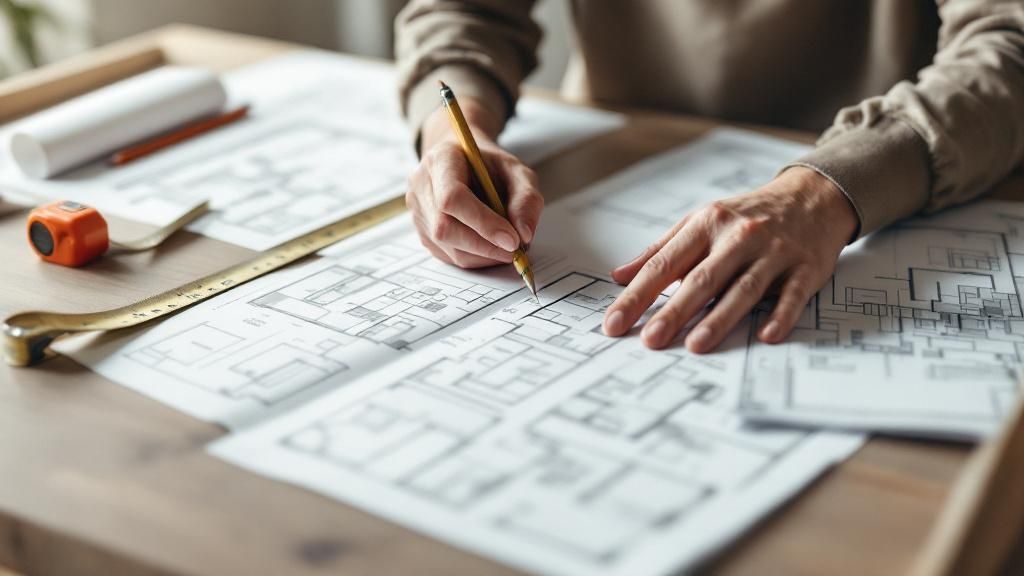
A solid financial plan is the bedrock of any successful remodel. Without one, even the most beautiful design can quickly become a source of stress. The goal isn't just to land on a final number, but to truly understand what pushes that number up or down.
For example, a cosmetic bathroom refresh in Santa Cruz County will carry a wildly different price tag than a full kitchen gut and remodel in Maricopa County, Arizona. This comes down to variations in local labor costs, permit fees, and even the price of materials from one region to another. Getting a handle on these local nuances is essential for an accurate initial estimate.
Understanding National Cost Averages
Before digging into local specifics, it’s helpful to get a bird's-eye view with national data. According to the U.S. Census Bureau's American Housing Survey, homeowners spend a median of $10,000 on home improvements. More comprehensive projects, however, range much higher.
That’s a huge range, showing how much a project’s size, complexity, and location can swing the final bill. This is why kitchens and bathrooms almost always top the list for expenses—they involve multiple trades, expensive fixtures, and complex installations. A midrange bathroom remodel, for instance, can recoup up to 66.7% of its cost upon resale [Remodeling Magazine, 2024 Cost vs. Value Report].
Initial Renovation Cost Estimate Ranges
To give you a clearer picture, here’s a look at what different levels of renovation might cost based on national averages.
| Renovation Level | Typical Cost Range (National Average) | Common Projects Included |
|---|---|---|
| Minor / Cosmetic | $15,000 – $45,000 | Painting, new flooring, light fixture swaps, cabinet refacing, new faucets. |
| Mid-Range | $45,000 – $80,000 | Full room remodel (kitchen/bath), new stock cabinets, standard appliances, layout changes. |
| Major / High-End | $80,000 – $200,000+ | Gut renovation, structural changes, custom cabinetry like Zonavita, luxury appliances. |
These figures are just a starting point, but they help set realistic financial expectations before you get too deep into the planning process.
The Foundation of Your Estimate
A practical way to start is by creating a clear hierarchy for your project, separating must-haves from nice-to-haves. This simple exercise helps prevent "scope creep"—that common phenomenon where small additions gradually blow up the budget.
To build a strong financial foundation, Aldridge Construction recommends zeroing in on these core areas:
- Project Scope: What exactly are you changing? Are you moving walls, or just updating surfaces and fixtures?
- Material Level: Are you choosing budget-friendly items or splurging on luxury materials like Quartz countertops and energy-efficient Milgard windows?
- Labor and Professional Fees: This includes the construction crew, architects, designers, and permit expediters.
This initial legwork gives you the clarity needed for productive conversations about your full-scale home renovation and remodeling project with a trusted contractor.
Defining Your Project Scope and Vision

Before you can ask how to estimate renovation costs, you must answer a more fundamental question: "What, exactly, am I building?" An accurate estimate is impossible without a crystal-clear project scope.
This is where you move from a vague idea like “a new kitchen” to a concrete, specific vision. Instead of just “new cabinets,” think “white, custom-built shaker cabinets that extend to the ceiling.” Don't just say "new countertops"; specify “durable, low-maintenance quartz countertops.” This detail turns a wish list into an actionable blueprint.
Building Your Needs vs. Wants List
Aldridge Construction always recommends clients create a needs vs. wants list. This tool forces you to prioritize what is essential versus what would be a nice-to-have upgrade, providing built-in budget protection.
For instance, a client in Monterey County decided their needs were new, energy-efficient Milgard windows to fight coastal drafts and a more open layout. Their wants included a high-end Sub-Zero refrigerator and imported tile for the backsplash. This list becomes your North Star for cost-trimming decisions.
How Scope Details Impact Your Budget
Every decision during this scoping phase directly impacts the final cost. Choices that seem small can add thousands to your budget.
Here are a few real-world examples we see:
- Structural Changes: Removing a load-bearing wall in an older San Benito County home requires an engineer's assessment, new support beams, and significant labor, driving up costs.
- Layout Adjustments: It’s far more cost-effective to keep your kitchen’s existing plumbing and electrical layout than it is to move the sink or range.
- Code Compliance: Renovating an older home in California often requires upgrades to meet current Title 24 energy efficiency standards. This is a non-negotiable cost to factor in.
By defining every element, you eliminate ambiguity. A detailed scope is your best defense against unexpected costs and project delays. This allows you to get precise, comparable quotes from contractors and choose a partner with confidence.
Sorting Out Material and Labor Costs
Once you have a solid grip on the scope, it’s time to dive into the two biggest budget items: materials and labor. These are where the bulk of your money will go, and their costs can swing wildly based on quality, location, and complexity.
Material Tiers and Choices
Materials generally fall into a few quality tiers that directly shape your budget. Consider the common choice of flooring:
- Builder-Grade: Entry-level options like basic luxury vinyl plank (LVP) or standard carpet. They are cost-effective upfront but show wear faster.
- Mid-Range: Higher-quality LVP, engineered hardwood, or good porcelain tile. These materials strike a fantastic balance between durability, aesthetics, and price.
- Luxury: Premium materials like natural stone tile or solid hardwood flooring. They come with a higher price tag but deliver unmatched beauty and longevity.
Understanding Labor Rates
Labor is the other side of the coin, often making up 40-50% of the total project cost. Labor rates reflect the skill level required and the local economy. A general contractor (GC) manages the project, while subcontractors like licensed plumbers and electricians are brought in for specialized skills.
Rates for these skilled trades differ by area. For example, labor costs in coastal communities like Monterey and Santa Cruz tend to be higher than in a metro area like Maricopa County, Arizona, due to local demand and the cost of doing business. A professional GC’s bid will include all subcontractor costs plus their own management fee (typically 15-20%).
Sample Cost Breakdown for a Mid-Range Bathroom Remodel
To give you a clearer picture of how a budget gets allocated, here’s a sample breakdown for a typical mid-range bathroom project. This illustrates how quickly costs add up, making a detailed, line-item budget essential.
| Expense Category | Estimated Percentage of Budget | Example Items & Services |
|---|---|---|
| Labor | 40-50% | General contractor, plumber, electrician, tiler, painter |
| Cabinetry & Vanity | 15-20% | Stock or semi-custom vanity, medicine cabinet, hardware |
| Fixtures | 10-15% | Toilet, sink, faucet, showerhead, tub/shower |
| Flooring & Tile | 7-10% | Porcelain or ceramic tile for floor and shower surround |
| Countertops | 5-7% | Quartz, granite, or solid surface |
| Lighting & Electrical | 5% | Vanity lights, recessed lighting, exhaust fan, new outlets |
| Paint & Finishes | 3-5% | Primer, paint, trim, towel bars, toilet paper holder |
| Permits & Fees | 1-3% | City or county building permits |
A detailed, itemized quote shows you exactly where every dollar is going.
Getting Specific with Your Estimates
To start your research, head to local suppliers or browse online to get ballpark figures for the items on your list. For more complex jobs, like adding a room, a specialized tool can give you a more detailed starting point. You can begin to play with the numbers using our comprehensive home addition costs calculator to see how the scope of work impacts the bottom line.
Don't Forget the "Hidden" Costs: Soft Costs and Contingency Funds
A truly bulletproof renovation budget goes beyond lumber and paint. To truly understand how to estimate renovation costs, you must factor in "hidden" expenses. Aldridge Construction calls these soft costs, and they cover essential services and fees that aren't part of the physical construction.
Ignoring them is one of the fastest ways to blow up a budget. These costs ensure your project is legal, safe, and professionally designed. For example, any significant project in Monterey or Santa Cruz County will require building permits, which have their own fees and review cycles.
Uncovering Essential Soft Costs
These behind-the-scenes expenses are non-negotiable for most remodels. Getting them on your radar early prevents nasty surprises.
- Architectural or Design Fees: For layout changes or additions, professional blueprints are necessary. Expect these fees to run from 8% to 15% of your total project cost.
- Structural Engineering Reports: Taking out a load-bearing wall requires a structural engineer to sign off on the plan for safety.
- Permit Fees: Your city and county charge for permits to ensure work meets local codes. The fees in Maricopa County, AZ, differ from Monterey, CA, but they are a mandatory line item.
Your Project’s Most Critical Safety Net
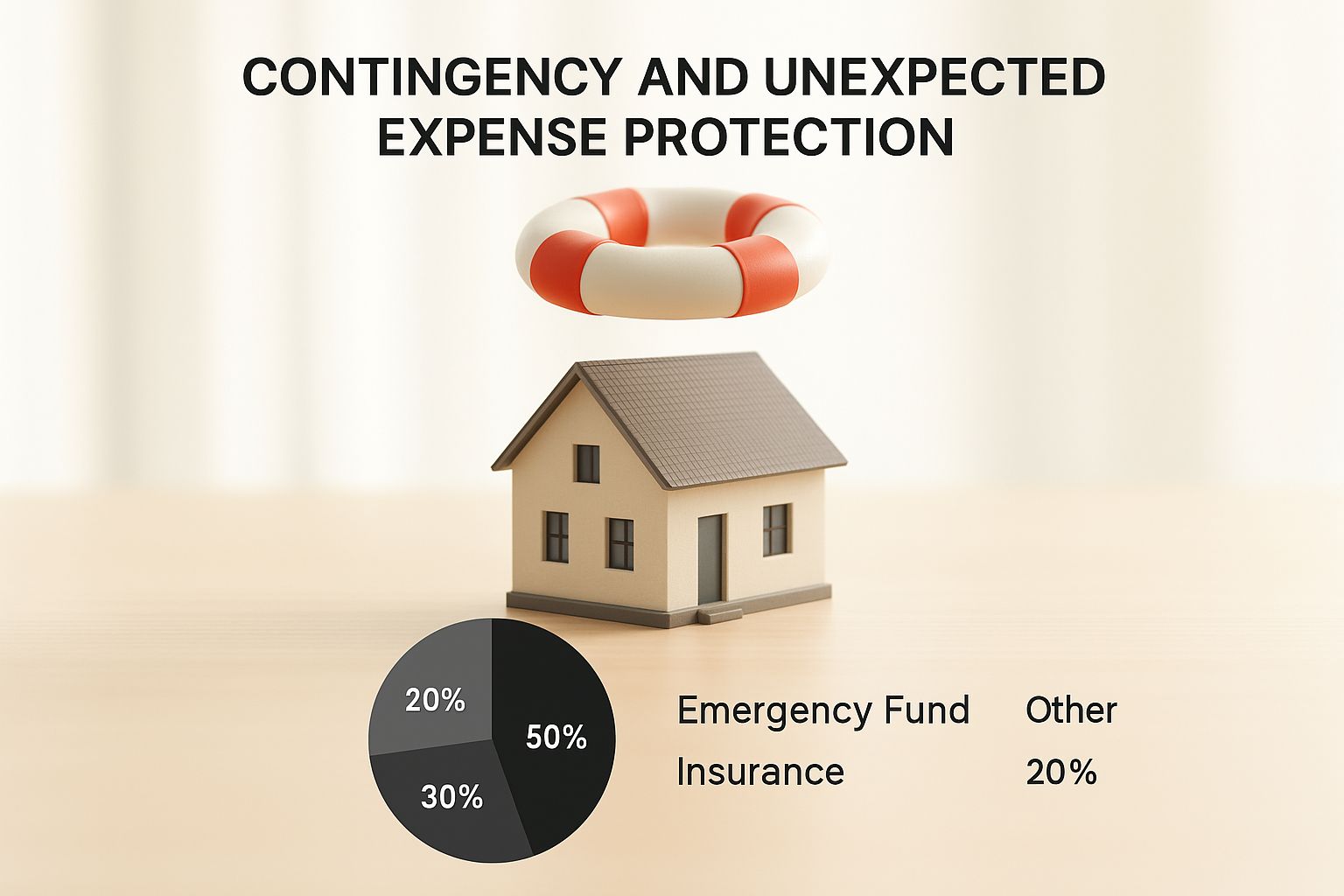
Once you’ve accounted for soft costs, there's one more piece: the contingency fund. This isn't a slush fund for upgrades—it's a dedicated safety net for the unexpected. Surprises are just part of renovating, especially in older homes.
The industry standard is to set aside 10% to 20% of your total construction budget for contingency. For a newer home, 10% might be enough. But for an older property on the Central Coast, where a house can have hidden history, aiming for 20% is a much safer bet. This fund covers surprises like finding old knob-and-tube wiring or unexpected water damage. It’s not just about money; it’s about peace of mind.
How Market Trends Influence Your Renovation Budget
Your renovation's price tag is also shaped by larger economic currents. Understanding forces like material costs, labor availability, and financing trends gives you a strategic edge when planning your project. This is a critical piece of learning how to estimate renovation costs with real-world accuracy.
When the housing market is booming, demand for skilled contractors in places like Monterey, Santa Cruz, and Maricopa County goes through the roof. This translates to longer wait times and higher prices for top-tier labor. It’s classic supply and demand hitting your bottom line.
Following the Economic Indicators
The overall health of the economy plays a huge part in remodeling. When property values rise, more homeowners are willing to invest. This can strain supply chains for popular materials, from lumber to high-end tiles.
According to the Joint Center for Housing Studies of Harvard University, the home improvement market is expected to remain strong as homeowners leverage rising equity for large-scale projects. This makes it easier to secure financing for big-ticket projects like kitchen and bathroom overhauls.
Modern Demands Shaping Costs
What homeowners want today also drives costs. People are increasingly focused on features that add long-term value and daily convenience.
Here’s what Aldridge Construction is seeing on the ground:
- Sustainability and Efficiency: In California, we must follow strict regulations like Title 24. This means using energy-efficient materials like high-performance windows and better insulation. They might cost more upfront but deliver long-term utility savings.
- Smart Home Technology: Integrating smart thermostats, automated lighting, and advanced security systems is becoming standard. The cost of these devices and the specialized installation labor must be factored in.
- Outdoor Living Spaces: A functional outdoor area is a huge priority in both California and Arizona. The budget for a well-built deck or outdoor kitchen can rival the cost of an interior room.
Understanding these influences gives you context for contractor quotes. It helps you see the bigger picture, decide between a straightforward renovation or a more involved home addition, and time your project for the best value.
Getting a Real-World Quote from a Pro
While your own homework provides a baseline, the most crucial step is bringing in a professional. A detailed, itemized quote from a trusted general contractor like Aldridge Construction is the only way to lock in a reliable budget. This is where your vision transforms into an actionable, real-world plan.
The home renovation market is hotter than ever, not just in Monterey and Maricopa Counties, but globally. Good contractors are in high demand and material prices can change quickly, making a professional quote more essential than ever.
Comparing Bids and Spotting Red Flags
When contractor bids arrive, resist the urge to just scan the bottom-line number. A professional quote is transparent, breaking down every piece of the job.
A quality quote from Aldridge Construction always includes:
- Itemized Costs: A clear list of costs for materials, labor, permits, and the contractor's management fee. A single lump-sum price is a major red flag.
- A Detailed Scope of Work: The quote must precisely match your project scope, specifying exact materials like "Mohawk RevWood flooring," not just "new floors."
- Clear Timelines: A projected start date and an estimated completion timeline.
Be very cautious of any bid that comes in drastically lower than the others. An unusually low price often hides cheap materials, uninsured labor, or an inexperienced contractor who missed critical parts of the estimate.
At Aldridge Construction, our consultation process is designed to avoid these problems. We work closely with homeowners across Monterey, Santa Cruz, and Maricopa counties to value-engineer projects, finding smart ways to meet your budget without sacrificing quality. You can learn more about our process for creating transparent home renovation quotes.
Frequently Asked Questions (FAQs)
1. How much should I budget for a contingency fund?
The industry standard is 10% to 20% of your total construction cost. For older homes in Monterey or Santa Cruz, or complex projects involving structural changes, Aldridge Construction recommends leaning towards 20% to cover potential surprises like outdated wiring or hidden water damage.
2. Why do contractor quotes for the same project vary so much?
Quotes can vary based on the quality of materials specified (e.g., builder-grade vs. luxury), the contractor's level of experience, insurance coverage, and overhead costs. A bid that is significantly lower than others can be a red flag for subpar materials, uninsured labor, or an incomplete understanding of the project scope.
3. What are the biggest budget mistakes homeowners make?
The most common mistake is not defining a detailed project scope before seeking bids. Other major pitfalls include failing to establish a contingency fund and allowing "scope creep"—making numerous changes and additions after work has begun, which drives up costs and delays timelines.
4. How can I save money on my renovation without cutting corners?
You can save significantly by keeping your existing plumbing and electrical layouts to avoid the high cost of moving utilities. Opting for high-quality, mid-range materials instead of top-tier luxury finishes can also provide excellent value. Phasing your project over time is another effective strategy.
5. Are permits always required for a renovation?
Not always, but often. Simple cosmetic updates like painting or replacing a faucet typically don't require a permit. However, any project involving structural changes, moving walls, altering plumbing or electrical systems, or changing the footprint of your home will almost certainly require permits from your local building department in Monterey, Santa Cruz, or Maricopa County.
Ready to turn your vision into a reality with a clear, reliable budget? The experts at Aldridge Construction are here to guide you through every step in Monterey, Santa Cruz, San Benito, and Maricopa Counties.
Contact us today for a professional consultation and a detailed estimate for your project.