
A typical kitchen renovation timeline usually lands somewhere between 6 and 16 weeks, from the first design sketch to the final walkthrough. This can shift depending on project complexity, custom material orders, and the speed of local permitting in areas like Santa Cruz County, CA, or Maricopa County, AZ. Aldridge Construction uses a detailed plan as your best defense against unexpected delays.
What Is a Realistic Kitchen Renovation Timeline?
Understanding the full journey—from your initial dream kitchen to the final, gleaming result—is the first step to a low-stress remodel. The total time a project takes boils down to a few key factors. A straightforward cosmetic update with stock materials will be much faster than a full gut job that involves moving walls.
Here are the big things that can stretch out your timeline:
- Project Scope: Taking down walls, rerouting plumbing for a new island, or upgrading the electrical system will add significant time compared to keeping the existing layout.
- Material Lead Times: Custom cabinets, special-order imported tiles, or high-end appliances can sometimes take months to arrive. Ordering these items early is absolutely critical.
- The Permitting Process: Working with building departments in San Benito County, CA, or Maricopa County, AZ, takes time. An experienced contractor who knows the local system can help expedite this process.
- Unexpected Discoveries: You never know what’s behind the walls until you open them up. Finding hidden water damage, outdated wiring, or pest problems during demolition can pause the project while these issues are properly addressed.
A well-thought-out plan, developed with a professional team like Aldridge Construction, is your roadmap. It anticipates these variables and lays out a clear, step-by-step path forward to minimize surprises and keep your renovation on track.
This simple visual breaks down the core phases of the hands-on construction work.
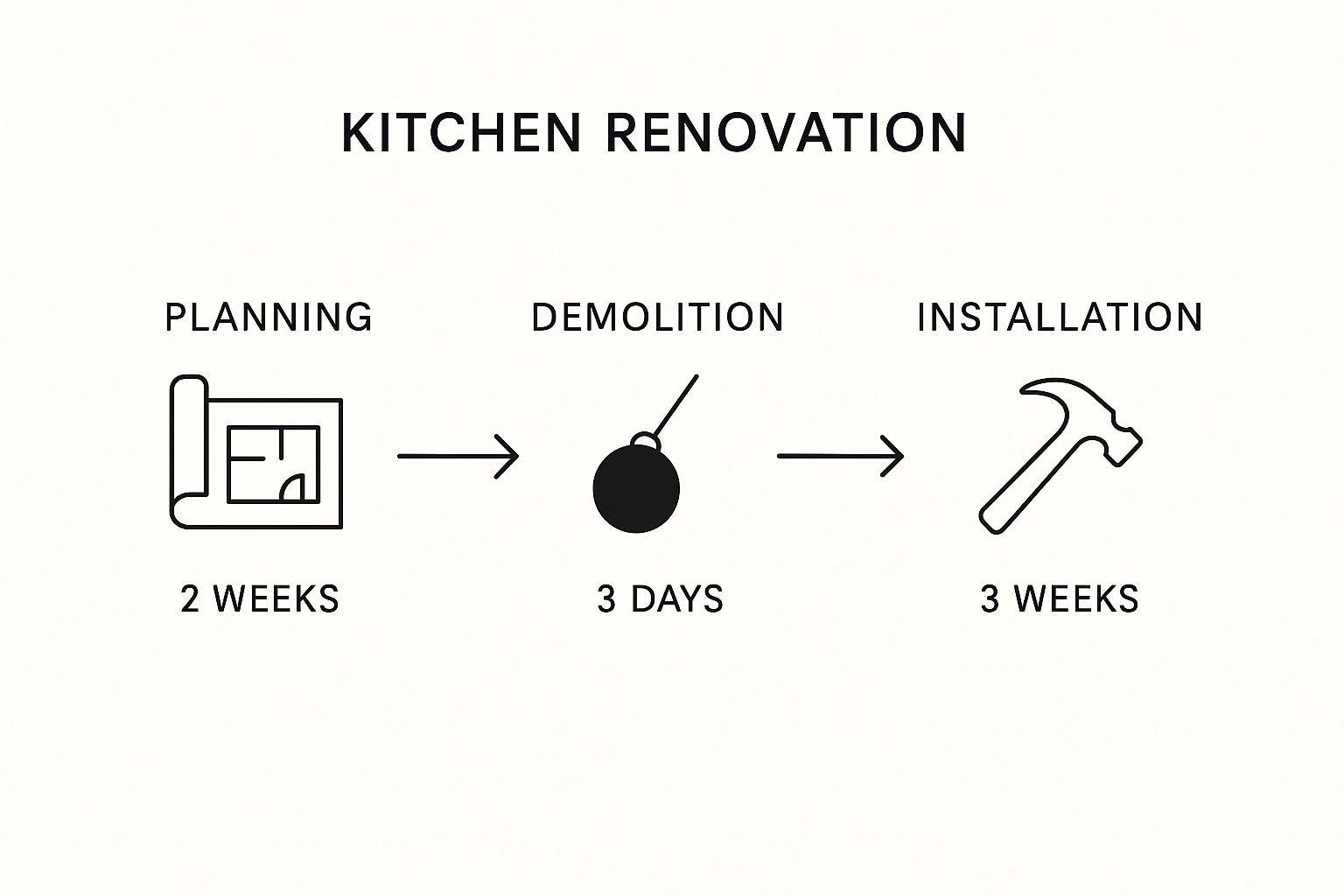
As you can see, active construction might seem relatively short, but it all hinges on the detailed planning that happens beforehand. To ensure all bases are covered, our comprehensive home remodel checklist is an essential guide for organizing every stage of your project.
Mapping Out Your Vision and Design

This is where the magic really begins. The vision and design phase is where your dream kitchen starts taking shape, moving from ideas into a tangible plan. This crucial stage can last anywhere from 2 to 6 weeks, and it’s the most important part of the entire kitchen renovation timeline.
What happens here sets the stage for everything that follows. Aldridge Construction helps create a detailed roadmap that involves nailing down a functional layout, choosing durable materials like quartz countertops, and defining a clear scope of work that fits your budget. Getting these details locked in before a single hammer swings is the key to a smooth project.
From Inspiration to Concrete Plans
The first order of business is to get specific. It's time to move beyond your Pinterest board and finalize the kitchen’s footprint. Are you keeping the current layout, or are you ready to knock down a wall for that open-concept feel?
Key decisions made during this phase include:
- Cabinetry: You'll need to choose between stock, semi-custom, or fully custom cabinets. This single decision has a massive impact on both your budget and lead times.
- Countertops: Select the workhorse surfaces of your kitchen. Will it be ultra-durable quartz, classic granite, or maybe a warm butcher block?
- Appliances: Finalize the exact models for your refrigerator, range, and dishwasher. Getting precise dimensions now ensures they fit perfectly into the new layout.
- Flooring and Backsplash: Pick materials like luxury vinyl plank or porcelain tile that tie the whole design together while being tough enough for daily use.
The Value of Professional Guidance
Most homeowners find that bringing in a professional pays off significantly. According to Houzz, a staggering 86% of homeowners partner with pros for their kitchen remodels, with general contractors being the go-to choice for 50% of projects. [Houzz, 2024]
This trend makes perfect sense. As the median spend for a major kitchen remodel hits $72,000, homeowners are clearly prioritizing expertly managed projects that deliver high-quality results. You can explore the full 2025 kitchen trends report to see just how homeowners are investing.
A general contractor in Monterey or Santa Cruz County provides invaluable local knowledge. They can recommend materials suited for the coastal climate, navigate regional design trends, and connect you with trusted suppliers.
Working with a seasoned pro like Aldridge Construction ensures every detail is buttoned up—from checking structural feasibility to making sure everything complies with local building codes like California's Title 24 energy standards.
Navigating Permits, Demolition, and Structural Changes

Once your design is finalized and materials are on their way, the real transformation begins. This part of the kitchen renovation timeline usually takes about 1 to 3 weeks and starts with a crucial, behind-the-scenes step: getting the right building permits.
The requirements and review times can be wildly different from one place to the next. What’s needed in San Benito County, CA, is a world away from the rules in Maricopa County, AZ.
This is exactly where having an experienced local team pays off. Aldridge Construction has spent years working with municipal departments across our service regions, so we know how to file everything correctly and keep your project moving. You can dive deeper into the specifics by checking out our guide to construction permit requirements.
The Demolition Process
With permits approved, it’s time for the demolition crew. This isn’t just about wild swings with a sledgehammer—it’s a methodical process of dismantling your old kitchen. We carefully remove cabinets, countertops, appliances, and flooring to create a clean slate.
The Aldridge Construction team makes dust management a top priority. We set up plastic barriers and containment systems to keep the mess contained and protect the rest of your home as much as possible.
Expert Insight: Demolition is the moment of truth. This is often when we uncover things hiding behind the walls—like old water damage or outdated wiring. A seasoned contractor always has a contingency plan for these surprises, allowing us to address them right away and keep your project moving forward safely.
Handling Major Structural Work
After stripping the space down to the studs, it’s time for any major structural changes. This is the foundational work that makes your new layout possible, and it has to be done right.
Some of the key structural tasks during this phase include:
- Wall Removal or Alteration: This creates airy, open-concept layouts that connect your kitchen to the dining or living room.
- Plumbing Relocation: If your dream kitchen includes an island sink or a new dishwasher location, our plumbers will reroute the supply and drain lines.
- Electrical System Upgrades: Our electricians run new wiring for modern appliances, add dedicated circuits, and ensure everything is up to current codes, like California's Title 24 energy standards.
This “behind-the-walls” work is the true backbone of your new kitchen, ensuring your space is safe, functional, and fully compliant.
Installing the Bones of Your New Kitchen
With the old kitchen cleared out, it's time to build its new foundation. This is the “behind-the-walls” phase, a critical period that typically takes 1 to 2 weeks. It's all about putting in the systems that make a modern kitchen work, and getting it right is non-negotiable for the Aldridge Construction team.
This stage is focused on the mechanical, electrical, and plumbing rough-ins (MEP). Our licensed electricians run new wiring for everything from recessed lighting to the dedicated circuits your new high-powered appliances will need. At the same time, our plumbers lay new supply and drain lines for your future sink, dishwasher, and refrigerator ice maker.
Inspections and Closing the Walls
This part of the kitchen renovation timeline is a huge checkpoint. Before any drywall goes up, all new MEP work must be inspected and signed off by a local building official, whether you're in Monterey County or Maricopa County. The inspector verifies that every wire and pipe meets current safety codes.
Expert Insight: Passing this inspection is a critical milestone. It's the official confirmation that all foundational work is safe and compliant. Trying to cover up uninspected work is a recipe for disaster, leading to costly tear-outs and major project delays.
Once we get the green light, our team can move forward with installing insulation. This is vital for energy efficiency, especially for homes in California that need to comply with Title 24 regulations. From there, we hang, tape, and finish the new drywall, creating a perfectly smooth, seamless surface. This is a perfect moment to do a final review of your plans; using a guide like our kitchen remodel checklist helps ensure every detail is locked in.
Bringing the Visuals to Life with Finishes

Once all the behind-the-walls work is done and inspected, your kitchen finally starts to reveal its new personality. This is one of the most exciting parts of the kitchen renovation timeline, spanning roughly 2 to 4 weeks.
The transformation kicks off with a fresh coat of paint on the walls and ceiling. Right after, our flooring crew comes in to lay down your chosen surface—whether that’s durable luxury vinyl plank, classic hardwood, or elegant tile. This gives us a clean, finished foundation for the main event: the cabinetry.
The Cabinetry and Countertop Sequence
The cabinets you selected weeks or even months ago are here. Our skilled carpenters meticulously install each box, door, and drawer, turning an empty room into a functional kitchen. The cabinetry defines your kitchen's look and storage capacity, so perfect installation is non-negotiable.
After the base cabinets are securely anchored, a specialist creates a precise template for the countertops. From there, it typically takes one to two weeks for your granite, quartz, or marble slab to be fabricated and installed.
Expert Tip: Once your base cabinets are in, don't put anything on them until after the countertop templating is finished. Even a small shift in the cabinets can throw off the template's accuracy, leading to a poorly fitting countertop that causes major delays.
Finalizing the Look with Backsplash
With the countertops installed, it’s time for the final major visual piece: the backsplash. Tucked between the countertops and upper cabinets, the backsplash is the design element that ties the room together. Whether you've picked a timeless subway tile or a dramatic full-height slab, our installers ensure a flawless finish.
For more great ideas on how to pull your whole design together, be sure to check out our essential home renovation tips.
Adding Fixtures, Appliances, and Final Details
This is where the magic really happens. Over the next 1 to 2 weeks, your project transforms from a construction site into a real, functional kitchen. It's an exciting time of coordinated activity as our specialized trades return to add the finishing touches.
The big-ticket items you've been dreaming about—your refrigerator, oven, and dishwasher—finally arrive. Our licensed plumbers and electricians are back on site, installing sinks, faucets, garbage disposals, and all the light fixtures that will bring your new space to life. This is a huge milestone in any kitchen renovation timeline.
The Finishing Touches and Final Checks
Once the major appliances are in, we shift our focus to the details. This is when cabinet hardware—all the knobs and pulls—is carefully attached. Our painters also return for any necessary touch-ups, ensuring every wall and piece of trim has a perfect finish.
These final details often reflect the latest design sensibilities. According to Remodeling Magazine's 2024 Cost vs. Value report, even a minor kitchen remodel can recoup an incredible 85.7% of its cost in added home value in the Pacific region. You can discover more about 2025 kitchen remodeling trends to see just how impactful these final selections can be.
Expert Insight: Before we hand over the keys, we conduct a final walkthrough with you. Together, we'll go through every inch of the kitchen, creating a detailed "punch list" of any minor adjustments needed. This collaborative review ensures the final product meets your standards.
After we've addressed every item on the punch list and the space has been professionally deep-cleaned, your kitchen is ready for you to cook, entertain, and enjoy.
Kitchen Renovation Timeline FAQs
1. How can you keep a renovation on track?
The most effective way is to finalize all design choices and material selections before demolition begins. This includes everything from appliance model numbers to cabinet hardware. Ordering items with long lead times, like custom cabinetry or specialty tile, is especially critical. Partnering with an experienced general contractor who has solid relationships with subcontractors and knows local permitting in areas like San Benito County also helps avoid common delays.
2. What are the most common causes of delays?
The number one cause of delays is discovering unexpected issues after demolition, such as hidden water damage, mold, or faulty wiring. Other frequent culprits include backordered materials, homeowner change orders made mid-project, and waiting for city permit inspections, which can create bottlenecks.
3. How long will I be without a working kitchen?
You should prepare to be without a fully functioning kitchen from the day demolition starts until the final appliances and fixtures are installed. For a standard remodel, this period typically falls between 4 to 10 weeks. We always advise clients to set up a temporary kitchen elsewhere in the home with a microwave, coffee maker, and mini-fridge to make this phase more manageable.
4. How much should I budget for unexpected costs?
It is wise to set aside a contingency fund of 10-20% of your total project budget. This buffer helps cover the cost of unforeseen issues, such as discovering structural problems behind walls or needing to upgrade old plumbing to meet current building codes, without derailing your project.
5. Do I need a permit for a kitchen remodel in California or Arizona?
Yes, most likely. In both California (e.g., Monterey, Santa Cruz Counties) and Arizona (Maricopa County), a permit is almost always required if you are moving walls, altering plumbing or electrical systems, or changing the building's structure. Cosmetic updates like painting or replacing countertops may not require one, but Aldridge Construction will manage the entire permitting process to ensure your project is fully compliant. Reviewing a list of questions to ask general contractors can help clarify this process.
Ready to create a realistic timeline for your dream kitchen? The team at Aldridge Construction has the experience to guide you through every phase, from initial design in Monterey County to final walkthroughs in Maricopa County. Contact us today for a professional consultation.