
California's new ADU rules are a game-changer for homeowners. They pave the way for faster permits and bigger units. Recent state laws have cut the approval process to just 60 days. They also expand design options. This makes it easier to add a second unit to your property in places like Monterey, Santa Cruz, and San Benito Counties.
Many homeowners know about ADUs. But they don't know about the specific 2025 changes that make them easier to build. Aldridge Construction can explain these updated laws in simple, actionable terms.
Your Guide to California's New ADU Rules
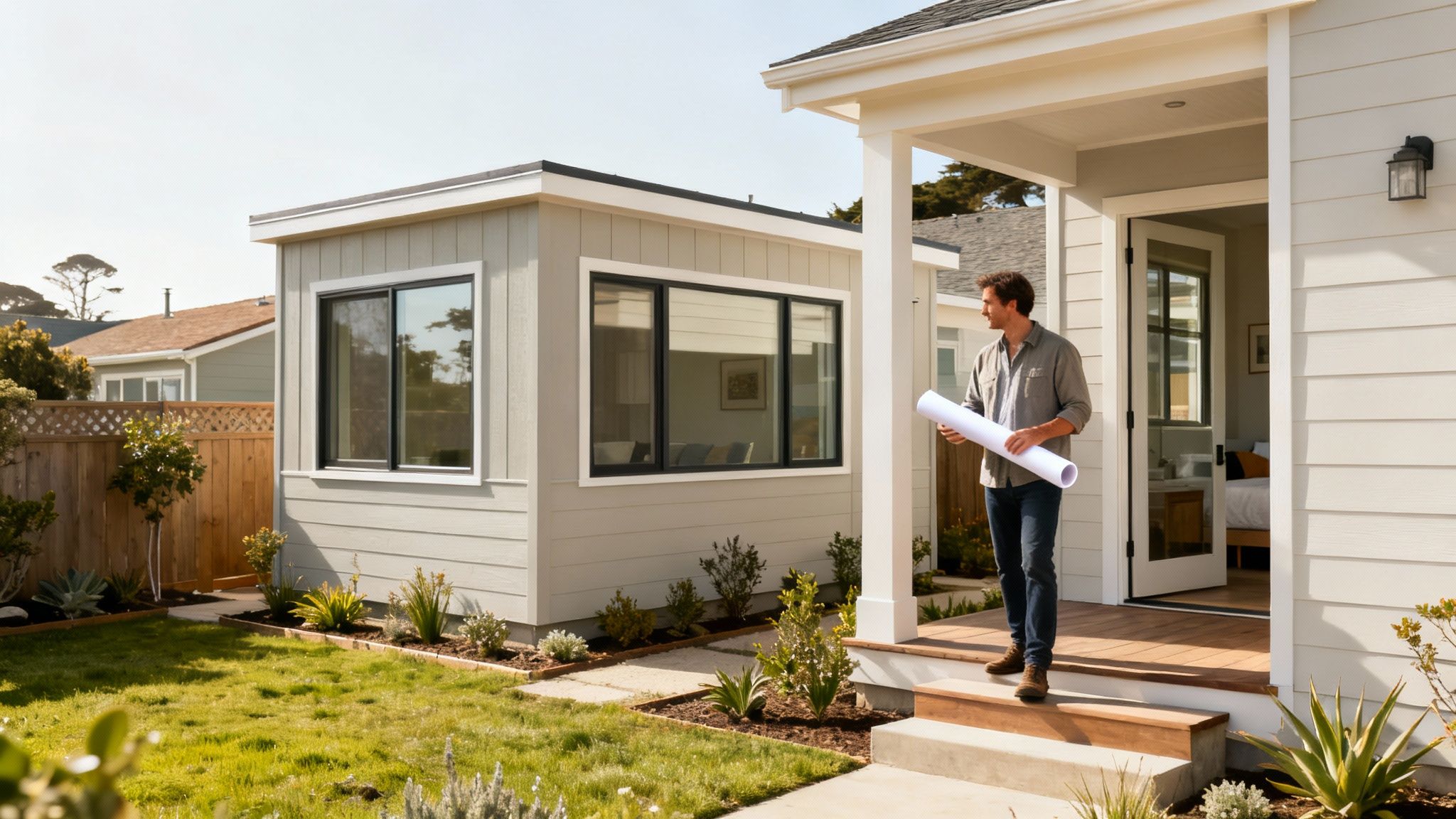
For homeowners, California's housing landscape is finally shifting for the better. Accessory Dwelling Units—often called granny flats—are now a key part of the state's plan to create more housing. This shift has led to powerful new laws. They are designed to cut through local red tape and empower property owners like you.
The days of long, uncertain waits for permit approval are over. Your local city must now act quickly. This creates a predictable timeline for your project. You can start building sooner and begin reaping the benefits. This could mean earning rental income or having a place for family to live close by.
Key California ADU Rule Changes at a Glance
To make sense of it all, it helps to see the before and after. The state has made several targeted changes. They address the biggest hurdles homeowners used to face.
Here’s a quick summary of the most impactful updates:
| Area of Change | Old Rule | New Rule Benefit |
|---|---|---|
| Permit Timeline | Indefinite; often 6-12+ months | Mandatory 60-day approval timeline |
| Owner-Occupancy | Often required by local cities | No longer allowed as a requirement |
| Lot Splits | Not allowed for ADU projects | Can split a lot to sell an ADU separately |
| Minimum Unit Size | Cities could set large minimums | Must allow at least an 850 sq. ft. unit |
| Impact Fees | High fees on units of all sizes | Waived for ADUs under 750 sq. ft. |
These changes represent a major shift in thinking at the state level. The goal is simple. Remove barriers and encourage the construction of these flexible, affordable housing units.
The Rise of the ADU in California
Interest in ADUs has exploded across the state. Since 2016, the number of ADU permits issued annually has skyrocketed. By 2022, nearly one in five new homes built in California was an ADU. This is a clear sign that homeowners are embracing this practical housing solution.
This surge isn't just a trend. It's a direct response to the housing crunch felt in communities from Salinas to Santa Cruz. The new regulations support this momentum. They make the entire process more straightforward and accessible.
These changes benefit you directly by:
- Simplifying Approvals: A standardized, faster timeline reduces headaches. It also cuts the costly delays that used to kill projects.
- Expanding Possibilities: The ability to build larger units means you can create a more functional and valuable space.
- Increasing Property Value: A well-designed ADU adds significant equity and long-term appeal to your home.
Don’t let confusion about the rules hold back your project. Aldridge Construction helps homeowners understand and navigate every step of the ADU process. It's also smart to explore all your funding options. You might find valuable financial aid by looking into these Top 10 Grants for California Residents.
Getting to Know the New ADU Laws
Think of California's new ADU laws as a statewide green light for homeowners. For years, building an ADU felt like a gamble. It was tangled in confusing local rules and frustrating delays. The state has stepped in, creating a clearer path forward for property owners.
The biggest change is how fast permits get approved. The days of waiting forever for an answer are gone. Cities across California now have to approve or deny a complete ADU application within 60 days. This mandatory timeline removes one of the biggest roadblocks.
These laws also level the playing field. Local governments can no longer invent their own restrictive rules that go against state law. This ensures every homeowner has the same basic rights to improve their property.
Faster Approvals and Fewer Roadblocks
This is all about making it easier to get your project off the ground. The state has standardized key regulations. This cuts through the red tape that homeowners in Santa Cruz and San Benito Counties used to struggle with.
This new approach focuses on common-sense changes. These have a real impact on your project's timeline and budget. The goal is to move projects from planning to construction much faster.
Here are the key changes that will speed up your project:
- Mandatory 60-Day Review: Your local planning department is on the clock. You get a clear answer, fast.
- Reduced Setbacks: You can often build an ADU as close as four feet from your side and rear property lines. This opens up possibilities on smaller lots.
- No More Owner-Occupancy Rules: Cities can no longer force you to live in either the main house or the ADU. This gives you total flexibility to rent out one or both units.
The 2025 California ADU legislative changes represent a pivotal shift. New rules eliminate parking requirements for garage conversions and simplify design guidelines. Importantly, the updated laws unify statewide regulations as of January 1, 2025, making local ordinances that conflict with these rules void. These key changes prevent cities from imposing restrictive conditions that could hinder ADU development.
More Freedom in Design and Size
It’s not just about speed. The new rules also give you more freedom to design an ADU that works for your needs. State law now guarantees you can build at least an 850-square-foot one-bedroom ADU. You can build a 1,000-square-foot ADU if it has two or more bedrooms. This means you can create a truly comfortable and functional home.
Parking rules have also been relaxed. If your property is within a half-mile of public transit, you are exempt from adding parking. Best of all, no extra parking is ever required for a garage conversion. This makes garage conversions one of the most cost-effective ways to add an ADU.
Getting a handle on these new rules is the first step. To streamline your ADU approval, the ultimate building permit checklist is an invaluable resource. Aldridge Construction has deep experience navigating local construction permit requirements. Our team manages the process for you, ensuring your plans are complete and compliant.
How Bigger Units and Faster Permits Boost Your Property Value
An ADU has always been a smart investment. But California's new rules make it even better. Think of the faster permit process as an express lane for your return on investment. Instead of getting stuck in delays for months, you can start building and earning rental income much faster.
This accelerated timeline has a direct, positive impact on your finances. Every month you’re not waiting on approvals is another month you could be collecting rent.
The Financial Power of Bigger Units
The ability to build larger units is a game-changer. A modern 950-square-foot, two-bedroom ADU in Salinas or Monterey will command a much higher rent than a tiny studio. This kind of unit attracts stable, long-term tenants.
That extra square footage translates directly into higher rental income. It also gives a bigger bump to your property’s appraisal value. A larger, functional ADU is a powerful asset.
Real-World Value and Appreciation
The data doesn't lie: properties with ADUs sell for more. They also appreciate faster. By adding a legal second dwelling, you're creating a new income stream. You are also adding flexible living space that today’s buyers want.
Properties with ADUs are outpacing the rest of the market. The median appraised value for single-family properties with ADUs grew at 9.34% annually between 2013 and 2023. Homes without ADUs appreciated at a slower 7.65% during the same period.
This gap shows the clear financial advantage of adding an ADU. It's an investment that pays you back while growing your property's equity faster.
Maximizing Your Return on Investment
A well-designed ADU is one of the most effective ways to boost your property's value. By taking advantage of the new rules, you can create a space that delivers a significant financial return.
An ADU is more than just an extra building; it's a financial engine for your property. By converting unused space into a high-demand rental or a home for family, you are unlocking equity that was previously dormant.
Here’s how an ADU built by Aldridge Construction can improve your financial outlook:
- Generate Passive Income: Renting out your ADU can create a steady monthly income.
- Increase Property Resale Value: Homes with permitted ADUs are hot commodities. Buyers pay a premium for them.
- Provide Housing for Family: An ADU offers a comfortable, independent living space for aging parents or adult children.
- Create Flexible Use Space: Use it as a home office, an art studio, or a guest suite.
Before diving in, understanding your home renovation return on investment is key. Our team at Aldridge Construction helps homeowners design and build ADUs that deliver a powerful financial return.
Projected ROI on a Monterey County ADU
Here is a sample cost and return breakdown for a typical ADU project in our local market. These numbers are estimates. They illustrate the powerful financial case for building an ADU.
| Investment Item | Estimated Cost | Projected Annual Return | Value Added to Property |
|---|---|---|---|
| Design & Permitting | $15,000 – $25,000 | – | (Part of Total Value) |
| Construction (750 sq. ft.) | $250,000 – $325,000 | – | (Part of Total Value) |
| Total Initial Investment | $265,000 – $350,000 | – | – |
| Rental Income (Projected) | – | $30,000 – $36,000 | – |
| Appraised Value Increase | – | – | $200,000 – $300,000+ |
The rental income can provide a strong annual return. The immediate boost to your property's equity makes an ADU one of the most rewarding home improvement projects.
Navigating Your ADU Build from Start to Finish
Building an ADU can feel like a huge project. But the new California ADU rules have made the process much smoother. Seeing your project go from an idea to a finished home involves a few key stages. This is your roadmap for the journey.
It all starts with a smart design. This is where your vision takes shape. We'll work with you to create a floor plan that fits your needs and sails through local codes in Santa Cruz, Monterey, or San Benito County.
This process flow shows exactly how streamlined permitting for larger units directly adds to your property value.
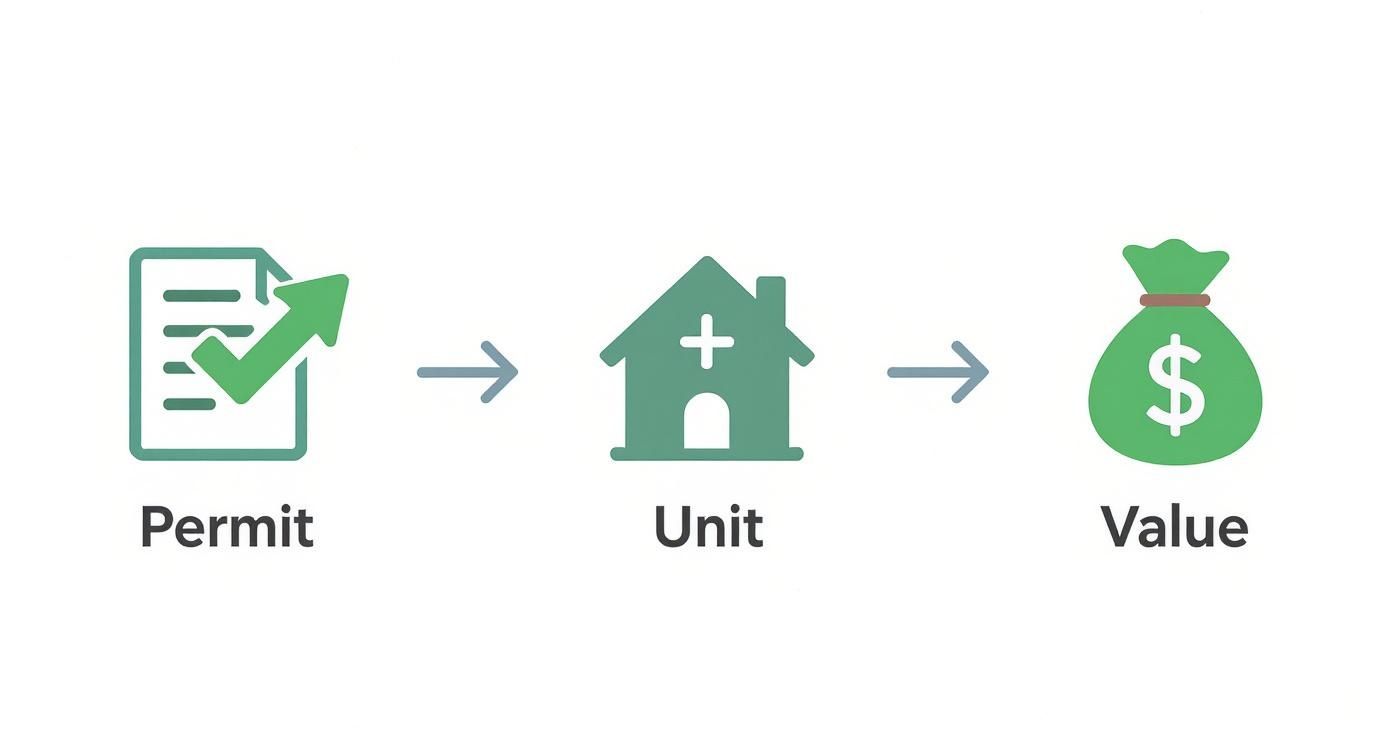
By cutting down on delays and allowing for bigger units, the new rules create a faster path to boosting your property's worth.
The Permitting Phase
Once we finalize the design, it’s time to get the permits. This is where how new California ADU rules could benefit your property really shows. The state now mandates a 60-day review timeline. We make the most of it by submitting a complete application package right from the start.
Our team has experience with the specific requirements in Salinas and the surrounding communities. We handle all the paperwork and communication to get your project approved as quickly as possible.
The Construction Stages
With the permit in hand, the real fun begins. Construction follows a logical sequence. We believe in keeping you in the loop the entire time, so you always know what’s happening.
Here are the main stages of construction:
- Foundation and Site Work: We prepare the site and pour a solid concrete foundation.
- Framing: The skeleton of the home goes up. Walls, floors, and the roof structure get framed.
- Rough-In Mechanicals: Our licensed subcontractors run all essential systems. This includes electrical wiring, durable PEX piping for plumbing, and HVAC ductwork.
- Exterior Finishes: We install windows, doors, siding, and roofing. This protects the structure from the elements.
For a more detailed breakdown, check out our guide to the home construction timeline.
The Finishing Touches
This final stage is where a structure becomes a home. We install all the interior finishes that reflect your personal style. Our team focuses on quality craftsmanship and materials that add lasting value.
A well-built ADU isn't just about speed and size; it's about the quality of the details. The finishing touches are what transform a structure into a comfortable, inviting, and valuable living space.
This is the phase where we install:
- Insulation and Drywall: This creates an energy-efficient and quiet interior.
- Flooring and Tile: From durable luxury vinyl plank to elegant bathroom tile.
- Cabinetry and Countertops: We install beautiful elements like quartz countertops.
- Fixtures and Appliances: All plumbing fixtures, light fixtures, and appliances are installed and tested.
- Paint and Trim: The final coat of paint and trim work complete the look.
Finally, we conduct a walkthrough with you to ensure every detail meets your expectations. At Aldridge Construction, our goal is to make the entire journey as seamless and rewarding as possible.
Navigating Local Conditions for Your ADU Project
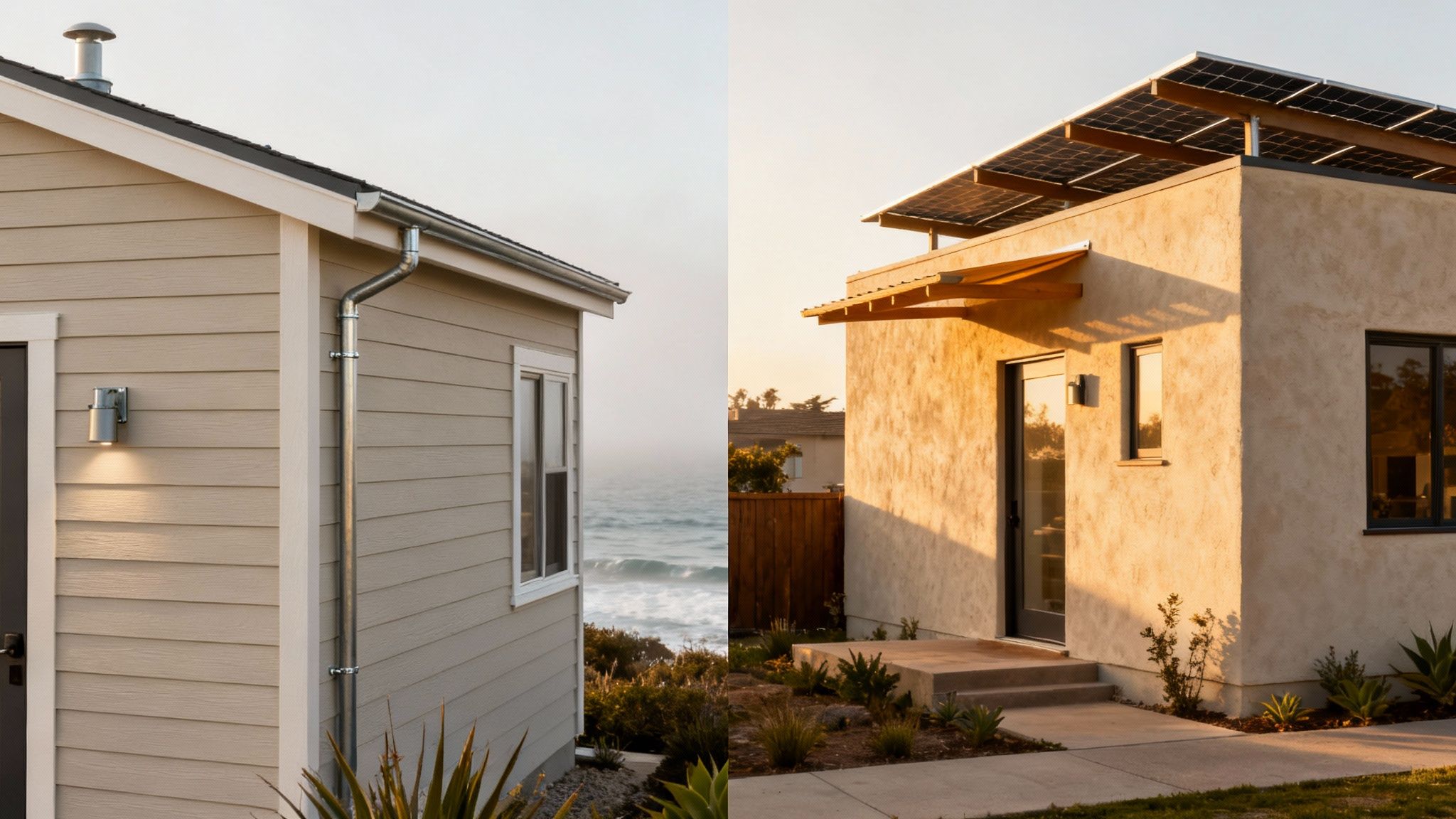
While California's state laws provide the blueprint for ADUs, the local environment shapes a successful project. A great ADU is adapted to its surroundings. This is especially true across the diverse microclimates of Monterey, Santa Cruz, and San Benito Counties.
Understanding local details is how we build an ADU that stands the test of time. With Aldridge Construction's deep local roots, we make sure your project is built right for its unique setting.
Building for Coastal Conditions in Monterey and Santa Cruz
For anyone living in coastal towns like Monterey and Santa Cruz, the ocean air brings construction challenges. Salt and moisture can be brutal on building materials. They cause rust, rot, and decay.
To fight back, we use materials designed for marine environments. This is the only way to ensure your coastal ADU lasts.
Our go-to materials for coastal builds include:
- Fiber Cement Siding: This tough material from brands like James Hardie won't warp, rot, or get damaged by salt spray.
- Corrosion-Resistant Hardware: We use stainless steel or galvanized fasteners and hinges to stop rust.
- Energy-Efficient Windows: High-quality Milgard windows with vinyl or fiberglass frames don’t corrode and provide great insulation.
By picking the right materials, we build ADUs that are as tough as they are beautiful.
Energy Efficiency for Inland Climates
Inland in warmer spots like Salinas or San Benito County, the big challenge is heat. Our focus shifts to building an ADU that stays cool without high energy bills. California's Title 24 energy code is our starting point for building high-performance homes.
An energy-efficient ADU isn't just a "green" choice; it's a smart financial one. The right insulation, windows, and system design can save you hundreds of dollars a year in utility costs, making your ADU cheaper to run and way more attractive to potential renters.
To meet and exceed these standards, we focus on a few key strategies:
- Cool Roof Technology: We use roofing materials that reflect the sun’s heat.
- High-Performance Insulation: We seal the entire ADU with top-notch insulation to keep the heat out.
- Strategic Window Placement: We orient windows to avoid direct sun during the hottest parts of the day.
These smart design choices create a comfortable home while keeping monthly bills down.
Matching Your ADU to the Local Vibe
A great ADU should feel like it belongs in the neighborhood. Whether your street is lined with historic Craftsman homes or sleek, modern designs, we can design an ADU that fits in.
In older neighborhoods, we might suggest pitched roofs and traditional siding. In a contemporary area, a minimalist ADU with clean lines and big windows might be the perfect fit. Aldridge Construction is here to help you navigate these design choices.
Ready to Start Your ADU Project?
If you've been thinking about building an ADU, now is the time to act. Recent state laws have cleared away old roadblocks. The process is faster and more straightforward than ever.
An ADU is one of the most powerful ways to add flexibility and value to your home. Imagine having a private home office, a space for aging parents, or a source of steady rental income. That's what an ADU delivers.
Turning Your Vision into Reality
Don't let new regulations keep you on the sidelines. At Aldridge Construction, we specialize in navigating these new ADU laws. We manage the entire process for you in Monterey, Santa Cruz, and San Benito Counties.
Our team brings the local expertise needed to turn your vision into a reality. Choosing the right partner is a critical step. For more on what to look for, check out our guide on how to find a good contractor.
An ADU is more than just another room; it's a strategic investment in your property's future. By taking advantage of the new, more favorable rules, you can unlock your property's hidden potential and create lasting value for your family.
Ready to see how these new ADU rules could work for you? The team at Aldridge Construction is here to answer your questions. Contact us today to schedule a professional consultation.
Frequently Asked Questions About California's New ADU Rules
1. How long does it take to get an ADU permit now?
Thanks to new state laws, your local city must approve or deny your complete ADU application within 60 days. This mandatory timeline creates a more predictable process, a big improvement from the months-long waits of the past. Aldridge Construction ensures your application is complete from the start to meet this deadline.
2. Can I build an ADU if I have a small backyard?
Yes, most likely. New California rules have reduced property line setbacks to as little as four feet for both side and rear yards. This change makes it possible to build an ADU on many lots that were previously considered too small. For garage conversions, setbacks are often waived entirely.
3. What is the biggest ADU I can build?
State law guarantees you the right to build an ADU that is at least 850 square feet. If the ADU has two or more bedrooms, you can build up to 1,000 square feet. These state minimums override more restrictive local laws, giving homeowners in areas like Monterey County more flexibility.
4. Do I need to add a new parking spot for my ADU?
Probably not. You are exempt from adding a new parking spot if your property is within a half-mile of public transit, is in a historic district, or if the ADU is part of an existing structure (like a garage conversion). Since most properties in the Monterey Bay area meet one of these criteria, new parking is rarely required.
5. How much does an ADU cost in Monterey or Santa Cruz County?
The cost of an ADU depends on several factors: size, design complexity, site conditions, and your choice of finishes. A simple garage conversion is the most affordable option. A new, detached two-bedroom unit with high-end finishes like quartz countertops and Milgard windows will be a larger investment. We provide clear, detailed quotes to give you a full picture of the costs.
Ready to find out what an ADU could do for your property? The team at Aldridge Construction is here to walk you through it. Contact us today for a custom estimate based on your vision and your goals.