
Building an Accessory Dwelling Unit (ADU) in Monterey, Santa Cruz, or San Benito County seems more straightforward than ever, thanks to updated California laws. However, this apparent simplicity is often deceptive. The journey from a basic floor plan to a fully approved, functional ADU is filled with critical details that many homeowners overlook.
This guide goes beyond the basics of ADU design to uncover what most homeowners miss. While state laws provide a helpful framework, the real challenges lie in the specifics of your local jurisdiction. Homeowners often assume all ADUs follow identical rules, but a design that works perfectly in Salinas might be rejected in Santa Cruz due to different local variances, utility requirements, or impact fees.
This is the hidden risk: generic advice can stall your project before a single nail is hammered, creating unexpected expenses and frustration. This article reveals the top nine critical factors that define a successful project. Consider this your roadmap to avoiding common pitfalls and ensuring your ADU dream becomes a well-executed reality.
1. Utility Infrastructure Planning, Metering, and Cost Separation
One of the biggest oversights in ADU design is underestimating utility needs. Many homeowners assume they can simply tap into existing water, sewer, and electrical lines. This often leads to expensive retrofits and disputes over shared bills.
Going beyond the basics of ADU design means treating your new unit’s utilities as a separate, self-sufficient system from day one.

True utility planning involves assessing your property's existing capacity and planning for separate metering before the first trench is dug. This proactive approach prevents major headaches, such as a main electrical panel that isn't robust enough for the ADU and an EV charger. For instance, some Monterey County projects require a main panel upgrade before construction can even start, adding unexpected costs and delays.
Actionable Steps for Smart Utility Planning
To avoid these pitfalls, a thorough utility audit is non-negotiable. This involves more than just a surface-level look.
- Conduct a Full Utility Audit: Before finalizing your ADU design, hire licensed electricians and plumbers to assess your existing systems' capacity. They can determine if your main electrical panel, water heater, and sewer lateral can support the new dwelling.
- Engage Utility Companies Early: Contact your local providers in Salinas or Santa Cruz to request estimates for separate meters. This process can take months, so starting early is crucial.
- Future-Proof Your System: Consider upgrading your main electrical service beyond the minimum requirement. This "oversizing" adds capacity for future needs like an electric vehicle charger or solar panels. Our guide to passing an electrical rough-in inspection offers valuable insights.
- Document Everything: Create a detailed map of all new and existing utility lines. This documentation is invaluable for future maintenance or landscaping projects.
2. Parking, Driveway Access, and Vehicle Maneuvering Space
Many homeowners focus on the ADU’s interior layout, only to have their project derailed by parking. Failing to plan for adequate parking spaces and clear driveway access can lead to code violations and safety hazards. Going beyond the basics of ADU design requires treating vehicle access as a critical component of your site plan.
Effective parking design is about more than just checking a box on a permit application. It ensures practical daily use and critical emergency access. We’ve seen projects in Santa Cruz County where an inadequate driveway design prevented emergency vehicles from reaching the unit, forcing a costly redesign.
Actionable Steps for Smart Access and Parking Design
A detailed site and access plan is essential from the very beginning. This requires a professional assessment of both regulations and real-world use.
- Verify Local Parking Rules First: Before finalizing any design, contact your local planning department in Monterey or Santa Cruz. Ask for their specific ADU parking requirements, as these can vary significantly by city.
- Map Out Vehicle Maneuvering: Use digital tools or online calculators to simulate how a vehicle will enter, park, and exit the property. This helps confirm that your design is practical and safe.
- Consider Emergency and Guest Access: Your plan must account for more than just the resident's car. Ensure there is a clear, unobstructed path for emergency services.
- Explore Permeable Paving Options: To meet modern drainage and sustainability codes, consider using permeable pavers or gravel systems. These materials help manage stormwater runoff and can be an attractive alternative to traditional concrete.
3. Privacy Fencing, Sight Lines, and Neighbor Relations
One of the most delicate aspects of adding an ADU is its impact on privacy—for your tenants and your neighbors. Failing to consider sight lines can lead to uncomfortable living situations and strained neighborly relations. Going beyond the basics of ADU design means treating privacy as a fundamental architectural element.
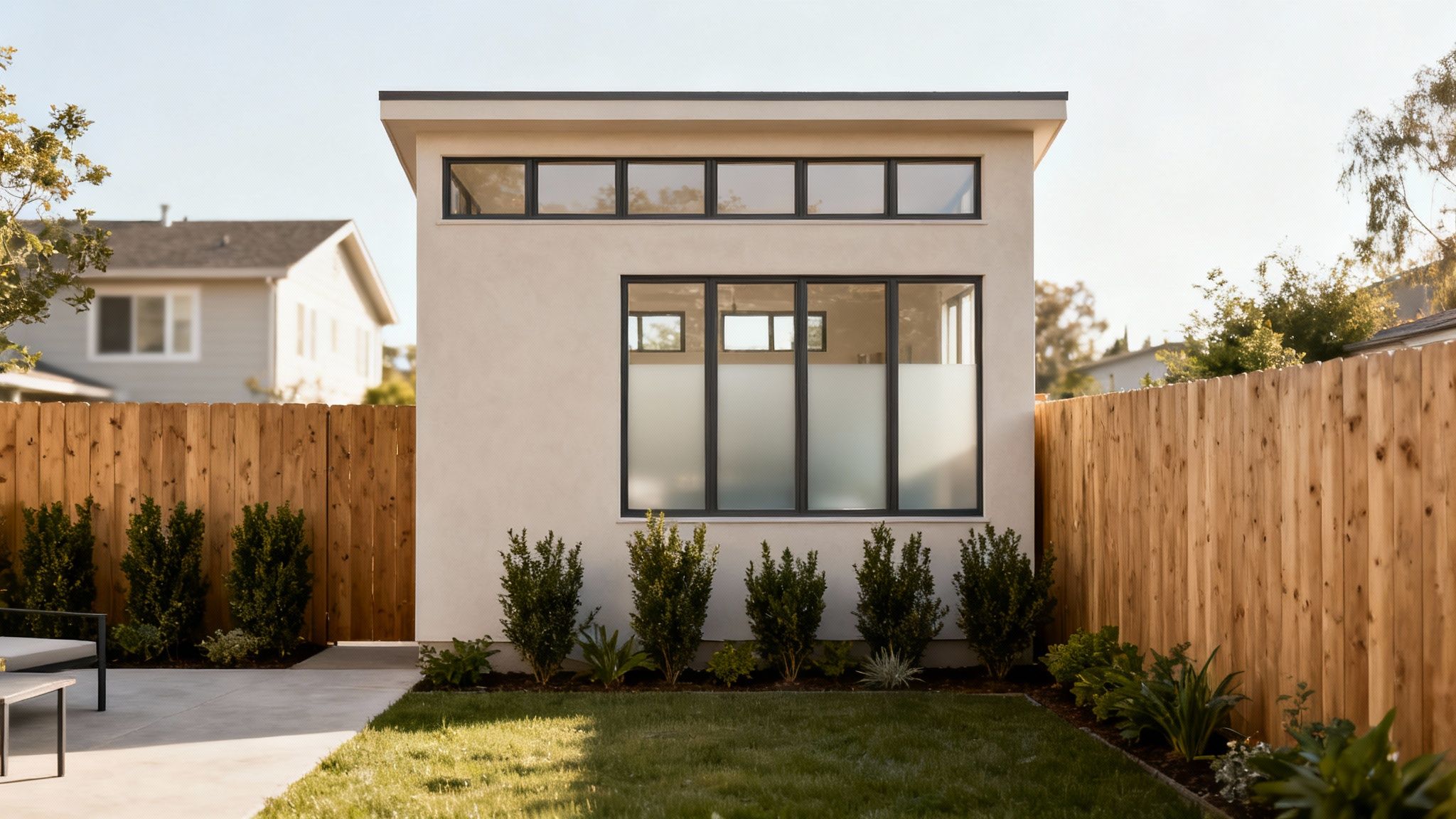
True privacy planning involves more than just putting up a standard fence; it requires a strategic analysis of views, sun angles, and daily routines. We’ve seen projects in San Benito County where poorly positioned ADU bedroom windows directly overlooked a neighbor's pool, causing immediate friction. Proper planning ensures your ADU is a welcome addition to the neighborhood.
Actionable Steps for Smart Privacy Planning
A careful site analysis and clear communication are key. This process helps anticipate issues before they become problems.
- Conduct a Sight Line Audit: Visit your proposed ADU site at different times of the day. Observe where the sun falls and which windows will overlook neighboring yards or homes.
- Create Visual Overlays: On your site plan, draw the sight lines from every proposed ADU window to neighboring properties. This simple exercise can reveal potential privacy issues that are easy to fix in the design phase.
- Communicate with Neighbors Early: Before finalizing plans, have a friendly conversation with your neighbors. Share your general intentions and ask about any specific privacy concerns they might have.
- Use a Layered Landscaping Approach: Combine fencing with natural elements like fast-growing plants to soften fence lines and add screening. For design inspiration, a complete guide to privacy fences for decks can be helpful.
- Incorporate Privacy-Enhancing Windows: In sensitive areas like bathrooms, use frosted glass or clerestory windows (placed high on a wall). This allows natural light to enter while completely obscuring the view.
4. Grading, Drainage, and Water Management Systems
A critical element often overlooked until the first major rainstorm is how water moves across your property. Failing to properly grade the site can channel rainwater directly toward your new ADU or main house foundation. This leads to water intrusion, mold, and costly structural damage.
Effective water management is an engineered system designed to protect your investment. We’ve seen a Monterey County project where improper grading sent water toward the main home's foundation, resulting in over $15,000 in repairs after the first rainy season. Proactive design is key to avoiding these issues.
Actionable Steps for Proper Water Management
A professional grading and drainage plan is essential before finalizing your design. This ensures water is managed responsibly from day one.
- Request a Topographic Survey: Start with a survey that maps the elevation changes across your lot. This data is the foundation for a successful grading plan.
- Hire a Drainage Specialist or Civil Engineer: A professional can design a comprehensive plan that includes swales, drains, and appropriate slopes to direct water away from structures.
- Observe Your Property in the Rain: Before construction, walk your property during a heavy downpour. Observing where water pools and flows provides invaluable, real-world insight.
- Integrate Natural Solutions: Use landscape features like rain gardens to slow down and absorb runoff. This not only manages water but also enhances your property's aesthetic.
- Verify Local Stormwater Requirements: Cities in Santa Cruz and Monterey counties have specific regulations for managing stormwater. Confirm these rules early to avoid compliance issues. Our guide on how to waterproof foundation walls effectively provides essential techniques.
5. Natural Light, Ventilation, and Indoor Air Quality Requirements
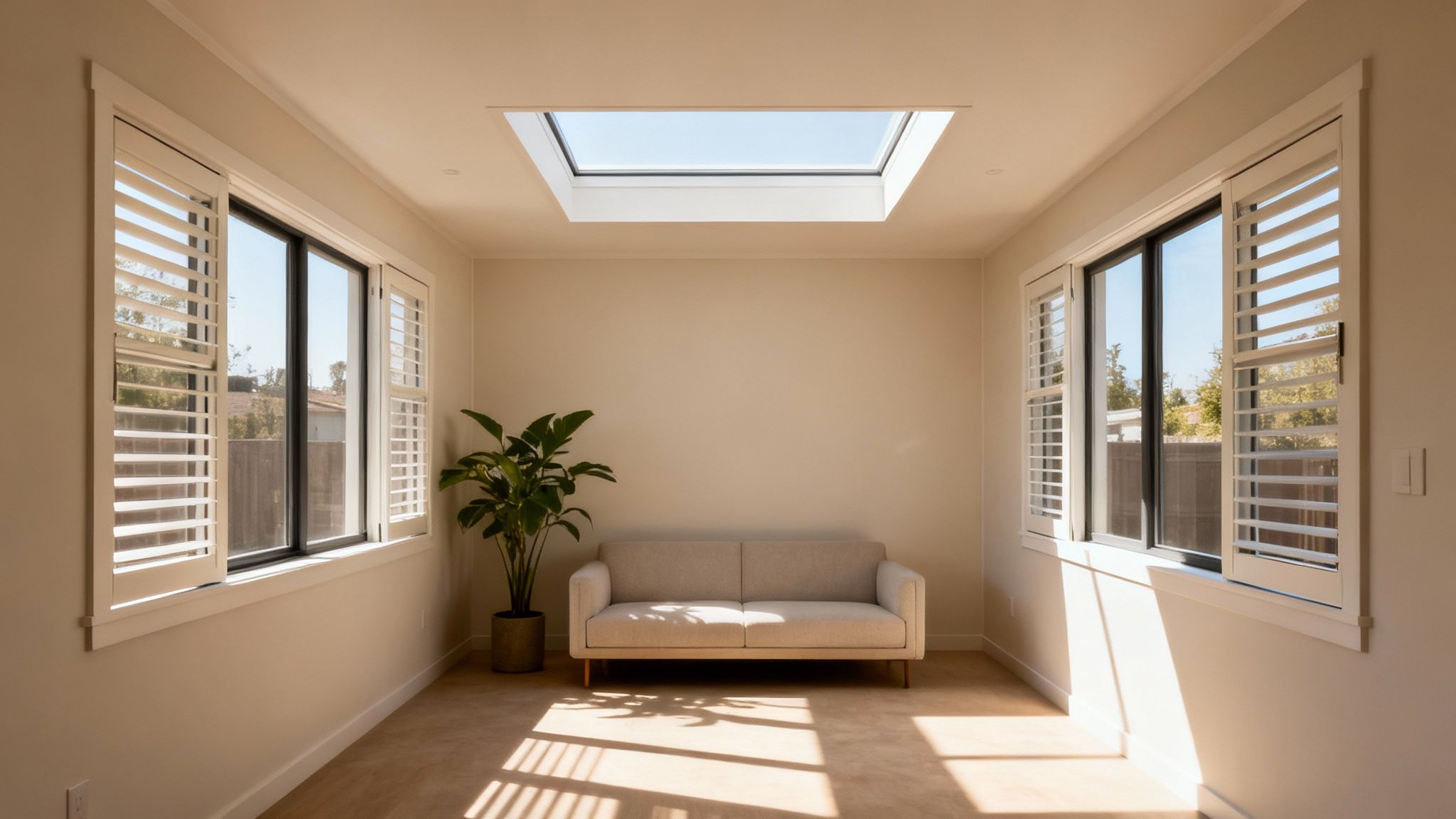
A common mistake in ADU design is treating windows and airflow as an afterthought. This often results in dark, stuffy spaces that feel smaller than they are. Going beyond the basics of ADU design means strategically planning for abundant natural light and robust ventilation.
Properly designed light and ventilation transform the livability of a small space. We have seen projects in Salinas where an ADU was initially designed with a single-exposure living room. Adding a skylight made the entire unit feel more spacious and inviting.
Actionable Steps for a Healthy ADU Interior
Integrate light and air quality planning into the earliest design phases. This requires a proactive approach that looks at the building as a holistic system.
- Create a Sun Path Diagram: Before finalizing the floor plan, map how sunlight will move across your property throughout the day. This helps you place windows to capture morning light or avoid harsh afternoon sun.
- Design for Cross-Ventilation: Whenever possible, place operable windows on opposite sides of a room. This allows for natural breezes to flow through, cooling the space and refreshing the air.
- Verify Window-to-Floor Ratios: California building codes have specific requirements for window area relative to a room's floor space. Confirm your design meets these ratios before submitting plans.
- Plan for Mechanical Ventilation: In compact bathrooms and kitchens, high-quality mechanical ventilation is essential. Consider energy recovery ventilator (ERV) or heat recovery ventilator (HRV) systems for fresh air. Our guide to energy-efficient home building explores these systems in more detail.
- Document Everything for Permitting: Clearly label all windows as "operable" or "fixed" on your design drawings. This documentation streamlines the plan check process with your local building department.
6. Setback Requirements, Lot Coverage, and Building Envelope Constraints
One of the most common pitfalls in ADU design is wishful thinking about size. Homeowners often envision a spacious unit only to discover their property's "building envelope" is much smaller. The building envelope is the actual buildable area defined by local zoning rules like setbacks and lot coverage limits.
Going beyond the basics of ADU design means understanding that while state laws provide a framework, local jurisdictions dictate the precise rules. For instance, a client in Salinas assumed they could build a large ADU, but a zoning analysis revealed that local limits capped their buildable area at just 800 sq ft.
Actionable Steps for Defining Your Building Envelope
To avoid designing a unit that can't be built, you must start with a thorough analysis of your property's specific limitations.
- Obtain a Current Property Survey: Before engaging an architect, get an up-to-date survey showing precise property lines, existing structures, and any easements.
- Verify Local Setbacks and Lot Coverage: Contact your local planning department in Monterey or Santa Cruz County and request a detailed zoning verification letter. This document will specify setback requirements and lot coverage maximums.
- Map the Buildable Area: Use your property survey to create a site plan. With colored overlays, map out the required setbacks from each property line. The remaining area is your true buildable footprint. A guide to building code violations can help prevent costly mistakes.
- Check for State Law Exemptions: California law often allows for reduced 4-foot side and rear setbacks for ADUs. Understanding how these state-level California ADU requirements interact with city ordinances is crucial.
7. Fire Safety, Egress Requirements, and Emergency Access
Among the most critical yet overlooked aspects of ADU design are fire safety and emergency egress. Homeowners often forget that California Building Code has strict rules for protecting occupants. Simply adding a bedroom isn't enough; it must have a safe and compliant exit in case of a fire.
Going beyond the basics of ADU design means integrating life safety features into your floor plan from the very beginning. This includes properly sized egress windows, fire-rated walls, and clear, unobstructed pathways for emergency personnel.
Actionable Steps for Compliant Safety Design
To ensure your ADU is both safe and approvable, you must proactively design for fire code compliance. This avoids expensive redesigns and ensures occupant well-being.
- Design Compliant Egress Windows: Ensure every sleeping room has at least one window meeting egress requirements: a minimum of 5.7 square feet of clear opening, with a minimum clear height of 24 inches and width of 20 inches.
- Specify Fire-Rated Assemblies: For attached ADUs, the shared wall with the primary residence must have a minimum one-hour fire-resistance rating.
- Plan Clear Emergency Access: Design a clear path from the ADU’s exterior door to the public street. This access path must be kept free of obstructions.
- Install Proper Detection Systems: Place interconnected smoke and carbon monoxide detectors in each bedroom, in hallways leading to sleeping areas, and on each level.
- Consult with Officials Early: Before submitting plans, consider a preliminary review from your local fire marshal or building official in Salinas or Monterey. This can identify potential issues early.
8. Sound Insulation and Noise Mitigation Between Units
A crucial element many homeowners overlook is the quality of life within both the main home and the new unit. Without proper sound insulation, everyday noises can travel easily between dwellings, creating disturbances. Going beyond the basics of ADU design means architecting a peaceful acoustic environment from the start.
True acoustic planning involves more than just standard insulation. It requires specifying materials and construction assemblies rated for their ability to block noise. For example, a homeowner using standard framing for an attached ADU may find they can clearly hear the tenant’s television and phone calls through the walls.
Actionable Steps for Effective Sound Insulation
A dedicated sound mitigation strategy is essential. This involves selecting the right materials and techniques for shared walls, floors, and ceilings.
- Specify High-Performance Assemblies: For any shared walls between the ADU and the main home, insist on a minimum Sound Transmission Class (STC) rating of 50. This industry standard effectively muffles loud speech.
- Use Resilient Channels and Double-Stud Walls: Installing drywall on resilient channels creates a gap that breaks the path of sound vibrations. A double-stud wall is an even more effective solution.
- Isolate Floor and Ceiling Noise: In a two-story ADU, footstep noise is a common complaint. A floating floor system or specialized acoustic insulation in the ceiling cavity can dramatically reduce this impact noise.
- Seal All Gaps and Penetrations: Sound will find any crack to get through. Use acoustical caulk to seal all penetrations in shared walls, including around electrical outlets and plumbing pipes, to prevent noise leaks.
9. Kitchen and Bathroom Fixture Requirements and Accessibility Considerations
A common misstep is treating the ADU kitchen and bathroom as miniature versions of those in a primary residence. Homeowners often select fixtures based on aesthetics alone, only to discover they violate building codes. Going beyond the basics of ADU design means planning these areas for code compliance, functionality, and long-term accessibility.
True fixture planning addresses mandatory clearances, counter space, and future-proofing for aging-in-place. In a Santa Cruz ADU, incorporating universal design principles like a curbless shower and reinforced walls for grab bars made the unit highly attractive to a wider tenant pool, including seniors.
Actionable Steps for Compliant and Accessible Fixture Planning
To create a functional, legal, and marketable ADU, your kitchen and bathroom layouts must be meticulously planned from the start.
- Verify Minimum Clearances: A kitchen needs at least 36 inches of continuous counter space next to a sink. Bathrooms require a minimum of 30 inches of clear floor space in front of the toilet and vanity.
- Reinforce for the Future: Add solid wood blocking inside the walls behind the toilet and around the shower. This makes future grab bar installation simple and secure.
- Choose Universal Design Fixtures: Specify lever-style door and faucet handles instead of knobs. Consider a low-curb or curbless shower, which improves accessibility for all mobility levels.
- Document Everything for Approval: Your architectural drawings must clearly show all fixture locations, clearances, and accessibility features. Explore concepts in our guide to accessible kitchen design.
FAQs About Advanced ADU Design
1. Do I need separate utility meters for my ADU in Monterey County?
While not always required by the state, separate meters are highly recommended for rental units to avoid billing disputes. Cities like Salinas or Santa Cruz may have specific requirements, so it's best to check with the local utility provider and planning department early in the design process.
2. How much space do I really need for ADU parking?
Parking requirements vary by city. However, California law waives parking requirements for ADUs located within a half-mile of public transit. Always verify your specific local rules, as a miscalculation can force a costly redesign.
3. What is the most overlooked cause of ADU permit delays in Santa Cruz?
Incorrectly calculated setbacks and lot coverage are common reasons for initial plan rejection. Homeowners often rely on state guidelines without confirming the specific ordinances in their city, leading to designs that don't fit the local building envelope.
4. How can I make my attached ADU quieter for both me and my tenant?
The best approach is a layered one. Use double-stud walls or resilient channels, install solid-core doors, and use acoustical caulk to seal all gaps around outlets and pipes. This combination effectively blocks both airborne and impact noise.
5. Is it expensive to add accessibility features to an ADU?
Incorporating "aging-in-place" features during the initial build is very cost-effective. Adding wood blocking for future grab bars costs very little, and choosing lever handles over knobs is often price-neutral. Planning for a wider doorway or a curbless shower from the start is much cheaper than retrofitting later.
Partnering with a Local Expert to Build Your ADU the Right Way
Building an ADU is a powerful investment that can provide a home for family or generate rental income. But as we’ve explored, the journey goes far beyond the basics of ADU design: what most homeowners miss. Overlooking just one element, such as parking regulations in your specific city or intricate setback rules, can lead to costly delays and rejected plans.
The True Value of Local Expertise
Navigating this intricate landscape is not a DIY task. The difference between a smooth project and a stressful one often comes down to deep, boots-on-the-ground knowledge of your local jurisdiction. Residents of Santa Cruz and Monterey know that while ADUs are easier to build, each city has its own process, fees, and timelines.
This is why one-size-fits-all advice from generic blogs often fails homeowners in our region. It can lead to incorrect assumptions, flawed budgets, and stalled projects.
Practical Tip: Before you hire a contractor, ask if they’ve built an ADU in your city in the past 12 months. Also ask if they’ll handle the paperwork and coordinate with the planning office—don’t assume it’s included.
Your Path to a Successful ADU Project
The topics covered in this guide represent a roadmap to a smarter, more valuable ADU. By addressing these often-overlooked details upfront, you move beyond simply building a structure to creating a well-designed, functional, and profitable home.
At Aldridge Construction, we use pre-approved ADU plans in Monterey County and stay current with changing city regulations in Salinas, Santa Cruz, Marina, and beyond. This helps homeowners avoid red tape and save months of permitting time. This level of foresight is the hallmark of a true ADU specialist.
If you’re in Santa Cruz, Monterey, or San Benito County, Aldridge Construction can guide your ADU project from idea to approved plan—with no surprises about permits, fees, or timelines. Reach out for a free local ADU consultation and let our expertise guide you.