
Direct Answer: Building an ADU does not reassess your whole property. The county assessor values only the new unit and adds that amount to your existing assessment, so your original Prop 13 basis stays intact.
The most common question I get about backyard units has nothing to do with framing or finishes. It is some version of this: “If I build an ADU, does the county reassess my whole house?”
I understand why people ask. If you bought in Salinas or Seaside in 1998 or 2004, your Prop 13 basis is one of the best financial assets you own. Nobody wants to trade it for a rental unit.
So let me answer it plainly. No, a new ADU does not reset the assessed value of your entire property. But there is a real tax change coming, and there is a bill most homeowners do not see coming. Here is how both work in Monterey County.
Your Prop 13 Basis Stays Put. Only the New Part Gets Valued.
This is the piece that stops projects cold, and it is based on a misunderstanding.
When you complete new construction in California, the assessor does not go back and re-price your house at today’s market value. The assessor values only the newly constructed portion and adds that figure to your existing assessment. Your main house keeps the basis it has been carrying all along.
So if your home is assessed at a fraction of what it would sell for today, that stays true after the ADU is done. The new number on your bill reflects the unit you just built, not what a buyer would pay for the whole parcel.
A few things that follow from that:
- The main house is not re-valued because you added a second unit.
- The added assessment tracks the new unit, not your neighborhood’s sale prices.
- A bigger, more finished unit carries a bigger tax line than a small, simple one.
That last point matters more than people expect. Finish decisions you make during design quietly shape a tax line you will carry for decades. Tile choices and cabinet grades show up on the assessment roll, not just the invoice.
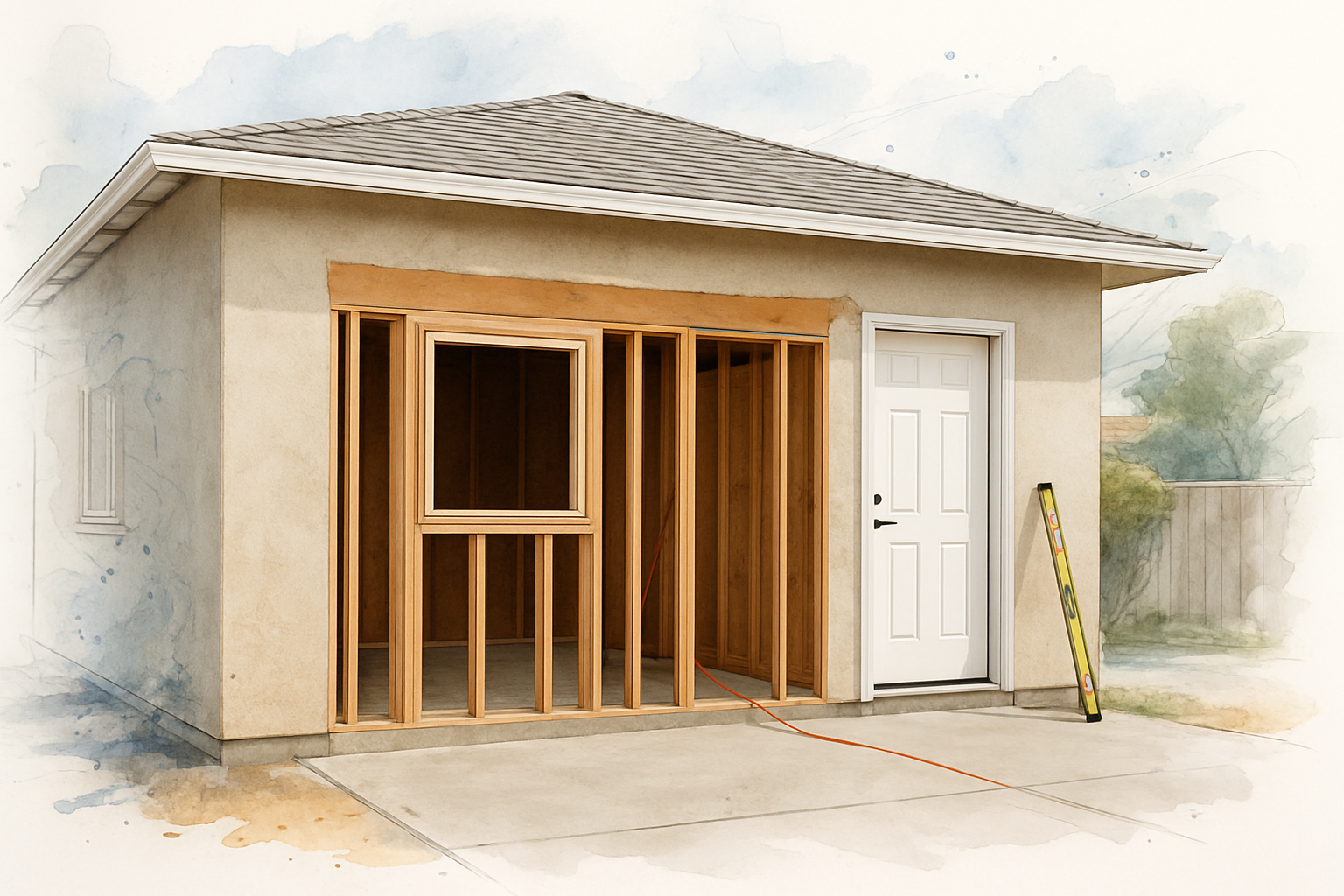
The Supplemental Tax Bill Is the Part That Surprises People
Here is where homeowners get caught off guard. The tax change does not wait for next year’s regular bill.
When new construction is completed, the assessor values the new portion, subtracts any prior assessed value for that space, and issues a supplemental bill in addition to your regular annual bill. It takes effect on the first day of the month after completion. Monterey County lays this out on its supplemental assessments page.
The timing is the tricky part. Reassessment volume is high, so weeks or months can pass between your final sign off and the bill actually arriving in the mailbox.
I have watched this play out more than once. A homeowner finishes a unit in spring, a tenant or a parent moves in, rent starts coming in, and everything feels clean. Then a supplemental bill lands in the fall covering back to the month after completion.
My advice is simple: do not treat your first year of rent as free money. Set some aside from month one so the supplemental bill is a line item you already planned for instead of a surprise.
Three Project Types, Three Different Outcomes on the Tax Roll
Not every ADU project lands the same way with the assessor. These three show up constantly in Monterey County, and they are worth separating.
| Project type | How it generally lands on the tax roll | What to plan for |
|---|---|---|
| New detached unit in the backyard | Clearly new construction. The full value of the new structure gets added to your existing assessment. | The largest added assessment of the three, since you built an entire dwelling from the slab up. |
| Garage conversion | The space already existed and was already on the roll. Assessment generally reflects the value added by turning storage into living space. | A smaller added assessment than a detached build, plus a lower build cost in most cases. |
| Legalizing an existing unpermitted space | Square footage that was never on the roll comes onto it for the first time, often with the value of the improvements. | An assessment you did not have before, in exchange for a unit you can insure, finance, and legally rent. |
The Unpermitted Unit Question, Answered Honestly
I get this call regularly from buyers around Carmel Valley, Seaside, and pockets of Salinas. They bought a house with a finished room or a full unit out back that a previous owner built without a permit. Now they want it legal so they can rent it.
And the tax question is usually the reason they hesitate. So I will be straight about it.
Yes, bringing that space onto the permit record usually means it comes onto the assessment roll too. That is the trade. Here is what you get for it:
- A unit an insurer will actually cover if something goes wrong.
- Square footage a lender and an appraiser will count, instead of ignoring or flagging it.
- A legal rental, rather than income you cannot document or defend.
- Work you know is safe, because wiring, egress, and drainage got inspected instead of guessed at.
Unpermitted space is a liability that sits quietly until you try to sell, refinance, or file a claim. If you are working through this, what to do with a house that came with an unpermitted unit goes deeper on the process itself.
Whether a garage conversion or a detached build fits your lot better is a separate call, and the tradeoffs between the two are worth reading before you commit to either.
How to Estimate the Added Tax Yourself
This is the arithmetic, not a quote. Use it to get in the ballpark before you talk to the assessor.

Running the Numbers Without Pretending to Be the Assessor
General California context is that the base property tax rate is 1 percent of assessed value, plus local levies and voter-approved bond measures. That puts most bills somewhere in the low 1 percent range, depending on your tax rate area.
So the method looks like this: assessed value of the new unit, times your local rate. Divide by twelve and you have a monthly number you can actually compare against something.
Two cautions before you take that anywhere.
First, the exact rate and the exact valuation come from the county, not from me and not from an article. Monterey County runs its own assessment and appeal timelines, and so do Santa Cruz, San Benito, and Santa Clara Counties. If your parcel is in Hollister or Morgan Hill, check with that county directly.
Second, be careful with the deferral and exclusion claims floating around online. Some of them are proposals that never became law, and some apply very narrowly to specific situations. The only reliable answer for your parcel is the assessor’s office.
Put the Tax Line Next to the Reason You Are Building
Almost nobody in this market builds an ADU for looks. The inquiries I get are about people and money.
A Salinas homeowner on a half acre building for aging parents. A Hollister family that wants mother-in-law quarters with two or three bedrooms. A Watsonville owner looking at roughly 450 square feet. A Santa Cruz owner who sees it as long term rental income.
Published figures put median household income in Salinas somewhere around $92,000 against a median property value in the high $700,000s. At those numbers, selling and trading up is not a realistic move for most families here. Building on the lot you already own is the option on the table.
So the question is not whether the tax goes up. It does. The question is whether that monthly line is small next to what the unit does for your household. Compare it against:
- What a second mortgage payment would cost if you moved instead.
- What assisted living runs per month in Monterey County.
- What the unit could reasonably bring in as a long term rental, without banking on a best-case figure.
I will also say this kindly, because it comes up a lot. One homeowner wrote in asking whether an ADU could be done for around $40,000. It cannot, not in this county. Full-service ADU projects here generally run well into six figures depending on type, size, site conditions, and utilities, and a realistic look at ADU costs in Monterey County is the right place to start before the tax conversation means anything. If the project is for family, building an ADU for aging parents walks through how that decision usually gets made.
Frequently Asked Questions About ADU Property Taxes in Monterey County
Will building an ADU cause my whole property to be reassessed at market value?
No. The assessor values only the newly constructed portion and adds it to your existing assessment. Your main house keeps its original Prop 13 basis.
When does the supplemental tax bill actually show up?
It takes effect the first day of the month after completion, but the paper bill often arrives well after that. Reassessment volume means weeks or months can pass between final sign off and the mailbox. Expect it and set money aside.
How much will my taxes go up?
The honest answer is that it depends on what the assessor values your unit at and your specific tax rate area. The method is assessed value of the unit times your local rate, with the base rate at 1 percent plus local levies and bonds. For a real number for your parcel, contact the Monterey County Assessor.
Does a garage conversion get taxed the same as a new detached unit?
Generally no. A garage conversion is adding value to space that already existed and was already assessed, so the added assessment tends to reflect the value added rather than a full new structure. A detached build in the backyard is straightforward new construction.
If I legalize an unpermitted unit I inherited, do I trigger an assessment?
Usually yes, because that square footage is coming onto the roll for the first time. In exchange you get a unit you can insure, finance, appraise, and legally rent, which is worth considerably more than the tax you avoid by leaving it in limbo.
Are there exemptions or deferrals for ADU property taxes?
Be skeptical of what you read online. Some of those claims are proposals that never passed, and others apply only to narrow situations. Ask the assessor’s office about your specific parcel rather than relying on a general article.
Thinking Through the Numbers on Your Lot?
The only reason that supplemental bill timing is predictable at all is that someone kept the permit record clean from planning through final inspection, including the multi-agency sequencing through planning, environmental health, and building that Monterey County projects require. Aldridge Construction handles detached units, garage conversions, and the messier work of bringing an existing unpermitted space up to code, which is a job most catalog ADU sellers will not take on. If you are weighing the math on your own property, you can talk through your lot and your options at 831-682-9788.