
Direct Answer: Most bathroom remodels in Salinas grow beyond the original scope once walls or floors are opened, because older homes hide moisture damage, outdated wiring, and failed waterproofing that a surface swap alone won’t fix.
We hear some version of the same thing almost every week. A homeowner reaches out describing a straightforward bathroom job, replace the tub, swap the vanity, retile the floor. The budget feels clear. The scope feels simple. Then we open the wall.
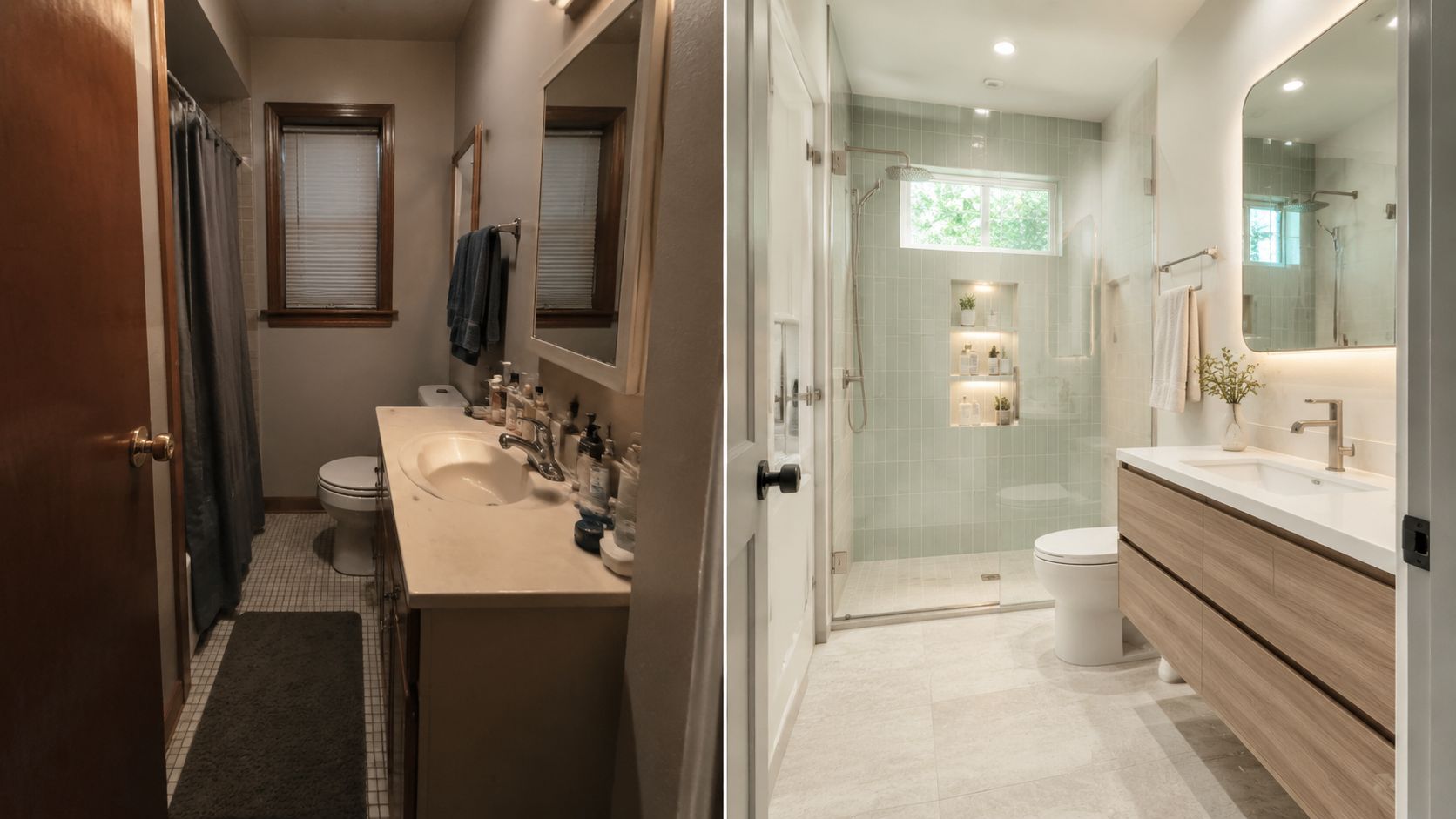
In Salinas and across Monterey County, a lot of the residential housing stock was built in the 1960s through 1980s. That age bracket is where we find the most surprises behind bathroom walls: subfloor rot from slow leaks that went unnoticed for years, original wiring that won’t handle a modern ventilation fan, and waterproofing that was either applied incorrectly from the start or just reached the end of its useful life.
This article is about what actually drives scope creep in bathroom remodeling, how to tell whether expanded scope is justified or a sign of poor planning, and what a transparent estimate should tell you before any demo begins.
Why Bathroom Jobs Change Size Once the Work Begins
A bathroom is one of the most demanding environments in a home. Water, steam, and temperature swings happen in a small enclosed space every single day. Over time, even well-built bathrooms develop problems that aren’t visible from the surface.
When we strip tile or remove a tub-shower unit in an older Salinas home, the three most common hidden conditions we find are:
- Subfloor damage from moisture intrusion, slow drips around a tub drain or failed caulk lines let water seep into the subfloor for years without triggering an obvious leak. The floor feels solid until you pull the tile.
- Outdated electrical, adding a ventilation fan with a humidity sensor, heated floors, or a modern light fixture often requires a circuit the original panel wasn’t wired to support.
- Failed or missing waterproofing, older construction sometimes used materials like felt paper or early-generation backer board that have degraded. In some cases, there was no dedicated waterproofing membrane at all.
None of this is visible before demo. A contractor who skips a pre-demo moisture assessment and reuses existing subfloor or wall backing without checking its condition is setting the homeowner up for the same problem in three to five years.
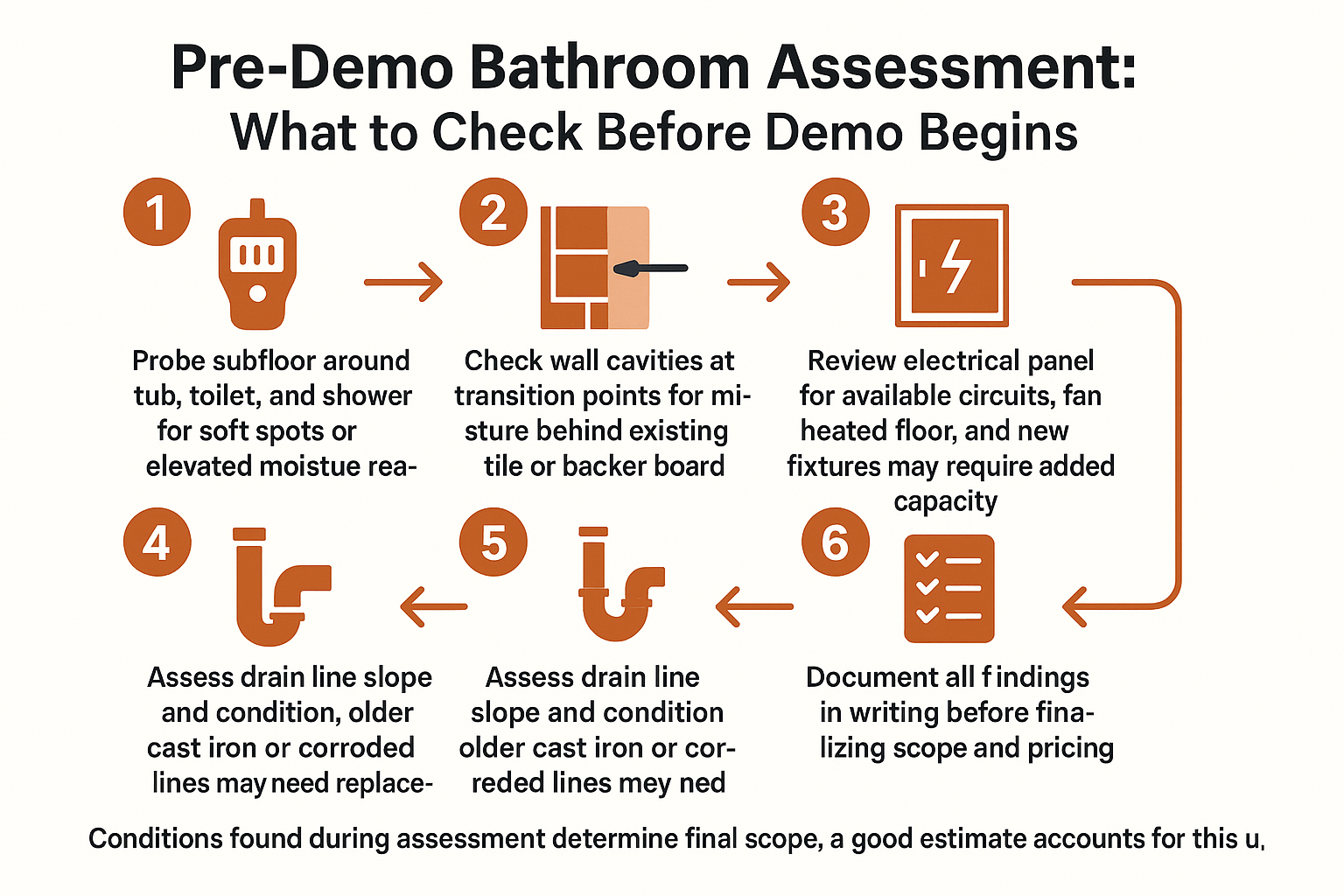
A real pre-demo assessment involves probing the subfloor around the tub and toilet for soft spots, checking wall cavities for moisture with a meter, inspecting the existing waterproofing at transition points, and reviewing the electrical panel for available capacity. It takes time. But it’s what separates a remodel that holds from one that comes apart. You can read more about that distinction in The Difference Between a Remodel That Holds and One That Doesn’t.
What Triggers a Permit in Monterey County Bathrooms
A lot of homeowners assume a tile swap or fixture replacement is a permit-free job. In Monterey County, that’s only true in a narrow set of circumstances.
The moment a bathroom remodel touches plumbing, electrical, or structural elements, a permit is typically required. And nearly every meaningful bathroom project touches at least one of those three. According to the California Department of Housing and Community Development, permit requirements for residential remodels are set at the local jurisdiction level, so homeowners should always verify current requirements directly with the Monterey County Building Services Department before any work begins.
Here’s what commonly triggers a permit in this jurisdiction:
- Moving or replacing any plumbing supply or drain lines
- Installing a new ventilation fan or upgrading an existing one
- Adding or relocating electrical outlets, switches, or fixtures
- Changing the shower or tub footprint (structural framing)
- Converting a tub to a walk-in shower
Permits matter for more than legal compliance. The waterproofing inspection that happens before tile goes in exists specifically to catch defects while there’s still time to fix them, before a failed membrane turns into mold or structural damage behind finished walls. Skipping permits on bathroom work means skipping that inspection, and passing the liability to yourself as the homeowner.
Permits also affect timeline. In Monterey County, scheduling inspections adds time to the project sequence, and the work has to stop at certain stages until an inspector signs off. A contractor who isn’t accounting for that in the project schedule is either inexperienced or giving you a timeline they know they can’t keep. For a deeper look at how the current code affects permit timelines, this breakdown of the 2025 building code changes is worth reading before you start planning.
Common Scope Additions and What Drives Them
This table covers the most common scope additions we see on bathroom remodels in Salinas-area homes, what triggers each one, and whether it typically adds genuine value or signals a problem with the original estimate.
| Scope Addition | What Triggers It | Justified or Warning Sign? |
|---|---|---|
| Subfloor replacement | Moisture damage found after tile removal | Justified, must be fixed before new tile |
| Waterproofing membrane upgrade | Inadequate or missing original membrane | Justified, required for a lasting result |
| Electrical circuit upgrade | Fan, heated floor, or fixture exceeds panel capacity | Justified if discovered; should appear in estimate contingency |
| Additional wall repair | Adjacent wall shows early moisture signs while space is open | Justified, cheaper to address now than later |
| Full wall tile replacement | New tile doesn’t match existing, or backing fails inspection | Justified, but should be flagged in original walkthrough |
| Expanded scope added mid-project | Homeowner requests new features after work starts | Homeowner-driven, add-ons should be documented in writing |
How to Tell Good Scope Growth From a Poorly Written Estimate
Scope creep gets a bad reputation, but it isn’t always the contractor’s fault or a sign that something went wrong. Sometimes expanding the scope while the space is already open is genuinely the right call.
For example: if we’re retiling a shower and find early moisture signs on an adjacent wall that wasn’t part of the original scope, addressing that wall now costs a fraction of what it would cost to come back and open a finished bathroom in two years. That’s good scope growth. It adds real value because the timing is right.
What distinguishes that from poor original estimation? The estimate should have told you upfront what conditions would trigger additional work, and approximately what those additions would cost. A thorough initial estimate should itemize a discovery contingency line, describe specifically what conditions would activate it, and give a cost range before anything is signed.
If you receive an estimate with no contingency language, no explanation of what could change the price, and no description of what the contractor plans to assess before demo, that’s a flag worth taking seriously. How to Read a Home Remodeling Estimate walks through exactly what to look for before you sign anything.
For Salinas homeowners trying to understand what bathroom remodeling typically costs in this market, costs can vary considerably based on square footage, existing conditions, and finish selections, but many Monterey County homeowners see something in the range of $15,000 to $40,000 for a full bathroom remodel. That range widens significantly when hidden conditions require subfloor repair, rewiring, or full waterproofing remediation. The factors driving that variation are covered in more detail at What Actually Drives the Cost of a Bathroom Remodel in Salinas.
What a Thorough Pre-Demo Bathroom Assessment Covers
Before any tile comes off or fixtures come out, a proper assessment should work through each of these checkpoints, this is what prevents surprise scope growth mid-project.
What Meticulous Bathroom Work Actually Means in Practice
Fred G., a homeowner who had two bathrooms remodeled, left this review: “The work performed was meticulous, and all aspects of the job were outstanding.” That word, meticulous, is worth unpacking, because it isn’t just a compliment about appearance.
In a bathroom, meticulous work means specific things:
- Waterproofing done in layers, a proper wet area assembly includes a bonded waterproof membrane applied at the floor pan, up the curb, and at least 12 inches up the walls before any tile is set. Corners and transitions get additional treatment.
- Tile set on a level, properly prepared substrate, lippage (tile edges that sit at different heights) and cracked grout lines within a year of installation are almost always a substrate problem, not a tile problem.
- Ventilation that actually exhausts to the exterior, a surprising number of older Salinas homes have bathroom fans that duct into the attic rather than to the outside. That moves moisture out of the bathroom and into the roof structure, which eventually causes the same damage you were trying to prevent.
These aren’t upgrades. They’re the baseline for a bathroom remodel that holds up over time. If you want to understand how scope decisions affect long-term durability, When Does a Bathroom Update Actually Become a Full Renovation? covers that decision point in detail.
Frequently Asked Questions About Bathroom Remodel Scope in Salinas
I just want to replace the tile and the tub. Why would that turn into a bigger project?
Because removing tile and pulling a tub exposes the subfloor and wall backing that have been sitting behind a sealed surface for years. If there was any slow moisture intrusion from grout joints, caulk failures, or a leaky drain, that damage shows up the moment demo begins. Replacing the surface without fixing the substrate underneath means the new tile will fail on the same schedule as the old tile, sometimes faster.
Do I need a permit to replace a bathroom vanity or toilet in Monterey County?
A straight swap of a vanity or toilet in the same location, no plumbing rerouting, no electrical changes, may not require a permit in Monterey County. But the moment you change drain locations, add a circuit, or modify the framing, a permit is typically required. Always verify current requirements with the Monterey County Building Services Department before starting, because the rules can shift and the liability stays with the homeowner.
How do I know if the extra scope a contractor is recommending is actually necessary?
Ask to see the condition before anything is repaired. A contractor who finds subfloor damage or failed waterproofing should show you the problem, photos, a moisture meter reading, or walking you through the space, before quoting the additional work. If they can’t show you the problem, that’s a reason to ask more questions. A good estimate also lists contingency conditions upfront, before demo, so you’re not hearing about potential additions for the first time after the walls are open.
How long does a bathroom remodel typically take in Salinas when permits are involved?
Most bathroom remodels in Salinas run 2 to 5 weeks for the construction work itself. Add time for permit application and inspection scheduling through Monterey County, that varies depending on the scope and current building department workload. Projects with discovered conditions that require additional repair can add another one to two weeks to that estimate. What Salinas Homeowners Get Wrong About Bathroom Renovation Timelines covers the sequencing in more detail.
Is it possible to stay in my home during a bathroom remodel?
Yes, in most cases. If you have more than one bathroom, the project can usually be sequenced so one remains functional. Single-bathroom homes require more planning around demo and rough-in timing, but it’s manageable with a contractor who communicates the daily schedule clearly.
Have Questions About What Your Bathroom Project Actually Involves?
If you’re looking at a bathroom in a Salinas or Monterey County home and you’re not sure what’s behind the walls, a walkthrough conversation before demo is the most useful step you can take. Aldridge Construction works with homeowners across Monterey County to assess existing conditions, explain what’s likely to come up, and put together estimates that account for real-world variables, not just the surface work. Reach out at 831-682-9788 or through the contact page at aldridgeconstruction.biz to start that conversation.