
Living in California means thinking about the future. This is true for technology, culture, and how we build our homes. Energy costs are rising, droughts are common, and the climate is changing. Making your home strong and efficient is now a must-have, not just a nice-to-have.
Homeowners in Monterey, Santa Cruz, and San Benito counties want more than just a new look. They want smart investments that lower bills, help the environment, and make life more comfortable. This is how you can future-proof your home: 5 sustainable upgrades California homeowners should prioritize in 2026. This guide gives you a real plan to get started.
1. Solar Panel Systems with Battery Storage
California is a leader in clean energy. One of the best ways to future-proof your home is to install a solar panel system with battery storage. This turns your home from just an energy user into its own power source.
A normal solar setup sends extra power back to the grid. But a system with a battery lets you save that clean power for later. You can use it when electricity is most expensive, at night, or during a power outage. This gives you true energy freedom.
Why This Upgrade is a Top Priority
In California, electricity prices are going up. The power grid can also be unstable due to wildfires or bad weather. A solar and battery system solves these problems.
It gives you a reliable backup power source. It also lowers your monthly utility bills and reduces your home's carbon footprint. This upgrade is a smart choice for your home’s safety and finances.
Key Insight: Pairing solar panels with a battery like a Tesla Powerwall gives you the best return. You can avoid paying high "peak rates" (usually 4 p.m. to 9 p.m.) by using your own stored energy. This helps you save money faster.
Costs, ROI, and Permitting in California
A solar and battery system is a big investment, but government incentives can help lower the cost.
- Expected Costs: For a typical home in Monterey or Santa Cruz County, the cost is usually between $25,000 and $40,000 before any credits. The final price depends on the panels, battery size, and how hard it is to install.
- Return on Investment (ROI): Most homeowners pay off the system in 6 to 9 years with what they save on bills. The system also adds value to your home without increasing your property taxes.
- Permitting: You will need electrical and building permits from your local city or county. This makes sure the installation is safe and meets all codes. An experienced contractor can handle this for you. You can learn more about construction permit requirements to see what is needed.
Implementation: Your Action Plan
Getting started is easier than it sounds. Follow these simple steps:
- Check Your Energy Bills: Look at your last 12 months of electricity bills. Find out how much energy (kWh) you use on average. This helps you get the right size system.
- Get a Few Quotes: Talk to at least three certified solar installers. A trusted contractor like Aldridge Construction can give you a full plan. It will show the design, equipment, and a clear cost.
- Look for Incentives: The federal solar tax credit can cover 30% of the cost. Check for local rebates from your utility company too.
- Make Your Home Efficient First: Before getting solar, think about other upgrades. New insulation or windows can lower your energy use. This means you might need a smaller, cheaper solar system.
2. Heat Pump Technology (HVAC & Water Heating)
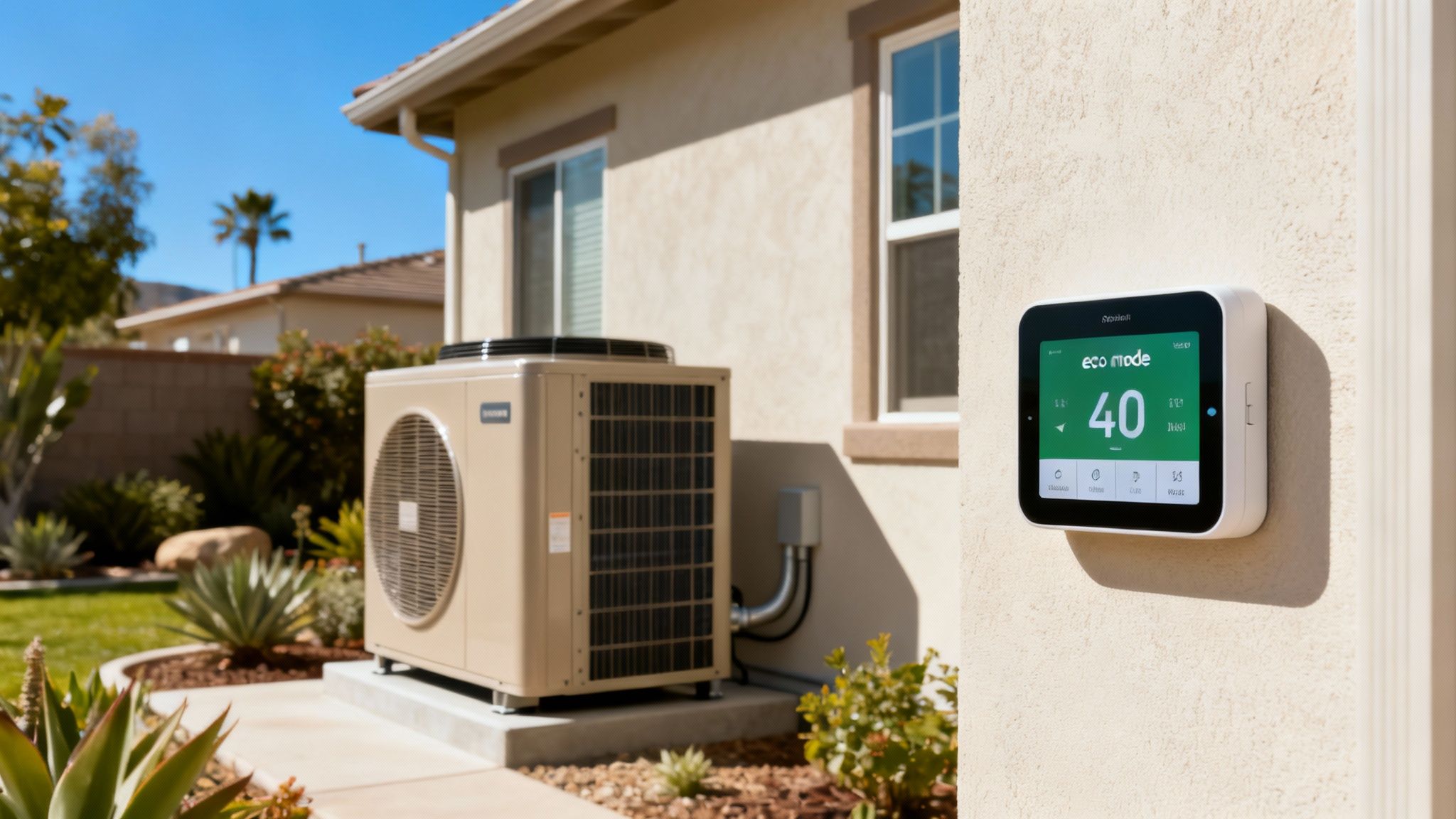
Switching from gas appliances to electric heat pumps is a very important upgrade. This works for both your home's heating and cooling (HVAC) and your water heater.
Furnaces burn gas to make heat. Heat pumps are different. They move heat from the air outside into your home. In the summer, they do the opposite to cool your house. This is a very efficient process.
Why This Upgrade is a Top Priority
California is moving away from natural gas in new homes. Switching to heat pumps helps you stay ahead of these changes.
This upgrade makes your home more efficient and ready for the future. It also improves your indoor air quality because there is no gas being burned inside. It is a key step to making your home modern and valuable for years to come.
Key Insight: A heat pump water heater is often a great first step. They can be two to three times more efficient than standard electric water heaters. You will see savings on your utility bill right away.
Costs, ROI, and Permitting in California
Moving to heat pumps costs money upfront. But state and federal rebates can make it much more affordable.
- Expected Costs: A new heat pump water heater can cost from $3,500 to $6,000 installed. A full HVAC system change costs between $15,000 and $25,000 in the Monterey Bay area.
- Return on Investment (ROI): With big energy savings and rebates, most systems pay for themselves in 5 to 10 years. These systems also make your home more attractive to buyers.
- Permitting: You will need permits to install a new HVAC system or water heater. Many older homes also need to upgrade their electrical panel to handle the new appliances.
Implementation: Your Action Plan
Follow these steps for a smooth upgrade to heat pumps:
- Get an Energy Audit: An expert can check your home to see where you are losing heat or cool air. Fixing leaks first means you may need a smaller, less expensive system.
- Hire a Good Contractor: The right size and proper installation are key for heat pumps. It's important to find a good contractor who knows the local climate and codes in Monterey or Santa Cruz County.
- Find Rebates: California and local utilities like PG&E offer large rebates for heat pumps. You can also get a 30% federal tax credit to lower the cost even more.
- Start with the Water Heater: If a new HVAC system is too expensive right now, a heat pump water heater is a great start. It is a smaller project that gives you immediate savings.
3. Advanced Home Insulation & Air Sealing
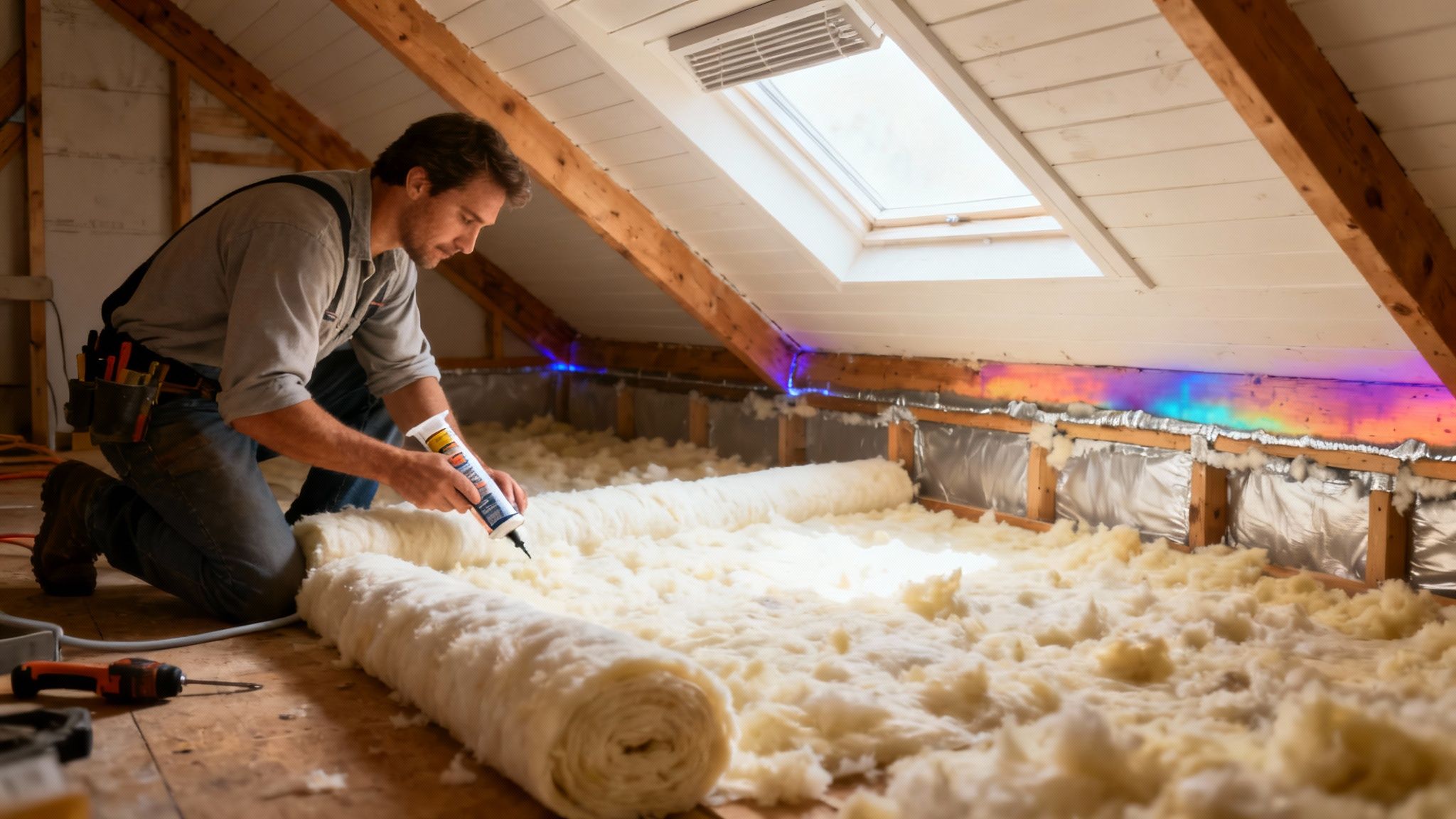
Before you buy new systems, it is best to fix your home's "thermal envelope." This means adding better insulation and sealing air leaks.
This basic upgrade stops heat from getting in during the summer and out during the winter. It lowers your energy bills and makes your home more comfortable all year. A well-sealed home is like a thermos—it keeps the temperature inside steady.
Why This Upgrade is a Top Priority
A home with poor insulation leaks expensive cool or warm air. This leads to high utility bills.
Sealing your home gives you more control over your indoor climate. It also keeps out dust and allergens, making the air healthier. This upgrade is especially important for handling California's heatwaves. A well-insulated home stays cooler for longer if the power goes out.
Key Insight: Always seal air leaks before you add new insulation. Seal gaps around windows, doors, and pipes first. Then, when you add insulation, it will work as well as it possibly can.
Costs, ROI, and Permitting in California
This investment gives you some of the fastest and biggest returns in energy savings.
- Expected Costs: A professional energy audit can cost between $100 and $400. A full insulation and air sealing job can cost from $2,000 to $8,000 or more, depending on your home's size.
- Return on Investment (ROI): The U.S. Department of Energy says homeowners can save about 15% on heating and cooling costs. The project often pays for itself in just 3 to 5 years.
- Permitting: Small insulation jobs usually don't need a permit. If you need to remove drywall, you might need a permit from your local building department.
Implementation: Your Action Plan
Follow these steps to improve your home's insulation:
- Start with an Energy Audit: An expert can use a special fan and thermal camera to find exactly where you are losing energy. This helps you spend your money in the right places.
- Seal the Biggest Leaks: Focus on common problem spots. These include the attic door, light fixtures, and gaps around windows and doors.
- Focus on the Attic: The attic is the most important area to insulate in California. Good attic insulation stops summer heat from getting into your home. When working on your attic, you might also look at sustainable roofing materials and eco-friendly options.
- Use the Right Materials: Different types of insulation work best in different areas. You can use high-performance green construction materials that are good for your home and the planet.
- Check for Rebates: Look for programs from your utility company. They often give rebates for insulation and air sealing projects.
4. Smart Water Management Systems (Smart Irrigation & Indoor Conservation)
California is known for its droughts. Saving water is one of the most important ways to future-proof your home.
Smart water systems include smart sprinkler controllers and efficient indoor fixtures. They use technology like weather data to water your yard only when needed. Inside, new toilets and faucets use much less water. This two-part approach helps you save water and money.
Why This Upgrade is a Top Priority
California's water supply is limited. This leads to strict rules and higher water bills. A smart water system helps you use less water and lower your bills.
It also protects your garden during dry periods. This upgrade shows you care about the environment and helps you control your costs.
Key Insight: The biggest water savings often come from your yard. Old sprinkler systems can waste half the water they use. A smart irrigation controller can cut your outdoor water use by 30-50% by itself. It checks the local weather and waters only when necessary.
Costs, ROI, and Permitting in California
Smart water technology pays for itself quickly through lower water bills.
- Expected Costs: A smart sprinkler controller can cost $500 to $1,200 to install. New high-efficiency toilets cost around $300 to $600 each. Replacing your lawn with drought-friendly plants is a bigger project, costing $5 to $20 per square foot.
- Return on Investment (ROI): A smart controller can pay for itself in just 1 to 2 years. Many local water agencies offer big rebates for these upgrades. A water-efficient home also has lower running costs and is more appealing to buyers, which improves your home renovation return on investment.
- Permitting: You usually don't need a permit to change faucets or install a smart controller. Large landscaping projects might need a permit from your city.
Implementation: Your Action Plan
You can upgrade your home's water systems one step at a time.
- Start with Smart Irrigation: Installing a smart sprinkler controller is the easiest way to get big water savings.
- Check Your Indoor Water Use: Replace any old toilets made before 1994. They use much more water than new ones. Also, fix any leaky faucets.
- Zone Your Landscape: Put plants that need similar amounts of water together. This helps your smart sprinkler system give each area the right amount of water.
- Look for Rebates: Check with your local water company before you buy anything. Many offer rebates for smart controllers, efficient toilets, and lawn replacement.
5. High-Performance Windows & Exterior Doors with Smart Shading
A home's windows and doors are where most energy is lost. Upgrading to high-performance windows and doors is a key step to future-proof your home. When you pair them with smart, automated shades, you get a powerful system.
This combination reduces heat transfer and blocks unwanted sun. It makes your home more comfortable all year long.
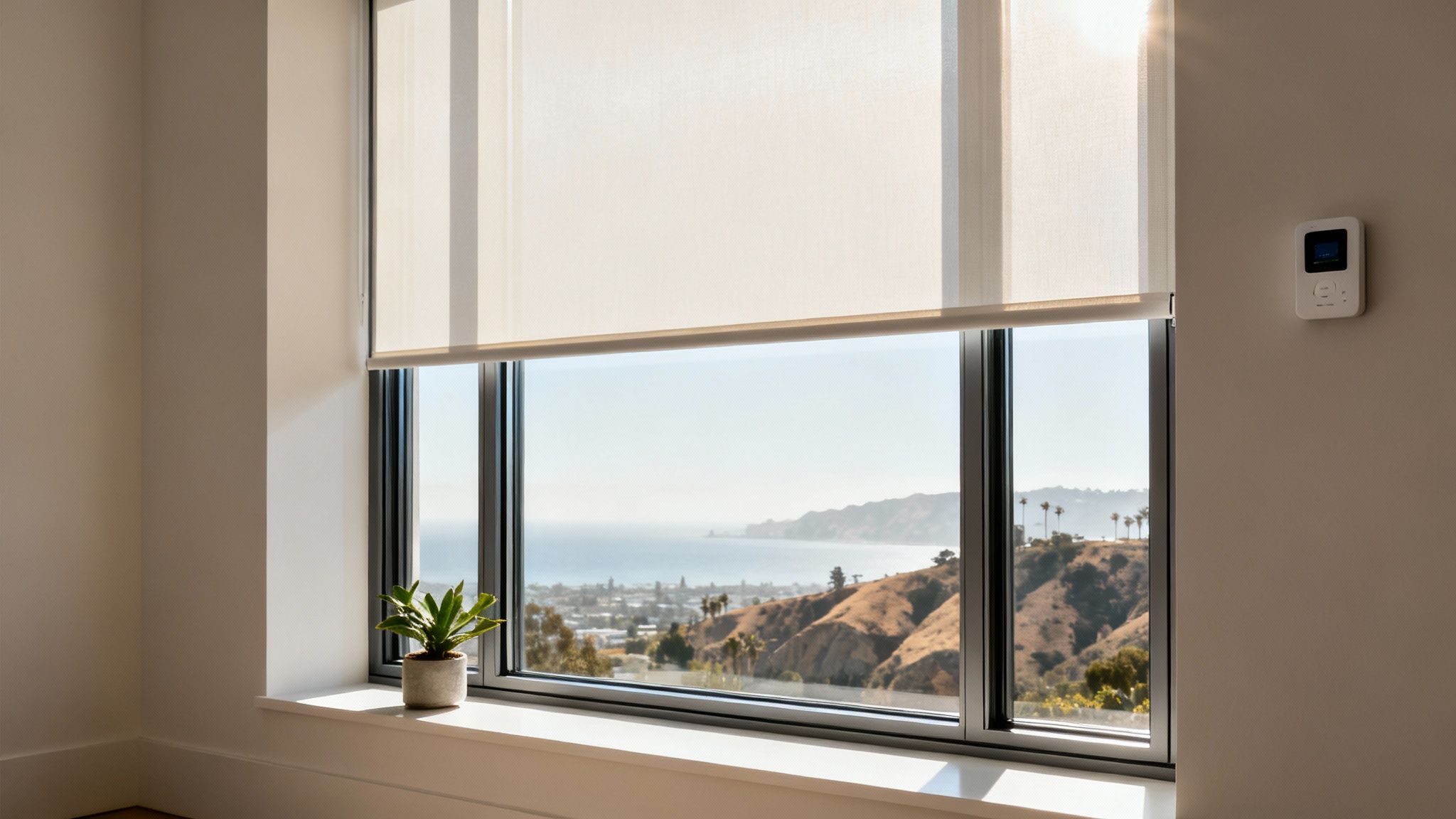
High-performance windows have special coatings and gas fills that standard windows do not. Smart shades can automatically close during the hottest part of the day. This keeps your home cooler in the summer and warmer in the winter, which helps your HVAC system work less.
Why This Upgrade is a Top Priority
For California homeowners, extreme heat and high cooling costs are big problems. Old windows can be responsible for 25-30% of a home's heating and cooling costs.
By upgrading, you make your home more comfortable and energy-efficient. It also makes your home quieter and more secure. This is an important upgrade for long-term savings and comfort.
Key Insight: The best results come from using both technologies together. High-performance windows stop constant energy loss. Automated shades block the sun when it's strongest. This two-part approach can cut your cooling needs by up to 25%.
Costs, ROI, and Permitting in California
New windows and doors are a big investment. But they pay off in energy savings and higher home value.
- Expected Costs: In Monterey or Santa Cruz County, a new window can cost between $1,200 and $2,500 installed. High-end brands or custom doors will cost more. Smart shades can add another $500 to $1,500 per window.
- Return on Investment (ROI): It can take 10-15 years to pay back the cost through energy savings. But you get immediate benefits like better comfort and a higher resale value for your home.
- Permitting: In most parts of California, you need a building permit to replace windows and doors. This ensures they meet local energy codes (like Title 24) and are installed correctly.
Implementation: Your Action Plan
Good planning will help you get the most from your investment.
- Start with Key Areas: Begin with the windows that get the most sun, which are usually on the south and west sides of your house.
- Choose the Right Coatings: Pick Low-E coatings made for California's climate. They block heat from the sun but let in natural light.
- Look for Rebates: Check for federal tax credits and local utility rebates for energy-efficient windows. A good guide to energy-efficient window treatments can offer more ideas.
- Hire Certified Installers: A great window needs great installation. A professional contractor like Aldridge Construction will make sure your windows are installed perfectly to prevent leaks and drafts. A home remodel checklist can help you plan this as part of a larger project.
FAQs: Future-Proofing Your California Home
1. What is the most important sustainable upgrade for a California home?
While all five are valuable, improving your home's insulation and air sealing provides the fastest return on investment. It's a foundational step that makes all other energy upgrades, like a new HVAC or solar panels, more effective.
2. How much can I really save with these upgrades?
Savings vary, but it can be significant. A well-insulated home can save 15% on energy bills. Solar panels can eliminate most of your electricity bill. Smart water systems can cut water use by 30-50%. Together, these upgrades lead to major long-term savings.
3. Do I need permits for all of these projects in Monterey or Santa Cruz County?
Not for all of them. Simple upgrades like changing fixtures or adding attic insulation often don't need a permit. However, major work like installing a new solar system, replacing all windows, or putting in a new HVAC system will require permits to ensure safety and code compliance.
4. Can I get financial help for these upgrades?
Yes. The federal government offers a 30% tax credit for solar panels and other energy-efficient upgrades. California and local utilities like PG&E also have many rebate programs for heat pumps, smart thermostats, insulation, and water-saving devices.
5. How do these upgrades affect my home's resale value?
They significantly increase it. Modern buyers in California are looking for homes that are energy-efficient, resilient, and have low utility bills. Features like solar panels, heat pumps, and new windows are strong selling points that can help your home sell faster and for a higher price.
Build for Tomorrow with Aldridge Construction
Sustainable remodeling is about more than just being "green." It is about building a smarter home that saves you money and protects your investment for the future. Aldridge Construction helps homeowners in Monterey, Santa Cruz, and San Benito Counties design with long-term value in mind.
Ready to turn these future-proofing ideas into reality? The expert team at Aldridge Construction specializes in adding sustainable, high-performance solutions to remodels and new homes. Contact us today for a consultation, and let's build a smarter, more resilient home together.