
Choosing the right contractor is a big deal. It’s not just about finding the lowest price. You need to check their license, talk to people they've worked for, and compare detailed bids—not just the final cost. This early work is key to a good renovation. It helps you find a pro who is skilled and trustworthy.
Starting Your Search for the Right Contractor
Starting a renovation in Monterey, Santa Cruz, or Maricopa County is exciting. The most important choice you'll make is picking the right contractor to build your dream. The first step is to make a solid list of possible builders.
If you’re thinking about solar panels, the process of finding local solar installers is a good guide. The same ideas apply to any project. A good search is more than just a quick Google search. The internet is helpful, but a recommendation from someone you trust is even better.
Building Your Initial Candidate List
Don't just look in one place. A wider search gives you a better group of contractors to pick from.
- Ask for Personal Referrals: This is the best place to start. Talk to friends, family, and neighbors who have done similar work. They will tell you the real story.
- Consult with Architects and Designers: If you are working with a designer, they are a great resource. They know which contractors they trust to do a good job.
- Visit Local Building Supply Stores: The staff at lumberyards and supply shops see contractors every day. They know who is busy and has a good reputation in town.
Once you have a list of three to five names, it's time to do some quick background checks. Do this before you even call them. This will save you time and help you focus on qualified pros.
A well-checked contractor list is your first defense against project delays and budget problems. Taking time to check licenses and insurance upfront protects your investment.
Verifying Essential Credentials
This step is a must. It protects you from unlicensed workers and the problems they can cause. For homeowners in our area, this means checking state websites.
In California, you must check that any contractor has an active license with the Contractors State License Board (CSLB). For projects in Arizona, you will check with the Arizona Registrar of Contractors (ROC).
These websites have lots of information. You can see if a license is active and if they have important insurance, like general liability and workers' compensation. This simple check makes sure you are only talking to pros who meet state rules.
A Realistic Guide to Vetting Contractors

You have a short list of contractors who are licensed and insured. Now, it's time to dig deeper to find the best one. You will look at their actual work, how they communicate, and what past clients say.
A nice website is one thing, but good work is another. This part of the process shows you how a contractor really works. You will get a clear picture of their standards and see if they are a good fit for your home in Monterey or Maricopa County.
Analyzing Their Portfolio With a Critical Eye
A contractor’s portfolio is more than just pretty pictures. You need to look for work that is like your project.
Find projects that match the size and style you are planning. For a kitchen remodel in Santa Cruz, you want to see that they know California’s Title 24 energy codes. If you’re building an addition in Arizona, their work should use materials that can handle the desert heat.
Don't just look at the final photos. Ask to see projects with a similar size and budget to yours. This shows they have the right kind of experience for your job.
Calling References and Asking the Right Questions
Talking to past clients is the most revealing step. To get the real story, you need to ask more than just, "Were you happy?" Ask specific questions to learn how they handle challenges.
Here’s a checklist for your calls:
- Budget and Timeline: Did the final cost match the estimate? What caused any changes? Did they finish on time?
- Problem-Solving: How did they handle unexpected issues? Was their communication clear?
- The Team and Job Site: Was the crew professional? Did they keep the work area clean each day?
- The Final Verdict: Would you hire this contractor again without hesitation?
The answers will tell you a lot about a contractor’s reliability. For more ideas, read our guide on how to find a good contractor.
The Value of a Job Site Visit
One of the best ways to see a contractor's professionalism is to visit one of their active projects. A well-run job site is clean, organized, and safe. These are signs of a team that respects their work and the client’s home.
This is very important right now. According to industry reports, the construction industry needed about 340,000 new skilled workers in 2024 alone. Contractors who run an organized site are better at keeping good workers. This means your project is more likely to stay on schedule. You can learn more in a recent US contractor market report.
How to Compare Bids Without Just Looking at the Price
You have done your research and met with contractors. Now the bids are coming in. It's easy to just look at the bottom line and pick the lowest number. But that is often a mistake.
A very low bid can mean they are cutting corners or using cheap materials. It could also mean more costs will pop up later. To choose the right contractor, you must look beyond the final price to see the true value.
A good comparison means you review each bid line by line. If one bid is much lower, you need to find out why. Does it leave out permit fees? Does it list lower-quality materials like vinyl windows instead of energy-efficient Milgard windows? A detailed bid is often a sign of a detailed professional.
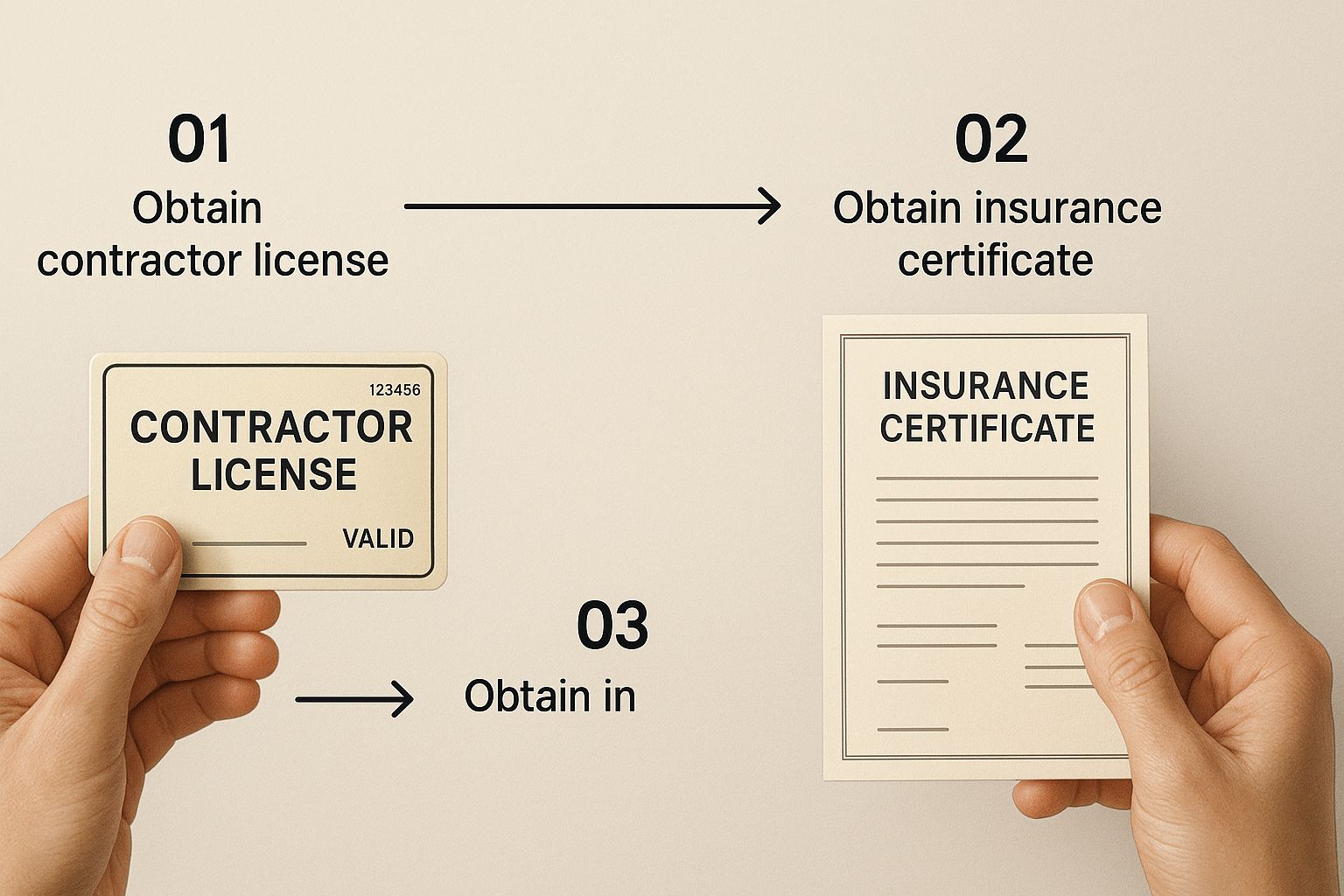
Having a valid license and the right insurance is not just paperwork. It shows a contractor is committed to professional standards. It’s a key factor when you check how trustworthy their bid is.
Decoding the Details in Each Proposal
A professional bid should be a clear roadmap for your project. A single page with just a total price is a big red flag. Vague bids often hide extra costs.
A complete, trustworthy bid will always include:
- A Detailed Scope of Work: This should list every single task, from demolition to final cleanup. There should be no room for guesswork.
- Specific Materials and Products: The bid must list exact brands and models. It should say “Milgard Style Line Series V250 windows,” not just “new windows.” It should specify “Daltile quartz countertops,” not just “stone counters.”
- A Clear Breakdown of Costs: You should see separate lines for labor, materials, and permit fees. This shows transparency.
- A Realistic Project Timeline: The proposal should give you a clear start date, an estimated finish date, and key milestones to track.
Use the checklist below to compare the key parts of each bid side-by-side. This helps you look at the details, not just the final number.
Contractor Bid Comparison Checklist
| Feature | Contractor A Bid | Contractor B Bid | Contractor C Bid |
|---|---|---|---|
| Total Price | |||
| Detailed Scope of Work Included? | |||
| Material Brands/Models Specified? | |||
| Labor Costs Itemized? | |||
| Material Costs Itemized? | |||
| Permit Fees Included? | |||
| Subcontractor Costs Included? | |||
| Project Start Date | |||
| Estimated Completion Date | |||
| Payment Schedule Detailed? | |||
| Warranty Information Provided? | |||
| License & Insurance Verified? |
Once you fill this out, the stronger bids will be clear. The contractor who gives the most detail is usually the one who will deliver the best results. An honest bid protects both you and the contractor. It sets clear expectations and reduces the chance of arguments later.
Understanding these parts helps you see the full picture. A bid with high-quality materials might seem more expensive at first, but it affects your long-term satisfaction and home value. In fact, quality choices often pay off, as you can see when exploring home renovation return on investment. By focusing on the details, you are not just comparing prices; you are comparing value.
Spotting Red Flags Before You Hire
Knowing how to choose a contractor is important, but knowing what to avoid is just as critical. Homeowners can get into trouble by missing key warning signs. These red flags should make you stop and walk away, protecting your money and your peace of mind.
Some signs are very clear. For example, if a contractor won't give you a detailed, written contract, that's a dealbreaker. A real pro knows the contract is the most important document for protecting both of you.
Obvious Financial Warning Signs
Pay close attention to how a contractor talks about money. Their approach to payments can tell you a lot about their business.
The biggest red flag is a demand for a large upfront payment, especially in cash. In California, the law is very clear: a down payment cannot be more than 10% of the total contract price or $1,000, whichever is less. A contractor asking for more is breaking the law. It often means they have money problems.
Be careful of high-pressure sales tactics. If you hear, “This price is only good for today,” it’s a trick to rush your decision. A good contractor will give you time to review their bid.
Subtle Communication Issues
Money red flags are easy to spot, but others are more subtle. Pay attention to a contractor's communication habits. How they talk to you now is how they will talk to you during the project.
Do they take a long time to return your calls? Are their answers vague? A professional should be able to clearly explain their process and how they will handle challenges.
Here are a few other subtle signs to watch for:
- No Physical Business Address: A contractor with only a P.O. box can be hard to find if problems come up.
- Unprofessional Appearance: A messy truck often means a messy job site.
- Avoiding Your Questions: If they can't give you a straight answer about permits in Monterey County or materials for the Arizona sun, they may lack local expertise.
Being prepared with the right questions is your best defense. We have a full list of questions to ask general contractors to help you check every candidate.
Finalizing Your Choice and Understanding the Contract

You have done your homework. You have checked your candidates, reviewed the bids, and are ready to choose. This is where it all comes down to one thing: the contract.
This document is the legal foundation of your project. It’s not just a piece of paper; it’s the rulebook that protects both you and your builder. It lays out clear expectations from the start.
A true professional will want you to read the contract carefully. They will be happy to explain anything you don't understand. If a contractor rushes you to sign, that is a huge red flag.
Key Elements of a Strong Construction Contract
Before you sign, make sure the contract includes a few key things. This is your project’s rulebook, whether you're in Monterey, Santa Cruz, or Maricopa County.
A good contract should always contain:
- A Detailed Scope of Work: This section needs to be specific. It should list every task and material, like Andersen windows or Trex decking.
- A Firm Start and Completion Date: There must be a clear, agreed-upon timeline.
- A Clear Payment Schedule: Payments should be tied to project milestones, like when the foundation is poured or the framing is complete. Never agree to a huge upfront payment.
- Change Order Procedures: The contract must explain how any changes to the plan will be handled and approved in writing.
- Warranty Information: It needs to detail what is covered by the contractor’s warranty and for how long.
Your contract is the final word on your project. A spoken promise that isn't in writing cannot be enforced. Get every detail in the signed document.
Why Every Word Matters
Legal documents can feel overwhelming. But you can protect yourself without being a lawyer. It’s helpful to know how to read contracts without a law degree before you sign.
The small details matter. A well-written contract helps keep a project on budget.
Finally, never sign a contract with blank spaces. This can lead to misunderstandings and surprise costs later. Making sure you understand every part of the contract is the final step in choosing a contractor you can trust.
FAQs: Answering Your Top Questions on How to Choose a Contractor
Here are answers to some of the most common questions homeowners in Monterey, Santa Cruz, and Maricopa Counties ask.
How many bids should I get for my project?
You should get at least three detailed bids for most renovation projects. This gives you a good way to compare costs and plans without getting overwhelmed. If the prices are very different, it may mean your project scope is not clear enough. In that case, add more detail to your plans and ask the contractors to bid again.
What do licensed, bonded, and insured really mean?
These three terms are different, and each one protects you.
- Licensed: This proves the contractor has met state standards. In California, this means a license from the Contractors State License Board (CSLB). In Arizona, it's the Arizona Registrar of Contractors (AZ ROC).
- Insured: This covers accidents. General liability insurance protects your home from damage, while workers' compensation covers injuries to the crew.
- Bonded: A bond protects your money if the contractor fails to finish the job or pay their suppliers.
Should I pay a large down payment upfront?
No. Be very careful if a contractor asks for a lot of money upfront. In California, a down payment cannot be more than 10% of the total price or $1,000, whichever is less. A professional contractor will set up a payment schedule tied to completed work.
How involved should I be during the project?
Good communication is key. You don't need to be on-site every day, but you should have a regular check-in. Agree on a weekly call or meeting with your project manager. This is a good time to see progress and ask questions. If you want to make a change, always use the change order process in your contract to avoid confusion. If you need financing during the project, look into home renovation loans.
What if I have a problem with my contractor?
If a problem comes up, talk to your contractor directly and professionally. Use your written contract as a guide. A simple talk can often solve the issue. If not, put your concerns in a dated email to create a record. If you still cannot agree, you can contact the state licensing board (CSLB in California or AZ ROC in Arizona) to file a complaint.
Ready to start your home renovation in Monterey, Santa Cruz, or Maricopa County with a team you can trust? The experts at Aldridge Construction are here to guide you through every step.