
Building a custom home is a big project, but it is also very rewarding. You get to create a home that is perfect for your family. The process comes down to three main things: making a clear plan, setting a good budget, and hiring a team you trust.
With the right help, this journey can be exciting and clear. This guide will walk you through the steps, from the first idea to the final day you move in.
From Dream to Blueprint: The Custom Home Journey
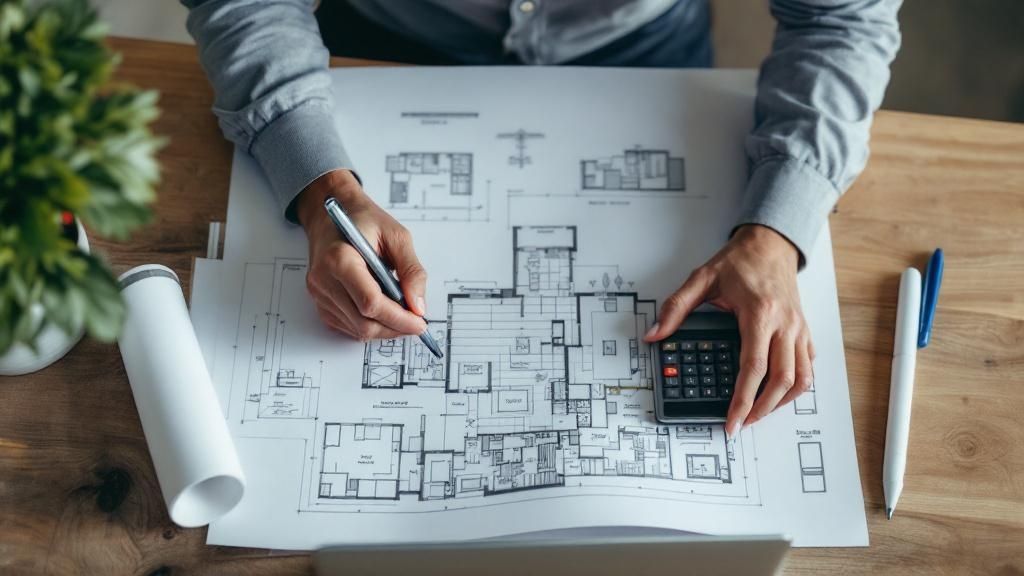
Building your own home is a huge milestone. Unlike buying a house that’s already built, a custom home lets you control every detail. You can choose the room layout, the cabinet style, and everything in between.
This guide is your roadmap. We will break down the process into easy-to-understand stages. We’ll cover everything from finding land in places like Monterey County, CA, or Maricopa County, AZ, to passing the final inspection. Our goal is to make the process clear so you can feel confident.
Why a Clear Vision Is Your Most Important Tool
A big mistake people make is jumping into design without a solid plan. A Pinterest board is a good start, but a real vision is more detailed. It’s about understanding how your family will live in the home every day.
Before meeting with an architect or builder, ask yourself these questions:
- Daily Life: Where will the kids do homework? How should the kitchen work on a busy morning?
- Future Needs: Will you need space for aging parents later on? What about growing teenagers?
- Must-Haves vs. Wants: What features can you not live without? Knowing this helps protect your budget.
A clear vision guides every decision. It helps prevent expensive changes later and makes sure your new house truly feels like your home.
Understanding Your Finances
Before you design your home, you need to know your budget. An important first step is to calculate your borrowing capacity. This sets the financial limits for your project.
Custom homes are a key part of the housing market. According to the National Association of Home Builders (NAHB), custom home building makes up about 18-19% of all new single-family homes in the U.S. [NAHB, 2024].
At Aldridge Construction, we help homeowners in Monterey, Santa Cruz, and San Benito Counties navigate this process. With a good plan and a trusted partner, building your dream home is a fulfilling experience. To learn more, see our guide on the custom home building process.
Planning and Designing Your Custom Home
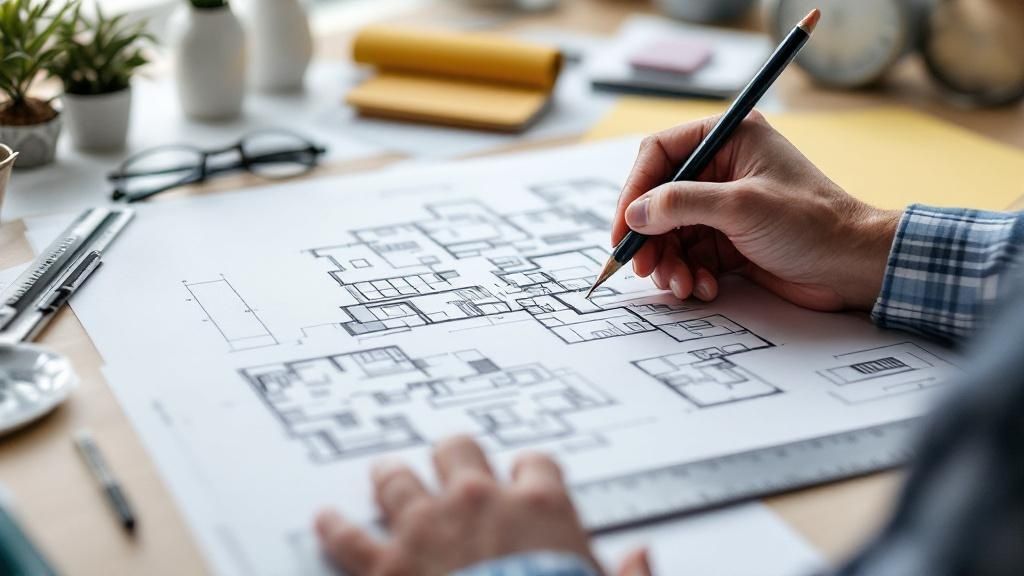
Once you have a vision, it’s time to turn that dream into a real plan. This is where your ideas take shape on paper. You’ll be guided by your budget, your land, and local rules.
The key is to separate your "needs" from your "wants." A good design balances your big dreams with what is possible.
Assembling Your Professional Team
You cannot build a custom home alone. The success of your project depends on hiring the right experts. The two most important people are your architect and your general contractor.
- Architect/Designer: This expert turns your vision into drawings and floor plans. They make sure the design is beautiful and follows local building codes, like California's Title 24 energy rules.
- General Contractor: The builder, like Aldridge Construction, is your project manager. They oversee the entire build, from hiring workers to managing the schedule and checking quality.
Creating a Realistic Budget
A detailed budget is your financial map. Many people only plan for "hard costs," like materials and labor. But you also need to include "soft costs."
A good budget makes your dream achievable. Knowing all the costs upfront helps you avoid stress and surprises later.
Here are the two main types of costs:
- Hard Costs: These are the physical items. This includes lumber, concrete, roofing, and high-quality products like Milgard windows. It also includes the labor to install them.
- Soft Costs: This includes fees for the architect, building permits from Monterey or Santa Cruz County, and charges to connect utilities.
A good budget plans for everything, not just the building itself.
Sample Custom Home Budget Allocation
| Cost Category | Percentage of Total Budget | Example Items |
|---|---|---|
| Site & Foundation | 10-15% | Land purchase, excavation, foundation, utilities |
| Framing & Exterior | 15-20% | Lumber, trusses, siding, roofing, windows |
| Major Systems | 10-15% | HVAC, electrical, plumbing |
| Interior Finishes | 25-35% | Drywall, flooring, paint, cabinetry, countertops, fixtures |
| Soft Costs | 10-15% | Architect fees, permits, engineering, insurance |
| Contingency Fund | 10% | Unexpected costs, change orders, weather delays |
This table is just a guide. It shows why it’s important to include soft costs and a contingency fund from the start.
Evaluating Your Building Site
Your land is more than just a location. It is a key part of your home’s design. A site evaluation in an area like San Benito County will show you the opportunities and challenges of your lot.
You need to check a few things:
- Topography: The slope of the land affects the foundation and drainage. For steep lots, you might need to know how to build retaining walls.
- Soil Conditions: A soil report tells you if the ground is stable. This helps determine the right type of foundation for your home.
- Zoning and Setbacks: Local county rules decide how big your home can be and where it can sit on your property.
- Utility Access: You must confirm that you can connect to water, sewer, electricity, and gas. This is important for your budget and schedule.
The Design Development Process
This is where your vision, budget, and site plan come together. You will work with your architect to move from general ideas to detailed blueprints. You’ll start with floor plans and then refine the layout and exterior style.
Now is also the time to choose specific materials. Picking things like custom cabinets, quartz countertops, and siding early helps keep the project on budget. It also makes sure the final plans are accurate, which is needed to get permits and good bids from contractors.
Navigating Permits and Finalizing Selections

With your plans complete, it’s time to get permission to start building. This phase is all about getting permits and choosing all your materials.
This is the last step before your dream starts to become a real building. Getting this part right is key to staying on schedule and on budget.
Understanding the Permitting Process
Before any construction starts, your plans must be approved by the local government. This step ensures your home will be safe and built correctly. Your general contractor will prepare and submit all the necessary documents.
The permit application package is large and includes:
- Final Architectural Plans: Detailed drawings of your home's design.
- Structural Engineering Calculations: Proof that your home is designed to be safe.
- Site and Grading Plans: Maps showing where the house will be and how water will drain.
- Energy Calculations: In California, this includes Title 24 reports to show the home is energy-efficient.
After submission, the review can take several weeks or even months. Aldridge Construction has experience with the specific https://aldridgeconstruction.biz/construction-permit-requirements/ in Monterey, Santa Cruz, and other local counties. This helps reduce delays.
The Importance of Finalizing Selections Early
While you wait for permits, it’s the perfect time to choose every material and finish for your home. Making these decisions now is one of the best ways to prevent delays and cost overruns later.
Why? Making choices during construction often leads to change orders. A change order is any change to the original plan. Each one can add thousands of dollars and weeks to your schedule. Deciding on everything now avoids this problem.
Creating Your Selections Sheet
Your builder will help you create a "selections sheet." This is a master list of every finish, fixture, and material for your home. This is where you make final decisions on everything.
Your selections sheet will include:
- Exterior Finishes: Siding like James Hardie fiber cement, roofing type, and paint colors.
- Windows and Doors: Window styles like Andersen casement windows and all interior and exterior doors.
- Interior Finishes: Flooring like engineered hardwood, paint colors, and trim style.
- Kitchen and Bath: Cabinet styles, quartz countertops, tile, plumbing fixtures, and appliances.
- Lighting and Electrical: All light fixtures, ceiling fans, and the location of outlets.
This detailed list allows your builder to order materials ahead of time. This level of planning keeps the project running smoothly.
Building Your Home from Foundation to Finishes
Once you have your permits and have made your selections, the building begins. This is when the plans on paper become a real home. Construction happens in carefully managed stages.
An experienced general contractor, like our team at Aldridge Construction, manages all the workers, materials, and inspections. Good communication keeps you updated and ensures the project stays on track.
Site Preparation and Foundation Work
First, we prepare the land. This includes clearing the lot, grading the soil for drainage, and digging for the foundation. In places like Monterey County or Santa Cruz County, this requires knowledge of local land conditions.
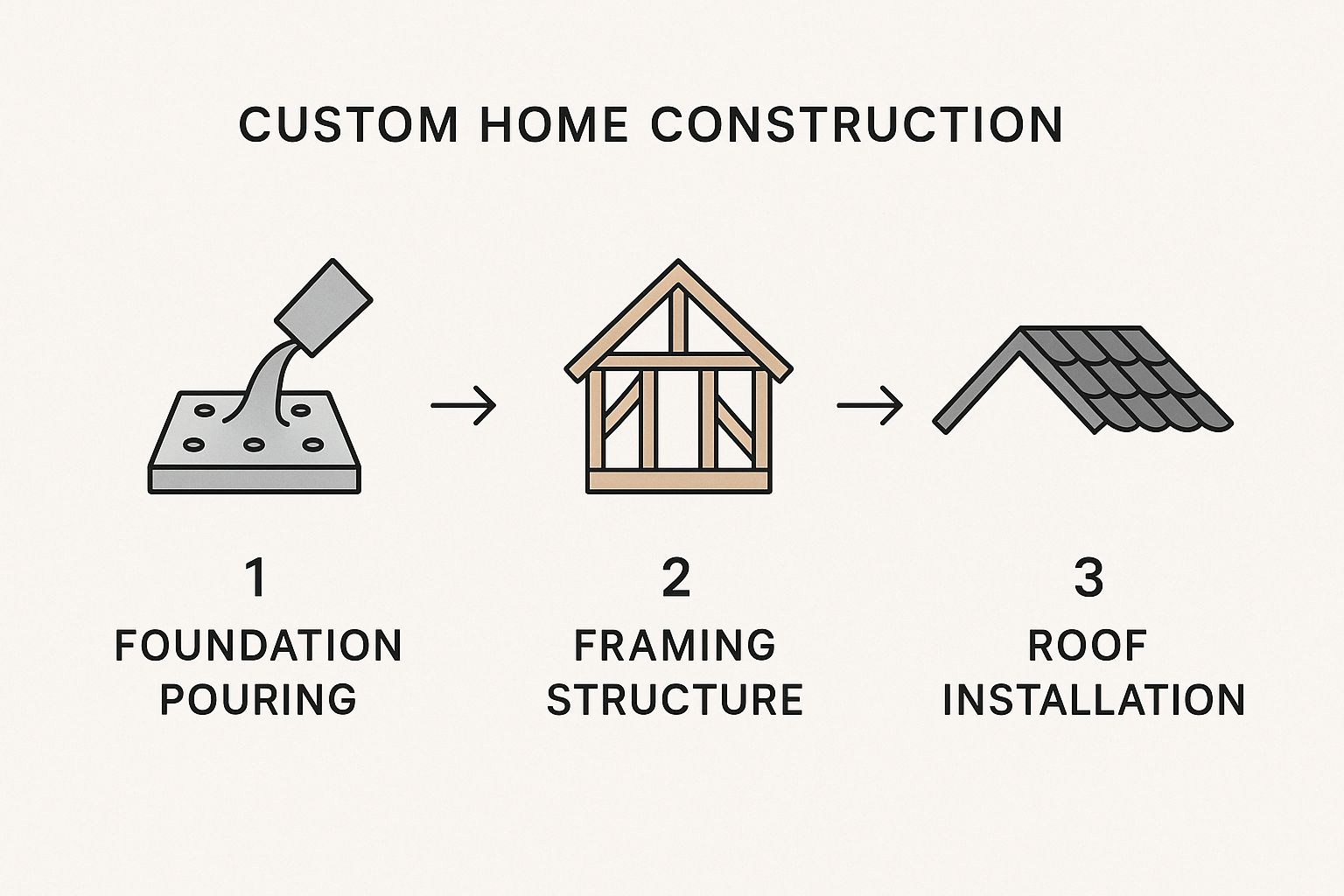
Next, the foundation is poured. This is the base of your home, so it must be strong. Whether it's a slab, crawl space, or basement, this step is done carefully to meet all building codes.
The image below shows how these first steps set the stage for the rest of the build.
From Framing to a Weather-Tight Shell
Framing is when your house starts to take shape. The walls, floors, and roof are built. This is an exciting stage because you can finally walk through the rooms you designed.
After the frame is up, we create a "weather-tight shell." This includes:
- Roofing Installation: The roof is put on to protect the structure from rain and sun.
- Sheathing and House Wrap: The exterior walls are covered to block moisture and air.
- Window and Door Installation: High-quality, energy-efficient windows are installed to close in the home.
Once the shell is secure, work can continue inside, no matter the weather.
Typical Custom Home Construction Timeline
This table shows the main phases of construction. Each project is different, and things like weather can affect the schedule.
| Construction Phase | Typical Duration | Key Activities |
|---|---|---|
| Site Prep & Foundation | 2-4 weeks | Excavation, utility rough-ins, forming, pouring concrete, curing time. |
| Framing | 3-6 weeks | Building the structural skeleton: floors, walls, and roof system. |
| Exterior & Rough-Ins | 4-8 weeks | Roofing, windows, doors, siding, plumbing, electrical, and HVAC installation. |
| Interior Finishes | 6-10 weeks | Insulation, drywall, painting, flooring, cabinetry, countertops, and fixtures. |
| Final Touches | 2-4 weeks | Landscaping, final inspections, appliance installation, and punch list items. |
Your contractor will give you a detailed schedule for your specific project.
The Rough-In Phase
With the home enclosed, workers begin the "rough-in" process. This is when we install the home's essential systems inside the walls before the drywall goes up.
This important phase includes:
- Plumbing: Water and drain pipes are run to kitchens, bathrooms, and laundry rooms.
- Electrical: Wiring for outlets, switches, and lights is installed.
- HVAC: Heating and air conditioning ducts are run throughout the home.
A local inspector will approve this work to make sure it meets safety codes. For more details, see our complete home construction timeline.
Drywall, Insulation, and Interior Finishes
After the rough-in is approved, insulation is installed in the walls and ceilings. This is important for energy efficiency, especially for meeting California's Title 24 standards. Next, drywall is hung to create smooth, paint-ready walls.
Now, your home's personality starts to show. The finishing stage includes many details:
- Trim and Millwork: Baseboards and door casings are installed.
- Painting: Walls and ceilings are painted.
- Flooring: Hardwood, tile, or carpet is laid down.
- Cabinetry and Countertops: Kitchen and bathroom cabinets and countertops are installed.
A good builder manages the schedule carefully to ensure high-quality work.
The Final Walkthrough and Moving In
You are almost at the finish line. After months of work, it's time to make sure your new custom home is perfect before you get the keys.
This final step is about checking every detail, getting official approval, and preparing for a smooth move.
The Punch List Process
The final walkthrough centers on the punch list. You and your builder will walk through every room to find any small items that need a final touch-up.
This is not the time for big changes. It’s for catching small things like:
- A small scuff on a wall.
- A cabinet door that needs adjustment.
- A light switch plate that is crooked.
A professional builder like Aldridge Construction welcomes this process. Our goal is to deliver a home you are 100% happy with. The punch list helps us do that.
Final Inspections and Your Certificate of Occupancy
While you do your walkthrough, a local building inspector does theirs. An inspector from Maricopa County or San Benito County will check that everything meets safety codes and matches the approved plans.
Once all inspections are passed, the city or county issues a Certificate of Occupancy (CO). This is the legal document that says your home is safe to live in. You cannot move in without it.
Understanding Your Home Warranties
When you get the keys, you will also get your warranties. These documents protect your new investment.
Your warranty package usually includes:
- Workmanship Warranty: This comes from your builder. Aldridge Construction provides a one-year warranty on labor and installation.
- Material Warranties: These come from the makers of the products in your home, like your Andersen windows or your roof.
- Structural Warranty: This is a long-term warranty, often for ten years, that covers the foundation and frame of your home.
Preparing for Move-In Day
With your CO in hand, it's time to plan your move! A little planning can make this day stress-free.
An ultimate residential moving checklist can help you stay organized. You will also need to set up utilities like water and electricity in your name.
Planning these final steps—and even future projects with home renovation loans—makes the move smoother. At Aldridge Construction, our goal is to provide a seamless handover so you can enjoy your new home.
FAQs: How to Build a Custom Home
Here are answers to some common questions we hear from homeowners in Monterey, Santa Cruz, San Benito, and Maricopa counties.
1. How long does it take to build a custom home?
A typical custom home build takes 10 to 16 months from start to finish. This includes about 3-6 months for design and permits and 7-10 months for construction. The exact timeline depends on your home's design and location.
2. What is a reasonable budget for a custom home?
The cost varies greatly based on location, materials, and design. Your total budget will include the land cost, "hard costs" for labor and materials (like lumber and concrete), and "soft costs" for permits and fees. It's smart to set aside a 10% contingency fund for unexpected expenses.
3. Can I make changes during construction?
Yes, but it can be costly. Any change made after construction starts is called a "change order," which adds time and money to the project. The best way to stay on budget is to finalize all your selections, from quartz countertops to paint colors, before building begins.
4. How do I choose the right general contractor?
Choosing the right builder is the most important decision you will make. Look for a licensed and insured contractor with experience building homes like yours in your area. Always check references and read our guide on questions to ask your general contractor before hiring.
5. What's the difference between a custom and a production home?
A production home is built by a developer on a pre-selected lot with limited design choices. A custom home is a one-of-a-kind house designed just for you on land that you own. It gives you complete control over every detail, from the floor plan to the finishes.
Ready to build the home you’ve always dreamed of in Monterey, Santa Cruz, San Benito, or Maricopa County? Contact Aldridge Construction today for a consultation and let’s start planning your project.